





Module 4: Title IX: The Patsy Takemoto Mink Equal Opportunity in Education Act
Does having an Asian American in the US House of Representatives positively impact the lives of Asian Americans?
When Kamala Harris was elected to serve as vice president of the United States in 2020, she became the first woman and person of color to occupy this position of leadership. Harris acknowledged that her achievement resulted from many generations of women of diverse racial backgrounds who fought for political rights and the opportunity to serve as political leaders.
Patsy Takemoto Mink, a third generation Japanese American woman born in Hawai‘i, was one such inspiration. When she passed away, Title IX was renamed the Patsy Takemoto Mink Equal Opportunity Education Act. Title IX, a law passed in 1972, seeks to “prohibit sex (including pregnancy, sexual orientation, and gender identity) discrimination in education programs or activities receiving federal financial assistance.” 1
This module is about the Title IX act, and how Patsy Mink worked with other feminists to collectively lobby for its passage and enforcement.
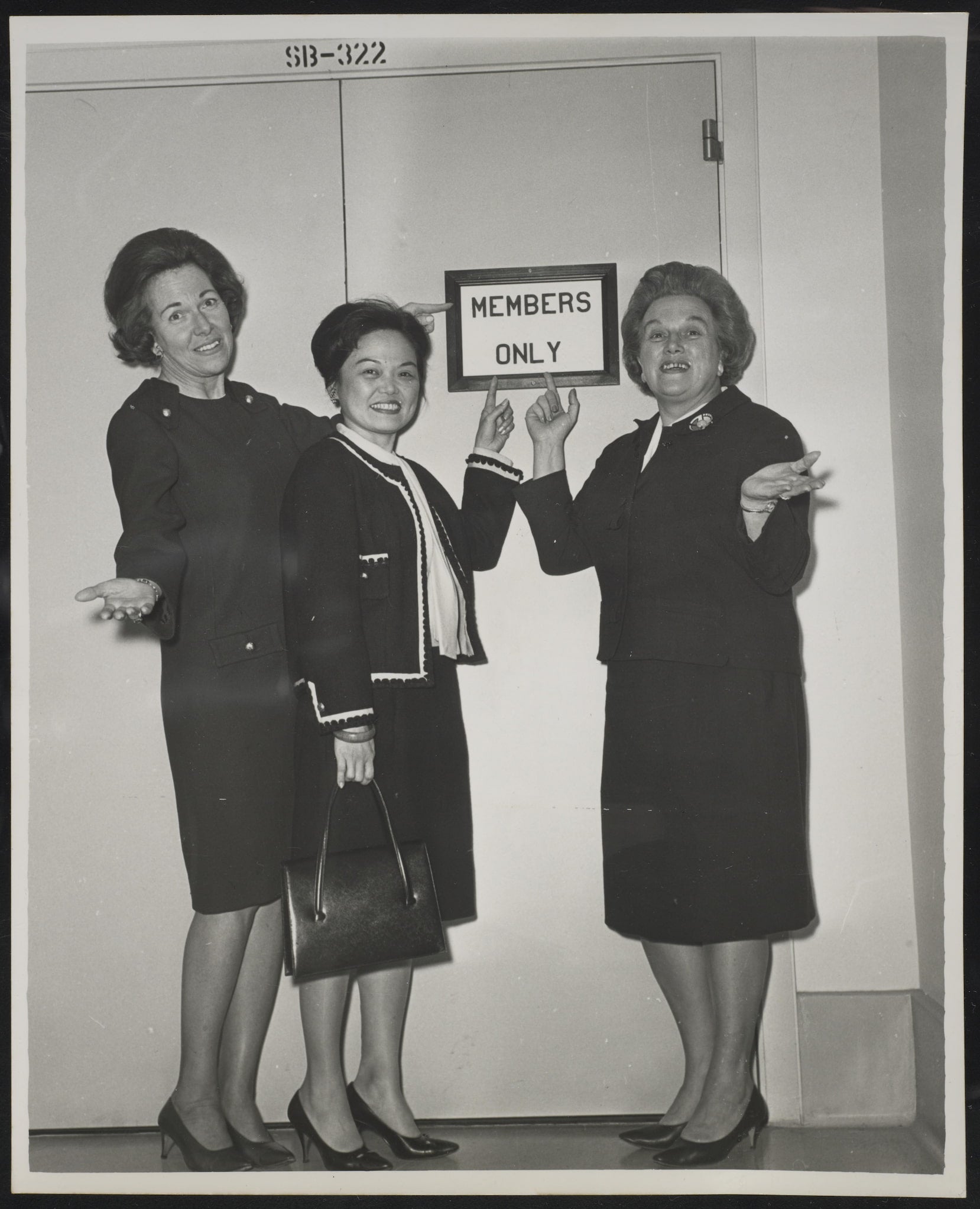
Image 36.04.01 — Mink (center) built bridges with many, including Congresswomen Charlotte Reid (left) and Catherine May (right), to advocate for equal opportunity.
What is Title IX?
What motivated Patsy Mink to support Title IX?
What approach to political leadership did Patsy Mink take?
Fighting for Title IX
Title IX is usually associated with providing opportunities for girls and women to participate in sports. However, it goes far beyond that to impact admissions policies, the allocation of scholarships, employment practices, access to housing, the inclusion of pregnant and parenting students, and the treatment of individuals. It also serves as a mechanism to monitor whether there is a hostile environment against women, and those who are trans and gender non-conforming, in educational institutions.
Mink was inspired to advocate for these opportunities because of her own and other women’s experiences with educational exclusion. Early on she set her goal on medical school but was rejected from all the places she applied to. At the time, medical schools admitted very few women (at most 4–5 percent of the entering class), and after World War II, returning soldiers received priority. Even when Patsy’s daughter, Wendy, was applying for college in 1969-70, some colleges still had quotas that capped admission for women. When Mink sponsored the bill, she hoped to expand opportunities for women.

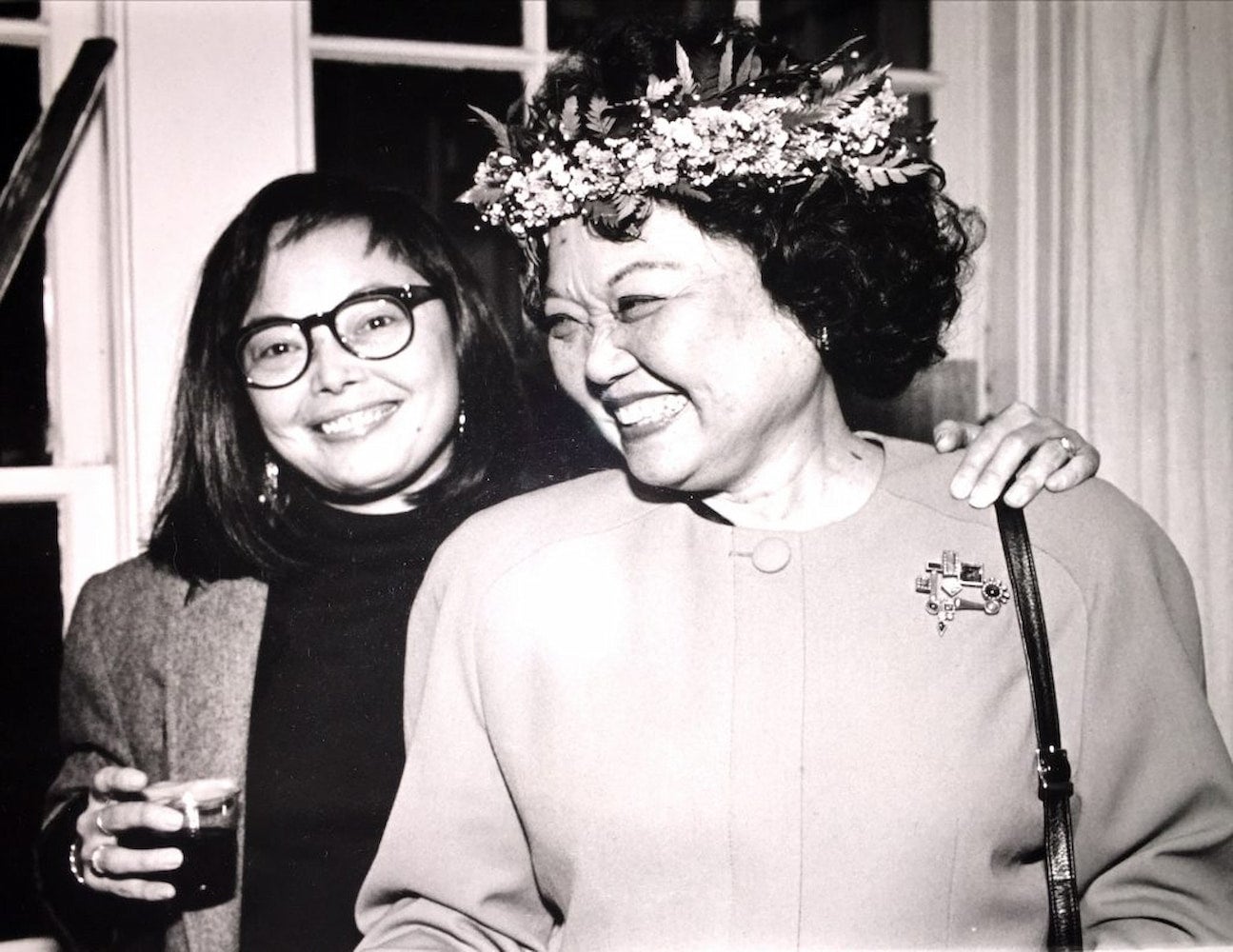
Image 36.04.02 — While Patsy Mink dealt with exclusion when applying for medical schools, little would she know that her daughter, Gwendolyn (or “Wendy”) would also face quotas that capped admission for women. Mink aimed to expand these opportunities.
Not everyone agreed, and some attempted to stop or weaken Title IX. Representative Robert Casey from Texas sponsored one such amendment. Under Title IX, the government could withhold federal funds from schools that maintained sex-segregated physical education programs, honorary societies, and social organizations.
If the Casey Amendment passed, the Department of Health, Education, and Welfare would not be allowed to withhold funding from schools that did not comply with Title IX. In other words, the schools that practice sex discrimination would not be punished.
In her speech against the Casey Amendment, Mink emphasized the importance of physical education classes as part of the overall educational experience for every student:
“All we are talking about is an opportunity for youngsters to have physical education classes in which all of the activities are oriented to people as individuals, as human beings, not because they are girls or boys or men or women, but because physical education is an important ingredient in the entire educational experience.” 2
Mink cosigned a letter with seventy-seven other congressional representatives, warning, “The Casey Amendment will seriously weaken Title IX.” 3 Mink lobbied extensively against the amendment.
However, when the Amendment came up for a vote, it passed by one vote (212 to 211). That day, Patsy’s daughter Wendy suffered serious injury in a car accident and was hospitalized in intensive care.
Mink rushed to the hospital in Ithaca, New York before she was able to cast her vote. One supporter commented, “How ironic it is that the demands of motherhood should come at a time when your vote could have kept defeated the unconscionable Amendment of Casey. How truly difficult to meet both private and public demands.” 4
“Give Women a Sporting Chance”
Feminist supporters refused to allow the vote to stand. The Washington Post described how “several hundred” women roamed “the corridors” of Congress, “handing out literature, pursuing House members onto elevators, meeting in hallways and cafeterias to map tactics.” 5 These lobbyists chanted, “Give Women a Sporting Chance,” and demanded a revote on the Casey Amendment. Casey himself described the mobilization as “the heaviest lobbying I’ve ever seen around here.”
These feminist lobbyists found support from some lawmakers and congressional staff aides, particularly women, who in turn helped push the re-vote. Their collaborative political pressure led to another vote in the House. Still caring for Wendy in upstate New York, Mink followed these developments while away from Congress.
This time, opponents defeated the amendment (215 to 178). While the number of votes against Casey increased a little, a substantial number of Casey’s supporters, fearful of political embarrassment, declined to vote. In Mink’s place, feminist activists collaborated to keep Title IX intact.
Feminists have celebrated many successes, including the passage of Title IX. However, there have been many disagreements within the feminist movement over the years of its existence. Historian Estelle Freedman identifies three components to feminism that addresses some of these disagreements. 6
First, feminists should acknowledge the equal worth of people of different genders. While some people argue that men and women are fundamentally different, and others argue that they are fundamentally similar, the recognition of equal worth goes beyond this same/difference argument to posit that people of diverse genders have equal worth.
Second, feminists should recognize that gender identity intersects with other forms of identity, such as race, class, ability, sexuality, and so on. In other words, to address social inequalities, feminists need to understand the intersectionality of identities and the cumulative impact of structural forms of inequality.
Finally, feminism recognizes that social change occurs in conjunction with social movements. Power inequalities are resistant to change, and hence collective activist efforts are needed to work towards social justice.
Patsy Mink’s Feminism
Although Patsy Mink is often remembered as “the mother of Title IX,” and the act was also renamed the Patsy Takemoto Mink Equal Opportunity in Education Act in 2002, the success of Title IX was a collective endeavor. Patsy Mink used her role in Congress to “bridge” political partnerships with activists in the feminist movement to advocate for their collective ideas in Congress. She used her position to advocate for women who wanted equal access to institutions that had previously favored men. She was an extraordinary individual, but she also modeled a form of leadership that emphasized and respected collective political action.
In addition, Mink was an intersectional legislative feminist. Mink brought her experiences as a woman of color, and as someone who witnessed the class hierarchies in a plantation society in Hawaiʻi, with her to Washington, DC. She recognized how various forms of oppression combined to exclude and marginalize communities. As a result, she brought these insights on race, gender, and class to create change through policy and law. Mink sought to shift the government to redistribute resources so there could truly be equal opportunity for all.
More to explore
Reflection Questions
How does intersectionality help you understand your own identity/experiences or members of your family and community? Are there policies that can be proposed and passed to address intersectional forms of inequality that you have identified?
Glossary terms in this module
intersectionality Where it’s used
The idea that there are overlapping identities that people must navigate, such as race, gender, class, sexual orientation, and disability. Intersectionality understands that recognizing these overlapping identities must also mean to address the overlapping systems of oppression that people are subjected to.
Title IX/Patsy Takemoto Mink Equal Opportunity Education Act Where it’s used
A law passed in 1972 and renamed in 2022 that seeks to prohibit sex (including pregnancy, sexual orientation, and gender identity) discrimination in education programs or activities receiving federal financial assistance.
Endnotes
1 “Title IX of the Education Amendments of 1972,” U.S. Department of Health and Human Services, https://www.hhs.gov/civil-rights/for-individuals/sex-discrimination/title-ix-education-amendments/index.html.
2 Patsy T. Mink, 42 Cong. Rec. 23123 (1975).
3 Bella Abzug et al., “Dear Colleague,” Patsy T. Mink Papers, Box 184, folder 7.
4 JDG, August 8, 1975, “Letter,” Patsy T. Mink Papers, Box 184, folder 7.
5 Eric Wentworth, “Ban on Sex Integration Is Rejected,” The Washington Post, July 19, 1975, Patsy T. Mink Papers, Box 184, folder 7.
6 Estelle B. Freedman, No Turning Back: The History of Feminism and the Future of Women (Ballantine Books, 2003).