





Cartoon: In a classroom, black-skinned children wearing sashes labeled Philippines, Hawaii, Porto Rico, and Cuba are scolded by Uncle Sam while white-skinned children read at their desks.
Module 3: Colonialism, Racism, and Identity
To what extent are the histories and memories of colonialism part and parcel of Asian American and Pacific Islander identity?
Quiet, good at math, bad at driving. Simple, laid back, always at the beach. These familiar stereotypes about Asian Americans and Pacific Islanders are often heard in countless jokes and demeaning insults. More than mere prejudices, stereotypes reflect deeper theories about racial differences that developed historically. They are legacies of colonialism in American culture and politics that continue to influence the Asian American and Pacific Islander experience to this day.
Europeans in the eighteenth and nineteenth centuries justified colonialism in Asia with a theory about the “Orient”(people from Asia) as stagnant, slavish, and traditional, opposed to a progressive, industrious, and modern West. Palestinian scholar Edward Said developed the theory of Orientalism, which describes the obscuring and justification of European imperialist conquest of others, including countries in Asia and Africa. By pitting the superior West to the “backward Orient,” such ideas promoted the “civilizing” mission of Western culture, which justified European and US domination of the East.
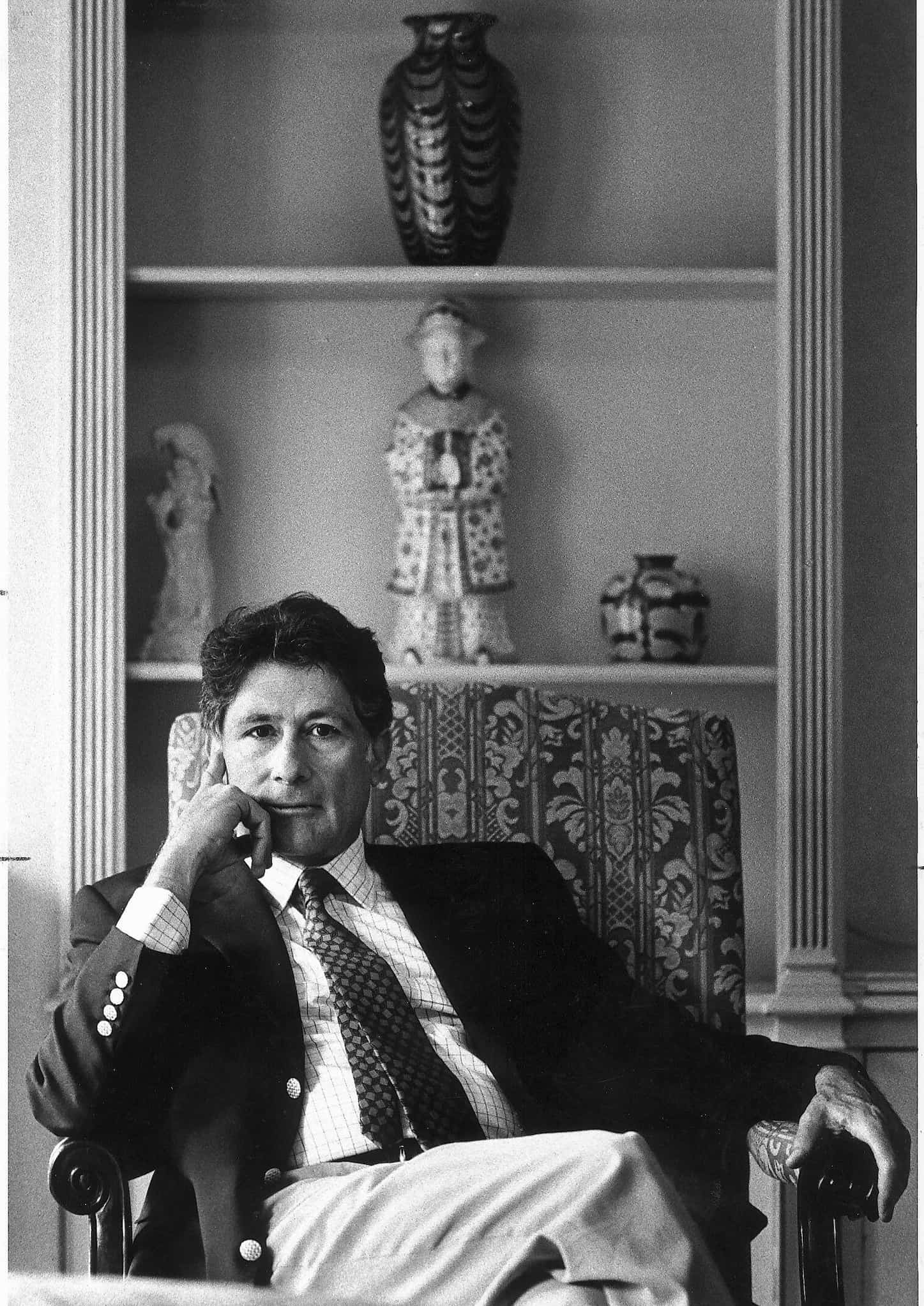
Image 03.03.01 — Edward Said (1935–2003) was a Professor of English and Comparative Literature at Columbia University. In his book Orientalism (1978), Said argued that Orientalist writings and ideologies portrayed the West as being culturally superior, while people of Eastern countries are seen as inferior and subordinate.
This module investigates how colonialism, through racist constructions of stereotypes and conventions, is intricately linked to racism and has shaped the lives of Asian American and Pacific Islander communities.
What are the colonial origins of racist stereotypes against Asian Americans and Pacific Islanders?
In what ways do the tropes of “forever foreign” and “yellow peril” linger today?
To what extent is the “model minority” myth positive for Asian Americans and Pacific Islanders? To what extent is it negative?
Forever Foreign
The idea that Asians are “forever foreign” is central to the belief that Asian people, including American-born and naturalized citizens, can never truly belong in America. This Orientalist idea emerged in the US in the nineteenth century during the California Gold Rush. In an attempt to garner support from white miners, white politicians falsely accused Chinese gold diggers of being “coolies”—an offensive term meaning an unfree laborer—who posed a threat to US workers as “unfair competition.”
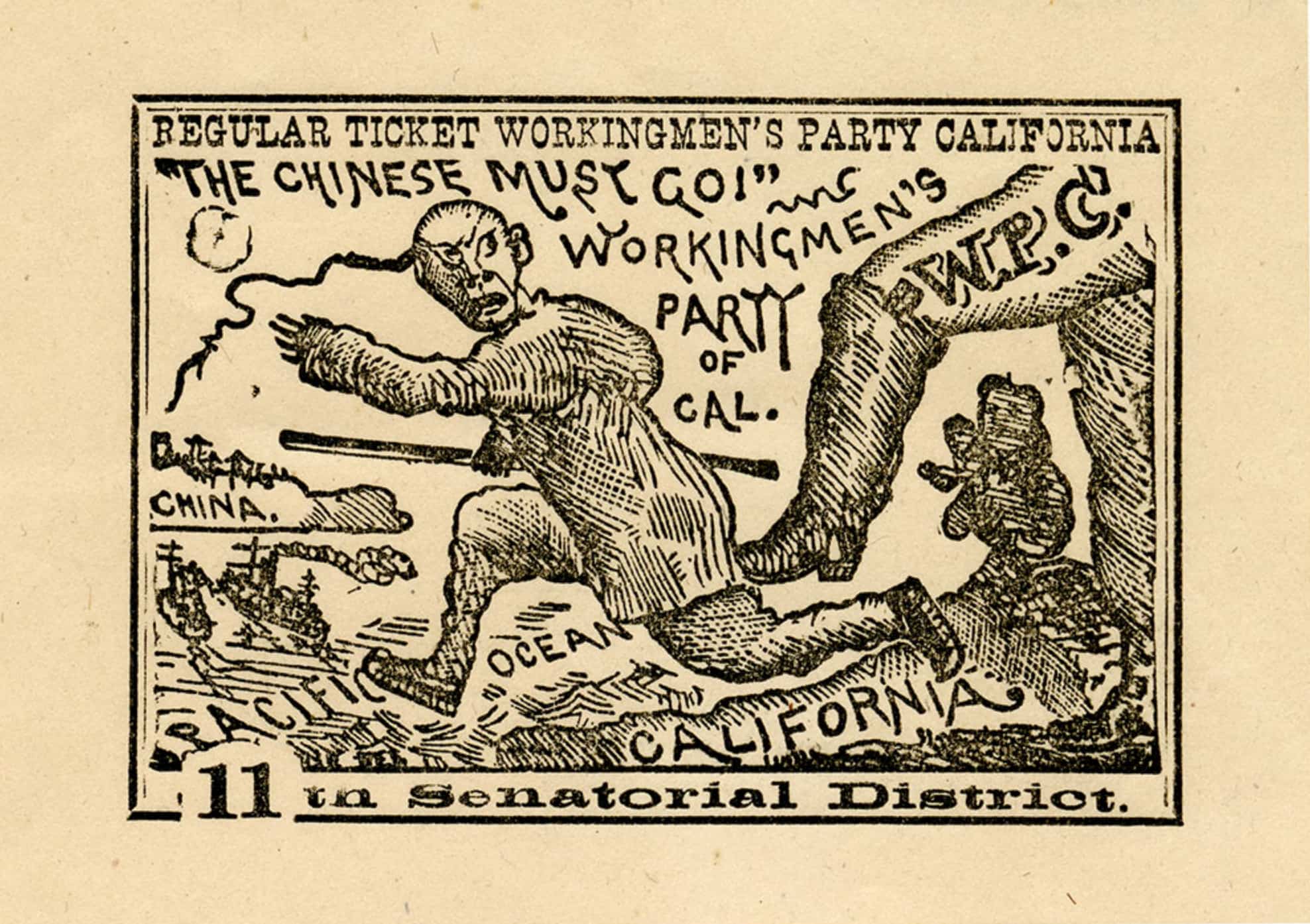
Image 03.03.02 — An 1879 regular ticket for the Workingmen’s Party of California, which ran on the slogan, “The Chinese must go!”
The idea that the Chinese are innately subservient and therefore unable to understand and practice American democratic values created racist stereotypes as an increasing number of Chinese immigrated to the US in the late nineteenth century. This idea was later applied to other Asian immigrant groups as well. The notion that Asians are “forever foreign” functioned as a racial assertion that Asians could never be Americans, referring to not just their physical attributes or cultural differences but also inability to belong.
To mark Asians in the US as un-American justified the intolerant attitudes, social ostracism, and discriminatory laws against Chinese Americans, including numerous exclusion laws during the late nineteenth and early twentieth centuries. Even after the repeal of the exclusion laws in the mid-twentieth century, the idea of foreignness persisted. Throughout the early twenty-first century, this perception of Asians as “forever foreigners” has continued through the form of housing injustice, job discrimination, racist attacks in print media, as well as misrepresentations in popular culture. Past lithographs and journal publications are clear depictions of such historic racist imagery.
Pacific Islanders
Early stereotypes of Pacific Islanders were different because, unlike Asians, they were not migrants seeking entry to the United States. Rather, they were Indigenous inhabitants of lands that foreigners had seized and then occupied. These circumstances generated popular images of Pacific Islanders as resembling those of Indigenous Americans on the North American continent, sometimes romanticizing them as “noble savages.”
Pacific Islanders under US rule were likewise seen as a “primitive,” “pre-modern people,” out of place in an advancing world. Descriptions and images of them emphasized dark and partially clad bodies, associating them with savagery and nature. This also made the deaths of Islanders resulting from disease and violence seem inevitable, just as Western territorial conquest was viewed as justifiable and inevitable due to the supposedly “barbaric” character of the colonized and occupied.
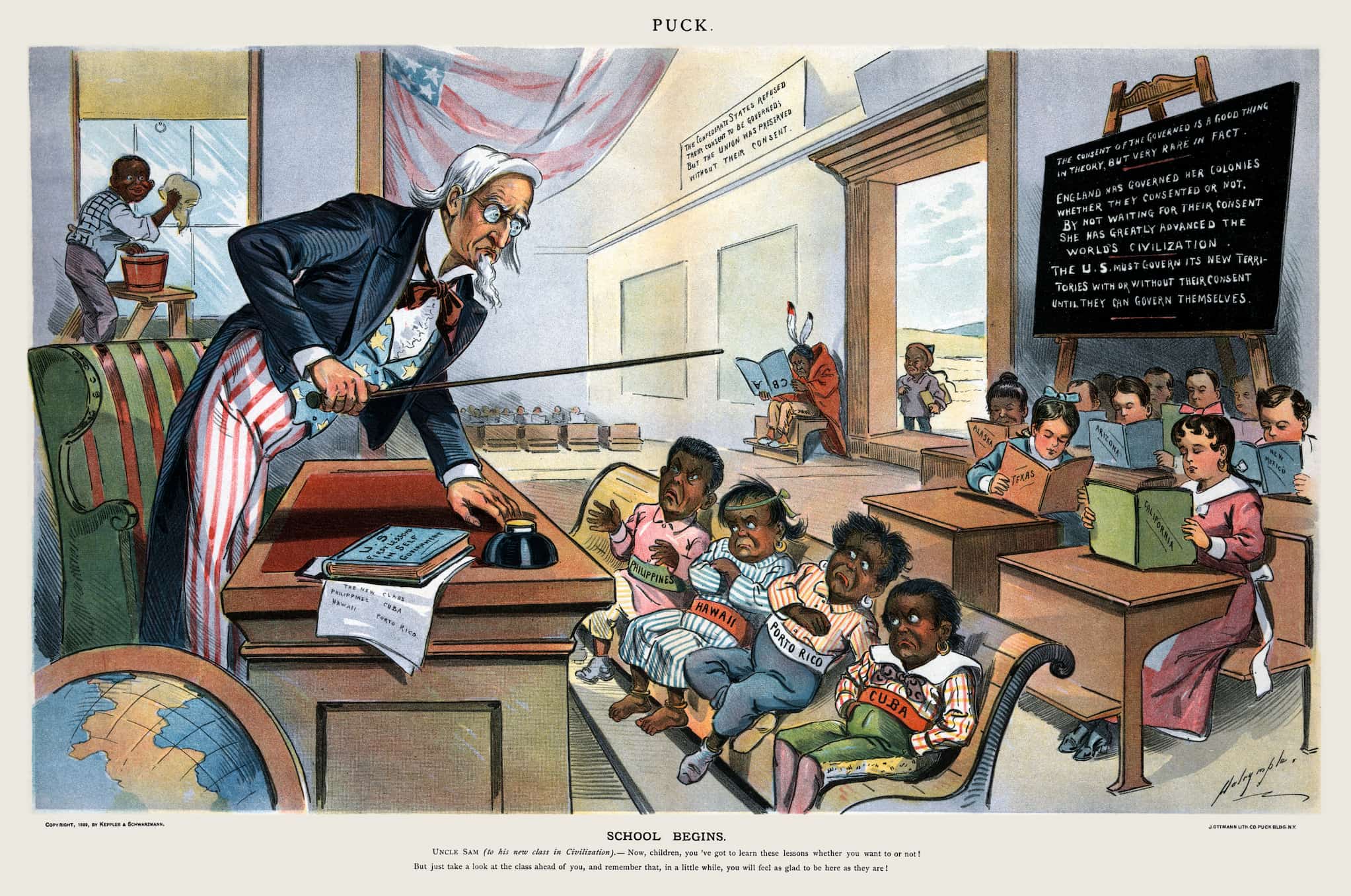
Image 03.03.04 — In the late nineteenth and early twentieth centuries, US media representations of the Philippines, Hawaiʻi, “Porto” Rico, and Cuba crudely depicted them as uncivilized children in Uncle Sam’s classroom.
Sex and Gender
Racial stereotypes of Asian Americans and Pacific Islanders are infused with sex and gender stereotypes. On one hand, puritanical and Victorian ideas of chasteness and modesty in Anglo-American culture cast non-European and non-white people as debased, dirty, and sexually dangerous. On the other hand, Asian and Asian American women are sexualized, often into starkly split images of the “dragon lady” versus the “lotus blossom,” with the former depicted as ruthless, deceptive, and domineering, and the latter as chaste, pleasing, and submissive.
US militarism in the Asia-Pacific contributed further to the objectification of Asian and Pacific Islander women. At the turn of the century, US involvement in wars in Asia brought American servicemen to the Philippines, Japan, Korea, Vietnam, and elsewhere, living on military bases and engaging in intimate encounters in these contact zones. Their sexual relationships with Asian women became symbols of masculine conquest and metaphors for US power over a dependent, feminized Asian body.
Sexuality and gender stereotypes have also informed depictions of Asian men as emasculated and homosexual. Popular nineteenth-century cartoons portrayed their slight builds and long, braided hair, in stark contrast to Western ideals of rugged physiques and muscular masculinity, as embraced by Theodore Roosevelt at the turn of the century for example. Elsewhere, sensationalist exposés on subjects such as Chinese immigrant men living in crowded bunkhouse communities without female companionship implied asexuality or homosexuality. Such conditions further marginalized Asian men as distinct from conventional notions of the desirable male physique.
Stereotypes of Asians varied by ethnicity. Filipino immigrant men during the 1920s and 1930s, for example, were highly sexualized in depictions as stylish, charming, and lustful. Such images aligned more with racist stereotypes of Black people. This image emerged from the taxi dance hall scene where Filipino men interacted frequently—and sometimes intimately—with white women.
The sexualization of Pacific Islanders in American culture was also distinct. Early impressions by white settlers portrayed their sexuality as animalistic and unrestrained–a result of their “uncivilized” condition. In contrast to such sexually aggressive images, pleasing and pleasant images of Indigenous women in the twentieth century were instrumental in the islands’ construction as a paradise. Fantasy Island, a popular TV series from 1977 to 1984 starring Ricardo Maltalbán, echoed these imperial fantasies. In another example, Paul Gauguin’s paintings of Native Islander women in France’s colony of Tahiti bring to mind arousing and otherworldly images. Likewise, the figure of the Hawaiian “hula girl,” which appears on postcards, advertisements, and travel brochures disseminated throughout the world, cements the image of Hawaiʻi as an alluring destination. Such tourist industry propaganda aligned with colonial desires and tropical fantasies in which women were subservient and sexually pleasing.
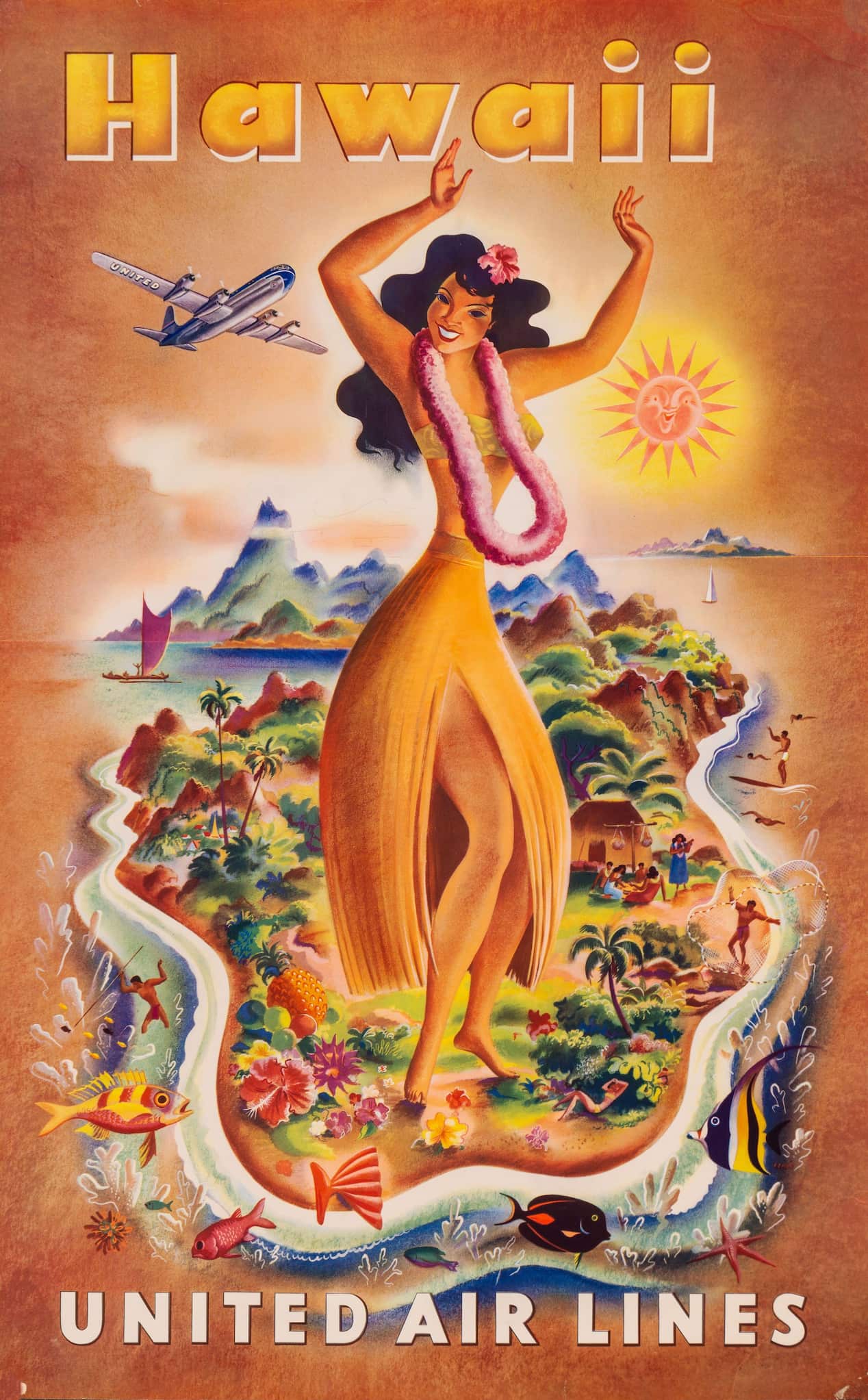
Image 03.03.05 — This United Airlines advertisement from 1950 leans into the sexualized image of the “exotic” Hawaiian “hula girl” to market the islands as a bountiful tourist paradise.
Additionally, US expansion in the Pacific at the turn of the century (beginning with the overthrow of the Hawaiian monarchy in 1893), Hawaiʻi’s annexation in 1898, and the colonization of the Philippines in 1902 gave rise to distinct and uneven stereotypes of Pacific Islanders. Instead of being potential foes in a clash of civilizations, Pacific Islanders were imagined as hospitable hosts. This stereotypical image helped justify annexing the territories and displacing their people and economies. Further, the trope of Manifest Destiny allowed the US to claim the land as part of their civilizing mission westward.
Yellow Peril
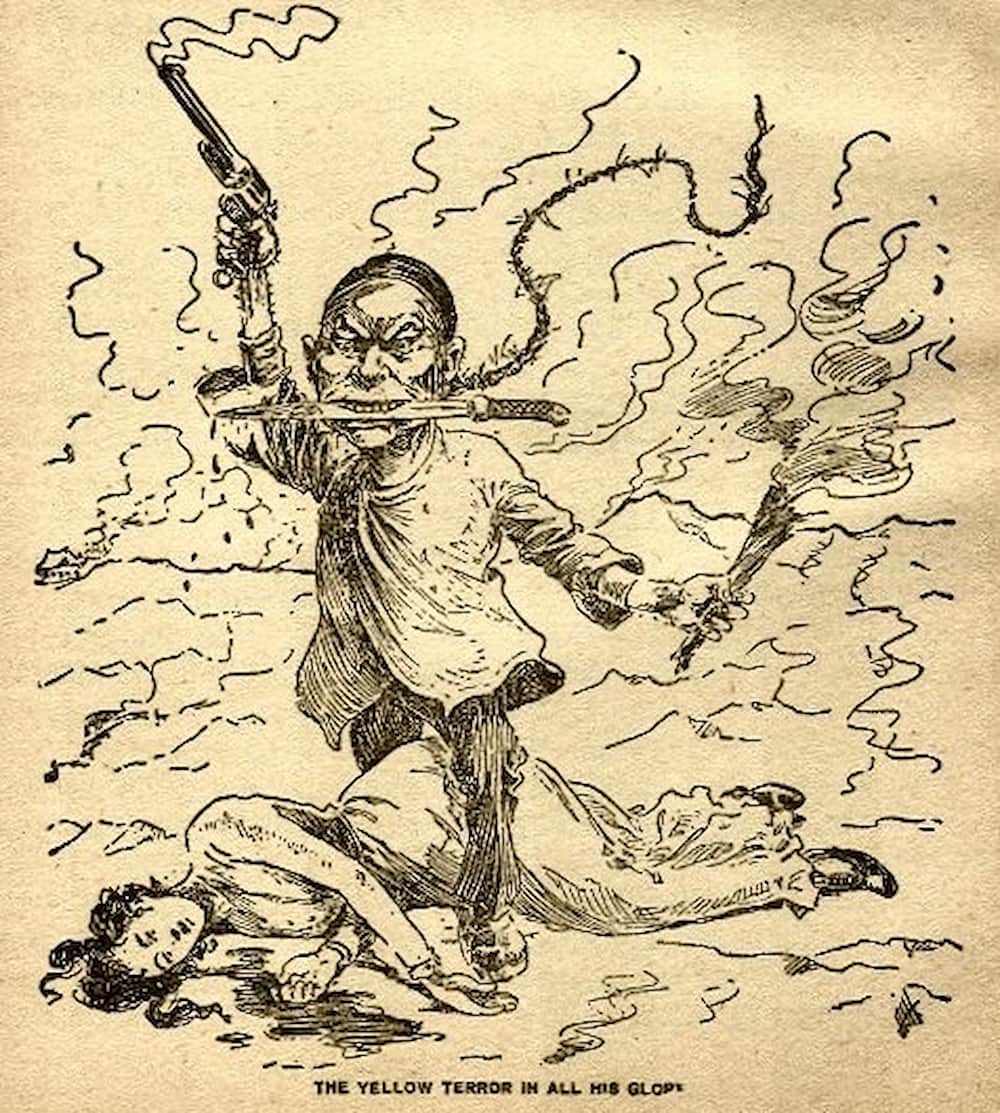
Image 03.03.06 — The Yellow Terror in All His Glory, an 1899 cartoon about the Boxer Rebellion in China, stereotyped Chinese and Chinese Americans.
The term “yellow peril” stereotypes Asians as nefarious and intent on supplanting white dominance and US power. Such fear has been used as another reason for colonial conquest, geopolitical domination, and wars. Fears of the yellow peril have especially appeared in times of economic pressure, increased immigration, contentious geopolitics, or global epidemics. When the overtly racist conception of Asians and Asian Americans can dehumanize Asians en masse as undifferentiated, nameless, faceless bodies, the US and the West are then seen as justified in their drive toward conquest, domination, and incarceration.
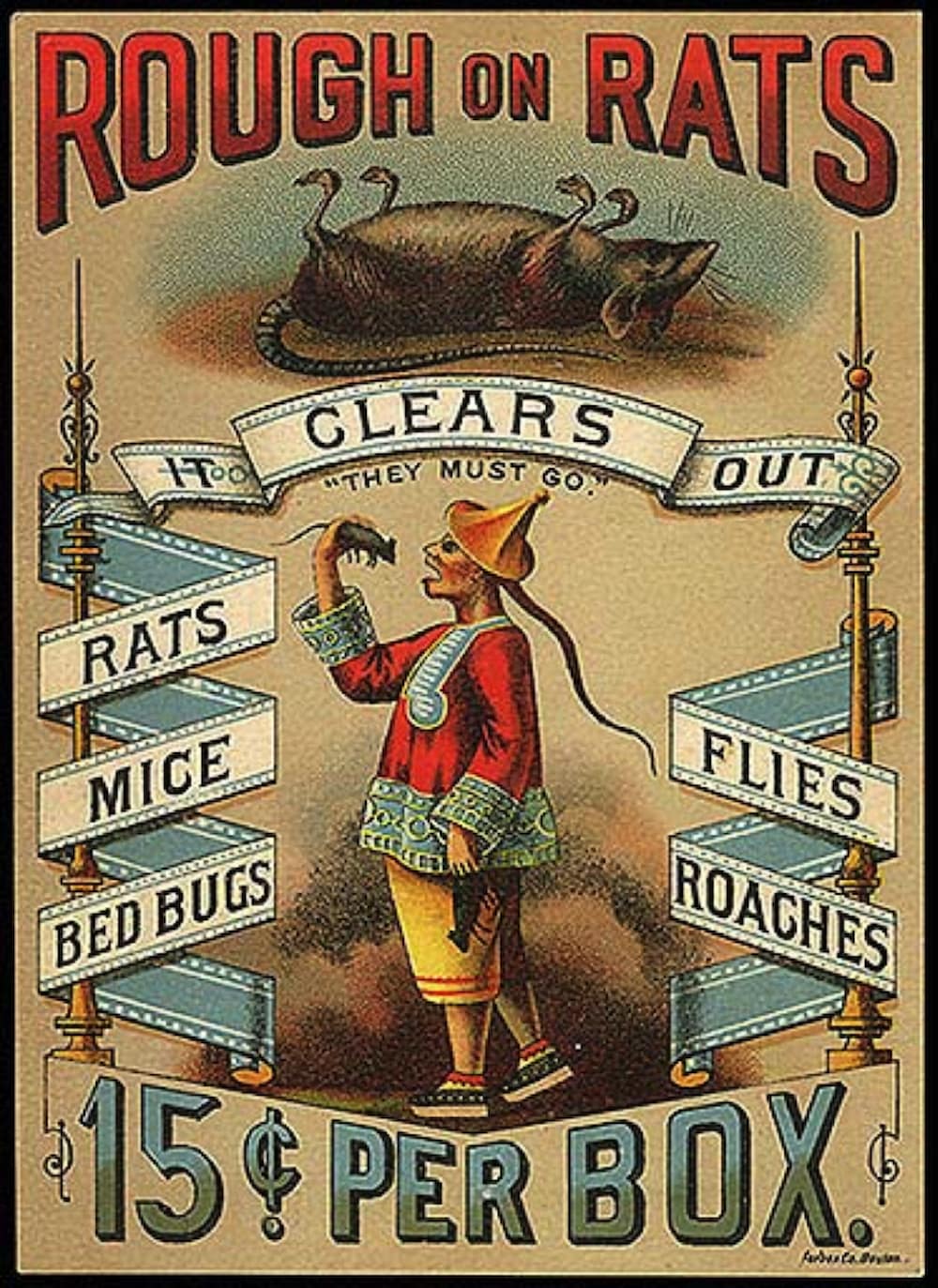
Image 03.03.07a — A trade card advertisement ca. 1880 for rat poison features a Chinese man about to eat a rodent. The stereotype was that the Chinese were so alien as to eat rats, mice, and other vermin as part of their diet.
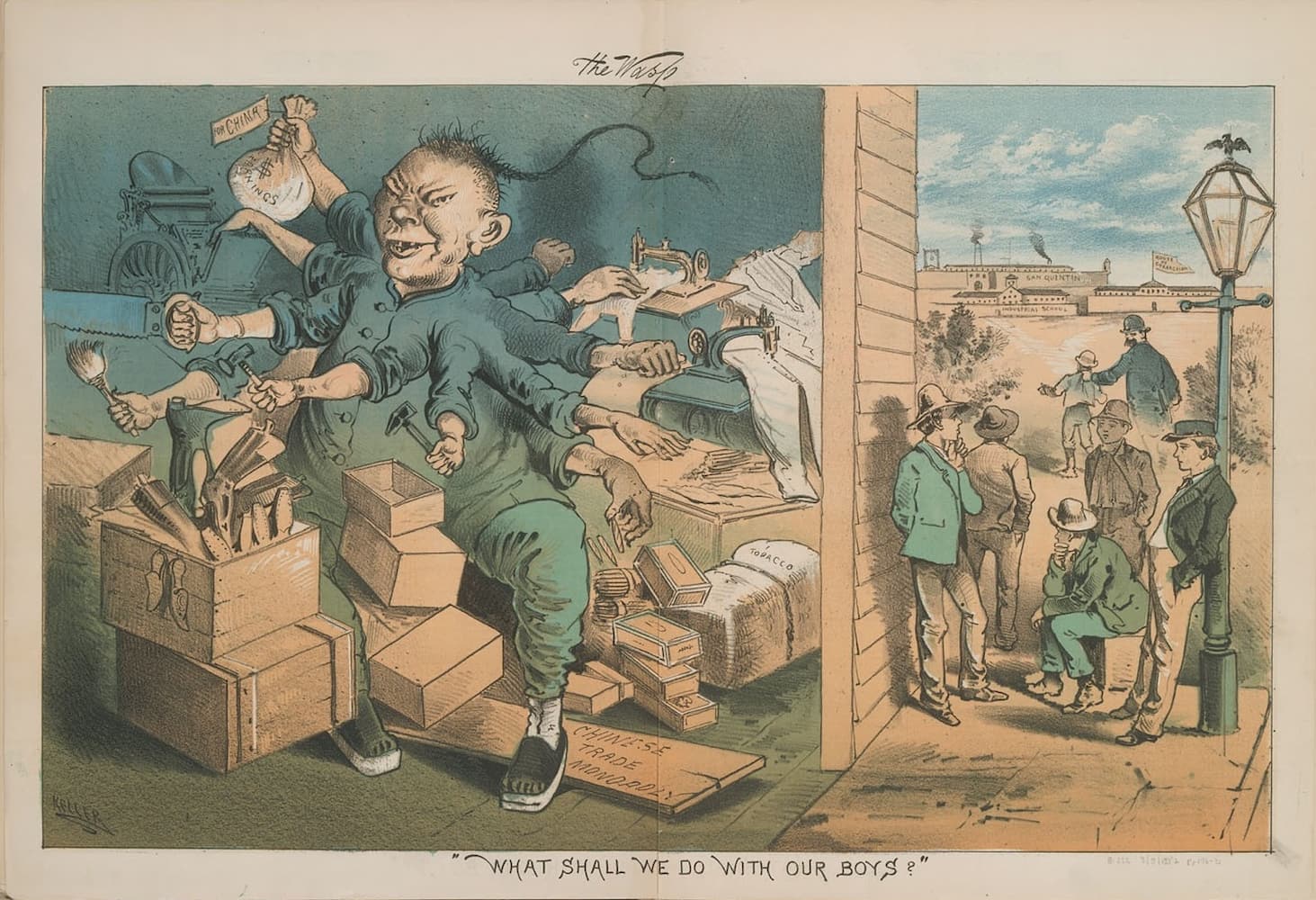
Image 03.03.07b — George Frederick Keller’s 1882 cartoon, “What shall we do with our boys?” shows a group of young white men put out of work by a caricature of an octopus-armed Chinese man.


During the anti-Chinese movement of the late nineteenth century, cartoons, speeches, and published writings painted pictures of Chinese immigrants as a horde of cheap workers that threatened to steal white American jobs and taint US culture.
Yellow peril has also been invoked in the global arena as a reflection of American worries about Asian countries on the rise. In 1905 Japan stunned the world with its victory against Russia in the Russo-Japanese War, a development that drew admiration as well as trepidation among leaders of dominant Western nations. The United States, in particular, felt threatened as it had recently annexed the Philippines, Hawaiʻi, and other Pacific territories. As a result, a resurgence of yellow peril politics emerged in the twentieth century, especially to rationalize the incarceration of Japanese Americans during World War II. It heightened amid the US-Japan trade wars of the 1970s and 1980s, and it continues to surface today with ongoing tensions with China and false assertions of the “China virus” during the COVID-19 pandemic.
More recently, stereotypes of Pacific Islanders have shifted to reflect changing conditions. More commonplace are stereotypes such as the laid-back beach bum or the happy, peaceful native strumming a ukulele. As with earlier tropes, these help to wash away Americans’ guilt over their history as colonial settlers, deny the realities of life under colonization for Indigenous and Pacific Islander communities, and deflect attention from the islands’ environmental degradation and cultural loss under US militarism.
Model Minority Myth
At first glance, the “model minority” stereotype of Asian Americans appears to be the opposite of the “yellow peril,” as Asian Americans are imagined as successful, secure, and thriving in their work and lives. The model minority myth crystallized in the decade and a half after World War II during the Cold War between the Soviet Union and the US, where domestic society was also embroiled in the Civil Rights Movement and other internationalist struggles.
An infamous article that appeared in a 1966 New York Times Op-Ed praised Japanese Americans for their comeback after wartime incarceration. The model minority myth was also used to pit one group against other minorities in the US, stoking the flames against Black communities, particularly as they fought nationwide against Jim Crow segregation laws in the South.
The model minority myth promotes a racial stereotype about Asian Americans as naturally smart, especially at math, and as successful because they work hard and never complain. It does not assist in uplifting Asian Americans, but instead treats them as racially different from white students and employees. Equally, the myth obscures the pain, violence, and displacement Asian Americans have suffered at the hands of white dominance while simultaneously working to pit Asian Americans against other minorities by disparaging comparisons. If Asian Americans can pull themselves up by the bootstraps, why can’t Black and Brown people?
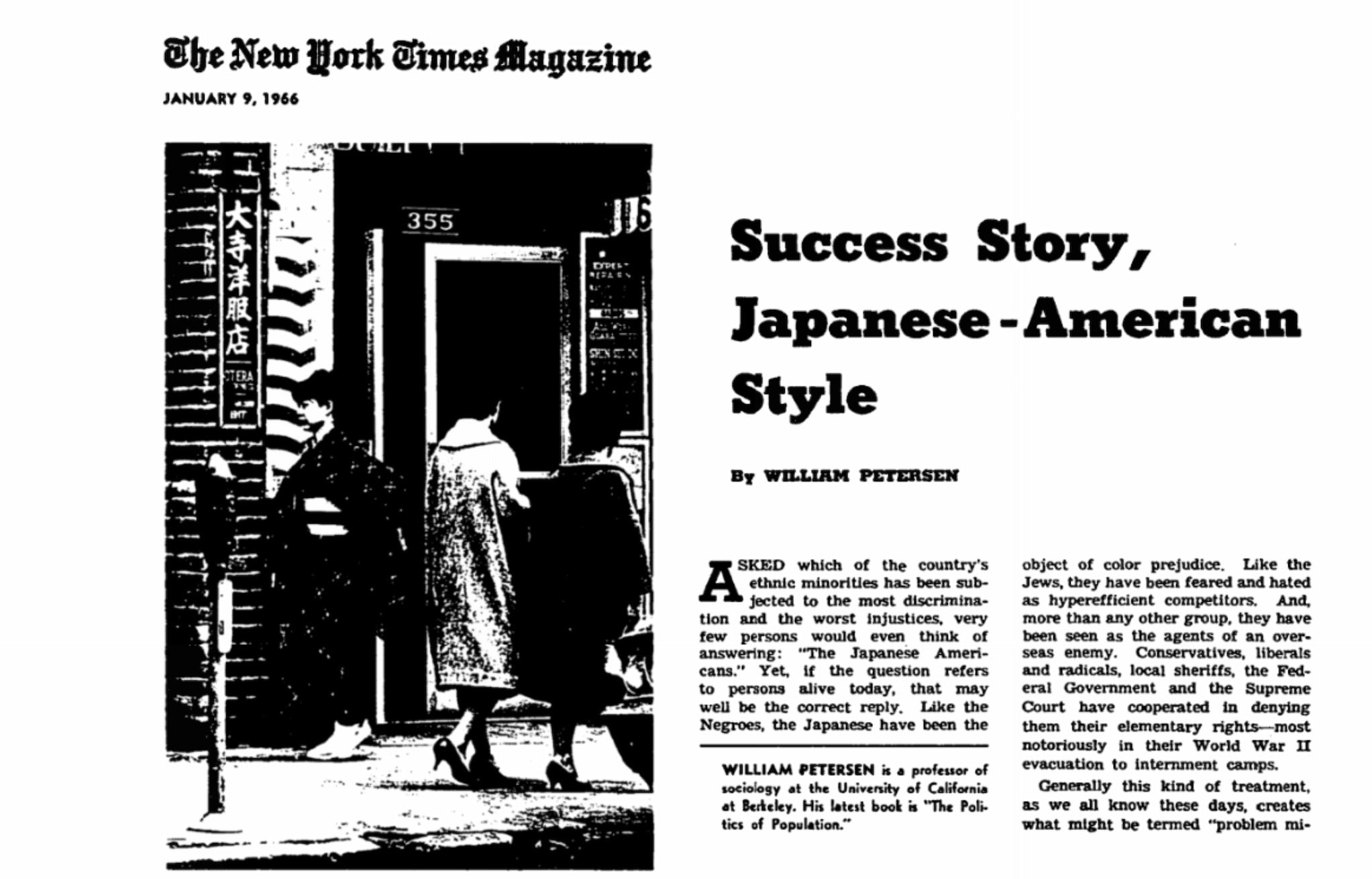
Image 03.03.08 — A 1966 New York Times Op-Ed praised post-World War II Japanese Americans for succeeding in spite of their setbacks: “the Japanese Americans are better than any other group in our society, including native-born white.” The model minority myth creates a false hierarchy by pitting Asian Americans against other racial groups.
By perpetuating this false narrative, the model minority myth has served to undermine the struggles of Black people against racial oppression. For Asian Americans, embracing the role of the model minority is conditioned on distancing themselves from other communities of color and denying the structural realities of racism by upholding a belief that anyone can realize the American dream if they work hard enough. This then impedes solidarity with other minorities and disempowers Asian Americans by demanding their silence and accommodation with the status quo in order to be considered exemplary by the dominant culture.
In recent years, critics of affirmative action–a policy to increase opportunities for marginalized groups facing discrimination—in higher education have often lauded Asian Americans as a minority that has succeeded without “special” treatment, or even claimed they were penalized for being good students. This perspective led to the 2023 Supreme Court case Students for Fair Treatment v. Harvard, which ended affirmative action for college enrollment.
“Asian American and Pacific Islanders” as a Racial Category
Political and cultural elites invested in the economic project for colonial resources have long developed and imposed racial stereotypes on Asian American and Pacific Islander people. Racial and ethnic labeling in government census data since 1790 reflects this agenda, when the US began to track the population by race.
The 1790 Census recognized three main groups: “free whites,” “all other free persons,” and “slaves,” Over the years, census categories changed many times. By the 1950 Census, the racial categories expanded to include white, Negro, American Indian, Chinese, Japanese, Filipino, or Other. Mexican was included as a race in 1930 but dropped by the next census. Koreans and Hindus appeared alongside other Asians in 1940 but not in 1950. In 1977, the Office of Management and Budget (OMB) created the Asian or Pacific Islander (API) category and instructed federal agencies to use it in their data collection. OMB’s latest category is Asian American and Native Hawaiian/Pacific Islander (AANHPI).
The expansion of Asian people’s categories in the census reflects both demographic changes and the demand by Asian American and Pacific Islander groups for specific inclusion and historic recognition. Historically, the US census enumerators determined the race of people they counted. By 1960, Americans could self-select their race when they answered the census questionnaire. Asian Americans and Pacific Islanders understood that recognition was necessary to advocate for funding, anti-discrimination policies, and inclusion in the political process.
Changing census practices were part of a trend where people long-disempowered and disenfranchised turned race on its head and channeled it to build community and empower themselves. During the late 1960s, college student activists of Asian descent rejected the term “Oriental” because of its negative connotations and replaced it with Asian American. The naming was an important act of self-determination. It was also strategic, as it galvanized numerous different Asian nationalities under a common identity. For Pacific Islanders, remaking race has relied primarily upon building a movement for sovereignty, preservation, and reclamation of language, culture, land, waters, and natural resources. As it has been for Asian Americans, dismantling stereotypes has been an important component of identity for Pacific Islander cultures and peoples.
More to explore
“Asian American and Pacific Islander” as an Identity Category
The terms “Asian American” and “Pacific Islander” categorize people based on attributes such as culture, ancestry, and history. When people identify with these groups, it reflects how they view themselves as both individuals and as members of a group. Such membership can signify a range in scale of identification from the deeply personal to the utterly impersonal and bureaucratic. Therefore, “Asian American” and “Pacific Islander” encompass a diverse community of peoples.
In this fashion, those who identify as Asian American can include a fifth-generation Chinese American whose ancestors came to California during the 1840s, to the child of recent refugees from the Central Asian nation of Kazakhstan. Pacific Islander encompasses people of Indigenous descent from Pacific Rim territories under US control, including Kānaka Maoli (Native Hawaiians) and CHamorus from Hawaiʻi and Guåhan (Guam), as well as Tongans and Fijians.
The joining of Asian Americans and Pacific Islanders through different categories and acronyms—such as APA, API, AAPI, AANHPI, and so forth—creates an even larger, more diverse category. While broadening terminology does represent a wider-ranging number of peoples, its use also raises more questions, including whether or not Asian Americans and Pacific Islanders can or should be considered a single group of people. In essence, what does it actually mean to be Asian American and Pacific Islander?
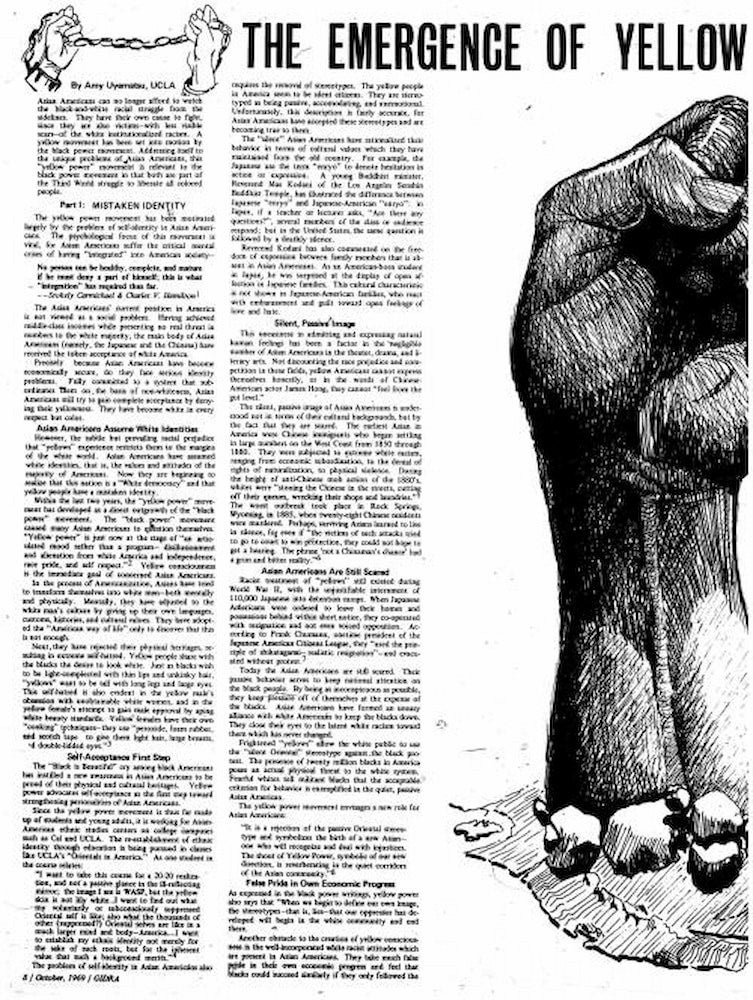
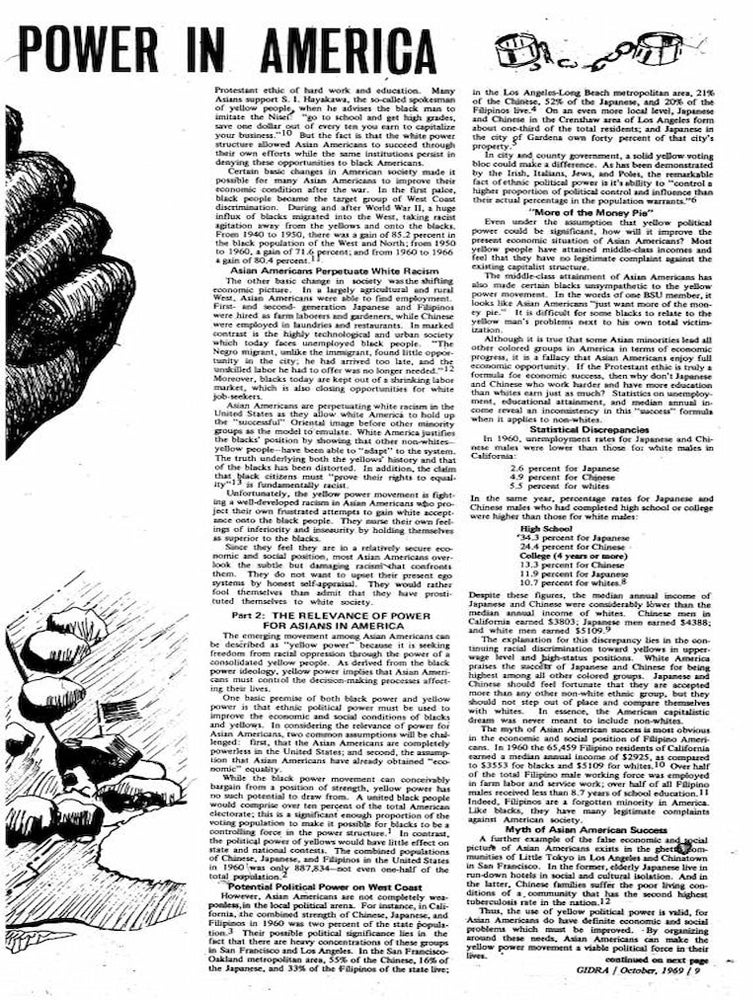
Image 03.03.10 — Amy Uyematsu’s article, “The Emergence of Yellow Power in America” in Roots: An Asian American Reader examines the social position of Asians in America in 1971.
Since these identification categories are strategic and political, they can gloss over historical specificity and cultural nuances. For instance, a seventy-two-year-old Japanese American and twenty-year-old Sri Lankan American may both identify and be counted as Asian American, but that does not necessarily mean they share the same experiences nor social needs. Other identities may intersect also. The elder Japanese American may be a heterosexual, cisgender man living in an affluent Southern California suburb, while the Sri Lankan American may be a queer, female-identifying child of a taxi driver in New York City.
In other words, such a broad and complex identity as Asian American and Pacific Islander can make it difficult to identify what it actually means to be their true selves. The works of scholars like Yến Lê Espiritu and her concept of a pan-Asian identity, on the one hand, can inspire unity and cohesion. The term Asian American was created through solidarity work and student activist movements, after all. On the other hand, such sweeping and overarching terms might imply a false uniformity or privilege some subgroups over others.
Specifically, critics have charged that the use of the “Asian American and Pacific Islander” category does not substantively incorporate Pacific Islanders and simply creates an illusion of Asian Americans as inclusive of Pacific Islanders’ history of displacement, exclusions, and harm. The spread of the term has created confusion and distortion, with some believing that Asian American and Pacific Islander are interchangeable categories, or that when an organization uses “AAPI,” both groups must be involved—even when that is not the case. Just in terms of sheer population size, in 2020, twenty-four million people identified as Asian American, whereas close to 1.6 million identified as Pacific Islander. This also includes those of mixed racial ancestry.
Native Hawaiians, the largest group of Pacific Islanders in the US, were just 3 percent of “Asian Pacific Americans.” While bureaucratic consolidation of government categories offered Pacific Islanders some measure of visibility and inclusion, they also found that their particular concerns could often get pushed aside in favor of Asian Americans’ needs.
For example, if Pacific Islanders needed funding for an initiative they would be told to go to Asian American and Pacific Islander organizations. Pacific Islanders would get lost in the aggregate data that produced inaccurate and deceptive pictures of their needs and concerns. Such lack of oversight made it difficult to understand the full picture of Pacific Islander lives, from rates of business ownership to experiences with police abuse, which disproportionately affected Pacific Islander groups such as Tongan and Samoan men. In response to these concerns, the official category was changed in 2021 to “Asian American, Native Hawaiian, and Pacific Islander” in the census. However, much work still remains in raising awareness and consciousness around Asian American and Pacific Islander identification categories.
Conclusion
Central to racist perceptions about Asian Americans are ideas that they are foreign, sexually deviant, threatening to America, or docile “model minorities.” Pacific Islanders are stereotyped as primitive, savage, and hypersexual on the one hand, and as hospitable and cheerful on the other. These stereotypes reveal little about Asian Americans and Pacific Islanders themselves. Instead, they are legacies of US empire, colonialism, and war that endure today in a postcolonial context, where they are reshaped and realigned through ongoing geopolitics and culture.
Glossary terms in this module
Cold War Where it’s used
Beginning at the end of World War II and ending with the fall of the Soviet Union in 1989, the Cold War was a period of indirect war and competition between the United States and Soviet Union (USSR), and their allies. Though there was no direct fighting between the US and USSR, their rivalry brought forth a nuclear arms race and the formation of strategic alliances that supported one or the other side (NATO, Warsaw Pact, others). Both the US and USSR pressured decolonizing nations to take sides instead of remaining neutral. The Cold War also included several “hot wars,” or proxy military conflicts, in Korea, Vietnam, and elsewhere.
colonialism Where it’s used
When one country takes partial or complete control over another country economically and politically, exploiting its natural resources for profit. The colonizer forces their beliefs and way of life onto the colonized.
geopolitical Where it’s used
The influence of geography (location, ecology, and natural resources) on the politics of foreign relations and international affairs.
model minority Where it’s used
A concept that frames certain minorities, predominantly Asian Americans, as more academically and professionally hard-working, adaptable, and successful than other minorities and immigrants. This myth perpetuates harmful consequences, such as creating a divide between Asian Americans and other racial groups–particularly Black and Latinx people, and it doesn’t account for the diversity among Asian American communities.
Orientalism Where it’s used
Coined by Palestinian scholar Edward Said, Orientalism is a theory that describes the West’s erroneous and often stereotyped perspective of the East, or the “Orient.” Scholarship, history, art, literature, and other forms of media with an Orientalist lens typically portray the East as backward, weak, subservient, and exotic, while emphasizing and juxtaposing the West (the “Occident”) as powerful, progressive, heroic, and modern.
Pacific Rim Where it’s used
The landmasses and countries that border the Pacific Ocean.
refugee Where it’s used
Someone, or a group of people who have been forced to flee their native country due to war, violence, or persecution, and are unable to return.
self-determination Where it’s used
The right of a people to freely determine their political status and freely pursue their economic, social, and cultural development without external interference.
solidarity Where it’s used
A political, cultural, and collective stance that recognizes the mutual responsibility and support that is necessary to achieve change. Taps into the power in numbers and considers the collective interests of communities.
stereotype Where it’s used
Generalized beliefs about a group of people based on one or a few characteristics, often simplistic and false. Typically, stereotypes perpetuate harmful ideas about groups of people and are rooted in incorrect, and often racist beliefs.