





An elderly Asian couple in a kitchen. Pots and pans, stacks of papers, and grocery bags cover every surface. Asian art hangs on the wall.
Module 4: Decolonization and New Immigration
To what extent are the histories and memories of colonialism part and parcel of Asian American and Pacific Islander identity?
People in the United States want freedom and independence,—the independence to live in a style and fashion that follows their cultures, customs, and religious creeds. Independence as a sovereign state means resisting oppression by a foreign power. The image of World War II (WWII, 1939–1945) may be understood as the war against German aggression in Europe and Japan’s invasions in Asia. WWII resulted in tremendous destruction and the greatest number of deaths, with eighty-five million military and civilian casualties, including twenty-seven million Soviet Union (USSR) forces, twenty million in China, and six million Jews.
The victory of the Allied forces—Britain, France, the US, the Soviet Union, and China—was not only a win for democracy over fascism, but also ushered in a new era of decolonization, as the end of the war in 1945 also liberated formerly colonized countries. The resulting new world order radically changed global migration patterns, including those from Asia-Pacific to the United States.
This module examines the decolonization of Asian countries, as well as the changes in Asian migration patterns to the United States from the end of WWII to the present day.
To what extent has the decolonization of Asian countries after World War II affected Asian Americans and Pacific Islanders?
How are refugees different from immigrants?
To what extent are Asian American and Pacific Islander migration patterns in the twenty-first century different from the twentieth century? From the nineteenth century?
Decolonization
Decolonization did not happen in one fell swoop. As part of the peace agreements after World War II, the losing countries–Germany, Italy, and Japan–relinquished control over their colonies—including the African colonies of Libya, Somalia, and Ethiopia, and also Manchuria, Korea, and Taiwan in Asia, among many other countries. In fact, Koreans celebrate August 15th as Gwangbokjeol, or the “Return of Light Day,” as Independence Day to mark the anniversary of Japan’s surrender in 1945.
In addition, the spirit of democracy that had defined the war’s purpose pressured the Allied powers to grant independence to their own colonies. The Philippines, a US territory since 1898, became independent in 1946. India and Pakistan became independent on August 15, 1947, when the British divided the land into two countries, creating Pakistan. Each year, Independence Day is celebrated on August 14th in Pakistan, and on August 15th in India.
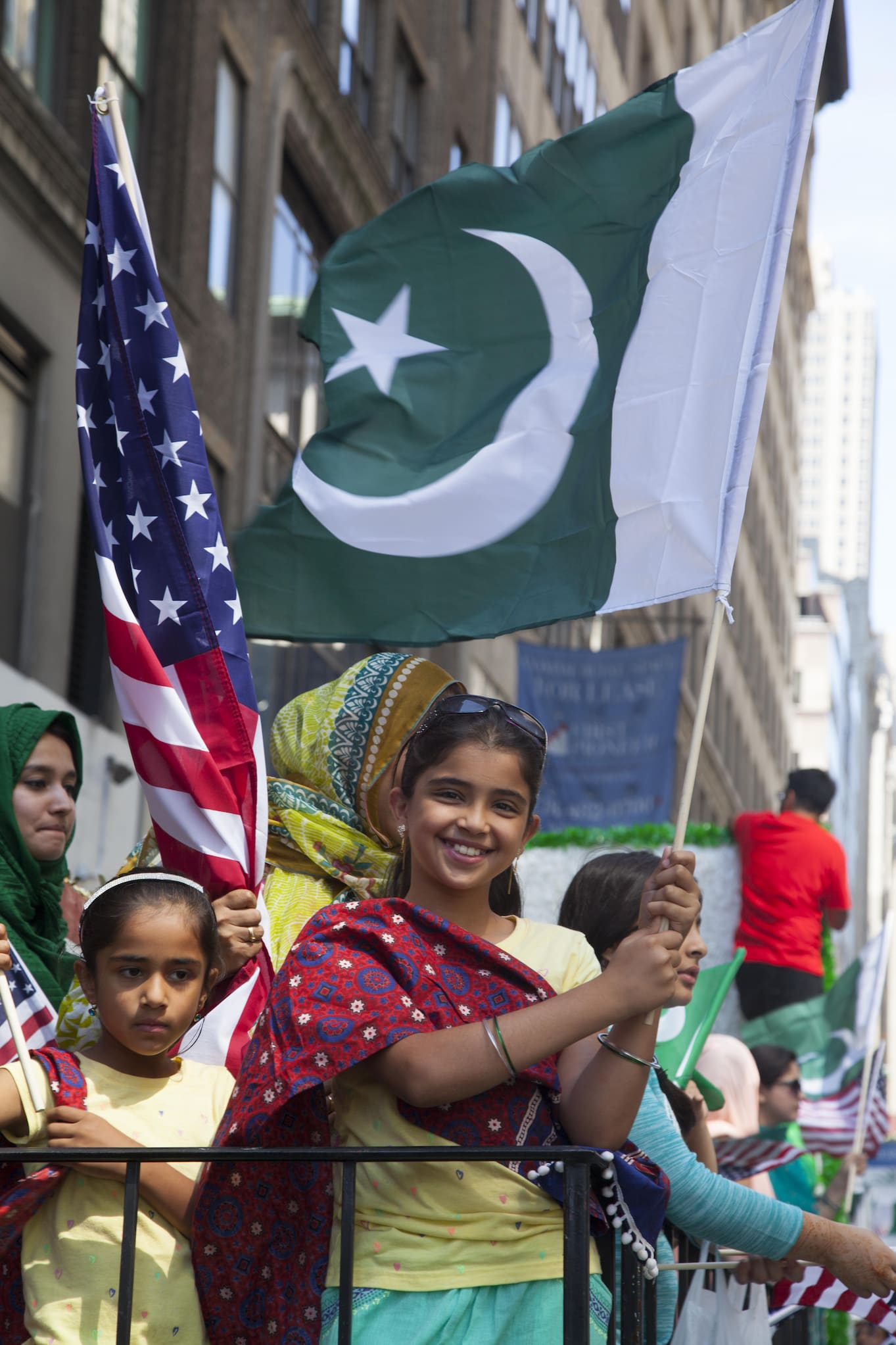
Image 03.04.01 — Proud Pakistani Americans take part in the Pakistani Independence Day Parade on Madison Avenue in New York City, 2016.
Britain, however, dragged its feet and did not accept independence for its African and Caribbean colonies until in the late 1950s and 1960s under pressure from nationalist liberation movements. Other decolonization movements waged bitter wars against their oppressors before winning independence in the 1950s and 1960s, including Vietnam and Algeria from France, and the Congo from Belgium. In Africa, Angola, Mozambique, and Guinea-Bissau were the last European colonies to win independence from Portugal in 1975.
Today, the United States continues to hold Puerto Rico, Guåhan (Guam), and other Pacific Islands as territories. Though not formal colonies, an argument can be made that they function as such, since they were taken without consent and do not have the same rights as US states.
Decolonization was not easy—or peaceful—in some cases because of the colonizers’ resistance to independence, but also because of the Cold War between the United States and the Soviet Union that began after WWII. Former allies against Nazi Germany, the two superpowers were champions of different economic systems and political ideologies, and their competition included pressure upon newly independent nations to take sides.
The Hot Wars in the Cold War
The Cold War involved a buildup of military forces in Western and Eastern Europe, a nuclear arms race, and two hot wars in Asia that pushed non-aligned countries—such as Egypt, India, and Ghana—to select a side. After Japan’s defeat in Korea in 1945 and France’s defeat in Vietnam in 1954, the United Nations called for democratic elections and the establishment of independent republics. But US machinations thwarted elections in both countries and led to their arbitrary division.
North Vietnam and North Korea were led by communist parties both allied with, but independent from, the Soviet Union and China. South Vietnam and South Korea were ruled by pro-American conservatives. In each case, the US sent troops to forestall their independence. The Korean War (1950–1953) ended in a stalemate with Korea remaining divided to this day. The Vietnam War (1955-1975), including adjacent wars in the former French colonies of Cambodia and Laos, ended with the defeat of the US–its sole loss in war in the twentieth century.
More to explore
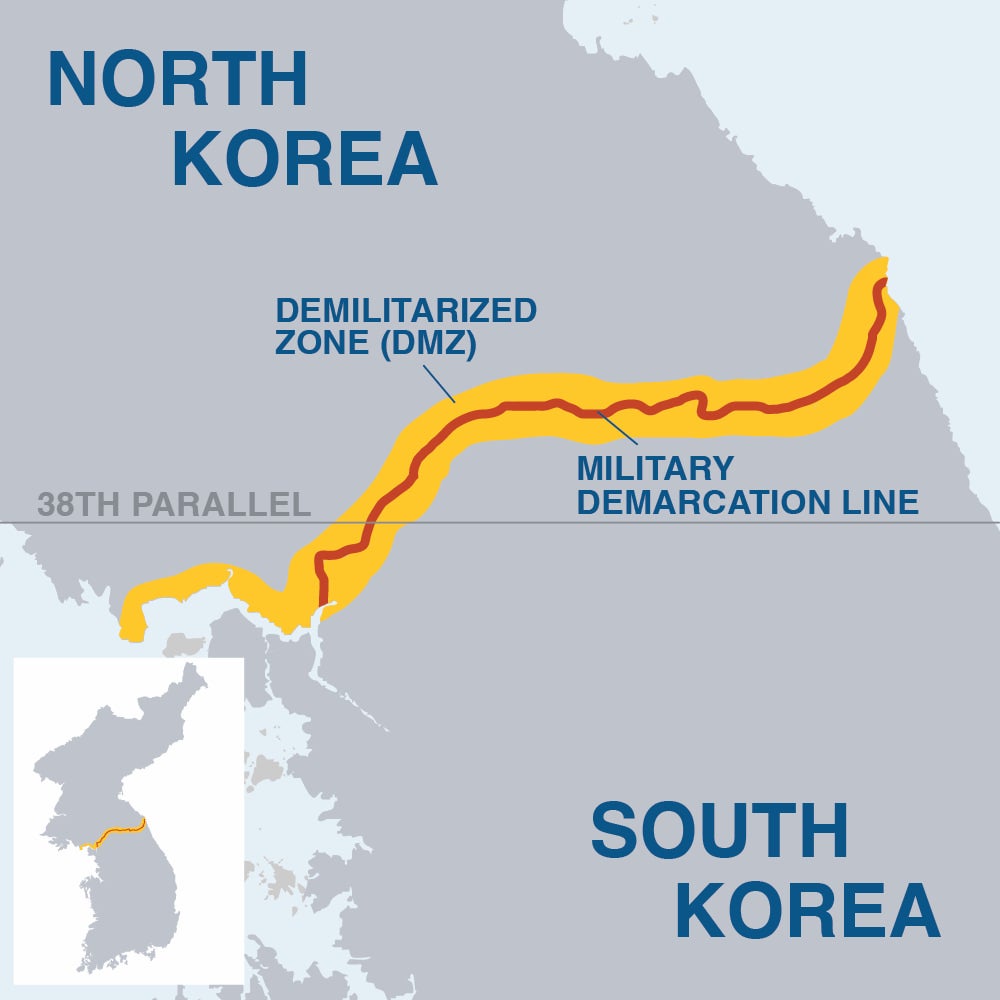
Image 03.04.02a — This map of Korea shows the demarcation line and demilitarized zone (DMZ) established after the Korean War of 1950–1953, in which US troops were heavily involved.
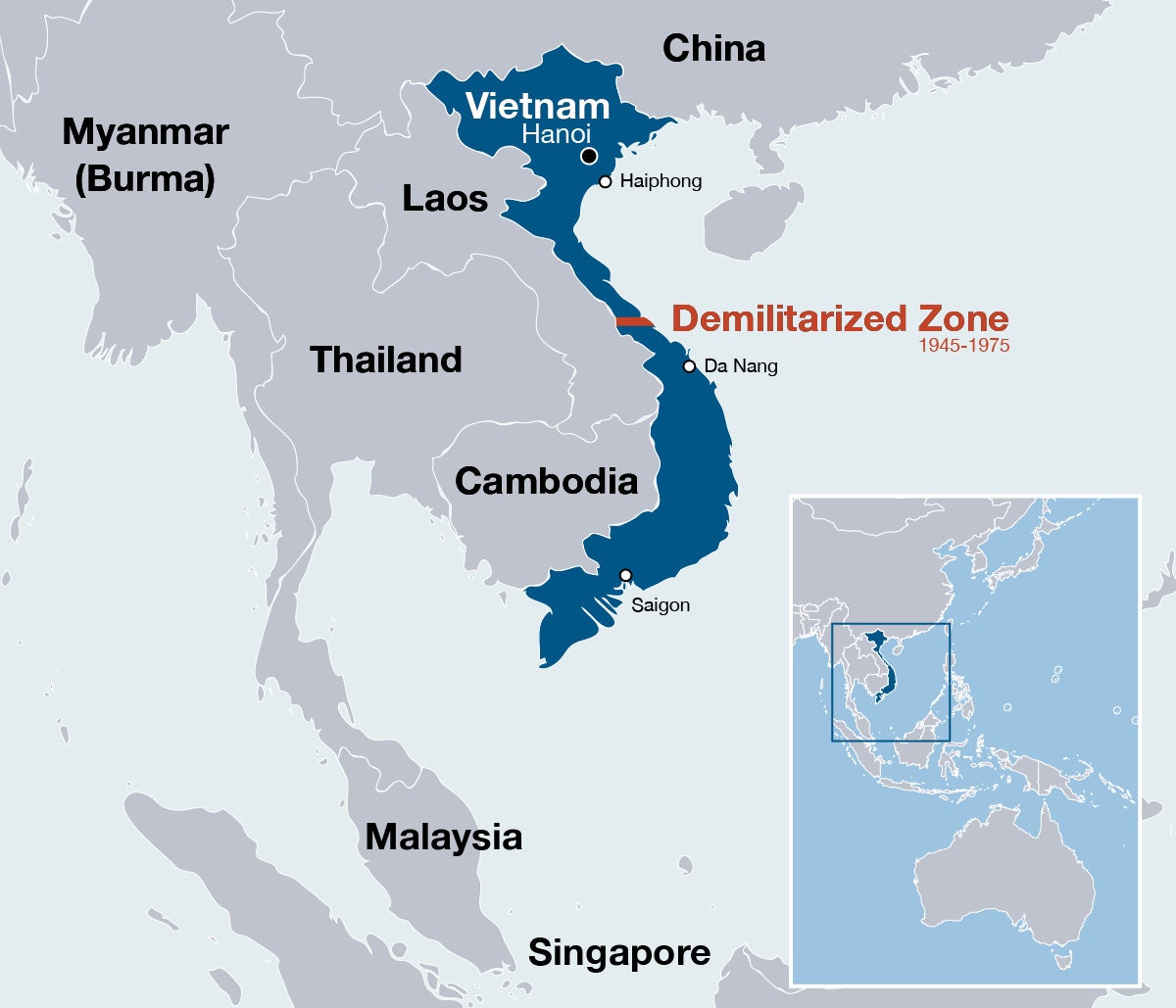
Image 03.04.02b — A map of previously divided Vietnam. The Vietnam War (1955–1975), including adjacent wars in the former French colonies of Cambodia and Laos, ended with the withdrawal of US forces and the reunification of Vietnam.


Decolonization and the Cold War had various consequences, one of which was to spur emigration from former colonies. Typically, immigrants who seek work or study abroad go to the country of their former colonizers because of their historical connections. South Asians and West Indians went to Great Britain, Indonesians to the Netherlands, Vietnamese to France, and Filipinos to the United States.
Because wars are, by their nature, destabilizing events, the Korean War and Vietnam War also displaced many people and spurred emigration. The first wave of post-war immigrants from Korea included war orphans, adopted by American families, and women who married American servicemen. However large-scale Korean immigration did not take place until after the Immigration and Nationality Act of 1965 removed restrictive national-origin quotas that kept immigration from all Asian countries at about two thousand a year.
The Vietnam War resulted in several waves of refugees. International and US law treat refugees differently from migrants. Refugees are people who have been uprooted from their homes, suffer from trauma, family loss and separation, displacement, and poverty from war. They are temporarily homeless and stateless, unable to return to their home country for fear of persecution, imprisonment, or even death.
In the fifty years since the end of the Vietnam War, over 1.2 million people from Vietnam, Cambodia, and Laos arrived in the United States as refugees. The first 150,000 arrivals were government and military officials who were allies of the US, and evacuated by the US military during its withdrawal in 1975. Others later fled from political, religious, or ethnic persecution, leaving Vietnam in rickety boats in the South China Sea, or by trekking through the jungle from Cambodia and Laos to the Thai border. Many perished along these perilous journeys: some were raped or killed by pirates, others drowned, or were shot by Communist soldiers patrolling the jungles. Those who survived spent months, or years, in crowded refugee camps awaiting resettlement in their destination country, including to the US.
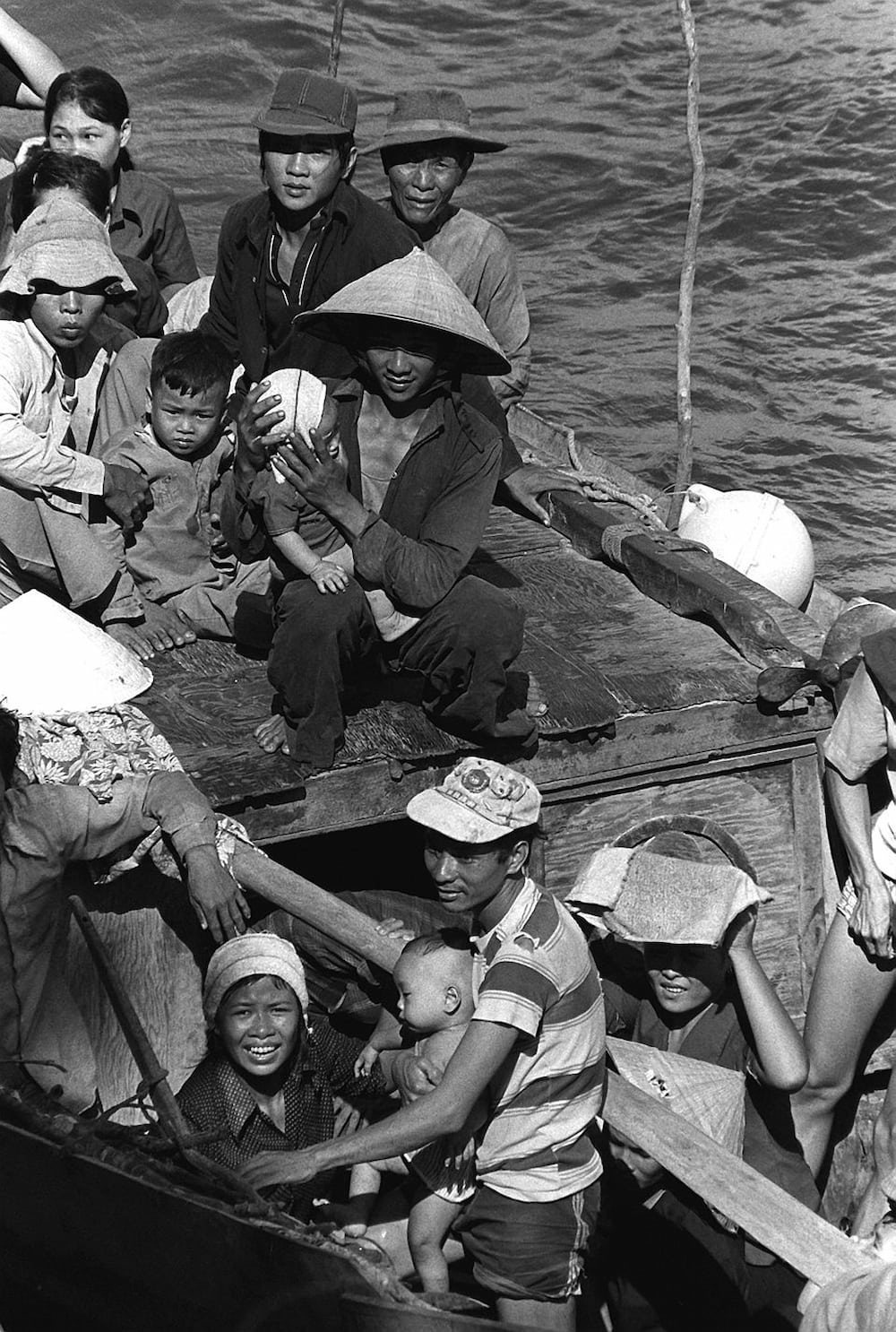
Image 03.04.03 — In the years following the Fall of Saigon, many refugees left Vietnam secretly in unseaworthy and overcrowded boats. This second wave of refugees became known as the “boat people.”
The refugees from Southeast Asia included political prisoners, ethnic Chinese and Catholics persecuted by the Vietnamese government, victims of the Cambodian Pol Pot regime, and Hmong soldiers who worked for the Central Intelligence Agency (CIA) in the jungles of Laos. Though diverse in make-up, their plights were directly the result of US wars in Southeast Asia. Even as many of these refugees and migrants had been allies of the US during wartime, upon arrival on US soil, Americans often did not welcome these new immigrants. Some Americans did not want to be reminded of the wars it had lost, while others were uncomfortable or hostile to non-English speaking refugees from Asia, recalling the long history of anti-Asian racism in the US.
Immigration Reform
In addition to refugees from the Vietnam and Korean wars, immigration from East Asia and South Asia increased after 1970. This increase also resulted from post-WWII decolonization and the Cold War. From 1943 to 1952, Congress repealed the Asian exclusion laws established since 1882 and throughout the early twentieth century. This was intended to improve the US’ international image, but the extremely low immigration quotas on Asian countries belied Congress’s continued hostility to Asian immigration.
The Immigration and Nationality Act of 1965 repealed national-origin quota laws, in place since 1924, with a new system that allowed any country to send twenty thousand new immigrants a year, based on family and occupational preferences. The 1965 law was in response to civil rights demands of European ethnic groups, such as Italians, Jews, and Greeks, who had been discriminated against by the national origin quotas laws. Cold war politics also played a role, as the discriminatory national-origin quotas tarnished the US’ claim to be leader of the free world.
Congress did not foresee the tremendous increase of migrants from Asia resulting from the 1965 Immigration Act. The Asian American population was small prior to the 1960s and 1970s—less than a half percent of the total population in 1970. Those here utilized the family preference law to bring their family to the US. For instance, the cousin of the late New York photographer Corky Lee illustrates the effects of the 1965 Immigration Act. Lee’s cousin immigrated to Cuba when he was a young man because he was barred from the US by exclusion laws. After living in Cuba for several decades, he immigrated to the US in the 1970s and later brought his wife from Hong Kong.
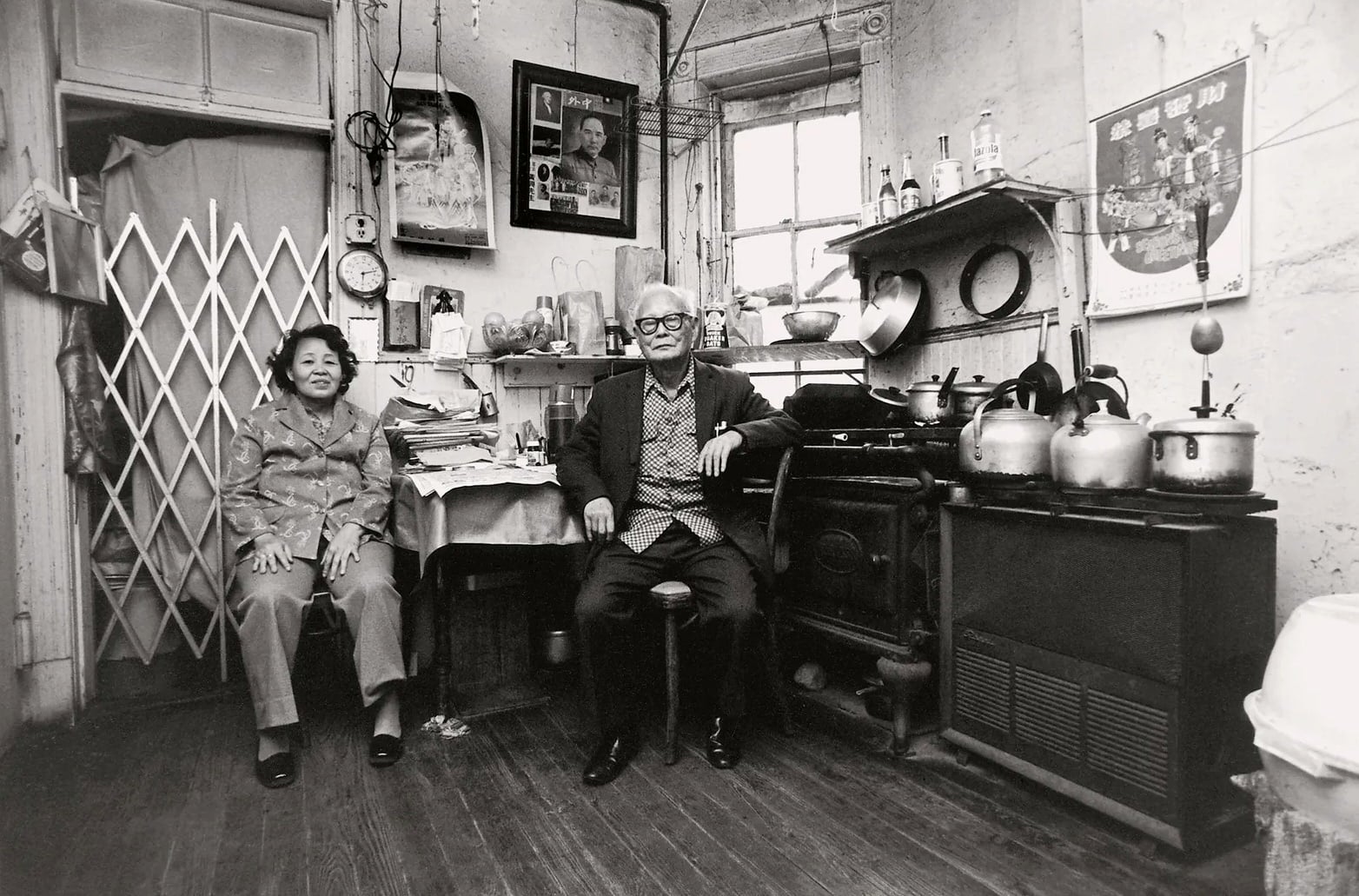
Image 03.04.04 — Chinese American photographer Corky Lee (1947–2021) photographed his elderly uncle and his wife in their Chinatown apartment in 1981, as part of his project to show Asian Americans in their everyday lives.
However, the most popular pathway for Asian immigration after 1965 was through occupational preferences, allowing entry to doctors, nurses and other health care professionals, as well as engineers and scientists. This addressed the US shortage of labor needed in the growing health care, telecommunications, and pharmaceutical industries. In South Korea, Taiwan, and India, decolonization resulted in a surge of college-educated middle-class population. Yet, despite the rapid economic growth in the so-called Asian tiger countries (South Korea, Taiwan, Hong Kong, and Singapore), local economies could not absorb all these graduates. As a result, some of the graduates of top universities ended up as professionals abroad in the US.
The Philippines had been sending nurses to the United States since the early twentieth century, a feature of its colonial relationship to America. But after 1965, the number of nurse migrants skyrocketed. In a 2020 article for Routed, Reynaldo Capucao wrote about how his mother, Jolly Capucao, and other family members, including himself, became nurses:
Growing up in the rural fishing town of Bolinao, nursing became Capucao’s childhood dream to escape poverty and travel the world…Fortunately, the community raised funds to support her matriculation into nursing school, and she graduated in 1976. She then returned the favour and supported her siblings through school, three of whom also became nurses…Almost twenty-five years since her arrival to the US, my mother returned to the Philippines having ensured that my sister and I were able to take care of ourselves as nurses. 1
Immigrating under the occupational preferences, the new Asian Americans became eligible for citizenship after five years. They subsequently began to sponsor their relatives’ immigration under the family preference category. This resulted in a tremendous increase of the Asian American population, from less than 0.5 percent in 1970 to over 6 percent in 2020—nearly doubling in size every ten years. Family unification replicated the class background of the professional immigrants. In this way, the 1965 Immigration Act favored well-educated, middle-class immigrants from Asia, which further fed the “model minority” stereotype.
Asian American Now
Not all Asian immigrants who arrived in the late twentieth and early twenty-first centuries were middle-class professionals. They were also people who worked in garment factories, restaurants, meat-packing plants, and nail salons. They were homecare workers, housecleaners, and taxi-cab drivers. Some Asian American ethnic groups such as Chinese, Koreans, Indians, and Taiwanese include both professional and working-class people, while others such as Hmong and Bangladeshis were mostly blue-collar workers. There were also educated Asian immigrants unable to practice their professions in the US due to lack of language proficiency to pass licensing exams. Some instead became small business owners of dry cleaners, newsstands, or groceries, working long hours for marginal profits with the hope their children would achieve upward mobility in the future.
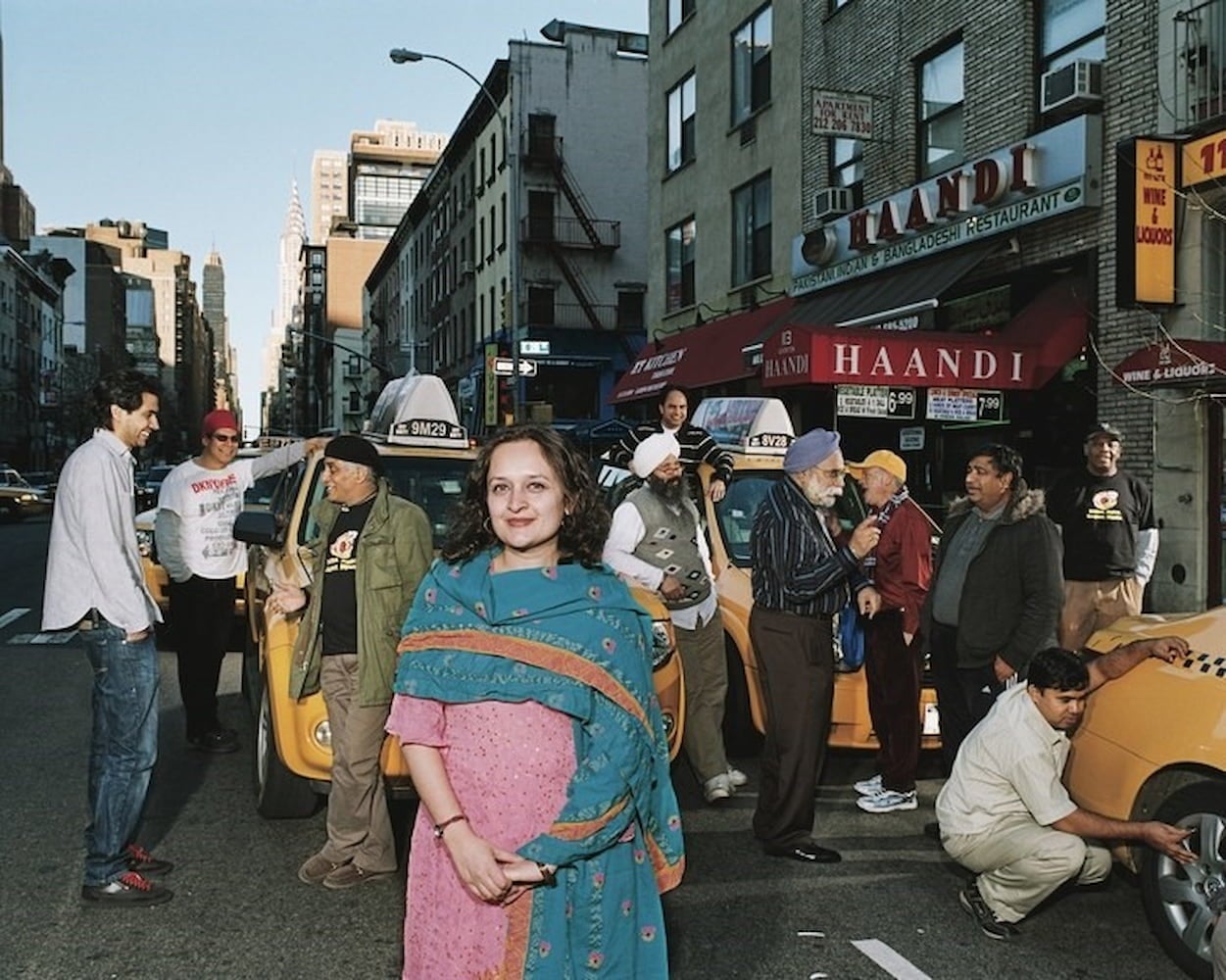
Image 03.04.05 — Co-founders of the New York Taxi Workers Alliance, with Indian American Bhairavi Desai (center) and Pakistani American Javaid Tariq (third from left), in a photo from The New Yorker, captured in 1998.
The Cold War ended in 1989 with the collapse of the Soviet Union. A new world order emerged, with the United States as the dominant global power. However, the European Union and several Asian countries—including Japan, India, South Korea, Taiwan, Hong Kong, and Singapore—also emerged as new regional economic powers. In 1978, the People’s Republic of China, which had remained an impoverished country since the 1949 Communist Revolution, implemented a mixed path of economic development that included private ownership, capitalist profit-making, and manufacture for export. China’s Gross Domestic Product (GDP) grew at an average rate of over 8 percent a year from 1979 to 2023, making it the second largest economy in the world today, second only to the US.
From 2012 to 2022, over 187,000 new refugees have come to the United States from Iraq, Afghanistan, Syria, Somalia, and Iran. Many Iraqi and Afghan refugees were formerly employed by the US military as guides, informants, and translators during the War on Terror, which began in 2001. These refugees, however, only represent a fraction of the more than nine million people displaced by conflicts in the region. These groups, sometimes identified as Southwest Asia and North Africa (SWANA) or Middle East and North Africa (MENA), are joining the ever-growing coalition of Asian Americans.
Conclusion
Immigration from Asia in the late twentieth and early twenty-first centuries is remarkably different from immigration during the nineteenth century under colonialism and exclusion laws. Immigrants now arrive from working, middle, and upper-middle class backgrounds. The expanding post-war economy and the Civil Rights Movement in the US opened up more possibilities for employment in white-collar professions. Refugees from Southeast Asia, and SWANA (Southwest Asia and North Africa) and MENA (Middle East and North Africa) countries, however, bring new ethnic groups and new experiences to Asian America.
Glossary terms in this module
Cold War Where it’s used
Beginning at the end of World War II and ending with the fall of the Soviet Union in 1989, the Cold War was a period of indirect war and competition between the United States and Soviet Union (USSR), and their allies. Though there was no direct fighting between the US and USSR, their rivalry brought forth a nuclear arms race and the formation of strategic alliances that supported one or the other side (NATO, Warsaw Pact, others). Both the US and USSR pressured decolonizing nations to take sides instead of remaining neutral. The Cold War also included several “hot wars,” or proxy military conflicts, in Korea, Vietnam, and elsewhere.
colonialism Where it’s used
When one country takes partial or complete control over another country economically and politically, exploiting its natural resources for profit. The colonizer forces their beliefs and way of life onto the colonized.
decolonization Where it’s used
The process in which a native population expels colonial power from their land and establishes their sovereignty.
model minority Where it’s used
A concept that frames certain minorities, predominantly Asian Americans, as more academically and professionally hard-working, adaptable, and successful than other minorities and immigrants. This myth perpetuates harmful consequences, such as creating a divide between Asian Americans and other racial groups–particularly Black and Latinx people, and it doesn’t account for the diversity among Asian American communities.
refugee Where it’s used
Someone, or a group of people who have been forced to flee their native country due to war, violence, or persecution, and are unable to return.
stereotype Where it’s used
Generalized beliefs about a group of people based on one or a few characteristics, often simplistic and false. Typically, stereotypes perpetuate harmful ideas about groups of people and are rooted in incorrect, and often racist beliefs.
Endnotes
1 Reynaldo Capucao, “For the Love of Family: The Filipina/o Nurse Diaspora,” Routed Magazine, February 14, 2020, www.routedmagazine.com/filipino-nurse-diaspora.