




Module 4: Palestinian Americans in Chicago, Illinois
Does place matter in becoming a community?
Palestinian Americans have been part of Chicago, Illinois, for over a century. The Chicago metro area is home to the largest concentrated Palestinian community in the United States. In a southwest suburban area known as “Little Palestine,” the community hosts more than two hundred small businesses, including grocery stores, bakeries, and restaurants, as well as religious institutions, travel, healthcare, legal, and social services. Along Harlem Avenue—the heart of Little Palestine—you can smell freshly baked clay-oven bread, aromatic pies topped with za’atar, and hear the sounds of their native Arabic language in this historic ethnic enclave.
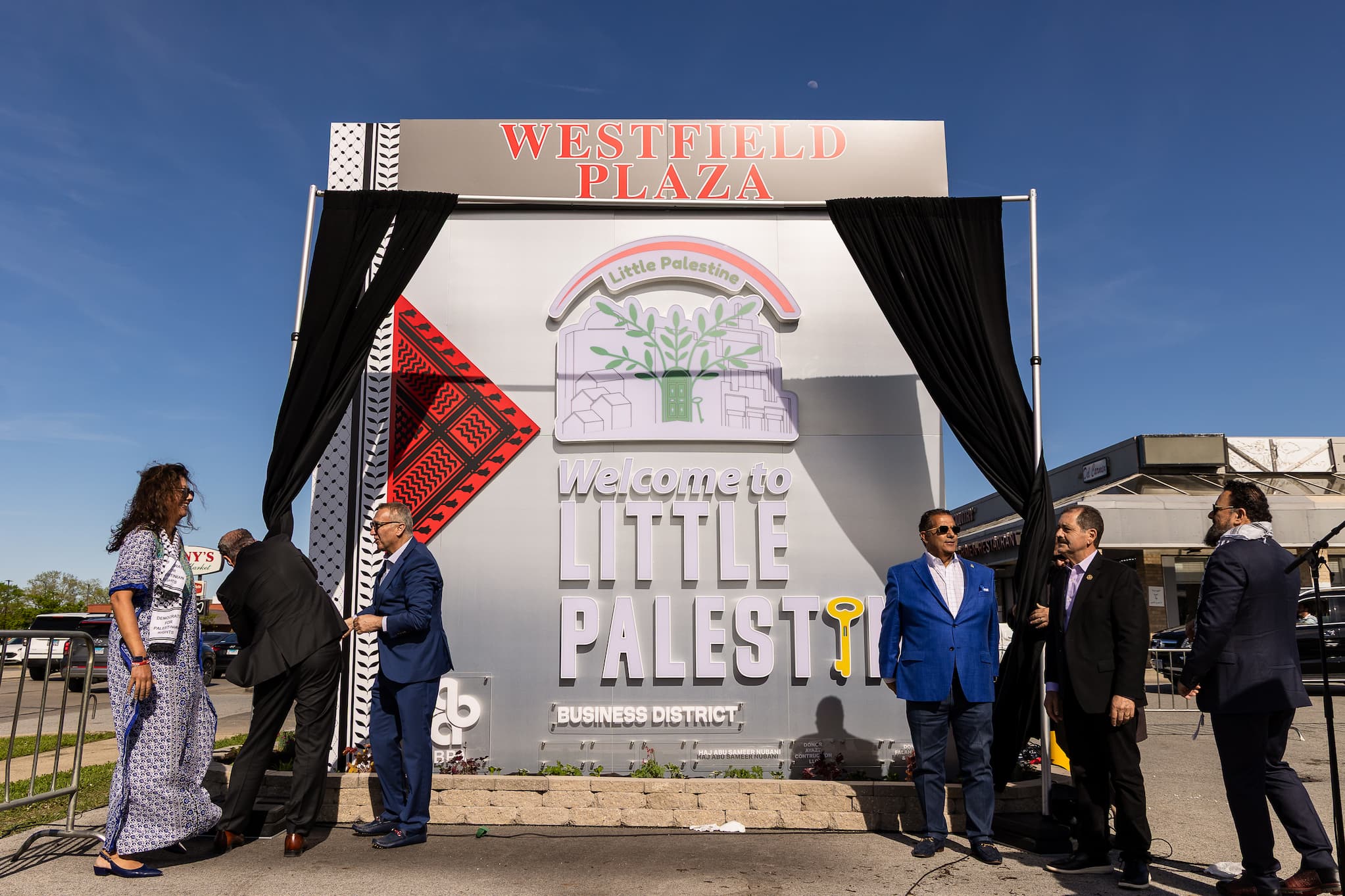
Image 39.04.01 — Community leaders, including members of the Arab American Business and Professional Association and Congressman Jesús Garcia (second from right), unveil a “Welcome to Little Palestine” sign in Bridgeview, Illinois. The sign is a symbol of unity and pride for the community.
Signs in Arabic script signal grocery stores, spice markets, halal butchers, and restaurants, as well as shops specializing in clothing, coffee, jewelry, and hookahs. Travel agents, realtors, doctors, dentists, lawyers, and nonprofit organizations provide a variety of services. The soul of little Palestine is nourished at its places of worship centered around Bridgeview’s Mosque Foundation. Also, St. Mary Eastern Orthodox Church, Our Lady of the Holy Land Catholic Church, and the Orland Park Prayer Center lie within its outer ring. Members of these religious congregations are predominantly Palestinian, but other Christians and Muslims, including Jordanians, Syrians, Yemenis, Lebanese, Mauritanians and Moroccans, partake in their services as well.
This module examines the Palestinian communities in Chicago and the realities that have shaped their experiences in the US as Palestinian Americans. It also explores their relationships with their homeland, and their resilience in the face of institutional barriers in the US and efforts to remove them in Palestine.
What characteristics make Little Palestine an ethnic enclave of Chicago?
How have Palestinians been treated, both in the US and back in their homeland?
In what ways was the Chicago Palestinian American community threatened in the aftermath of 9/11?
Urban Movement and Entrepreneurship
The Bridgeview Mosque has been a magnet for Palestinian movement within the metro Chicago area. The Mosque represents a long-awaited achievement for Palestinian Muslims who had no dedicated prayer space for decades. Most early Palestinian migrants—both Muslim and Christian—hailed from Jerusalem and the Ramallah area, located in what is currently called the Israeli-occupied West Bank. The largest single group is from Beitunia, a small village located about twenty miles northwest of Jerusalem, framed by olive groves and pastures, along with new homes built by its diaspora.
Community leader Talat Othman’s father arrived in Chicago from Beitunia in 1919 at the age of nineteen and worked selling goods door-to-door. After returning to Palestine six years later to get married, the family resumed life in Chicago and opened a lingerie shop on the South Side. Talat moved back and forth between Palestine and Chicago, eventually finishing high school in Chicago, where his family settled in an apartment above their grocery store.
Talat recalls the social gatherings with Beitunia folks in Chicago, where they collected money to remit back home and to save to build a prayer space in Chicago. Muslim community members held collective prayer—called Jummah—on Sundays back in those days because that was the only time they were free from work. This was different from the Muslim practice of Friday jummah prayer. As the community grew in size and moved in a southwest direction, it rented a hall for Friday prayer, then repurposed a church. They finally purchased land in suburban Bridgeview to build the Mosque that was established in 1981.
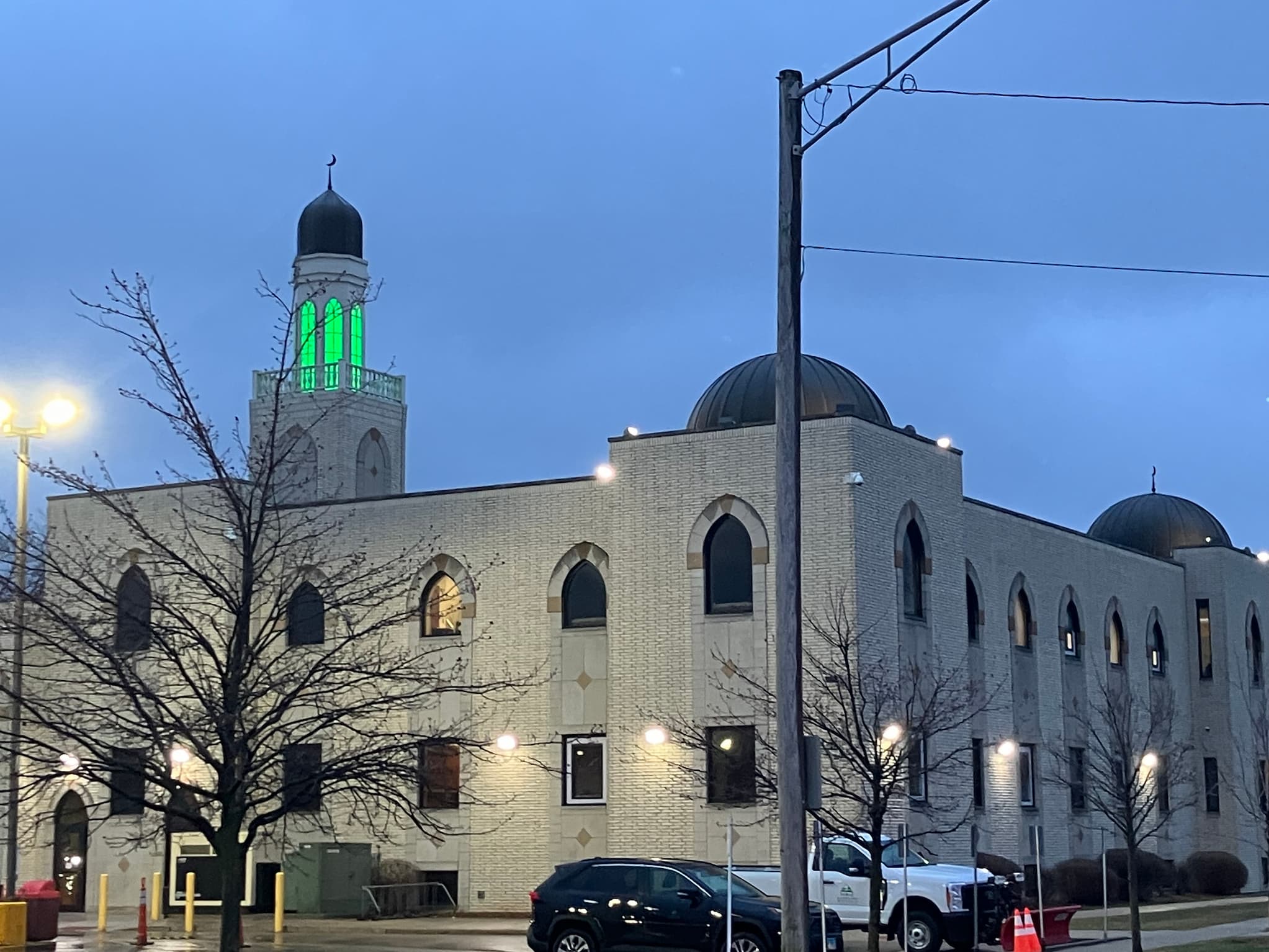
Image 39.04.02a — The Mosque Foundation in Bridgeview, Illinois, seen here in 2025, attracted Palestinians to the southwest suburbs of Chicago.
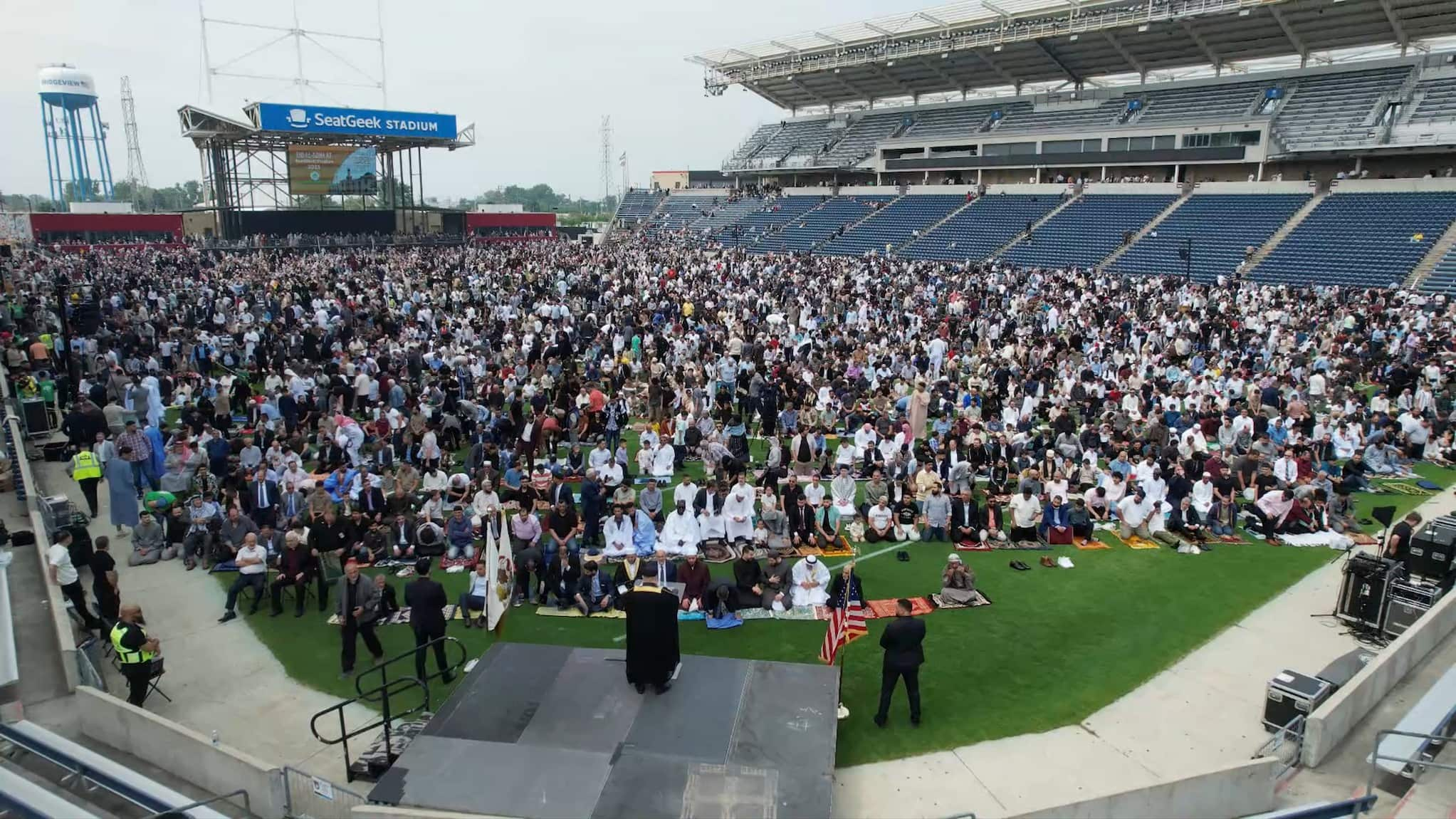
Image 39.04.02b — The Bridgeview Mosque near Chicago, Illinois, is one of the largest in the country. This 2015 Eid prayer hosted by the Mosque Foundation took place at the SeatGeek Stadium in Bridgeview, Illinois, and drew thousands of worshipers.


Not all Palestinians in Chicago settled on the South Side, and not all are Muslims. A largely Christian community from Ramallah arrived initially on the city’s North Side and later spread across its northern and western suburbs. Over time, the places of origin among Palestinians in Chicago have expanded well beyond Jerusalem and Ramallah to include all areas of historic Palestine, including Gaza and Israel. The community has been joined by Palestinians from Jordan, Lebanon, and Syria, who fled or were expelled to neighboring countries in 1948 when Israel was created.
Since their earliest days in Chicago, Palestinians have been known for their commercial ventures. They began by selling goods door-to-door and opening small businesses, especially in Chicago’s “Black Belt,” a racially segregated area enforced by local law prior to 1960s Civil Rights legislation. Palestinians became what some call a “middleman minority” or intermediaries, facilitating commerce between racialized and excluded communities and mainstream—and mainly white—producers and wholesalers. In Chicago, Italian Americans and Jewish Americans were once the middlemen, roles that are now heavily composed of Arab Americans and Korean Americans.
The 1992 Los Angeles civil unrest (also known as the LA Uprising, or “Sa I Gu” within the Korean American community) was a reminder of how anger and frustration from longstanding neglect, inequality, and deeply felt injustices can lead to the victimization of “middleman” businesses. After the tragic events of the LA Uprising, Chicago’s Palestinian and Korean communities worked together to forge a program of action that included efforts to increase employment of local Black youth into their businesses.
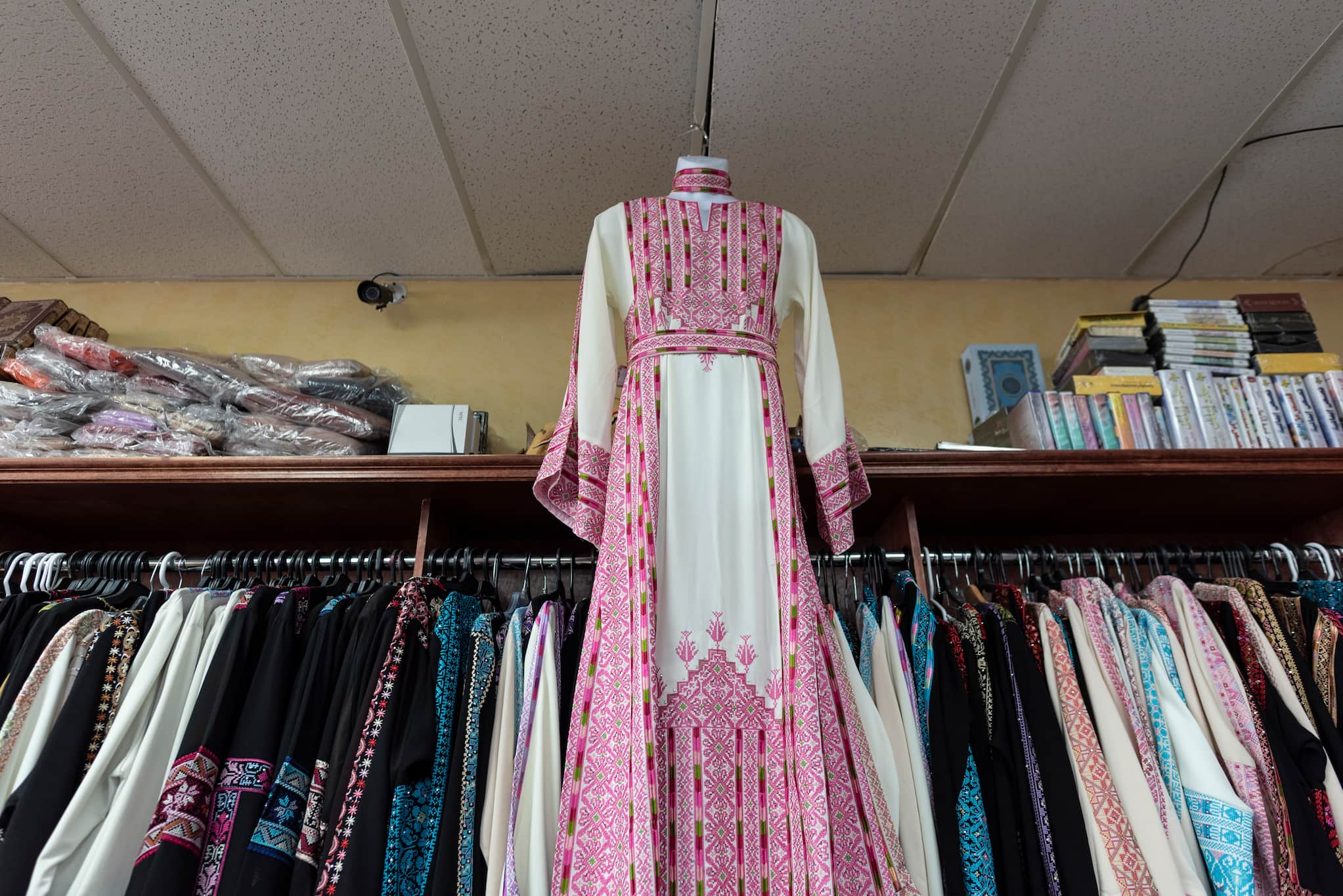
Image 39.04.03 — A traditional Palestinian dress for sale inside of the Al-Omari Islamic Fashions shop in Bridgeview, Illinois.
Palestinian entrepreneurship plays an important role in Palestinian life in Chicago, as retail businesses often serve as a first place of work for new adult arrivals to the area. There, they learn business skills and improve their English language proficiency, but also work long hours for relatively low wages. Like other immigrants, parents often encourage their US-born second generation children to complete college and move on to professional work. Yet many eventually return to small business, making entrepreneurship more than a first-generation stepping stone.
Scholars of immigrant business practices have found that an important feature of entrepreneurship lies in its capacity to shield community members from the racism and discrimination they often face in mainstream institutions, such as large corporations, medium-sized professional firms, and small non-profits. For many Chicago Palestinians, the choice to own businesses has become an established way of life, due to both continuing migration and ongoing racism.
Migration and Racism
The relationship between racism and migration offers a window into the shared experiences of Palestinians back home and their diaspora in Chicago. Israeli policies of Palestinian removal continue to spur migration, and a pro-Israel US establishment garners public support for those policies by promoting anti-Palestinian racism.
Anti-Palestinian racism steeped in dehumanizing representations has long been part of a larger political project in US support of Israel. For more than half a century, institutions in US society from the media and education to official proclamations have projected images of Palestinians as uncivilized, violent barbarians who have no right to live as equals in their own homeland. These racialized modes of thinking have a long history in US culture, starting with Native American removals and the enslavement of people from Africa. Preserving power and dominance by perpetuating racist distortions was similarly behind earlier US state laws in the late 1800s and early 1900s barring Asian immigration as well as denying them the right to own property and testify in courts.
Anti-Muslim sentiments often fuel anti-Palestinian racism, even though many Palestinians are Christians. Such sentiments arrived in the Americas in what has been called the “two-1492s,” a time when Jews and Muslims were expelled from Spain, and Spanish colonizers brought anti-Semitism and Islamophobia with them across the Atlantic. Although anti-Palestinian and anti-Muslim views are not held by all Americans, just as they are not held by all Jews or Israelis, the binary division of people as being “civilized” or “uncivilized” remains powerful and goes unquestioned by many today.
Given this history of racism and repression, the Palestinian community in Chicago was particularly targeted in the years following the tragic events of September 11, 2001, commonly known as 9/11. Mirroring Japanese American incarceration sixty years earlier, all Arab Americans and Muslim Americans were held under suspicion by US government agencies and officials, as well as by mass media outlets, for attacks in which they played no part.
As with Japanese Americans before them, widespread pre-existing stereotypes blossomed into justifications for aggressive US government harassment and abuses, as well as hate crimes by the public. Palestinians in Chicago reported being surveilled and questioned by government agents, fired from their jobs, and assaulted by members of the general public.
These rights-violating activities continued for years, even though the perpetrators of the 9/11 attacks were foreign visitors to the US–not Palestinians and not US residents. The official government National Commission on Terrorist Attacks Upon the US (known as the 9/11 Commission) found no evidence of a domestic terror threat, whether from Palestinians, Arabs, Muslims, or anyone else. Afraid to travel by car for fear of assault—and by plane for fear of removal—Palestinians nonetheless steadfastly carried on with their lives in the US.
Palestinians of Gaza and Beyond
More recently, anti-Palestinian propaganda has risen with efforts to justify Israeli attacks on Gazan civilians. The October 2023 murder of six-year-old Wadea al-Fayoumi, whose immigrant mother is from Beitunia, brings home the seriousness of the racism fueled by this propaganda. Wadea was stabbed repeatedly by his white landlord while at home in a suburb on the edge of Chicago’s Little Palestine. His mother was also stabbed and strangled, but she ultimately survived. Police reported that the perpetrator was driven by anti-Muslim and anti-Palestinian hatred stirred up by conservative talk radio, where pro-Israel discourses portrayed Palestinians and Muslims as uncivilized monsters in order to defend Israeli and US aggression and potential war crimes. The murderer was sentenced to fifty-three years in prison where he died months later.
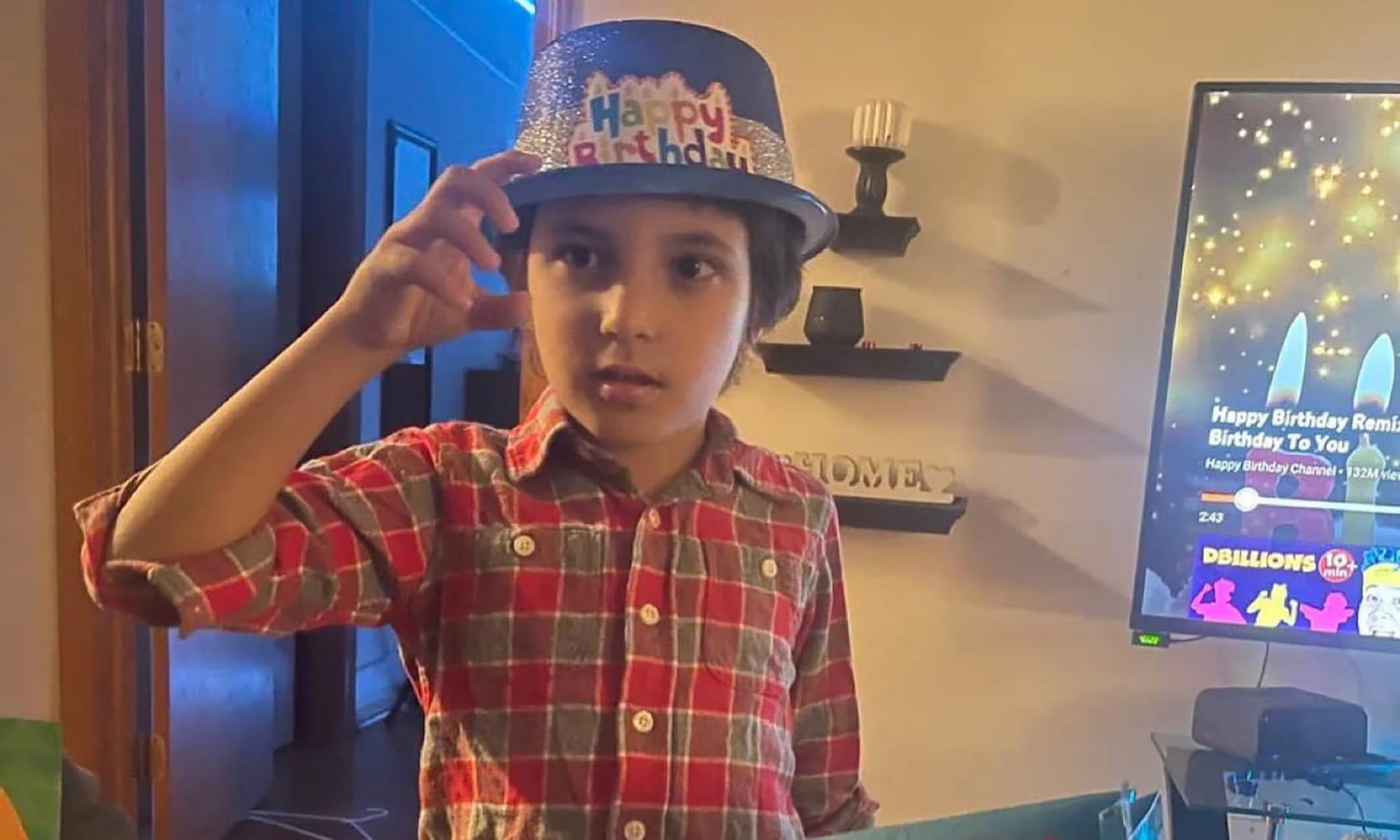
Image 39.04.05 — Wadea al-Fayoumi, age six, was murdered in suburban Chicago, Illinois, by his landlord in a 2023 anti-Palestinian and anti-Muslim hate crime.
The United Nations, Amnesty International, and many other organizations, including Israeli groups, along with scholars, have all called the situation in Gaza a genocide. As reported by PBS News on June 14, 2026, “The Palestinian death toll in Gaza tops 73,000, officials say, as Israel strikes despite ceasefire.” 1 Most were killed by US-supplied and US taxpayer-supported Israeli attacks between 2023 to 2025, while thousands more died of Israeli-imposed starvation. These atrocities were Israel’s response to the October 2023 Hamas attack inside Israel, when 815 Israeli civilians were murdered and 252 Israelis were taken hostage.
Despite a hostile environment in the US, Palestinian migration continues to Chicago and elsewhere in the US, as well as across the globe, as life in Palestine is still characterized by deplorable human rights conditions for Palestinians, most severely for those in Gaza.
Palestinian Jerusalemites and West Bankers have more ability to move, but under conditions that many describe as apartheid—a system and policy of segregation and discrimination based on race, or in this case, religion. They are denied access to Israeli-only roads, buses, and water resources, live under constant monitoring, and face incursions on their lands and homes by armed Israeli settlers seeking to expand their territories, often backed by the Israeli military. The 2025 Academy Award winning film No Other Land provides one example of these violent, land grabbing processes that have been occurring for decades. In sum, varying by a matter of degrees depending upon location, including within Israel, survival for Palestinians continues to be tenuous, often forcing migration to places like Chicago.
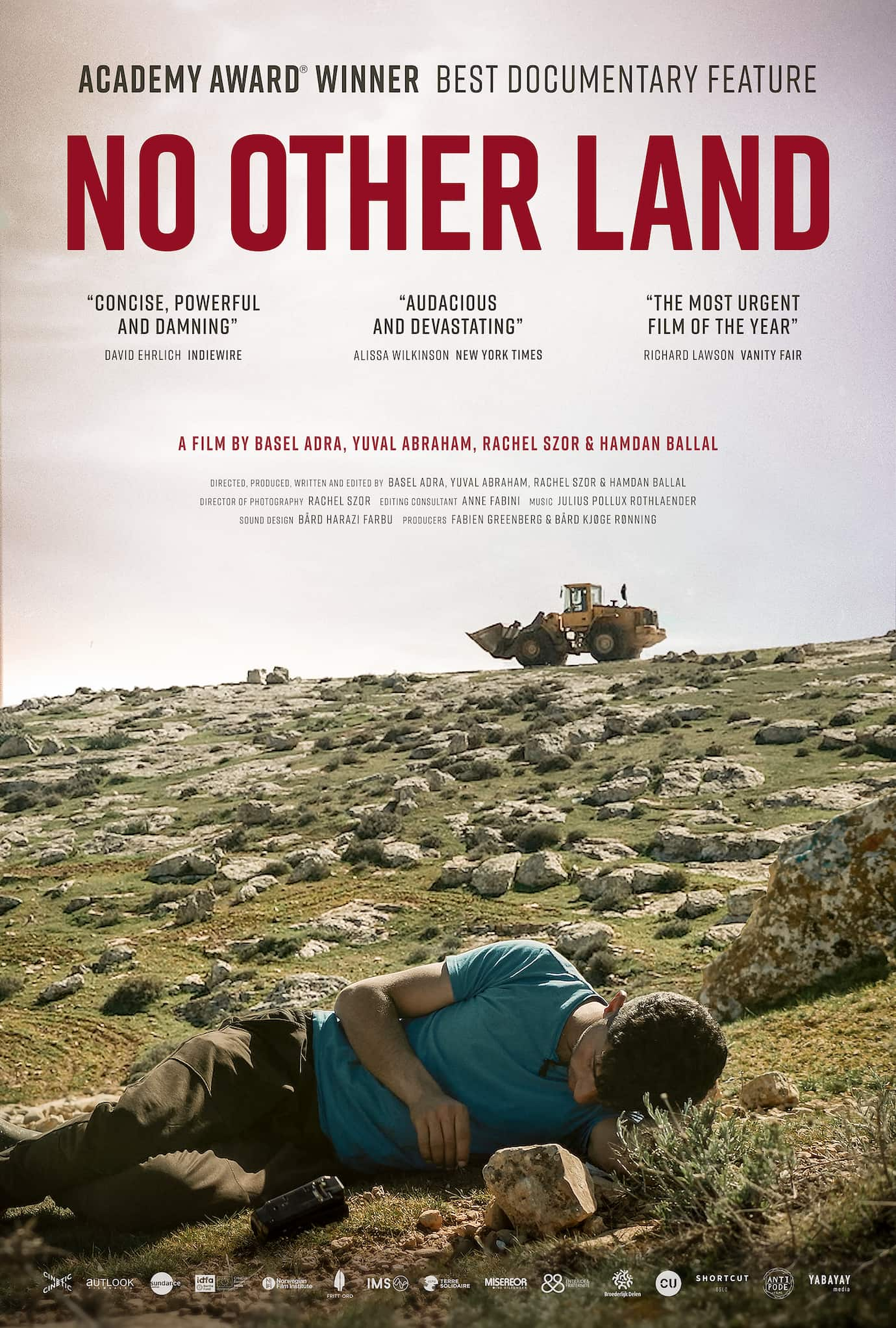
Image 39.04.06 — The film No Other Land, about the Israeli occupation of Palestine’s West Bank, won the 2025 Academy Award for Best Documentary Feature.
Although most Palestinians want to stay on their land to prevent their permanent expulsion, a commitment Palestinians call sumud, or a steadfast perseverance, thousands leave each year so they can make a living, support their families, speak and move freely, and stay alive. Upon arrival in the US, they tend to go where their family is located, which is why the Palestinian American community in Chicago continues to grow. While new migrants will find jobs and freedom from daily oppression, they also find a hostile climate that mirrors much of what they faced back home, reinforced by an invisibility to their conditions.
Resilience
Despite these challenges, Palestinians in Chicago remain resilient and, at times, resplendent. They are culturally and religiously inspired to be hospitable to friends and strangers alike. They bring joy tinged with hope to weddings and religious holidays. They cook labor-intensive, fragrant dishes of rice and meat. They visit their homeland as permitted by Israel because this, too, is controlled. They celebrate the birth of the next generation, and they stand up in solidarity against others’ suffering and injustice.
Palestinians have also resisted the racism that they and others face. Since the 1980s, Palestinians in metro Chicago have formed local community organizations focused on justice in Palestine and equality in Chicago. They have been key participants in local progressive alliances, including the coalition in the late 1980s that elected Harold Washington as Chicago’s first Black mayor. They also united to oppose apartheid in South Africa and US intervention in Central America. Actors Susan Sarandon and Danny Glover and musicians Gil Scott Heron and Kris Kristofferson have traveled to Chicago to raise funds for Palestinians back home and to expand Chicago’s cultural base. Kristofferson’s charity concert was emceed by famed Chicago Jewish American writer Studs Terkel.
Palestinians also work in coalition with local groups opposing police brutality, such as the Chicago Alliance Against Racist and Political Repression, and have been a key partner in Reverend Jesse Jackson’s Rainbow Coalition, which was established 1984. Palestinians are in the forefront of South Side organizations working to rebuild the lives of the formerly incarcerated, and they are partners in city-wide, interfaith dialogues. Most significantly, they ally with progressive Jewish Americans who oppose on moral and religious grounds a system that is unjust to Palestinians.
In recent years, Palestinian community members were at the forefront of resettling Afghan refugees. They worked to elect Abdelnasser Rashid, the first Palestinian American to serve in the Illinois House of Representatives. They sponsored marathons for Palestinian relief and hosted musical events that celebrate both their culture and resistance to inequity.
Palestinians in Chicago and elsewhere are encouraged by new generations of Americans who are more keenly aware of the political uses of stereotypes and therefore more willing to fight racial discrimination. They have learned of teachers raising awareness of anti-Palestinianism and Islamophobia, and assigning books that humanize Palestinians, in which Palestinians laugh and cry, suffer pain, experience joy, raise their families, and long for belonging, just like everyone else. They have witnessed a diverse range of people protesting by their side on behalf of their human right to sovereignty and to a life free from violence and persecution.
Glossary terms in this module
apartheid Where it’s used
A system and policy of segregation and discrimination based on race or religion.
entrepreneurship Where it’s used
The act of creating a new business in pursuit of economic and social opportunities, often taking on a risk to achieve such goals.
ethnic enclave Where it’s used
A geographic area where an ethnic group is clustered and has formed a socially interconnected community and full-service economy.
government harrassment Where it’s used
Excessive surveillance, interrogation, policing, and arrests by government agencies in order to control a population, typically based on assumptions and stereotypes rather than actual threat.
Jummah Where it’s used
The Friday communal prayer for Muslims, which is usually preceded by a Khutba—a sermon by an imam, a Muslim religious leader.
resilience Where it’s used
The capacity to withstand or to recover quickly from difficulties.
sumud Where it’s used
An Arabic word meaning steadfastness or perseverance. Palestinians maintain this determination to stay on their land in the face of consistent threats and acts of removal.
two-1492s Where it’s used
Coined by scholar Ella Shohat, the simultaneous expulsion of Jews and Muslims from Spain and the Spanish conquest of the Americas, which brought European anti-Semitic and anti-Muslim sentiments to the Americas.
Endnotes
1 “Palestinian death toll in Gaza tops 73,000, officials say, as Israel strikes despite ceasefire,” PBS News, June 14, 2026, https://www.pbs.org/newshour/world/palestinian-death-toll-in-gaza-tops-73000-officials-say-as-israel-strikes-despite-ceasefire.