





Refugees carry their belongings while trekking across a dry riverbed in the Ganges Delta at Kushtia.
Module 2: Bangladeshi Americans and the 1971 Bangladesh Liberation War
Has the political history of their homeland shaped Bangladeshi American visibility, identities, and community formation?
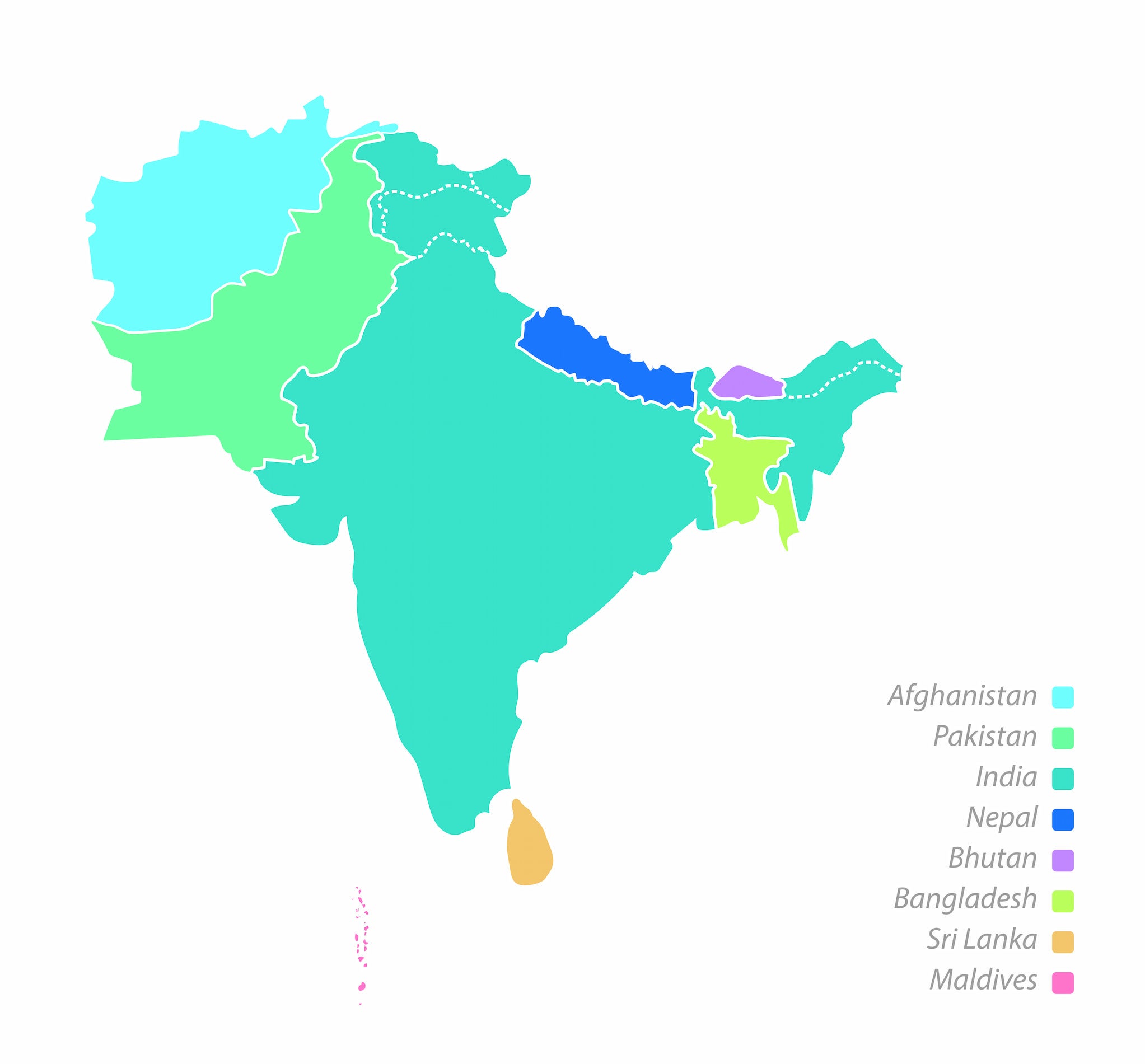
Image 07.02.01 — A map of South Asia, with Bangladesh between India and Myanmar.
March 26 marks Bangladesh’s Independence Day. On this day in 2023, Subaita Mahmud, a student at Springfield High School in Virginia, spoke about what the day means to her. “My life’s path was made possible by Bangladesh’s independence. Without it, none of my experiences would have been the same. My grandparents were able to work and have fulfilled lives after Bangladesh gained its freedom. My parents were eventually permitted to immigrate, and I was provided the privilege to be American. Without it, I would also have a complete change in identity. My heritage would originate from ‘East Pakistan,’ and many aspects of my culture including the language, artwork, cuisine, clothes, family, and religion would be different.” 1
Bangladesh’s independence was a result of the 1971 Bangladesh Liberation War, a significant historical event for Bangladesh and its allies. Memories and narratives of the war help connect the meaning of this war and Bangladesh Independence Day to the younger generations, who face challenges of invisibility as they navigate their identity as Bangladeshi Americans.
This module is about the 1971 Bangladesh Liberation War and how its legacy continues to affect the lives of Bangladeshi Americans.
What is the 1971 Bangladesh Liberation War?
To what extent do Bangladeshi Americans remember the 1971 Liberation War?
How does feeling invisible affect the Bangladeshi American experience?
The East Pakistan Era: 1947 and the Bengali Language Movement
In 1947, after decades of struggle against British colonial rule, India gained independence. The departure of the British was accompanied by the creation of two states: India and Pakistan. With this, East Bengal became integrated into the new state of Pakistan as part of the province called East Pakistan. Islam informed the formation of Pakistan and remained the predominant religion within the East and West wings of the Pakistani territory.
Over time, however, shared religion was not enough to unify the East and West wings of Pakistan. They differed greatly, both geographically and culturally. The central government of Pakistan was in the West. It was controlled by the West Pakistani elite who pursued discriminatory policies towards Bengalis in terms of culture, politics, and the economy. In one example, East Pakistan provided raw materials such as jute, tea, and paper to West Pakistan, but received little in return.
Soon after the creation of Pakistan, language became a key point of tension between the East and West wings. East Pakistan spoke Bangla or Bengali, whereas West Pakistan spoke Urdu. The declaration of Urdu as the official language of Pakistan was met with resistance in the East, giving rise to the Bengali Language Movement.
On February 21, 1952, police killed eight Bengali students protesting government efforts to enforce the Urdu language in East Pakistan. A makeshift memorial dedicated to these students emerged on the site of their killing. This site later came to be called the Shaheed Minar, or Martyr’s Monument. The monument holds such significance that replicas have been built in several cities across the US.
Moreover, this day, known as “Ekushey February,” is a national holiday in Bangladesh, celebrated on February 21. It is commemorated with processions to Shaheed Minar where people lay wreaths to honor those who have sacrificed their lives for the Bengali Language Movement. To recognize the importance of linguistic rights and diversity in the world, the United Nations has proclaimed February 21 as International Mother Language Day.
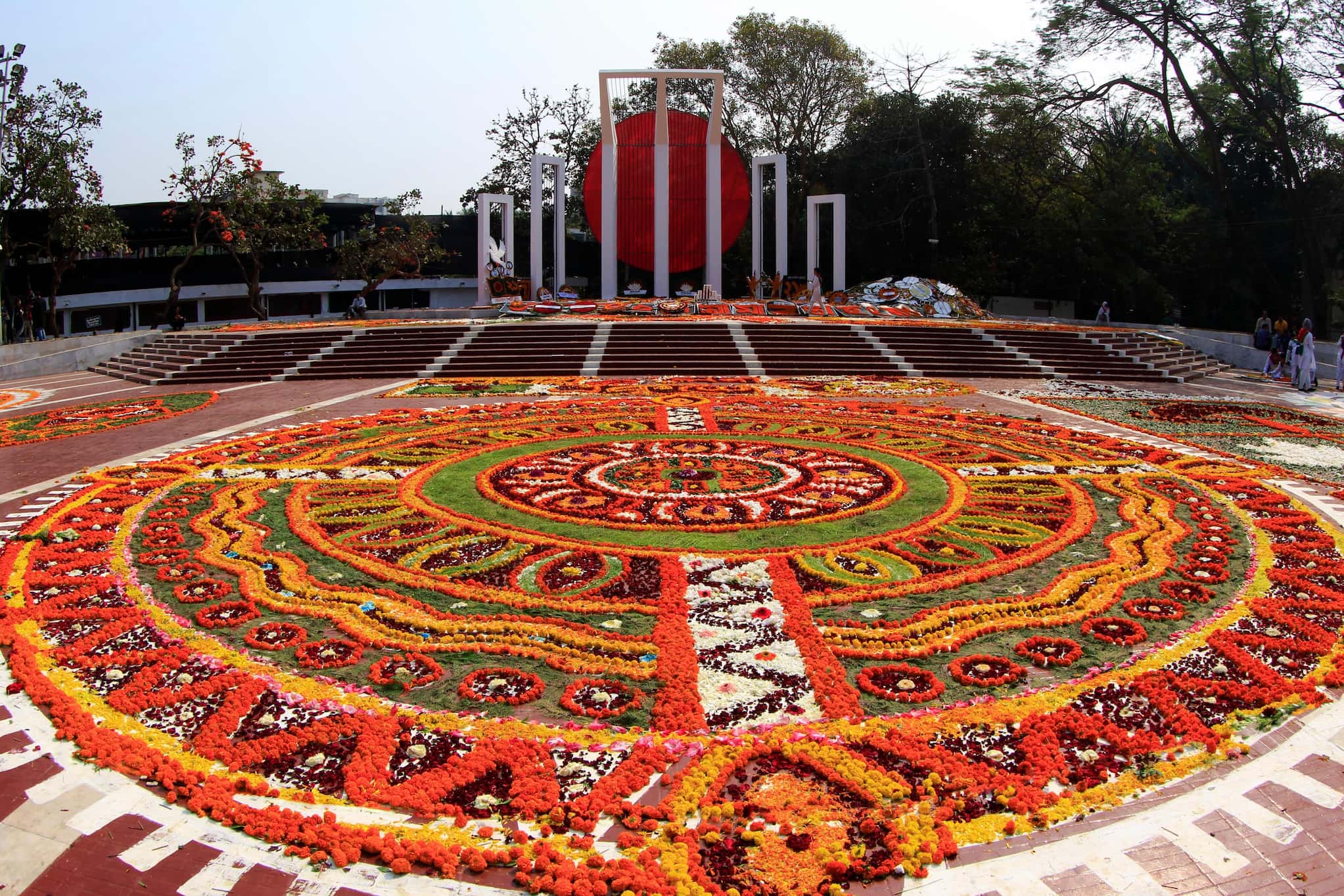
Image 07.02.02 — The Shaheed Minar (Martyr’s Monument) in Dhaka, Bangladesh, commemorates the lives of students who died fighting for the right to use their native Bengali language.
The 1971 Liberation War
Tensions between East and West Pakistan reached an apex in 1970. First, a deadly tropical storm (Bhola Cyclone) killed 300,000 people in East Pakistan. Public anger rose at the failure of the Pakistani government to provide humanitarian assistance. Then, when the Awami League, an East Pakistani political party, won the national election, the West Pakistani government refused to accept the results. Pakistan’s military leader, General Yahya Khan, flew troops into East Pakistan to quell Bengali demands for political rights.
Known as Operation Searchlight, the Pakistani military crackdown came to a head on the evening of March 25, 1971, when officials began to commit mass murder, sexual assault, and other atrocities that continued throughout the nine months of war that followed. The Hindu minority and Bengali intellectuals were targeted, as were women who became targets especially of sexual violence. Millions of refugees fled to neighboring India. It is estimated that as many as three million people died in 1971. In response, Bengalis launched a guerilla resistance movement against the West Pakistani military. The war ended on December 16, 1971, after India intervened in the conflict. In the end, Bangladesh achieved independence, but with a high cost of countless innocent lives.
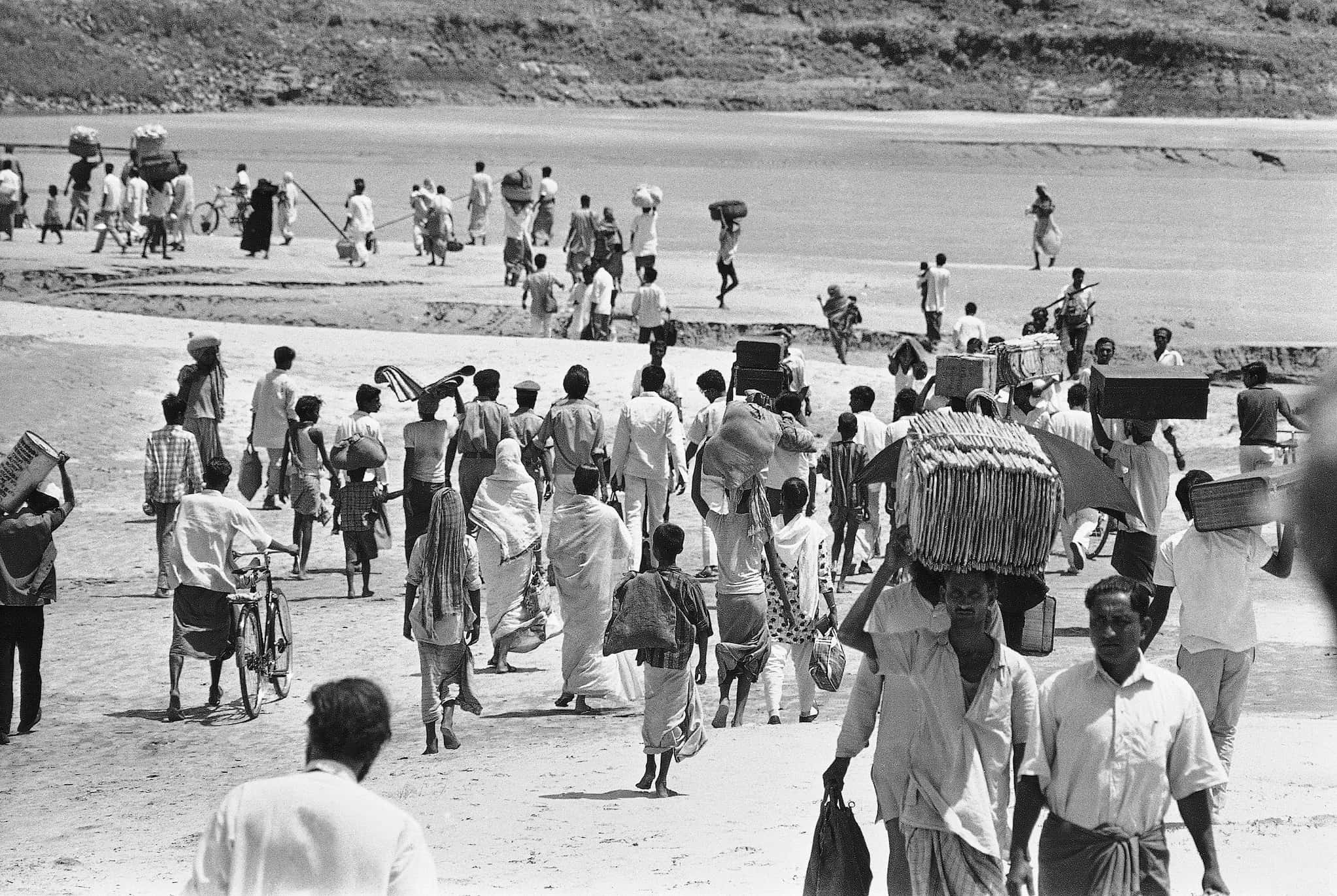
Image 07.02.03 — Refugees stream across the delta of the Ganges river in 1971 as they flee the violence in East Pakistan during the ongoing West Pakistani military campaign, known as Operation Searchlight.
Fifty years later, in 2022, the US House of Representatives passed H.Res.1430, which condemns the Pakistani military’s atrocities against the people of Bangladesh that occurred from March to December 1971. Bangladeshi Americans worked toward this resolution in order to honor the victims of the war and gain recognition of the atrocities of 1971 as war crimes and crimes against humanity.
Bangladeshi American Support for the Homeland
Some Bengalis from East Pakistan were already in the United States when war broke out in March of 1971. Most were students and professionals in science, medicine and engineering. Other Bengalis who managed to escape the targeted killing of the East Pakistanis were also able to secure political asylum. In 1971, the Bangladeshi American community sought to support the struggle for independence in the homeland even as the US government supported the West Pakistani government against the Bangladesh struggle for independence under President Nixon and his Secretary of State, Henry Kissinger.
To raise awareness of the brutal campaign in East Pakistan, Bengali activists formed alliances with activists in the US protesting US military involvement in Vietnam. Senator Edward Kennedy urged Congress at that time to stand against the unfolding genocidal violence. US diplomat to East Pakistan, Archer Blood, also expressed his dissent against the Nixon-Kissinger policy.
Actions and Solidarity
Another act of protest against the atrocities taking place in East Pakistan occurred on July 14 1971, when Friends of Bengal activists attempted to stop a Pakistani ship from docking at the Baltimore harbor by offering their own bodies as “mines.” The ship had come to collect arms donated by the US to the Pakistan army.
Quaker peace activists Richard and Phyllis Taylor led this action in which the protestors on small boats tried to board the ship before it could dock. Hundreds of people gathered at the harbor to support and cheer on the activists as police threatened to arrest them. But the activists did not relent. In solidarity, longshoremen farther north at the Port of Philadelphia refused to load Pakistani ships. After several months of coordinated protests, the US finally ended its arms exports to Pakistan.
In the cultural realm, on August 1, 1971, musician and former Beatles member, George Harrison, organized the historic Concert for Bangladesh at Madison Square Garden in New York City. He and legendary Bengali musician, Ravi Shankar, came together to raise funds for Bangladeshi refugees displaced by the war. Shankar believed the concert raised awareness of the war and the resulting humanitarian crisis when he stated during an interview in 2005 that “overnight, everybody knew the name of Bangladesh all over the world.”
Remembering 1971 as Bangladeshi Americans
Bengali American poet, Zubair Ahmed, remembers the Bangladesh Liberation War as something that still haunts his dreams. “I feel the dead limp across the screen of my mind,” he said. “When my uncle shares his stories—another one, lying between burnt and dying bodies, avoiding the soldiers—I imagine a great fire in the background, burning the soul of a people to a bright orange light.” 2
More than fifty years later, the Bangladesh Liberation War continues to haunt the memories of many Bangladeshi Americans. They have grown up hearing firsthand accounts of the war from friends and family members. These family stories are part of a larger collective narrative of Bangladeshi identity. At the heart of this narrative of the war is the “Spirit of 1971,” or pride in self-determination and resistance against injustices.
The Bangladesh Liberation War has impacted nearly every American of Bangladeshi descent. Southern Connecticut State University student Anjay Kornacki, age twenty-five, speaks of 1971 with awe and reverence. Growing up Muslim after 9/11, he encountered hateful messages about Muslims being the enemy.
The Spirit of 1971 became an affirming counter-narrative: “I am here because of resistance,” he said. “I am here because of poor, illiterate people in lunghis, or sarongs worn by men, taking up arms. It takes everything to do something like that. It takes everything to put down what you were doing and [pick] up a gun.” 3 For Anjay, then, being Bangladeshi is a hard-won point of pride and not something to take for granted.
Philadelphia-born poet Dilruba Ahmed equally feels a powerful connection to Bangladesh. She visited the country for the first time in her early thirties and describes her relationship to Bangladesh as a “phantom life that I knew of that existed somewhere far away.” 4 Still, her parents made sure she understood the importance of 1971 and told her to always identify herself as Bangladeshi.
Bangladeshi American community events are another important way that the younger generations learn about the Bangladesh Liberation War. Bangladeshi Americans organize to commemorate the Bengali Language Movement and Independence Day on March 26 with community programs including speakers, poetry, dance, and music.
The 1971 Bangladesh Liberation War defines what it means to be Bangladeshi American, but the memory of war is also filled with tensions. Younger generations in particular are critical of the post-independence politics of Bangladesh. They criticize the failure of the Bangladeshi government to safeguard human rights, ensure economic opportunities across classes, and recognize the struggles of the Bangladeshi diaspora.
In 2021, Bangladeshi American journalist, Samira Sadeque, wrote about government attacks on freedom of speech in Bangladesh. She cited the continuing economic struggles of the greater population despite the high levels of economic growth for the country as a whole. “No one cries for our countrymen–the fighters, the writers, those breaking their backs just to be able to live an ordinary life in a free country,” she said. “No one sings love songs for them. After the dust settles, after each attack, each arrest, they remain in anticipation of the freedom that our ancestors fought for, the freedom we celebrate today.” 5
This gap between the Bangladesh that was dreamt of in 1971 and the complex reality that exists now is especially difficult to navigate because Bangladeshi identity is often disregarded in parts of the US.
Joi is a twenty year-old college student who has lived in the US since the age of four, and he voices his frustration when people do not recognize Bangladesh. He described a conversation with a close friend who thought Bangladesh was a city in India. He said he was “pretty disgusted,” but his friend only questioned him further, responding, “Dude, are you sure it’s a country? How come I haven’t heard about it?” 6
In being categorized generally as Asian American, or South Asian American especially, Bangladeshi Americans may find their unique cultural experience erased. Joi connects invisibility as a Bangladeshi to a general lack of familiarity in the US. Such feelings of erasure can also come from inclusion within the broad pan-ethnic categories of Asian American, Muslim American, and South Asian American that put Bangladeshis under these three political umbrellas. This emphasis on shared traits can minimize or make invisible specific experiences for different ethnic groups.
Glossary terms in this module
asylum Where it’s used
The protection granted by a nation to someone who has left their native country as a political refugee.
Bangladesh Liberation War Where it’s used
The armed conflict of 1971 that led to the independence of Bangladesh from Pakistan.
diaspora Where it’s used
People scattered across different parts of the world who share an identification with a homeland.
East Bengal Where it’s used
The eastern part of the province of Bengal in India. Later, the region became East Pakistan, a province of Pakistan formed at the time of national independence from British colonial rule in 1947. This would become the nation of Bangladesh in 1971.
self-determination Where it’s used
The right of a people to freely determine their political status and freely pursue their economic, social, and cultural development without external interference. This right is recognized by the United Nations and is an important aspect of human rights.
Shaheed Minar Where it’s used
A monument dedicated to honoring the memory of those who died in the Bengali Language Movement in 1952 in Bangladesh, symbolizing linguistic and cultural pride.
solidarity Where it’s used
A political, cultural, and collective stance that recognizes the mutual responsibility and support that is necessary to achieve change. Solidarity taps into the power in numbers and considers the collective interests of communities.
Endnotes
1 Jemmima Faruque, “1971: Becoming Bangladesh,” The Oracle, March 29, 2023, https://theoracleonline.org/features/2023/03/29/1971-becoming-bangladesh/.
2 Zubair Ahmed, “’To be as is,” in “We Must Regard the Revolution as Unfinished”: On the 50th Anniversary of Bangladesh’s Independence, The Margins: Asian American Writers Workshop, March 26, 2021, https://aaww.org/we-must-regard-the-revolution-as-unfinished-on-the-50th-anniversary-of-bangladeshs-independence/.
3 Anjay Kornacki, in discussion with the author, August 5, 2024.
4 Dilruba Ahmed, in discussion with the author, August 5, 2024.
5 Samira Sadeque, “No One Sings Lovesongs for My Countrymen,” The Margins: Asian American Writers Workshop, March 26, 2021, https://aaww.org/we-must-regard-the-revolution-as-unfinished-on-the-50th-anniversary-of-bangladeshs-independence/.
6 Joi, in discussion with the author, April 26, 2024.