




Module 5: Becoming Chinese American: The Second Generation
Is it possible to be both Chinese and American?
In 1936, a Chinese American women’s association in New York City called the Ging Hawk Club addressed second generation Chinese Americans throughout the United States. The club sponsored a national essay contest with the topic, “Does my future lie in China or America?”—a question that reflected the cultural struggles that younger generations faced at the time.
The first and second place winners took opposing positions. Robert Dunn declared his desire to remain in the United States, while Kaye Hong wrote it would be more meaningful to help build a new nation in China. Later, both young Chinese American men did the opposite of what they wrote in their essays. Other essay submissions discussed family pressures, racism, and apprehension about the future.
This second generation of Chinese Americans came of age in a country after decades of restriction and exclusion laws. Although the 1898 Supreme Court case United States v. Wong Kim Ark confirmed their right to citizenship through birth in the US, this new generation still faced racial discrimination and barriers. Despite their difficult experiences, this group also broke barriers and created places where they could support each other and foster a sense of belonging together.
This module examines the experiences and identity formation of second generation Chinese Americans during the 1920s-1930s.
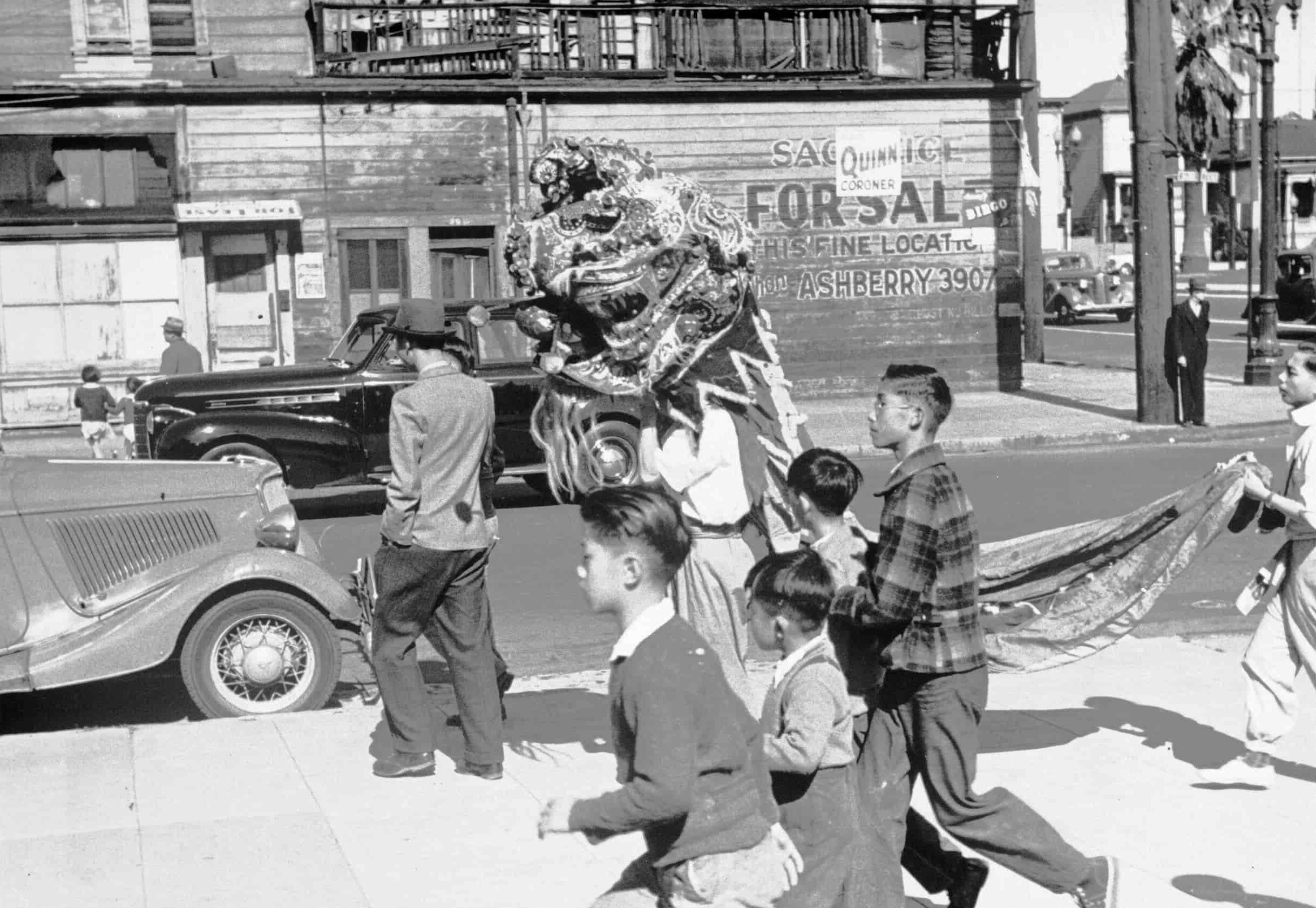
Image 09.05.01 — Chinese American boys in a San Francisco Chinatown parade, c. 1936.
How were the lives of second-generation Chinese Americans similar to or different from their immigrant parents?
What were the social experiences of second-generation Chinese Americans in the early twentieth century?
How did education and professional opportunities shape second-generation Chinese American identities and experiences?
Experiences at School
Most second-generation Chinese Americans learned about US cultural and social norms at public schools. In addition to their academic lessons, they learned American perspectives and values regarding friendships, family structures, eating habits, and other aspects of American society. Unfortunately, many Chinese Americans also experienced racism and discrimination at school.
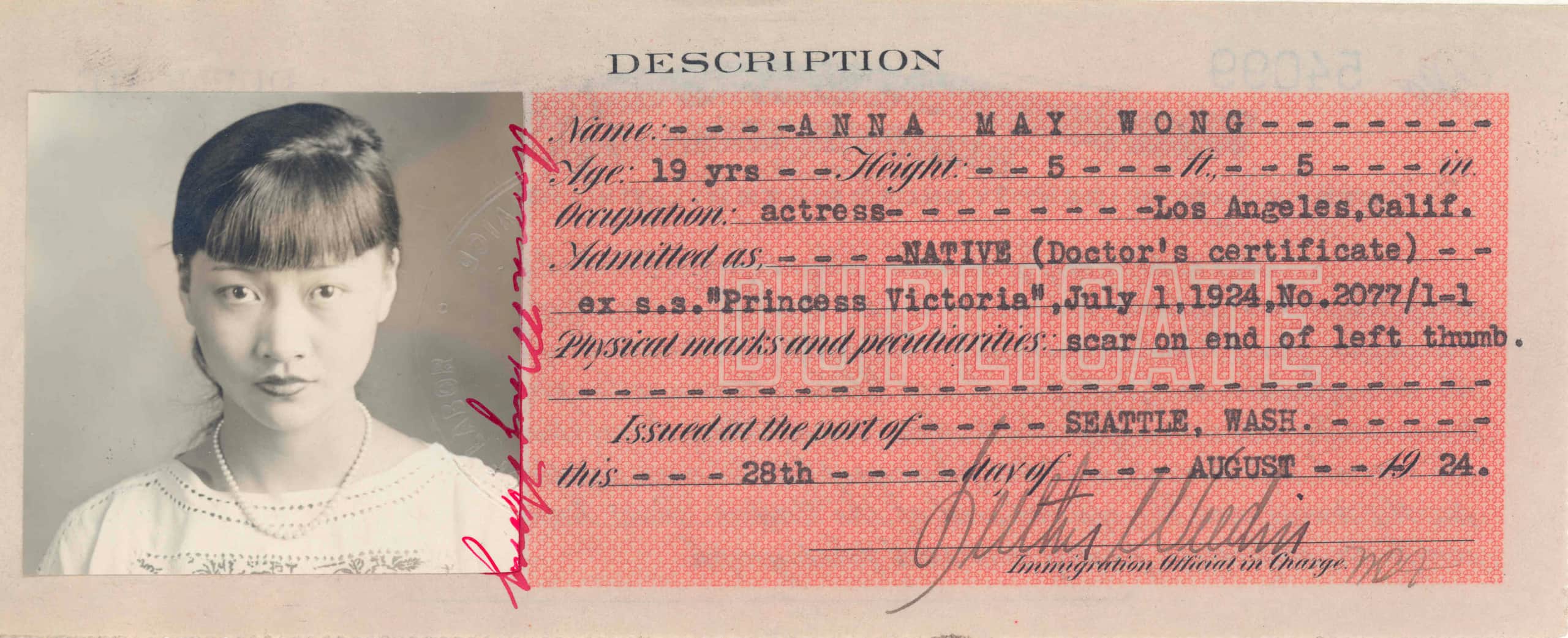
Actress Anna May Wong was part of this second generation of Chinese Americans. She attended a predominately white public school where she felt “miserable” because of her classmates. For Wong, the experience of bullying and being called racial slurs became normal. “I don’t think I resented it bitterly or hated them,” she said. “To me it was a vague impersonal danger and misery.” 1 Wong understood that the racism she experienced was about how her classmates saw her and other Chinese children. The harassment became so severe, however, that her parents transferred her and her siblings to a school in Los Angeles, Chinatown instead.
More to explore
Slideshow
Breaking Barriers: Anna May Wong
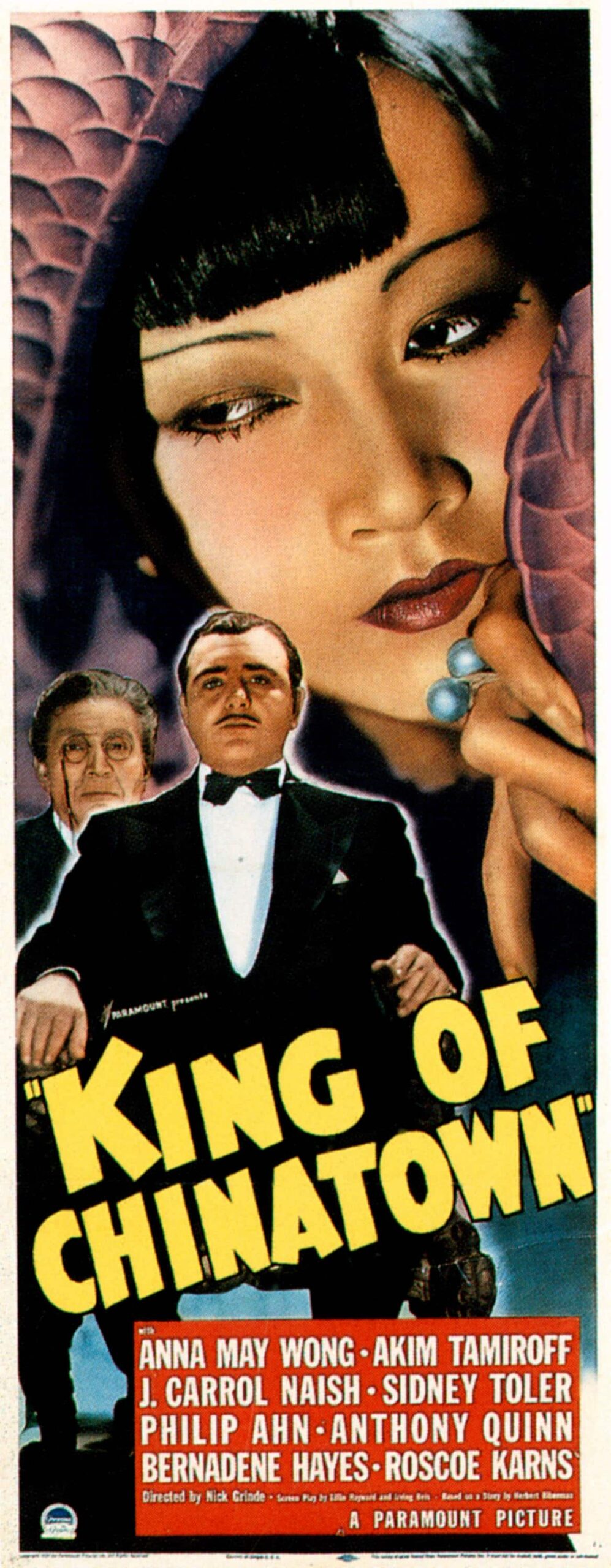
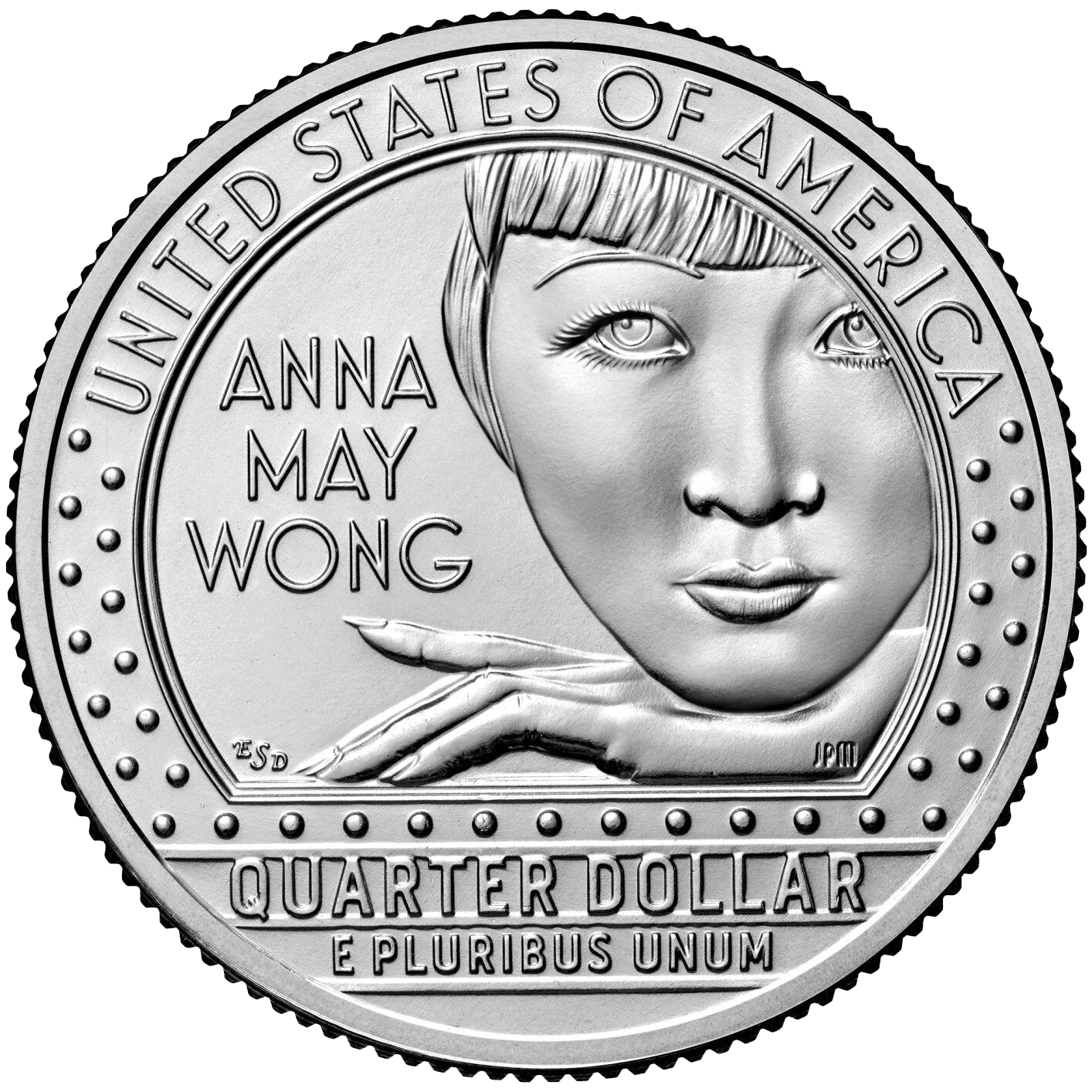
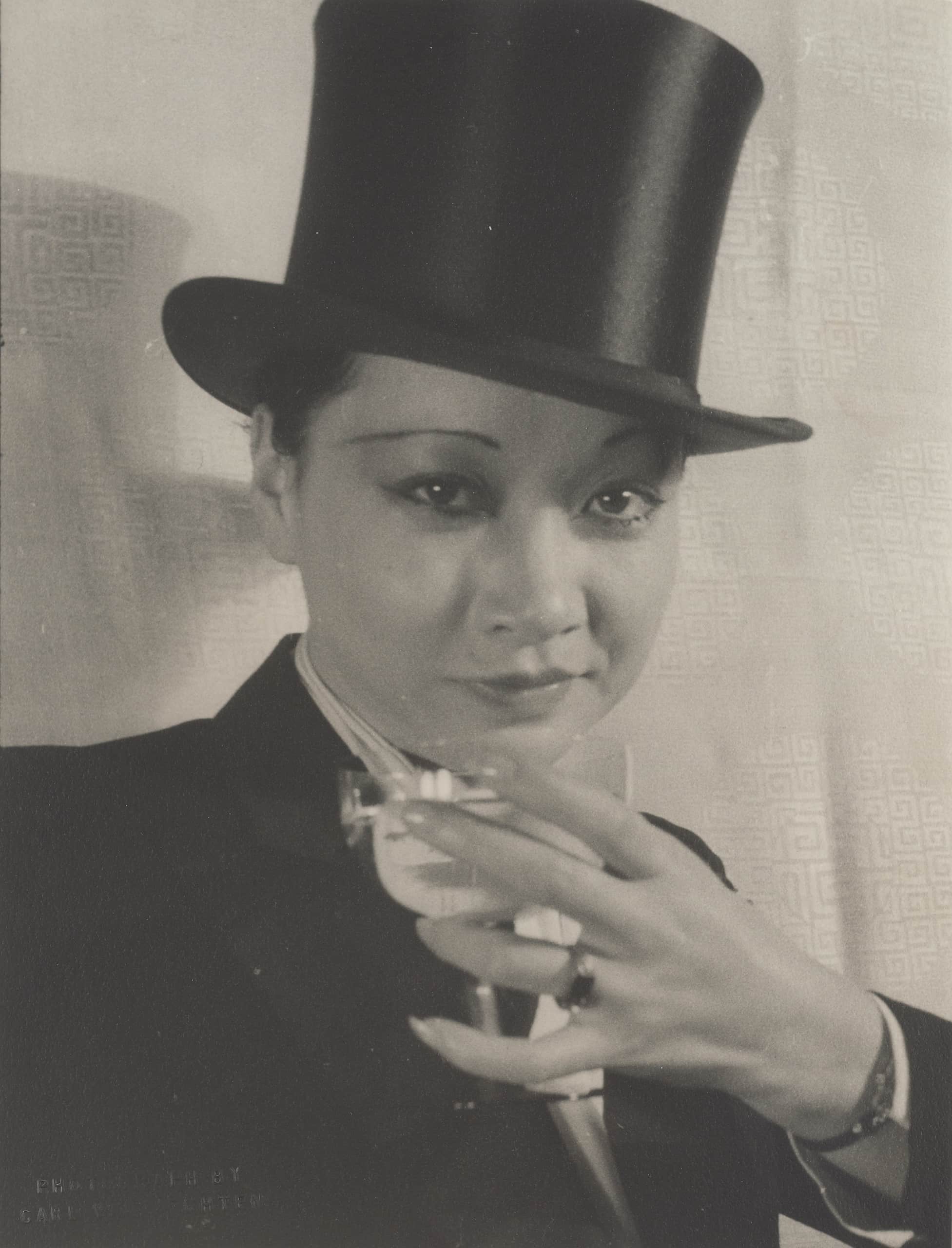
Anna May Wong (1905–1961), the first Chinese American celebrity, broke important Hollywood barriers in the span of her acting career. Born in Los Angeles in 1905, Wong’s interest in acting began at a young age.
Another second-generation Chinese American, Lillie Leung, recalled playing with white American children when she was younger, but that dynamic changed when she was about twelve years old. “They began to turn away from me,” she stated. This rejection affected how she saw herself. “I never realized that I was any different, but then I began to think about it.” 3 Other Chinese Americans noticed that some groups did not want to sit with them at lunch or invite them to parties.
For the few whose families could afford college, campus life was also challenging—but many created spaces for themselves. For example, Stanford University banned Chinese Americans from living in their own dormitory, so students set up their own residence called the Chinese Club House. Fraternities and sororities had racial and religious restrictions that prevented Chinese Americans from joining, so students formed their own. In 1928, Chinese engineering students founded Pi Alpha Phi at the University of California, Berkeley, and two years later, a group of Chinese women at San Francisco State Teacher’s College formed Sigma Omicron Pi, the first sorority for ethnic Chinese people.
Generational Divides
During this era, young second-generation Chinese Americans also felt a generational divide at home and with their families. Journalist and writer Flora Belle Jan, who grew up in a household with seven children in Fresno, California, described her frustration. “My parents have wanted me to grow up a good Chinese girl,” she said, “but I am an American and I can’t accept all the old Chinese ways and ideas.” 4 Like many of her generation, she found her parents’ traditional expectations stifling. Many American-born Chinese adolescents in the 1920s embraced mainstream consumer culture and fashion as well as independent, assertive attitudes—which felt at odds with traditional Chinese family values.
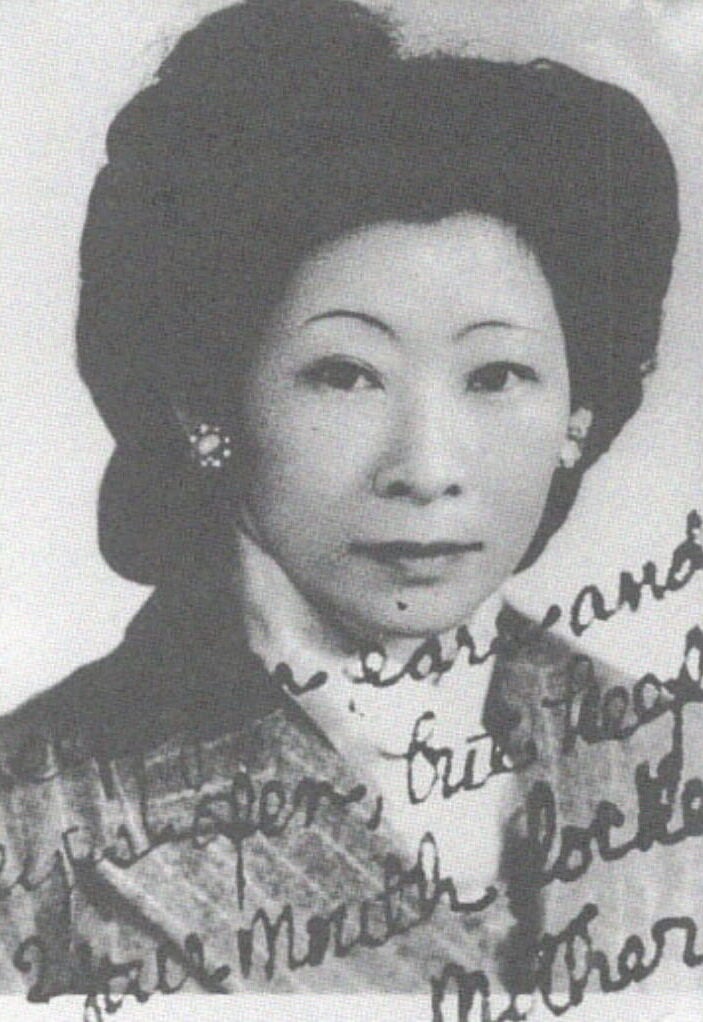
Image 09.05.03 — Chinese American journalist and poet Flora Belle Jan in the 1930s. “My parents have wanted me to grow up a good Chinese girl,” she said, “but I am an American and I can’t accept all the old Chinese ways and ideas.
Chinese immigrant parents wanted their families to stay connected to the language and culture of China, so many sent their children to Chinese language schools. There were dozens of such language schools in the United States, mostly located in California and along the West Coast. Children attended language school after attending public school, sometimes six days a week. Most felt indifferent about learning Chinese, believing they would never be proficient in reading or writing the language. Their elders lamented their ignorance, calling them “bamboo poles” because without knowledge of their heritage, they were “empty inside.” George Lem, a first-generation immigrant, thought that children in the United States “have no respect for the old people” unlike in China. “There is too much liberty… among the young people,” he continued. 5
Young Chinese American women, especially those from middle-class backgrounds, faced more parental restrictions and domestic responsibilities than their male peers and siblings. Alice Sue Fun lamented spending most of her time after school doing household chores, such as washing dishes, laundering clothes by hand, sewing, and taking care of her siblings. In contrast, young Chinese American men were often permitted to leave the house for work and recreation. However, these young men did clash with their parents over dating and marriage choices. Arranged marriages remained common, though many in the second generation refused to follow this tradition.
Finding Work and Belonging
Neither parents nor children could control the limited employment prospects that Chinese Americans encountered as they grew up and graduated from high school and college.
Chinese American women with high school degrees were able to find work in a few places. Some worked in Chinatown gift shops and businesses. Others who were fluent in English and multiple Chinese dialects became operators for the San Francisco Chinatown Telephone Exchange. Some businesses that were owned by white men hired Chinese American women as secretaries, clerks, and stock girls—sometimes known as “pink collar” positions because of the preference to hire women to do this type of work. Some white-owned stores and restaurants hired these women to create an “exotic” atmosphere and attract customers by wearing Chinese garments. 6
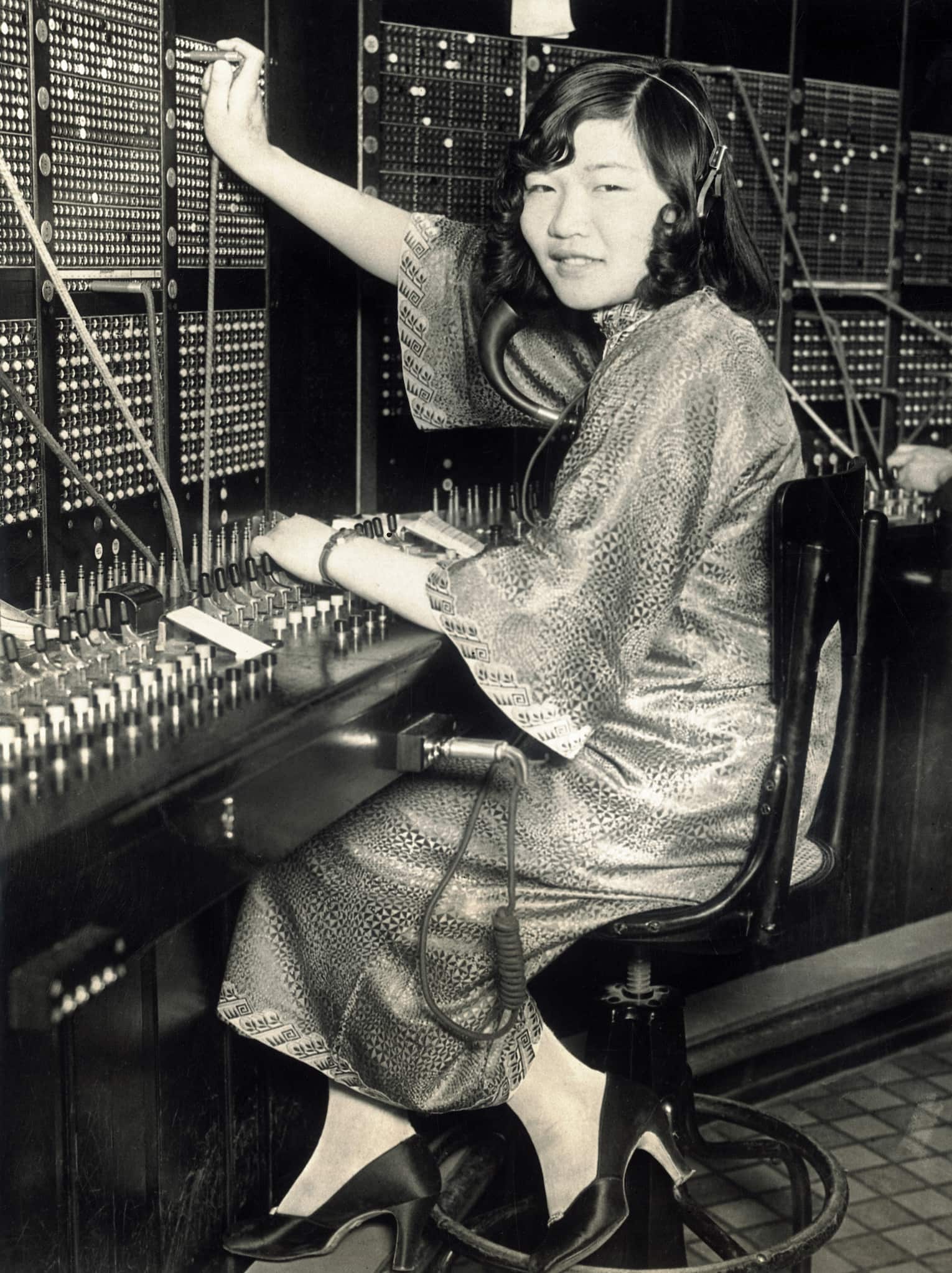
Image 09.05.04 — Harriett Ng, an operator at the Chinese Telephone Exchange, date unknown. Chinese American women who were fluent in English and multiple Chinese dialects became operators for the San Francisco Chinatown Telephone Exchange.
College-educated Chinese Americans often could not find professional jobs within their fields of study. Some found work that matched their qualifications in Chinatowns, but even when they could, there were restrictions. Alice Fong Yu was hired as a schoolteacher by the San Francisco School District, but was not allowed to teach in the classroom during the 1920s. Despite her training in education, she was hired to perform administrative and translation tasks instead.
Many prominent American companies had general regulations against employing people who were not white. Others did not hire Asian Americans because “other men employed by the firms do not care to work with them.” 7 For example, Pardee Lowe, who had graduated from Stanford University and Harvard Business School, could not find a job in the early 1930s. In his memoir, he recalled:
“Everywhere I was greeted with perturbation, amusement, pity or irritation—and always with identically the same answer. “Sorry,” they invariably said, “the position has just been filled.” […] I sensed that something was radically, fundamentally wrong. It just didn’t seem possible that overnight all of the positions could have been occupied, particularly not when everybody spoke of a labor shortage. Suspicion began to dawn.” 8
His suspicions were confirmed when he checked newspapers the following week and saw listings for the same job openings.
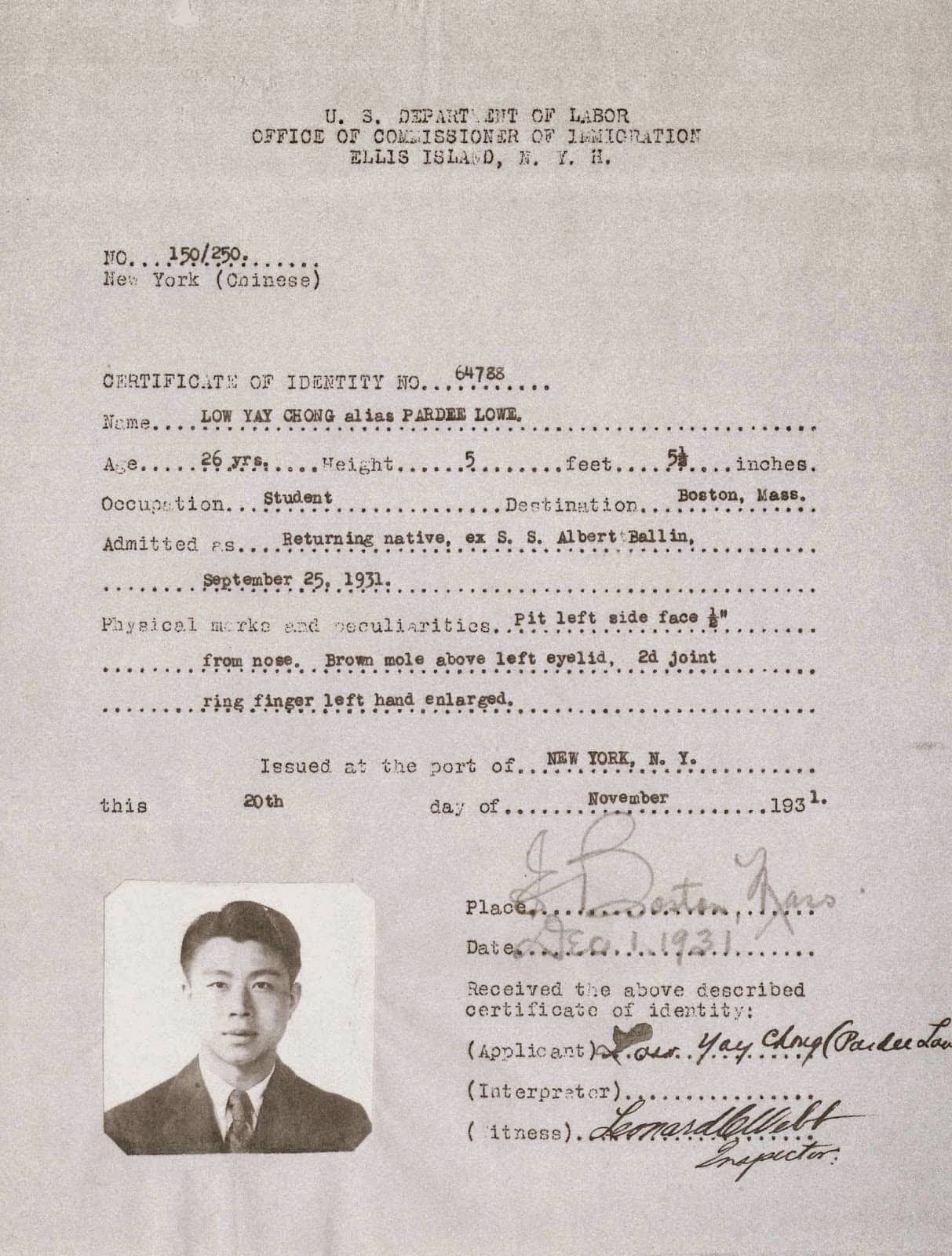
Image 09.05.05 — Pardee Lowe in a 1931 US immigration form designating him a “returning native” from overseas travel. Despite graduating from Stanford University and Harvard Business School, Lowe struggled to find work in the early 1930s due to racial discrimination.
Some college-educated Chinese Americans were willing to take jobs that did not require their level of education, but still encountered discrimination. For example, a white-owned boat company in the Pacific Northwest turned away a group of Chinese applicants, saying “I cannot employ you people.” 9 Unable to find work at such companies, they found jobs at Chinese restaurants and laundries. A Chinese elder assessed the issue frankly. “Oh, you couldn’t get a job outside of the Chinese community because, you know, look [at] your face… So what if you’ve got ten degrees?” 10 For many, racial discrimination was commonplace.
“Return” to China
The Great Depression made jobs even more scarce at the time, and some second-generation Chinese Americans began looking to China for work. In 1933, a Chinese-language newspaper based in San Francisco called Chung Sai Yat Po encouraged younger Chinese Americans to find jobs in China. Chinese companies also tried to recruit American-born professionals in the 1930s. For example, the Shanghai Aviation Association recruited aviation students, and the Ministry of Industry in China requested engineers.
In addition to finding work, some Chinese Americans felt a sense of belonging in China that they had not felt in the United States. A twenty-eight-year-old woman who moved to China for work said, “In China, we can be somebody. We can even walk the streets without being stared at. I understand that there is a feeling of ‘belonging’ that is absent in America.” 11 These Chinese Americans felt the weight of racism lifted when they arrived in China.
Although many Chinese Americans supported the idea of “returning” to China, only a few thousand went. Most who left the US had a strong sense of Chinese nationalism and felt morally responsible to use their education to help “rebuild” China. However, as China faced the crises of war and Japanese occupation, many had no choice but to return to the United States.
Second-generation Chinese Americans who came of age in this time period faced unique experiences at school, home, and in the workforce. Even though they experienced bullying, tension within the family, and discrimination, many found ways to create and find places of belonging.
Glossary terms in this module
second generation Where it’s used
The children of immigrants. The second generation consists of those who were born in the US.
United States v. Wong Kim Ark Where it’s used
This 1898 Supreme Court case established the precedent for birthright citizenship, meaning all individuals born in the US have a right to citizenship. Wong Kim Ark was born in San Francisco in 1873 to Chinese immigrants.
Endnotes
1 Anna May Wong, “I Am Growing More Chinese – Each Passing Year! (1934)” in Chinese American Voices: From the Gold Rush to the Present, ed. Judy Yung, Gordon Chang, and Him Mark Lai (University of California Press, 2006), 178.
2 Edward Sakamoto, “ANNA MAY WONG AND THE DRAGON-LADY SYNDROME,” Movies, Los Angeles Times, July 12, 1987, https://www.latimes.com/archives/la-xpm-1987-07-12-ca-3279-story.html.
3 Iris Chang, The Chinese in America: A Narrative History (Penguin Publishing Group, 2004), 180.
4 Yung, Unbound Feet, 123.
5 Shelley Sang-Hee Lee, A New History of Asian Americans (Routledge, 2014), 180.
6 Yung, Unbound Feet, 136; Chang, The Chinese in America, 190.
7 Eliot Mears, Resident Orientals on the American Pacific Coast: Their Legal and Economic Status (University of Chicago Press, 1928), 200.
8 Pardee Lowe, Father and Glorious Descendant (Little, Brown and Company, 1943), 147.
9 Chang, The Chinese in America, 187.
10 Chang, The Chinese in America, 212.
11 Chang, The Chinese in America, 212.