





Module 6: World War II and the Cold War to 1965
Is it possible to be both Chinese and American?
China became a vital ally to the United States, which resulted in the US government lifting immigration restrictions on Chinese entry. Overall American attitudes about Chinese people also began to shift. A New York Chinatown resident named Harold Liu remarked that in the 1940s, “for the first time Chinese were accepted by Americans as being friends because at that time, Chinese and Americans were fighting against Japanese and the Germans and the Nazis.” Because they shared a common enemy, Liu explained, “[All] of a sudden, we became part of an American dream.” 1
This change in American perceptions of Chinese people happened in politics and media. In 1943, the United States welcomed Soong Mayling, also known as Madame Chiang Kai-Shek, on a speaking tour in the United States. She was the wife of China’s Nationalist leader and spoke to crowds of up to thirty thousand people, encouraging them to support the war effort. In cooperation with the US government, Hollywood filmmakers created wartime films with positive portrayals of Chinese people as valiant allies deserving of American support.
Chinese Americans found work in the military industry, and the population grew with relaxed immigration laws. Despite these major shifts during World War II, these international relations were conditional and tenuous. Old stereotypes of Chinese Americans as dangerous and untrustworthy emerged again as the Cold War era began, and as China became a Communist rival of the United States.
This module explores how World War II brought sweeping changes to the Chinese American community.
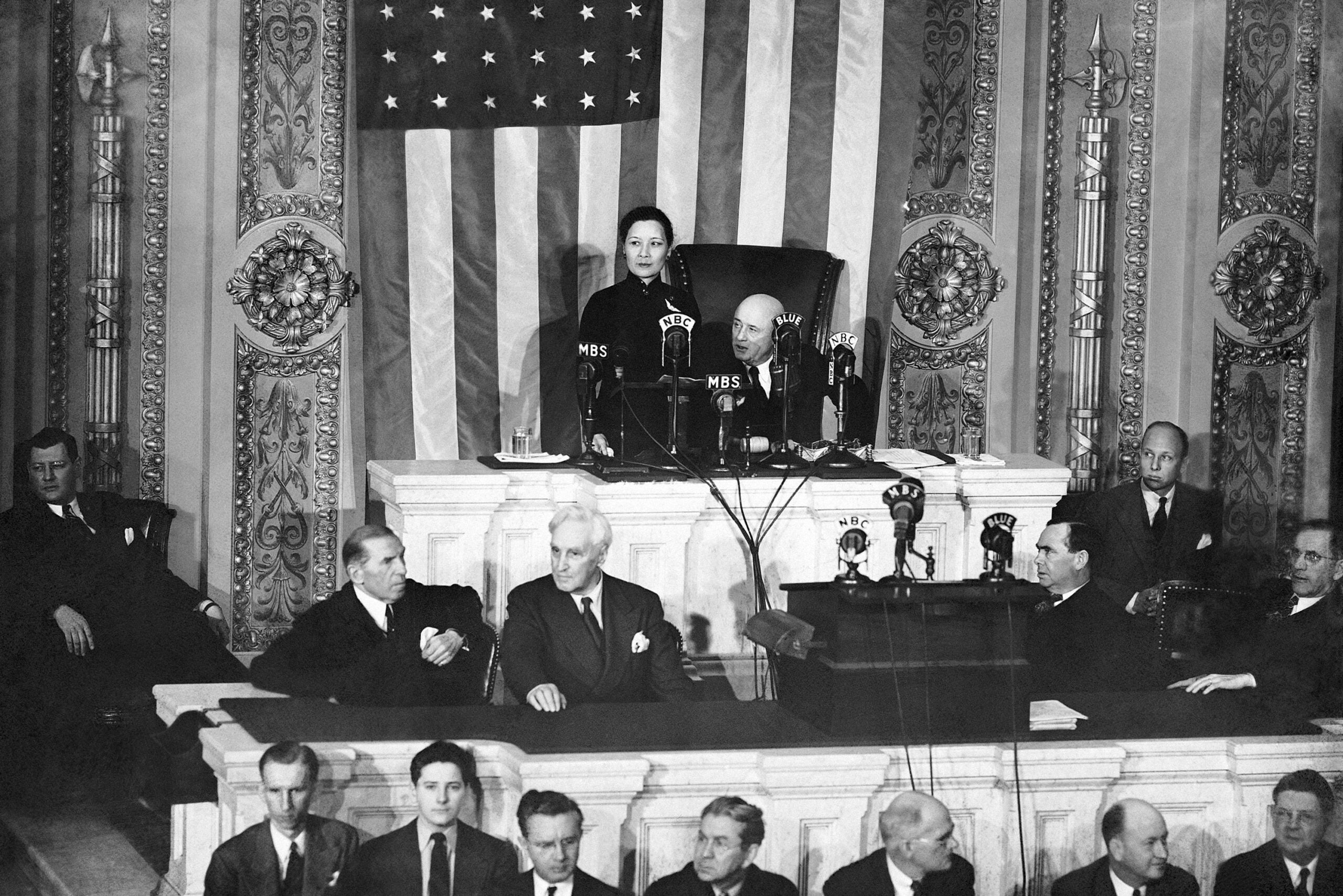
Image 09.06.01 — Madame Chiang Kai-shek, wife of China’s Nationalist leader, addresses the House of Representatives on February 18, 1943, to encourage military cooperation between the US and China against Japan.
How did World War II and the Cold War change perceptions and self-perceptions of Chinese Americans?
How did a new alliance between China and the United States during World War II change the demographics of Chinese immigration to the United States?
How did the tensions between China and the US during the Cold War foster discrimination against Chinese Americans?
Labor, Military Service, and Repeal of Exclusion
During World War II, Chinese Americans joined the war effort, finding new opportunities in the military and defense industries. More than twelve thousand Chinese Americans served in the US armed forces—about twenty-two percent of the Chinese adult male population in the US at the time. They were placed in both integrated units and segregated all-Chinese units. Ten percent of Chinese Americans in the military were part of the Fourteenth Air Service group, which deployed to China in 1944. Chinese American women served in non-combat units like the Women’s Airforce Service Pilots and the Women’s Army Corps.
Along the West Coast, Chinese Americans also worked in shipyards and aircraft factories to contribute to the war effort. The US-China alliance caused some previously restrictive companies to accept Chinese American labor. Thus, some college-educated Chinese Americans, unable to find work before the war, could finally work in jobs that matched their level of education and training. Even so, employers still racially discriminated against Chinese Americans by assigning them to menial work on segregated teams and rarely promoting them.
The US-China alliance also catalyzed the end of Chinese exclusion laws. Chinese Americans argued that the laws were hypocritical, violating democratic ideals and insulted China, a valuable ally. Furthermore, Japanese propaganda exposed embarrassing truths about the US government’s treatment of Chinese Americans.
These programs noted that “while white people are free to live in China, the Chinese cannot enter the United States,” demonstrating a contrast in freedoms. They revealed the “humiliating and discourteous treatment” that Chinese immigrants underwent in detention centers like Angel Island. Lastly, they denounced the unequal treatment of immigrants in the United States. While “the lowliest immigrant from Europe” had the right to naturalized citizenship, no Chinese immigrant had the same right. 2
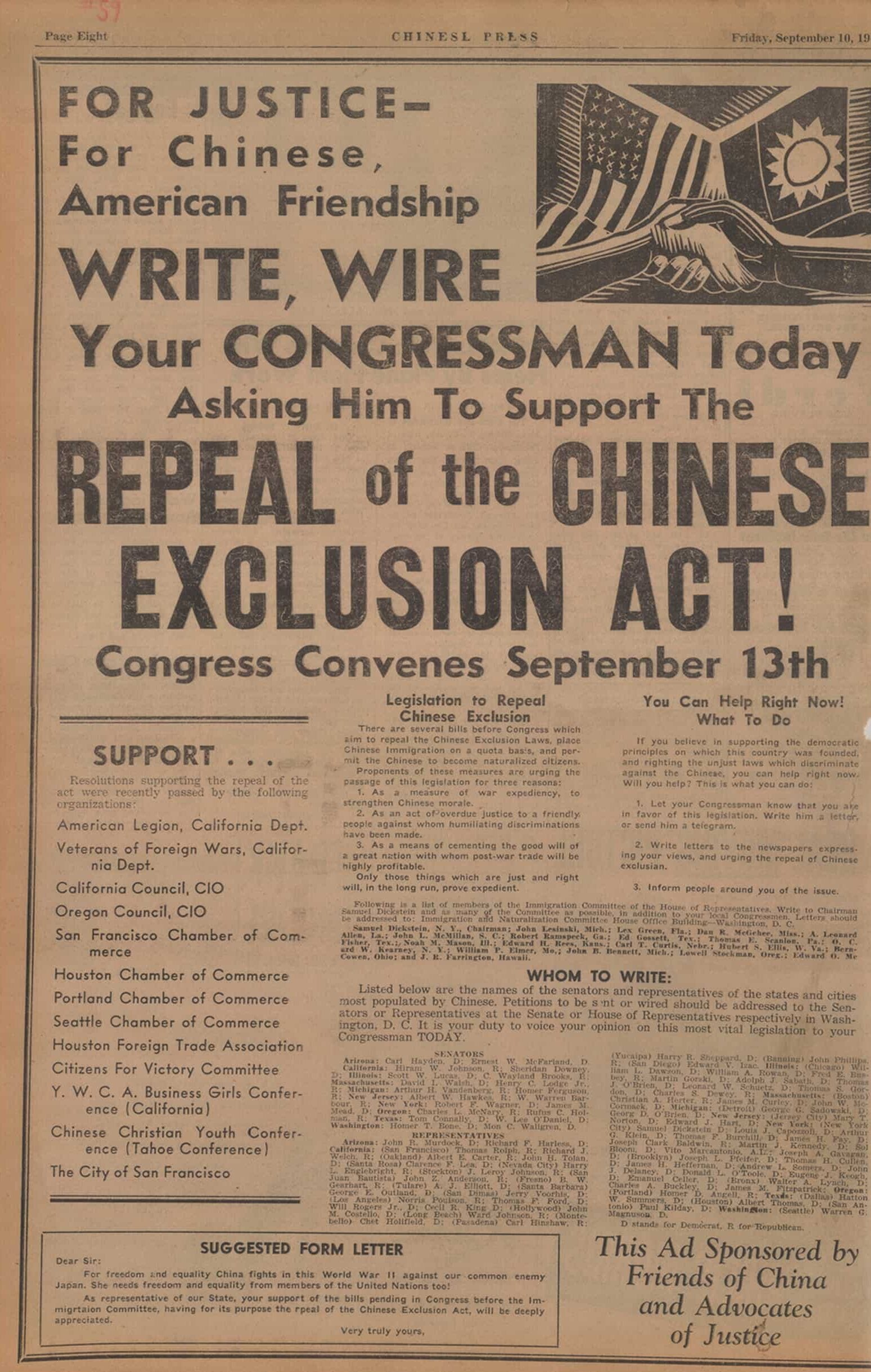
Because the US government valued China as an ally, Congress considered ending Chinese exclusion laws. However, white-led labor groups and others concerned with labor competition opposed the repeal of such laws. To address these fears, Congress established an immigration quota of 105 Chinese people per year. On December 17, 1943, the Chinese exclusion era formally ended when President Franklin D. Roosevelt signed the repeal bill. Chinese immigrants were legally “admissible” and eligible for naturalized citizenship.

Image 09.06.02 — A Chinese Press advertisement from September 10, 1943, asking readers to lobby Congressional representatives to support the repeal of the Chinese Exclusion Act.
Despite the end to a long era of Chinese exclusion, there was no public celebration in the Chinese American community as many found the repeal inadequate. For example, journalist Gilbert Woo wrote a satirical piece about the new quota. He highlighted how small the number was with humorous analogies, remarking that a single streetcar or apartment building could hold the quota. Woo and others saw that despite the new immigration policy, millions of Americans still feared that Chinese people would “overrun the country.” Despite repealing exclusion laws, racial discrimination itself did not end.
Postwar Demographic Changes
New waves of Chinese migrants began coming to the United States as a result of major policy changes. In the two decades after World War II, more women, children, and educated elites entered the US—groups that were very different from the earlier Chinese immigrants who came during the exclusion era.
A number of US laws allowed more Chinese women to enter the US. More than five thousand of them gained entry after the passage of the War Brides Act of 1945 and an expanded version of it in 1946. Many of the women who immigrated at this time had already been married to US military personnel for at least a decade.
After years of lobbying, Congress also passed the Chinese Alien Wives of American Citizens Act in 1946, permitting entry to the wives of Chinese men who were US citizens. Chinese Americans celebrated this shift in policy. Families who had previously been separated because of exclusion laws could finally reunite. In the postwar “baby boom” that saw a dramatic increase in birth rates across the nation, the Chinese American population’s birth rate more than doubled, rising 287 percent from 1946 to 1947.
China’s Nationalist government also encouraged young people to study abroad and return to China with knowledge and education to help modernize the country. Chinese students and professionals began entering the US in larger numbers. However, with the establishment of a Communist government in China in 1949, many found themselves unwilling or unable to return back home. These students and professionals, who had temporary visas, petitioned for refugee status in the US.
This was the beginning of the Cold War (1947–1991), a period of tensions and global competition between the United States and the Soviet Union. Although there were never official declarations of war, these decades involved conflict between capitalist Western nations and communist Eastern nations. The US provided asylum and financial support to more than 3,500 Chinese students. Because many of the students specialized in engineering and science, they could help develop military technology in the US. Among the students were physicists Chen Ning Yang and Tsung-Dao Lee, who jointly won the Nobel Prize in 1957.
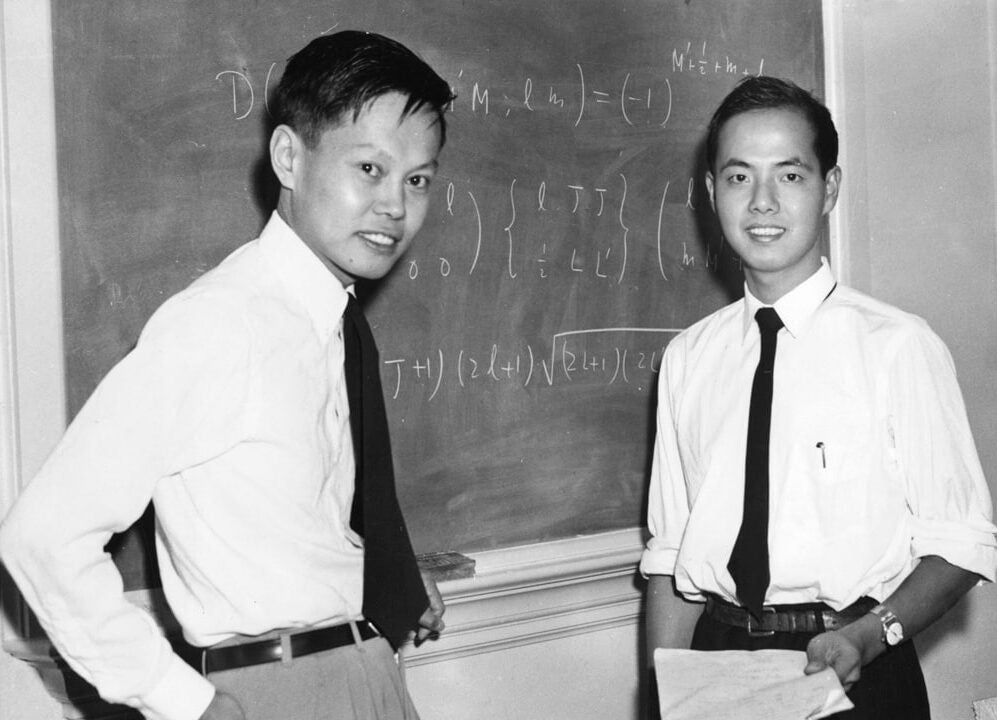
Image 09.06.03 — Chinese-born physicists Chen Ning Yang and Tsung-Dao Lee studied and researched at American universities. They were awarded the 1957 Nobel Prize in Physics.
New Vulnerabilities in the Cold War
Friendly relations between the United States and China shifted when the Communist party established the People’s Republic of China in 1949. When the party’s leader, Mao Zedong, formed an alliance with Soviet Union leader Joseph Stalin in 1950, the US-China rift became bigger. Fearful of losing its place as a global power, the US focused its foreign policy on stopping the spread of Communism around the world for the next two decades. Once again, Chinese people became suspect in the eyes of the wider American public, as the government and media associated them with Communism.
The Korean War (1950–1953) also negatively affected Chinese Americans. While the US supported South Korea, the Soviet Union and China supported North Korea. China was now considered an enemy of the United States, and Chinese Americans felt the tension. Some spoke of having to perform patriotism during this time of war and unease. “You had to make sure you didn’t sound anti-American,” recalled Franklin Woo, who lived in San Francisco’s Chinatown. He feared that “if you weren’t careful, you could be thrown into a concentration camp.” 3
Many Chinese Americans remembered that the US government unjustly detained Japanese Americans in concentration camps during World War II when Japan and the US were adversaries. Chinese Americans feared the government would accuse and persecute them as well. The late scholar Betty Lee Sung remembered feeling watched in the early 1950s. “People would look at you in the street and think, ‘Well, you’re one of the enemy,’” she said. 4
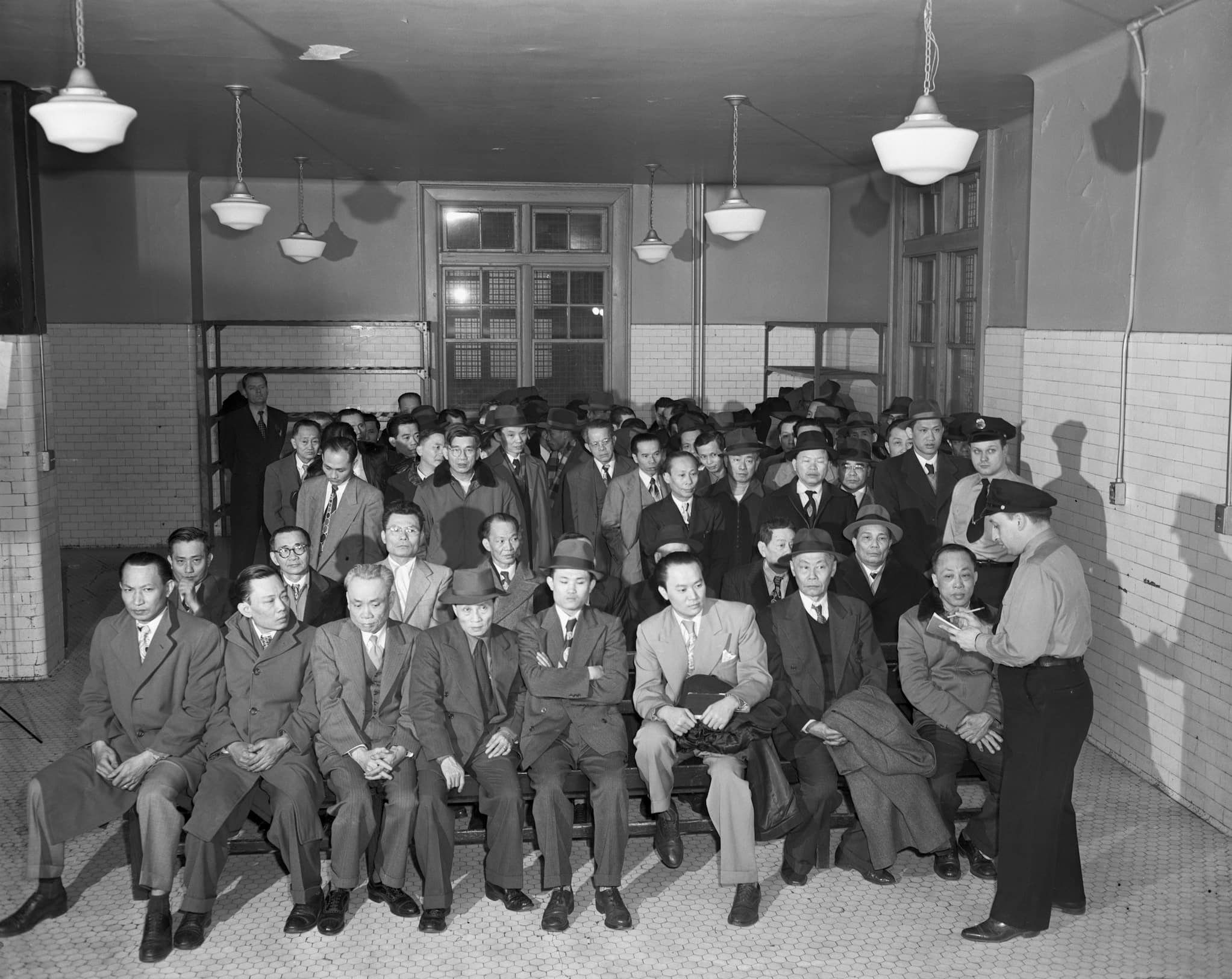
Image 09.06.04 — US immigration officers interrogating Chinese immigrants suspected of being Communists or deserted seamen, Ellis Island, New York, January 31, 1951.
Surveillance and the Chinese Confession Program
Although Chinese Americans were not detained in concentration camps during this period, the Federal Bureau of Investigation (FBI) and Immigration and Naturalization Service (INS) placed the Chinese community under intense surveillance. Maurice Chuck, a San Francisco resident, witnessed government agents questioning people in Chinatown. “They would stop you on the street. Harassed you and asked you all sorts of questions, push you around,” he observed. Chuck also emphasized how routine these interrogations became. “It became a part of our daily lives in Chinatown during that time.” 5 Agents even questioned children at playgrounds and schools.
In 1951, authorities arrested Eugene Moy, the editor-in-chief of the China Daily News, a New York-based Chinese language newspaper. They accused him of violating Trading with the Enemy Act of 1917 because the newspaper had published advertisements for a Chinese bank that operated under the Communist government. It was common for immigrants at the time to send funds back to their families in China, but Moy was still arrested. Three Chinese laundry workers who wired money through the bank were also imprisoned. A few who worked at the newspaper died by suicide and some were deported.
The McCarran-Walter Act of 1952 further codified the arrest, interrogation, and deportation of certain groups. Even US citizens could be deported. FBI Director J. Edgar Hoover listed Chinese Americans as “susceptible to recruitment” as spies for China. The FBI targeted Chinese American leftists and anyone suspected of Communist leanings. 6
Suspicion of Chinese Americans and fear of communist infiltration escalated when the INS began its “Confession Program” in 1955. The US consul in Hong Kong had warned that Chinese Communist spies were entering the US through immigration fraud. Authorities began investigating thousands of Chinese Americans, accusing them of obtaining passports with fake birth certificates. The FBI and INS raided Chinatowns across the country.
As part of their investigations, the INS established the Chinese Confession Program, allowing Chinese Americans to confess their own illegal entry or the immigration-related crimes of relatives and acquaintances in exchange for the possibility of gaining legal status in the US. The program caused tension and mistrust in the Chinese American community. Many felt guilt over betraying their friends and relatives and some died by a suicide after writing their confessions. Others changed addresses, phone numbers, and closed their businesses to evade investigation. When the program finally ended in 1966, nearly 14,000 Chinese Americans submitted confessions, exposing at least 22,000 people.
“Model” Americans?
Public media, including newspapers, offered differing and contradictory perspectives on Chinese Americans, which often reduced them to stereotypes. Some journalists reported about Chinese American families in a positive light, praising parents for raising “Americanized” children. In 1957, one reporter lauded Chinese American teenagers for their academic achievements and lack of “juvenile delinquency.” He wrote, “[It] wouldn’t hurt us a bit to try keeping up with the Wongs, Lees and Engs,” implying that the community was an example for others to follow. 7
Reporters described this “model” community in inconsistent ways. On one hand, they said American values and culture had positively influenced Chinese Americans. On the other hand, they also concluded that Confucian family norms and traditional values like hard work and respect for authority made them upstanding people who have assimilated into American society. Whichever the case, these narratives helped assure white, middle-class American readers that the Chinese American community was not a threat to domestic and international security. Such narratives may have obscured the truth about the INS’s intense surveillance, interrogations, and community raids, while characterizing Chinese people and Chinese Americans as distinct groups among the public.
Alliances and the war abroad affected the treatment and perceptions of the Chinese community in the US. In the short period of cooperation between China and the US during World War II, the Chinese American community finally saw the end of exclusion-era laws. The population grew as a result of relaxed immigration policies, bringing greater numbers of women, children, and educated groups from China to the US. However, the rise of Communism in China cast suspicion on the Chinese American community as the Cold War era began. New immigration and “national security” policies were established, subjecting Chinese Americans to surveillance and deportation.
The Cold War era also revealed contradictory images of Chinese communities. According to narratives pushed by the government as well as public media, Chinese people were dangerous to US democracy and Chinese Americans were traitors and spies. These same media outlets also commended Chinese Americans as exemplary minorities. Neither image captured the complicated experiences of Chinese Americans who made families, homes, friendships, business networks, and communities despite repressive policies and violence.
Glossary terms in this module
Cold War Where it’s used
A period of tensions and global competition between the United States and the Soviet Union between the end of World War II and the collapse of the Soviet Union in 1992.
Communism/Communist Where it’s used
A political economic system and ideology where the means of production are owned collectively and there is no class differentiation.
Endnotes
1 Ronald Takaki, A Different Mirror: A History of Multicultural America (Little, Brown & Company, 1993), 385–86.
2 Repeal of the Chinese Exclusion Act: Hearings on H.R. 1882 and H.R. 2309, Committee on Immigration and Naturalization (1943).
3 Victor Nee and Brett De Bary, Longtime Californ’: A Documentary Study of an American Chinatown (Knopf Doubleday Publishing Group, 2014), 216.
4 Nee and De Bary, Longtime Californ’, 216; Ronald Takaki, Strangers from a Different Shore: A History of Asian Americans (Little, Brown & Company, 1989), 415.
5 Yeh, “Politicizing Chinese New Year Festivals,” 23.
6 Zia, Asian American Dreams, 45.
7 William A. McIntyre, “Chinatown Offers Us a Lesson,” New York Times Magazine, October 6, 1957, 59.