



Search the Media Repository
Discover the curated images, videos, and primary sources featured throughout Foundations and Futures
History is more than just text on a page; it is the photographs, voices, and artifacts of the people who lived it. The images and recordings featured across Foundations and Futures are part of a meticulously curated media repository. Whether you are building a lesson plan or investigating an artifact, you can use this database to trace the provenance of our media: discover who created an asset, the historical context behind it, and how it can be used to bring Asian American and Pacific Islander experiences into your classroom.
Multimedia
Chapters
-
Image
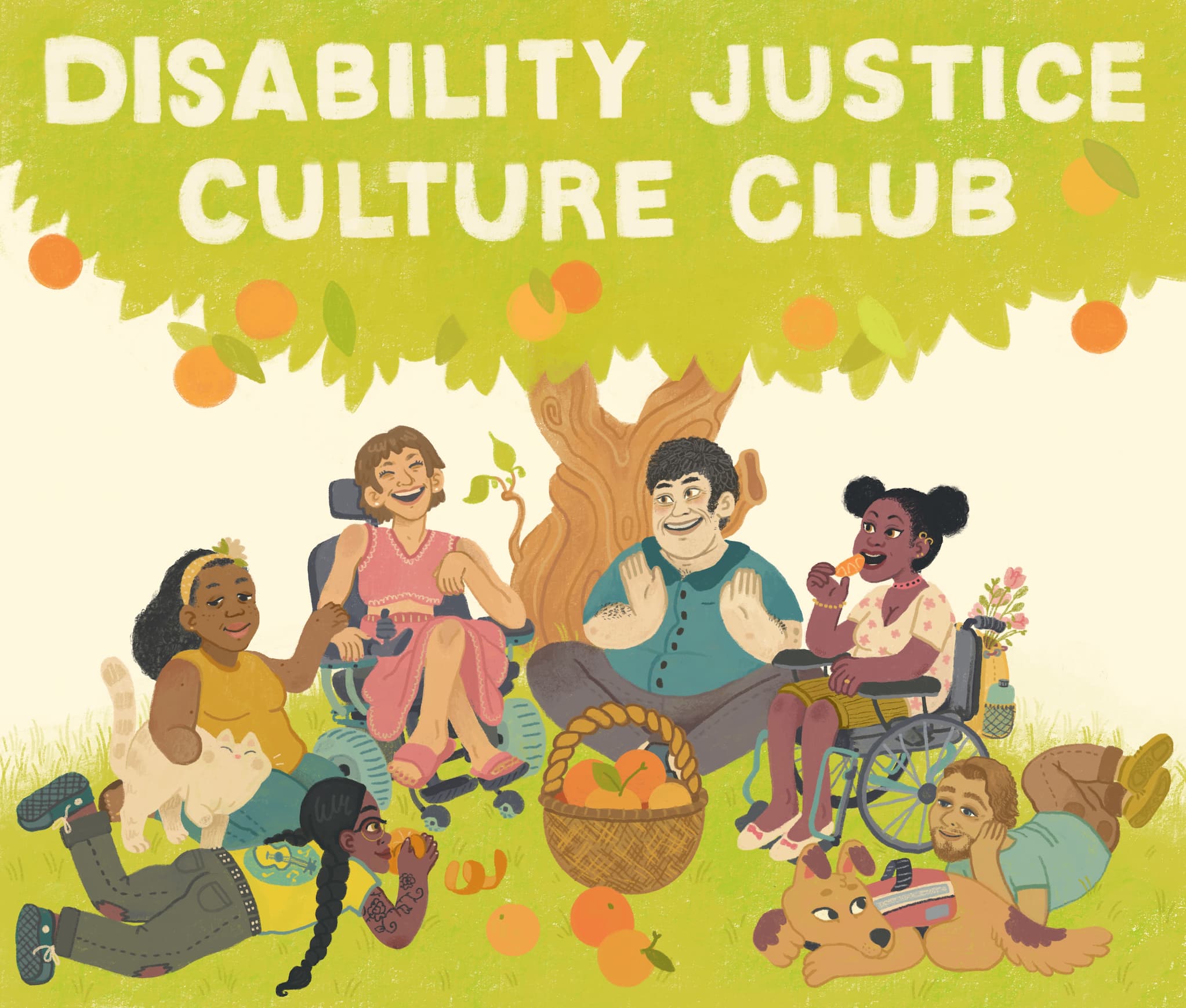
Disability Justice Culture Club (DJCC) illustration by Art Twink
Bengali American artist Art Twink created this image for the Disability Justice Culture Club (DJCC), a collective founded by Stacey Park Milbern in 2011 of disabled and neurodivergent Queer, Trans, Black, Indigenous, and People of Color (QTBIPOC) who cultivate disability justice, interdependent community, and joyful resistance.
-
Image
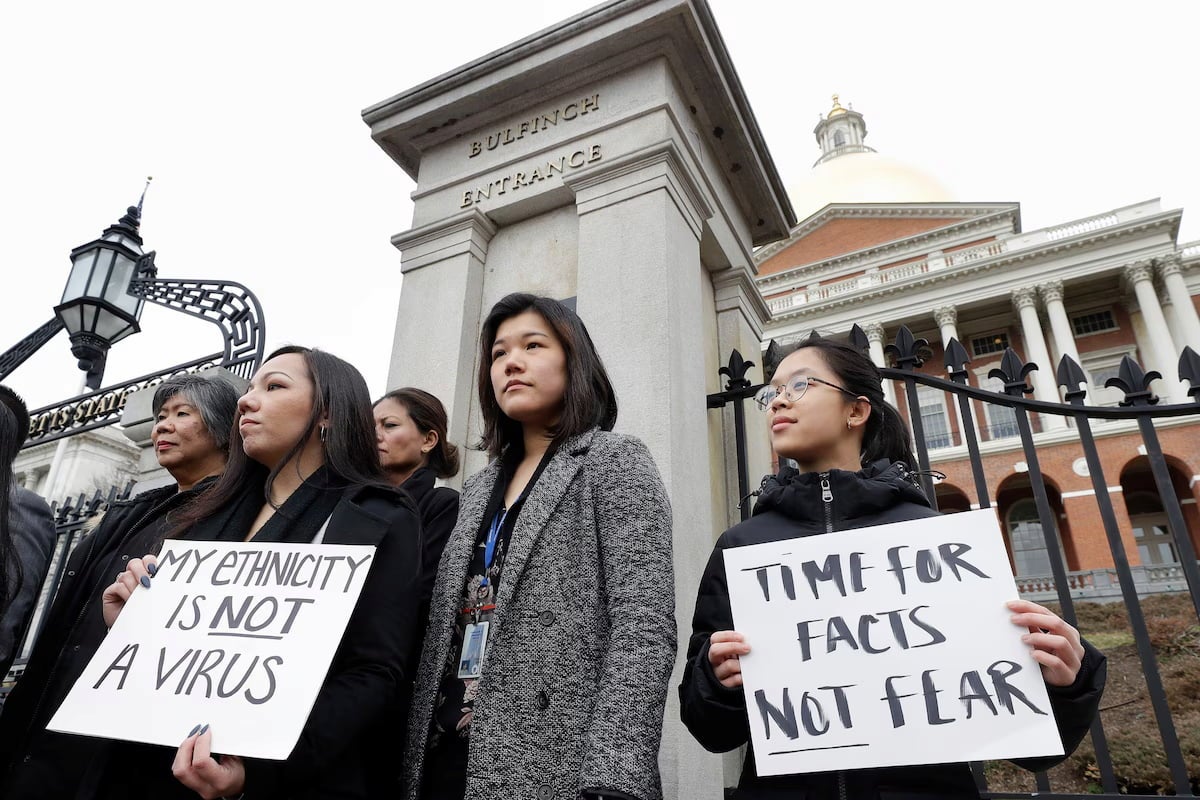
Protestors in 2020
Protestors stand outside the Boston State House during a 2020 demonstration in objection to anti-Asian rhetoric and misinformation surrounding the COVID-19 virus.
-
Image
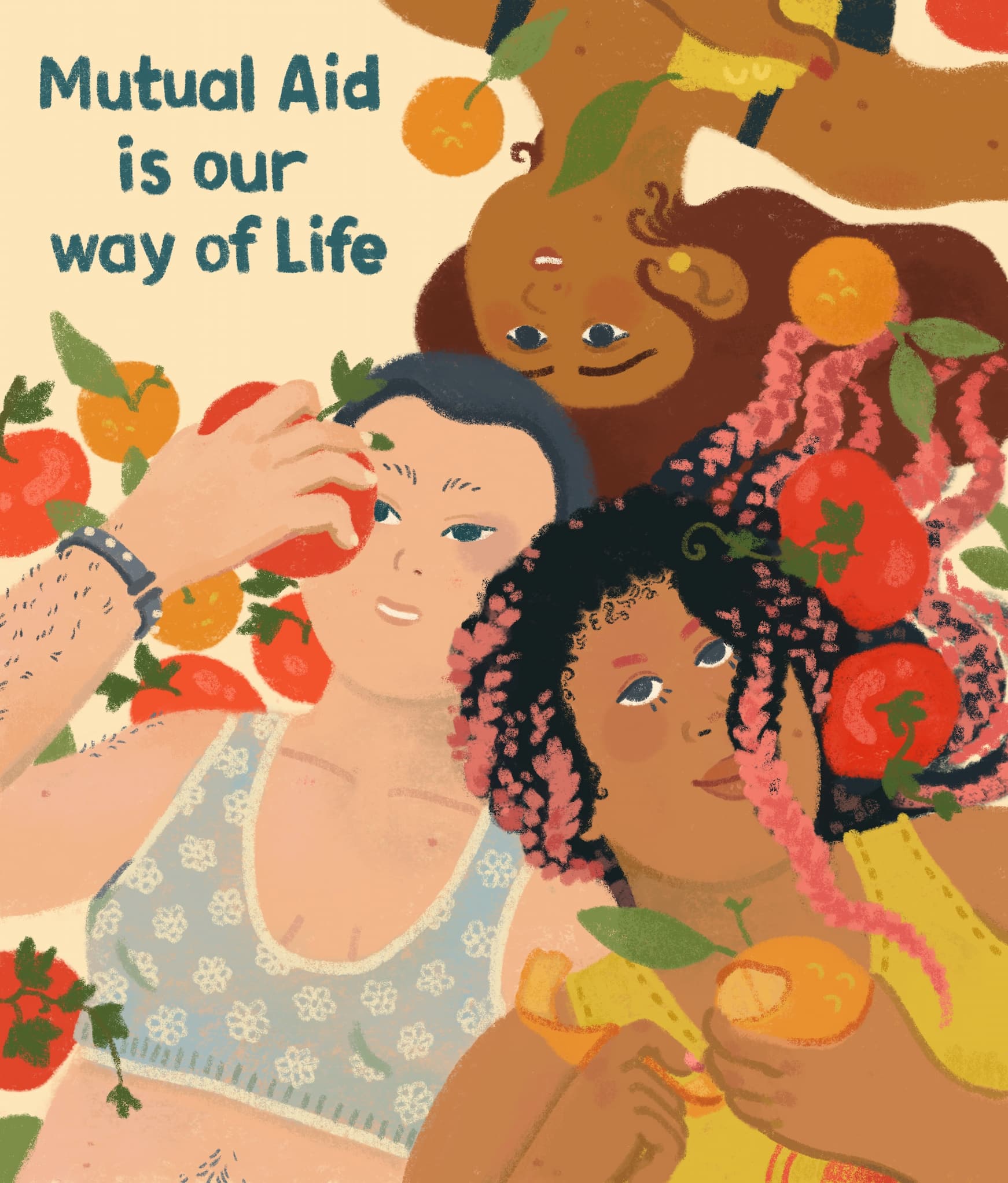
Mutual Aid Illustration by Art Twink
This illustration by Bengali American artist Art Twink depicts the importance of mutual aid as a way of life for disabled people, people of color, and other marginalized communities.
-
Video
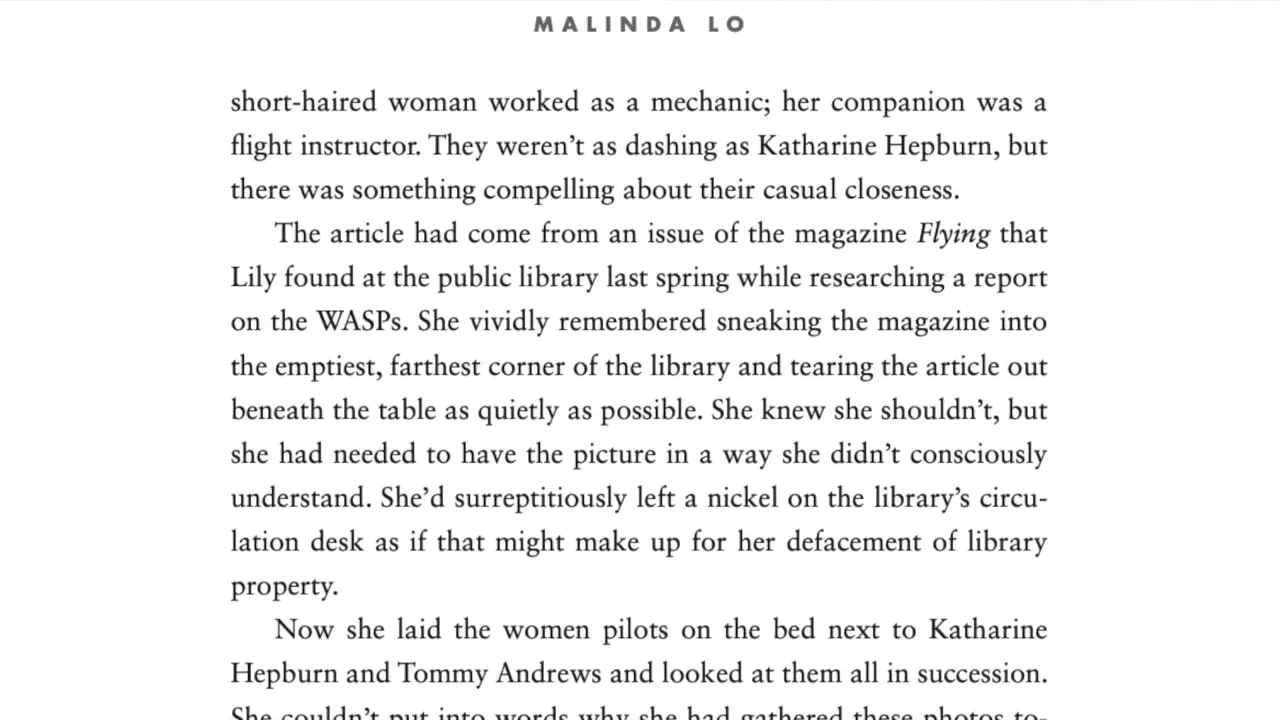
Author Malinda Lo Reading Excerpt from Last Night at the Telegraph Club
Author Malinda Lo reading from the beginning of her book, Last Night at the Telegraph Club (2021). In this excerpt, protagonist Lily Hu ponders her collection of photographs depicting women in masculine clothes—all based on real photographs encountered by Lo during her research for the book.
-
Video
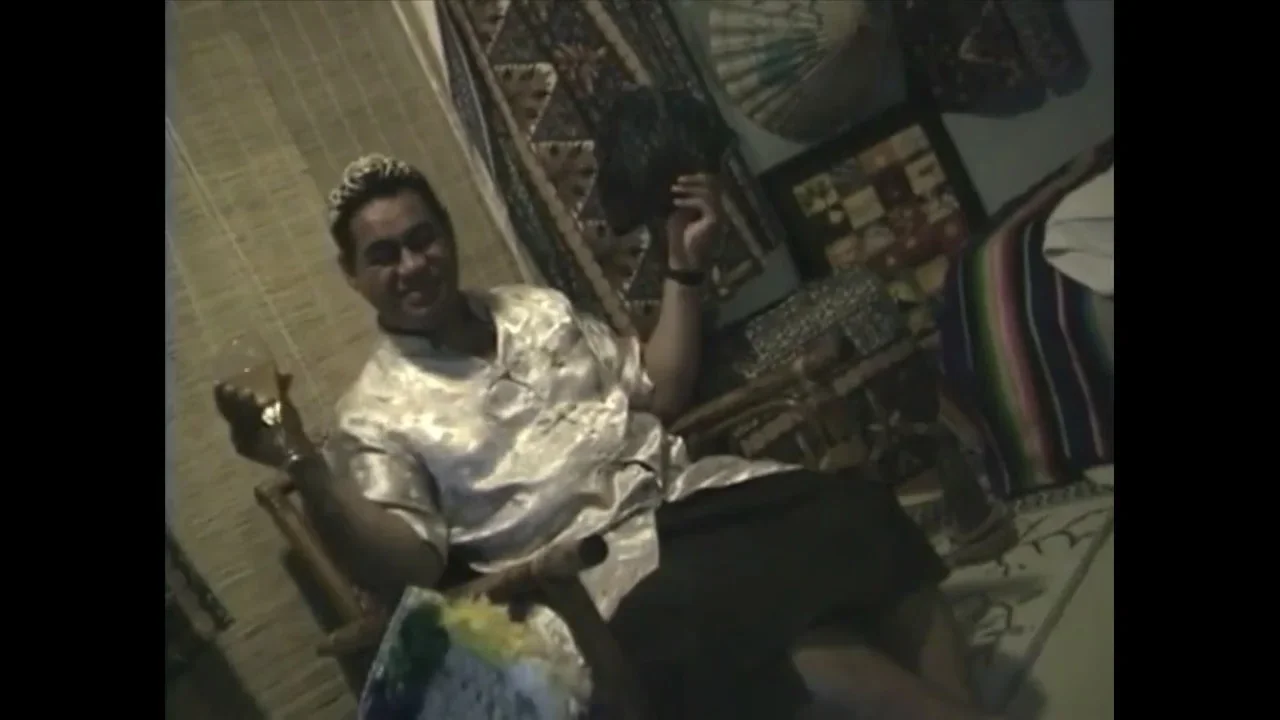
Excerpt from Dan Talaupapa McMullin’s Sinalela
In this clip of Dan Talaupapa McMullin’s short film Sinalela (2001), Indigenous faʻfafine Sinalela narrates about their life in present-day Sāmoa with their drag queen stepmother and stepsisters.
-
Audio
D’Lo Discussing His Work on NPR
In an interview on NPR’s Spilling the T, D’Lo discusses what it means to share his story as a Tamil Sri Lankan trans man and the impact of vulnerability on audiences in To T, or Not To T? A Comedic Trans Journey through (T)estosterone and Masculinity.
-
Image
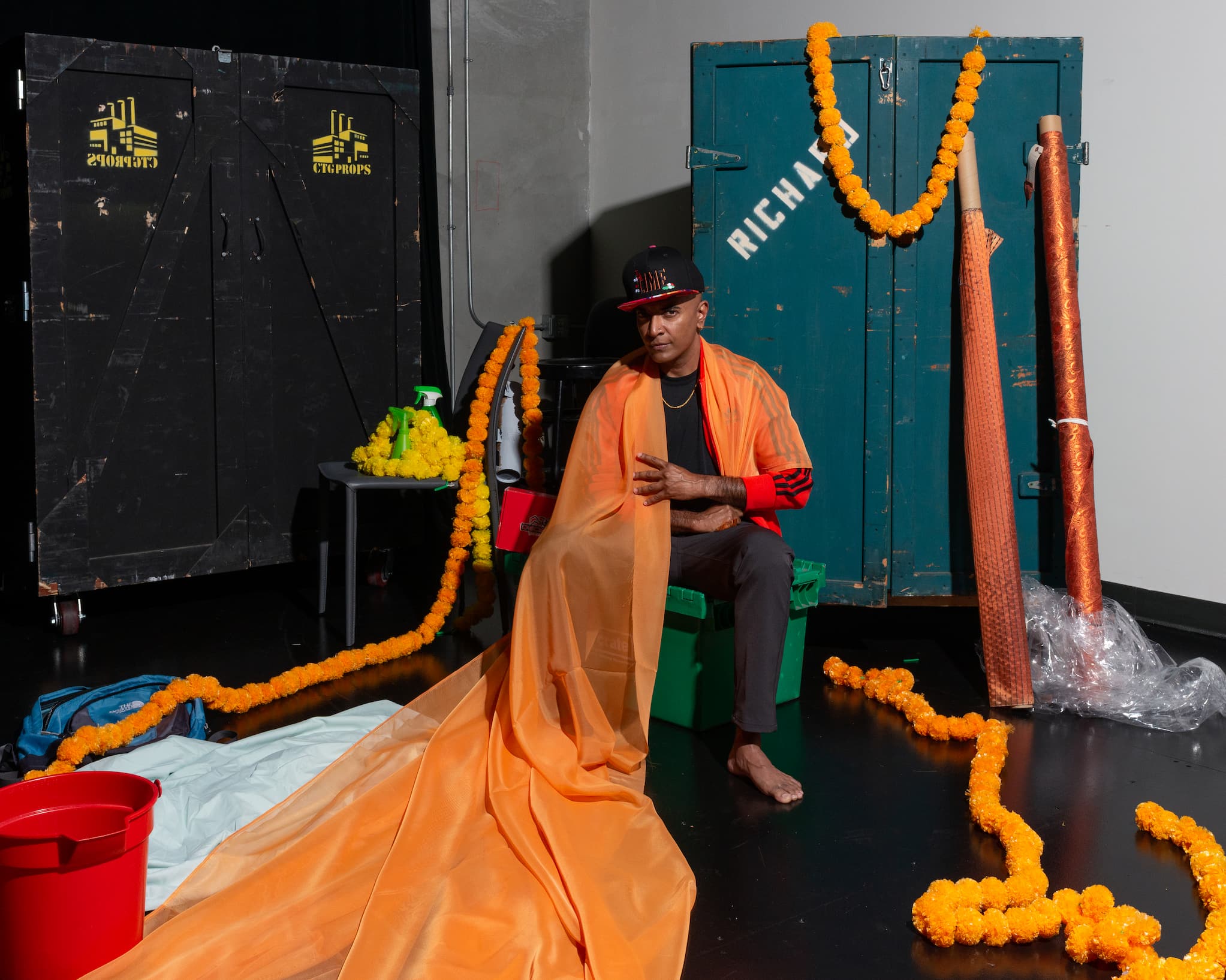
D’Lo Rehearsing To T, or Not To T? A Comedic Trans Journey through (T)estosterone and Masculinity
Performance artist D’Lo at a rehearsal for To T, or Not To T? A Comedic Trans Journey through (T)estosterone and Masculinity in 2022. The show follows D’Lo’s upbringing as he navigates his gender and cultural identities as a Tamil Sri Lankan trans man.
-
Video
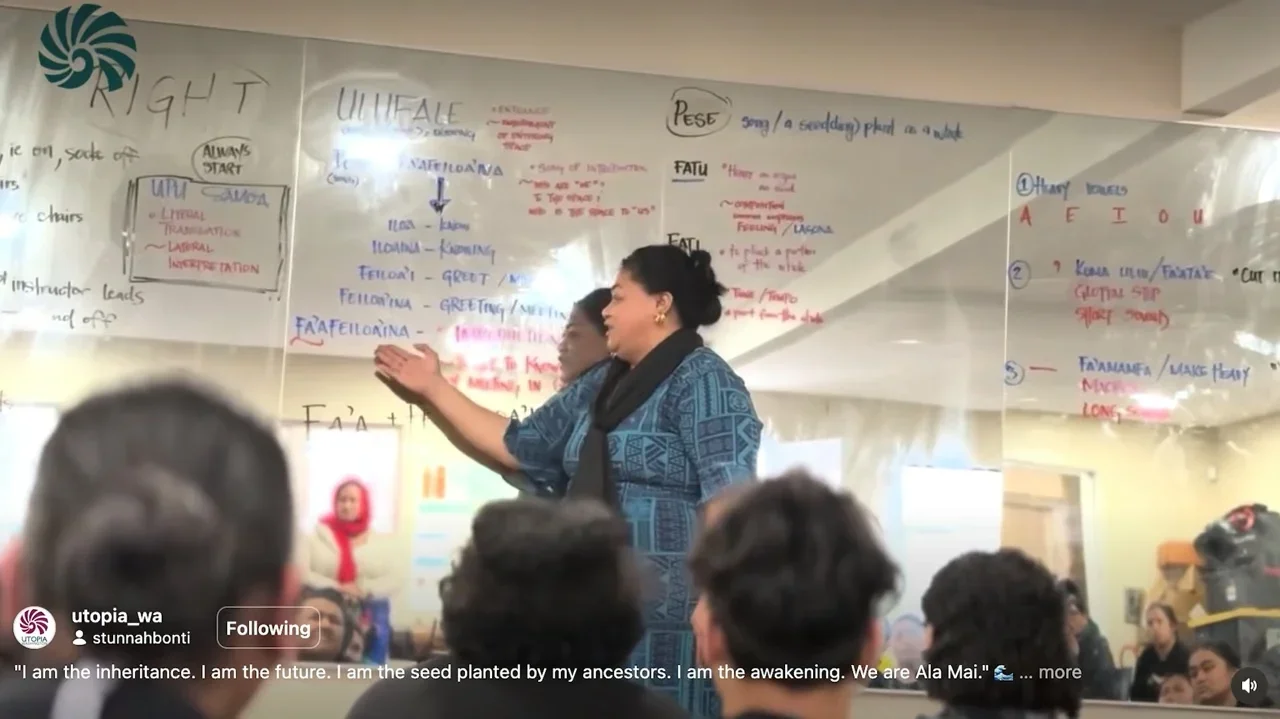
UTOPIA Washington’s ʻAla Mai Program
In UTOPIA Washington’s ʻAla Mai program, LGBTQ+ Pacific Islander youth and young adults explore traditional music, cultural dancing, storytelling, and handicrafts. Here, they participate in art lessons and practices leading up to the 2025 Laʻu Samoa Academic & Samoan Cultural Competition.
-
Audio
Dr. Amy Sueyoshi on the Importance of Uplifting Untold LGBTQ+ Histories
In an interview with One Institute, Dr. Amy Sueyoshi, author of Queer Compulsions: Race, Nation, and Sexuality in the Affairs of Yone Noguchi, explains the importance of uplifting untold LGBTQ+ histories.
-
Image
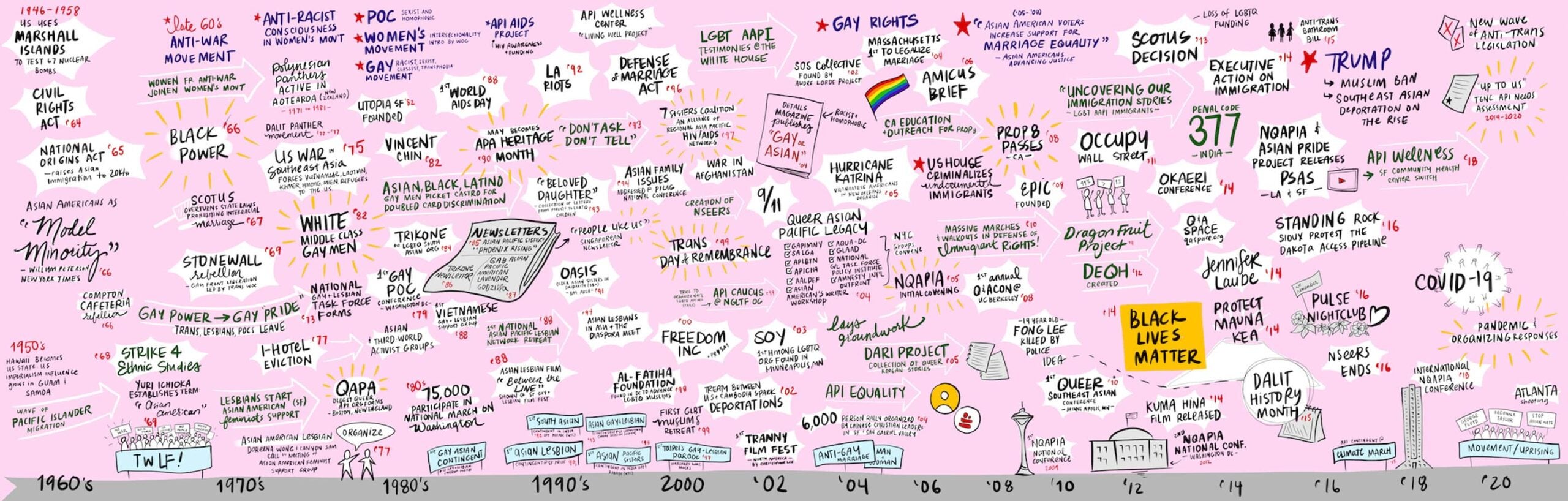
Trans & Queer API Timeline
A timeline of queer and trans Asian American and Pacific Islander history, by Lavender Phoenix and Tracy Nguyen (2021). The timeline, as well as the oral histories they have collected through their Dragon Fruit Project, are available on their online museum.
-
Video
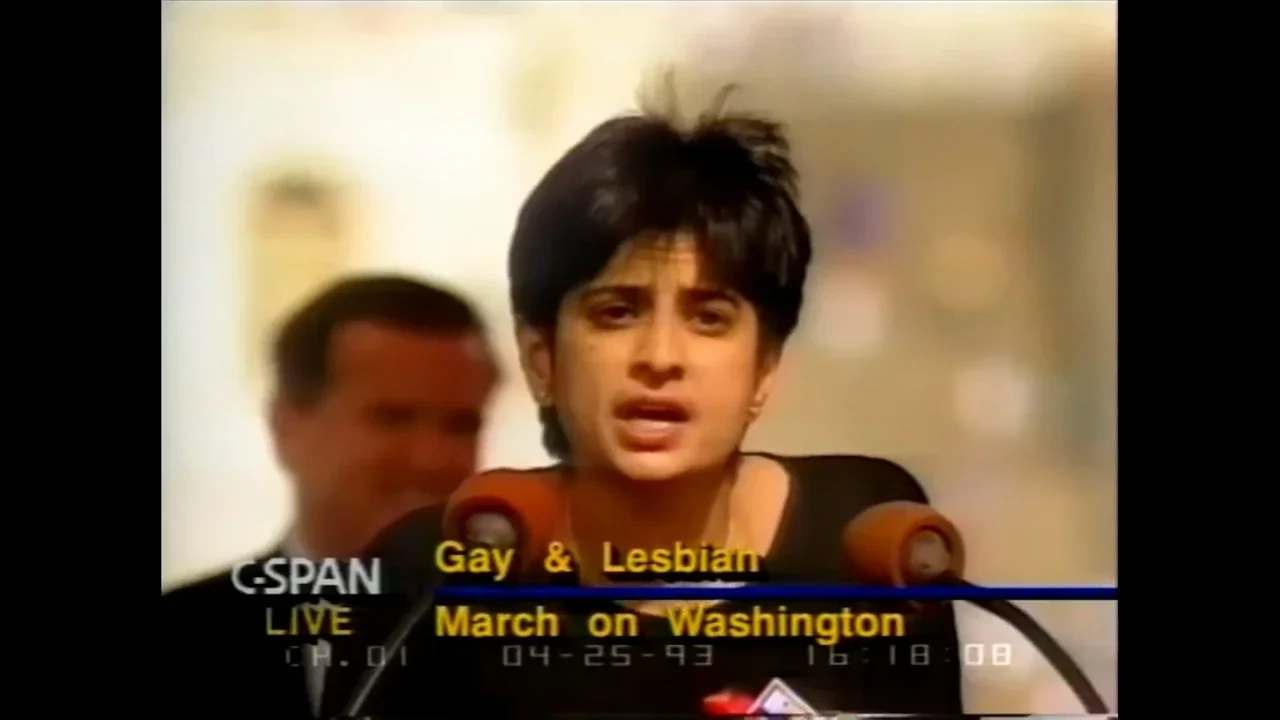
Urvashi Vaid Speaking at 1993 March on Washington for Lesbian, Gay, and Bi Rights and Liberation
In this clip from Urvashi Vaid’s powerful speech at the 1993 March on Washington for Lesbian, Gay, and Bi Rights and Liberation, Vaid criticizes what she sees as the political, spiritual, and moral corruption of the far right.
-

Image
Dan Choi joins protestors in front of the White House
Former US Army Lieutenant Dan Choi (center, facing camera) handcuffed to a White House fence alongside supporters in an act of protest against the US military’s “Don’t Ask, Don’t Tell” policy.
-
Video
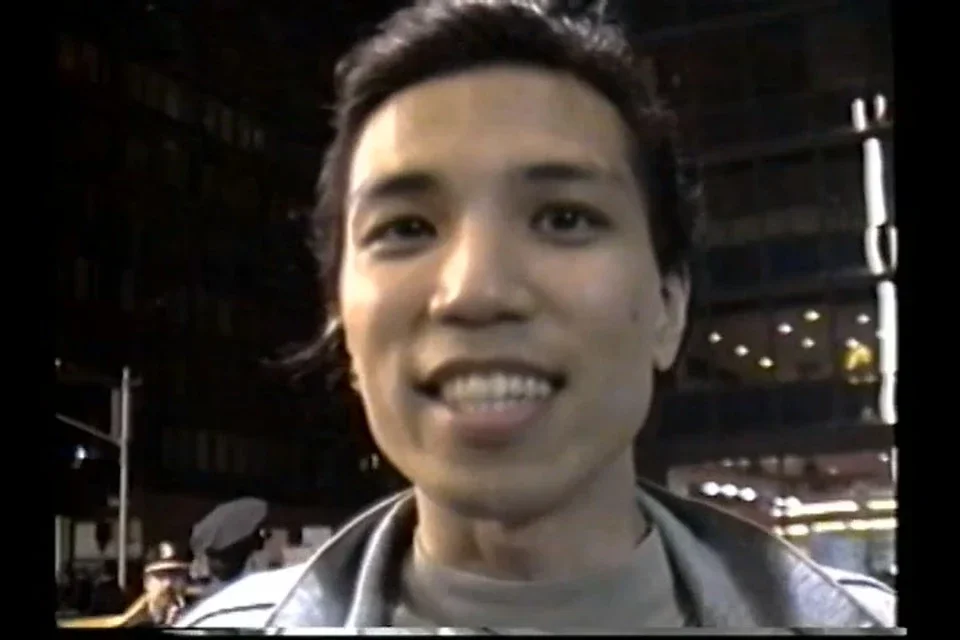
Protestor on Problematic Representation in Miss Saigon
A protestor at the Broadway opening night of Miss Saigon explains the show’s problematic representation of Asian women and partnership with Lambda Legal Defense Fund as its fundraiser.
-
Video
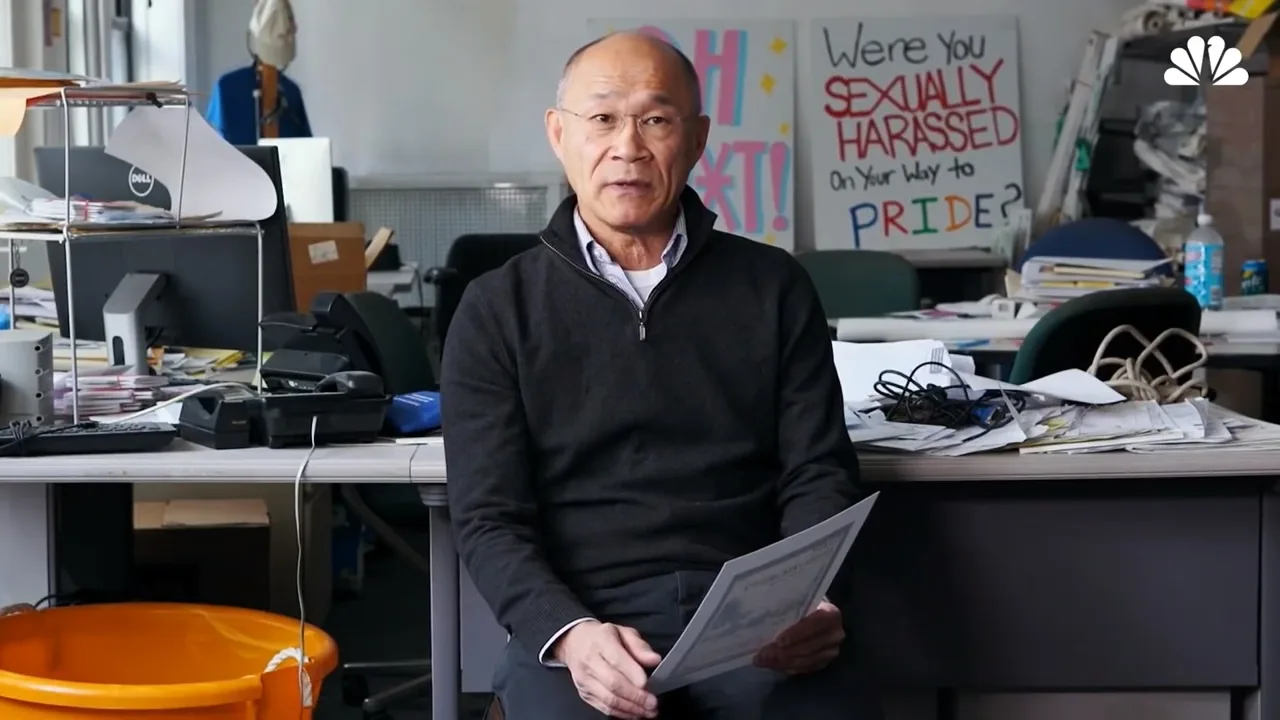
Founding of the Asian Caucus at Third World Lesbian/Gay Conference
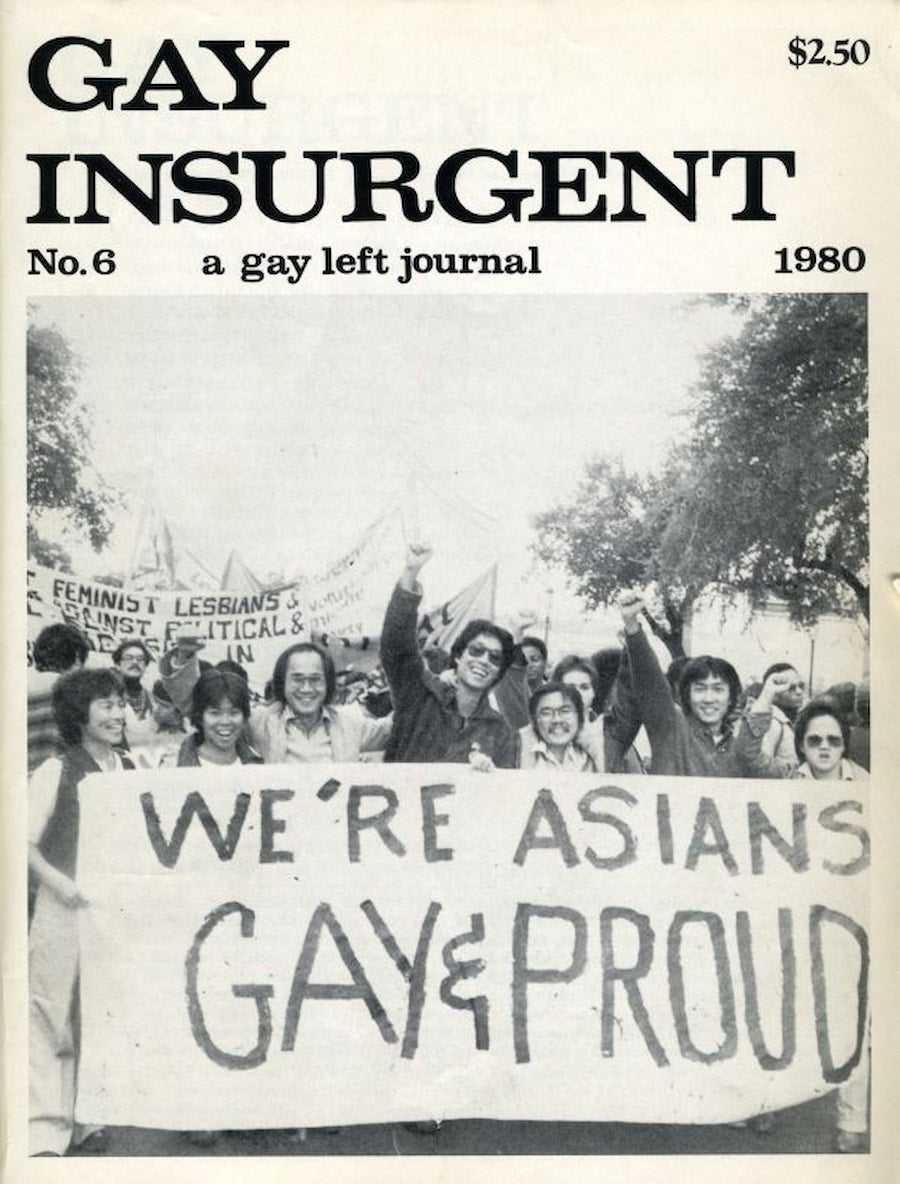
Gisele Pohan and Don Kao tell their stories of holding the “We’re Asians, Gay & Proud” banner at the 1979 March on Washington for Lesbian and Gay Rights. At a time where white people dominated LGBTQ+ spaces, the banner proclaimed LGBTQ+ Asian American and Pacific Islander representation.
-
Image
1980 Cover of Gay Insurgent: Journal of Gay Liberation Research, Reviews and News
The 1980 cover of Gay Insurgent: Journal of Gay Liberation Research, Reviews and News, featuring protestors holding a banner proclaiming “We’re Asians, Gay & Proud” at the first March on Washington for Lesbian and Gay Rights in 1979.
-
Video
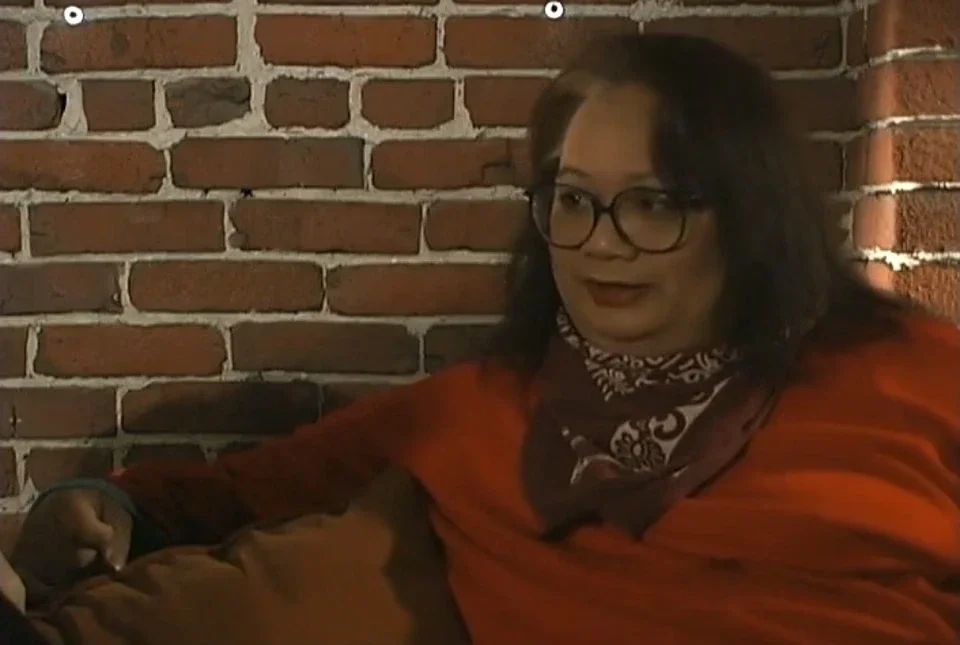
Tamara Ching Speaking on Police Raids and Sweeps Targeting the LGBTQ+ Community in San Francisco
Tamara Ching, a transgender woman of Native Hawaiian, Chinese, and German heritage, frequented the Tenderloin during the 1960s and was a regular patron at Compton’s Cafeteria. Here, Ching describes the police raids and sweeps at establishments where LGBTQ+ people gathered.
-
Image
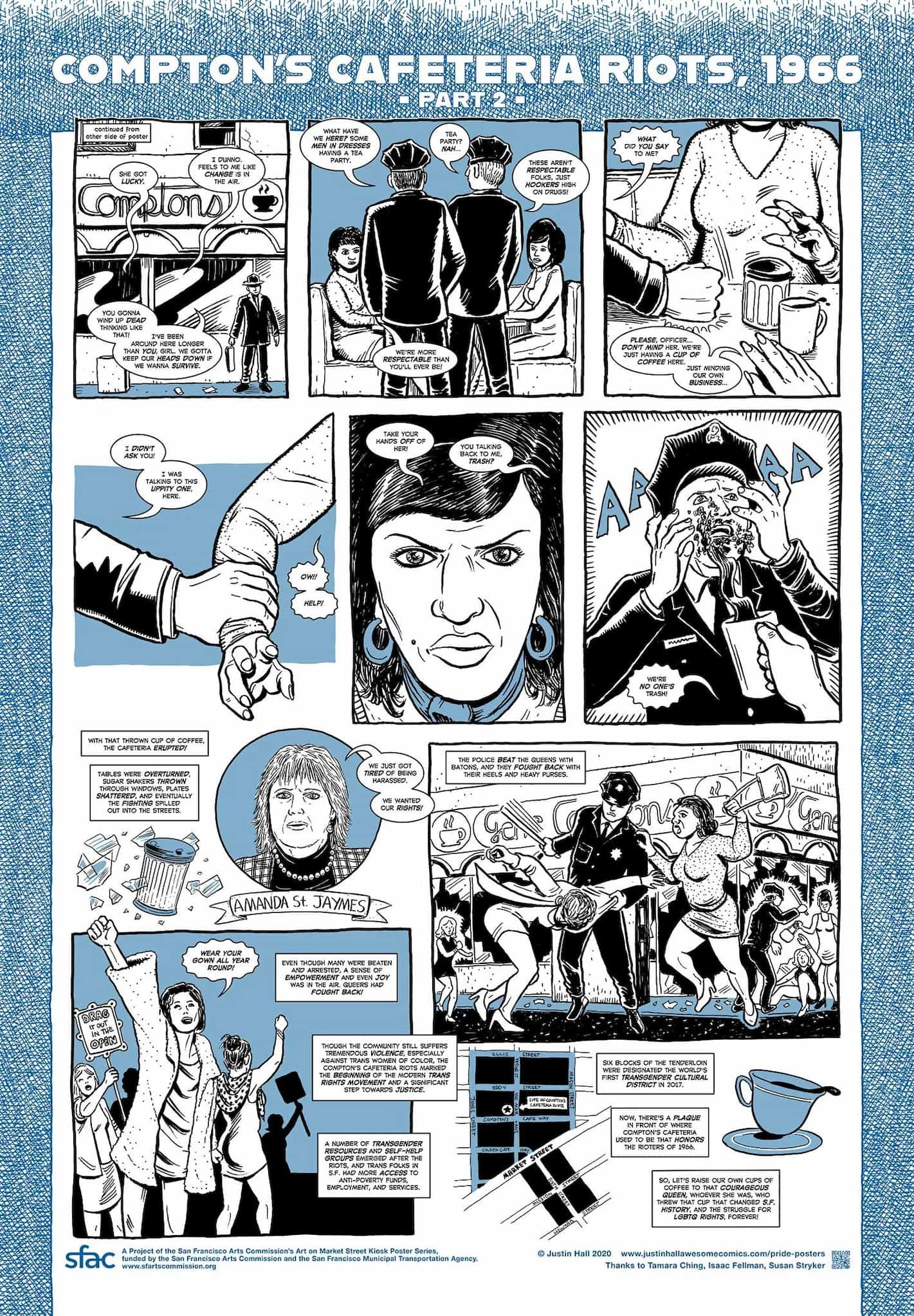
Justin Hall’s Compton’s Cafeteria Riots, 1966 (Part 2)
This poster by artist Justin Hall illustrates the 1966 Compton’s Cafeteria Riots in San Francisco’s Tenderloin District, where a group of trans women and drag queens rebelled against police harassment. The riot catalyzed the trans rights and larger LGBTQ+ movement.
-
Image
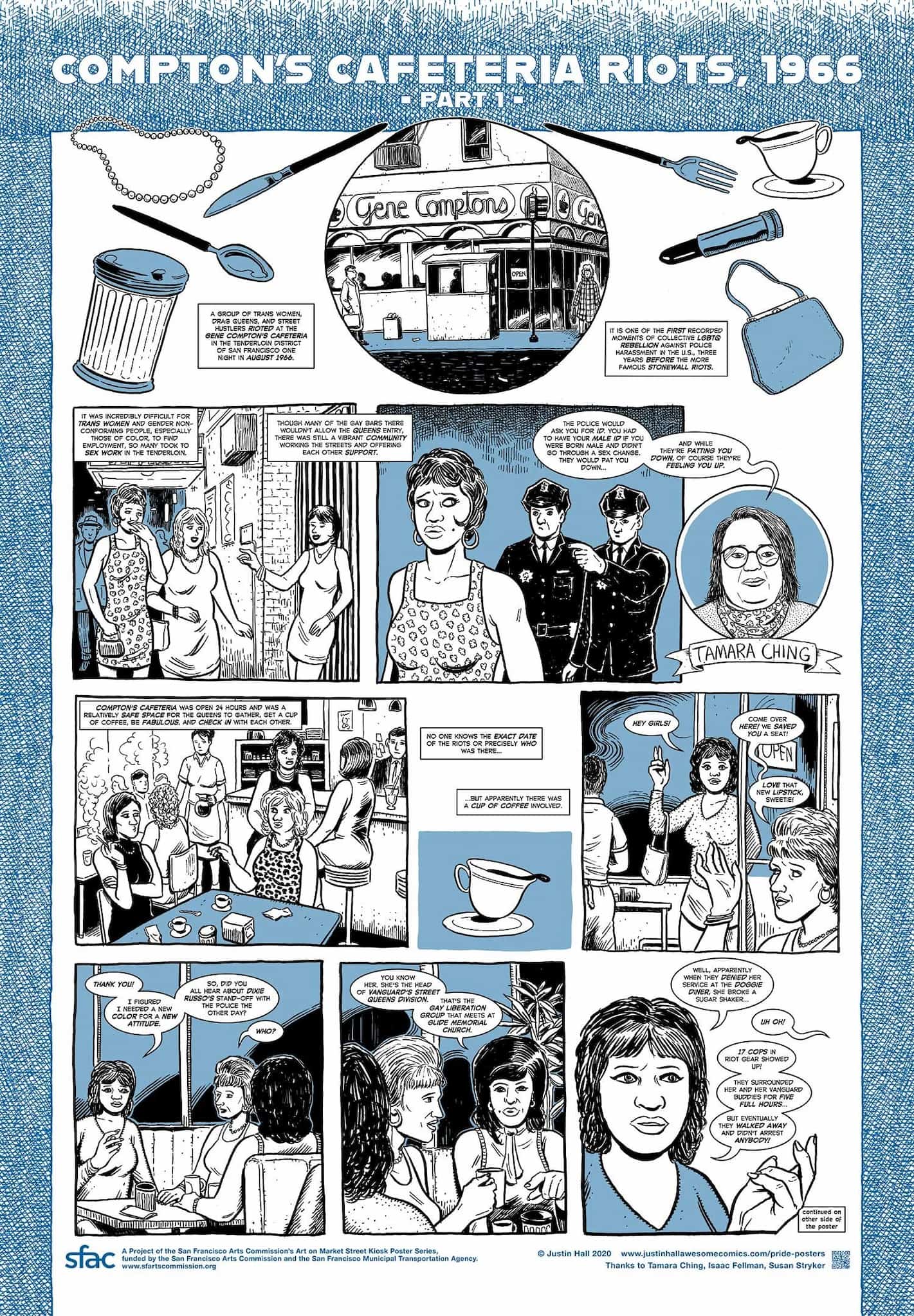
Justin Hall’s Compton’s Cafeteria Riots, 1966 (Part 1)
This poster by artist Justin Hall illustrates the 1966 Compton’s Cafeteria Riots in San Francisco’s Tenderloin District, where a group of trans women and drag queens rebelled against police harassment. The riot catalyzed the trans rights and larger LGBTQ+ movement.
-
Image
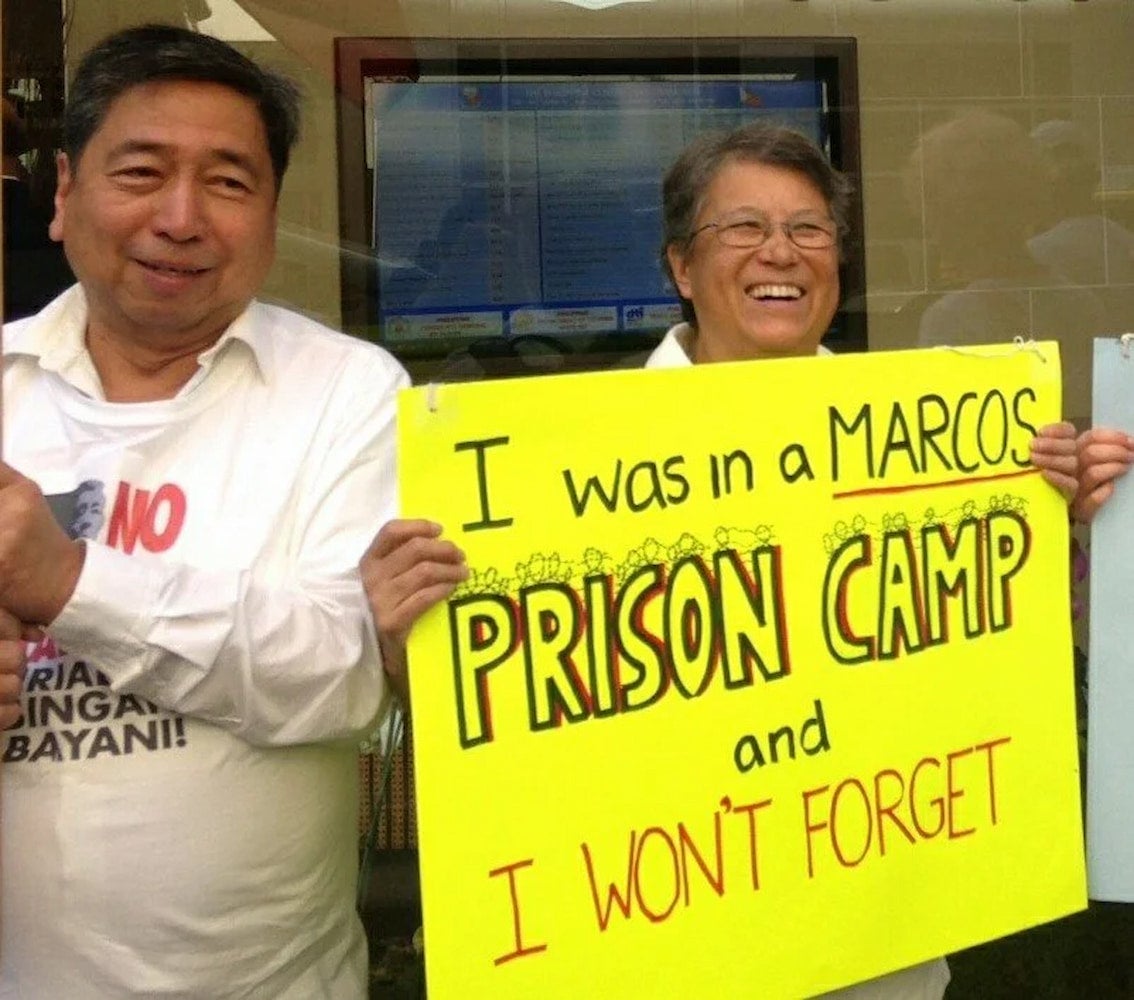
Melinda Paras, Katipunan ng mga Demokratikong Pilipino (KDP) Leader
As a leader for Katipunan ng mga Demokratikong Pilipino in the 1970s, Melinda Paras (right) kept her sexuality a secret out of concern that it would cause members to question her leadership, though her anti-martial law activism and arrest in the Philippines helped maintain her credibility.
-
Image
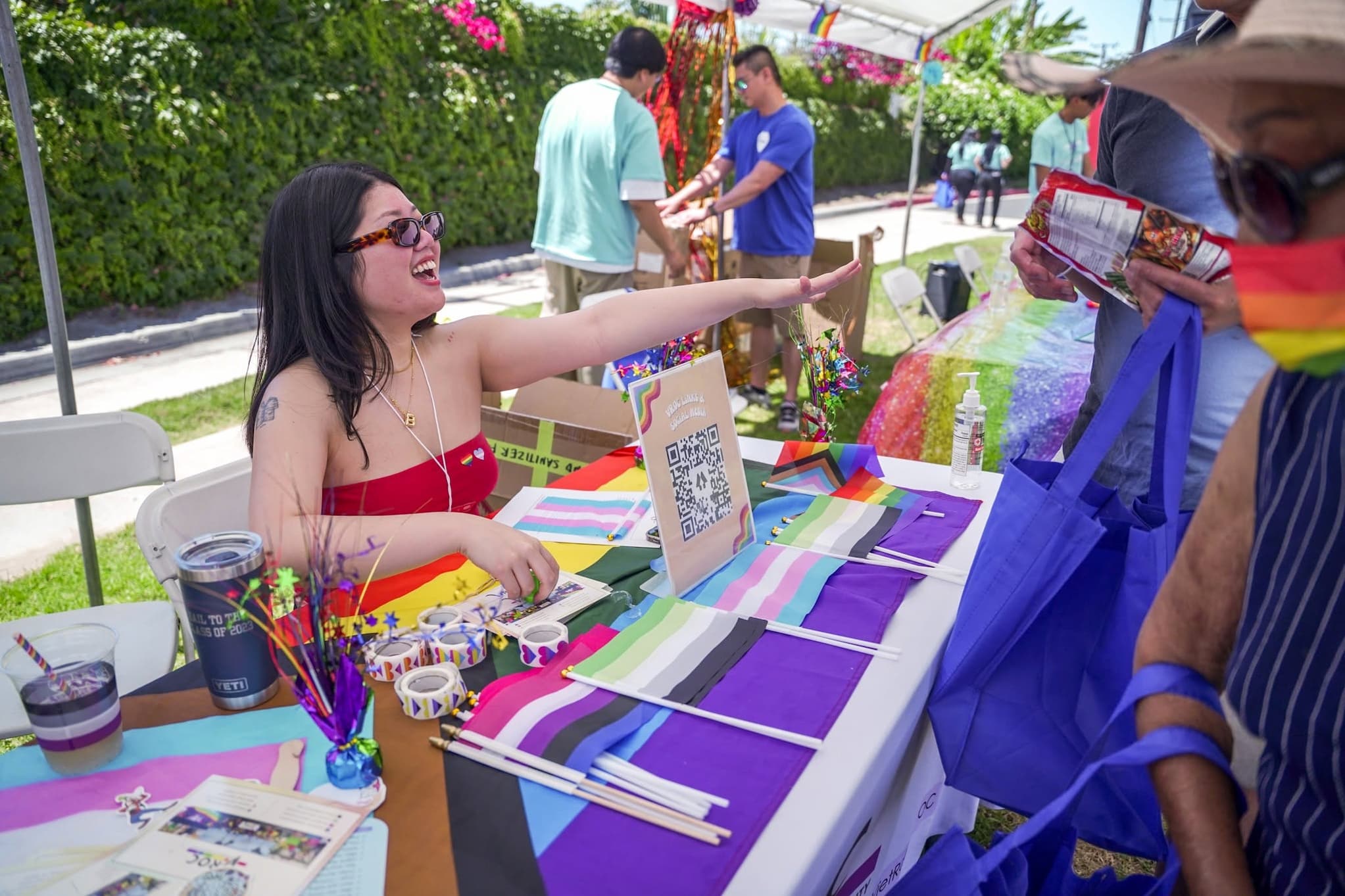
Viet Rainbow of Orange County’s (VROC) table at Hot Person Summer 2024
Viet Rainbow of Orange County’s (VROC) table at Hot Person Summer 2024. By providing gender-affirming clothing, sexual health clinics, basic care products, and therapeutic experiences their annual resource fair is one way VROC supports the health and wellbeing of their community.