



Search the Media Repository
Discover the curated images, videos, and primary sources featured throughout Foundations and Futures
History is more than just text on a page; it is the photographs, voices, and artifacts of the people who lived it. The images and recordings featured across Foundations and Futures are part of a meticulously curated media repository. Whether you are building a lesson plan or investigating an artifact, you can use this database to trace the provenance of our media: discover who created an asset, the historical context behind it, and how it can be used to bring Asian American and Pacific Islander experiences into your classroom.
Multimedia
Chapters
-
Image
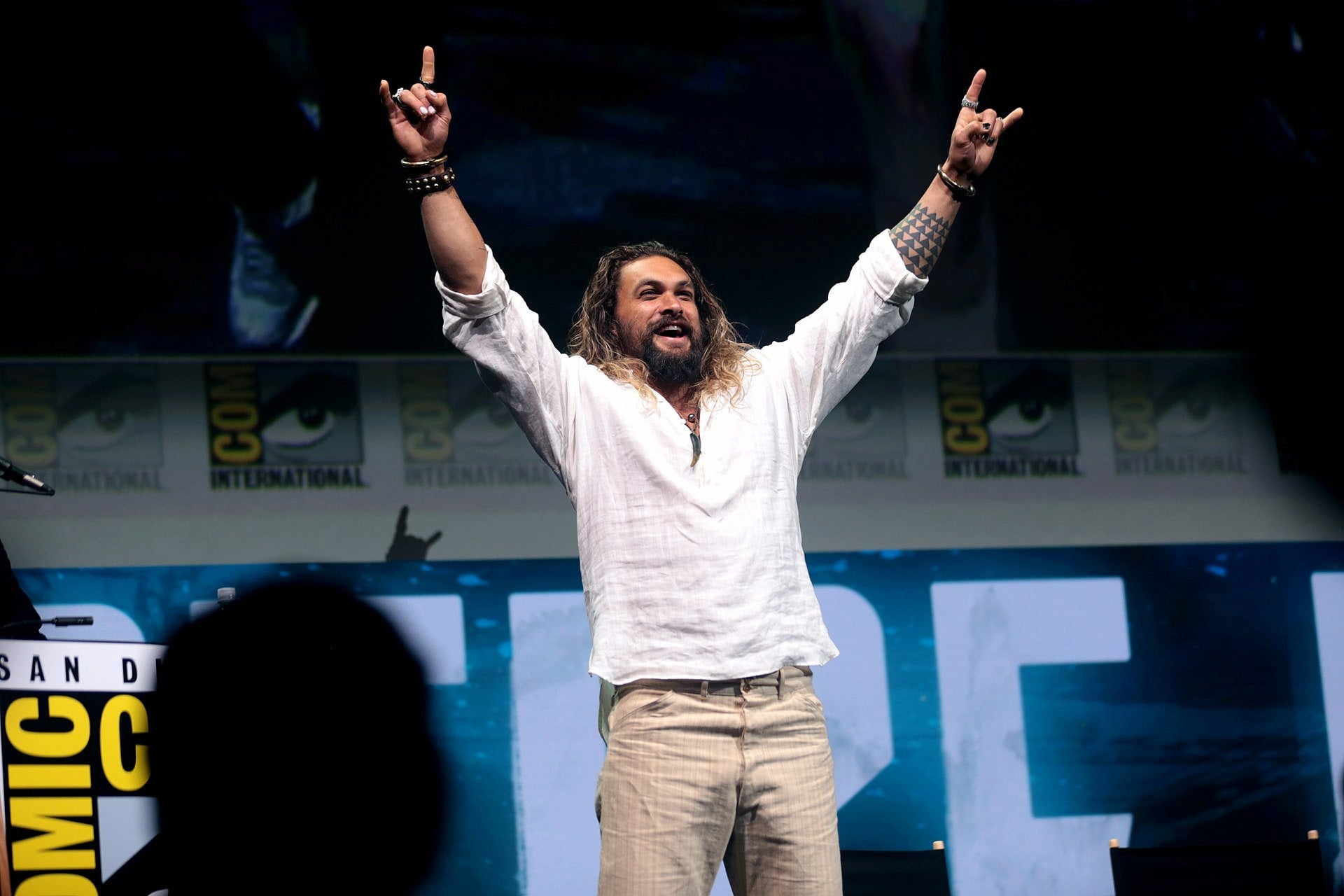
Jason Momoa Gestures to the Crowd From a Stage
-

Image
Naomi Osaka Prepares to Return Serve
-
Image
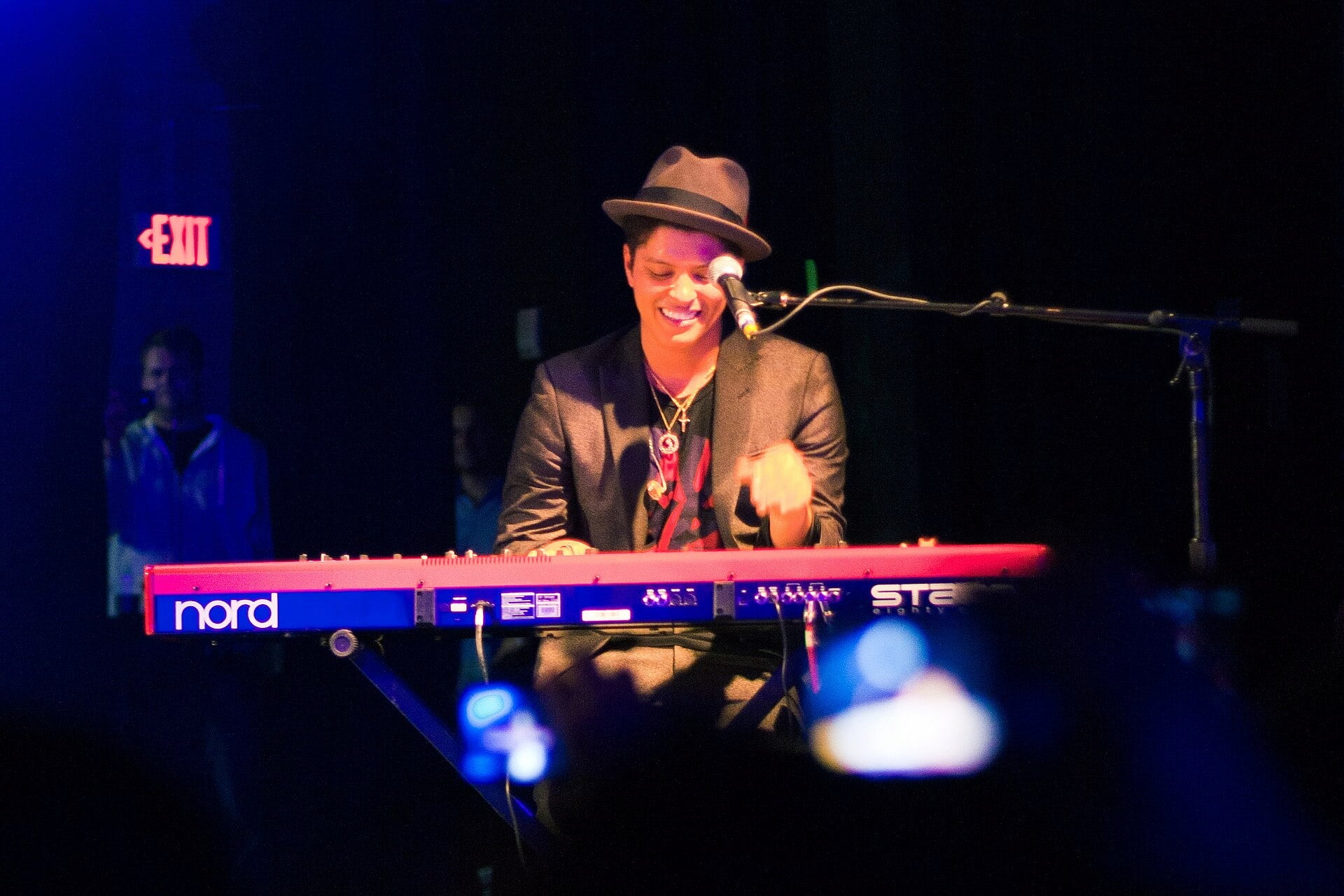
Bruno Mars Playing Keyboard at a Concert
-
Image
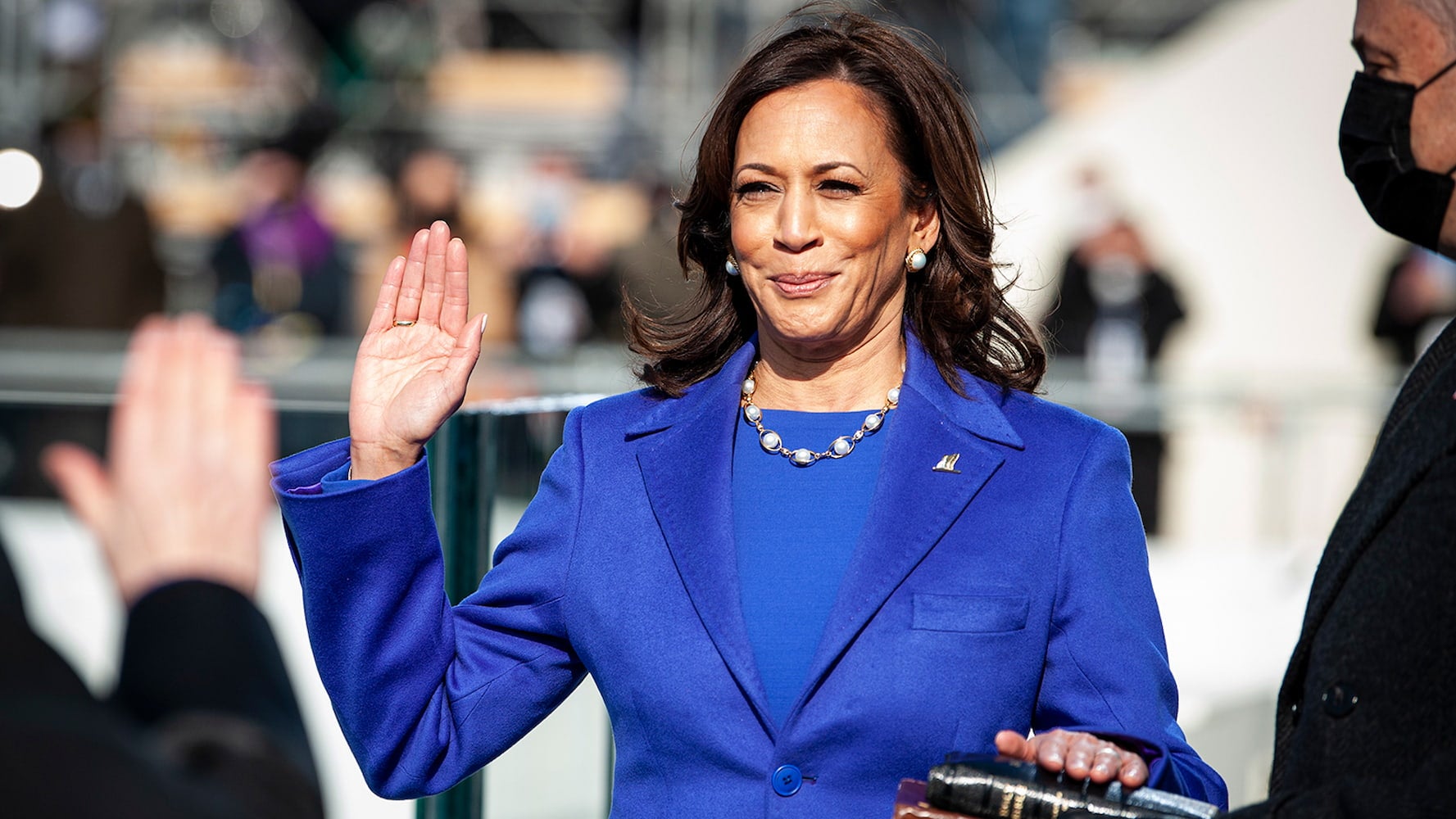
Kamala Harris Being Sworn into Office
-
Image
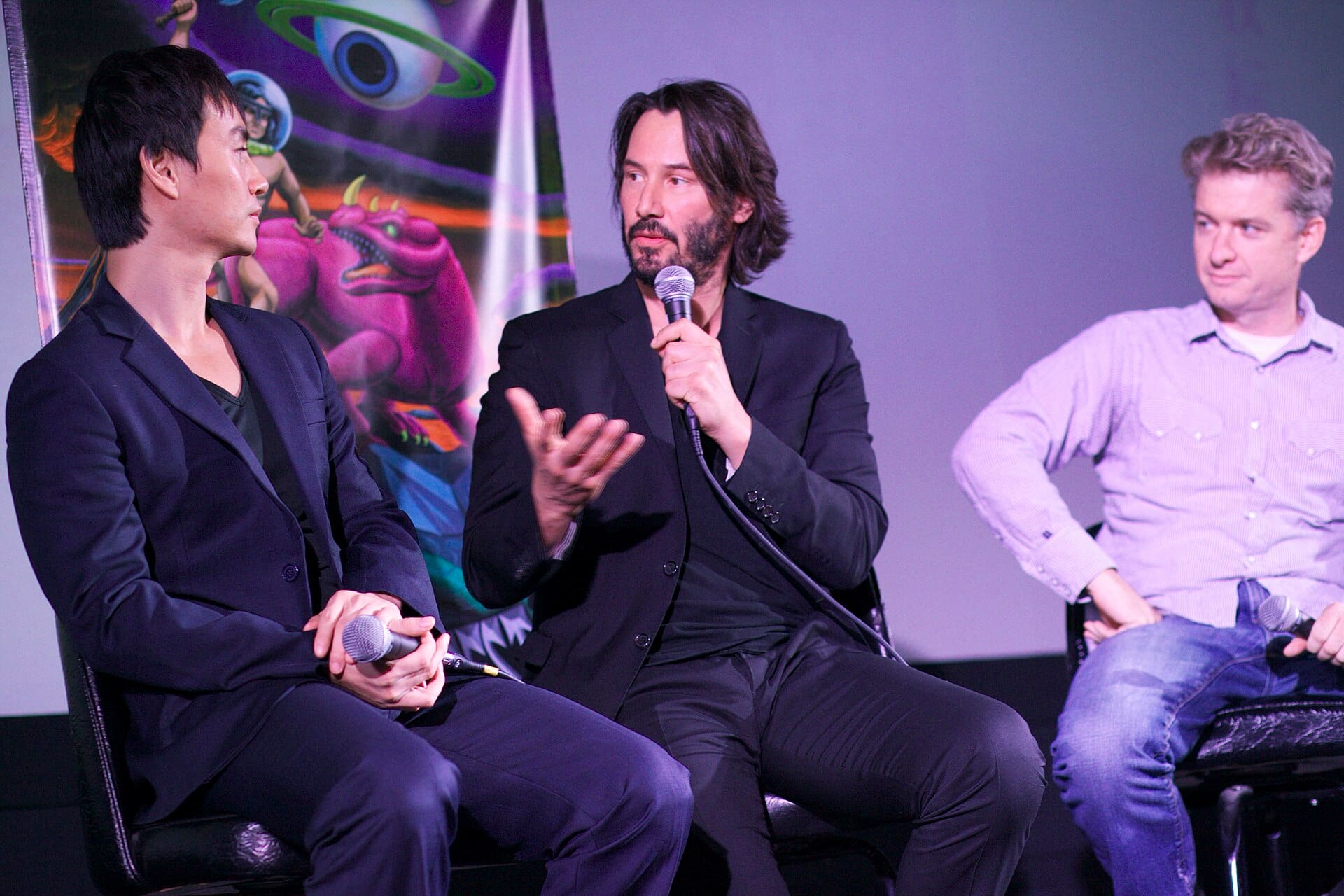
Keanu Reaves Speaking on a Panel Interview
-

Image
Juju Smith Pointing to the Crowd
-
Image
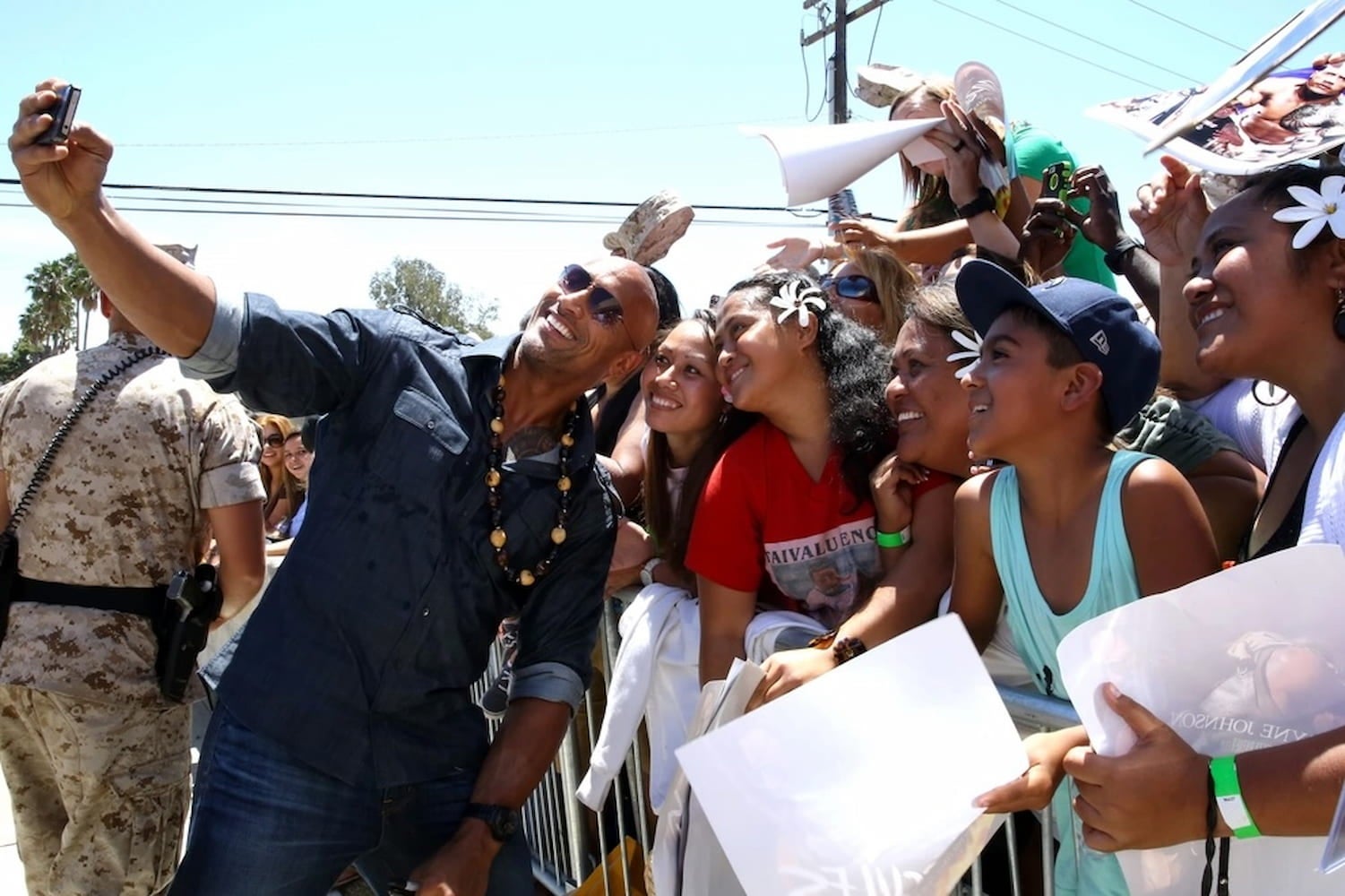
Dwayne “The Rock” Johnson Taking a Selfie with Fans
-

Image
Celebrity Multiracial AA&PIs
Dwayne “The Rock” Johnson, Jason Momoa, H.E.R., Kamala Harris, Bruno Mars, Keanu Reeves, Naomi Osaka, and Juju Smith-Schuster are among the US’s most famous multiracial Pacific Islanders and Asian Americans.
-
Image
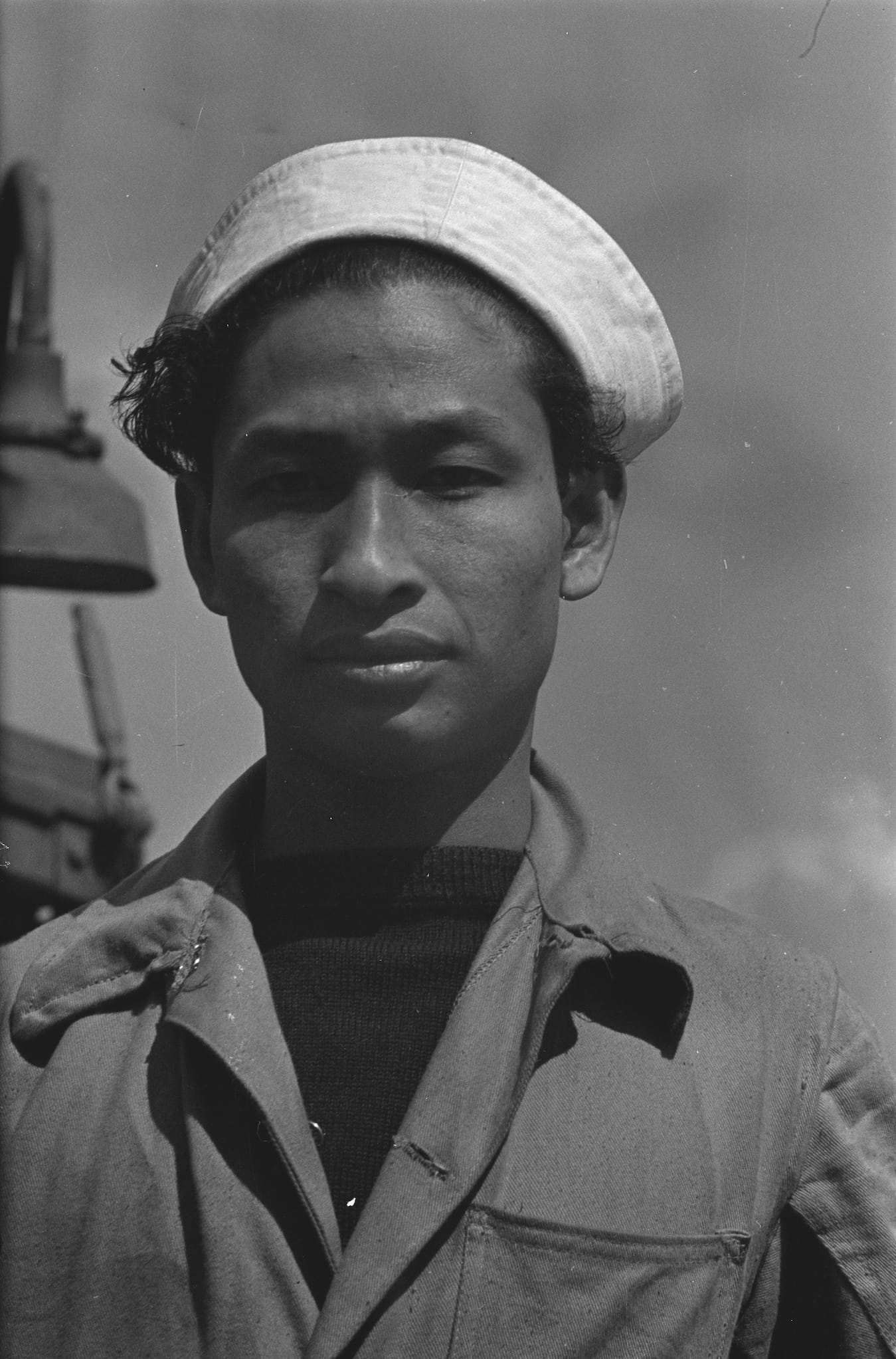
An Indonesian sailor during World War II.
An Indonesian sailor during World War II. The trial of the detained sailors set the stage for future refugee cases in the US.
-
Image
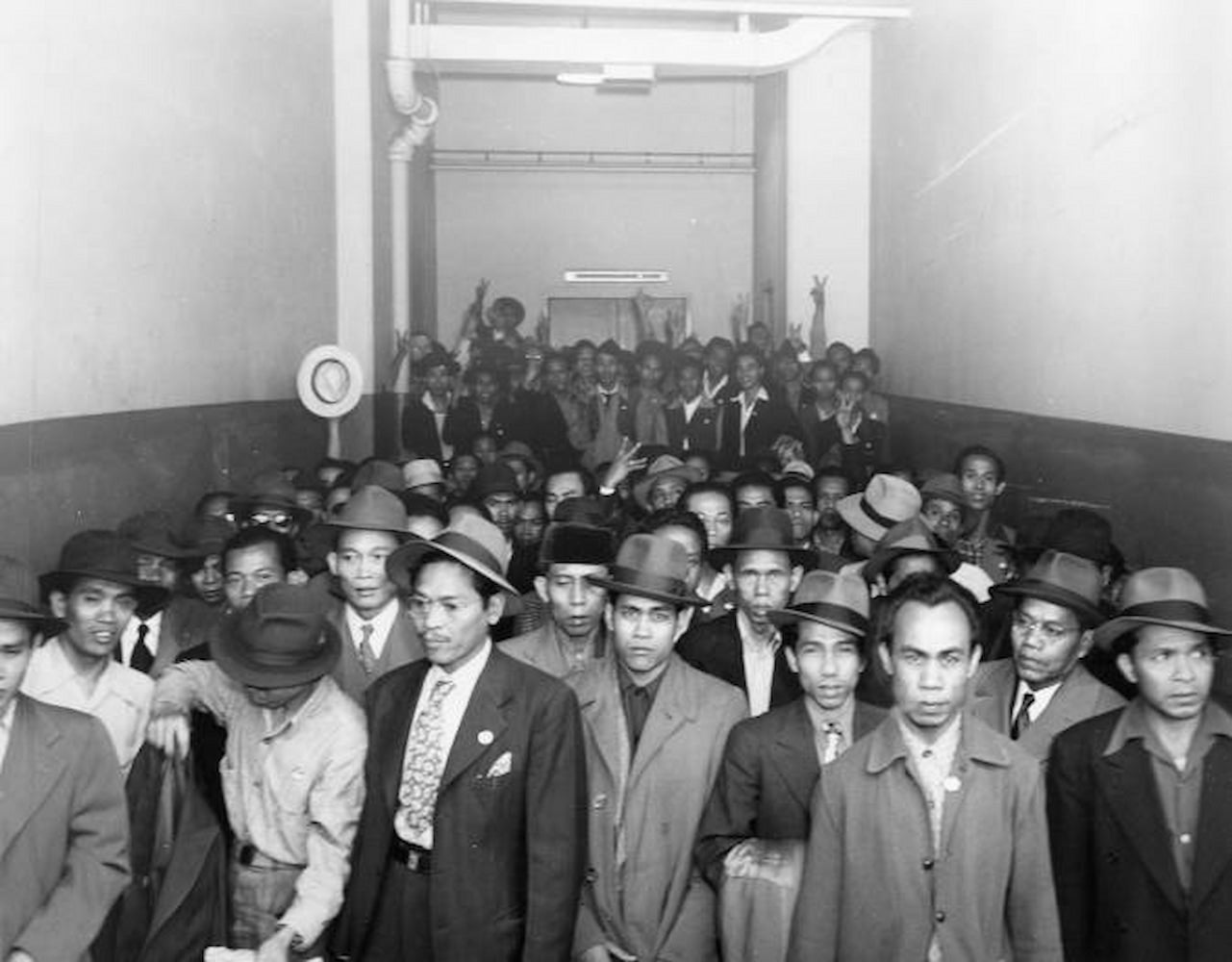
Indonesian men at immigration detention facility in San Francisco to be transported to immigration detention facility in Crystal City, Texas
An archival collection undertaken as a part of the California State University Japanese American Digitization Project shows the transport of the Indonesian maritime workers to Crystal City, Texas, where Japanese Americans were also being incarcerated during World War II.
-
Image
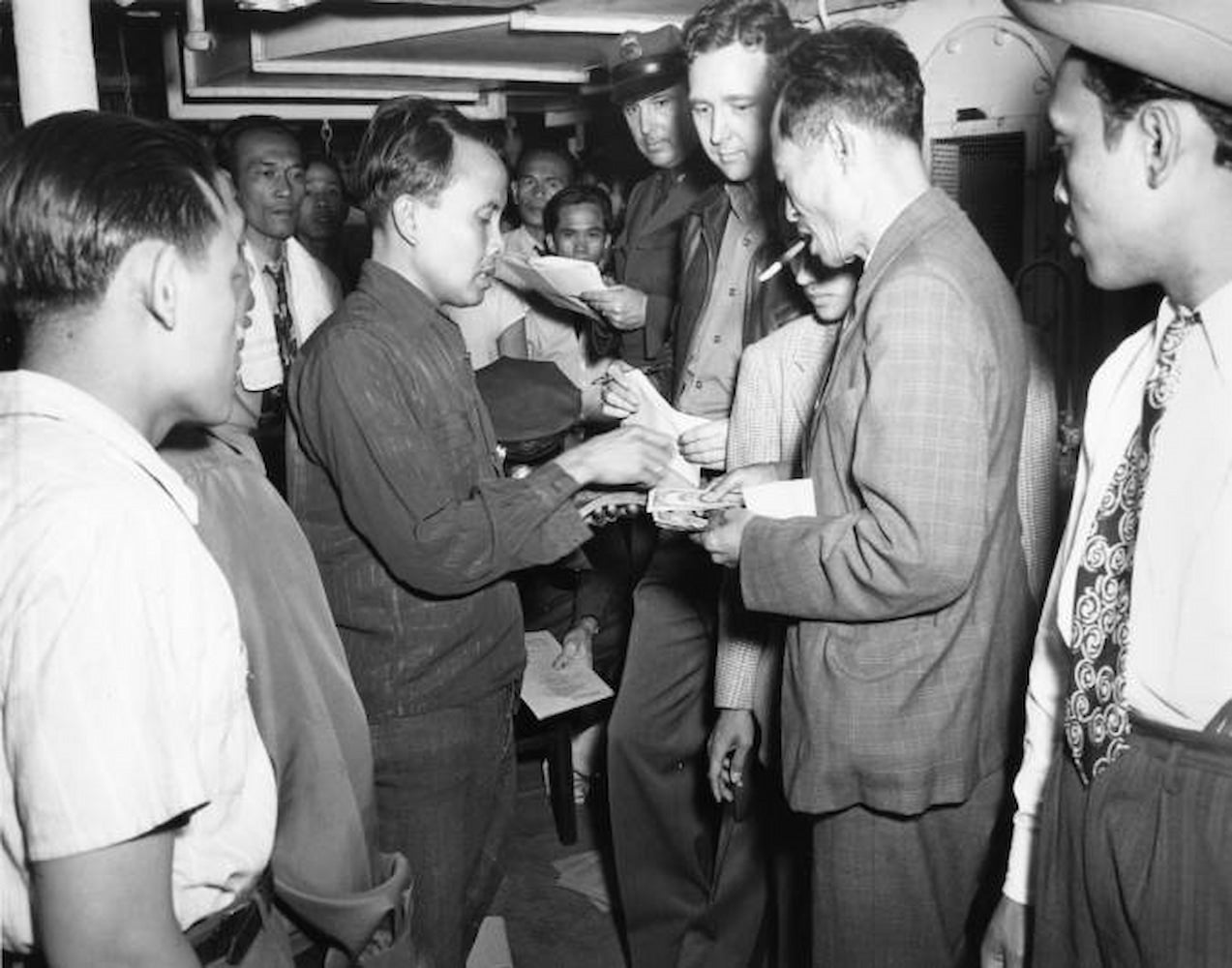
Indonesian deportees changing currency
Indonesian workers exchanged currency while undergoing deportation from San Francisco, California, to Jakarta, Indonesia (then called Batavia, Dutch East Indies).
-
Image
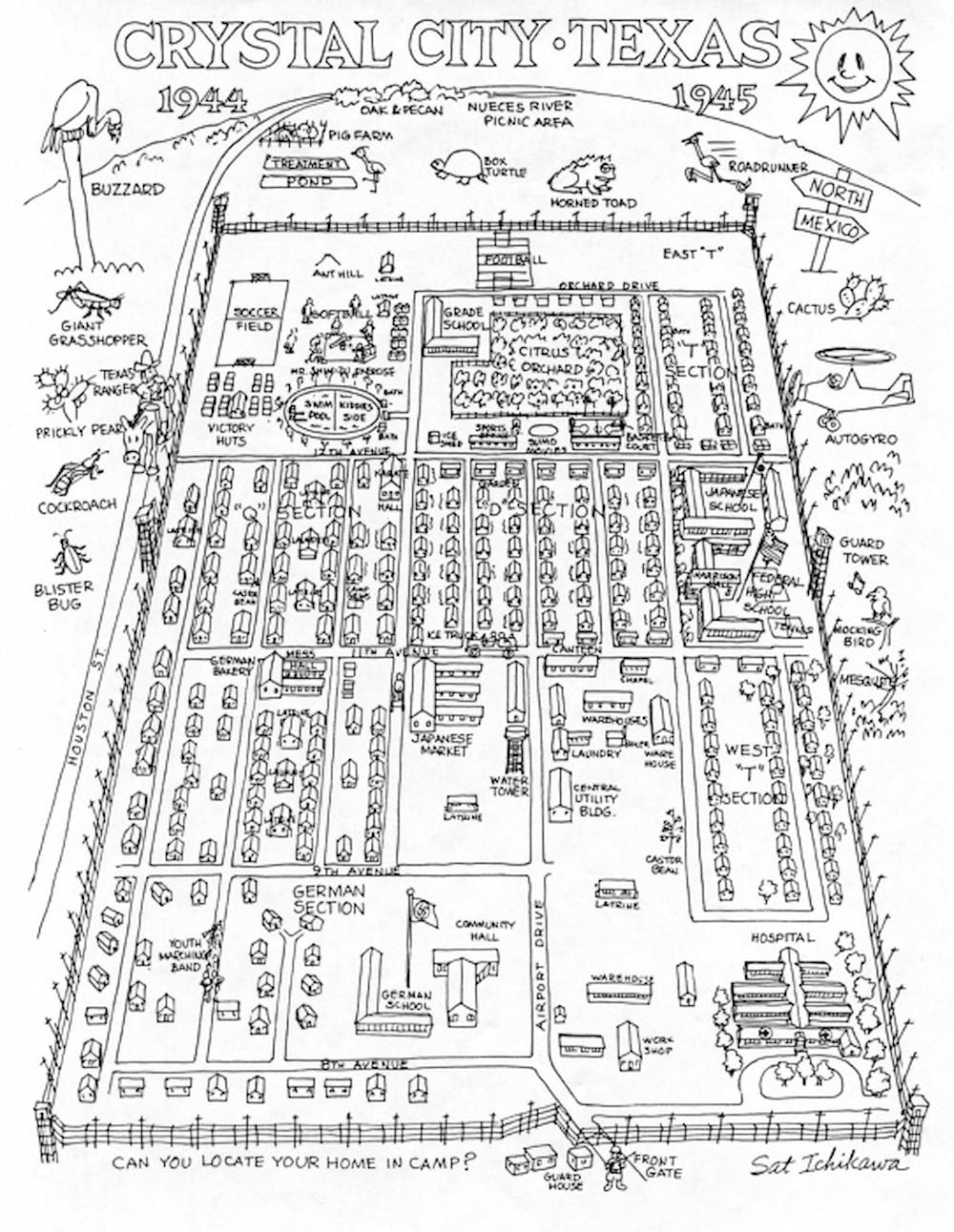
Hand-drawn map of Crystal City internment camp, Texas.
Indonesian maritime workers were incarcerated alongside Japanese Americans during World War II in Crystal City, Texas, and were ultimately deported to Indonesia. Their important history represents an early chapter of Asian immigrants in the United States, many of whom were likely Muslim, many years prior to the 9/11 era.
-
Image
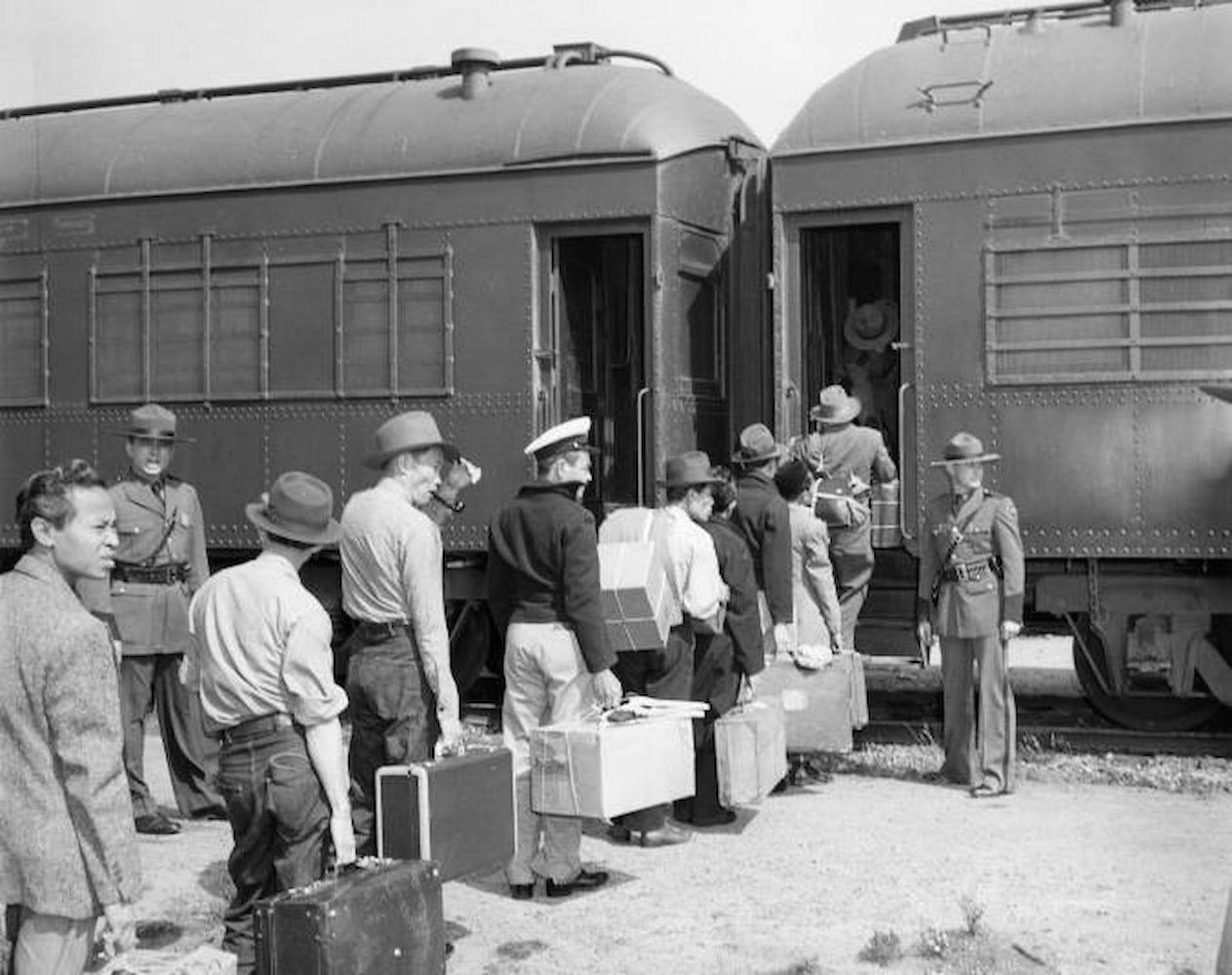
Indonesians boarding a train in San Francisco for the immigration detention facility at Crystal City, Texas
In this 1947 photograph, Indonesian maritime workers carry their possessions for their train ride to a detention facility in Crystal City, Texas.
-
Image
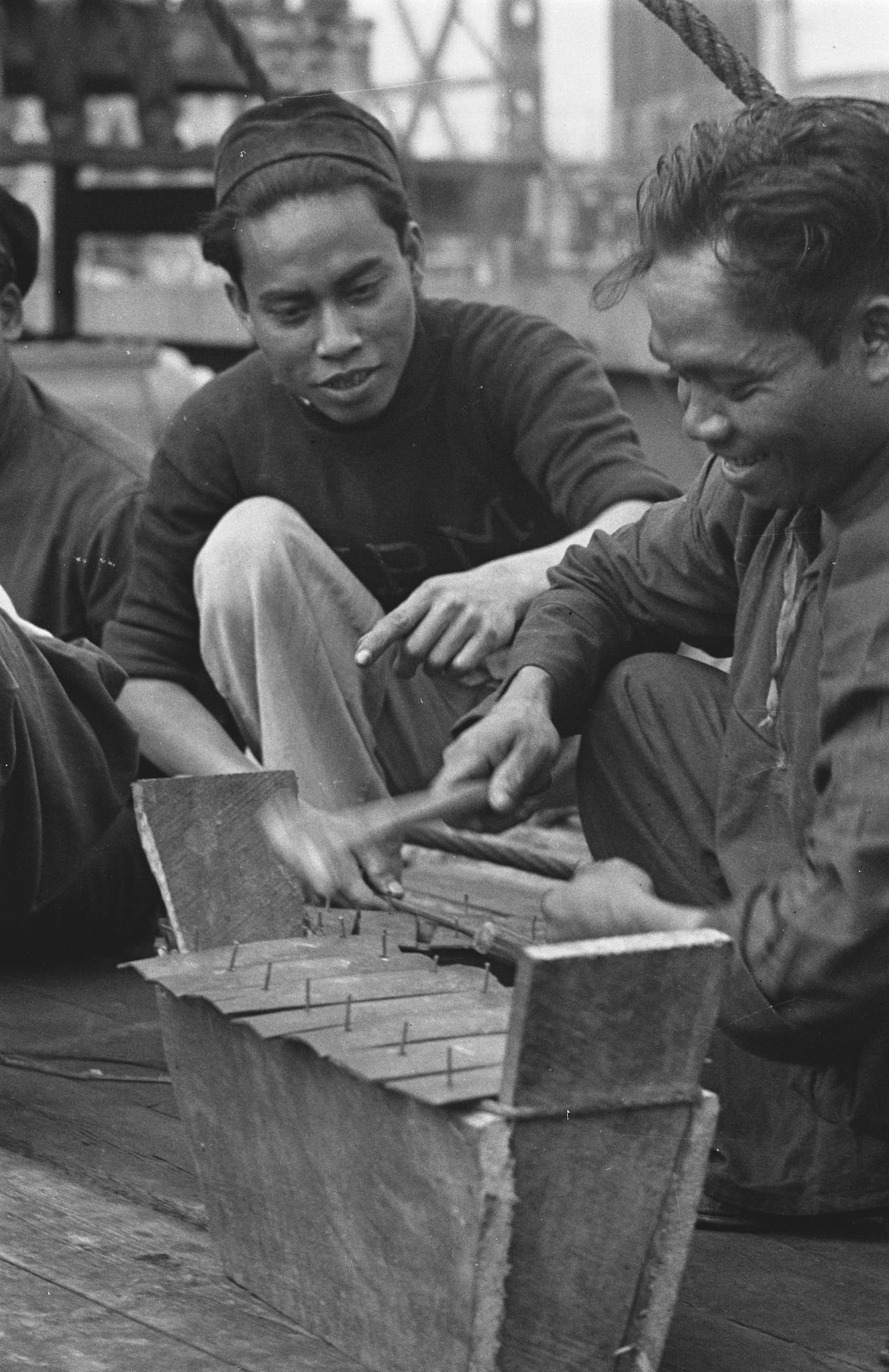
Indonesian maritime workers making gamelan instrument
This gamelan instrument, likely made out of discarded materials from the ship, demonstrates the cultural practices of maritime workers in recreating objects that would remind them of their home in Indonesia.
-
Text
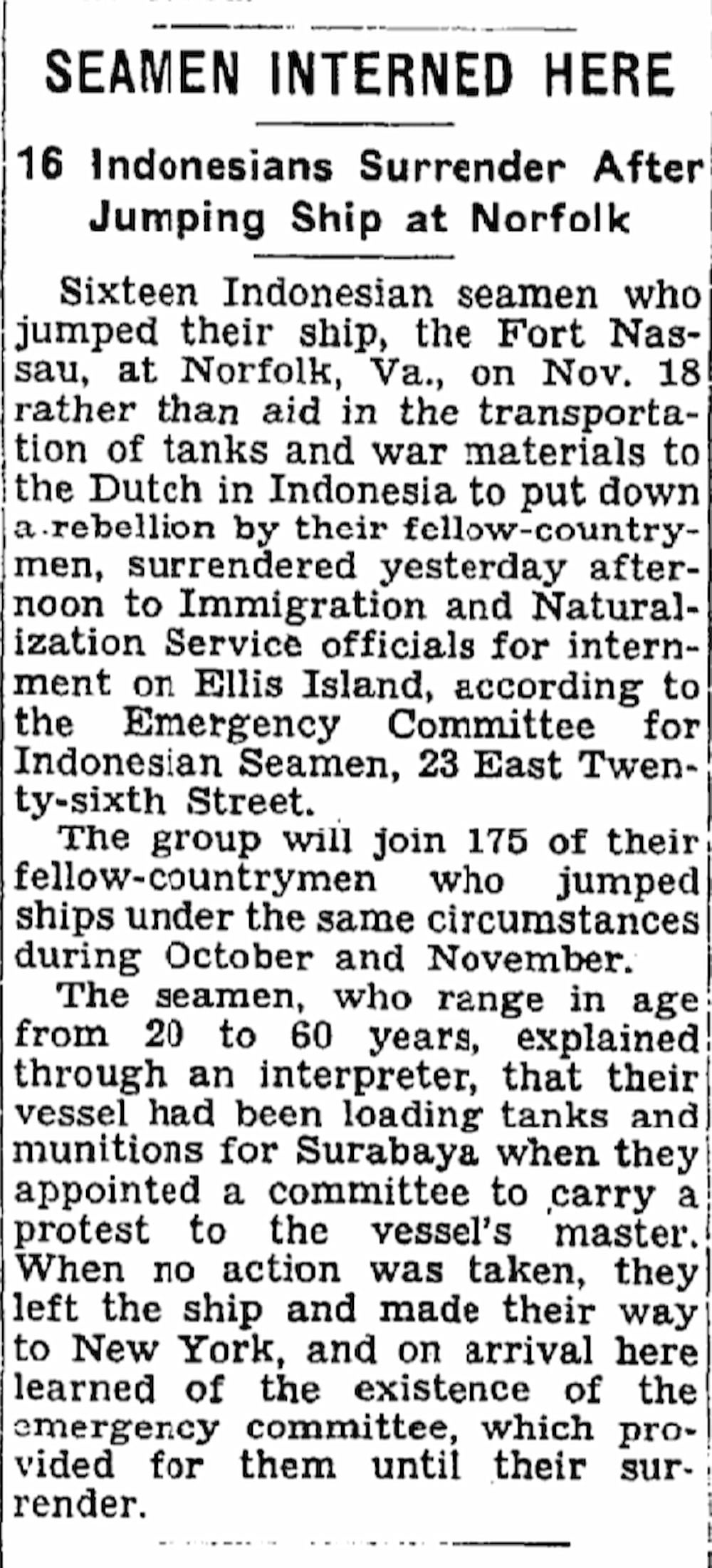
New York Times, December 21, 1945
This New York Times article from December 21, 1945, chronicles the Indonesian maritime workers who refused to work on ships transporting weapons and other armaments to suppress resistance against Dutch colonizers in Indonesia.
-
Image
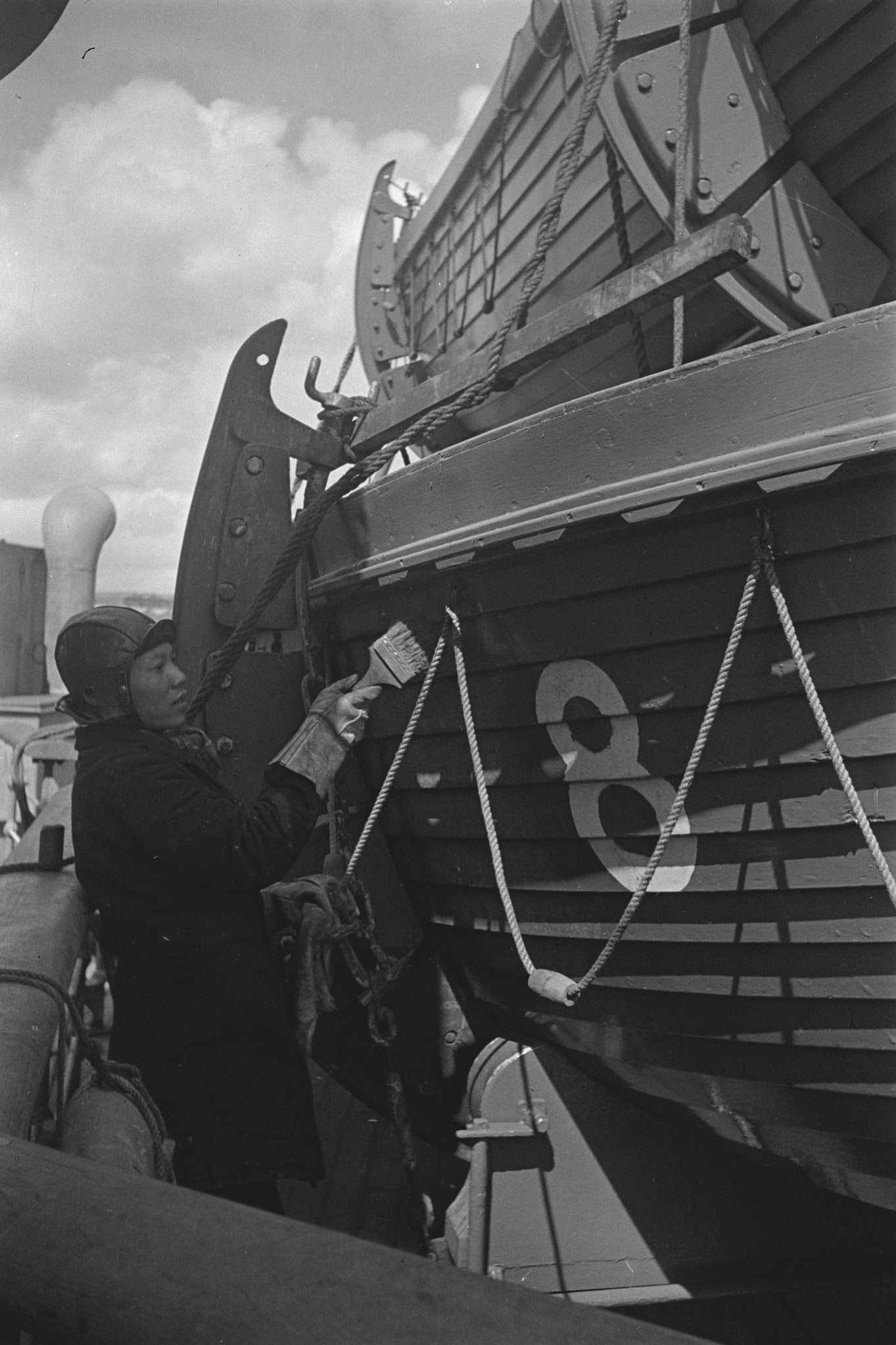
Indonesian sailor during World War II
An Indonesian sailor at work maintaining a ship. These photos represent the importance of Indonesians as workers in the global economy, as well as the value of the maritime industry worldwide.
-
Image
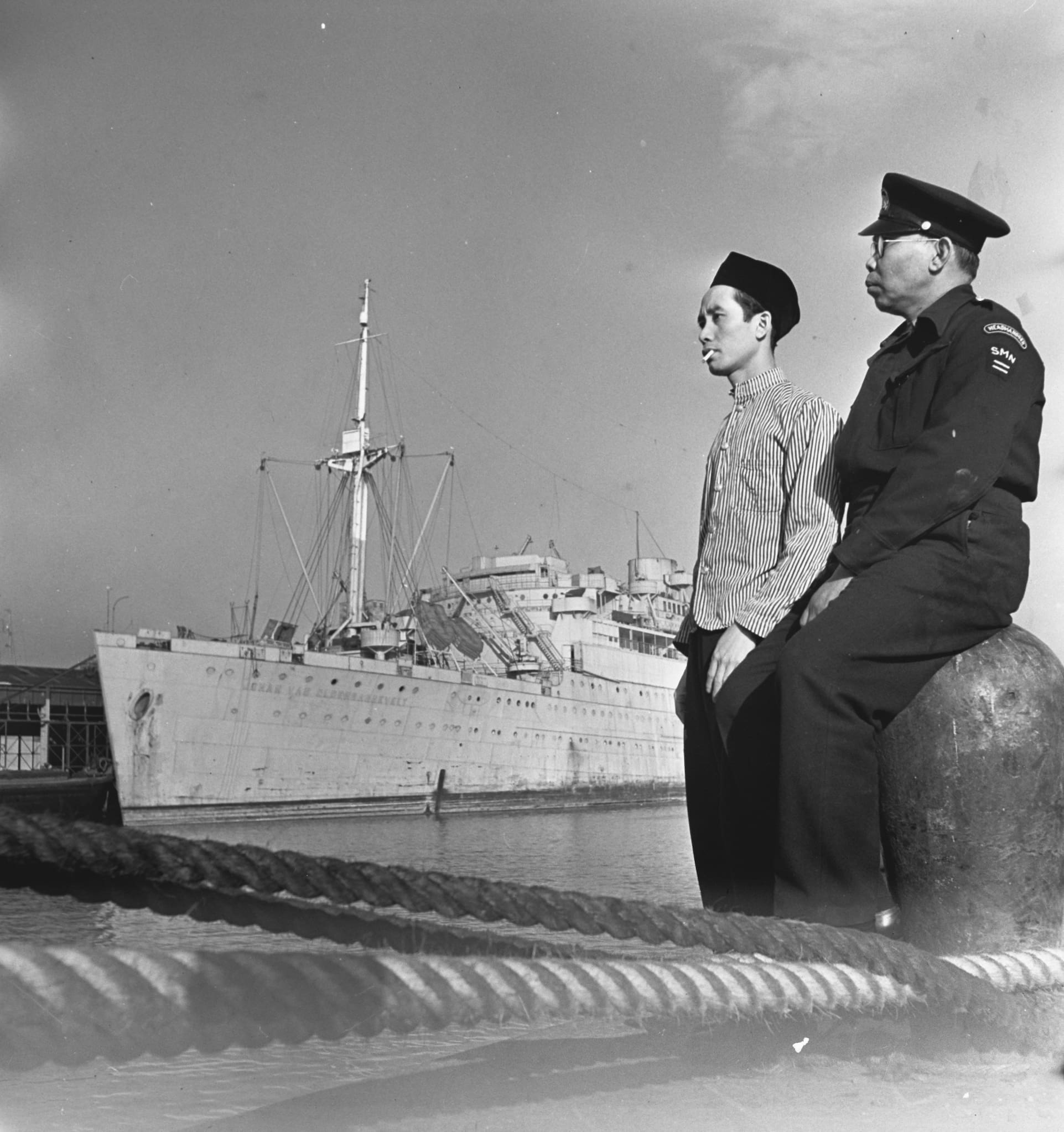
Indonesian maritime workers during World War II
Two Indonesian maritime workers and the Dutch ship they worked on in the background during World War II.
-
Image
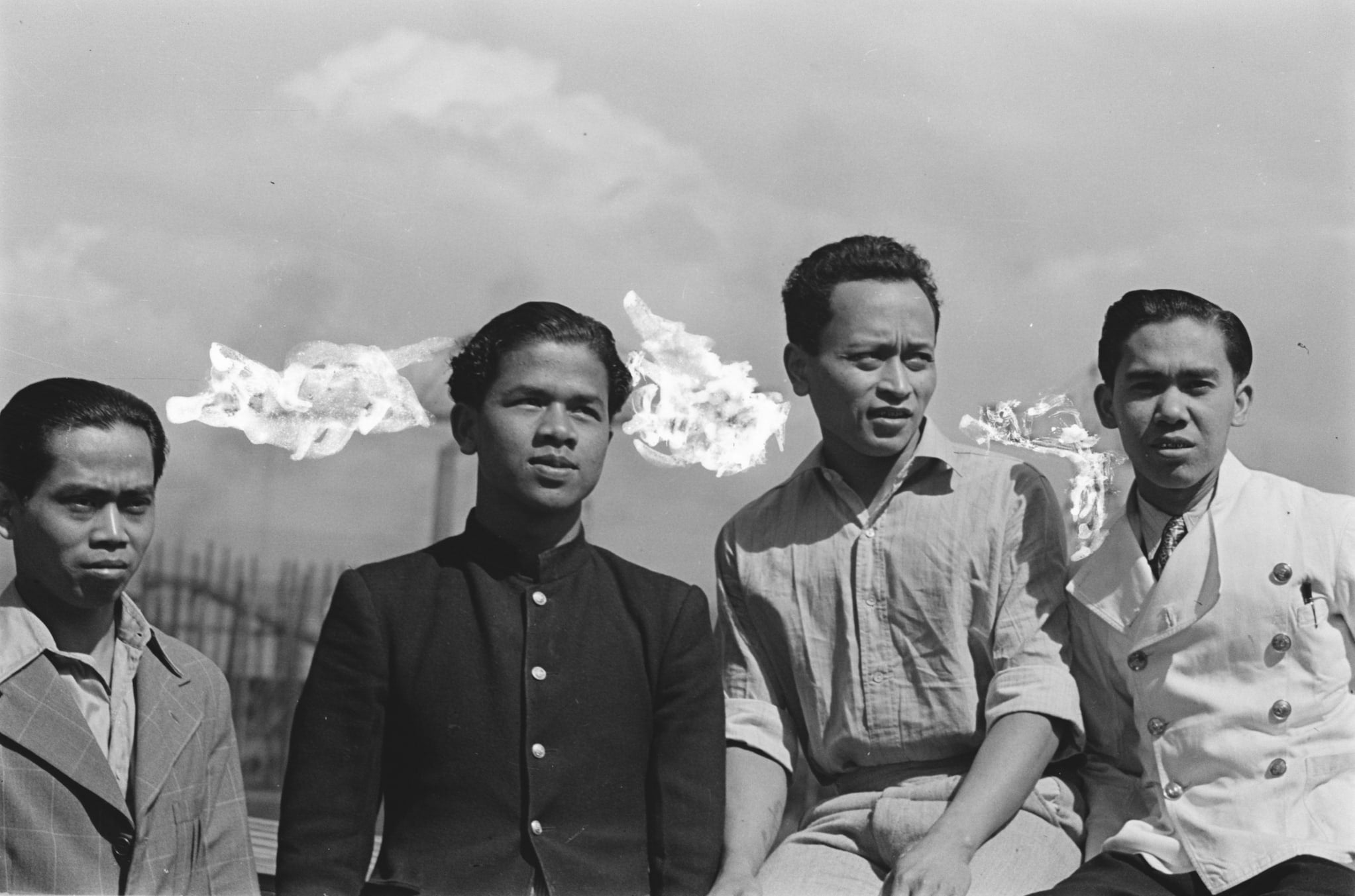
Indonesian merchant seamen during World War II
Indonesian merchant seamen during World War II. Because they are wearing more formal clothing, it is likely that this picture was taken during their leisure time.
-
Image
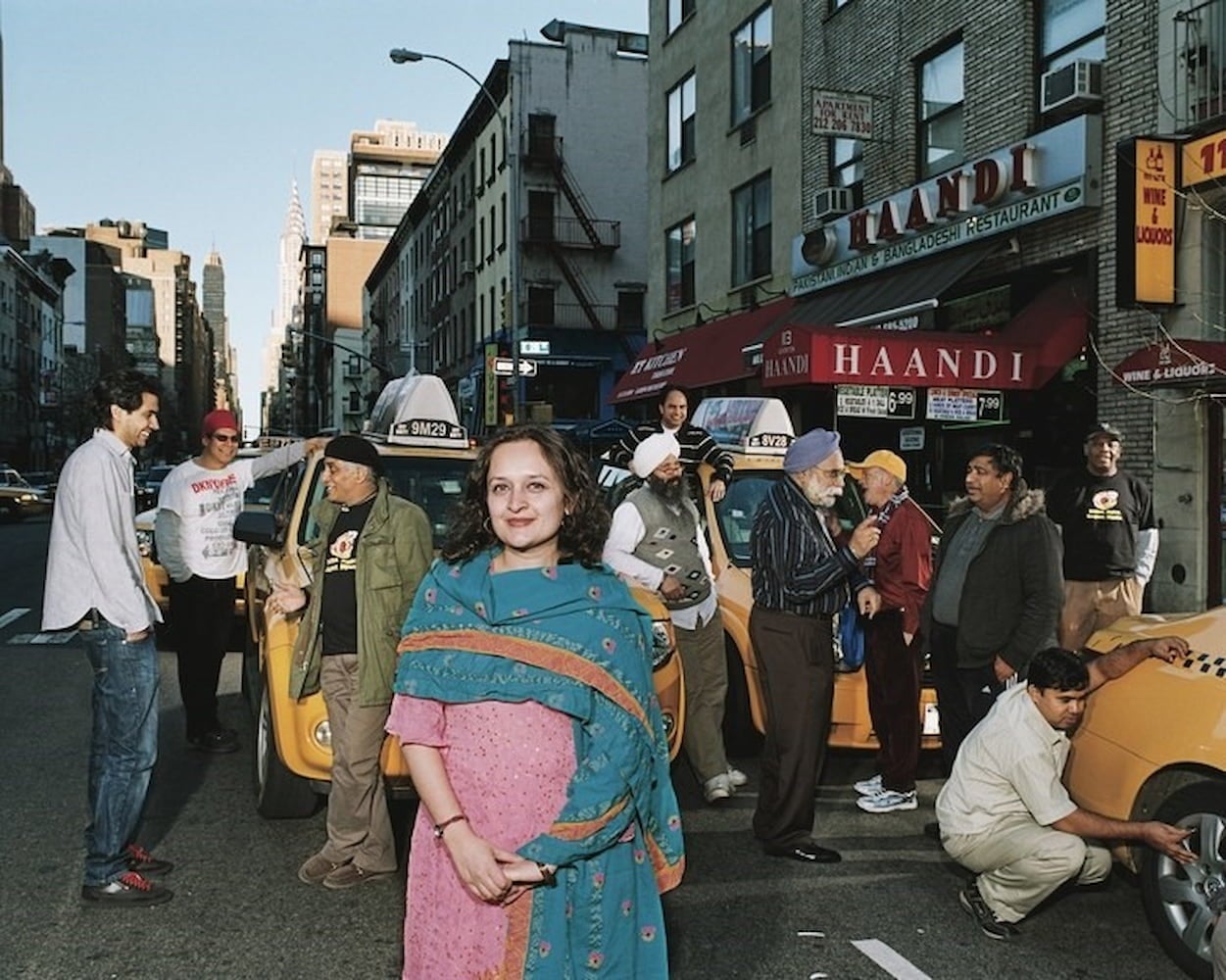
Bhairavi Desai and yellow-cab drivers, 1998
Co-founders of the New York Taxi Workers Alliance, with Indian American Bhairavi Desai (center) and Pakistani American Javaid Tariq (third from left), in a photo from The New Yorker, captured in 1998.
-
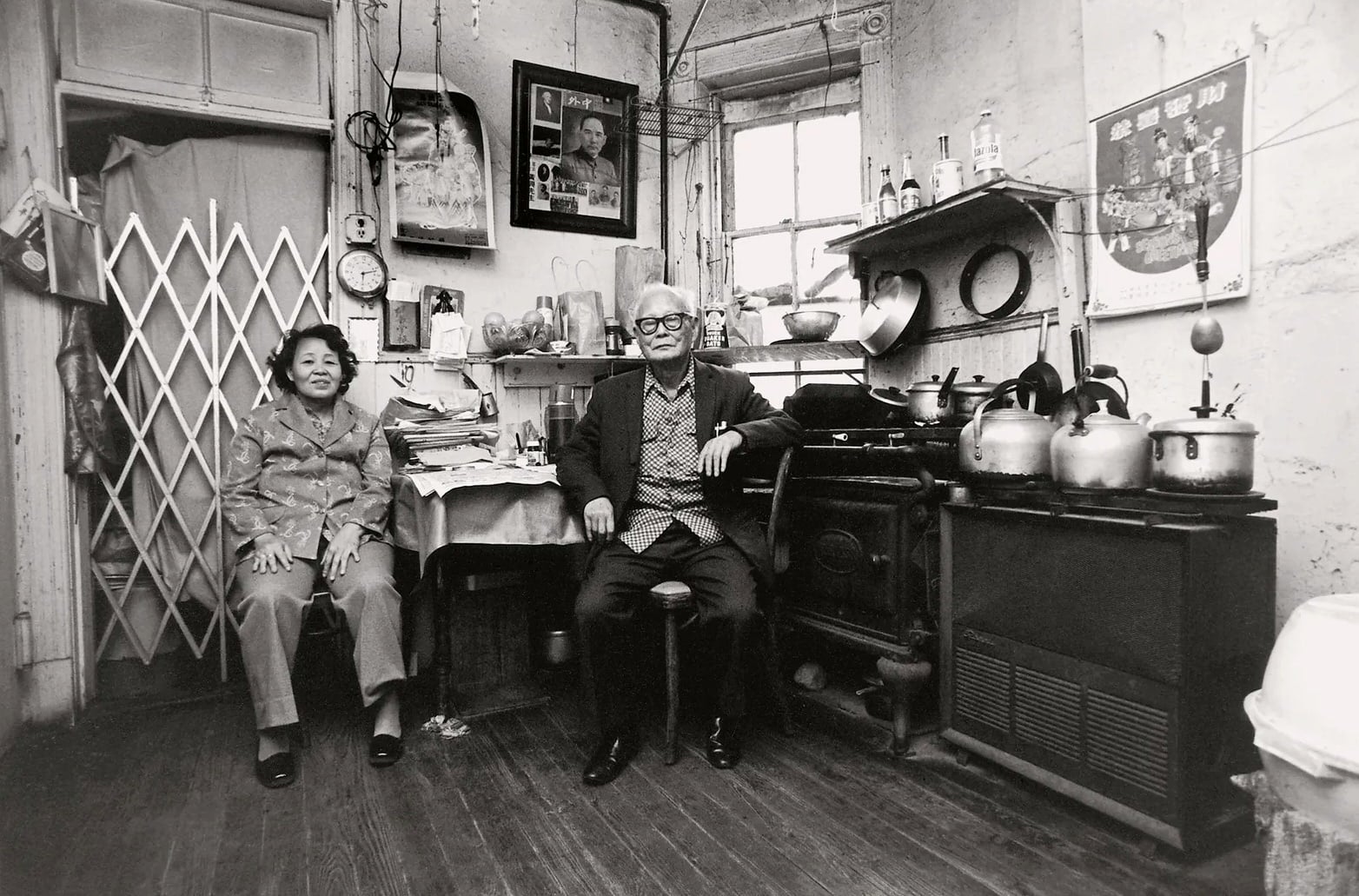
Image
Photograph by Corky Lee (1947–2021)
Chinese American photographer Corky Lee (1947–2021) photographed his elderly uncle and his wife in their Chinatown apartment in 1981, as part of his project to show Asian Americans in their everyday lives.