





Poster with “Fight For The International Hotel” written at the top, translated into multiple languages below. At center is a drawing of tenants.
Module 3: Housing as a Fundamental Human Right Part I: The Price of Gentrification
Was Asian American Activism successful in improving the lives of Asian Americans?
“Stop the eviction! We won’t move!”
“It’s our home! We won’t move!”
“Karapatan Ng Lahat Ang Mababang Paupopahan!”
“Vivienda Decente y Barata es el Derecho de Todo Humano!”
“Decent low-income housing is everybody’s right!” 1
On the evening of Sunday, January 16, 1977, seven thousand people chanted these words as they stood around the International Hotel (I-Hotel) with linked arms to protest the forced eviction of the hotel’s elderly tenants. For nine years, hotel residents, allies, and community members had participated in community organizing to stop the eviction and demolition of the I-Hotel—one of the last remnants of the once-thriving Manilatown in San Francisco, and home to the elderly, working-class, and immigrant tenants who had built a tightly-knit community. Community organizing mobilizes everyday local people to come together, identify the issues that most affect their communities, and create solutions that create positive change.
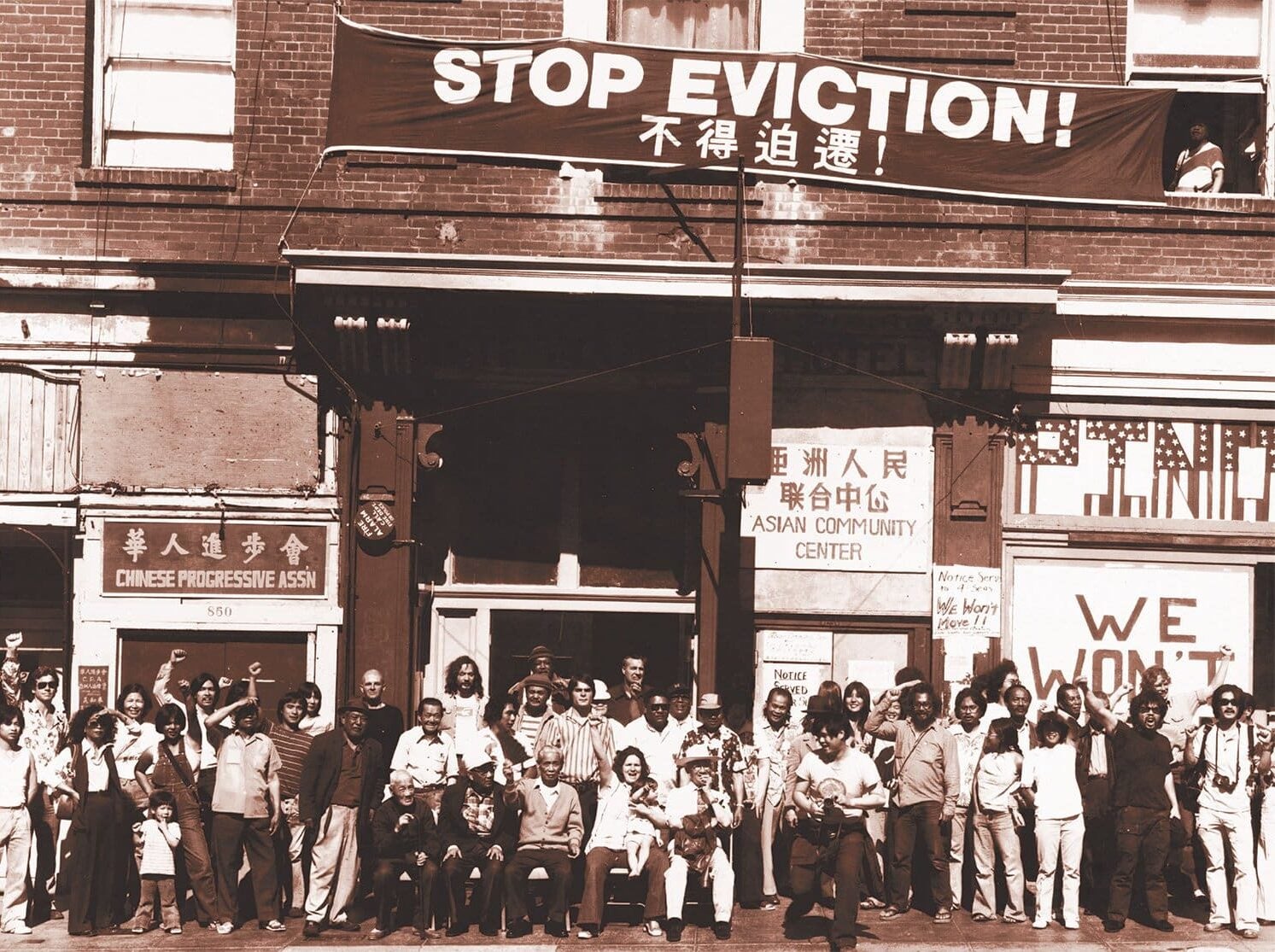
Image 41.03.01 — In an important act of community resistance, I-Hotel tenants and community allies lined up in front of the I-Hotel in 1977 to resist its closure and demolition.
The fight to save the I-Hotel was a fight to defend affordable housing as a human right, preserve Manilatown, and defend the rights and futures of the city’s poor and immigrant communities. Inspired by the residents who first resisted eviction, organizers worked closely with hotel tenants and, through community organizing, mobilized thousands of supporters across the city to defend the I-Hotel and its tenants. Together, they created a powerful network of people who took action and stood in solidarity with the tenants. The citywide effort to save the I-Hotel would become the longest and largest anti-eviction campaign in the history of San Francisco and one of the most important struggles in Asian American movement history.
This module explores efforts to gentrify Manilatown and how the I-Hotel residents and community members resisted eviction and gentrification.
Why is housing a human right?
What is gentrification, and how has it impacted Asian American communities?
How did International Hotel (I-Hotel) residents and community members resist eviction and gentrification?
The I-Hotel: The Heart of San Francisco’s Manilatown
Manilatown was a vibrant working class Filipino community near downtown San Francisco. Spanning ten city blocks, Manilatown was home to Filipino-owned stores, barbershops, restaurants, and cafes that bustled with life and the sounds and familiar comforts of Filipino culture.
Elderly Filipinos, fondly called manongs, gathered every day in Manilatown to socialize and build friendships. As they ate meals at Mabuhay Restaurant or Bataan Lunch and got their hair cut at Tino’s Barbershop, manongs shared stories and talked about current events. They played pool at Lucky M Poolhall and visited the many shops and stores that lined Kearny Street. More than just a place, Manilatown was a community where elderly Filipinos could enjoy living among friends and build a shared sense of belonging.
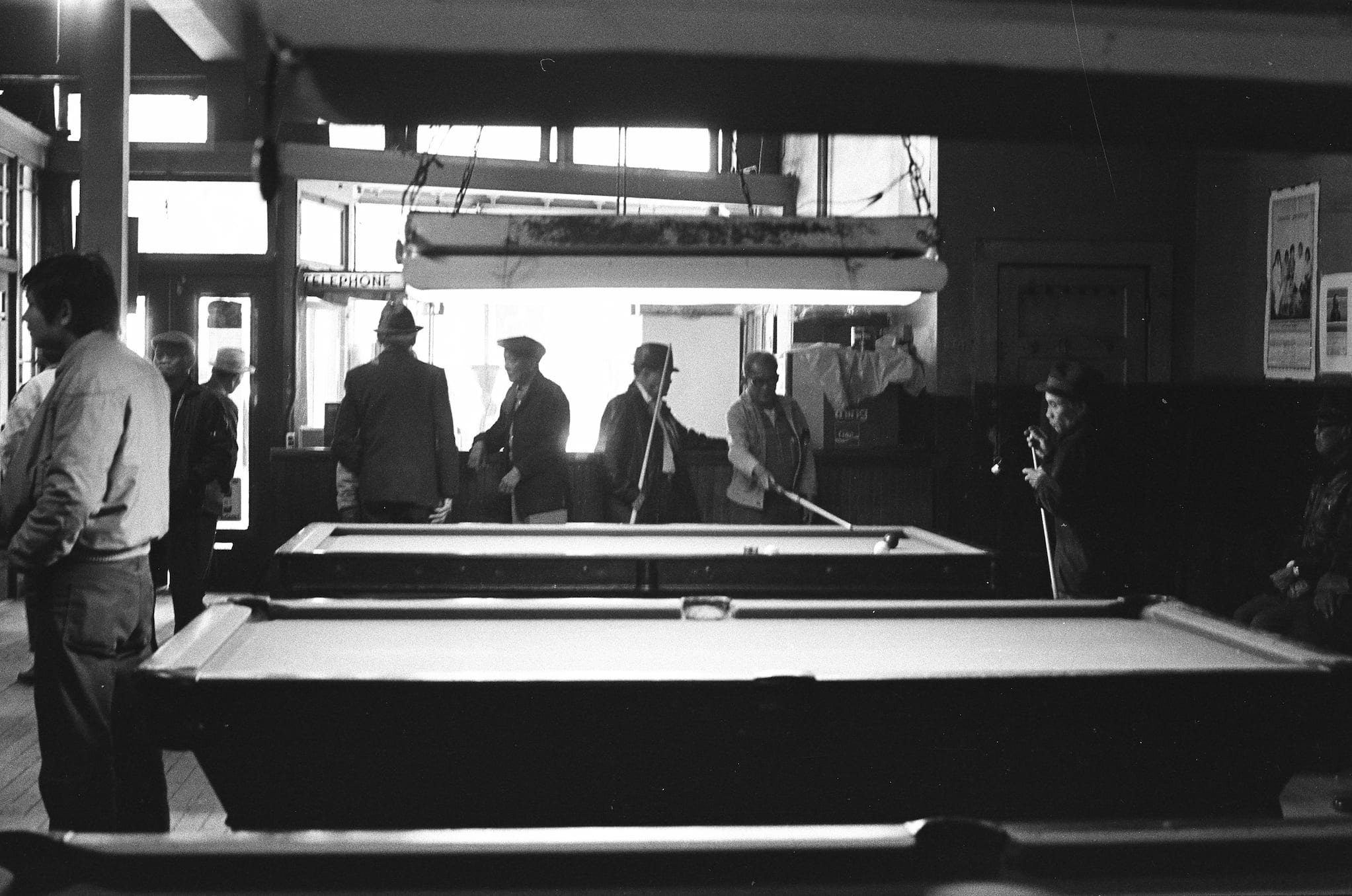
Image 41.03.02 — Manongs at the Lucky M Pool Hall, one of many establishments along Kearny Street in Manilatown where community members gathered.
Built in 1873, the I-Hotel was located at 848 Kearny Street in Manilatown. It was one of the many affordable housing buildings in the area that rented short- and long-term rooms for forty-five dollars per month to industrial and agricultural workers, military veterans, and retirees. These residents included Filipino American immigrants, Chinese American seniors, as well as Black and white working-class people who were otherwise unable to afford safe and decent housing in San Francisco, where rent was rapidly increasing.
Many Filipinos were migrant workers who moved from job to job based on the seasons and employment availability. The I-Hotel became a stable home base for these workers, a place they returned to after the work season ended. They reconnected with friends, cooked meals together in the communal kitchen, and enjoyed the comfort of the small rooms that they called their own. Through these shared activities and mutual care for one another, I-Hotel residents formed a close-knit, multiethnic community and found refuge from the racism and discrimination they experienced in the workplace.
Felix Ayson was one of many residents who lived in the I-Hotel. Born in the Ilocos region of the Philippines, Manong Felix was a US veteran and previously worked as a third-grade school teacher in the Philippines. When he moved to the US, he was told that the country was a “land of opportunity, land of equality,” 2 but he experienced racism and discrimination instead. The I-Hotel, however, provided him with a place of safety, a “real home” where tenants treated each other with dignity and respect:
The I-Hotel was Manong Felix’s home base for fifty-one years while he worked as a migrant laborer, moving from place to place for temporary jobs. Manong Felix harvested crops with Mexican American farmworkers in central California and Filipino Americans in Alaskan canneries. He also worked as a union organizer who led strikes for fair wages and better working conditions for Filipino farmworkers. Later on, he studied electrical engineering and worked as an elevator operator. When he retired, Manong Felix returned to his beloved community at the I-Hotel.
Luisa de la Cruz, known as Mrs. D., also lived at the I-Hotel. Born in Caloocan, Philippines, Mrs. D worked in a rubber factory and as a union organizer before she migrated to San Francisco with her husband. In the US, she worked long hours each day as a seamstress in a garment factory, but she always made time to build community in the I-Hotel. Mrs. D planted a beautiful outdoor garden, made jewelry boxes, and sewed window curtains for the hotel. Every Sunday, she organized brunches with residents and student volunteers. Together, they shopped for groceries, cooked homemade Filipino dishes, and shared delicious meals over lively music and dancing. Because she spoke English and Tagalog (the language primarily spoken in the Philippines), Mrs. D also served as a language interpreter for residents, assisting Filipino tenants who only spoke Tagalog. Mrs. D poured her love into the I-Hotel community and embodied the Filipino bayanihan spirit of community care and loving respect for the elderly.
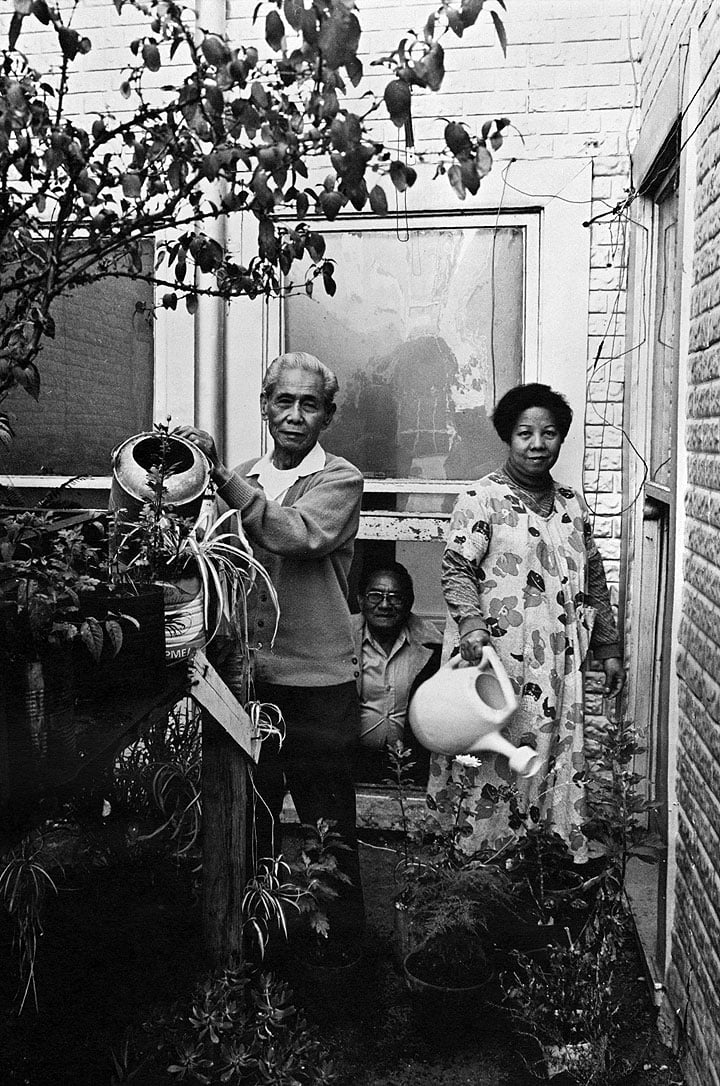
Image 41.03.03a — I-Hotel tenants (left to right) Claudio Domingo, Anacleto Moniz, and Luisa de la Cruz (also known as Mrs. D), together as a community embodying the bayanihan spirit.
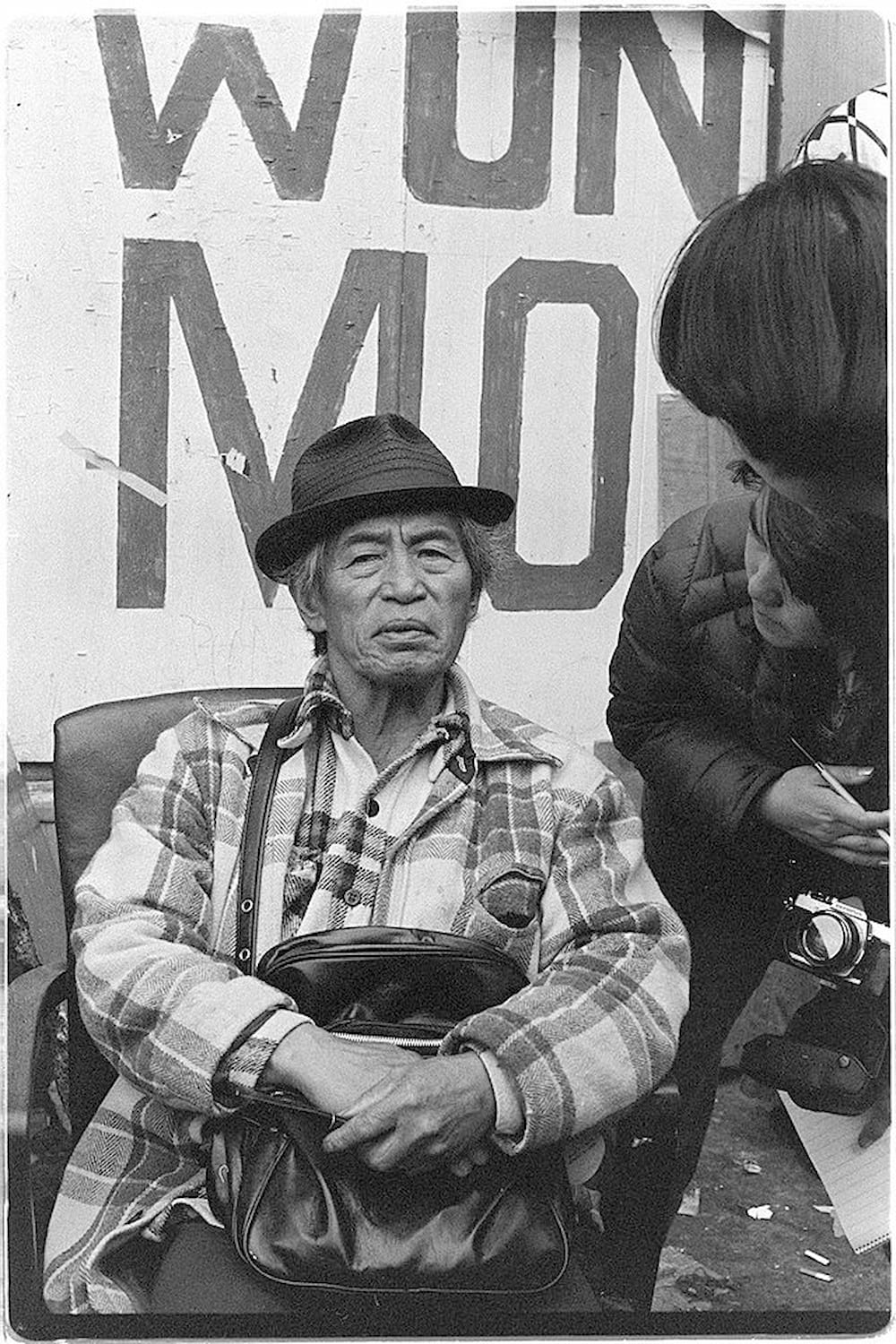
Image 41.03.03b — I-Hotel tenant Wahat Tompao sits outside of the I-Hotel after being evicted on August 4, 1977. He fearlessly stood up to city officials and called attention to competing claims in the fight over the I-Hotel.
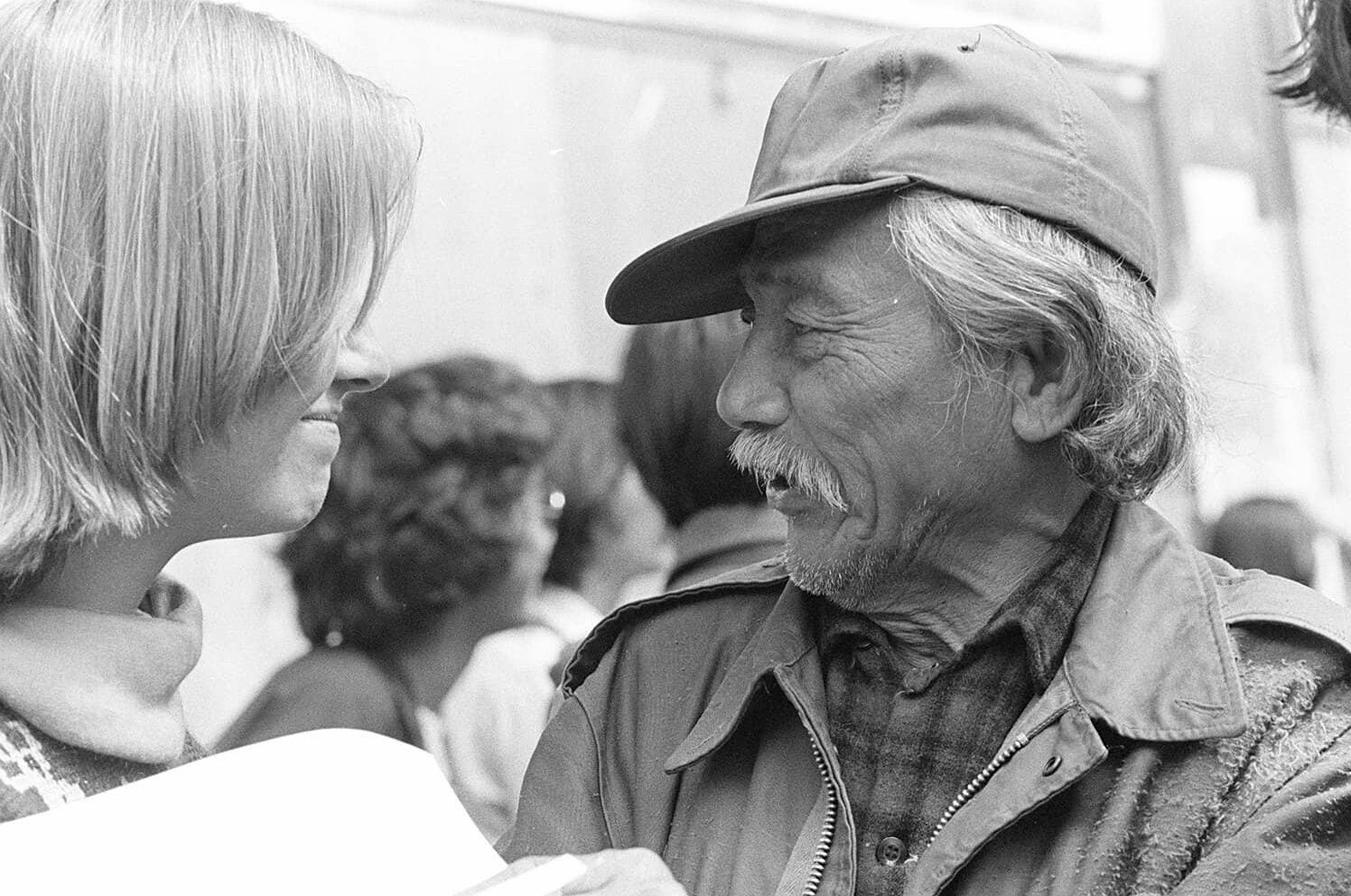
Image 41.03.03c — I-Hotel tenant Felix Ayson (right) speaks with a supporter after the eviction. Felix lived in the I-Hotel for fifty-five years and was a strong organizer post-eviction.



Image 41.03.03b — I-Hotel tenant Wahat Tompao sits outside of the I-Hotel after being evicted on August 4, 1977. He fearlessly stood up to city officials and called attention to competing claims in the fight over the I-Hotel.
Image 41.03.03c — I-Hotel tenant Felix Ayson (right) speaks with a supporter after the eviction. Felix lived in the I-Hotel for fifty-five years and was a strong organizer post-eviction.
For Manong Felix, Mrs. D, and other residents, the I-Hotel was the heart of the historic Filipino American community in San Francisco—a place where they could support one another and grow old in the shared home they had created together.
The Price of Gentrification
By the 1960s the city of San Francisco sought to expand its downtown financial district, driving gentrification and the displacement of communities residing there. Gentrification is a process in which real estate developers move into historically divested, low-income communities like Manilatown, renovate or redevelop properties, and establish new businesses. The growth that accompanies gentrification often displaces existing residents who lack the wealth and resources needed to challenge gentrification, because development evicts existing residents from their homes in order to develop new, profitable businesses. As new businesses attract wealthier residents and raise property values, long-time residents who can no longer afford to live and work in the neighborhood are forced to move. The rapid expansion of San Francisco’s Financial District eventually reduced Manilatown to one remaining block.
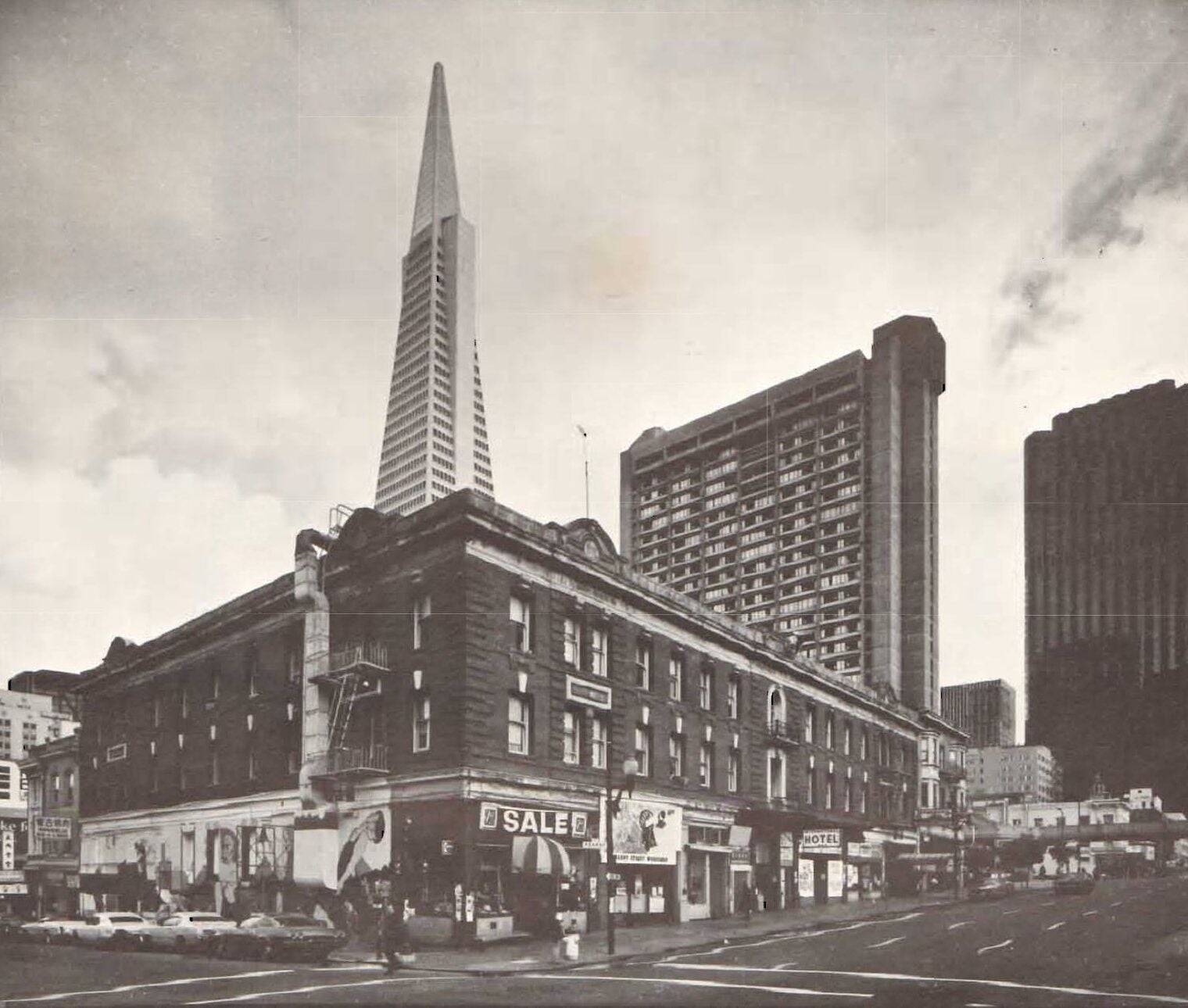
Image 41.03.04 — The International Hotel, located at 848 Kearny Street in Manilatown, San Francisco, California.
The I-Hotel was a prime target for real estate development. Developers and government officials, including Mayor Joseph Alioto, wanted to replace low-income residential hotels like the I-Hotel and the surrounding Filipino-owned businesses with corporate office buildings, businesses, and parking lots. In their view, gentrifying Manilatown would generate more tax revenue for the city, boost profits for property owners, and create new job opportunities that would attract middle- and upper-class, white-collar workers. They believed that eliminating the I-Hotel and immigrant-owned businesses would allow San Francisco to become an “administrative, financial, business, cultural, and entertainment center” of the future. 5
Milton Meyer and Company, the corporate owner of the I-Hotel, strongly supported this vision. In 1968, the company sent eviction notices to I-Hotel residents as part of their plan to demolish the building and build a parking lot in its place. Like many property owners and developers, the company believed they had the right to evict tenants and renovate, lease, sell, or tear down their buildings in order to make more money without interference from the city or the tenants. Refusing to consider the devastating impact the eviction would have on the tenants, Milton Meyer instead focused on the opportunity that gentrification presented for property owners and the city itself—the opportunity to transform San Francisco into a profit-generating, financial center of the West. Company president Walter Shorenstein supported Milton Meyer’s commitment to profit when he declared that “progress was a train coming down a railroad track. If you don’t get out of the way, you’ll get run over.” 6
“We Won’t Move!”: The Residents Speak Out
Hotel residents were stunned by the development plan. More than just a piece of property, the I-Hotel was their beloved home. Residents knew they needed to speak out and publicly defend their community.
Wahat Tompao was a longtime resident of the I-Hotel who rejected the profit-driven agenda of property owners and city officials. Manong Wahat was a descendent of the Benguet Igorot tribe from the Mountain Province in the Philippines. The Benguet were courageous people who had never been fully colonized by Spanish settlers, and Manong Wahat embodied their bravery in his everyday life. He proudly served in the US Navy for twenty-one years as a mess attendant and diligently sent his savings to support his family in the Philippines. Although he only had a fourth-grade education and spoke with a thick accent, Manong Wahat held himself with dignity and spoke with a confidence that was grounded in his ancestry as he challenged the gentrification plan:
“[W]here are you going to put us? In the street? You got a house for us? Look behind you. Look at [the tenants], one by one, how old they are … We don’t want that hotel to be lost. That is our only memory.” 7
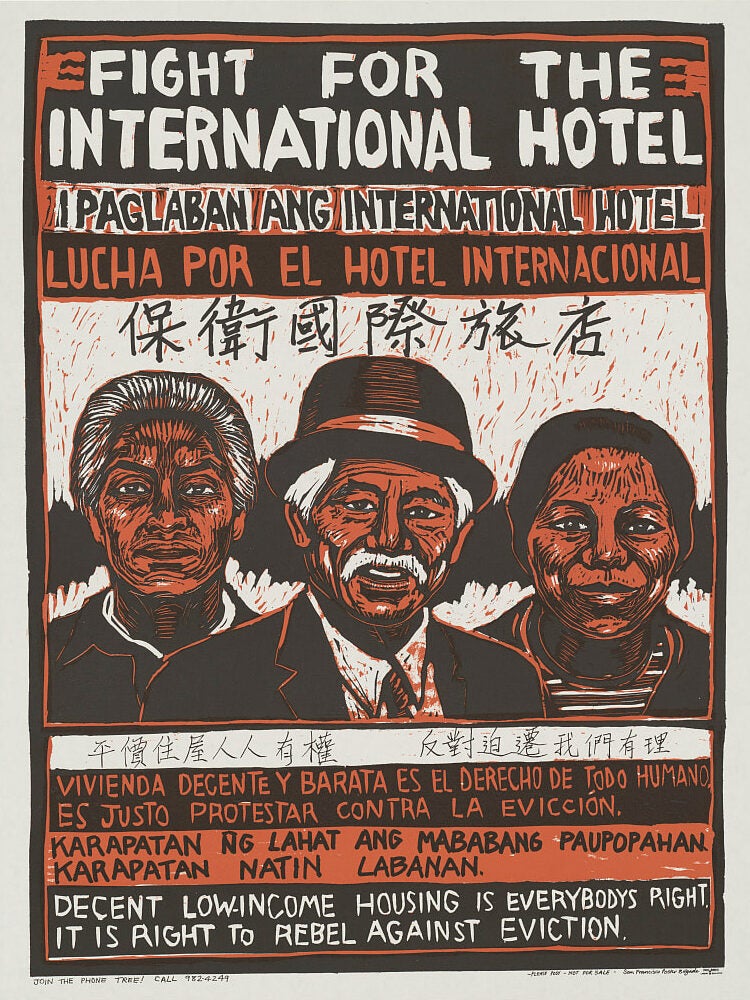
Image 41.03.05 — This “Fight for the International Hotel” poster, created by artist Rachael Romero and the San Francisco Poster Brigade, features text translated into multiple languages to bring community members together.
Manong Wahat became one of the strongest advocates and leaders in the movement to save the I-Hotel. He fearlessly stood up to city officials and called attention to the competing priorities in the fight over the I-Hotel. At a 1977 demonstration at City Hall, for instance, he confronted Mayor George Moscone:
Because I’m brown, because I’m old, because I’m ugly, because I’m Asian, is this why you do these things? In the hotel, it’s not only yellow skin, but red skin and black skin, and there’s white skin too. So why do you do this? 8
As Manong Wahat’s frank comments to Mayor Moscone demonstrate, property owners and city officials did not share the tenants’ commitment to basic human rights and dignity. Manong Wahat’s statement raised many challenging questions: How could corporate office buildings serve the needs of elderly manongs? Didn’t the city have a moral and ethical obligation to address the housing needs of all poor, aging, and vulnerable citizens, including those who had fought for and generated wealth for the country?
Indeed, many of the manongs who lived in the I-Hotel were US veterans, including Frank Alarcon, a longtime tenant who had served in the US Navy during both world wars and had made the I-Hotel his home since 1918. Manong Frank and his fellow veteran manongs were proud of their service to the country and believed they had earned the right to live in the US and be treated with dignity and respect. An avid dancer with an energetic and warm presence, Manong Frank helped to make the I-Hotel a welcoming community for the manongs. His critical analysis of the city’s development plans and his fierce belief in the manongs’ rights as veterans and citizens both inspired and politicized fellow tenants:
We made this city of San Francisco a rich city on account of all of us working here in this state. We pay taxes. We’ve paid all kinds of taxes, on the things we buy and on our income. Why should we be thrown out from this hotel right on the street there, after they have made their profits? Is that right? 9
Glossary terms in this module
affordable housing Where it’s used
Housing in which the person living there is paying no more than 30 percent of their income for housing costs, including utilities.
community organizing Where it’s used
Getting everyday local people to come together, identify the issues that most affect their communities, and create solutions and actions for positive change.
eviction Where it’s used
A legal process in which a landlord forces a person or group to leave their home.
gentrification Where it’s used
The process in which real estate developers displace neighborhood residents out of their community by upscaling or establishing new properties and businesses. These new establishments attract wealthier residents and raises the cost of living, which eventually forces longtime neighborhood residents to move. Gentrification often disrupts the original community’s history, culture, and social networks.
solidarity Where it’s used
A political, cultural, and collective stance that recognizes the mutual responsibility and support that is necessary to achieve change. Solidarity taps into the power in numbers and considers the collective interests of communities.
strike Where it’s used
Traditionally, a strike is when workers collectively refuse to work to achieve certain goals. In the context of the student strike, students refused to go to class, held educational workshops, and organized demonstrations.
Endnotes
1 Estella Habal, San Francisco’s International Hotel: Mobilizing the Filipino American Community in the Anti-Eviction Movement (Temple University Press, 2007), 99.
2 Habal, San Francisco’s International Hotel, 97.
3 Habal, San Francisco’s International Hotel, 96–97.
4 Habal, San Francisco’s International Hotel, 45.
5 Habal, San Francisco’s International Hotel, 49.
6 Sidney Wolinsky, interview by Estella Habal, August 31, 2004, as quoted in Habal, San Francisco’s International Hotel, 43.
7 Wahat Tampao, Kearny Street Workshop Calendar 1978, December 23, 1976, published in 1977, http://freedomarchives.org/Documents/Finder/DOC63_scans/63.Ihotel.calender.full.pdf.
8 Habal, San Francisco’s International Hotel, 106.
9 Habal, San Francisco’s International Hotel, 105.