




Module 2: Education for Liberation: Asian Americans and Third World Studies
Was Asian American Activism successful in improving the lives of Asian Americans?
This module examines the historic student strikes for Third World Studies that led to the formation of Ethnic Studies as a new academic field. It also examines the student-led Third World Liberation Front (TWLF) strikes, their vision for an alternative education, and the role of Asian American activism in the strikes. The module focuses on the two major student strikes in 1968–1969 at San Francisco State College (SF State, now University) and the University of California, Berkeley (UC Berkeley), where the first college and first department of Ethnic Studies in the nation would be built, respectively. In this module, we examine the original goals and vision for what many called Third World Studies.
Which communities took part in the Third World Liberation Front, and what were their demands?
What led to the 1968 student strikes at San Francisco State College (now University) and the University of California, Berkeley, and what role did Asian American activists play?
What lasting impact did the Third World Liberation Front struggles have on our education system today?
Asian American Communities and Student Struggles
In the 1960s, Asian Americans were experiencing poverty and anti-Asian racism. They suffered from overcrowding, poor health care, and low wages in Chinatowns, and limited job opportunities and housing evictions in Filipino communities. Japanese Americans were struggling to rebuild their lives after the US government incarcerated them in concentration camps during World War II.
However, mainstream society often failed to recognize and address these problems. In schools, Asian American as well as Black and Chicano/a youth read textbooks that excluded their histories, and young Black and Brown students were pushed out of schools at high rates. At SF State, changes to admissions policy led to a large decline in the Black student population, from 11 percent in 1960 to 4 percent in 1967.
In the midst of the Civil rights, Antiwar, Black Power, and Women’s Movements, students at SF State and UC Berkeley launched strikes to transform education and establish Ethnic Studies. They wanted to have their histories and perspectives included in the curriculum and demanded that more students of color be admitted into colleges and universities. They wanted greater control over the conditions of their education and their lives.
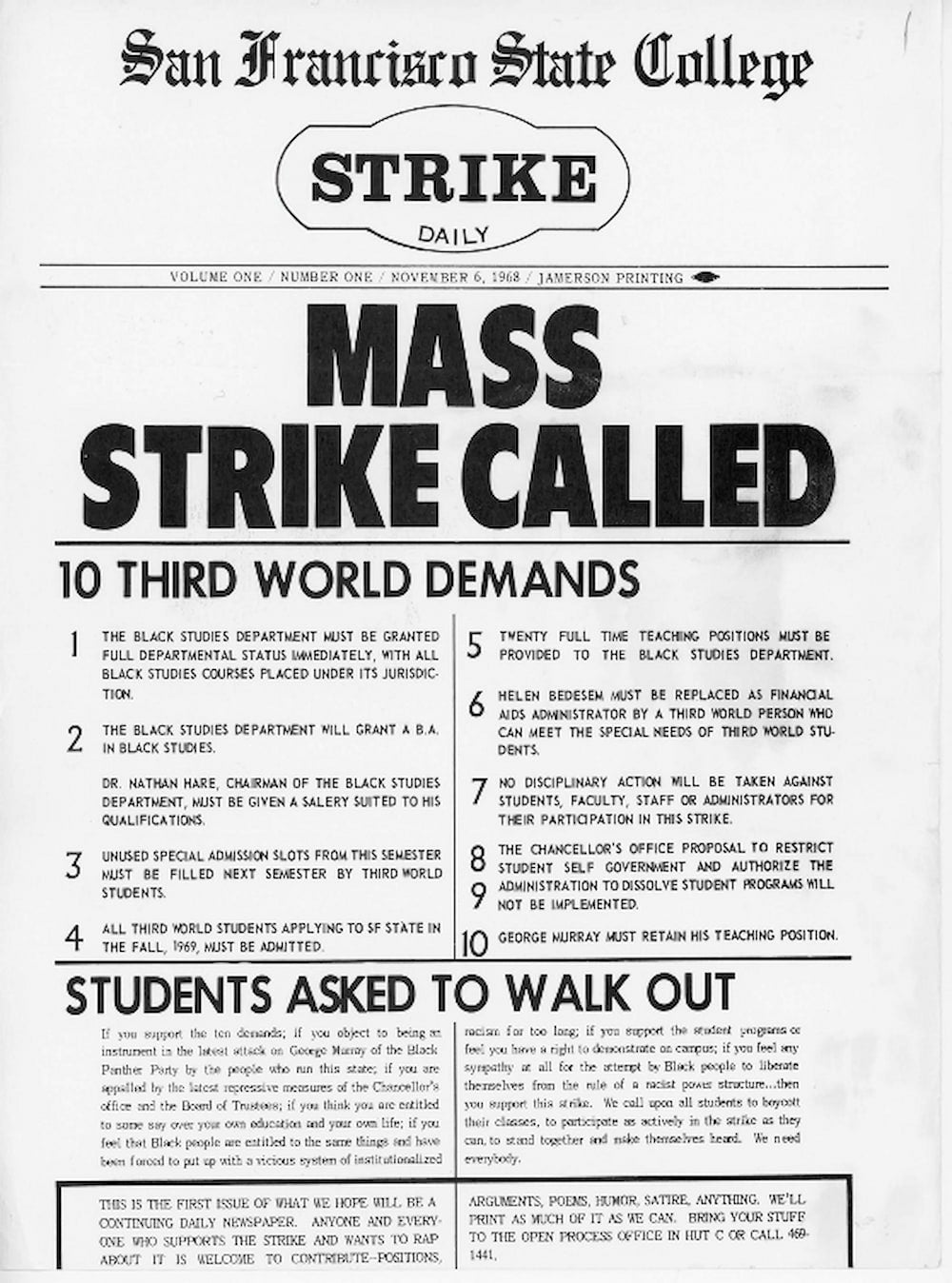
In November 1968, SF State students launched what became the longest student strike in US history. For five months, they organized demonstrations, held educational workshops, boycotted classes, and stopped business as usual. Their goal was to establish, for the first time, a program in Third World studies.
Across the San Francisco Bay, students at UC Berkeley started a strike of their own in January 1969. The two Third World Liberation Front (TWLF) strikes led to the nation’s first Department of Ethnic Studies at UC Berkeley and the first College of Ethnic Studies at SF State. The strikes inspired additional struggles for Ethnic Studies on other college and university campuses and, years later, in some public high schools as well. This module examines the student-led TWLF strikes, their vision for an alternative education, and the role of Asian American activism in the strikes.
Asian American Activism
Who were some of the Asian American students involved in the strikes for Third World studies? At UC Berkeley, Lillian Fabros and Vicci Wong grew up as best friends in the farming community of Salinas, California. Fabros, the child of Filipino immigrants, had long worked in the fields, picking tomatoes, lettuce, and strawberries. She saw firsthand the injustices of low pay and backbreaking work impacting Filipino farmworkers.
Wong had also worked in the fields. Her father was a Chinese immigrant scholar, and her mother was a waitress. Wong became interested in politics in high school when a teacher introduced her to texts about class and race inequities, which ultimately helped her understand her own lived experiences.
Bryant Fong learned about the impacts of low-wage jobs, racism, and sexism from his mother and grandmother’s experiences as Chinatown garment workers. Harvey Dong moved from supporting the ROTC (Reserve Officers’ Training Corps) to becoming an antiwar protester.
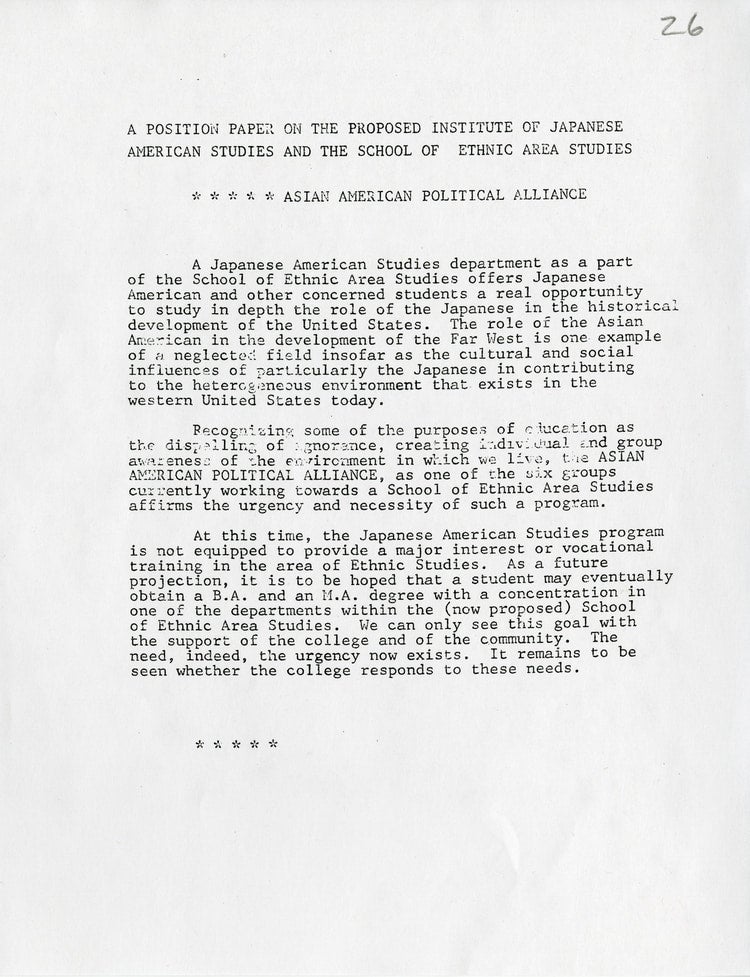
As a young child, Yuji Ichioka, along with his family, had been forcefully moved to one of the ten US concentration camps—in his case, a camp in Topaz, Utah—set up by the US government to incarcerate Japanese Americans during World War II. Fabros, Wong, Fong, Dong, and Ichioka were all active with the Asian American Political Alliance (AAPA) and the TWLF strike at UC Berkeley.
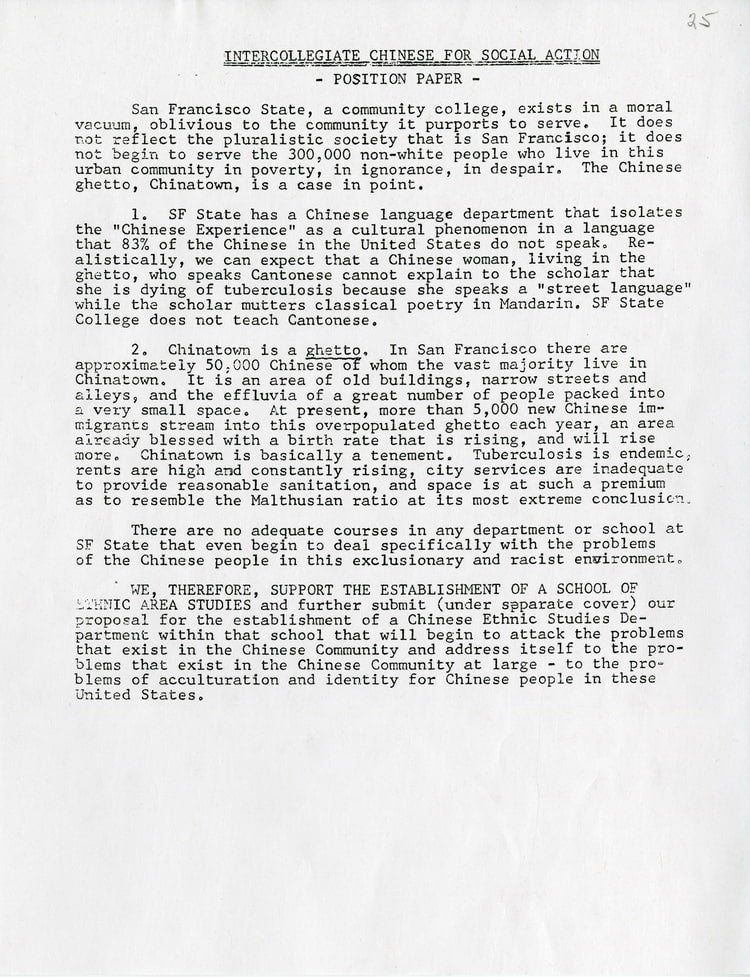
Meanwhile, prominent students in the strikes at SF State would include Ida Dea Collier, who grew up living with her family in a small SRO (Single Room Occupancy) unit in San Francisco’s Chinatown, sharing a bathroom and kitchen with the building’s other tenants. While a student at SF State, Collier became involved with the Intercollegiate Chinese for Social Action (ICSA)’s tutoring program in Chinatown. Penny Nakatsu, a Japanese American with an inquisitive mind and activist experience from high school, was the principle founder of AAPA at SF State.
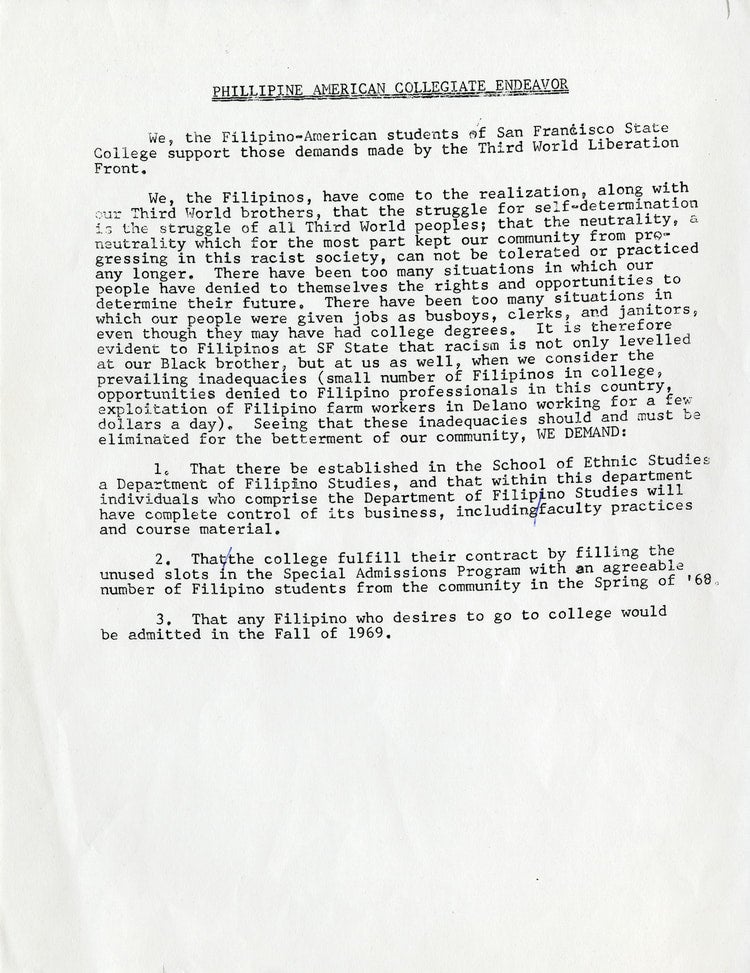
Pat Salaver and Robert “Bob” G. Illumin worked in the Philippine-American Collegiate Endeavor (PACE) to run tutorials and other programs to support Filipino youth. Salaver, Illumin, and others in PACE also supported the anti-eviction struggle at the International Hotel. It turns out that Salavar’s adopted father lived in that very hotel from 1927 to 1940. Even earlier, Salaver and his friends supported the Delano grape boycott in 1965, inspired by his uncle, the famed Filipino labor organizer Larry Itliong. Nakatsu and Salaver were major leaders in the TWLF strike at SF State, while Collier played an important support role.
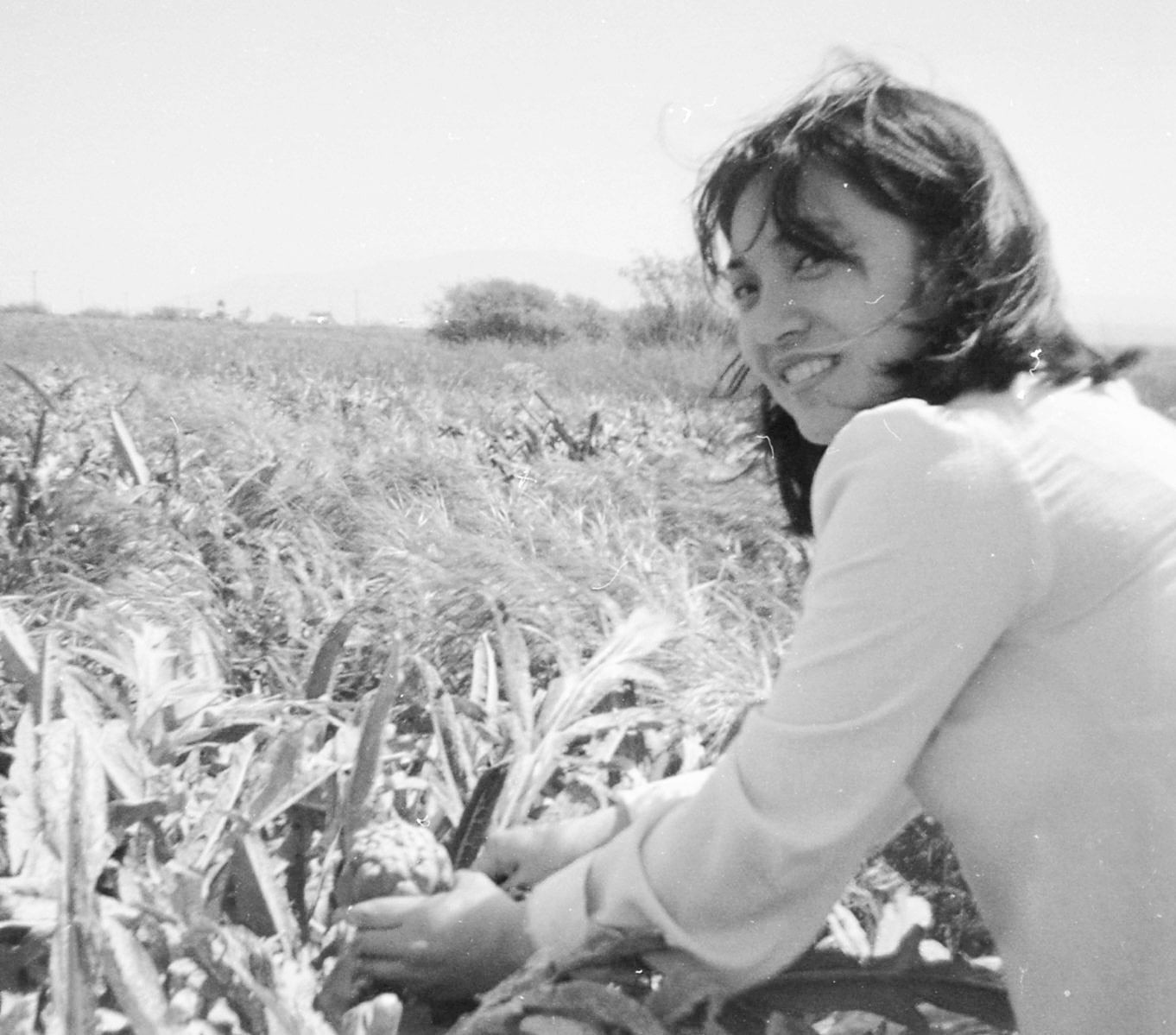
Image 41.02.01a — Lillian Fabros, the daughter of Filipino immigrants, grew up working the fields in Salinas, California. Her social consciousness arose from these experiences, and at the University of California, Berkeley, she joined the Asian American Political Alliance, protested the Vietnam War, and participated in the Third World Liberation Front strike.
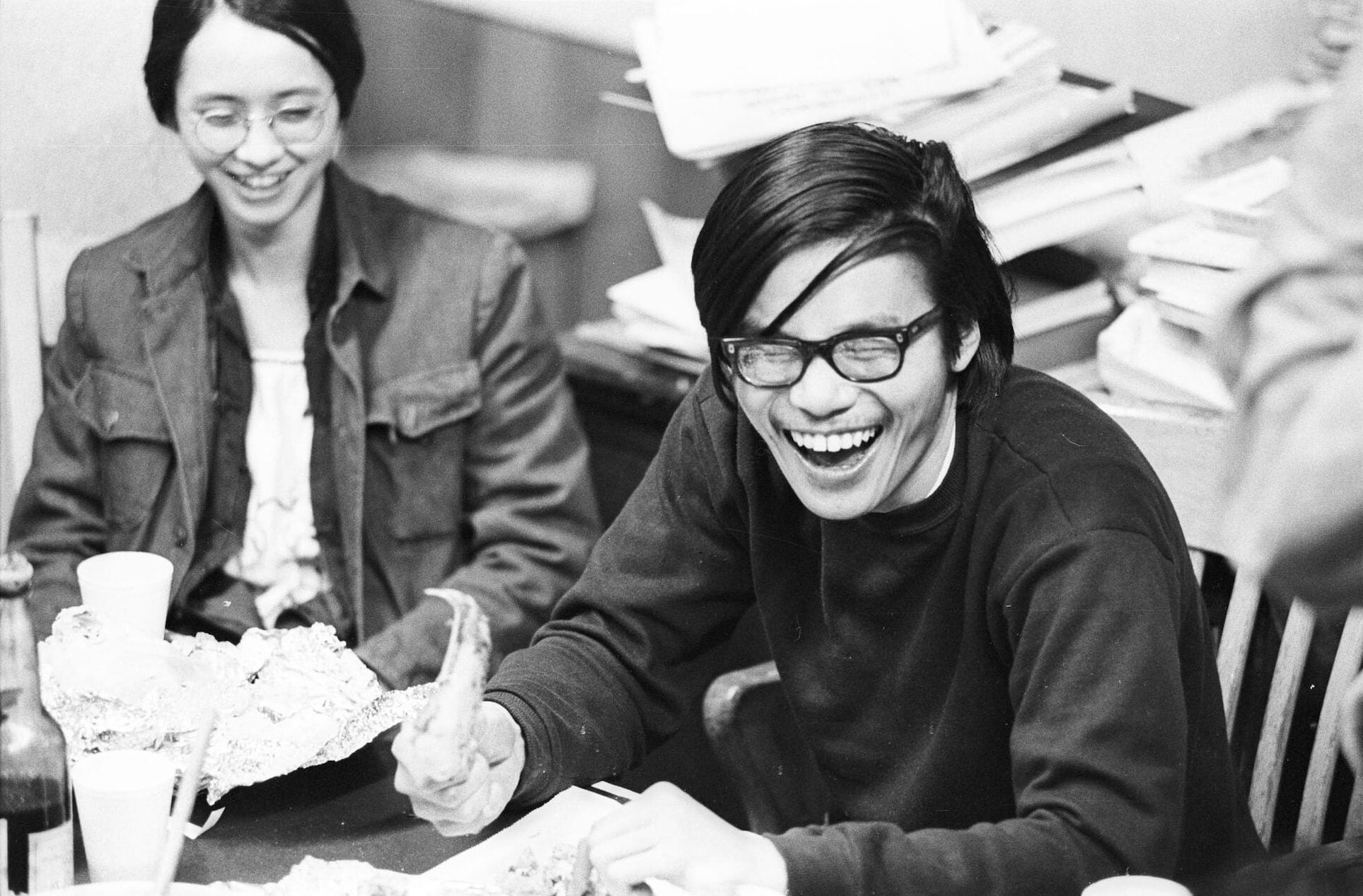
Image 41.02.01b — Harvey Dong grew up in Sacramento, California, the child of Chinese immigrants. At the University of California, Berkeley, he joined the Asian American Political Alliance and the Third World Liberation Front strike. He was part of the group that moved into the community, helping to found Everybody Bookstore in the International Hotel.
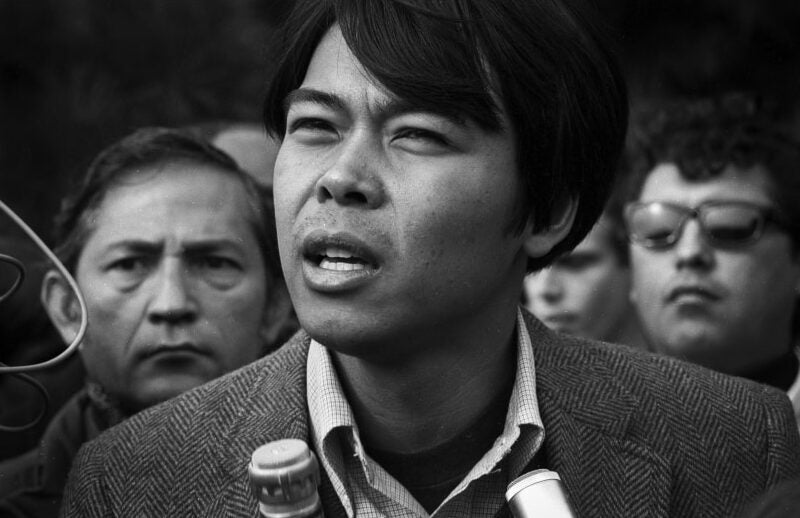
Image 41.02.01c — Robert “Bob” Illumin was active in the Philippine American Collegiate Endeavor (PACE) at San Francisco State College (SF State). PACE formed in 1967 to offer tutoring and support academics, becoming one of three Asian American organizations to join the Third World Liberation Front at SF State.
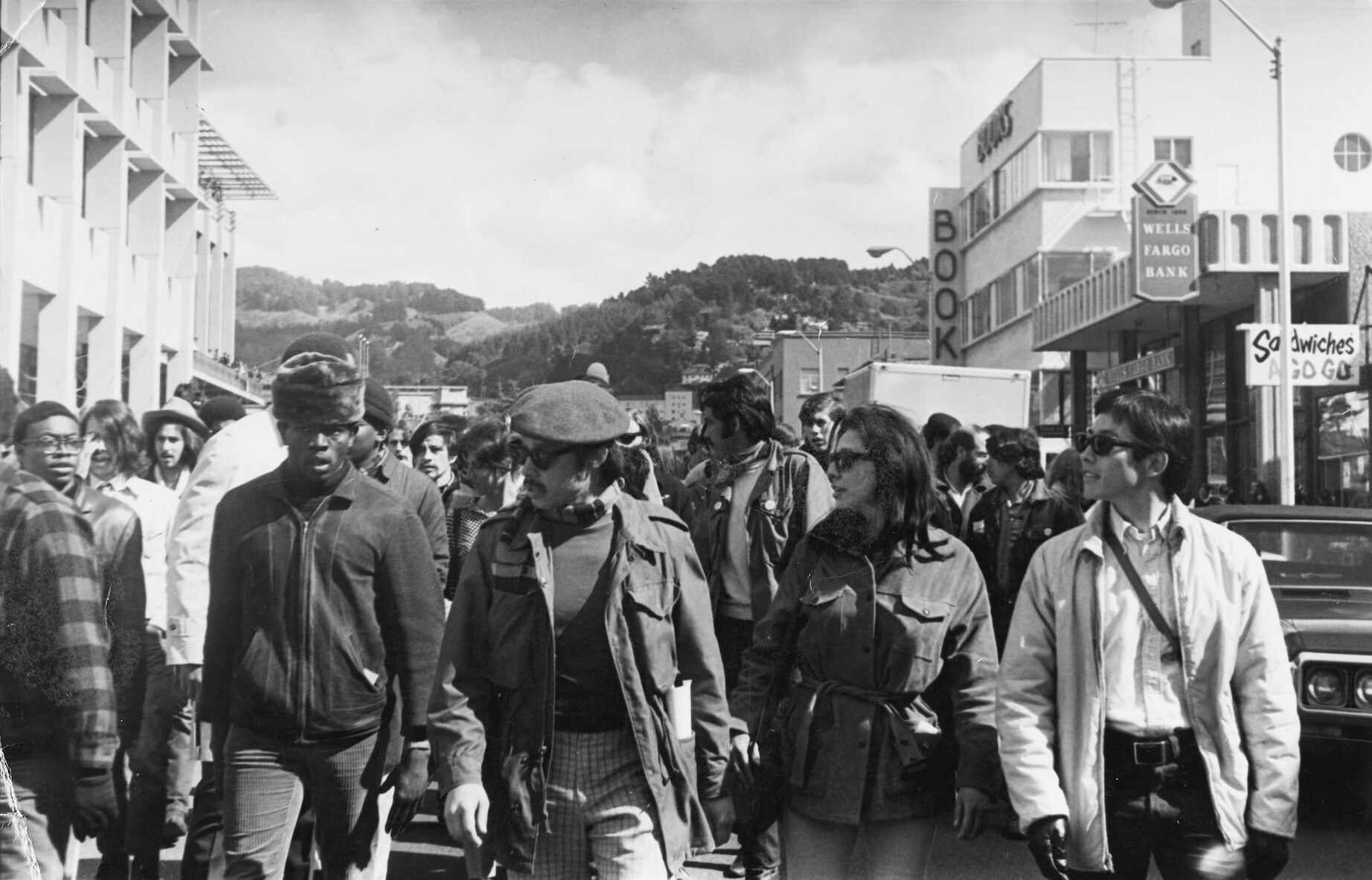
Image 41.02.01d — Third World Liberation Front leaders marching down Bancroft Way at the University of California, Berkeley, c.1969. The march included (left to right) Charles Brown (Afro-American Student Union), Ysidrio Macias (Mexican American Student Confederation), LaNada Means (Native American Student Union), and Stan Kadani (Asian American Political Alliance).




The Third World Liberation Front Strike at San Francisco State College
At San Francisco State College, Black students had a leading role in creating the Third World Liberation Front (TWLF) that directed the strikes. The TWLF was comprised of six organizations: Black Student Union (BSU), Mexican American Student Confederation (now MEChXA), Latin American Student Organization, Intercollegiate Chinese for Social Action, Philippine-American Collegiate Endeavor, and Asian American Political Alliance.
The term “Third World” referred to the developing countries of Asia, Africa, and Latin America. Meanwhile, the term “Liberation Front” linked the local strikes on US college campuses to larger global struggles against colonialism. Notably, these global movements had different goals than those of the civil rights era. One of these goals was the right to self-determination. This had a major impact on the TWLF and what they wanted to achieve.
The TWLF on both campuses had the ambitious objective of transforming public education. They had three main demands:
First, they wanted quality education for all Third World students (that is, descendants of people from Asia, Africa, and Latin America) equal to that of others.
Second, they wanted to transform the fundamental purpose of education. They called for a “relevant education” that prioritized the needs of working-class communities above the needs of corporations. They believed the experiences and perspectives of racially marginalized groups should be included in their classes. They wanted to develop a community-based curriculum where students gained knowledge by working on social problems in communities alongside academic learning. They also wanted Third World studies to “[confront] racism, poverty, and misrepresentation imposed on minority peoples.” 1
Third, they sought self-determination and the power for students and people of color to help hire faculty and develop their own classes and curriculum.
More to explore
Slideshow
Third World Liberation Front Position Papers
To understand what the three Asian American student organizations involved in the movement wanted from the Third World Liberation Front strike, check out the position papers of the Philippine-American Collegiate Endeavor (PACE), Intercollegiate Chinese for Social Action (ICSA), and the Asian American Political Alliance (AAPA).
In the years leading up to the strike, students had developed student-run programs, including tutoring programs and student-led classes, as part of what they called “Experimental College.” These students were promoting ways of learning in which knowledge came from working in communities outside of the university. They connected their lived experiences with what they were learning in school. These student-led programs and initiatives shaped their vision of what education could be.
On November 6, 1968 the TWLF at SF State began what would become the longest student strike in US history. At its height, 80 percent of classes were closed, and the strike endured for five months. The struggle had been brewing for a few years, largely in response to concerns about the sharp decline in Black student enrollment as well as stalled efforts to establish Black Studies. 2
The Black Student Union (BSU) issued ten strike demands that focused on establishing a Department of Black Studies, admitting Black students on the campus, and defending instructor George Murray, the outspoken Black Panther Party Minister of Education, who was fired from his part-time teaching position in English days before the strike began.
Additionally, the TWLF issued five strike demands (several that overlapped with those of BSU), including establishing a School of Ethnic Studies, hiring faculty, admitting non-white students, and retaining George Murray. Together these became the fifteen demands of the TWLF strike.
Text 41.02.03a — This leaflet called for students to walk out of classes on November 6, 1968, the first day of the Third World Liberation Front (TWLF) strike at San Francisco State College. It lists the ten Black Student Union-initiated demands adopted by the TWLF.
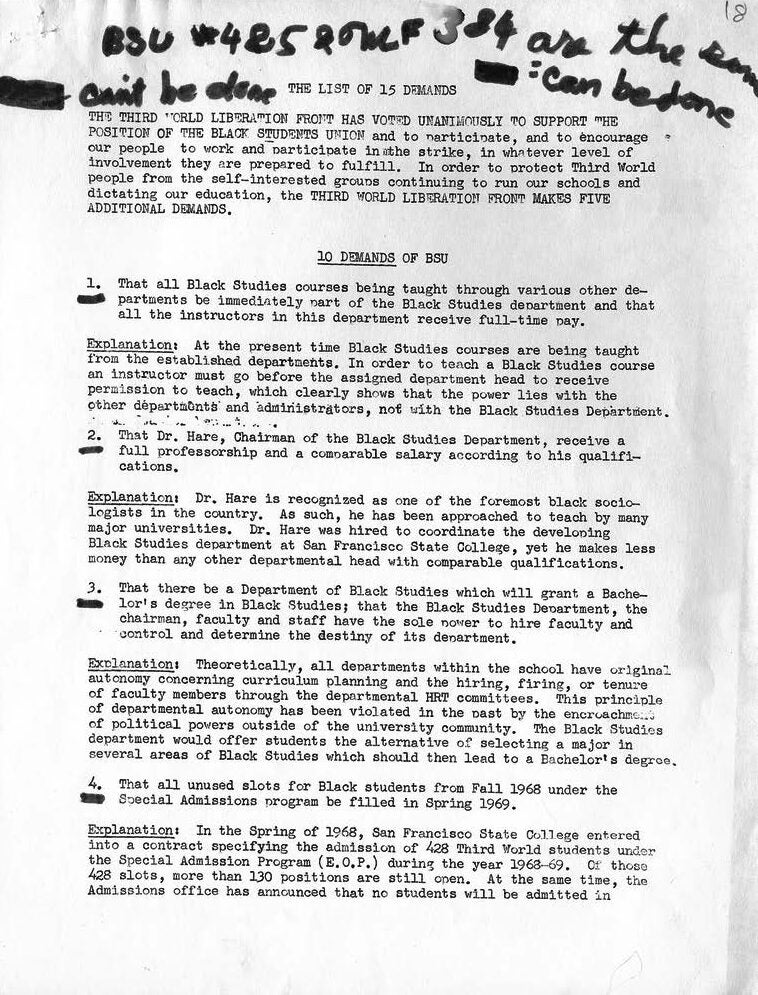
Text 41.02.03b — (Page 1 of 3) This document shows the ten demands of the Black Student Union and five demands of the Third World Liberation Front (TWLF), which together became the TWLF strike demands to create relevant educational content that included the histories and cultures of communities of color.
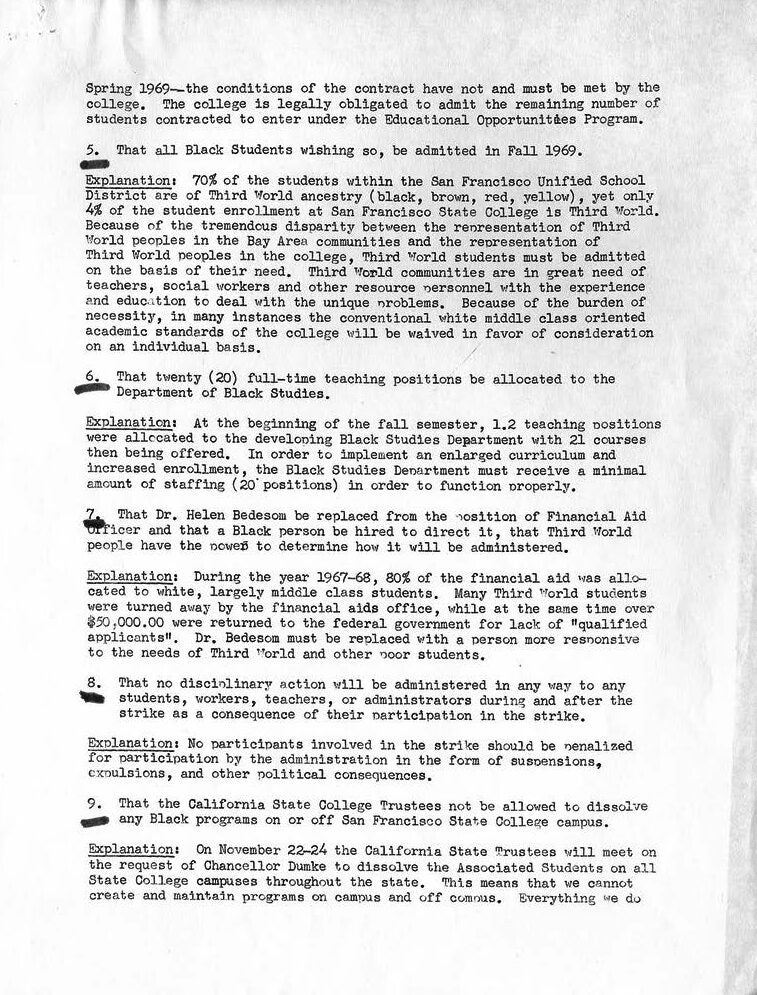
Text 41.02.03c — (Page 2 of 3) This document shows the ten demands of the Black Student Union and five demands of the Third World Liberation Front (TWLF), which together became the TWLF strike demands to create relevant educational content that included the histories and cultures of communities of color.
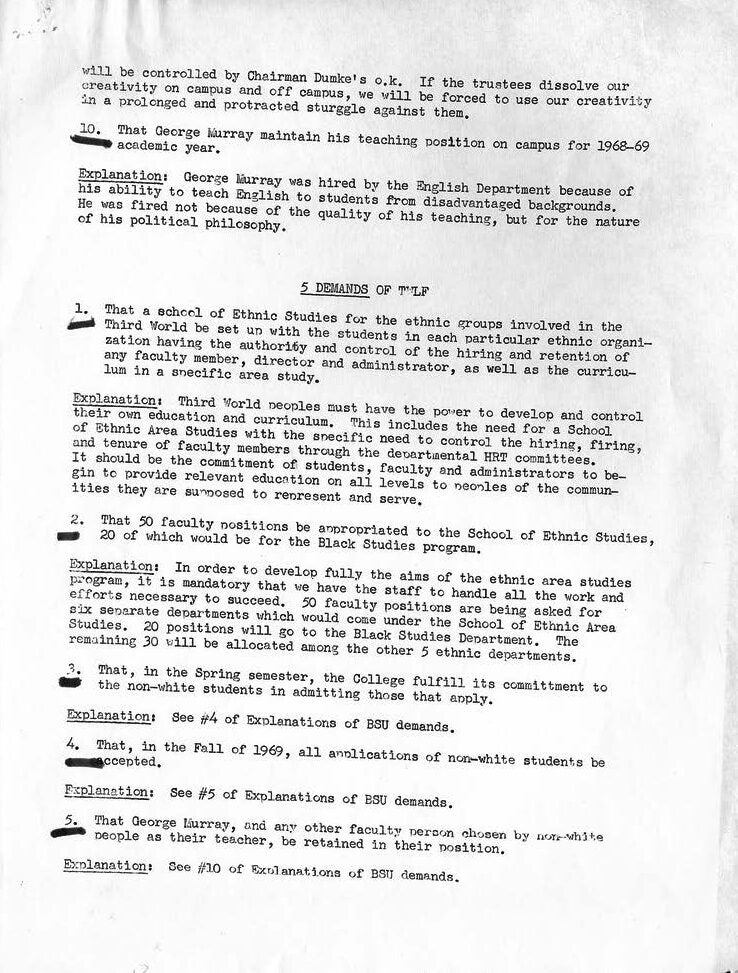
Text 41.02.03d — (Page 3 of 3) This document shows the ten demands of the Black Student Union and five demands of the Third World Liberation Front (TWLF), which together became the TWLF strike demands to create relevant educational content that included the histories and cultures of communities of color.




The college administration responded to the strike by calling in the police. On one day alone, 453 people were arrested. The police regularly beat students, both activists and bystanders. When the California State University Trustees appointed Professor S. I. Hayakawa to head the college in late November 1968, the decision sparked protest and controversy. Hayakawa was a “law-and-order” administrator who was not afraid to directly confront activists. At one of the student demonstrations, to enforce his ban on amplified sound, Hayakawa jumped on top of the sound truck and wildly pulled out the wires, and mockingly told the press, “This has been the most exciting day of my life since my tenth birthday, when I rode on a roller coaster for the first time.” 3
Activist students, the Associated Students, and the Academic Senate (the main faculty body) all opposed Hayakawa for his disregard for democratic processes and opposition to student demands. Many in the local Japanese American community further condemned Hayakawa, a Japanese American/Canadian, for opposing student justice struggles and promoting Japanese American compliance. By contrast, top California officials, and the general public as well, admired Hayakawa’s approach.
While Hayakawa and the police opposed the TWLF strike, there were some internal tensions among the student activists as well. These tensions were mainly between white students and students of color, even though white students made up the majority of protesters. There were also tensions within the TWLF, including over which tactics to use.
Nevertheless, the strike achieved several major changes. After faculty who had also been on strike returned to work, the students formalized a strike settlement with Hayakawa. As a result of the TWLF strike and settlement, SF State established the first School of Ethnic Studies in the nation. What they gained was remarkable: twenty-two faculty positions, a Black Studies department, student participation on personnel and curriculum committees, and an effort to increase the percentage of special admission slots.
Third World Liberation Strike at the University of California, Berkeley
Inspired by SF State’s TWLF, students at UC Berkeley formed their own TWLF to fight for Third World Studies at their own university. UC Berkeley’s TWLF was made up of four organizations: Afro-American Student Union, Mexican American Student Confederation, Asian American Political Alliance, and United Native Americans.
Leading up to the strike, Black students had submitted a proposal to create a Department of Black Studies nine months earlier and were frustrated by the administration’s slow response. Chicano/a students had pressured the university to boycott grapes in solidarity with the United Farm Workers strike, and also wanted Chicano studies classes. Asian American students and AAPA advocated for the creation of UC Berkeley’s first-ever Asian American studies course to be taught in winter 1969. UC Berkeley’s strike began on January 22, 1969.
Compared to Hayakawa, UC Berkeley’s Chancellor Roger Heyns appeared more sympathetic toward the students. He claimed that he had already committed to creating a Black Studies program and that he had already implemented the Educational Opportunity Program to support minority students. However, to students in the TWLF, a key issue that had yet to be addressed was self-determination.
While Heyns wanted to work through established university procedures to implement changes, the TWLF wanted to change institutional procedures altogether in order to give students increased power to take part in decision making. They also wanted to incorporate community-oriented courses into the existing curriculum. They were seeking to transform schooling in major ways.
Berkeley’s campus had more middle-class students and fewer arrests, compared to SF State. Still, police violence was high, with the police attacking TWLF activists as well as bystanders. In one case, the police severely beat a Black strike leader. In another, a white non-striker tried to stop the police from beating a Black reporter; for his efforts, the police took the white man to the basement and beat him into semi-consciousness, knocking out his front teeth.
After six weeks of strikes, on March 4, 1969, UC Berkeley’s Academic Senate voted 550–4 to establish the first Department of Ethnic Studies in the nation, which included Afro-American Studies, Chicano Studies, Asian Studies, and Native American Studies.
Conclusion
Following the Third World Liberation Front strike victories at SF State and UC Berkeley, numerous Black, Chicano/a, Asian American, Native American, and/or Ethnic Studies programs were created at colleges and universities nationwide. Despite several recent efforts to dismantle Ethnic Studies programs throughout the country, such as Arizona’s 2010 ban, Ethnic Studies is set to become a graduation requirement in California for the class of 2030. Alongside the rising attacks on Ethnic Studies, the national movement for K–12 Ethnic Studies continues to grow.
Ethnic studies is now an established field of inquiry that examines history, culture, and society. It includes both theory and practice. It critiques power and works to counter racism and structural inequities in communities. Ethnic studies has its own journals, book series, and a growing number of programs and courses across the nation, all of which was set in motion by the two TWLF strikes in the late 1960s.
Glossary terms in this module
eviction Where it’s used
A legal process in which a landlord forces a person or group to leave their home.
self-determination Where it’s used
Within a global context, self-determination is the right of a people to freely determine their political status and freely pursue their economic, social, and cultural development without external interference. For students in the TWLF, self-determination meant having the power to develop their own classes and change university procedures.
solidarity Where it’s used
A political, cultural, and collective stance that recognizes the mutual responsibility and support that is necessary to achieve change. Solidarity taps into the power in numbers and considers the collective interests of communities.
strike Where it’s used
Traditionally, a strike is when workers collectively refuse to work to achieve certain goals. In the context of the student strike, students refused to go to class, held educational workshops, and organized demonstrations.
Endnotes
1 Third World Liberation Front: School of Ethnic Area Studies, Special Collections San Francisco State University, San Francisco State University, accessed May 16, 2023, https://diva.sfsu.edu/collections/strike/bundles/187979; also “The Third World Liberation Front and the Origins of Ethnic Studies and African American Studies at UC Berkeley Resource Guide.” UC Berkeley Library Guides. Last modified May 2, 2025. https://guides.lib.berkeley.edu/twlf.