





I-Hotel supporters link arms to form barricade outside hotel. Above them hangs a banner with partially obscured text reading “No Eviction!”
Module 4: Housing as a Fundamental Human Right Part II: Save the International Hotel
Was Asian American Activism successful in improving the lives of Asian Americans?
Throughout the nine-year fight to save the I-Hotel, hotel residents, including Manong Wahat Tompao and Manong Frank Alarcon, used their growing political awareness to challenge gentrification and eviction and demand accountability from the city. Residents demanded that public officials like Mayor Moscone prioritize the well-being of the general public instead of profit-driven goals. They believed the city had a responsibility to address the needs of all residents, especially the poor, elderly, and disadvantaged.
This module examines how the I-Hotel residents fought to make housing a human right and what their movement for affordable housing ultimately accomplished.
How did I-Hotel residents lead the fight to make housing a human right?
How did the anti-eviction organizing efforts build community? How did this impact the movement to save the I-Hotel?
How did Filipino American organizers keep the I-Hotel movement alive, even after residents were evicted? What did their ongoing fight for safe and affordable housing ultimately accomplish?
Housing as a Human Right
When developers and property owners argued that gentrifying Manilatown would generate profit for the city, I-Hotel residents retorted that they—as veterans, laborers, and taxpayers—had devoted their entire working lives to generating profit for the city. When politicians and corporate representatives argued that this was a matter of private property rights and progress for the city, I-Hotel residents maintained that true progress would be achieved when all people had access to safe and affordable housing as a human right.
Although they were poor and elderly, I-Hotel tenants were the most militant activists in the long fight to save the hotel. They drew on their past experiences as union organizers, migrant workers, garment workers, and military veterans to challenge powerful developers and develop the critical arguments about housing rights that would drive the movement. I-Hotel community organizer Emil De Guzman recalls the powerful leadership and commitment of the manongs as they defended their right to affordable housing:
We’re talking about people who really made fighting part of their lives, like going to work every day and coming back for meetings. People had to find a way of making a living. [Many residents were] longshoremen. Mrs. [de la Cruz] was into making jewelry boxes. Just a lot of people working in restaurants, working in hospitals, working in office buildings. They did their work, and they came home, and then they went to meetings… It was really a long process, but… we knew that this was it. This is where the rubber hits the road. This is where the organizing and fighting can decide whether we live here or we lose and are evicted. 1
While I-Hotel residents fought to save their home, they also recognized that the struggle for the I-Hotel was a part of a larger fight for housing rights in poor, elderly, and immigrant communities. As Manong Felix stated, “Our fight is a human rights fight. By saving the Hotel, we are saving the respect for human dignity. We want to restore that. By saving the respect for human dignity, we are helping to save the human race.” 2
The tenants fearlessly exposed the problems with placing profit over human rights and stood up to city officials, inspiring a community-wide movement for housing as a human right.
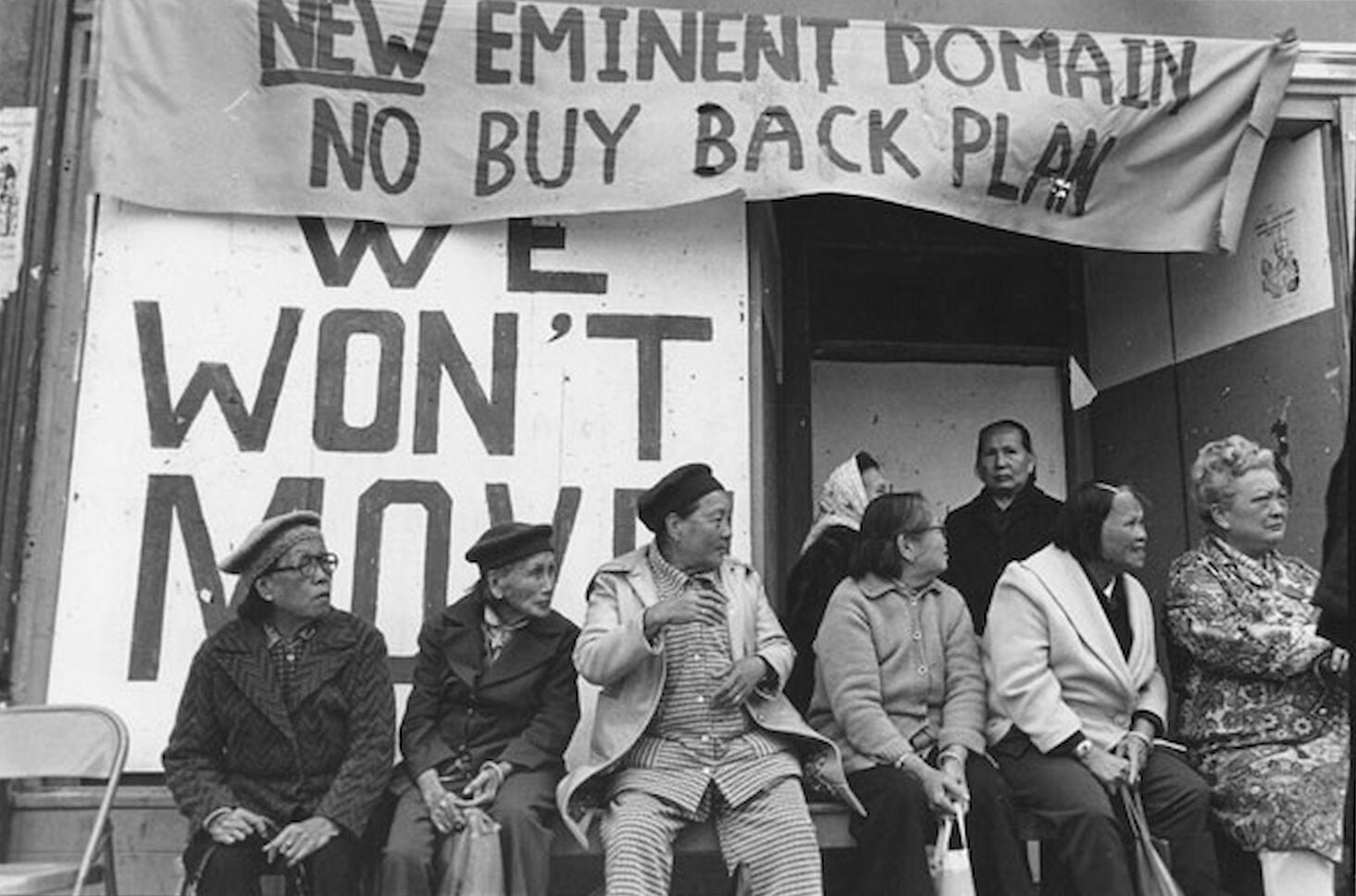
Image 41.04.01a — Women sit in front of the iconic “WE WON’T MOVE” sign outside of the I-Hotel to protest the eviction of long-standing tenants.
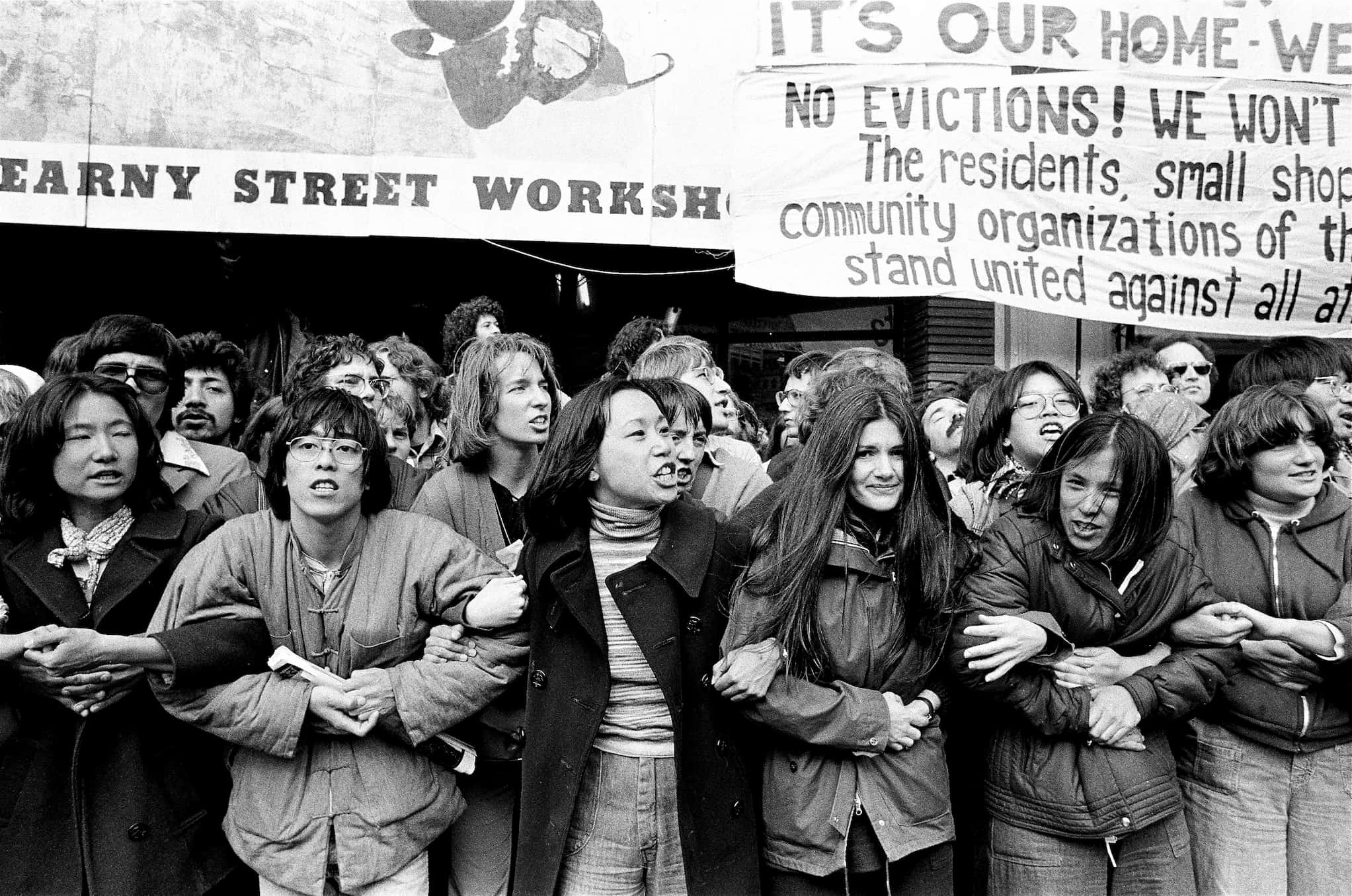
Image 41.04.01b — I-Hotel supporters, including Pam Tau Lee (center, black coat), link arms to form a human barricade in front of the I-Hotel.


Building a Movement: Community Activists Support the Residents
Although it was an uphill battle, the residents were not alone in their fight. Their activism inspired young Filipino American activists who joined them to form the International Hotel Tenants Association (IHTA). Thousands of volunteers joined the IHTA’s efforts, especially high school and college students from San Francisco State University, the University of California, Berkeley, and other local campuses.
Teachers, garment workers, longshoremen, and farmworkers also stood in solidarity with the residents, as did churches and religious leaders, lawyers, urban planners, and politicians. This broad network of supporters understood that the struggle for housing in Manilatown reflected the larger struggle for housing as a human right everywhere. These volunteers turned the aging hotel into a vibrant community center and a home for the residents. Through their dedicated organizing efforts, many volunteers came to see the I-Hotel as their community as well.
In addition, Asian American community organizations rented spaces in the I-Hotel and offered important resources to Filipino American and Asian American community members in order to address community needs. For example, the Asian Community Center organized a food program that offered free groceries, recipes, and information about nutrition to Chinatown residents to support the community’s health and well-being. Asian Legal Services provided the neighborhood with legal aid and advocated for immigrant rights.
The Kearny Street Workshop (KSW) was located in the I-Hotel and is the oldest running Asian American arts organization in the country. In the 1970s, its artists expressed the beauty and struggle of everyday life in Manilatown and Chinatown through murals, poetry, photography, and film. These artists used art as a tactic to educate the public about the anti-eviction struggle and inspire community support.
KSW poets like Al (Alfred A.) Robles documented the life stories of the manongs through his poetry, while artists like Nancy Hom and Jim Dong created murals and posters that reflected the vision of the movement. KSW also served as an important social space where residents, artists, activists, and community members gathered for art classes, poetry readings, and performances. In these ways, art became a powerful form of cultural resistance that not only galvanized many supporters but also created spaces where residents, artists, and activists could build meaningful friendships with each other.
The young artists and students who became active in the struggle to save the I-Hotel spent time with the elderly tenants, which allowed them to develop intergenerational relationships with the manongs. These relationships fostered respect, responsibility, and reciprocity across different generations. IHTA organizer Estella Habal recalls,
I spent every day with Wahat Tampao… attending meetings with him, driving him to political functions, and simply hanging out. 3 … Mrs. D and Wahat became the aunt and grandfather I had never had. At the same time, I became their niece and granddaughter. . . These bonds between the manongs and the young were deep, tender, and durable. 4
Like Habal, KSW artist Nancy Hom also shares how the intergenerational bonds between young people and the elderly residents deeply shaped her experiences of the I-Hotel:
[T]he I-Hotel was more than a hotel. For the transient Filipino workers it was a cultural center, a clearinghouse and a place to call home. This sense of belonging was passed on to those who came to the Hotel to help the tenants, but also to find meaning in their own lives… The elderly tenants welcomed us like family, taught values that stay with us to this day – humility, family, honoring our ancestors, fighting for what we believe in, staying true to our sense of justice. 5
While they may have initially volunteered at the hotel to support the elderly residents, the youth were deeply impacted by the residents’ care, wisdom, and friendship. Through the intergenerational relationships they built with the residents and their growing understanding of what the I-Hotel community meant to them, the youth came to realize that the eviction would remove not only the residents but also the heart of Manilatown. Together, the residents and volunteers formed a powerful coalition united in the conviction that affordable housing was a basic human right—a right that superseded the pursuit of profit.
In 1973, Milton Meyer and Company sold the I-Hotel to Four Seas Investment Corporation, a holding company owned by a businessman in Thailand, which planned to demolish the building and construct an underground parking garage in its place. Despite their best efforts, members of the IHTA were unable to extend the lease with the new owners.
The Fall and Rise of the I-Hotel
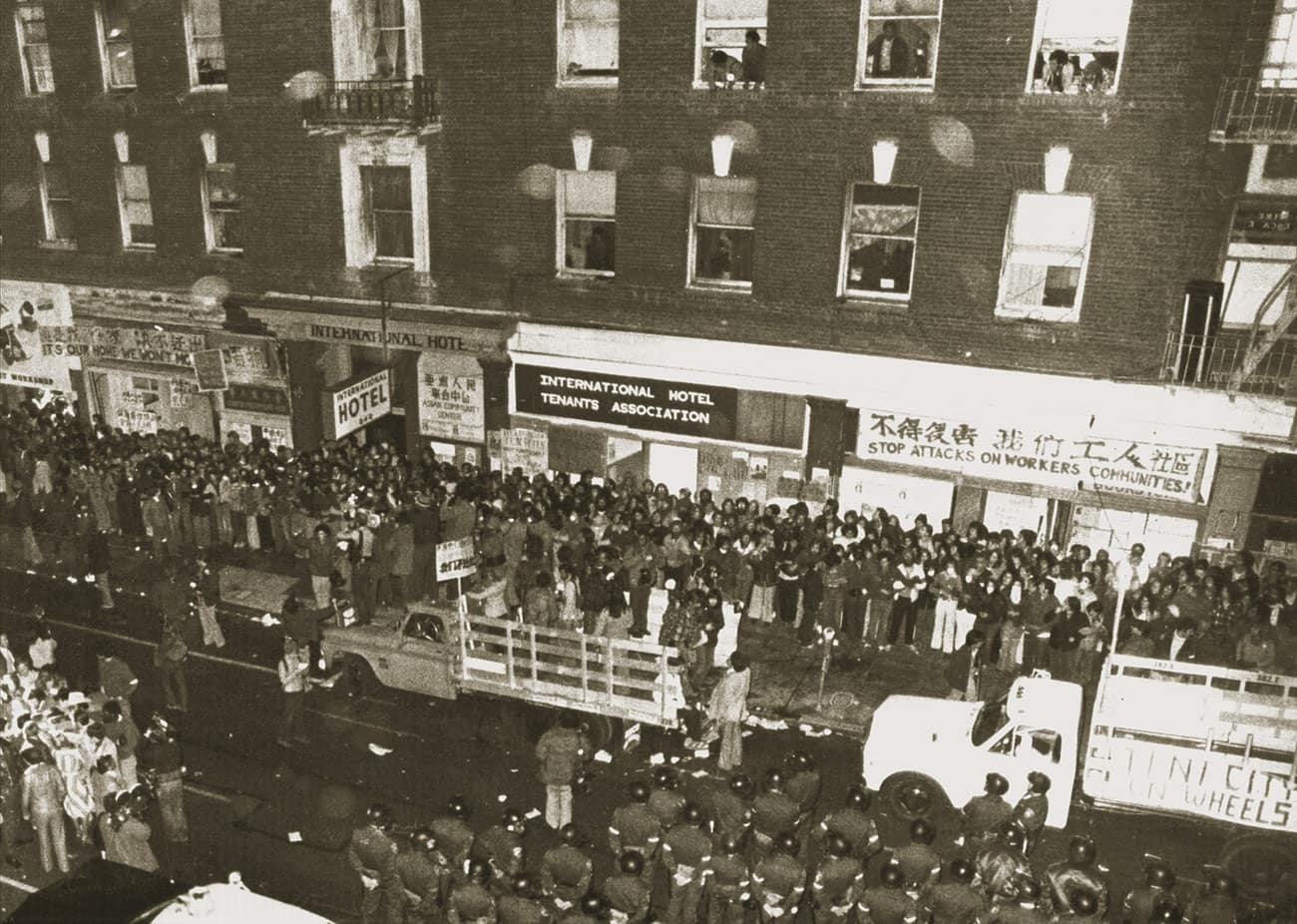
Image 41.04.02 — Facing three hundred police in riot gear, I-Hotel supporters and the International Hotel Tenants Association form a human barricade in front of the hotel before tenants were forcibly evicted on the night of August 4, 1977.
On August 4, 1977, three hundred riot police arrived at the I-Hotel to evict its residents. The police officers were met with a barricade of three thousand supporters who stood shoulder-to-shoulder with linked arms in hopes of stopping the eviction. After several hours of struggle, the police broke through the barricade and removed the residents. Uprooted from their home, residents were forced to move away, and many fell ill from the stress of housing insecurity. Nevertheless, the manongs maintained their fierce spirit. Manong Felix declared:
The eviction is terrible, but it is only a temporary defeat. We will continue to fight for our place in society. This system which oppresses us all has the courts, laws, and police. But our weapons are much stronger – the people and their righteousness. 6
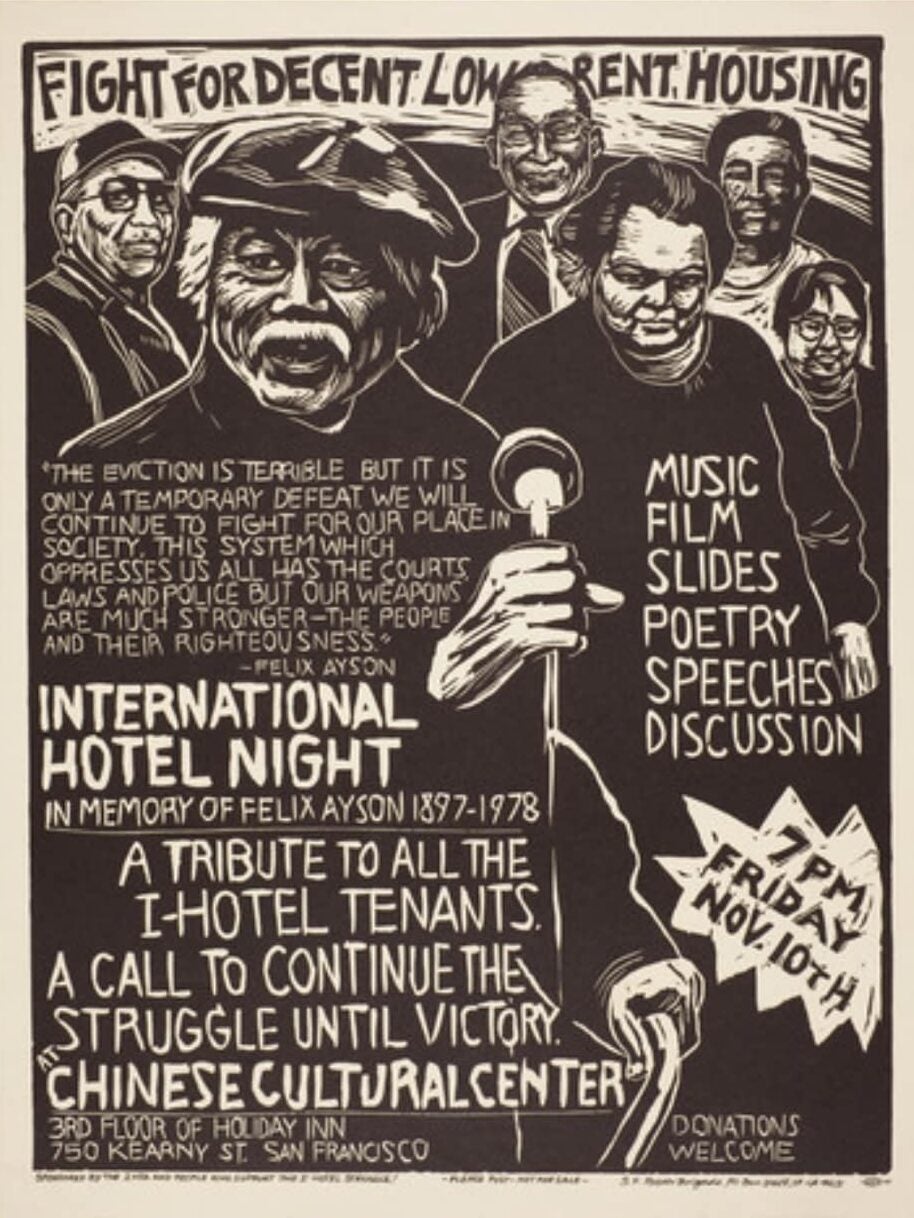
Image 41.04.03 — This poster for the “Fight for Decent Low Rent Housing” by artist Rachael Romero and the San Francisco Poster Brigade features Felix Ayson (second from left) and the I-Hotel struggle.
The I-Hotel remained vacant for two years before it was finally demolished.
For the next thirty years, Filipino American organizers kept the movement of the I-Hotel alive. Although they had lost the eviction struggle, they refused to abandon the residents’ fight and dream for affordable housing in Manilatown. Former I-Hotel resident and community organizer Bill Sorro explained:
The lesson that they passed on… was with their bodies – maintaining dignity for yourself by refusing to move. They said, “We see young people giving us respect. We say this back to you, we say back to you, ‘We Won’t Move.’ There is no price that you can put on your dignity. Some things are not for sale.” These brothers passed this on to us. 7
Organizers formed the International Hotel Block Development Citizens Advisory Committee (IHCAC) which created important allyships and partnerships with the Mayor’s Office and community organizations. In recognition of their sustained efforts, the US Department of Housing and Urban Development granted the IHCAC an eleven-million dollar grant to build affordable senior housing on the property.
As a result of continued activism, the new International Hotel Senior Center opened to the public on August 26, 2005. The fifteen-floor building has 104 affordable housing units and daily programs for residents. The Manilatown Heritage Foundation is located on the building’s ground floor and features a community space, cultural programs, and guided tours that recount the powerful history of the original I-Hotel residents and their movement to save the hotel.
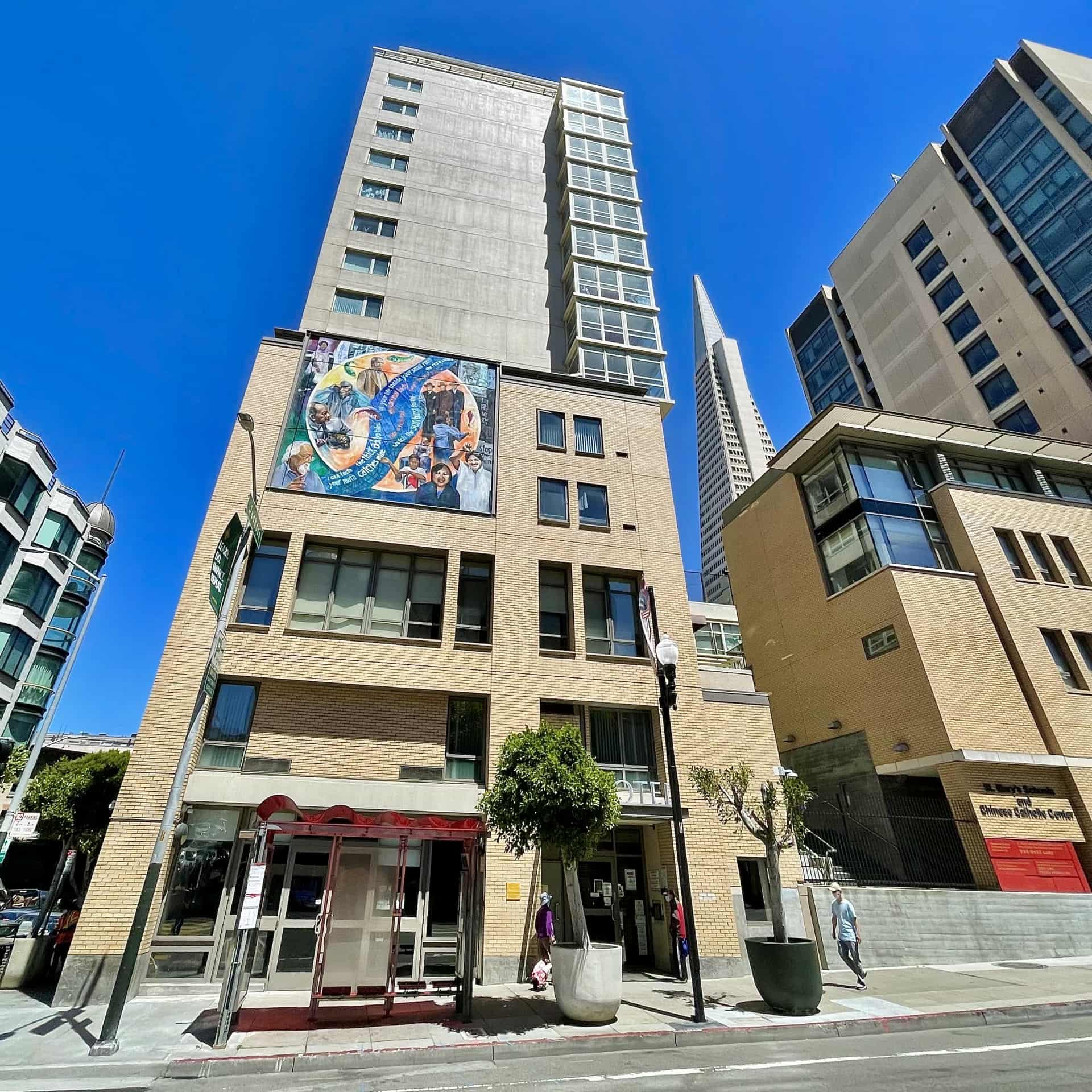
Image 41.04.04 — The new I-Hotel sits at the same site as the original. A mural by Johanna Poethig commemorates the fight for low-income housing and pays tribute to former tenants such as Etta Moon, Luisa de la Cruz, Wahat Tompao, and Al Robles.
The long struggle to save the I-Hotel is a cornerstone in the history of Asian American activism. Immigrant, working-class, and elderly residents challenged the efforts of wealthy developers and city officials who wanted to eradicate affordable housing and gentrify Manilatown. These residents united with many supporters and created an intergenerational and multiethnic coalition to stop the eviction.
Although the residents were unable to save the I-Hotel, the Filipino community was determined to honor their courageous efforts by carrying on the struggle for affordable housing in Manilatown. Thirty-six years later, the dreams of the residents and their supporters were finally realized when the new I-Hotel Senior Center was built. Because of the long-term commitment and bayanihan spirit of residents, community organizers, and a wide network of community allies, the I-Hotel movement for housing as a human right lives on. In the words of the residents and community supporters, long live the International Hotel!
Glossary terms in this module
affordable housing Where it’s used
Generally defined as housing in which the person living there is paying no more than 30 percent of their income for housing costs, including utilities.
eviction Where it’s used
A legal process in which a landlord forces a person or group to leave their home.
gentrification Where it’s used
The process in which real estate developers displace neighborhood residents out of their community by upscaling or establishing new properties and businesses. These new establishments attract wealthier residents and raises the cost of living, which eventually forces longtime neighborhood residents to move. Gentrification often disrupts the original community’s history, culture, and social networks.
solidarity Where it’s used
A political, cultural, and collective stance that recognizes the mutual responsibility and support that is necessary to achieve change. Solidarity taps into the power in numbers and considers the collective interests of communities.
Endnotes
Authors note: We are grateful to the organizers of the International Hotel, including Estella Habal, Emil de Guzman, and Nancy Hom, for sharing their front-line experiences and insights into community organizing. Their steadfast commitment to honor the ongoing legacy and communities of the I-Hotel deeply inspire and ground us. We thank filmmaker Josh Chuck for generously sharing footage from his documentary film Chinatown Rising and for his thoughtful suggestions about how to effectively incorporate visual footage into the curriculum. We also thank the teachers who participated in the 2022 Bay Area Writing Project and South Coast Writing Project summer invitational institutes for providing invaluable recommendations on our early curriculum drafts. We are especially grateful to Jon Salunga for his wise and generous comments which challenged us to think more deeply about Ethnic Studies teaching pedagogies and our responsibility as instructors. Finally, we would like to extend special thanks to the high school students who piloted a draft of the curriculum in their English Language Arts class and who invited us to learn with and from them. Their thoughtful comments, questions, and critical insights give us hope for the future of Ethnic Studies.
1 Emil de Guzman, interview by May Fu, August 8, 2002, as cited in May Fu, “Keeping Close to the Ground: Politics and Coalition in Asian American Community Organizing, 1969-1977” (PhD diss., University of California, San Diego, 2005), 156.
2 Estella Habal, San Francisco’s International Hotel: Mobilizing the Filipino American Community in the Anti-Eviction Movement (Temple University Press, 2007), 106.
3 Habal, San Francisco’s International Hotel, 101.
4 Habal, San Francisco’s International Hotel, 186.
5 Nancy Hom, “Keeping the Story Alive: An Art History of the I-Hotel,” in Julianne P. Gavino, Nancy Hom, and Johanna Poethig, Visions and Voices of the I-Hotel, Maryland Institute College of Art Community Arts Journal, 2011, https://www.mica.edu/research/hurwitz-center/community-arts-journal/visions-and-voices-of-the-i-hotel/.
6 Kearny Street Workshop, Kearny Street Workshop Calendar 1978, 1977, calendar, The Freedom Archives, http://freedomarchives.org/Documents/Finder/DOC63_scans/63.Ihotel.calender.full.pdf.
7 Bill Sorro, interview with May Fu, April 13, 2005, as cited in Fu, “Keeping Close to the Ground,” 150.