





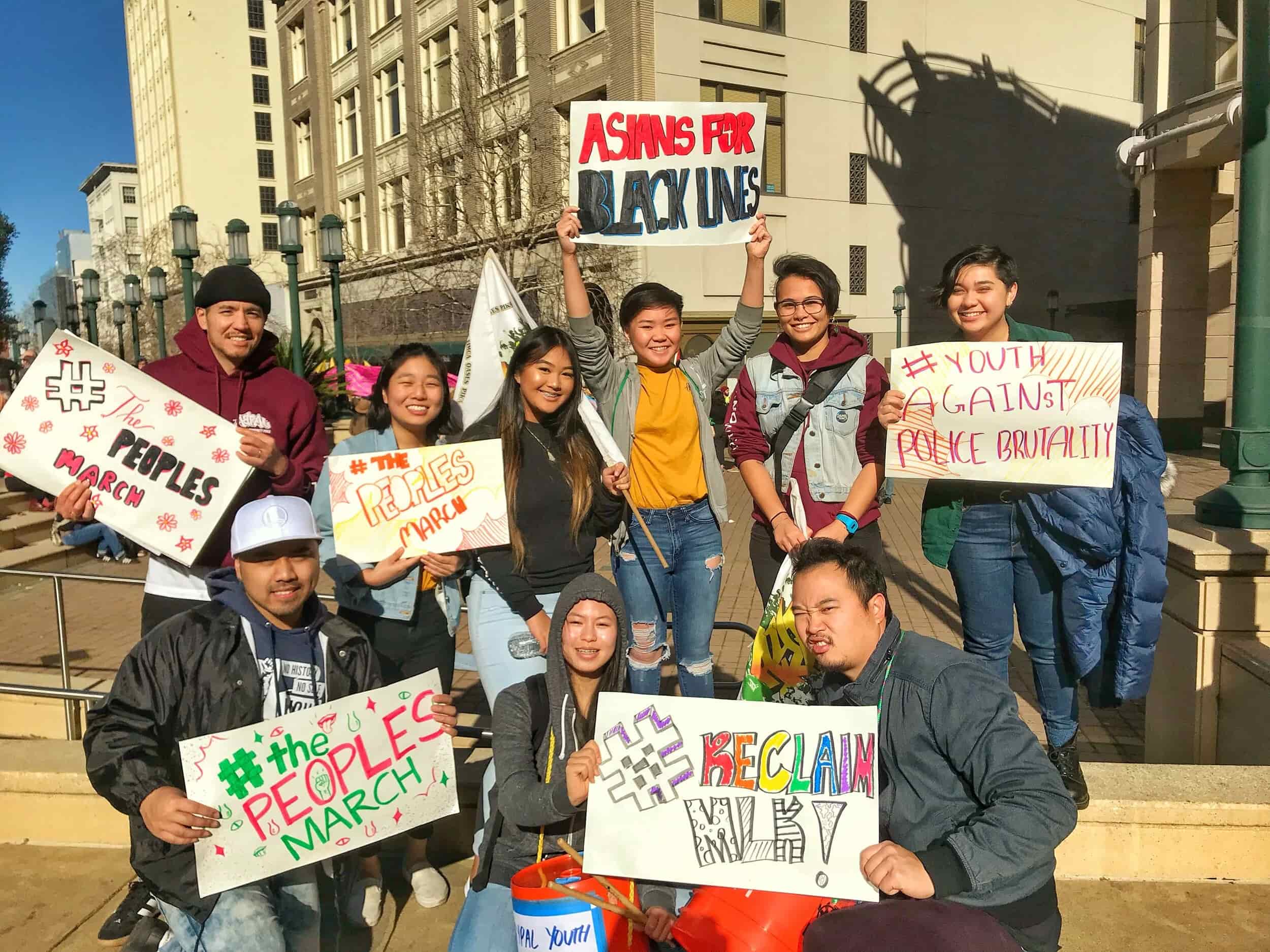
Module 2: Identity and Multiracial Alliances
How can young people from different backgrounds and experiences work together to make positive changes in their communities?
David Phan was born in Oakland, California, and raised by refugee parents who had escaped a war-torn Vietnam. Neither of his parents had the opportunity to pursue an education. David’s mother worked in a nail salon and his father was employed as a deliveryman. The couple worked hard to provide for their family, barely making enough money to pay the bills. Like many immigrants or refugees who experience traumatic events before arriving in the United States, David’s parents did not discuss the violence they had witnessed during the war in Vietnam and on their journey to the United States.
This module examines how reflecting on one’s identities, group histories, and privilege can help build solidarity.
Because his parents were reluctant to discuss their history, David learned how and why his family and other Vietnamese refugees came to Oakland through other ways. In particular, he learned through workshops led by AYPAL, a grassroots youth organizing group that aims to empower diverse Asian American and Pacific Islander youth to have a voice in their communities. The organization encourages students to learn about their own and their peers’ ethnicities—their cultural, linguistic, and/or national background, as well as their histories in the United States.
Why is it necessary for individuals to recognize power and privilege when reflecting on their own identities?
Why is it important to understand the history of one’s community?
What are some ways that individuals can become allies and work in solidarity?
Family and Community History
Through AYPAL’s workshops, David learned that migrating to the United States had been a matter of life and death for many Vietnamese people. He began to see himself not simply as American but as a Vietnamese American, and he became, in his words, “more proud of my identity and my culture.” As David added:
“[The AYPAL workshops] helped me a lot in terms of just being more proud of my background, having respect for my culture and for myself. Learning your history also makes you want to make things better for your community, you know? After learning all that we have been through, not just during the war, but also here in Oakland, it makes you want to continue working to improve things.” 1
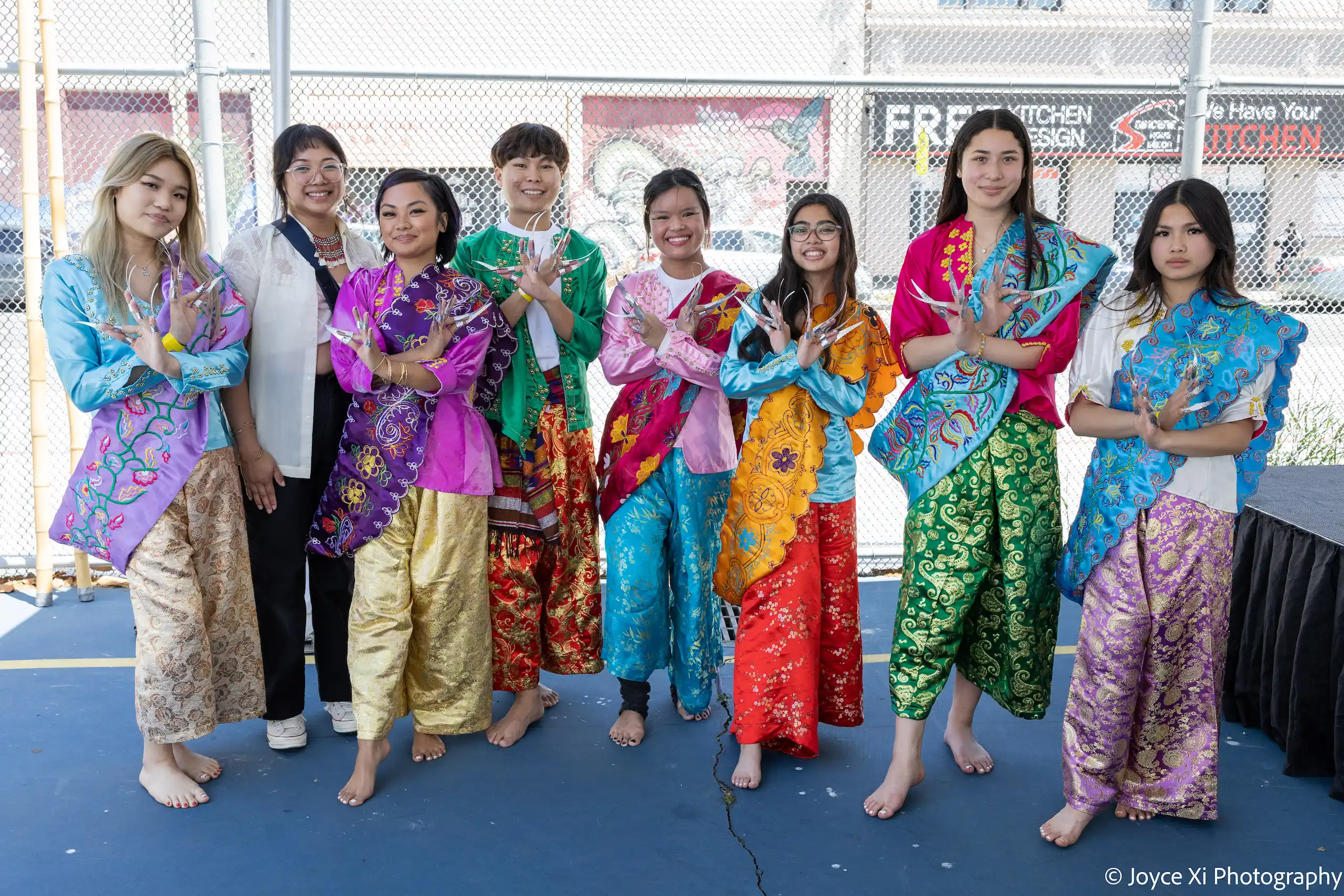
Image 50.02.01 — Members of AYPAL, a group that aims to empower diverse Asian American and Pacific Islander youth, dress in traditional Southeast Asian attire for their annual May Arts festival in 2023.
David’s experience reflects that of many high school students who have learned about their family backgrounds and who go on to work uplifting their communities. His time at AYPAL showed him the importance of understanding the triumphs and struggles of his ancestors—the experiences that defined their identity and journey, and that helped them to adapt to their new lives in the United States.
Such struggles are rarely well represented in the media or in school textbooks. David began to understand how the Vietnamese refugee experience was similar to, yet different from the diverse experiences of youth with Korean, Chinese, Cambodian, Laotian, Filipino, and Samoan ancestry who are typically racially categorized as “Asian American or Pacific Islanders.” He also began to see how the experiences of Asian Americans and Pacific Islanders echoed, but also differed from those of his Latinx, Black, and white peers.
Race and Privilege
Ideas about race have been shaped over time by historical events, economic interests, and political decisions. These ideas have often been used to give advantages to some groups while limiting opportunities for others. In the United States, people categorized as white have typically received the most advantages and privileges.
Privilege means benefiting from advantages you did not earn and may not even notice. For example, studies show that white people often receive better customer service than people of color. Privilege can come from many sources, such as having lighter skin, growing up in a wealthy family, being a US citizen, or being a man.
While white people may benefit from certain privileges, people who are seen as non-white—such as Asian American, Pacific Islander, Black, Latino, Arab American, or Native American and Indigenous—may face racism, which is unfair treatment based on race.
For instance, during the COVID-19 pandemic, many Asian Americans experienced racism and even violence after some public leaders wrongly blamed them for the virus. At the same time, many Latino communities suffered very high death rates from COVID-19 because many Latinos worked essential jobs without enough protection or health care while living in overcrowded housing.

Image 50.02.02 — Members of AYPAL, a group that aims to empower diverse Asian American and Pacific Islander youth, dress in traditional Southeast Asian attire for their annual May Arts festival in 2023.
Black Americans also faced tremendous trauma during the pandemic, especially after the police killings of George Floyd, Breonna Taylor, and others. These events reminded many people of the long history of police violence against Black communities.
It is also important to understand that people can experience both discrimination and privilege at the same time. For instance, a person of color who comes from a financially secure family still benefits from economic privilege, while someone whose family struggles to pay bills, regardless of their racial background, does not.
Different groups experience racism or other kinds of unfair treatment in different ways, and no single group’s experience is exactly the same as another’s. Recognizing these differences—and understanding that people can hold both privilege and disadvantage at the same time—helps us identify injustice and work toward fairness for everyone.
Reflection Question
Can you think of examples of how people in your area have challenged racism or other forms of discrimination?
Social Identity
Racial background is only one of many social identities that influence a person’s lived experience. Social identity refers to an individual’s sense of self as shaped by their membership in various social groups. These groups are often defined by shared characteristics, such as race, ethnicity, gender, language, culture, or social roles. Social identities influence how people perceive themselves, as well as how they are perceived and treated by others. Therefore, social identities can shape people’s experiences, behaviors, and interactions within society.
For example, in addition to racial identity and ethnic background, gender (or one’s identification or expression as a woman, man, or nonbinary gender identity) can influence one’s opportunities and experiences. Male-identified individuals tend to enjoy more privileges than female-identified individuals, because women continue to face discriminatory barriers in some professional fields, and they are more likely than men to be judged by their physical appearance.
Class background (upper class, middle class, working class, or poor) is another social identity that affords people different levels of privilege; unlike individuals from less affluent class backgrounds, those in the upper class (i.e., those who tend to be financially well-off) enjoy the privilege of not worrying about their ability to pay for housing, food, or other basic needs.
Other social identities that tend to determine patterns of privilege and marginalization include identities based on:
- Sexual orientation
- US citizenship status
- Religion
- Ability/disability status
- Age group
Reflection Question
What are two or three social identities that you share with many of your classmates?
Intersectionality
Intersectionality is the idea that people’s experiences and identities are shaped by many different factors—like race, gender, class, sexuality, and more—that overlap and interact. This concept implies that overlapping identities can lead to unique advantages or disadvantages. Intersectionality emphasizes that the same individual can experience either privilege or disadvantage depending on the social setting.
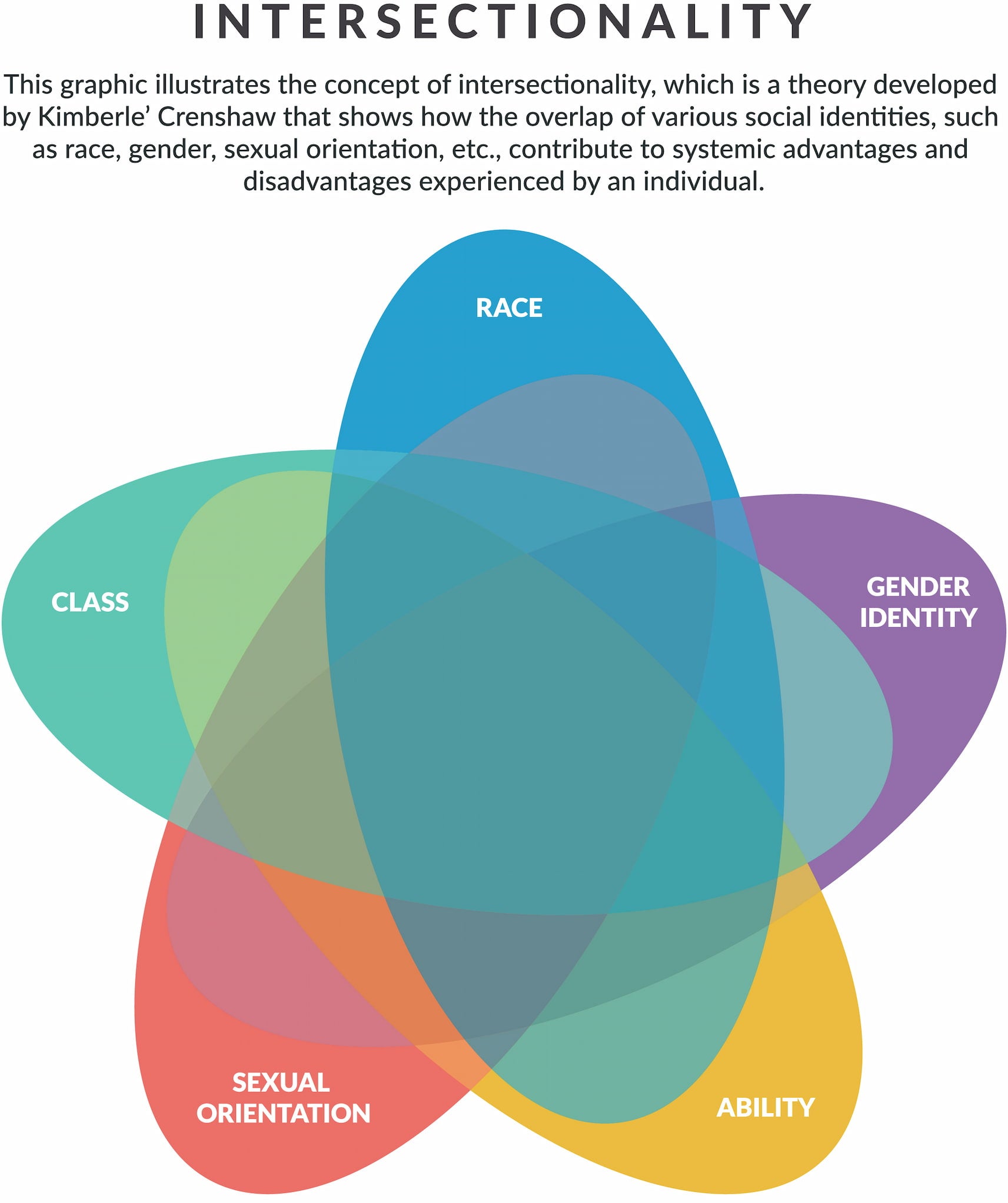
Image 50.02.03 — This diagram visually shows the intersections between our overlapping social identities.
In high school, David identified as a working class Asian American, a heterosexual male, a US citizen, and a teenager. Sometimes he was hurt by negative stereotyping as an Asian American. Because of his family’s financial situation, he could not afford certain extracurricular and educational opportunities.
At the same time, David acknowledged that he enjoyed privileges. For example, David was never bullied because of his sexual orientation, nor was he the target of offensive sexual remarks typically endured by women. And as a US citizen, he could legally obtain a job and never worry about being deported. David’s citizenship gave him privileges not enjoyed by peers who were undocumented.
Moreover, depending on the context (time, place, and surroundings), some identities become more important than others. For example, when David was surrounded by fellow teenagers at school, his age was relatively unimportant. However, when he was trying to make a difference in the community as a high school student, his age became a factor in his dealings with older adults who did not always respect input from a teenager.
Importantly, AYPAL taught David that situations occur where privileged groups could serve as allies to those who experienced marginalization. An ally is a member of a privileged group willing to stand beside members of another group being discriminated against or treated unjustly. For example, older adults privileged by their age might serve as allies to youth activists, who can sometimes be ignored because of their age.
David also learned he could be an ally to those experiencing marginalization. At AYPAL, LGBTQ+ and female members of the organization demonstrated to David the importance of addressing harm, even if that harm did not affect him directly. As a straight man, David understood that he could be an ally by speaking out against homophobic or sexist remarks that target LGBTQ+ groups and women.
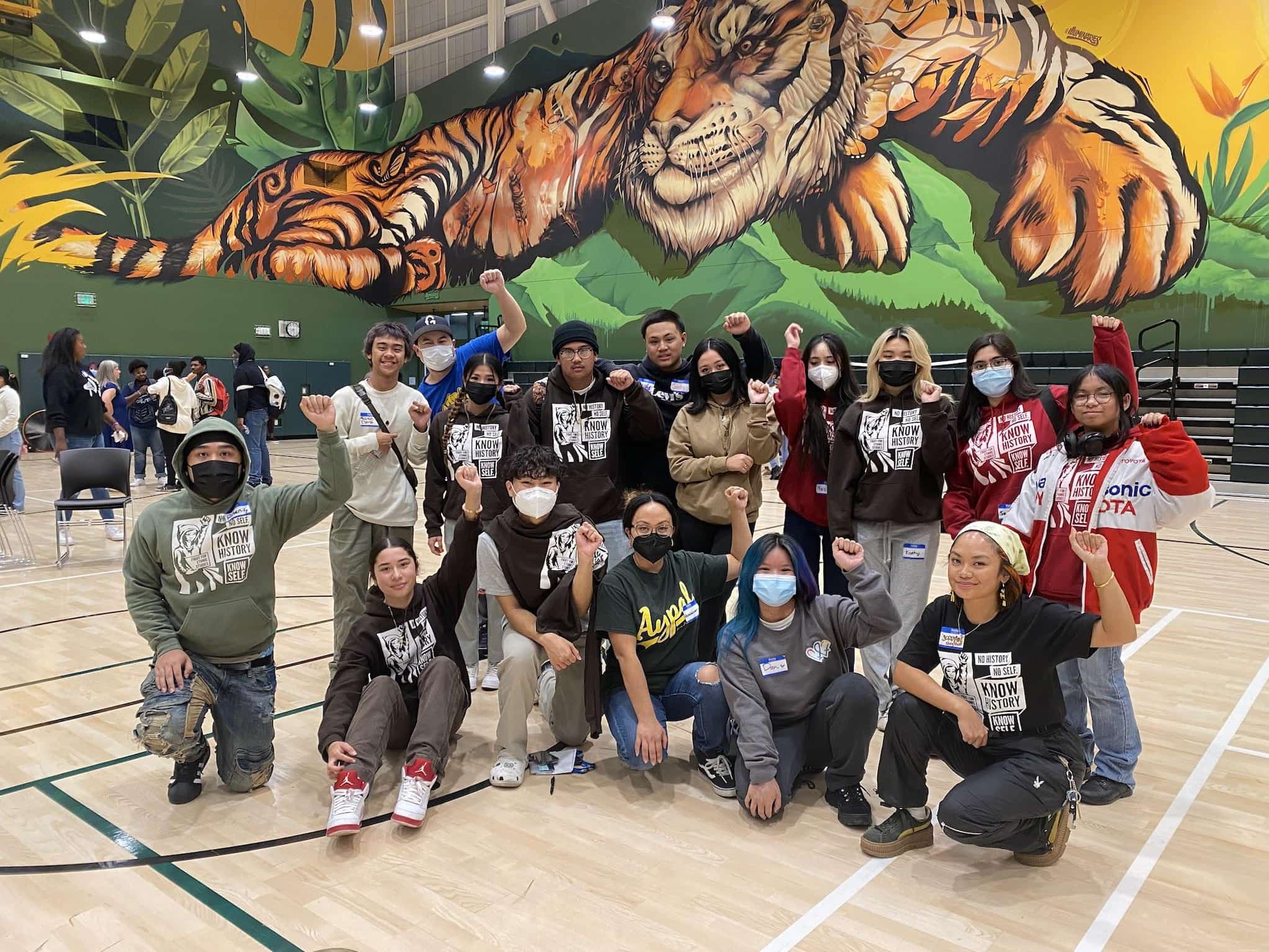
Image 50.02.04 — In 2022, members of AYPAL gather together after leading an event to share their perspectives with candidates for the Oakland School Board.
Reflection Questions
When has an ally made a difference in your life or someone else’s life?
Describe a time when you were challenged to be an ally for someone or something?
One Land, One People
Learning about their own ancestors’ challenges, achievements, and even mistakes can encourage students to try to fix past wrongs. But it is also important for students to learn about the ancestors of other groups in their community and beyond. By doing this, they can build solidarity, or alliances, among diverse groups to achieve common goals.
As a resident of Oakland, California, and as a person of Vietnamese, Cambodian, and African American descent, Nancy Phan (no relation to David Phan) understood the importance of learning about the histories of diverse groups. Nancy attended Skyline High School in Oakland and was part of Youth Together, a grassroots youth organizing group founded in 1996 to reduce interracial violence and improve educational opportunities for low-income students.
As a high school student involved with Youth Together and later as a staff member, Nancy helped coordinate Skyline’s “Unity Weeks,” during which students organized lunchtime cultural and educational performances showcasing students’ ethnic traditions and histories. These events also informed attendees about various student-led efforts, including those spearheaded by the Gender and Sexualities Alliance, such as students passing out felt armbands with “Unity” written in their ancestral languages.
Skyline High School served a very diverse student body. It included African Americans, whose ancestors had survived slavery; students of Southeast Asian descent, whose parents or grandparents had escaped wars in Vietnam, Cambodia, and Laos; East Asian students, whose families hailed from China, Taiwan, Korea, and Japan; Polynesian Americans; and students whose parents migrated from countries across the Middle East and Africa. White students from diverse ethnic origins made up a notable part of the student body. The largest group of Skyline students identified as Latinx, primarily representing families with origins came in Mexico and Central America.
Over the years, Unity Week activities have helped Skyline students learn about one another’s identities and build solidarity around shared concerns and experiences. For example, in the late 1990s and early 2000s students led a campaign to open a youth center on their campus, achieving success after securing widespread support from school administrators, teachers, parents, and elected officials. They agreed that its name should reflect the sense of unity the center hoped to foster. They selected the name “One Land, One People.” In this youth center, students would support each other, celebrate each others’ diverse backgrounds, and promote a shared commitment to caring for the land in which they live—recognizing the traditional territory of the Ohlone Indigenous people. Thanks to student organizing efforts and the support of adult allies, the One Land, One People Youth Center has provided academic enrichment, arts, mental health, leadership, and other valuable programming for thousands of students.
Since opening the youth center in 2002, Skyline students have fought and won additional campaigns to expand health services at their schools. They have also joined forces with allies across the school district, including members of AYPAL, to demand an increase in school funding and to help guide the district’s budget priorities, among other campaigns. Forging strong alliances, student-led organizing efforts have been guided by understanding intersectionality and by an awareness that people have multiple and complex identities. Recognizing various forms of privilege and marginalization has helped build solidarity among students with wide-ranging social identities, enabling them to work together around shared interests and concerns.
Reflection Question
What are some of the different ethnic, racial, or other groups that are part of your school?
What are some things students could do to learn about each other’s backgrounds?
Glossary terms in this module
ally Where it’s used
Someone who unites with and supports people facing discrimination or unfair treatment, even if they are not a part of a marginalized group themself. Allies use their voice, influence, and actions to help others challenge injustices.
campaign Where it’s used
A coordinated group effort to reach a specific goal, like changing a school rule, improving a community, or raising awareness about an important issue.
ethnicity Where it’s used
A community that one identifies with, with a distinct and shared set of traditions, history, language, culture, or religion.
intersectionality Where it’s used
A way of understanding how a person’s multiple social identities—such as race, class, gender, sexuality, age, or immigration status—overlap and affect their experiences of advantage or disadvantage. It shows how systems of inequality, like racism, sexism, and poverty, work together to shape the opportunities and challenges people face in society.
marginalization Where it’s used
The unfair treatment of an individual or group in ways that limit their access to important resources, opportunities, or rights.
organizing Where it’s used
The process of bringing people together to build relationships, educate on issues, discover shared values, and support a cause to create change. Organizing also involves training new leaders, growing a base of supporters, and using strategies to ensure that decision-makers, laws, and policies respond to the needs of the community.
privilege Where it’s used
Unearned benefits, advantages, or rights limited to specific groups or people because of their race, gender, class, or other social identities, often allowing advantages that many others are unable to attain.
race Where it’s used
A way that society groups people based on physical traits, like skin color or family background. Racial groups aren’t biological. They are shaped by historical, economic, and political forces, and often plays a role in determining people’s opportunities, treatment, and experiences in society.
social identity Where it’s used
How people see themselves based on the social groups they belong to, such as race, ethnicity, gender, class, religion, or ability.
solidarity Where it’s used
A political, cultural, and collective stance that recognizes the mutual responsibility and support that is necessary to achieve change. Collective efforts tap into the power in numbers and considers the collective interests of communities.
undocumented Where it’s used
A term for people who were born in another country and live in the United States without legal immigration status or a valid visa. Many undocumented individuals come to the US seeking safety, stability, or better opportunities.
Endnotes
1 Veronica Terriquez, Learning to Lead: Youth Organizing in Immigrant Communities (Russell Sage, 2026), 111.