





Module 3: Religious Life
Have Indian Americans found belonging in the United States?
In 1893, a Hindu monk named Swami Vivekananda arrived in Chicago, Illinois, to attend the first World Parliament of Religions. His oration and subsequent lecture tours mesmerized audiences throughout the country. Some say that Vivekananda introduced yoga to America. He later established the Vedanta Society of New York in 1894, and another in San Francisco, California, a few years later. These may be seen as the first steps in giving “Hinduism” an institutional presence in the United States. The Vedanta Society of Southern California, established in 1929, would become a magnet for leading British intellectuals like Aldous Huxley and Christopher Isherwood.
This module is a brief overview of the religious life of Indian Americans and how immigrants adapted their religious lives to their new homeland. The religious, cultural, and social life of Indian Americans—Hindus, Sikhs, Jains, Muslims, and Christians—took on a new life after the passage of the Immigration and Nationality Act of 1965.
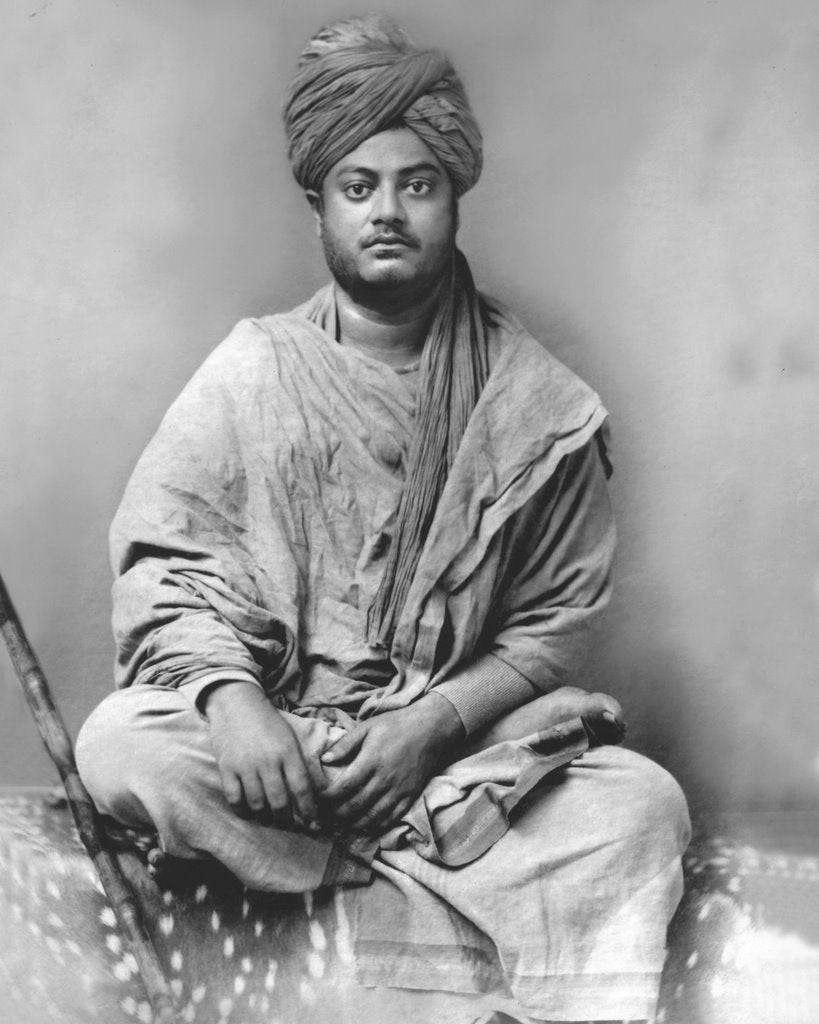
Image 12.03.01a — Swami Vivekananda, “Guru to the world,” first came to America in 1893. He is often credited with introducing yoga to the United States.
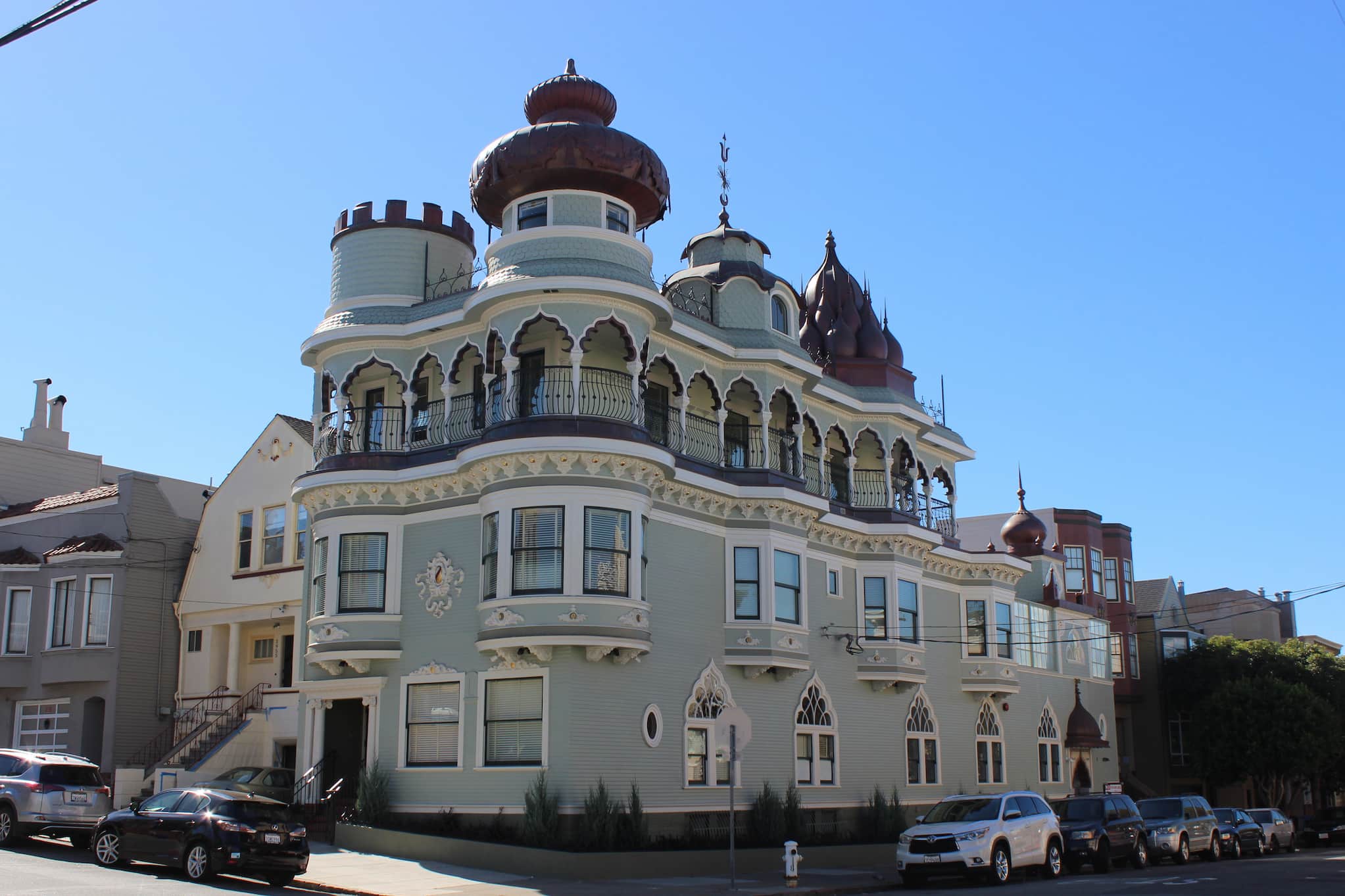
Image 12.03.01b — The Old Vedanta Temple in San Francisco, California, was the first Hindu temple established in the United States.


How did religions based in the Indian subcontinent first arrive in the US?
What are the social and cultural functions of Indian American spaces of worship?
What type of religious diversity exists among Indian American communities?
The Growth of Hinduism
White Americans have long had a fascination with Indian philosophy and Hindu texts. Nineteenth century writers Ralph Waldo Emerson and Henry David Thoreau’s essays, for example, were influenced by their interest in both. Swami Vivekananda’s arrival and tour of the US captured the attention of many crowds, spurring the establishment of Hindu temples in various cities. In 1965, Swami A. C. Bhaktivedanta (1896–1977), better known as Srila Prabhupada, arrived and established the International Society of Krishna Consciousness (ISKCON). The Hare Krsnas, as his many followers were dubbed, were soon a ubiquitous presence at airports and university campuses as they chanted, “Hare Krishna, Hare Krishna, Hare Rama, Hare Rama.”
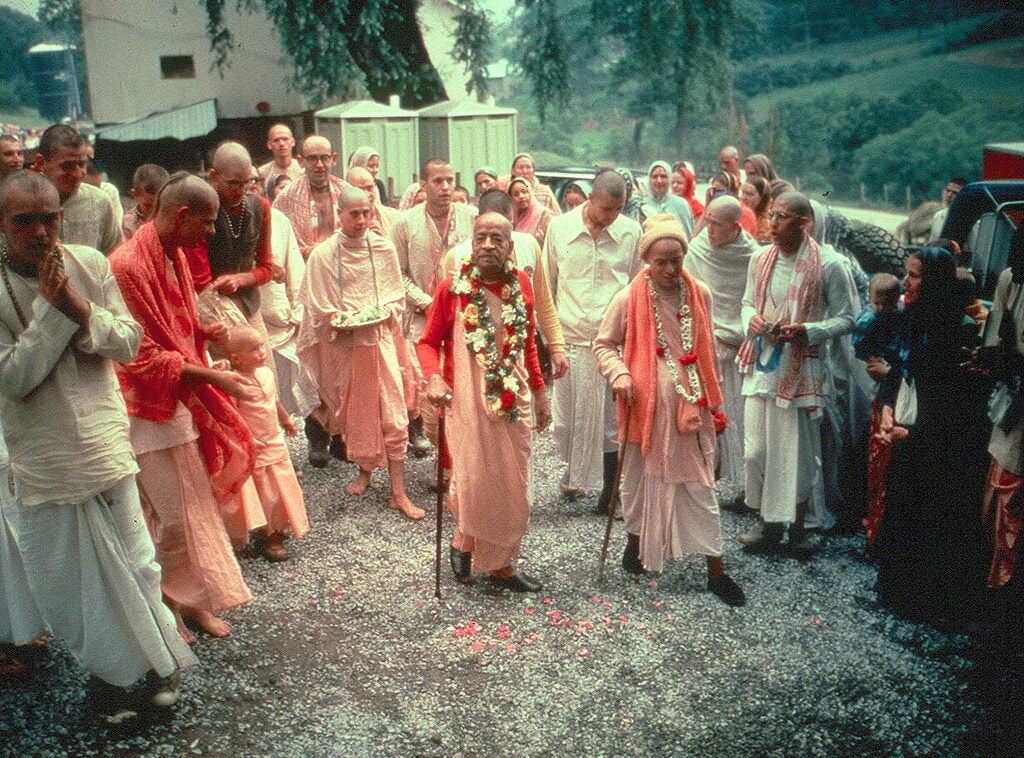
Image 12.03.02 — Srila Prabhupada with Hare Krsnas, Hindu devotees in America.
Though most of Swami Prabhupada’s direct followers were white Americans, Indian American Hindus frequented the ISKCON religious centers and makeshift temples. Few Hindus joined the movement but felt welcome in the temples.
By the mid-1970s, the Indian population grew rapidly across the US. Indian American communities began converting unused structures like churches and warehouses into new Hindu temples. For example, as the Indian American population increased in the Chicago Metropolitan Area around this time, temples were also established. Many of the estimated 34,000 Indian Americans were Hindu and had the monetary resources to facilitate the construction of several temples.
In December 1977, the Hindu Temple of Greater Chicago (HTGC) founded a not-for-profit organization aimed at building a temple complex. Recognizing the widely varying practices associated with Hinduism in the different parts of India, the project intended to embrace the diversity of their faith. Members, many of whom were wealthy doctors and other professionals, raised funds for its construction, and it finally opened in Lemont, Illinois, in 1986. Also opening in the 1980s was Sri Venkateswara (Balaji Temple) in nearby Aurora, Illinois, at the cost of four million dollars.
The construction of Hindu temples has continued across the United States. The Bochasanwasi Shri Akshar Purushottam Swaminarayan Sanstha (BAPS) has built gigantic, multi-million dollar temples in several cities such as Atlanta, Georgia and Houston, Texas. Their monumental temple in Robbinsville, New Jersey claims to be the largest temple outside of India.
These grand temples are based on the same principle that inspired medieval-era Christians in Europe to build majestic cathedrals. The greater the religious edifice, the more it rebounds to the glory of God. The constituency of BAPS temples is mainly Gujaratis, suggesting that sub-national or ethnic identities are significant. While some Hindu temples remain eclectic, others are associated with distinct Hindu communities. The many Sri Venkatesvara temples cater mainly to South Indians especially Telugu-speaking people, and similarly Murugan temples attract mainly Tamilians.
Indian American Hindu Life
With vast differences in region, language, class,and religion, Indian American identity is not a monolith. Even Hindu practices vary widely. But because Hindus from the Gujarat region of India have given major financial support and patronage to Hindu temples in the United States, some overarching characteristics emerge in Hindu temple construction and practices in the US.
In the early days of Hindu communities in the US temples were sometimes makeshift or built from unused churches or other buildings. Today Hindu temples are more often new structures, built to conform to the specifications in Hindu manuals of temple architecture, and in consultation with temple architecture specialists. Hindu priests are also brought in from India, which demonstrates how Hindu practitioners in the US see India as an authority on Hinduism.
There are some unique features of Hindu practice in the US. The temple is seen as a “learning center,” differentiating it from how they are seen in India. Temples are not only places of worship, but also community centers where young people can take classes in Bharatnatyam (Indian classical dance from Tamil Nadu), yoga, and sometimes Indian languages. Some community centers offer lessons on Hindu “dharma” and culture, and provide activities for senior citizens.
Hindu temples in the US have increasingly shown awareness of American mores and customs. For example, the Rama shrine at the Hindu Temple of Greater Chicago, and the Ganapathi Devasthanam in Queens, New York, were both purposely consecrated on July 4. Temple leaders chose Independence Day to emphasize the conception of inner freedom that they believe Hinduism cultivates. Religious studies scholar Dr. Vasudha Narayan observes that temples follow the Hindu festival calendar while planning big events around the American secular calendar.
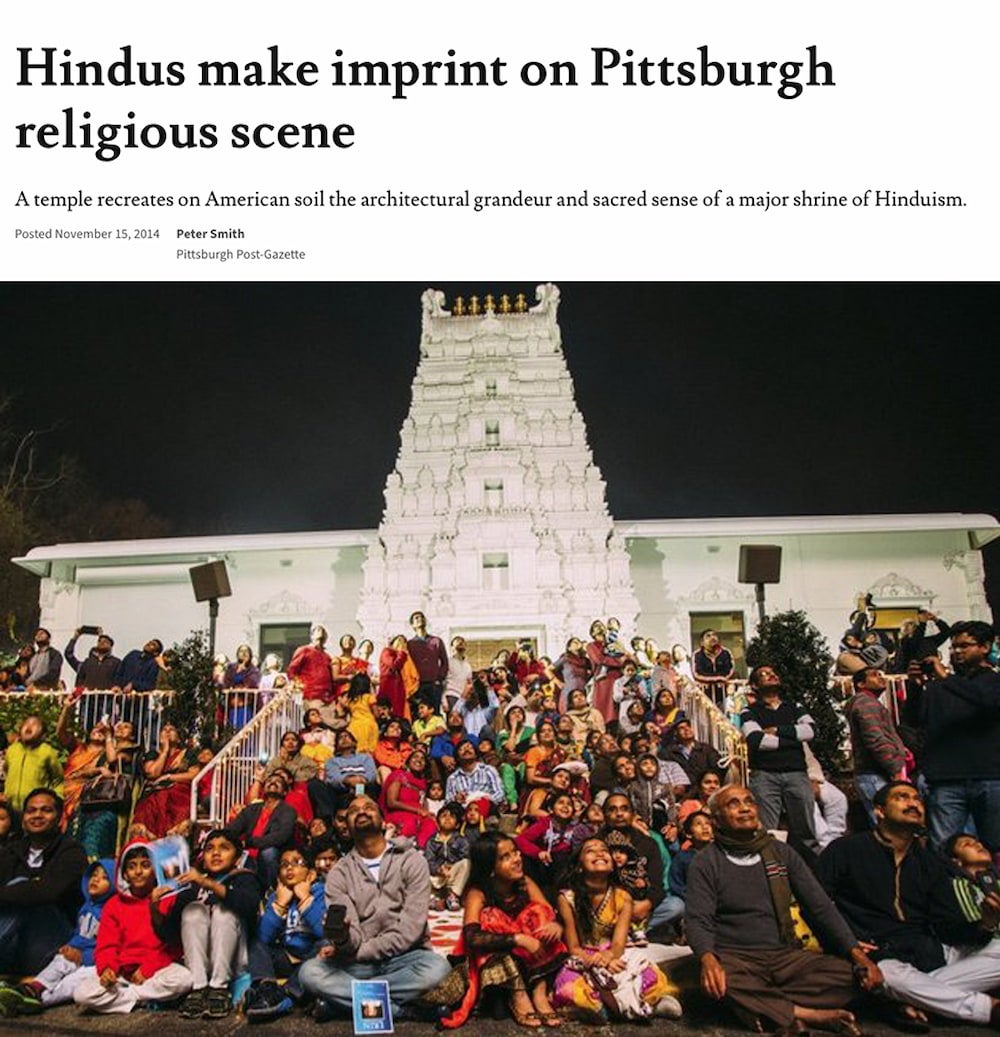
Image 12.03.03 — Devotees gather at the Sri Venkateswara Temple near Pittsburgh, Pennsylvania, as seen in the Pittsburgh Post-Gazette.
Lastly, some temples embrace the diversity of its practitioners. The fact that Los Angeles County in California has over forty temples reflects the considerable population and variation within the faith. The Hindu Temple of Central Florida has one gopuram (entrance tower) in the Southern Chola-style and another in the Northern Naga-style.
The Diversity of Indian American Religious Life
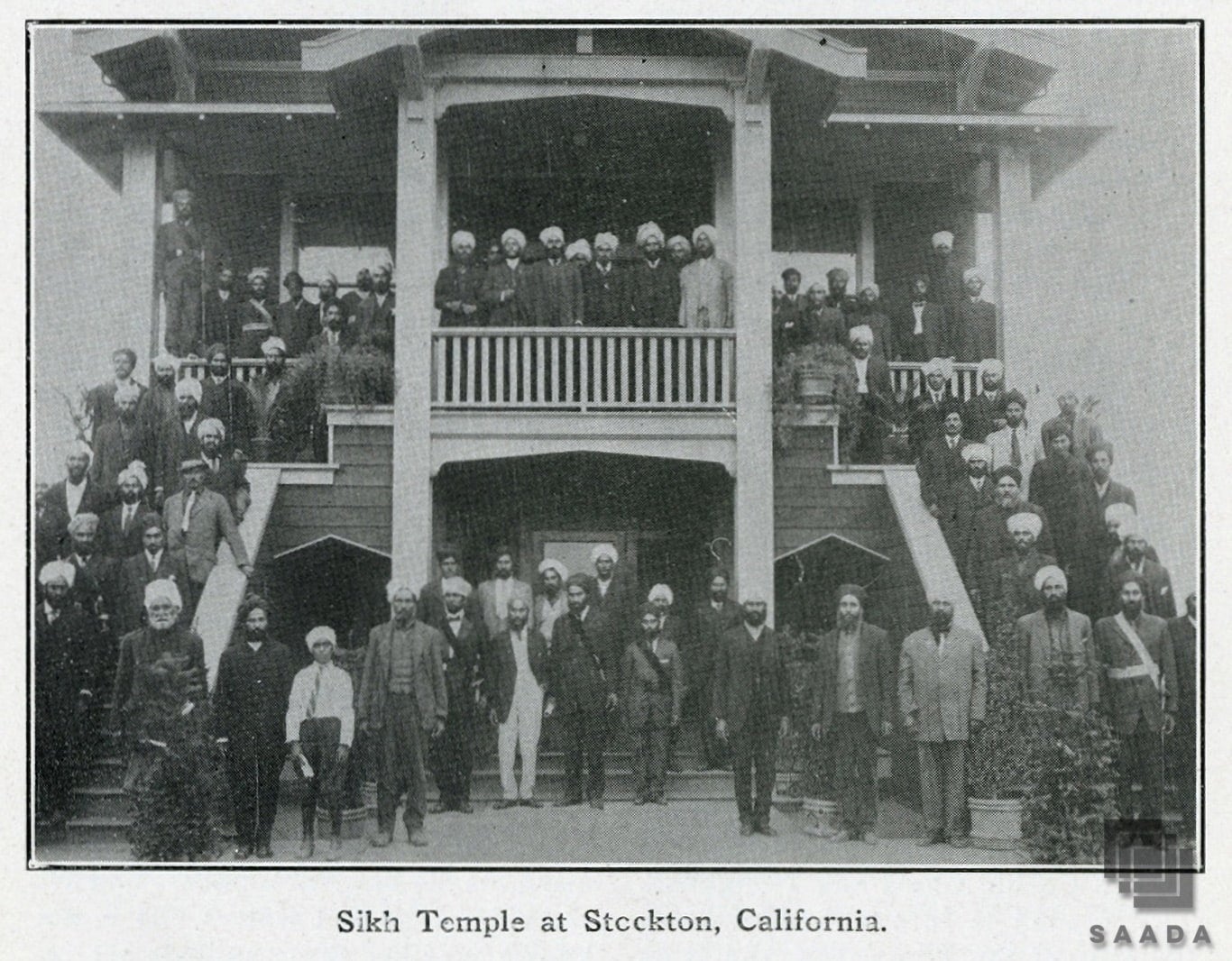
Indian Americans belong to diverse religious communities beyond Hinduism. There are a significant number of Sikhs, Jains, Indian Muslims, and Christians in the United States. Sikhs were the earliest immigrants from India, arriving at the turn of the twentieth century. Sikhs established their first house of worship, known as a gurdwara, in Stockton, California, in 1912. Today, there are over half a million Sikhs in the US, with California holding the largest communities.

Image 12.03.04 — This Sikh house of worship, a gurdwara, seen here in 1916 in Stockton, California was the first gurdwara established in the United States.
Similar to Hindu temples in the US, gurdwaras also function as community centers, imparting religious instruction in the Punjabi language and the Gurmukhi script to the young. The Sikh tradition in India has long emphasized seva, or community service. The Sikh American community, for example, helped clean up Los Angeles after the 1992 uprising. In New York, local gurdwaras and the Sikh Center of New York provided free hot meals to tens of thousands of people affected both by Superstorm Sandy in 2012 and the COVID-19 lockdown in 2020.
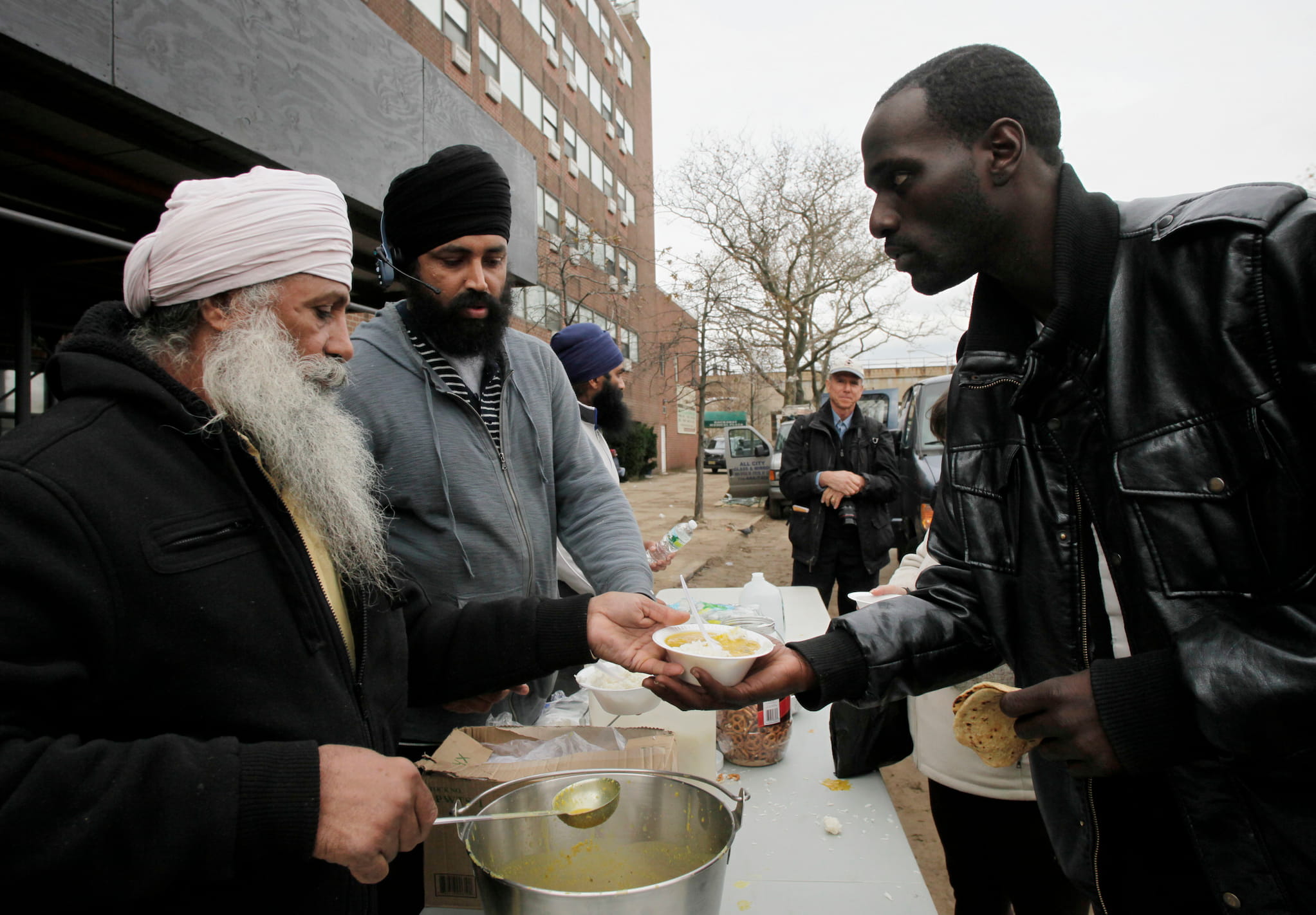
Image 12.03.05 — Serving hot meals in New York City after Hurricane Sandy in 2012, Sikh volunteers exemplify a tradition of seva (service).
Jains have increasingly made their home in the US starting in the 1960s. Jainism developed alongside Buddhism and shares fundamental principles with Hinduism. The US now has the world’s second largest population of practitioners, at around one hundred thousand. Most are Gujaratis, but there are Jains from other regions of India and East Africa. According to the Harvard Pluralism Project, most Jains are professionals—mainly doctors and engineers—and engaged in business. This economic stability enables them to support social and religious centers, create active national and international organizations, and construct temples. The community life of Jains revolves around worship at temples and the celebration of religious festivals.
Indian American Muslims comprise about 13 percent of all Indian Americans. Not only are they a minority among Indian Americans, but also among all Muslims in the US. Consequently, they worship at mosques with others from Muslim-majority countries, including Pakistan, Bangladesh, Iraq, Syria, and Lebanon. Their own distinct identity stems mainly from the history of Islam in India.
In 1947, India was partitioned and Pakistan was created as a new Muslim-majority state. Since then there have been some tensions between Hindus and Indian Muslims in the US. Anthropologist Karen Leonard noted that in beauty pageants held in the Imperial Valley and Yuba City, California, Indian Hindu wives selected a “Hindu” queen and Punjabi Muslims picked a “Pakistani” queen. Such are the complex ways in which aspects of the history of the “homeland” can carry over into the “adopted” country.
Nearly 10 percent of Indian Americans identify as Christian, divided roughly equally between Catholics and Protestants. Unlike Hindus, Sikhs, or Jains, Christian Indian Americans do not often build their own places of worship or attend churches exclusively for Indians.
Conclusion
This module provides only a brief glimpse into the many religions in India that are practiced here by Indian Americans. Temples, gurdwaras, and other places of worship became locations for communities to socialize and deepen understanding of their culture, in addition to serving as a space for religious practice.
Glossary terms in this module
Gurdwara Where it’s used
The Sikh word for a house of worship, comprised of the words “Gur,” meaning Guru or teacher, and “dwara,” meaning door or doorway.
Immigration and Nationality Act of 1965 Where it’s used
This act, also known as the Hart-Celler Act, officially ended the era of Asian Exclusion and created an immigration system based on family relationships and job skills. The law significantly changed the demographics of Asian immigrants.