





U.S. Army soldiers wearing wide brimmed hats rest in a grassy trench with their rifles leaning on the trench wall. A stilt house stands behind them.
Module 2: Conquest of the Pacific
Have US wars forced Asian American and Pacific Islander communities to become who they are, or have these communities defined themselves on their own terms?
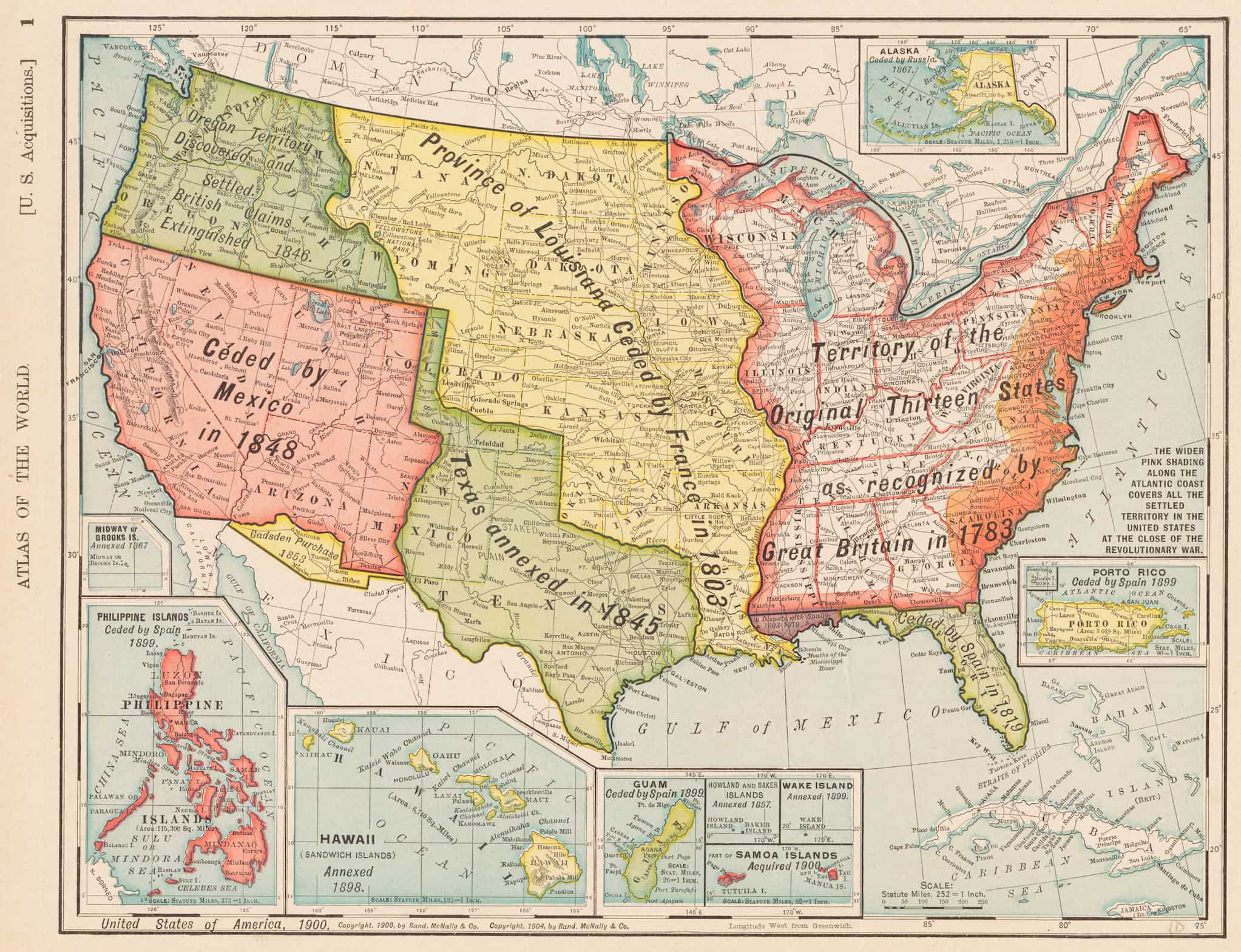
Image 05.02.01 — This 1900 map of the United States and its territorial acquisitions illustrates its vast expansion on the continent and abroad.
By the end of the nineteenth century, imperialists and business leaders had the goal of transforming the United States into a global superpower. This desire stems from a long history of American expansionism begun under the guise of Manifest Destiny, an ordained belief that the US was bound to expand Westward. This ideology was part and parcel of the making of American exceptionalism, justified by a divine right.
The business titans of industry who dominated American society in a period of intense industrialization and the accumulation of wealth, known as the Gilded Age, also sought to expand America’s reach to fuel a booming economy. By spreading into the Caribbean, the Pacific, and continental Asia, US business interests gained new sites of natural resources, a pliable workforce from the pool of colonized subjects, and new markets to sell its goods.
This module is an overview of how the US empire expanded in the Pacific Rim (the landmasses and countries that border the Pacific Ocean) during the late nineteenth and early twentieth centuries, which includes the colonization of Puerto Rico (1898), Hawaiʻi (1898), Sāmoa (1900-1904), and the Philippines (1902).
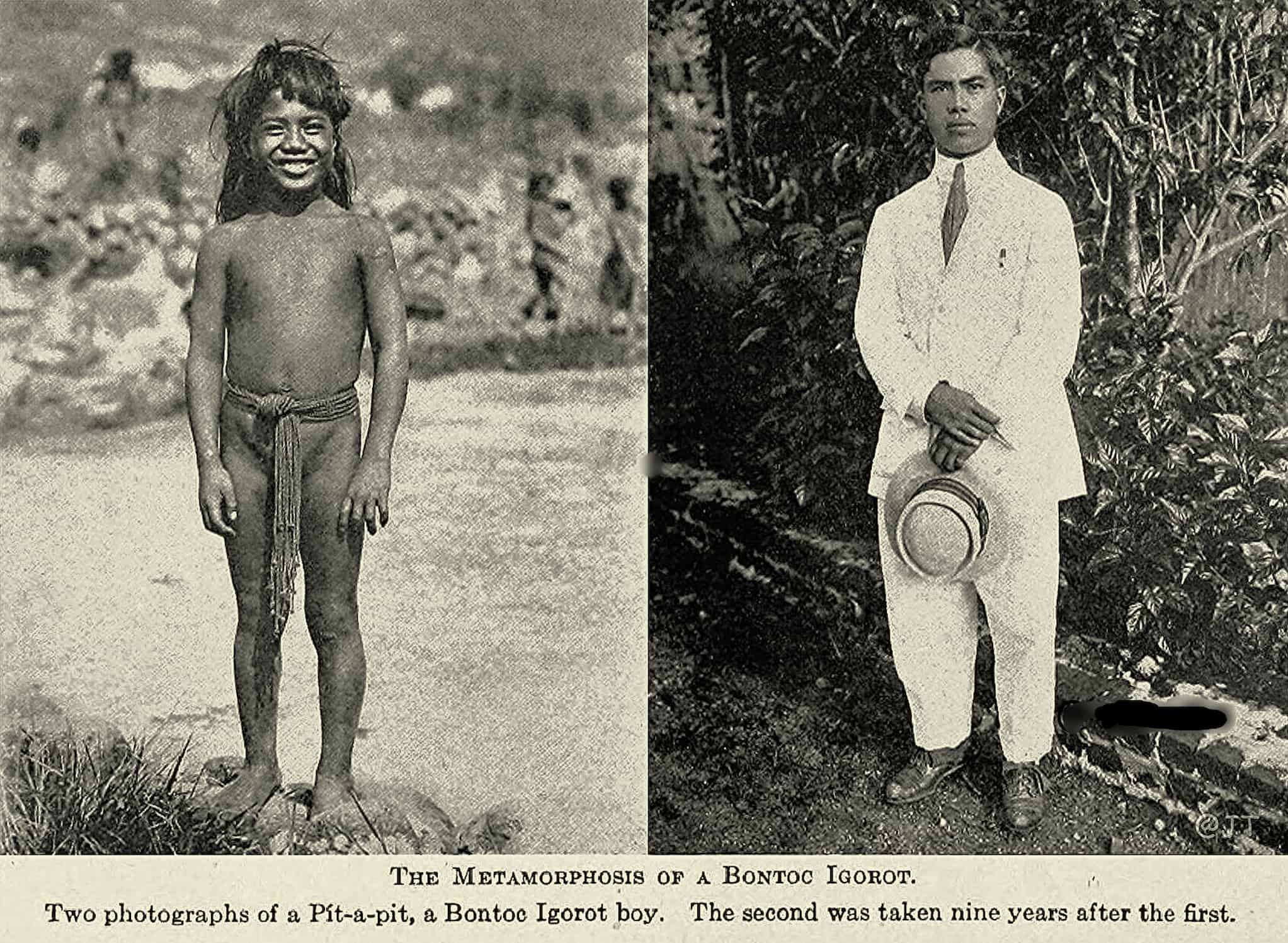
Image 05.02.02 — These images represent one justification for “Manifest Destiny” and the US’ colonization of the Philippines. The transition of the barefoot boy on the left to the respectable doctor on the right romanticized the “civilizing” impact of colonial expansion without regard for the loss of indigeneity.
What pushed American empire building into the Pacific Rim?
How has war and empire building shaped trans-Pacific migration?
What does it mean to live as a subject within an empire?
Era of New Imperialism
In stark contrast to the US expansion agenda that plundered lands and peoples and subjugated colonized peoples, those in charge of the US empire abroad–including soldiers, private businessmen, and plantation owners–represented the epitome of “progress and civilization.” Against the missionizing and exploitative conditions, workers eventually organized themselves to fight for better wages or living conditions, while others supported national movements for sovereignty in their home countries, such as the Philippines and elsewhere.
This era of new imperialism was characterized by rapid territorial expansion, aggressive colonization, or direct rule, driven by economic interests, nationalism, and a belief in cultural superiority based upon racist ideology. This world of racial and economic chauvinism was a race for empire among Europe, the United States, and Japan at the turn of the century. With the US’ acquisition of territories such as Puerto Rico, Hawaiʻi, and the Philippines in the aftermath of the Spanish-American War, and Japan’s victories in the Sino-Japanese (1895) and Russo-Japanese (1905) Wars, a new global framework of empire emerged. Whether through war, aggressive incursions, diplomatic coercion, or a combination of the above, the world largely became bifurcated into the colonizers versus the colonized at the dawn of the twentieth century.
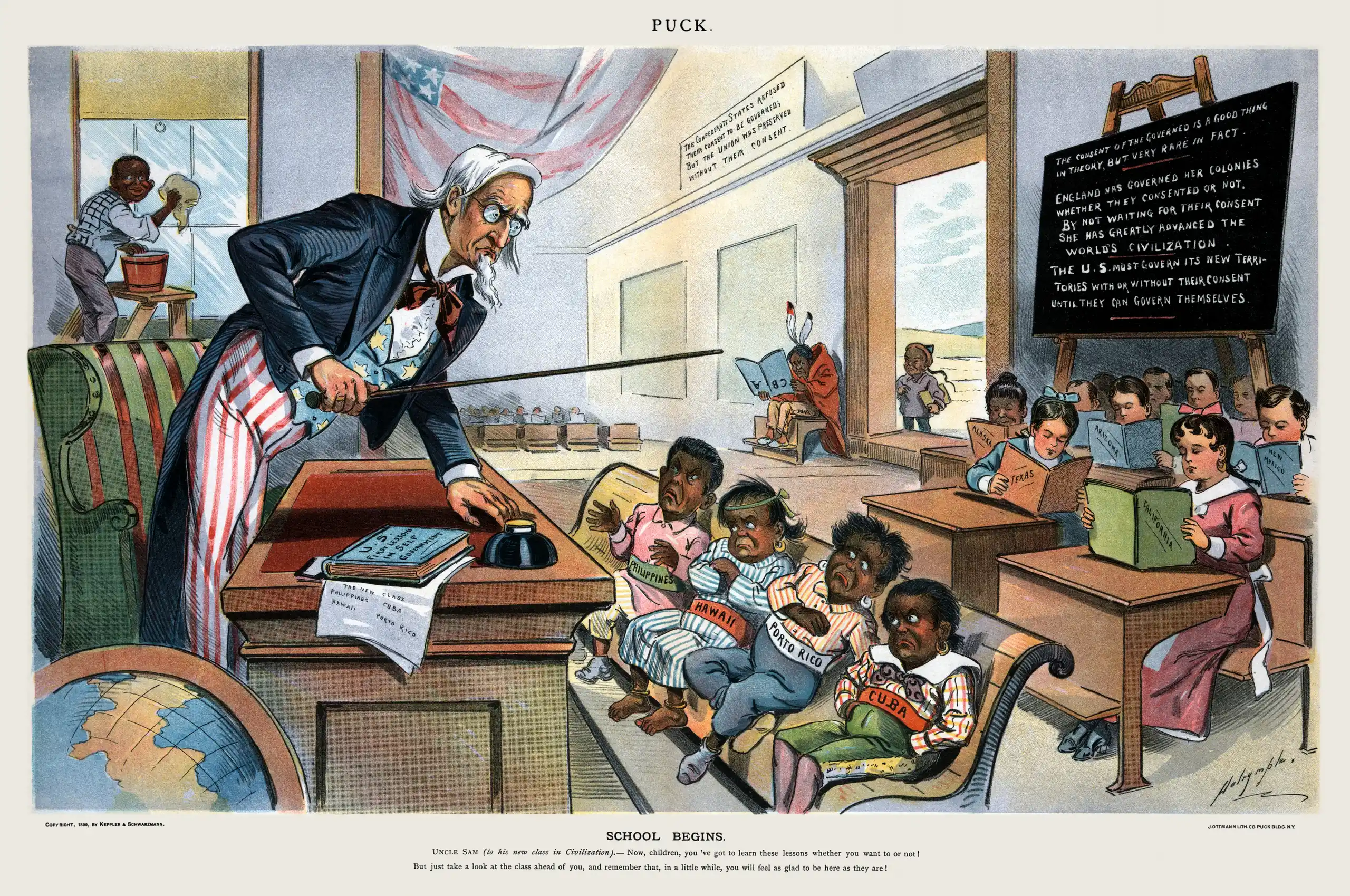
Image 05.02.03 — School Begins, from an 1899 issue of Puck magazine, shows Uncle Sam disciplining racist caricatures representing the Philippines, Hawaiʻi, “Porto” Rico, and Cuba. The chalkboard reads, “The U.S. must govern its new territories with or without their consent until they can govern themselves.”
Conversely, these links of racist ideologies, economic greed, and geopolitical competition of American imperialism brought the peoples of the Sāmoa, Hawaiʻi, Puerto Rico, Guāhan (Guam), and the Philippines to the US for generations. Through the Platt Amendment, even the island of Cuba was a protectorate of the US from 1898 to 1902. In Sāmoa, American domination began when the government negotiated a treaty to share the port of Pago Pago as a gateway to desirable Asian markets. Establishing this trade and naval presence set the stage for the overthrow of the Hawaiian monarch around two decades later in 1983.
Meiji Era Japan and the Rise of Empire, 1860s to 1920s
Following a long period of isolationist foreign policy under a feudal system, Japan’s shift to a modern nation-state was coerced through the intimidation of US Commodore Mathew Perry’s “black ships” that began the Meiji Restoration (1868–1912). During this period, the modern Imperial Government of Japan swiftly learned from the modernizing principles that gave rise to Western expansion and coalesced around the principles of industrialization and militarism. This included cultivating an aggressive navy, mass industry and production lines, and developing an ethnonationalist ideology to justify colonization in Asia and the Pacific Rim.
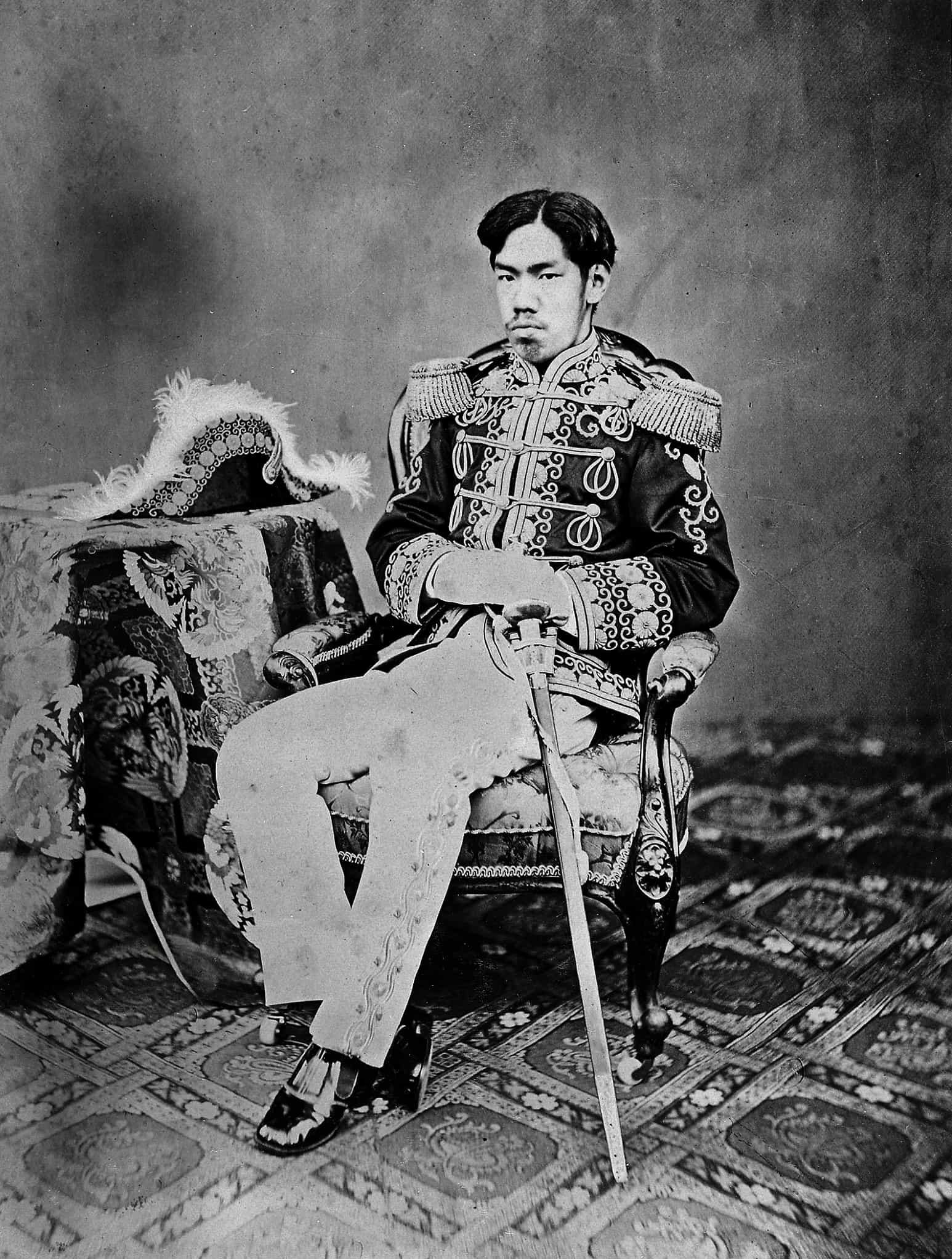
Image 05.02.04 — The 1873 official imperial photo of Emperor Meiji, seated in full military dress. Within the Meiji Restoration period, the modern imperial government of Japan transformed from an isolationist feudal state to one that formed around principles paralleling America’s expansionist rise, including mass industrialization and imperial colonization.
Unlike the US’ approach, Japan’s imperialist designs were also shaped by fears of European encroachment in their fight for port access. The country’s empire building included policies to encourage immigration along the Pacific Rim, to places such as the Kingdom of Hawaiʻi, the US, and Latin America. For Japan’s working or peasant classes burdened by debt and taxation, emigration provided an economic step up. As a result, Japanese immigrants were drawn to opportunities in agriculture, railroads, mining, and other industries. For the Japanese government, the expansion of Japanese colonizers and colonial settlers beyond the boundaries of Japan provided a growth of the nation-state beyond its territorial borders.
Part of their aspirations equally entailed its hemispheric domination of continental Asia with Taiwan in 1895, the annexation of Korea in 1905, and its subsequent colonization in 1910. In Korea, in particular, what followed was a violent suppression of Korean subjects and forced assimilation. In order to circumvent surveillance by Japanese colonial officials, a large portion of the Korean independence and underground resistance movement took place outside of the peninsula within the Korean diaspora, including China, Russia, and the US, especially in Hawaiʻi and California.
Figures, such as Dosan Ahn Chang Ho, may have toiled in the orchards of Riverside County in Southern California by day, but plotted for freedom by night. Meanwhile, scores of working-class Korean women subverted traditional gender boundaries on the plantations of Hawaiʻi by enacting what historian Lili M. Kim called “benevolent nationalism.” Through a variety of fundraisers and other actions, they mobilized overseas Koreans in order to create a greater sense of pride for Koreans abroad, and to financially support the independence movement.
Overall, the rise of Japan’s empire catalyzed migration in distinct ways. While Japanese emigrants may have participated as agents of imperial expansions and settlers for economic opportunities, Koreans actively fled colonization in order to resist it. Uniquely, the convergence of the empires of Japan and the US took place on the plantations of Hawaiʻi where American capitalism could not survive without the supply of a supple Asian labor force.
The Conquest of Hawaiʻi, 1820s to 1890s
Like many Indigenous societies, native Hawaiians, Kānaka Maoli, had deep cosmological ties to the land that were disrupted by European settler colonialism. This settler colonialism began with missionaries and plantations, and eventually led to the overthrow of the Hawaiian monarch, Queen Liliʻuokalani, and annexation by the US in the 1890s. Before European contact, Hawaiʻi was fundamentally governed by an overarching sense of kinship and kuleana, or responsibility, to the land, or ʻaina, and sea, or kai.
The collective stewardship of the land and waters fell to the hereditary ruling class of aliʻi, who ensured that an abundance of natural resources be used for the common good. Beginning in 1795, King Kamehameha I oversaw the unification of the archipelago, in part to help stave off European incursion which began when the English seafarer James Cook sailed to Hawaiʻi in 1778. US interest in the islands also grew steadily.
By the 1840s, the “Great Mahele” was an effort to divide and redistribute the land by King Kamehameha III. The Great Mahele is often described as the most important event in the history of land titles in Hawaiʻi. It restructured Hawaiʻi’s traditional land tenure, effectively ending the old chiefly-based system and establishing an allodial framework that allowed private property rights for individuals.
As plantations grew, so did the need for a cheap labor force to do the grueling work of harvesting sugar and pineapples. Although the first Chinese ventured to Hawaiʻi as early as 1850, the sugar boom in Hawaiʻi increased labor migrations to the islands exponentially when the American Civil War (1861–1865) cut off the Louisiana sugar supply, and irrevocably transformed the sugar economy. Due to the succession of exclusionary immigration laws, including the 1882 Chinese Exclusion Act, Hawaiʻi witnessed waves of migration from Japan, Korea, and the Philippines, in addition to Portugal and Puerto Rico.
Plantation owners dominated control over Hawaiʻi’s legislature, and by 1887, they engineered the Bayonet Constitution. It was forcibly signed by King David Kalakaua, threatened under “bayonets” and largely stripped of his powers. Less than a decade later, the planter class and other powerful US business leaders staged a coup with the support of the US Marines that overthrew the reigning Queen Liliʻuokalani and the independent government of Hawaiʻi.
A short-lived republic was headed by Sanford B. Dole, a descendant of Protestant missionaries and relative of the founder of the Dole pineapple empire. But recognizing the vast resources of the archipelago, the US officially annexed Hawaiʻi in 1898. The coerced imperial and commercial conquest had detrimental effects on the native population including disease, forced removal from their land, and the continued repercussions in education, health, employment, and housing for generations. While Indigenous Hawaiians (Kānaka Maoli) staged several forms of resistance to overthrow American colonialism, the struggle for Indigenous sovereignty in Hawaiʻi continues to this day.
Philippine-American War
The origins of the Spanish-American War lay in a deeper history connected to Gilded Age business. The US sugar empire stretched from Hawaiʻi to the shores of Cuba, where investors and planters grew increasingly concerned about the Cuban independence movement of the time. Locked in a protracted struggle against Spain, Cuban freedom fighters engaged in a variety of forms of resistance that included arson and other damage to US-owned plantations.
As a result, the United States dispatched the USS Maine to Havana, Cuba, in the event conflict escalated and the government needed to evacuate American citizens. Due to a malfunction in the boiler room, the USS Maine exploded on Havana Harbor on February 15, 1898, killing 266 people and became a major catalyst for the Spanish-American War. The disaster further became sensationalized by “yellow” journalism that inflamed anti-Spanish prejudice and incensed the US population. Utilizing the accident, the US formally declared war in April of 1898.
Under the pretense of Cuban and Filipino independence from Spain’s colonization, the US engaged in what Secretary of State John Jay called the “Splendid Little War” against Spain. In effect, the war was short and not costly in terms of lives, but its gains yielded territories and protections for American business investments. Spain surrendered after fewer than five months of battle and acquiesced to the terms of the Treaty of Paris, which laid a new framework for the US empire at the turn of the century. Spain agreed to relinquish their Caribbean colonies of Cuba and Puerto Rico, as well as the Pacific island of Guåhan (Guam). In 1903, Cuba signed the Platt Agreement with the US allowing it extensive reach into Cuba’s politics in return for Cuba to sell its sugar in US markets. Cuba became a protectorate of the US under the Platt Agreement until 1934.
The US also set its sights on the Philippines, which, like the other former Spanish colonies, was in the throes of an independence movement leading up to the end of the nineteenth century. For imperialists, the Philippines was a boon. It was abundant in natural resources, was an arms-distance away from the Chinese market, and would act as a US defense against English, French, Dutch, and Japanese influence in the region.
Yet, the United States faced a major quandary over the Philippines, whose revolutionary government had supported the American military in its fight against Spain. The US public opinion was also divided over annexing the Philippines. While imperialists projected the economic and geopolitical benefits, anti-imperialists questioned the dissonance between the nation’s own anticolonial origin story and the project of building a trans-Pacific empire. Another faction of anti-imperialists, meanwhile, feared the inability of Filipinos to assimilate and the potential that colonized subjects may one day enjoy the same rights and privileges of American citizens.
President William McKinley ultimately decided to go to war with the Philippines to subdue the ongoing revolutionary movement. To garner congressional support, the president proclaimed a policy of “benevolent assimilation,” extending the logic of Manifest Destiny. The Executive Order of 1898 stated the US would venture to the Philippines “not as invaders or conquerors, but as friends, to protect the natives in their homes, in their employments, and in their personal and religious rights.”
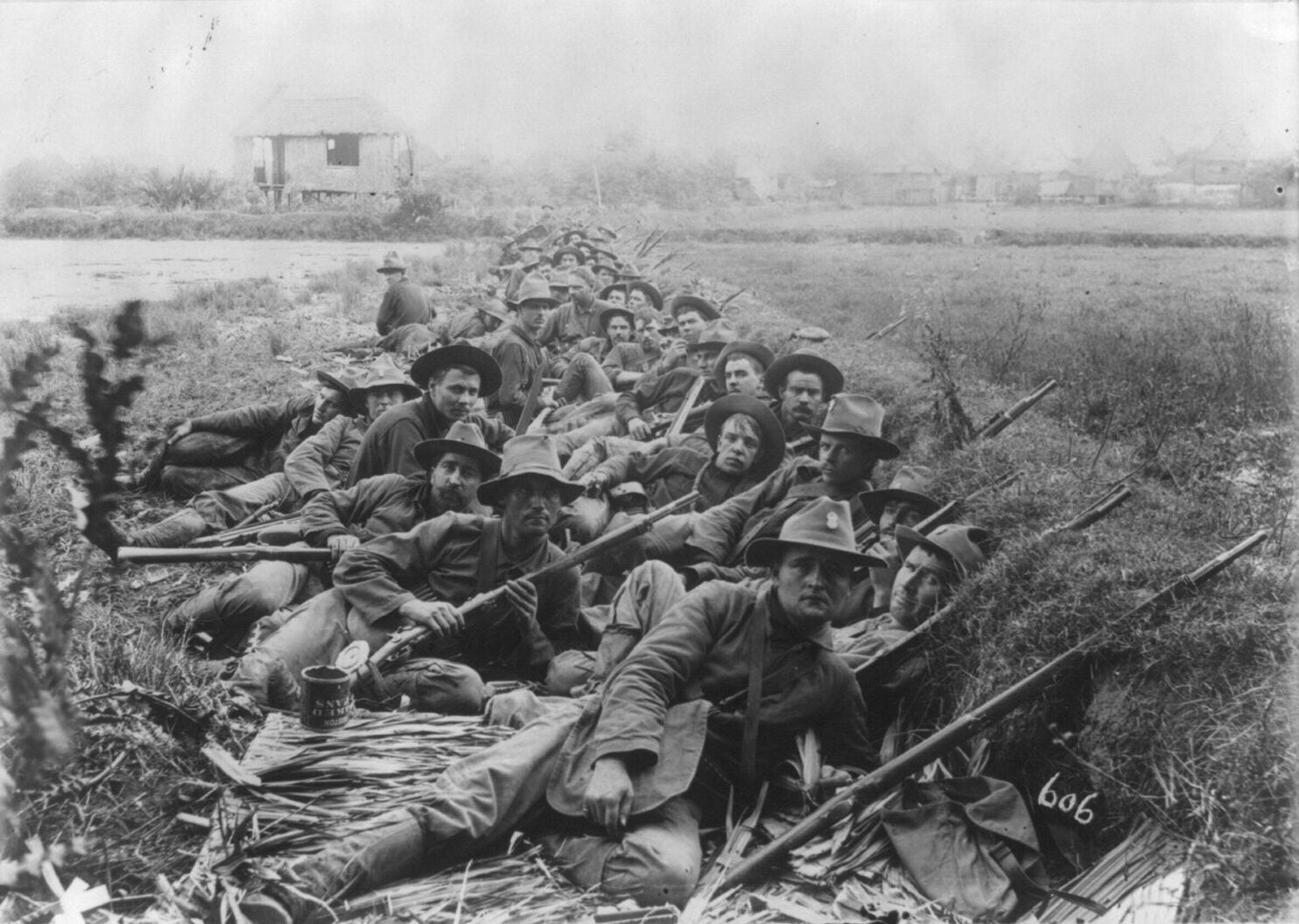
Image 05.02.06 — Soldiers of the 20th Kansas Volunteer Infantry in a trench. President McKinley garnered congressional support for the Philippine-American War by shrouding its intentions behind a policy of “benevolent assimilation.”
What followed, however, was a total war in which violent tactics, including torture, was used to suppress Filipino resistance to US colonial rule. As Stuart Creighton Miller wrote in his 1982 book on the conquest of the Philippines, the notorious commander of one campaign declared to his men, “I want no prisoners … The more you kill and burn, the better you will please me…the interior of Samar [province] must be made a howling wilderness.” 1
From testimony delivered to a US Senate committee, the “water cure,” a euphemism for waterboarding, was used during these early years of US empire building. As reported by The New York Times in 1902, a village leader “was then thrown under a water tank which held about a hundred gallons of water and his mouth was placed directly under the faucet and held open so as to compel him to swallow the water,” forcing him to reveal information about local insurgents. 2 The revolutionaries eventually surrendered with their nation under US rule. The precise number of Filipino casualties has been historically difficult to calculate, but some estimates hold that nearly one million were killed due to violence, famine, and disease.
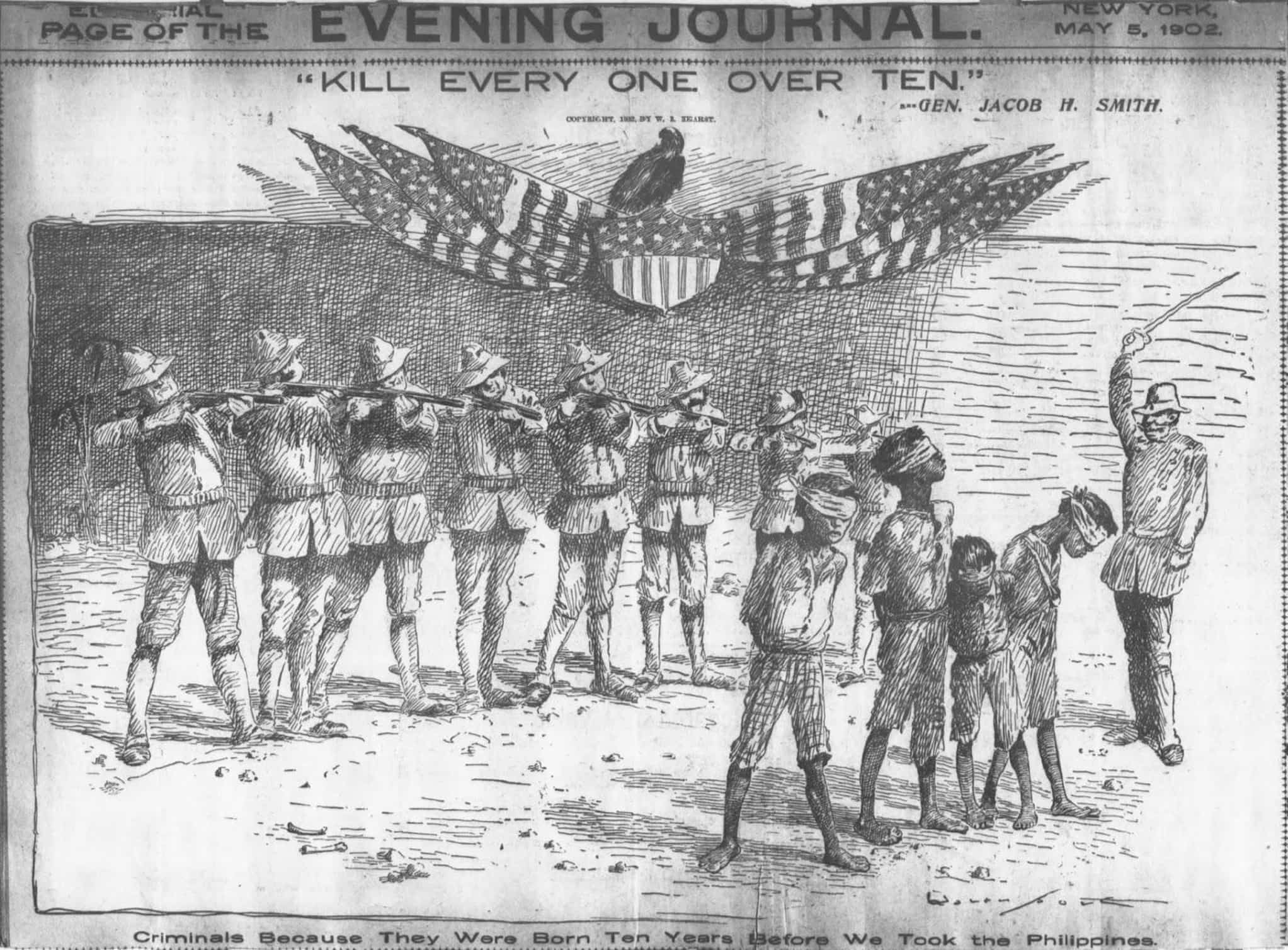
Image 05.02.07 — The Philippine-American war was a brutal total war. The New York Journal’s May 5, 1902, issue depicts General Jacob H. Smith’s order to “kill everyone over ten.” The caption reads “Criminals Because They Were Born Ten Years Before We Took the Philippines.”
Promoting and Resisting Benevolent Assimilation
Despite decades of violence, Filipinos refused to be defined by the terms of colonization. Figures who had been instrumental during the Philippine Revolution and Philippine-American War such as Emilio Aguinaldo advocated for immediate independence. Calling out the fallacy of benevolent assimilation, one pro-independence activist wrote in 1908 that the “old assertion of our incapacity [political independence] is the stock argument,” and yet ten years of American “preparation” and “guardianship” was nothing more than “ten years of bitter deception.” He exhorted sympathetic anti-imperialists in the US, “Why should the Filipinos not be masters of their own destiny and arbiters of their own fate?” 3
Though independence would not come to the Philippines until 1946, the spirit of independence never wavered among Filipinos both in the islands and the United States.
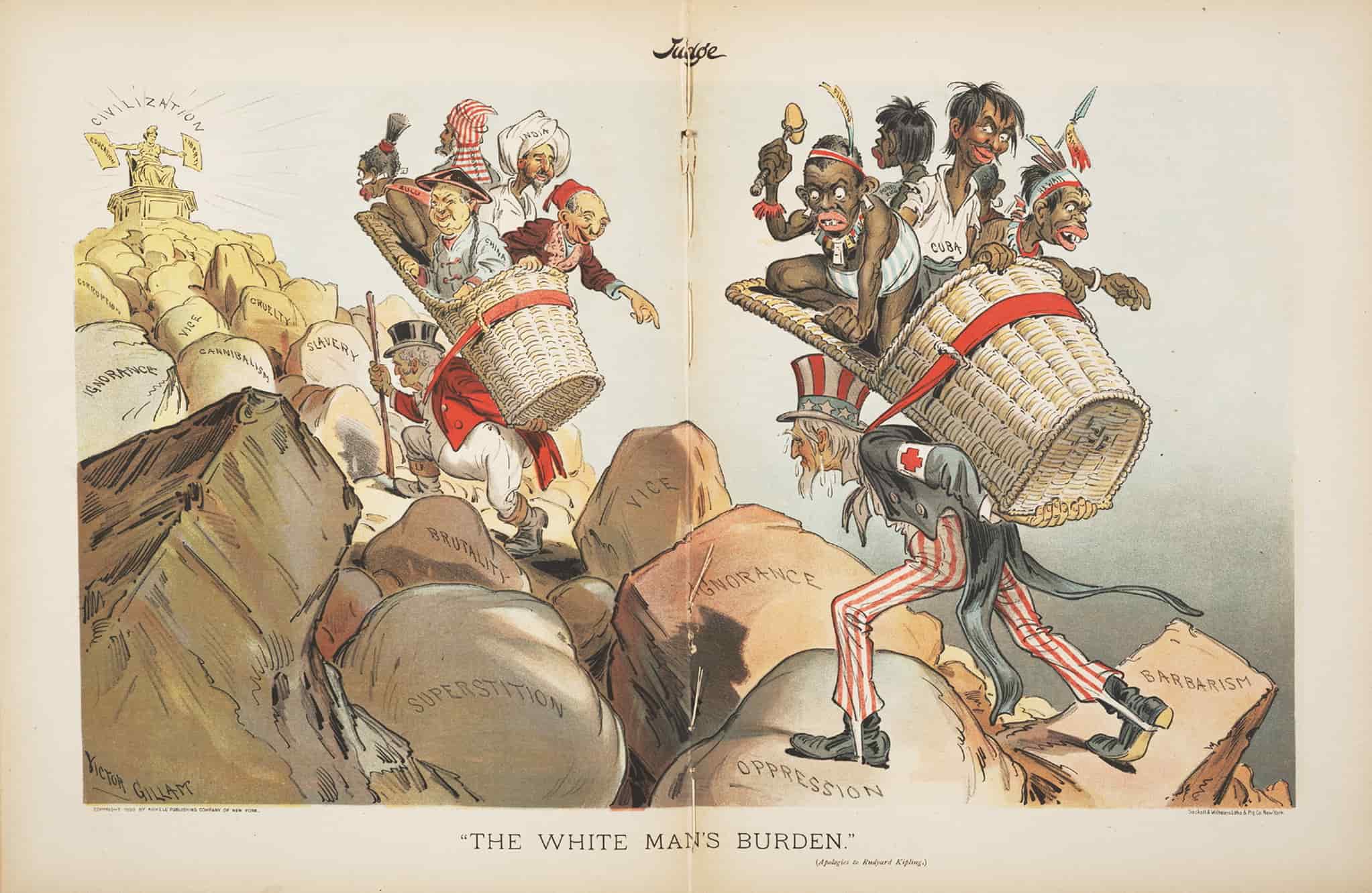
Image 05.02.08 — The cartoonist depicts the US as Uncle Sam, struggling to ascend a formidable mountain with all of the attributes of Indigenous people forming the rocks beneath him: barbarism, superstition, vice, brutality, and even cannibalism, among others.
Conclusion
The rise of the US empire in the Pacific did not occur in a vacuum but was rather a consequence of industrial and political factors such as the need for cheap labor, natural resources, and expanded markets supported by racial and political ideologies of nativism and benevolent assimilation. Pacific Islanders and Asian people caught in the wars and aggressions of US colonization experienced the adverse political, economic, and cultural effects of empire building, which eventually led to the out-migration of Asian and Pacific Islander migration flows to the United States.
Glossary terms in this module
capitalism Where it’s used
An economic system where the means of production, such as land, factories, and resources, are privately owned by individuals or corporations with the goal of generating profit, and in which goods and services are produced with labor purchased in exchange for wages. Under capitalism, economic power and wealth tend to concentrate among those who own capital, contributing to persistent social class divisions and inequalities.
colonialism Where it’s used
A system in which a foreign power establishes and maintains political and economic domination over a territory and its people, exploiting their land and resources for its own benefit and often imposing its language, culture, and beliefs on the colonized.
colonization Where it’s used
The act and process in which an external group or country brings a region and its Indigenous people under its domination and control, subordinating them politically, economically, and culturally.
empire Where it’s used
A group of countries or regions under the political rule of one single country or person. The ruling country typically exercises power over a territory by using military force, economic pressure, and political control to colonize and govern foreign lands for its own benefit.
imperialism Where it’s used
A policy or practice in which one state extends its power and domination over other territories and peoples—often through political, military, economic, or cultural means—with the goal of expanding its power and influence.
Manifest Destiny Where it’s used
The nineteenth century belief that the United States had a divine right and destiny for westward expansion across North America. This belief was used to justify American colonialism and the dispossession of Native Americans and other Indigenous peoples of their lands.
nation-state Where it’s used
A sovereign country formed with defined borders whose political authority is claimed in the name of a nation, among a population that sees itself as sharing a common identity (for example, through language, culture, history, or ethnicity), even though not all inhabitants necessarily share the same traits. Its formation is often shaped by war, colonialism, and continuous disputes over political territories and national identities.
settler colonialism Where it’s used
A form of colonization in which settlers establish a permanent society on Indigenous land by displacing Indigenous peoples and sovereignties, often through violence, forced removal, and assimilation, and in many cases involving genocidal practices.
Endnotes
3 “Filipinos Demand Independence, 1908,” in Major Problems in Asian American History, eds. Lon Kurashige and Alice Yang Murray (Houghton Mifflin, 2003), 149.