



Search the Media Repository
Discover the curated images, videos, and primary sources featured throughout Foundations and Futures
History is more than just text on a page; it is the photographs, voices, and artifacts of the people who lived it. The images and recordings featured across Foundations and Futures are part of a meticulously curated media repository. Whether you are building a lesson plan or investigating an artifact, you can use this database to trace the provenance of our media: discover who created an asset, the historical context behind it, and how it can be used to bring Asian American and Pacific Islander experiences into your classroom.
Multimedia
Chapters
-
Image
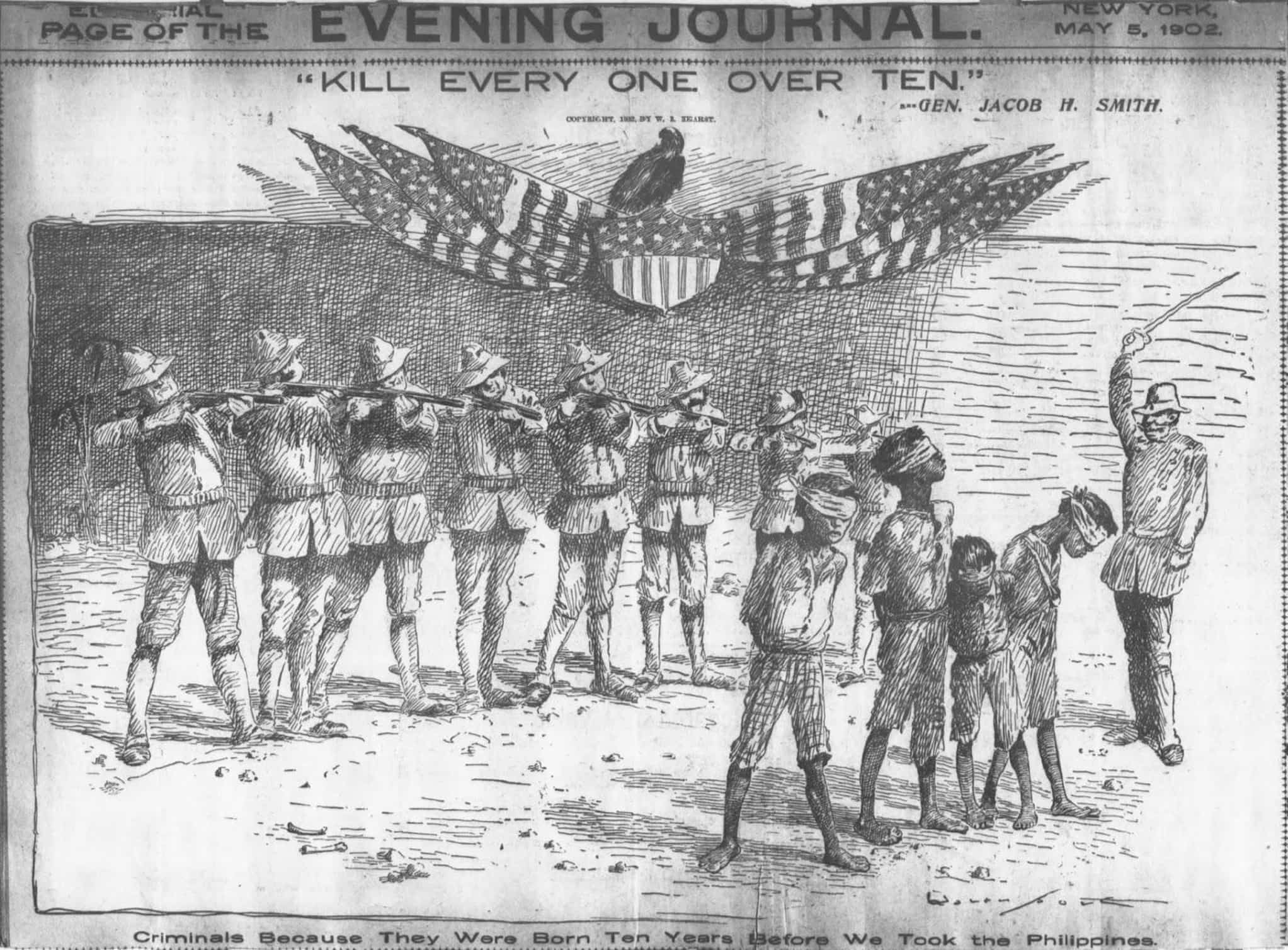
Philippine-American War Political Cartoon
The Philippine-American war was a brutal total war. The New York Journal’s May 5, 1902 issue depicts General Jacob H. Smith’s order to “kill everyone over ten.” The caption reads “Criminals Because They Were Born Ten Years Before We Took the Philippines.”
-
Image
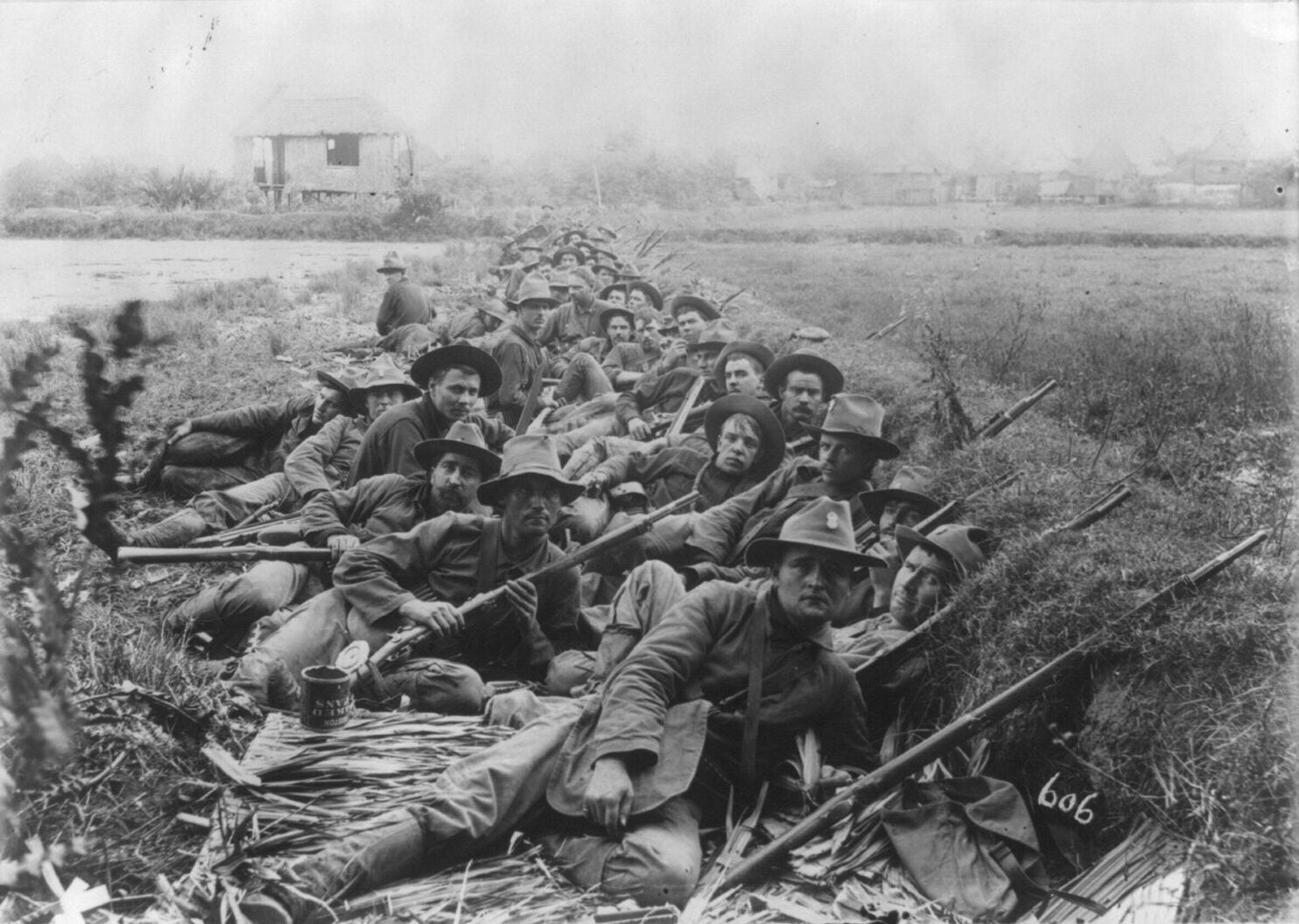
20th Kansas Volunteer Infantry
Soldiers of the 20th Kansas Volunteer Infantry in a trench. President McKinley garnered congressional support for the Philippine-American war by shrouding its intentions behind a policy of “benevolent assimilation.”
-
Video
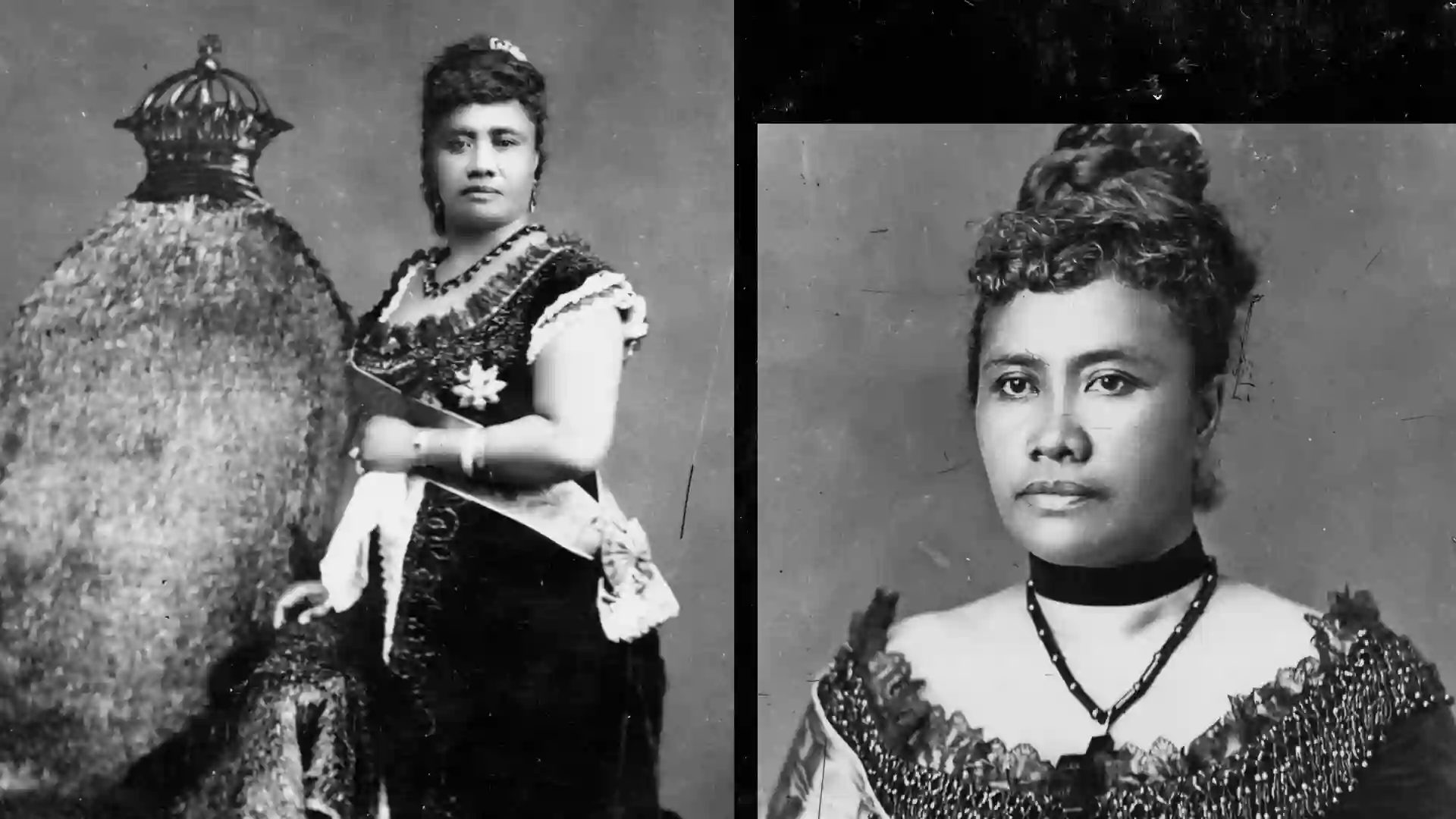
Queen Lili‘uokalani – The First and Last Queen of Hawai‘i
Queen Lili‘uokalani, the last monarch of the Hawaiian Kingdom, was overthrown and imprisoned for eight months in a bloodless coup driven by powerful US business interests and plantation owners supported by US Marines. She abdicated the throne in 1893 to avoid bloodshed.
-
Image
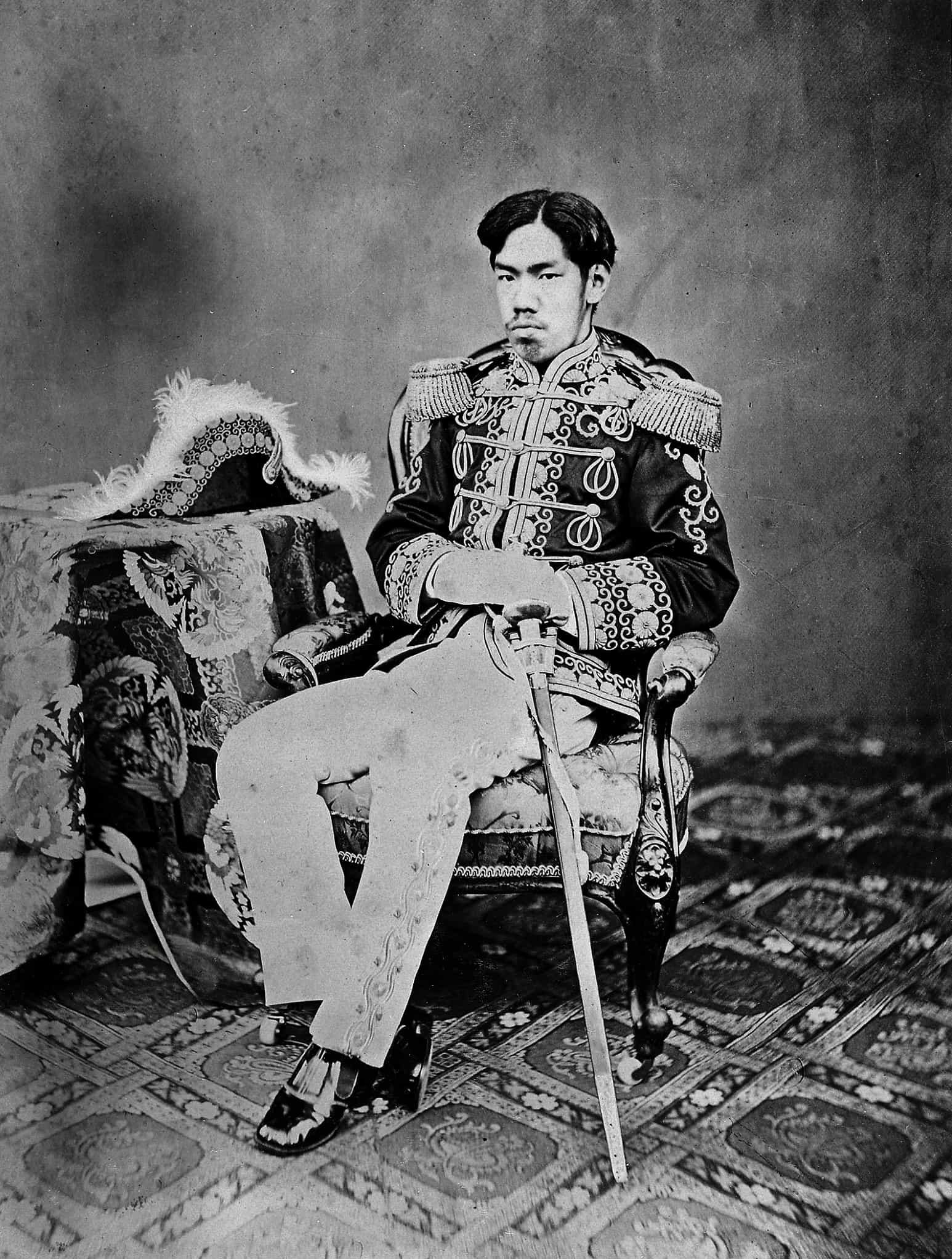
Emperor Meiji
The 1873 official imperial photo of Emperor Meiji, seated in full military dress. Within the Meiji Restoration period, the modern imperial government of Japan transformed from an isolationist feudal state to one that coalesced around principles that paralleled America’s expansionist rise, including mass industrialization and imperial colonization.
-
Image
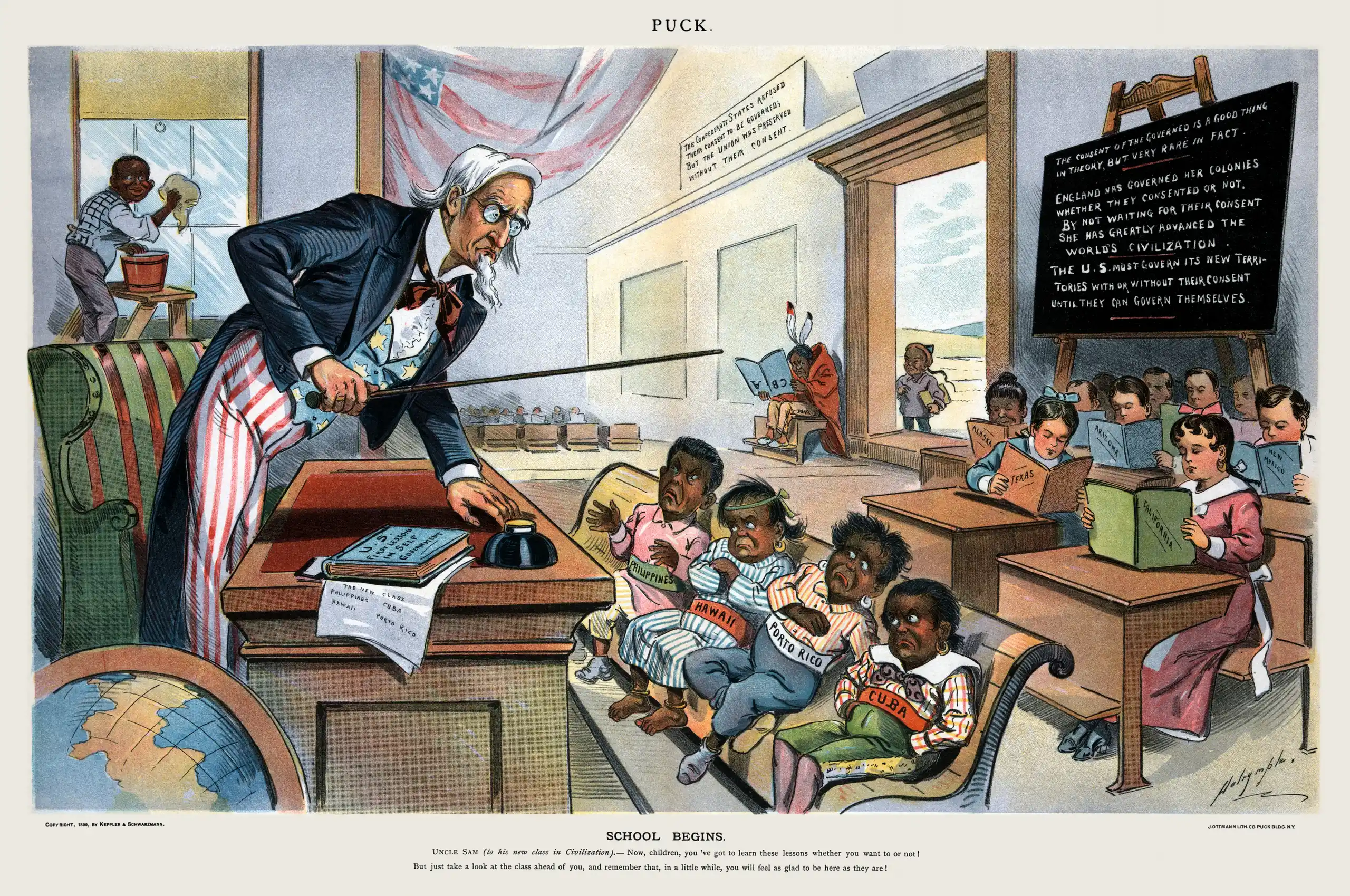
“School Begins”
The political cartoon School Begins in Puck magazine shows Uncle Sam disciplining racist caricatures representing the Philippines, Hawaiʻi, “Porto” Rico, and Cuba. The chalkboard reads, “The U.S. must govern its new territories with or without their consent until they can govern themselves.
-
Image
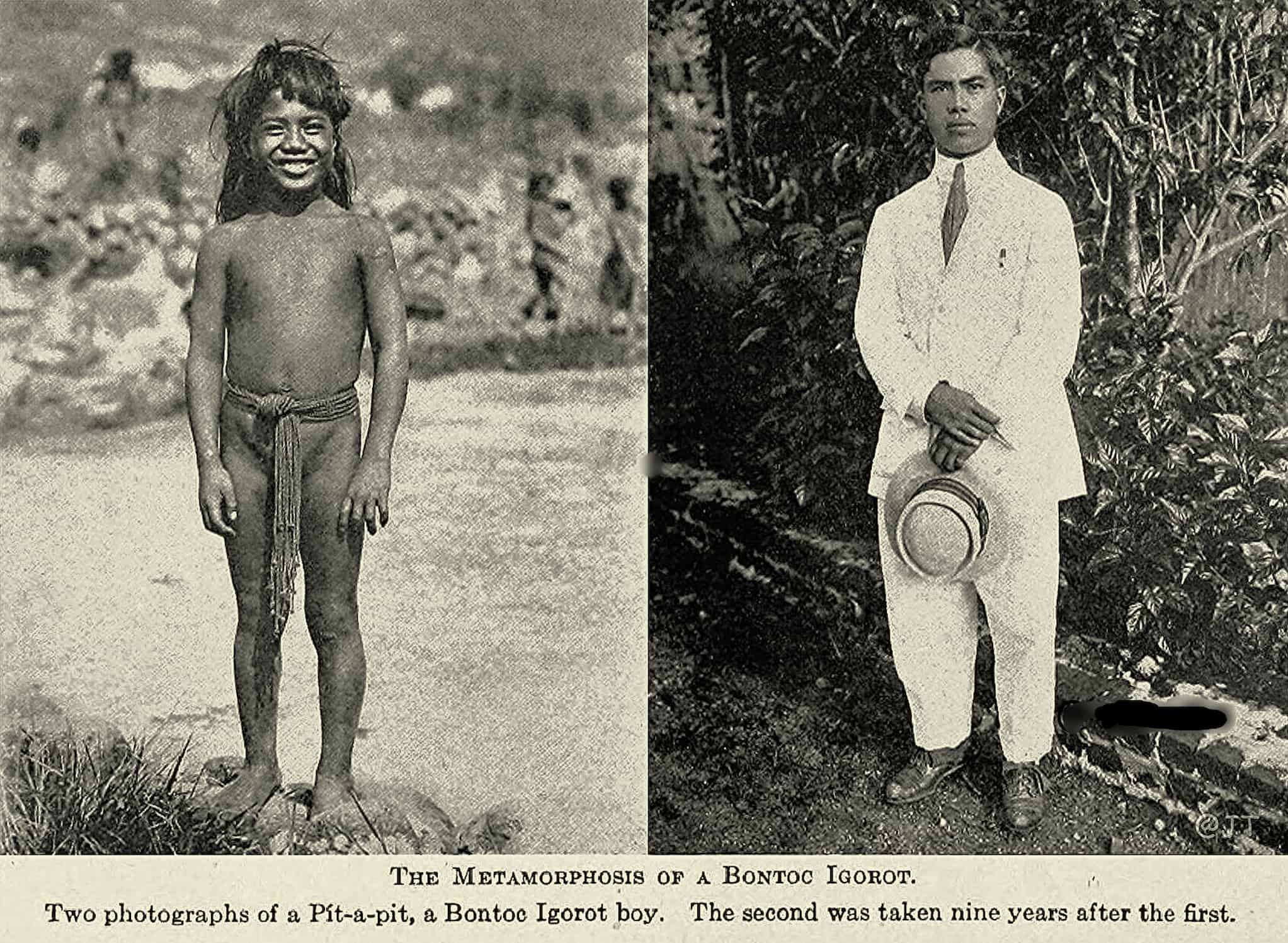
Two Images of a Bontoc Igorot Man
These images represent one justification for “Manifest Destiny” and the US’s colonization of the Philippines. The transition of the barefoot boy on the left to the respectable doctor on the right romanticized the “civilizing” impact of colonial expansion without regard for the loss of indigeneity.
-
Image
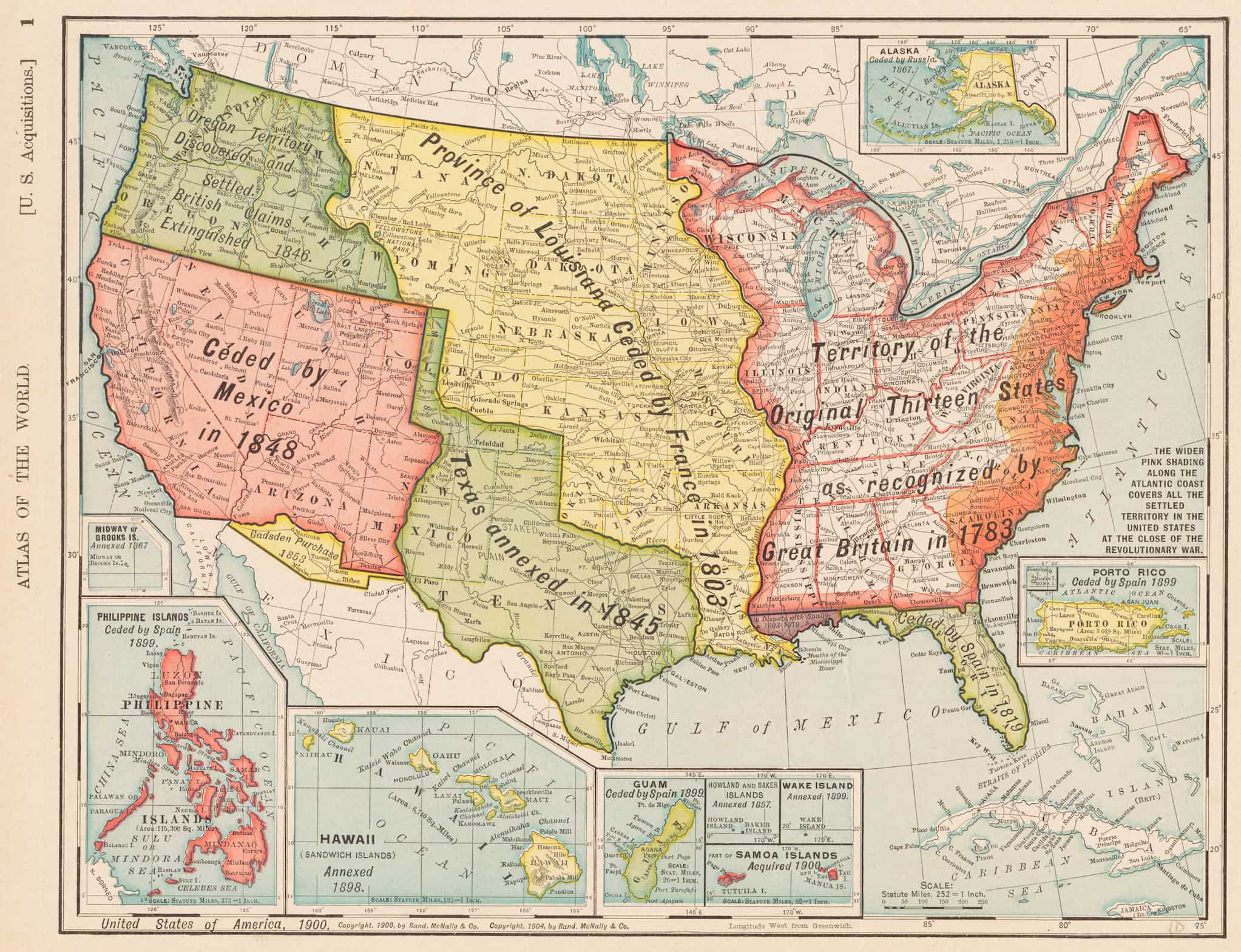
U.S. Acquisitions in 1900
This 1900 map of the United States and its territorial acquisitions illustrates its vast expansion on the continent and abroad.
-
Image
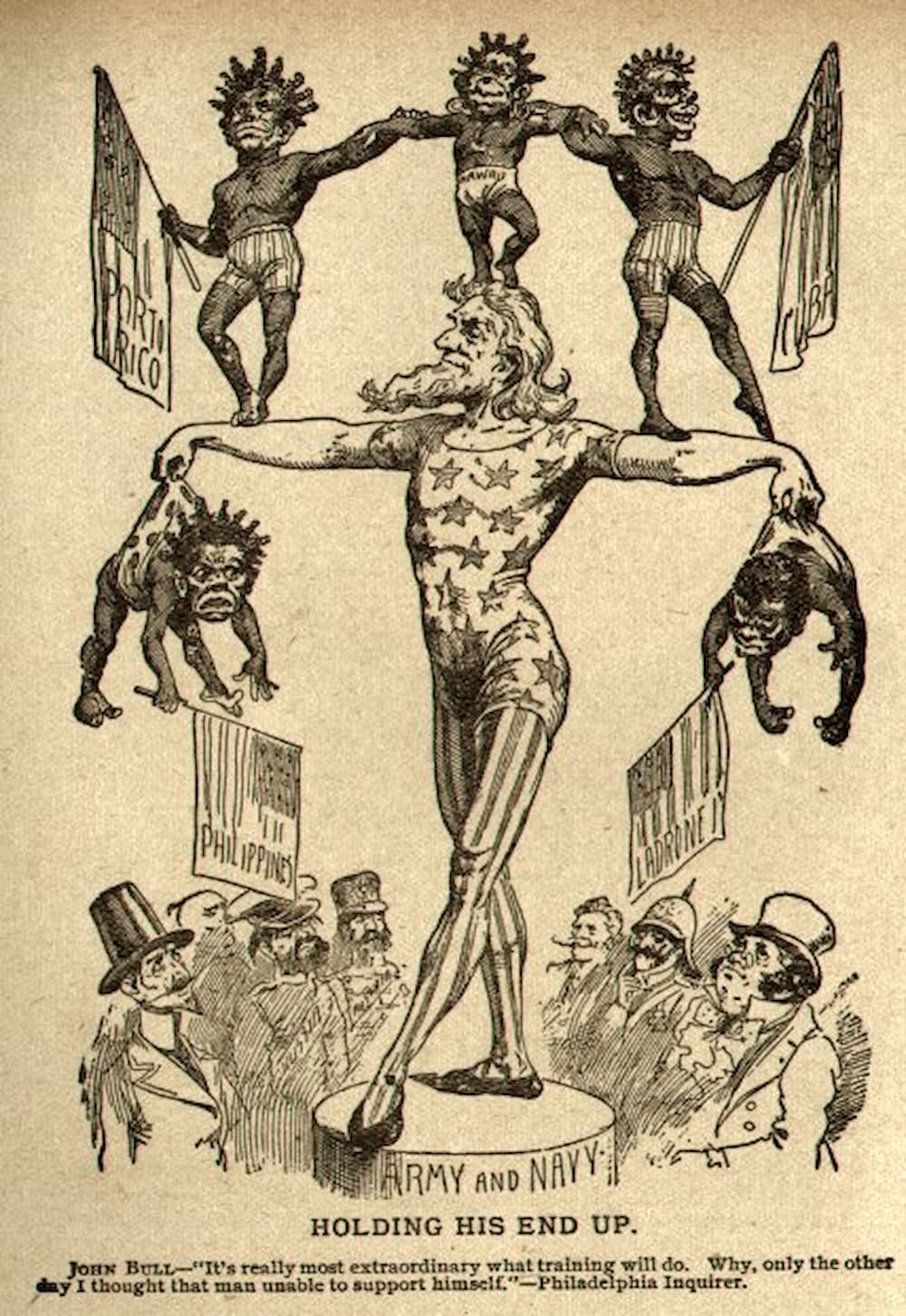
Holding His End Up
In this cartoon from 1899, we see how empire can be defined through unequal relationships between the colonizers and the colonized. Uncle Sam “holds up” barbaric-looking figures representing conquered territories: “Porto” Rico, Cuba, the Philippines, and the Ladrone Islands (Guam).
-
Video
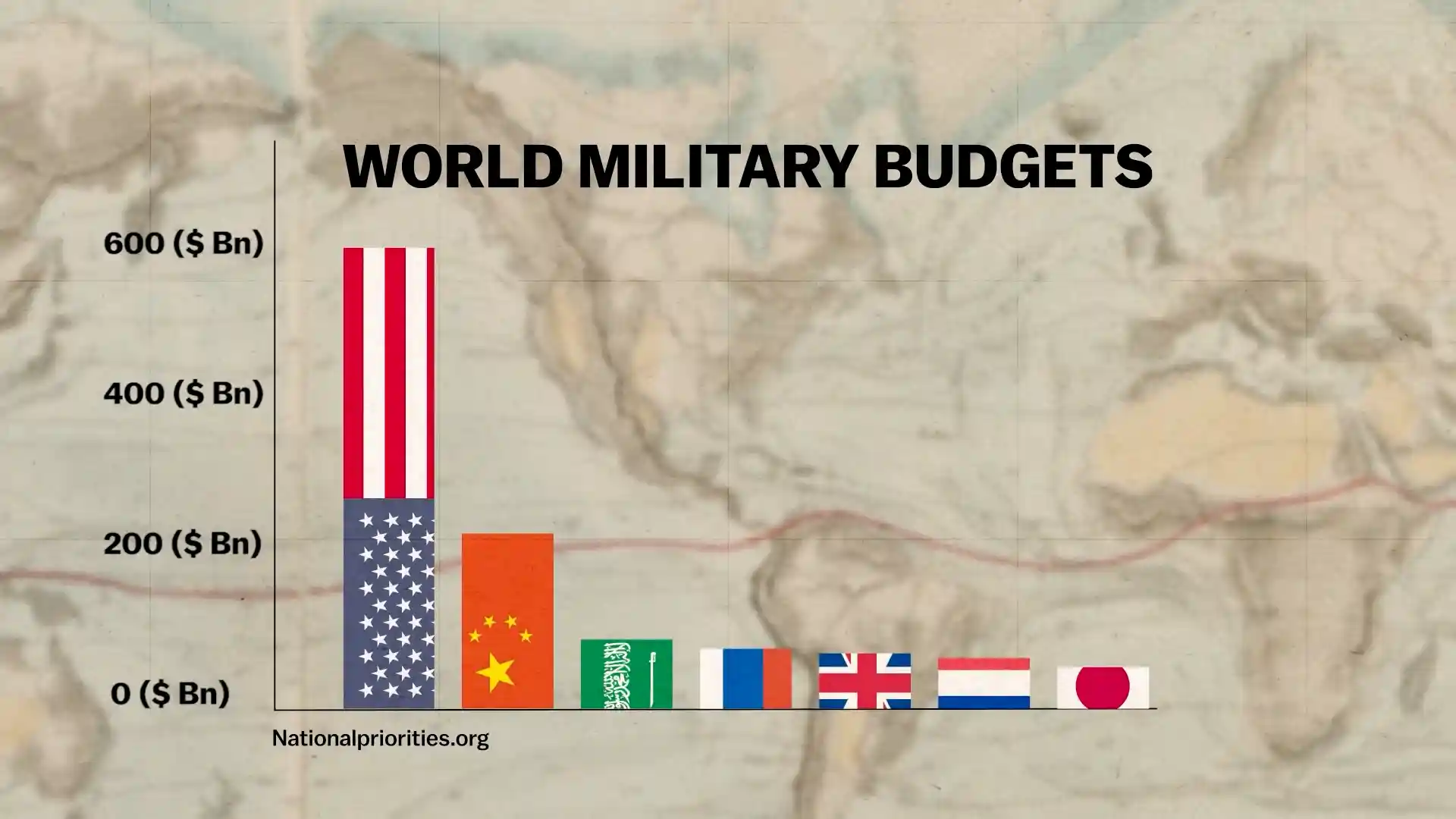
“How America Became A Superpower”
From the thirteen colonies to the founding of the United States, the nation continued to expand past its continental borders to become a truly global power by the early 1900s.
-
Image
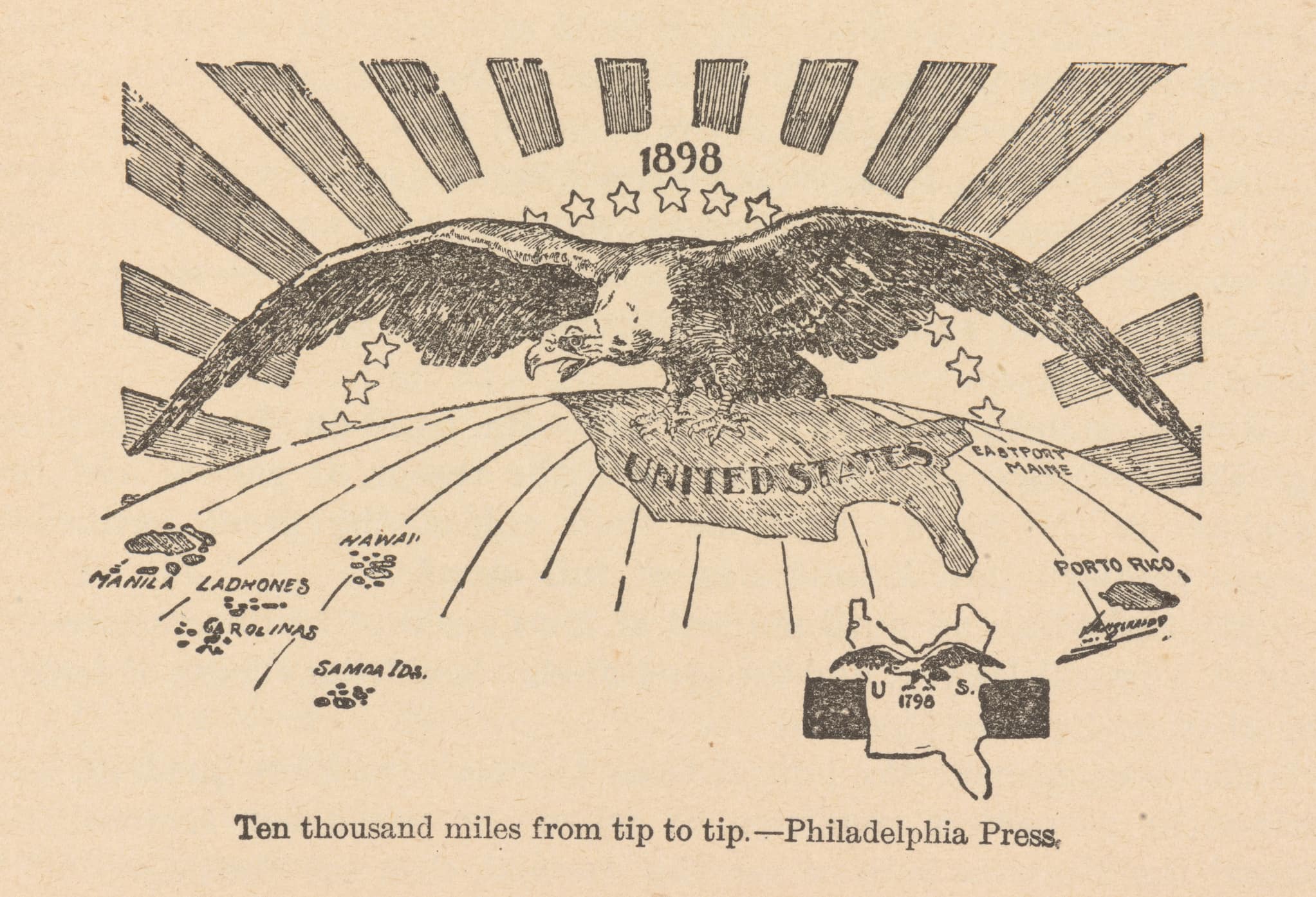
10,000 Miles from Tip to Tip
By juxtaposing that map with the impressive reach of the eagle, this 1898 cartoon gestures towards a central theme in defining empire: territorial expansion.
-

Text
Tiffany Min’s “Women”
-
Text
Kimsom Keoum’s “Refugee”
-
Image
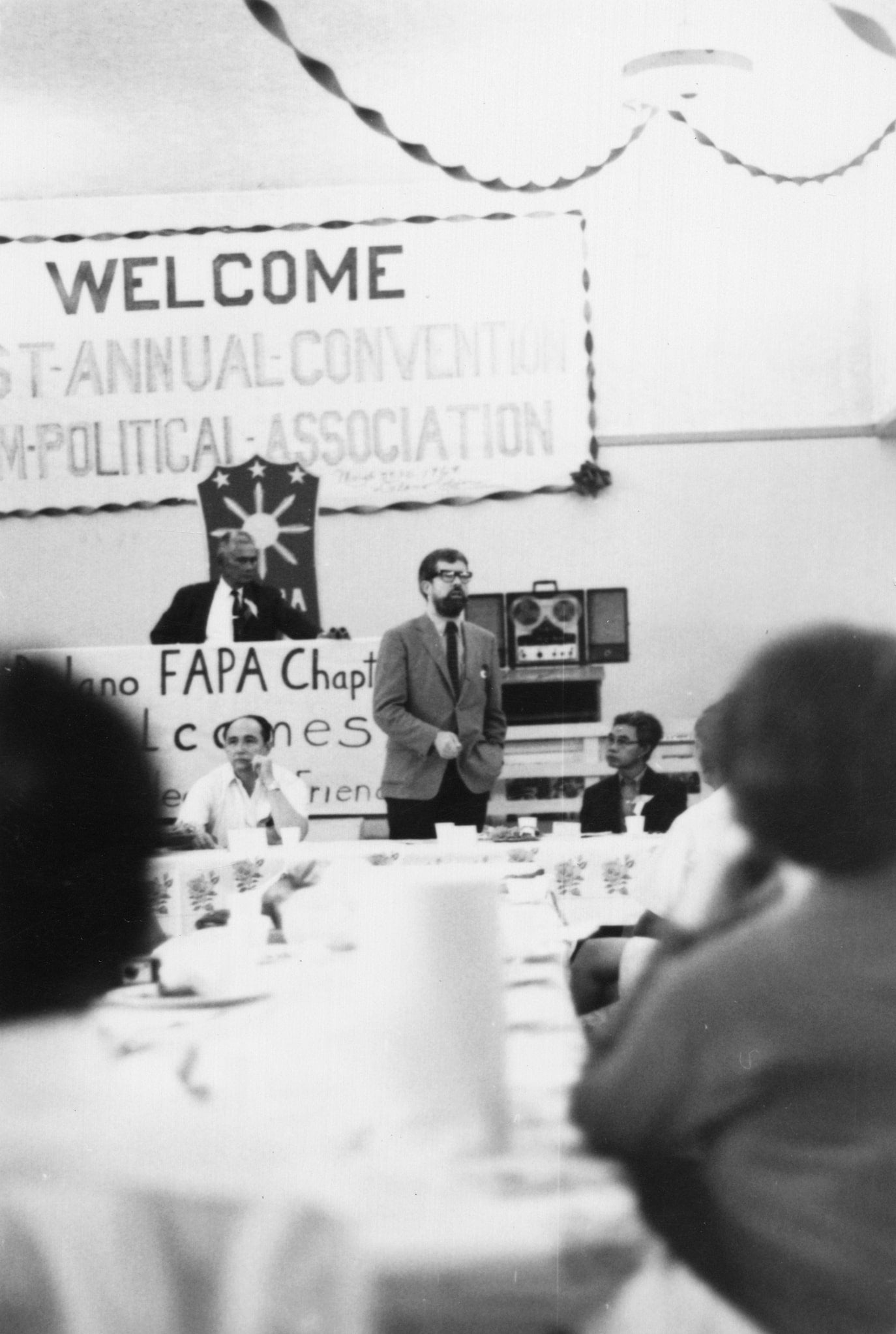
FAPA Convention
Paul Schrade of the Delano chapter speaks at the Filipino American Political Association (FAPA) Convention in April, 1969.
Featured in:
Labor & Activism of Filipino Farmworkers, Module 5
-
Image
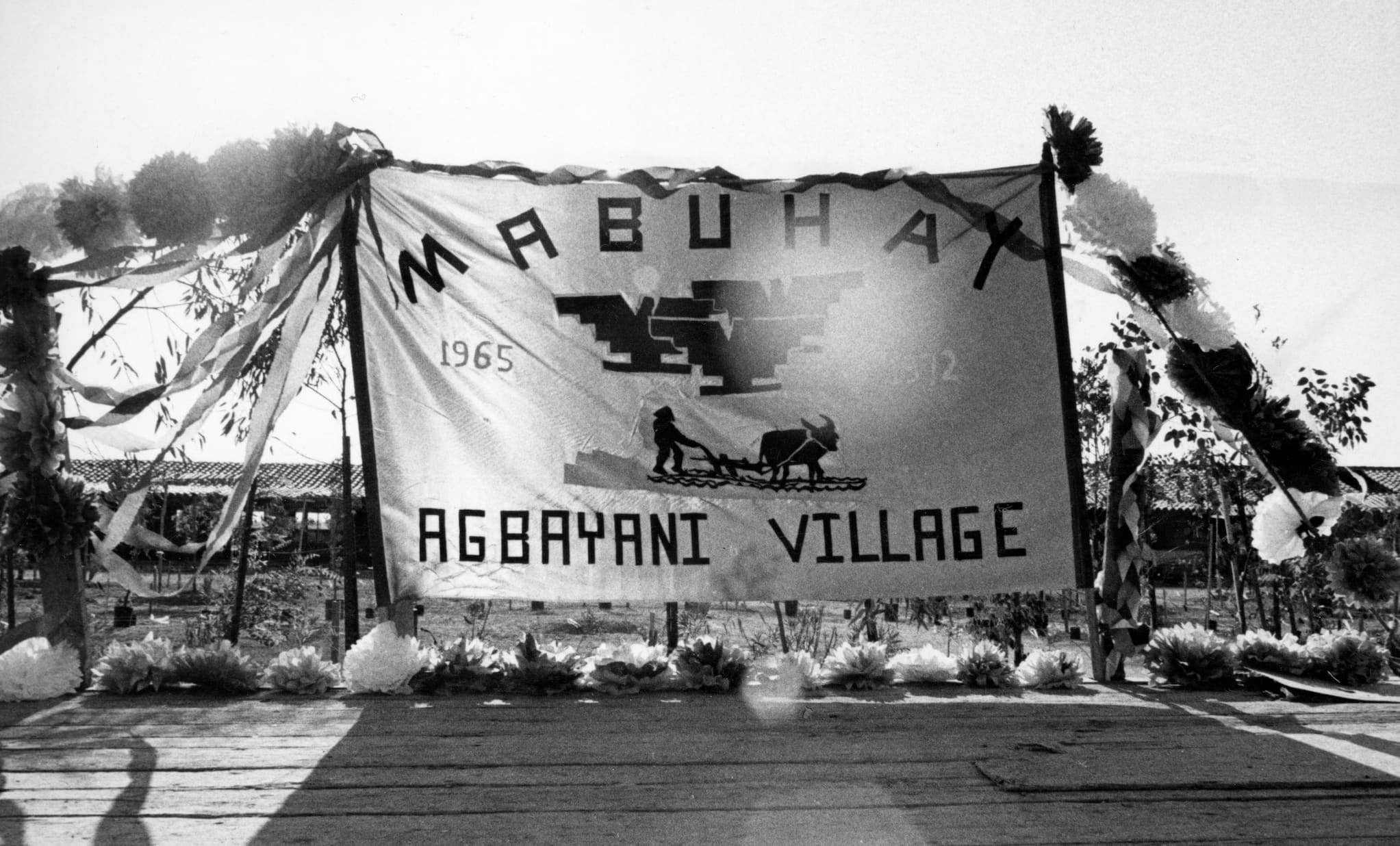
Agbayani Village Sign
Decorations and a sign that reads “Mabuhay Agbayani Village, 1965 – 1972.” Mabuhay is a Tagalog word that can be translated as “long live,” “welcome,” “viva,” or “cheers.”
Featured in:
Labor & Activism of Filipino Farmworkers, Module 5
-
Image
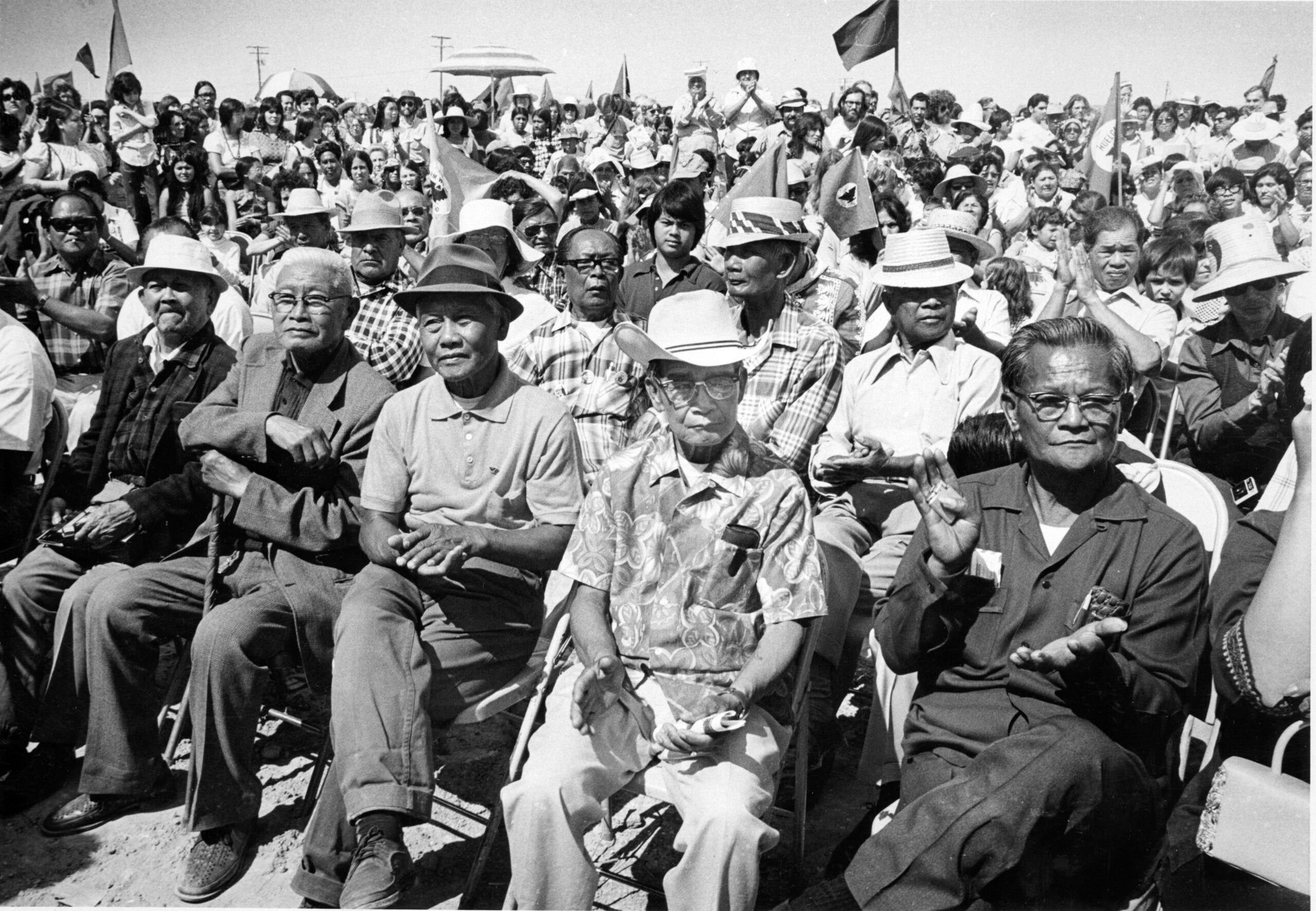
Agbayani Village Dedication Ceremony
Filipino farmworkers celebrate the dedication of the Paolo Agbayani Retirement Village in Kern County, California in June, 1974.
Featured in:
Labor & Activism of Filipino Farmworkers, Module 5
-
Image
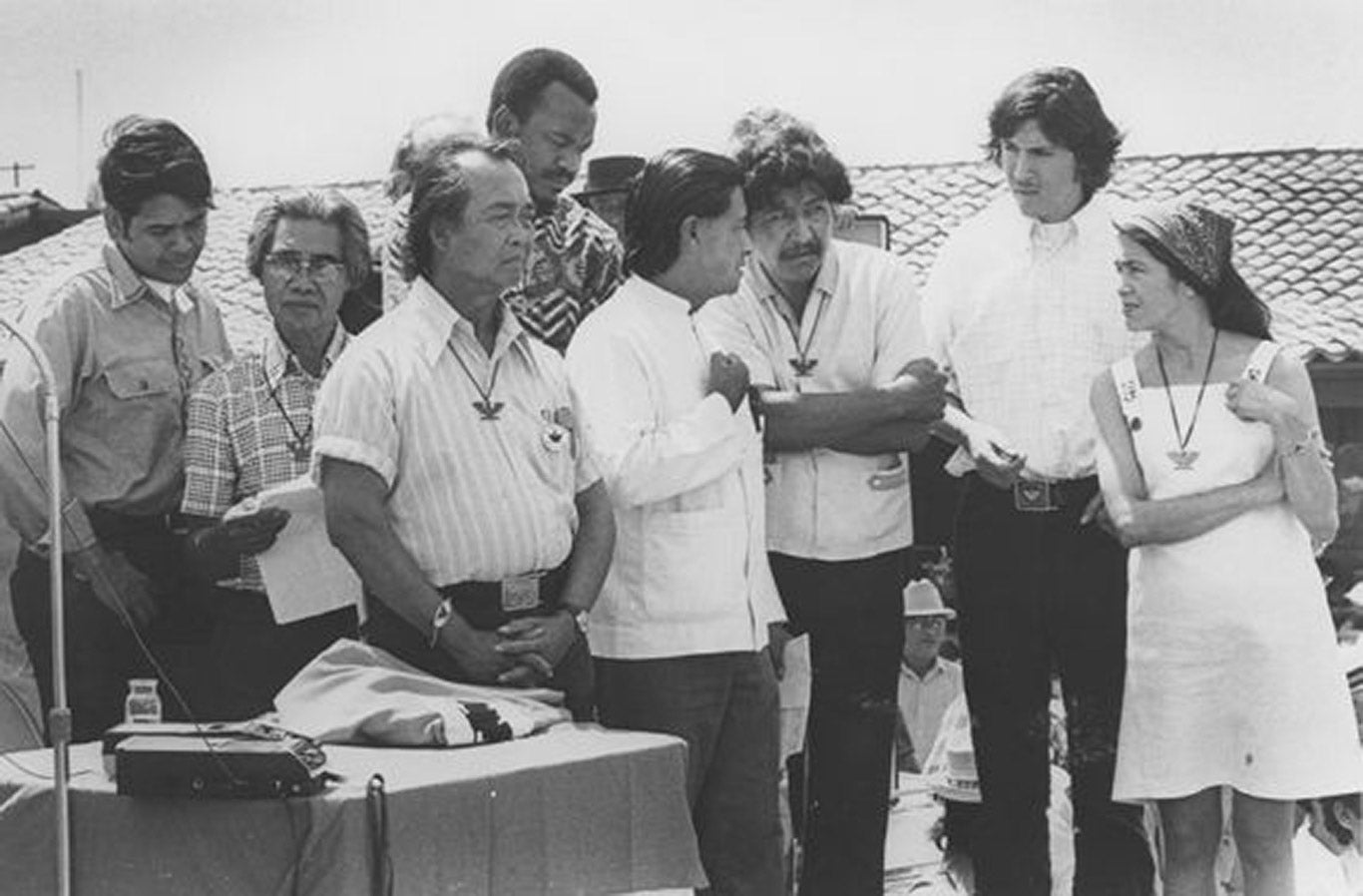
Agbayani Village Dedication Speakers
César Chávez and Dolores Huerta speak to each other onstage at the Agbayani Village dedication in June, 1974. Standing with them are (left to right): Eliseo Medina, Philip Vera Cruz, Pete Velasco, Mack Lyons, Richard Chávez, and unknown.
Featured in:
Labor & Activism of Filipino Farmworkers, Module 5
-
Image
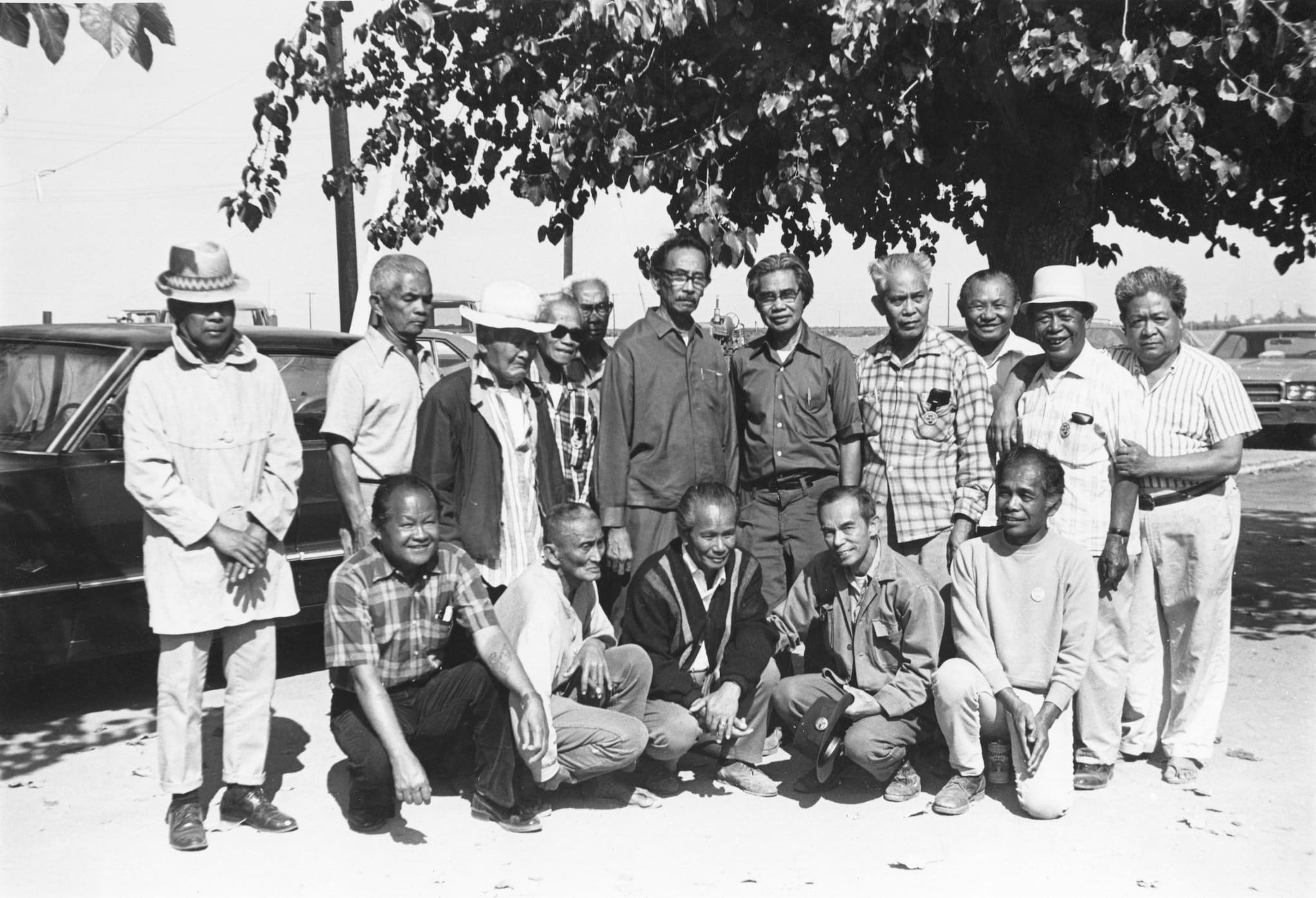
Agbayani Village Construction Planning
Filipino farmworkers plan the construction of the Paolo Agbayani Village in Delano, California in October, 1972. to house retired Filipino farmworkers who had no family in the United States. Back row, fifth from right: Philip Vera Cruz.
Featured in:
Labor & Activism of Filipino Farmworkers, Module 5
-
Image
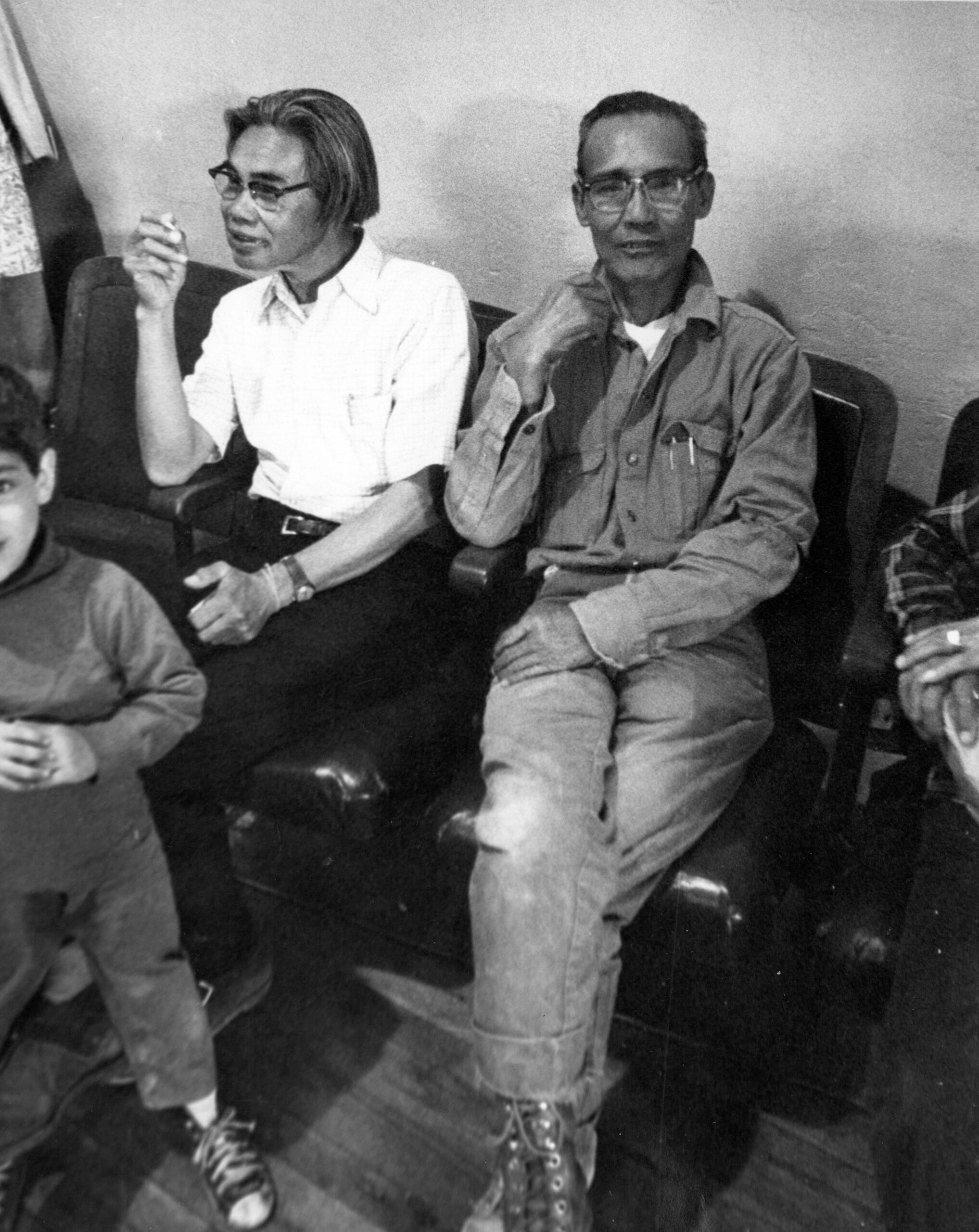
Philip Vera Cruz in a Meeting
Philip Vera Cruz (left) attends a meeting with unidentified man.
Featured in:
Labor & Activism of Filipino Farmworkers, Module 5
-
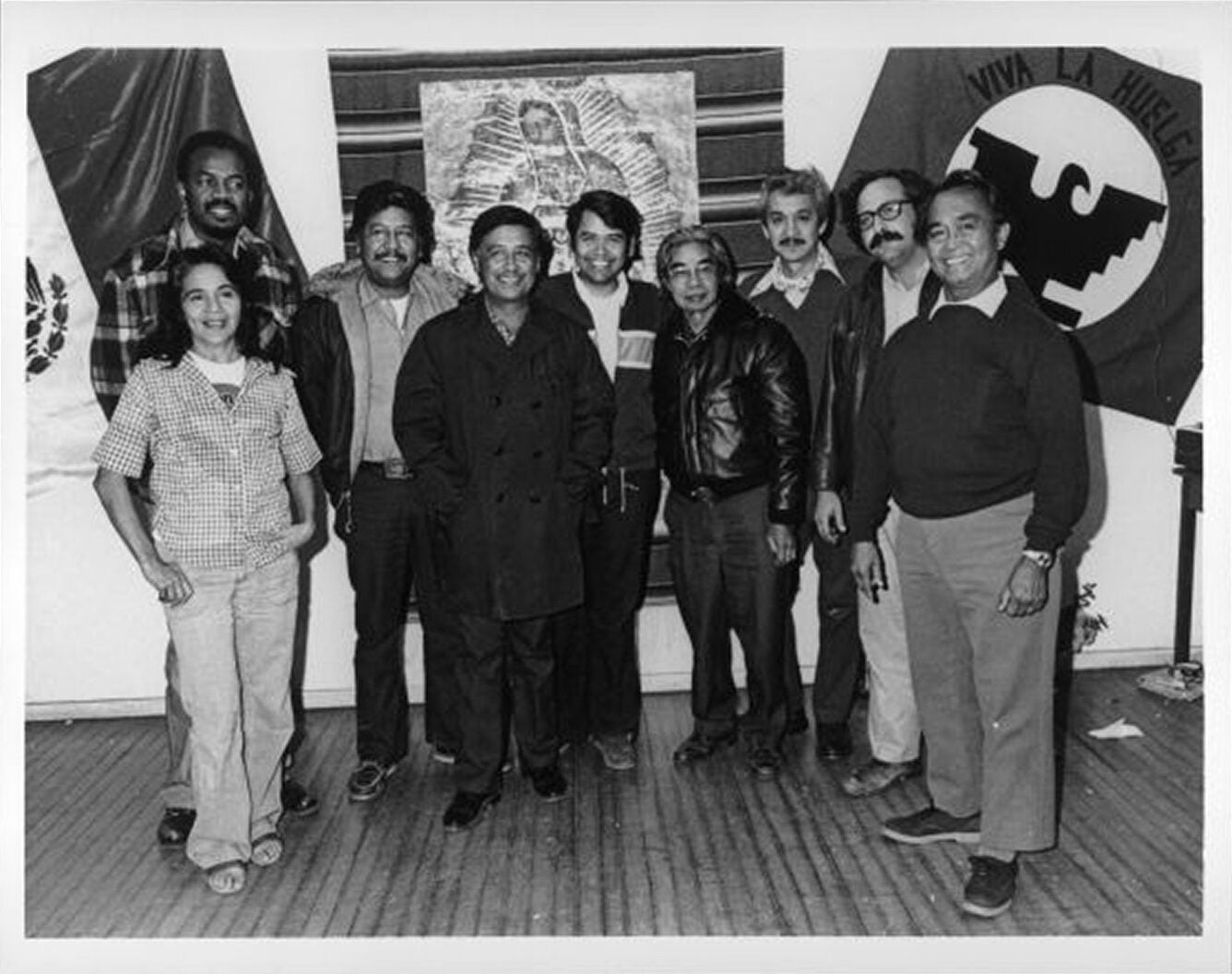
Image
UFW Officials 1977
UFW officials in 1977. Front row (left to right): Dolores Huerta, César Chávez, Philip Vera Cruz. Back row (left to right): Mack Lyons, Richard Chávez, Eliseo Medina, Gilbert Padilla, Marshall Ganz, and Pete Velasco.
Featured in:
Labor & Activism of Filipino Farmworkers, Module 5
-
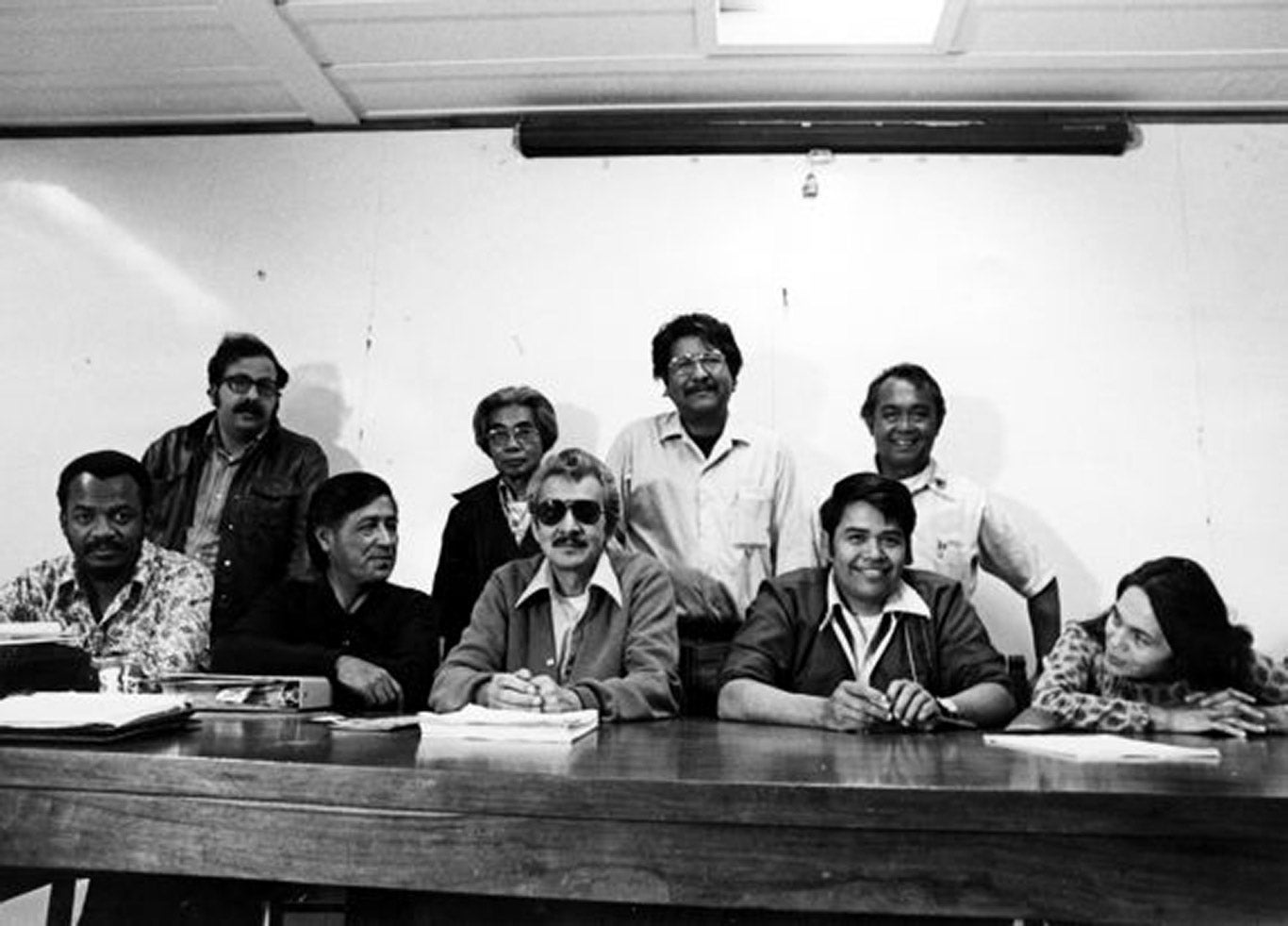
Image
UFW Officials 1976
UFW officials in 1976. Standing, left to right: Marshall Ganz, Phillip Vera Cruz, Richard Chávez, Pete Velasco. Sitting, left to right: Mack Lyons, César Chávez, Gilbert Padilla, Eliseo Medina, Dolores Huerta.
Featured in:
Labor & Activism of Filipino Farmworkers, Module 5