





Colorful oil painting of CHamoru woman. She is seated on a couch wearing a patterned textile wrapped around her waist and floral crown.
Module 3: CHamoru Diasporic Arts
Is CHamoru migration a choice?
Because much more than wind carries so many of us away from our islands … Because our families are separated. Because distance means we cannot always conjure the scent of our auntie’s cheek. Because we are visited by our ancestors in dreams. Because we are visited by our ancestors in waking life. Because our nieces and nephews struggle to remember the last time we visited.
– Lehua M. Taitano 1
Lehua M. Taitano, a queer CHamoru poet and artist, uses her poetry to highlight the diasporic struggles and internal reflections that CHamorus experience living in the continental United States. Similar to Lehua’s sentiment, I often reflect on my diasporic CHamoru identity and the “inbetween-ness” felt being born and raised in the continental US, in contrast to my mother and grandmother who moved from the Mariana Islands. As a child, I remember trying to make sense of their experiences in a multi-generational household run by CHamoru women alongside the realities of growing up in California.
Listen to
An excerpt from Lehua Taitano’s “A Love Letter to the CHamoru People in the Twenty-first Century”
Lehua M. Taitano: Dear, I will begin this in the middle since all of my letters have always been to you, even if you haven’t realized it. Go back and look. You’ll see. All of my imaginings, my histories, my deaths and rebirths, my love and heartbreak, all of my words.
My windblown hair, my lemon sticky wrists, my fishbones, slings, feathers, and offerings, my twig fires and heaped mounds of husks, my paint-dipped elbows and muddy feet, the bowers I weave into a home-scented bowl that might call you to me.
The way I can sometimes chant down the sea and coax a wave to carry my heart to you. The salt on my thighs, the clutch of shells I carry in my deepest pockets. They are always for you, addressed to you.
Audio 21.03.01 — Lehua Taitano’s poem, “A Love Letter to the CHamoru People in the Twenty-first Century,” explores love, kinship, and solidarity. In this clip, Taitano uses the format of a letter to bridge connections between CHamorus in the home islands and in the diaspora.
This module is about how artistic expression and creative practice have been an important part of life for Pacific Islanders in the past and, continue to be, for our communities today.
The arts are vital to diasporic CHamorus, serving as powerful vessels for exploring cultural heritage, identity, and connection. Their arts are not merely decorative but integral to preserving oral traditions, languages, and histories through dynamic forms like dance, music, weaving, and tattooing. These artistic expressions foster social cohesion by bringing people together in communal practices and celebrations, reinforcing spiritual ties to the land, ocean, and ancestors, and ensuring the intergenerational transmission of knowledge and values that define diverse Pacific cultures. While their creative expressions change over time, diasporic CHamorus use these practices to explore the complex lived experiences of being away from the Mariana Islands.
How do diasporic CHamorus use the creative arts?
What does art reveal about CHamoru experiences in the United States?
How can the arts be a tool to explore colonial history and a way to heal?
Music for Diasporic Longing
I am your assimilated son
you may know me as the light skinned one
the kind that you can palette
I look at best hispanic
every feature is just white enough
I am your unnecessary sum
hurt and unsure what I’ve become
wear floral for aesthetic
my accent is pathetic
there’s nowhere that I feel at home
si låhi amerikanu
– Micah Manaitai 2
These song lyrics by CHamoru musician Micah Manaitai highlight some of the identity issues and internal reflections that CHamorus have living in the US. The song reminds them of the complexities of being physically disconnected from their islands and the US being an influential factor for moving abroad. Yet, when living in America, “there’s nowhere that” CHamorus “feel at home.” Figuring out how to find their way home, diasporic CHamoru creative artists take on the challenge of understanding their migrations, lived experiences in the US, and the constant pull they have to their islands.
CHamoru musicians in the diaspora play a vital role in preserving and evolving their cultural heritage. They act as cultural ambassadors, sharing CHamoru traditions through song and performance, while also innovating by blending Indigenous sounds with contemporary genres. These artists create spaces for connection and community, fostering a sense of belonging, and strengthening their ties to the homeland. Their music often explores themes of identity, resilience, and CHamoru experiences, amplifying their voices and stories on a global stage and ensuring the continuity of their rich musical legacy for future generations.
Music is a major point of engagement in terms of grappling with CHamoru diasporic experiences. Key musicians, such as Johnny Sablan, the Iriate Family, The Kasuals, P.O.D., (some of the members in) Kalapana, Tribal Theory, Pia Mia, and Dijon (Duenas), have created careers at home and away from the Mariana Islands. Like Micah Manatai’s song, “Låhi Amerikanu,” from his album, Decolonize Me, there are also specific songs about missing home, in both CHamoru and English, that offer insight into how CHamorus in the US deal with the realities of being away from their islands. Dandan Marianas is particularly interesting because they record videos of musical collaborations between CHamorus from various locations throughout the Mariana Islands and beyond and make their work available on YouTube and Facebook.
Listen to
An excerpt from Micah Manaitai’s “Låhi Amerikanu”
I am your assimilated son
You may know me as the light skinned one
The kind that you can palate
I look at best Hispanic
Every feature is just white enough
Audio 21.03.02 — In “Låhi Amerikanu,” translated to English as “American Son,” Micah Manaitai sings about the struggles of finding a sense of belonging and feeling invisible as a CHamoru living in the US.
Listen to
An excerpt from Johnny Sablan’s “Munga Yu’ Ma Fino Inglesi,” or “Don’t Speak English to Me”
(Singing in CHamoru.)
Audio 21.03.04 — This song, “Munga Yu’ Ma Fino Inglesi,” or “Don’t Speak English to Me,” was written by Johnny Sablan upon returning home to Guam (Guåhan) after attending college in California. His diasporic experience made him aware of the cultural loss CHamorus experienced post-World War II.
Literary Expressions
Literature plays a crucial role for diasporic CHamorus, serving as a vital link to their cultural heritage and a powerful tool for navigating the complexities of displacement and identity. Literary expression fosters a sense of community and belonging, strengthening connections to ancestral roots and providing a platform to articulate the unique experiences of living away from their homeland. Through storytelling, poetry, and prose, diasporic CHamorus explore themes of mahålang (longing), loss, and resilience, while preserving their language and traditions across geographical distances, ensuring CHamoru voices continue to enrich and evolve their cultural narrative.
Currently there is a lack of scholarly research by and about diasporic CHamorus, especially deep accounts of their stories and experiences living abroad. That is beginning to change as CHamorus take up the task of writing, recording, and making their stories known. CHamoru women writers in particular are doing important work to show how their families moved to the US and what it was like to be Indigenous and separated from their island homes. As Lehua M. Taitano tells us, her poetry is written for “the indigenous islander living in diaspora, [because] constructing identity in neocolonial America requires conjuring wholeness from fragments.” 3
In addition to poetry, diasporic CHamorus have used autobiographies to reflect on their diasporic experiences. Marie S.C. Castro writes about her journey from Saipan to the US as a nun to teach for twenty-five years in the Kansas City school system. J.L. Quenga uses her short collection of stories to articulate how she wrestles with being born and raised in Southern California as a mixed ancestry CHamoru woman. Quenga’s work touches on the racialization of CHamorus in the continental US that often renders Islanders invisible.
Memoir, ethnography, and interviews provide other modes for CHamorus to relate complex experiences in diaspora. Paula A. Lujan Quinene, a CHamoru based in North Carolina, shows this through the collected memories and experiences from diasporic CHamorus, including many stories from her own experiences of migration.
Guma’ Gela’, a queer CHamoru collective, focuses on transgender, non-binary, gender non-conforming, and genderqueer experiences in diaspora through creative writing and creative expression in performances, zines, and workshops. Similarly, the Pulan Collective, comprised of CHamoru women living in the San Francisco Bay Area, has created a multimedia cookbook and cultural memory project that centers on “the full moon to combine intergenerational artistic forces … and harness our matrilineal power through acts of creative collaboration in the form of shared meals.” 4
These examples of CHamorus engaging in literary expression and collective creation highlight the richness of CHamoru experiences abroad and warrant further consideration when discussing diasporas. Even though the Mariana Islands have, and continue, to face immense militarization that drives migration, CHamorus, especially our women, use writing to keep strong ties to their homeland and share the experiences of living in the diaspora.
Visual Arts and Identity Making
Contemporary visual arts play a crucial role for diasporic CHamorus. It offers a dynamic and evolving platform to express their identities and experiences. Beyond traditional forms, these modern artistic expressions—including painting, sculpture, photography, and digital media—allow CHamorus to explore themes of displacement, cultural hybridity, and the ongoing impact of colonialism. They create a powerful space for dialogue and connection, fostering a shared heritage among those living far from their ancestral lands, while challenging mainstream narratives and reclaiming CHamoru stories through an innovative lens.
Gisela Charfauros McDaniel is one such CHamoru artist that is using her practice to bring fresh insight to understanding her CHamoru roots. McDaniel creates art that intimately centers around the stories of CHamoru often overlooked and marginalized within broader historical narratives. Her mixed-media paintings incorporate personal objects, sound, and tactile elements, which powerfully evoke themes of memory, trauma, and healing.
McDaniel’s art provides a crucial space for diasporic CHamorus to see themselves and fosters a sense of validation and connection to their heritage. By addressing the complexities of CHamoru experiences in the US, including the legacies of colonialism and militarization, McDaniel amplifies CHamoru voices on a global stage, contributing significantly to diasporic empowerment.
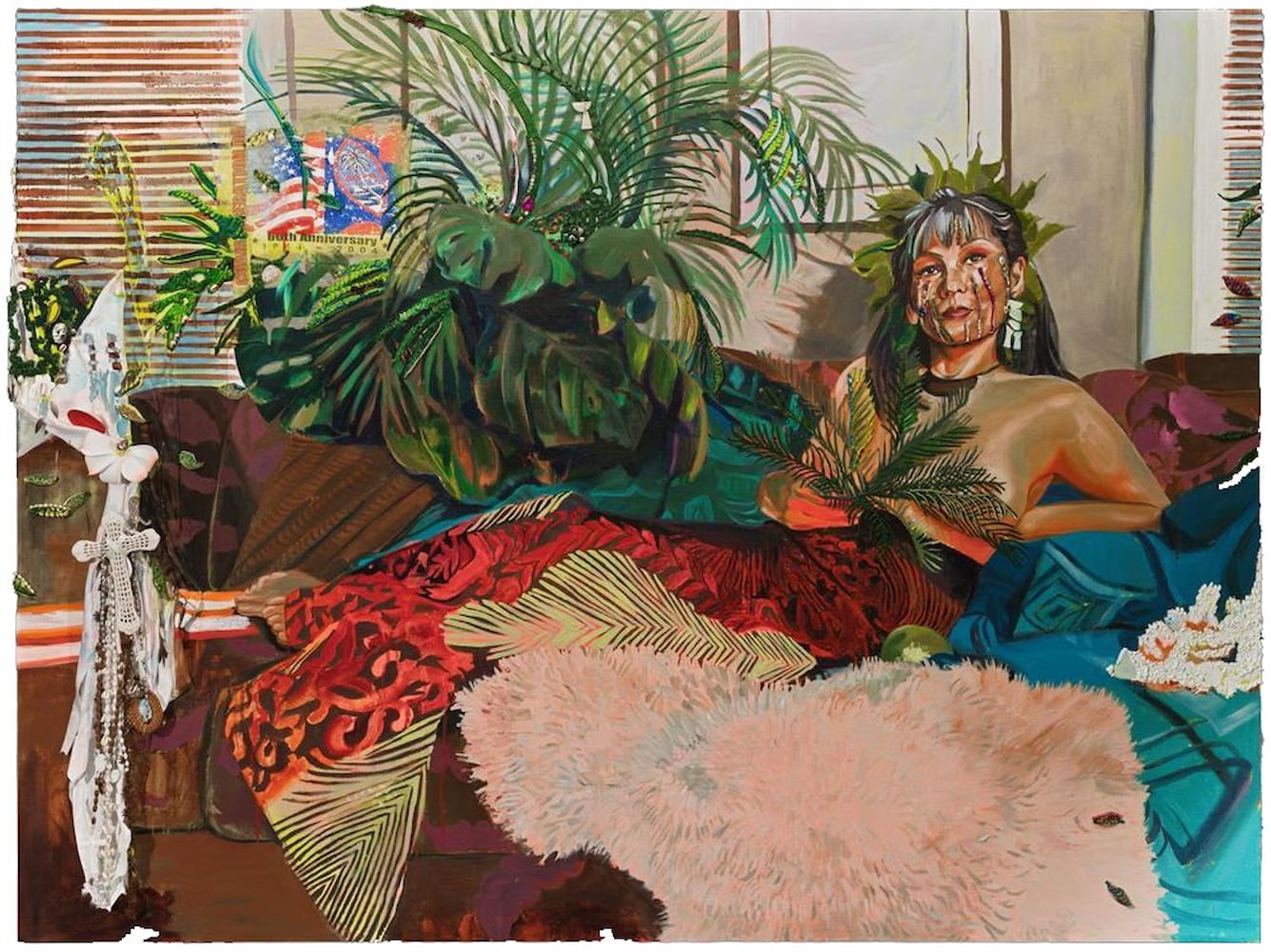
Image 21.03.05 — Gisela Charfauros McDaniel’s painting Tiningo’ si Sirena (2021), or “Knowledge of Sirena,” explores the impacts of US colonization on her mother’s life and what American control means for those in the Mariana Islands and in the diaspora.
The Pilele Projects, a Los Angeles-based exhibition and workshop space founded by CHamoru artist Mariquita “Micki” Davis and Edward Sterrett, actively showcases Pacific Islander artists as vital storytellers and cultural bearers. The organization amplifies their voices and strengthens their connection to their heritage. Focusing not only on the diverse artistic talents within the Pacific Islander diaspora, it also fosters a deeper understanding of their cultural identity, history, and ongoing contributions to the global arts landscape.
Possibilities for CHamoru Diasporic Arts
CHamoru weavers in the diaspora play a vital role in preserving and evolving a significant cultural tradition. These weavers maintain a tangible connection to their ancestral homeland by creating intricate works using techniques passed down through generations. Their art serves not only as a means of cultural preservation but also as a powerful form of self-expression and storytelling that reflects their experiences of displacement, adaptation, and the enduring strength of CHamoru identity. Through their creations, diasporic weavers foster a sense of community, educate others about CHamoru heritage, and ensure that this beautiful and meaningful art form continues to thrive and evolve.
For generations, mamfok (weaving) was a common skill for most CHamoru people. Children learned how to mamfok by observing their family members make woven pieces used for daily tasks, such as katupat, a woven pouch for carrying food items like rice. Following World War II, there was a sharp decline in the number of weavers because of the introduction of American household goods that replaced woven goods. Nevertheless, mamfok remains an important part of CHamoru cultural heritage and continues to be a valued element of their island traditions.
Starting in the 1960s, an artistic revival and celebration of cultural practices coincided with the growth of CHamoru political self-determination and the wider movement of decolonization throughout Oceania. In Guåhan (Guam), new government agencies led by CHamorus (e.g., Chamorro Language Commission) created projects that helped to revitalize and promote their arts, traditions, and language. Movement towards a decolonial future was closely aligned with a reclamation of CHamoru cultural heritage.
Generations of CHamoru weavers like the Barcinas Sisters (Lia, Rita, and Arisa) transform traditional woven goods, such as a katupat (rice pouch), to create novel forms like miniature versions that adorn earrings in the Mariana Islands and throughout the diaspora. They also create sculptural works, such as hammerhead sharks, bringing new artistry to mamfok. In the same vein, “Rockin Roquin” (Roquin-Jon Quichocho Siongco), a member of the queer, interdisciplinary CHamoru art collective, Guma’ Gela’, weaves one-of-a-kind pieces that Indigenize the contemporary fashion landscape in our home islands and beyond. Roquin’s work has graced runways from London, England, to Tāmaki Makaurau (Auckland), Aotearoa (New Zealand).
Modern mamfok is celebrated in digital spaces and on social media, communicating the ongoing intimate relationships between CHamoru people and their natural environments. These digital platforms effectively weave connections among CHamoru diasporic communities worldwide. Like many CHamoru artistic practices, mamfok represents the ability to thrive despite colonial and environmental shifts in the Mariana Islands. In spite of these complex issues, contemporary CHamoru artists in the diaspora leverage these multifaceted forms to explore their relevance for CHamoru lived experiences today.
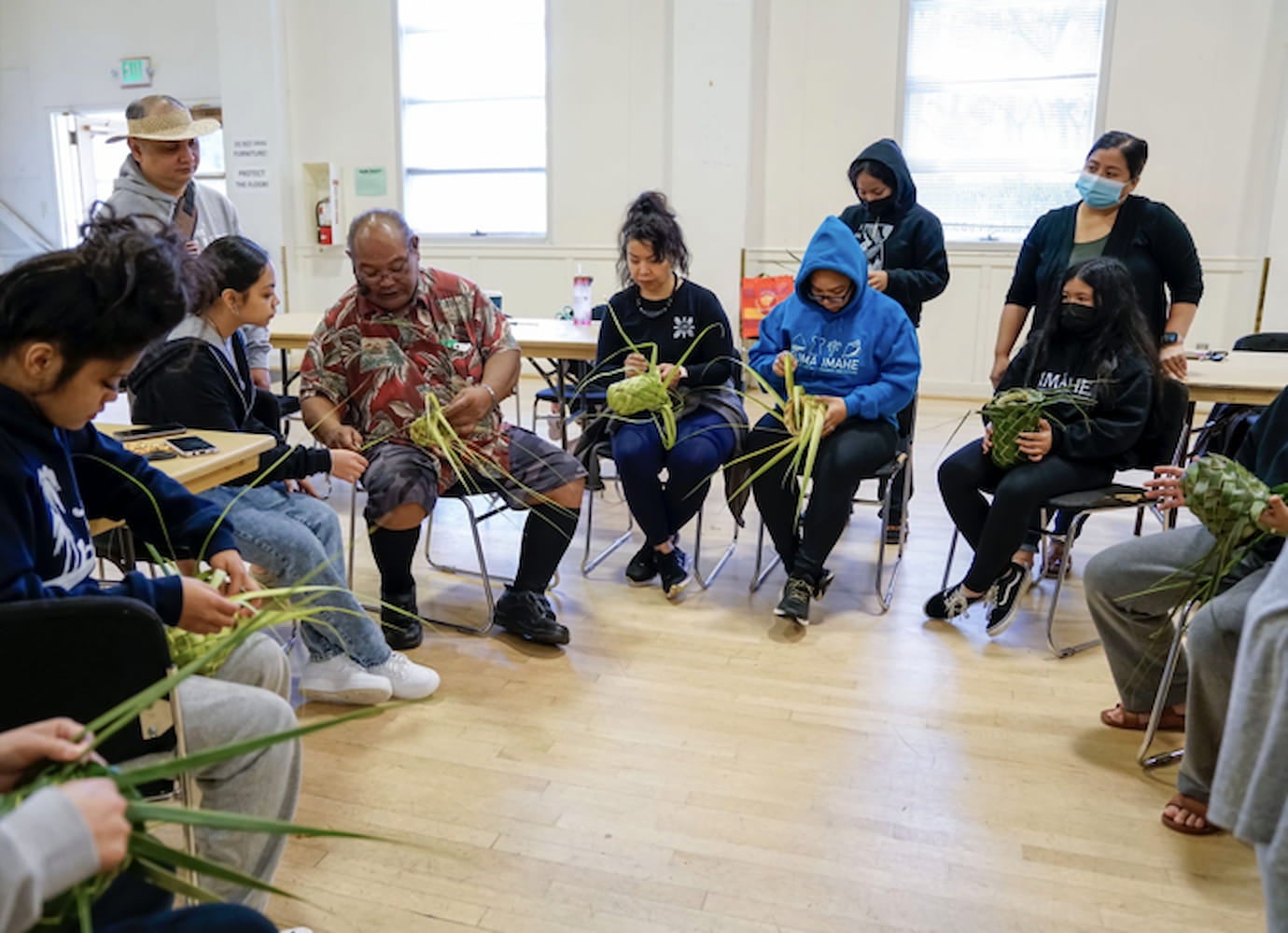
Image 21.03.06c — Anthony “Tony” Mantanona (fourth from left), CHamoru weaver and cultural practitioner, brought weaving workshops to diasporic CHamoru communities in California and Washington to help them further connect to their roots.

Glossary terms in this module
decolonization Where it’s used
The process by which a place reaches a full measure of self-government. It is the remedy to restore the right of self-determination.
diaspora Where it’s used
The dispersal, movement, migration, or scattering of a people from their established or ancestral homeland.
displacement Where it’s used
The movement of persons who have been forced or obliged to flee or to leave their ancestral lands, in particular as a result of or in order to avoid the effects of war, persecution, or natural disaster.
militarization Where it’s used
The process in which a country orders an increase in military presence to organize and prepare for war.
Oceania Where it’s used
Region made up of thousands of islands throughout the Central and South Pacific Ocean, including Australasia, Melanesia, Micronesia, and Polynesia.
oral tradition Where it’s used
The knowledge, culture, art, and history that are passed down through speech from one generation to the other.