




Dr. Joakim “Jojo” Peter, a Micronesian man dressed in bright blue who uses a motorized wheelchair, addresses people standing around him on outdoor walkway.
Module 5: Pacific Islands and Resistance to US Colonial Control
Have colonialism and migration impacted the way Micronesians maintain their various cultures?
This module examines how Micronesians in the United States continue to resist colonial control in the diaspora. It examines how the subregion of Micronesia is connected to the US government and explores the negative impacts of the US control in Pacific Island politics and populations. It also shares stories from Micronesians who resist colonial control while living within the US.
How do the states and territories in Micronesia fit within the larger US government?
How do various acts of resistance help Micronesians?
As Indigenous peoples, what issues do Micronesians confront today?
US Relations with Micronesia
The Pacific Islands and atolls that make up the subregion of Micronesia have various legal and political affiliations with the United States. Some people do not have full citizenship rights, and US laws do not fully extend to residents of territories outside of the fifty United States. These relationships mark an imbalance of power for the unincorporated territories, Commonwealth, and Freely Associated States.
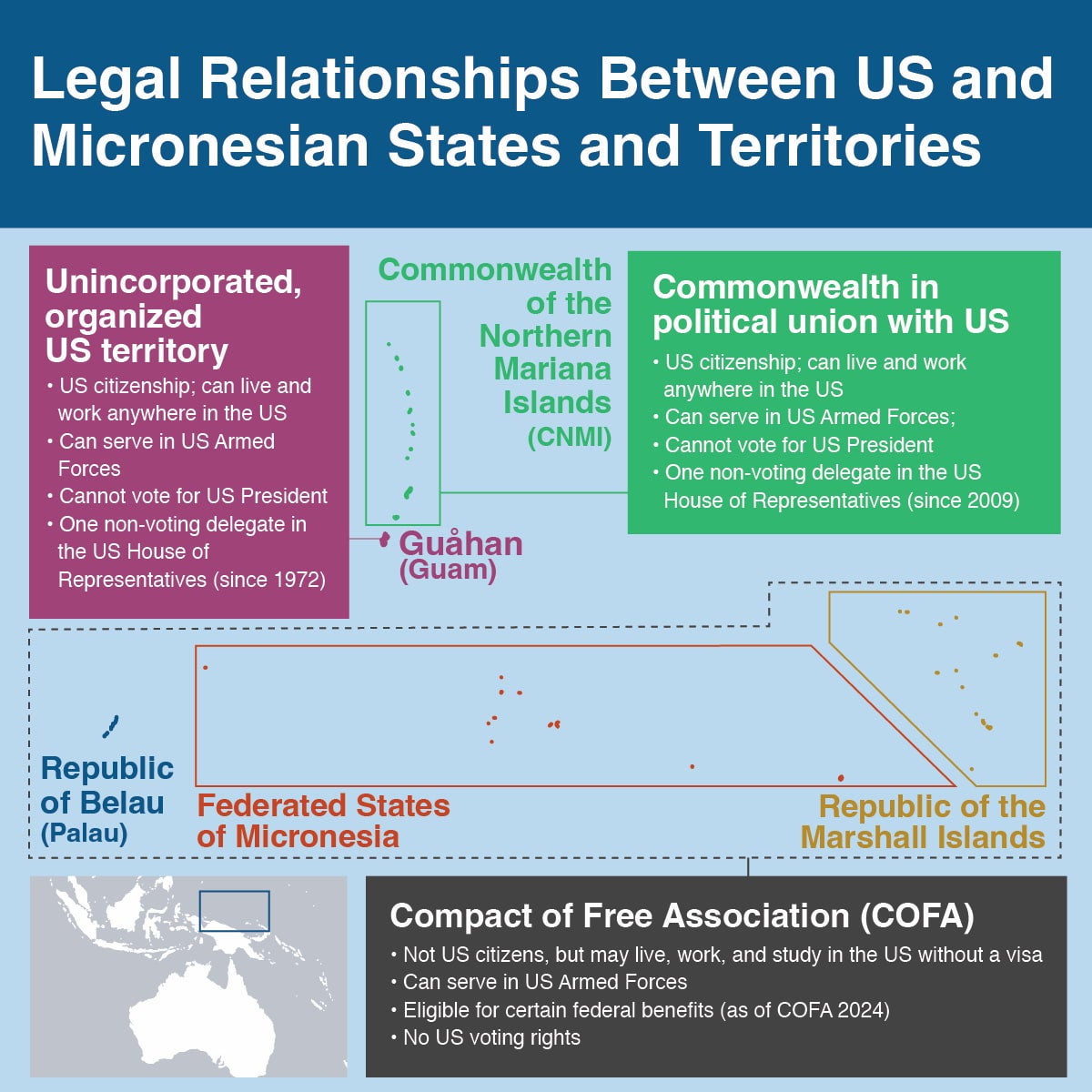
Image 23.05.01 — Map identifying the different agreements between the US and island states in Micronesia..
The United States has an agreement called the Compact of Free Association (COFA) with each of the three Freely Associated States of the Federated States of Micronesia (FSM), Republic of the Marshall Islands (RMI) and Belau. The COFA, along with subsequent agreements, allows the US to reserve land-use rights within these islands for its own military purposes. In exchange, the US provides benefits:
- Economic assistance that expires after an allotted period of time, but is renewable
- Access to certain federal programs, such as the US Postal Service, US emergency services, and US National Weather Service
- Visa-free travel into and residence in the US
The COFA agreements also allows Micronesians from the countries of Belau, FSM, and RMI to migrate and seek employment in the US. Together, these military and economic elements of the COFA agreements continue to be a factor influencing the movement, migration, and communities of Micronesians now living within the US.
Another outcome of COFA is that it has made these places more dependent and reliant upon the US federal funding as a primary source for their economy. As originally signed, the COFA agreements recognized the new Micronesian states as fully sovereign nations, with the right to conduct their own internal affairs and international relations subject to certain pre-arranged limitations. Yet, there are formidable challenges to such independent standing and territorial rights.
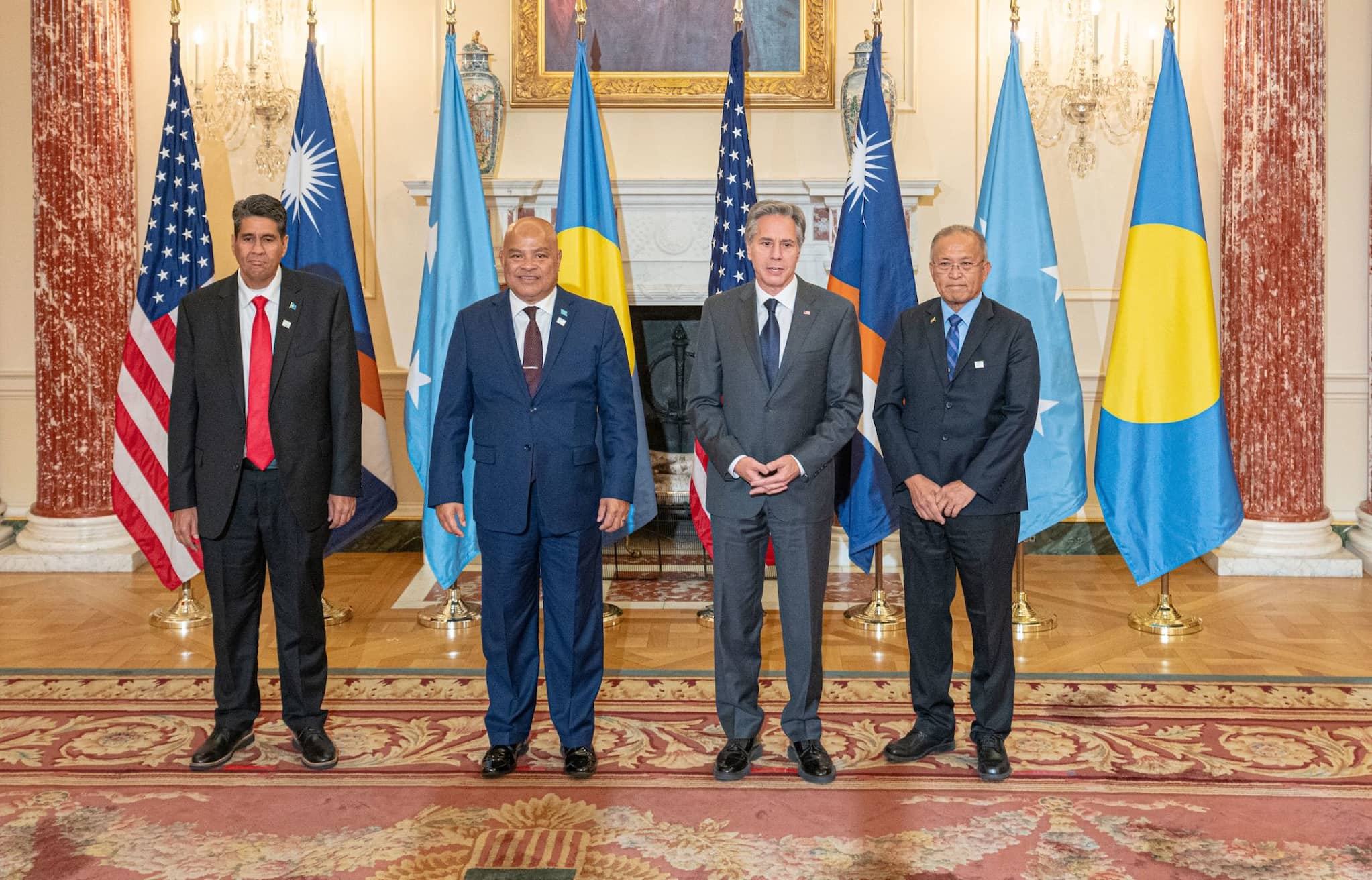
Image 23.05.02 — Former US Secretary of State Antony Blinken (second from right), Belau’s President Surangel Whipps, Jr. (left), former Federated States of Micronesia’s President David Panuel (second from left), and former Marshall Islands’ President David Kabua (right) gather in Washington, DC, in 2022.
Micronesian Demands
Colonial encounters, westernization, and Americanization have all brought violence to Micronesia. Colonizing forces have claimed islands as possessions under foreign rule and have attempted to replace, assimilate, and reorganize Indigenous societies. Micronesia is a place that endured and, in many areas, continues to persist under colonial control and militarism. Throughout this vast and abundant region there have been different colonial powers and various experiences with unequal and unjust treatment.
Among the Indigenous populations of Micronesia, their priorities range from cultural and language protection to environmental issues to economic development. They are concerned with these issues within their home islands and atolls and beyond, including the places where many now reside within the US.
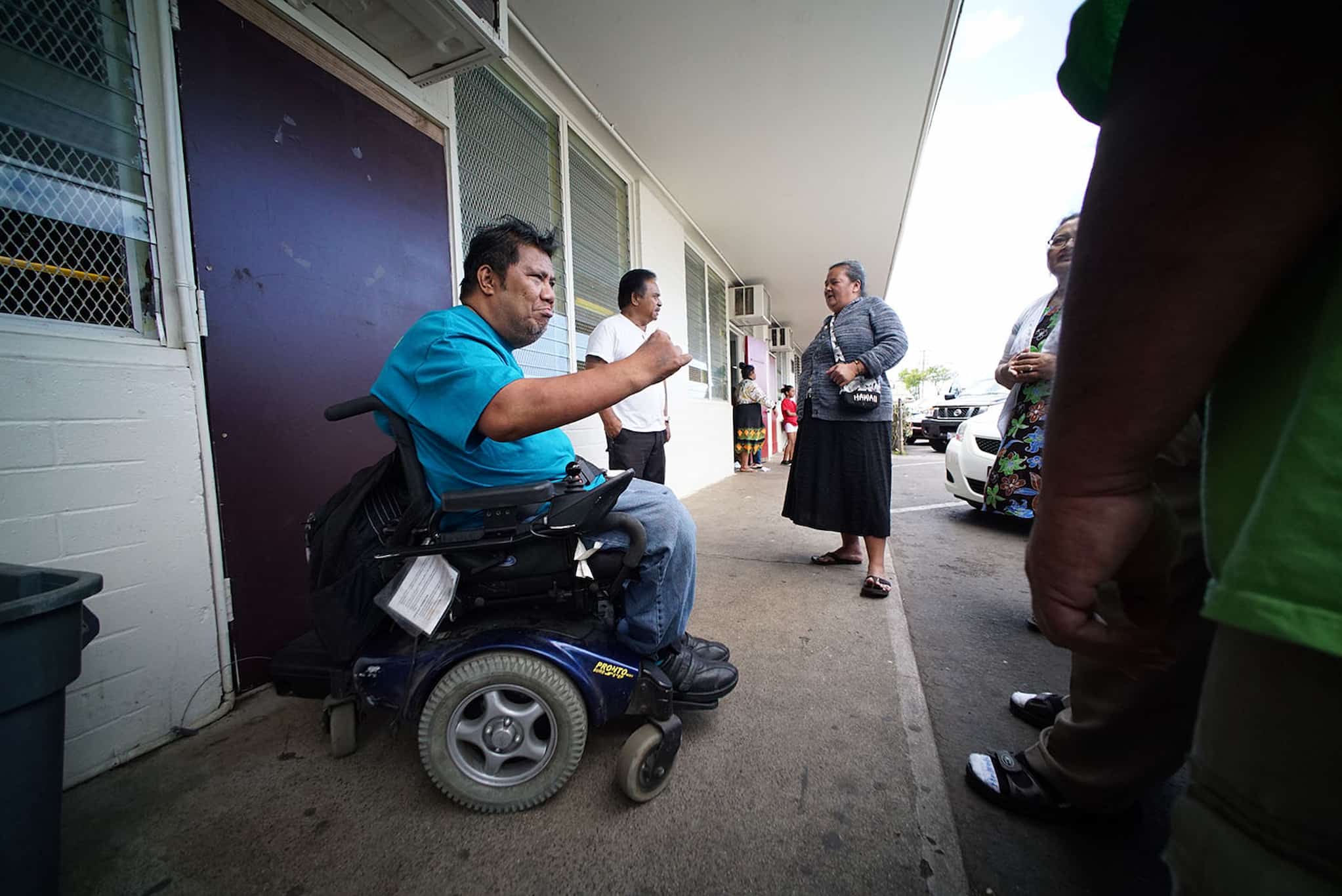
Image 23.05.03 — Dr. Joakim “Jojo” Peter (1964–2019) from Chuuk State was a dedicated social justice leader for the Compact of Free Association (COFA) community. Pictured here (left) in Honolulu, Hawaiʻi, helping a Micronesian community, his life’s work included raising awareness about immigrant and disability rights.
Present-day Micronesians in the US are revitalizing their Indigenous languages and oral traditions. Efforts to revitalize and restore the CHamoru language from the Mariana Islands are ongoing. In August 2024, in San Diego, California, a CHamoru language immersion camp was organized for adults to learn and speak the language. Actively speaking these languages resists the exclusive adoption of colonizers’ language and helps continue the stories of the peoples.
The wide array of spoken languages also provides an indicator and connector among emergent voices and activism for political power from Micronesians. Hermana Ramarui is a poet and leader in Belauan (Palauan) culture and education. She wrote The Palauan Perspectives (1984) and served the Belau Ministry of Education for over twenty years, working to preserve the culture and language used in Belauan schools. Her poem, “A Call for Youth” (1991) reflects the idea that the “past determines the future” by linking resistance to colonialism with the need for self-determination and freedom to be born from the wisdom and guidance of ancestors. After a long process that began in 1978, Belau gained independence as a nation in 1994. Ramarui’s poem, “Freedom,” raises questions about the US and its role in Micronesia. These words are a powerful and prompt consideration of responsibility to care for culture and language.
“Freedom,” a poem by Hermana Ramarui
America,
A giant man
Is fishing
In a US made
Fish pond
Called Micronesia.
Who does things
For nothing?
Who does things
For absolute
Altruistic
Purposes?
For every give
There’s a return
One way or
Another.
Text 23.05.04 — “Freedom,” a poem by Hermana Ramarui. From her 1984 collection, The Palauan Perspectives, the work raises questions about the US and its role in Micronesia.
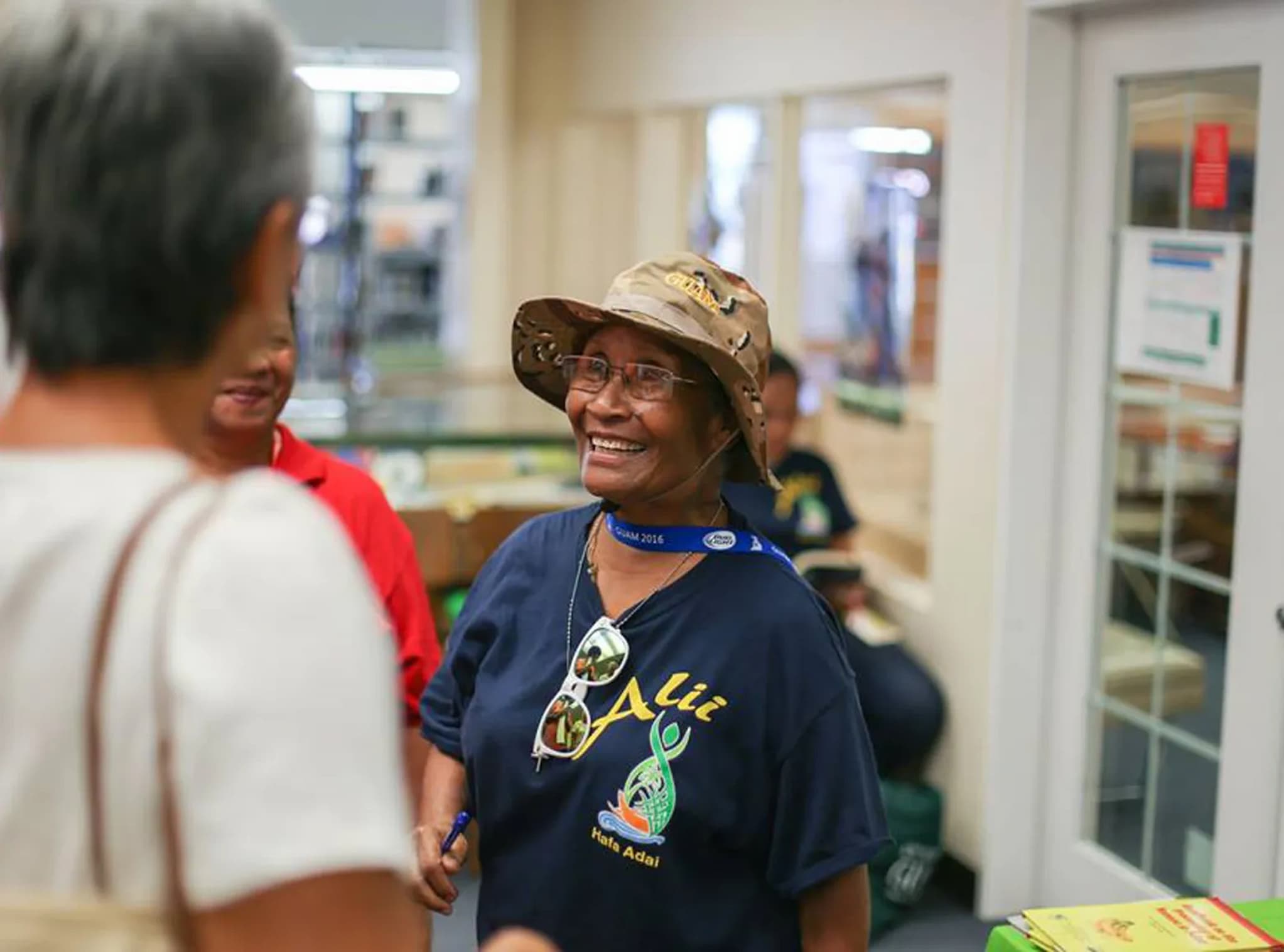
Image 23.05.05 — Poet and educator Hermana Ramarui smiles as she shares stories at the Festival of the Pacific Arts, hosted by Guåhan (Guam) in 2016.
Economic development in Micronesia is linked to the region’s dependence upon colonial powers like the United States. US federal laws such as The Jones Act limit the movement of cargo between US ports to ships that are US-built, owned, and crewed. It prioritizes the US shipbuilding industry and ships for US national defense. Yet, this law makes the transportation between island areas like Micronesia more expensive for transporting goods. It also puts burdens on the local island economies. For Micronesia and elsewhere, US policies that prohibit building economic industries also hinder the possibilities for being independent nations.
Economic advancement is therefore another priority for Micronesians in the US. For islanders from the Federated States of Micronesia, the COFA agreement has meant immigrating for employment opportunities within the US, but the situation has its challenges. In 2018, United Airlines food service workers across five cities voted to unionize. Many of the workers, especially those in Denver, Colorado, and Honolulu, Hawaiʻi, are islanders who were drawn to United Airlines for employment given the flight benefits that can help them afford to travel home to Micronesia.
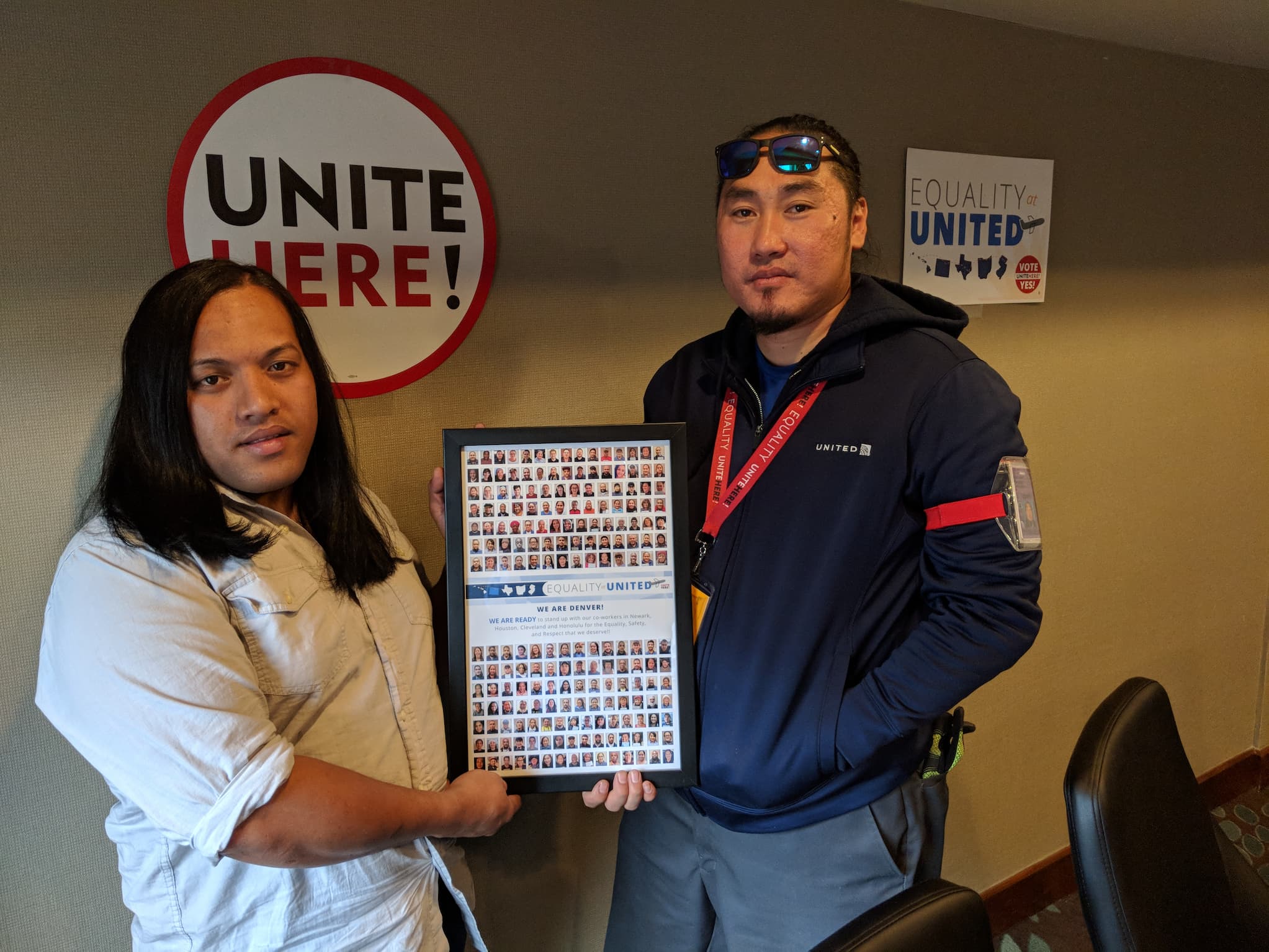
Image 23.05.06 — Solomon Jacklick (left) is from the Marshall Islands and is a Compact of Free Association (COFA) migrant who took a leadership role to organize and fight for better working conditions for United Airlines catering department employees. Right: Enstrasio Takashy from Chuuk in the FSM, holding a plaque featuring United coworkers.
In Denver, 27 percent of the United Airlines’ catering department employees are from Micronesia. United Airlines also has a monopoly on flights to Guåhan and Honolulu, Hawaiʻi. This economic power reflects another impact of US colonial control over Micronesians living in the US. Organizing for better working conditions is one way that Micronesian people are collectively raising their voices. Their activism calls attention to the complicated political relationships between the US and Micronesia.
Public health issues remain a core issue for Micronesians. In many US states, COFA migrants are not eligible for full Medicaid or Children’s Health Insurance Program (CHIP) coverage. For these Micronesian migrants, living in the US often means a difficult transition, especially in terms of maintaining cultural practices, norms, and community networks. They must confront major challenges to public health due to limited access to healthcare, non-communicable diseases, and high-mortality rates.
Conclusion
People from the Marshall Islands and FSM are making demands for justice. Micronesians living in the US are sharing their stories of resilience and challenging colonial control.
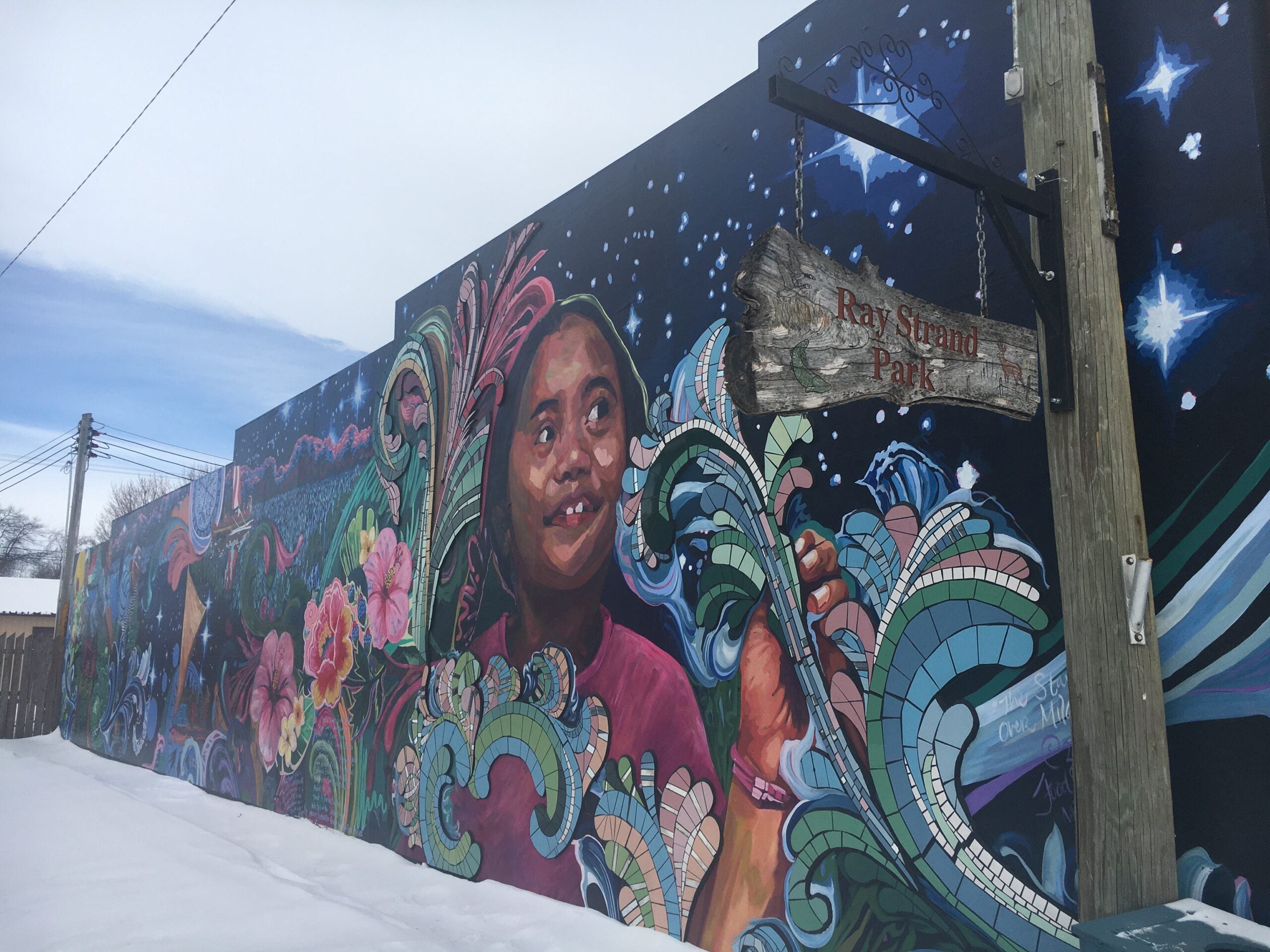
Image 23.05.07a — A photo of “Stars Over Milan” by Goodspace Murals (Greta McLain, lead muralist) at Bergen’s Prairie Market on Main Street in Milan, Minnesota. The Micronesian population in Milan has been increasing steadily since the early 2000s, and at the 2020 census was 416.
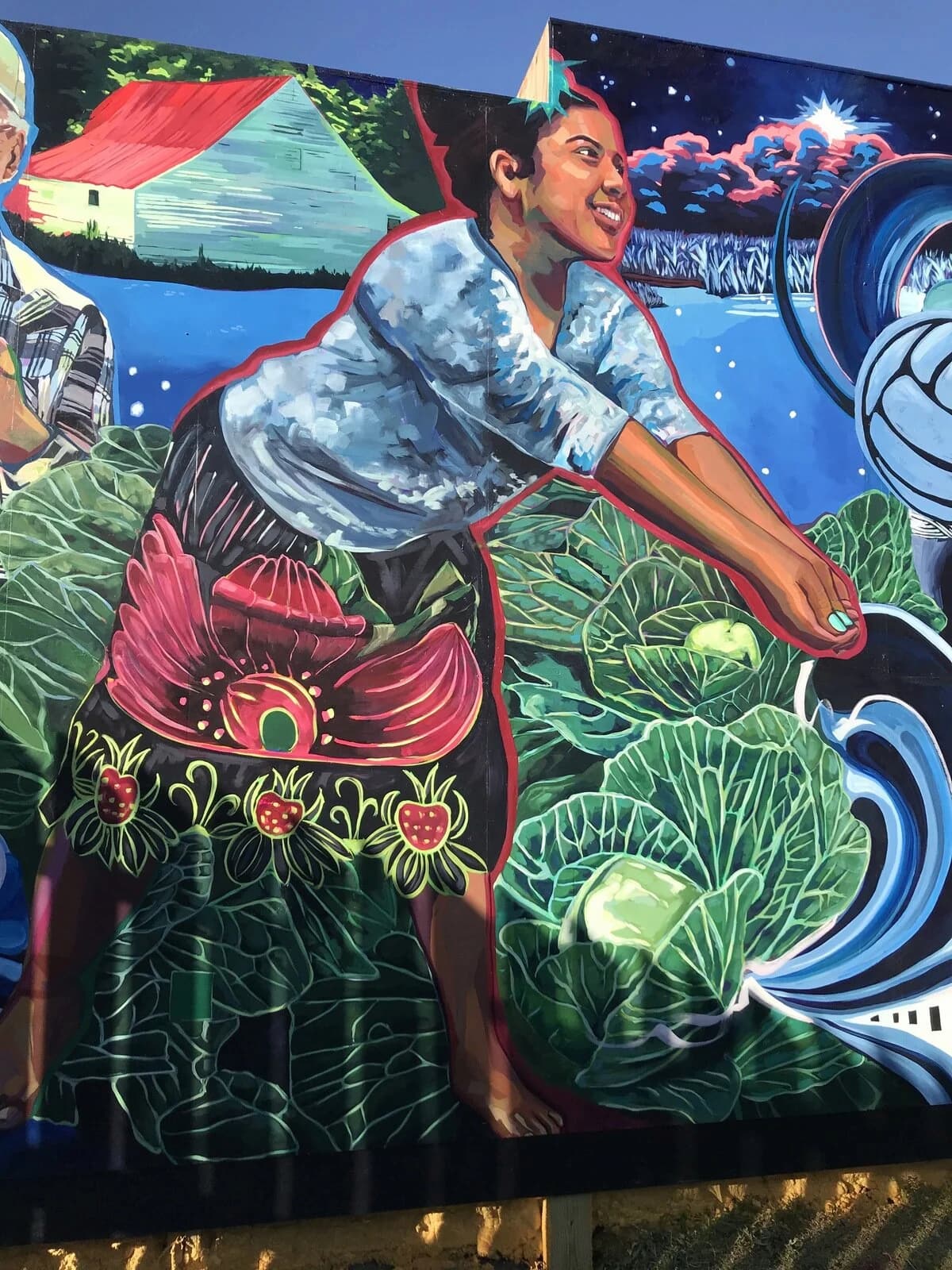
Image 23.05.07b — Completed in 2018, the public art project was inspired by Milan’s community ties to Micronesian and Norwegian heritages, both of which share traditions of seafaring, navigation, and boat building.
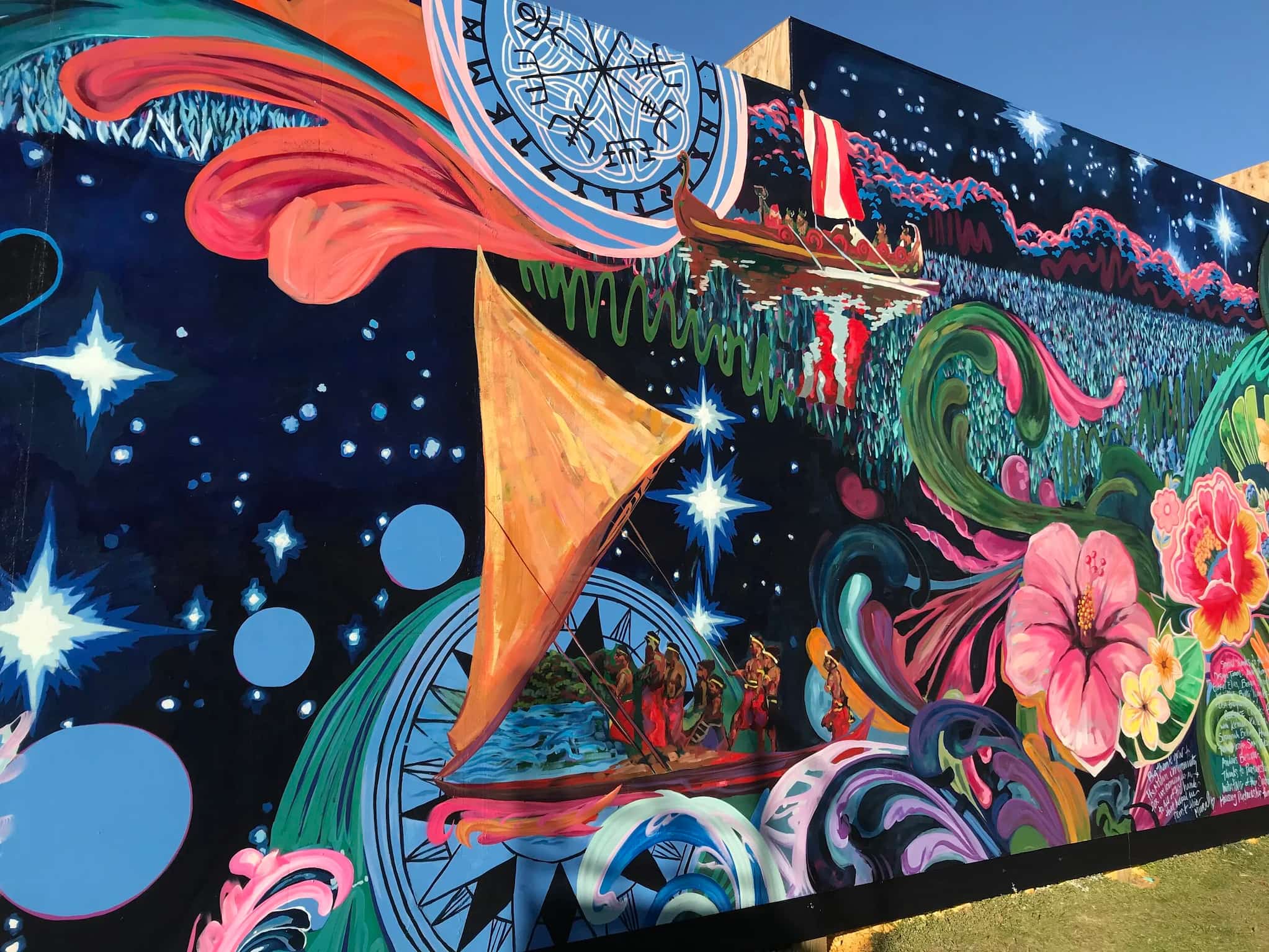
Image 23.05.07c — The mural draws on the shared spirit of exploration and relationship to the stars that connects Micronesian and Nordic histories, reimagining Milan as a place where distant journeys converge and stories reconnect. This photo shows a detail of a Polynesian outrigger canoe.



Glossary terms in this module
atoll Where it’s used
A ring-shaped series of islands, coral reefs, or islets surrounding a body water called a lagoon.
colonialism Where it’s used
When one country takes partial or complete control over another country economically and politically, exploiting its natural resources for profit. The colonizer forces their beliefs and way of life onto the colonized.
Compact of Free Association (COFA) Where it’s used
A series of treaties between the Federated States of Micronesia, the Republic of Belau (Palau), and the Republic of the Marshall Islands with the US, granting citizens of Micronesia to join the US military without requirements of residency or US citizenship, live and legally work in the US without a visa, and access to social and health programs. In exchange, the US has exclusive access to these islands, and significant military and veto power.
Freely Associated States Where it’s used
Sovereign states of the Marshall Islands, Federated States of Micronesia, and Belau (Palau) that receive economic aid from the US as part of a bilateral relationship outlined in the Compact of Free Association.
Indigenous Where it’s used
Refers to someone or something that originates from a region, predating colonialism.
militarism Where it’s used
The ideology that a country should maintain a strong military power and be prepared to use it aggressively to secure its interests.
oral traditions Where it’s used
The knowledge, culture, art, and history that are passed down through speech from one generation to the other.
Unincorporated US Territories Where it’s used
A political status in which a territory is owned by a colonizing power and there is no promise of an eventual transition into formally joining that power or becoming a state. In the US, people from the three unincorporated territories in Oceania: Guåhan (Guam), the Commonwealth of the Northern Mariana Islands (CNMI), and Wake Island cannot fully participate in American democracy, even if they are US citizens.