






Module 3: Becoming an Activist, Growing New Ideas
Do Yuri Kochiyama’s life experiences explain her political consciousness, solidarity, and activism?
After the war, Yuri Kochiyama moved to New York City with her new husband and growing family. She continued her community service and grew in her political consciousness, inspired by the Civil Rights Movement. This module explores her life postwar to the early 1960s and traces the development of her political activism.
How did Yuri Kochiyama’s marriage change her life and affect her activism?
In addition to Japanese American incarceration, what events moved Yuri Kochiyama towards political activism?
In what ways did Yuri Kochiyama’s community involvement and political consciousness evolve throughout her life?
New York, New Life, and New Social Awareness
When Japanese Americans were allowed to return to the West Coast in 1945, Yuri Kochiyama went back home to San Pedro in Southern California and was reunited with her mother. There, she worked as a waitress while waiting for her fiancé, Bill Kochiyama, to return from military service. After he returned from Europe, she joined him in New York City, where he had been raised. Yuri and Bill had a small wedding on February 9, 1946.
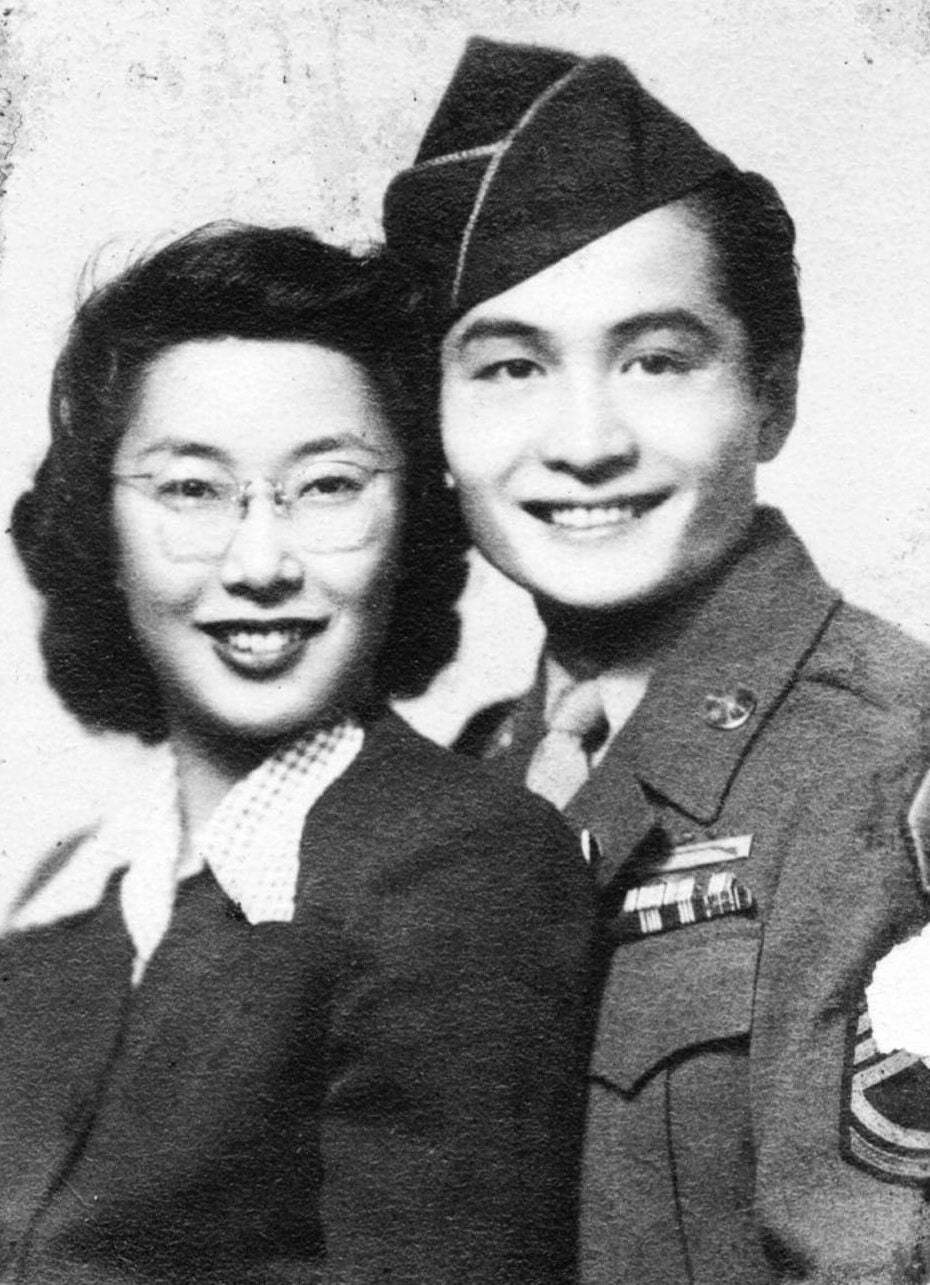
Image 38.03.01 — Yuri and Bill Kochiyama in New York City on their wedding day, February 9, 1946.
Yuri’s life in New York City diverged sharply from her experiences in San Pedro. She had grown up in an eight-room, custom-designed house in a serene small town. Yuri’s youth had been relatively carefree. By contrast, her first three homes with her husband in fast-paced New York City consisted of one-room sleeping units, with a communal kitchen and bathroom shared with other tenants. For the first time in her life, she had to worry about how to make ends meet.
Yuri wrote about this time in her memoir. They were living in rooms to rent, moving almost monthly. There were no private toilets or baths, as everything was shared. These experiences of shared housing opened her eyes to independent living. Despite the hardships, Yuri embraced her new life. She loved New York immediately and grew to love its kind and generous people. As she became a city girl in the Big Apple, rather than the anonymity and loneliness that some experience in urban living, she discovered community and a sharing of resources with everyone on her apartment floor within the first week.
By listening to the stories of her Black and Puerto Rican neighbors especially, many of whom had migrated from the US South or Puerto Rico, she gained more lessons about racism in America. She learned first-hand about the Jim Crow laws in the South. She also learned that institutional racism is practiced not only in the South, but also across the country. Though she did not use the term “institutional racism” in the 1950s, nor did she even understand its meaning, she recognized racist treatment and knew that people were treated poorly because of their skin color.
Yuri developed her political and social awareness further as a waitress at a restaurant the staff called “the plantation” because the owner and managers were white and almost all the workers and customers were Black. She learned from other employees that Black servicemen were treated differently during the war, not allowed to enter United Service Organizations (USO) or walk down the street even in uniform. These relationships sparked Yuri’s social and political awareness.
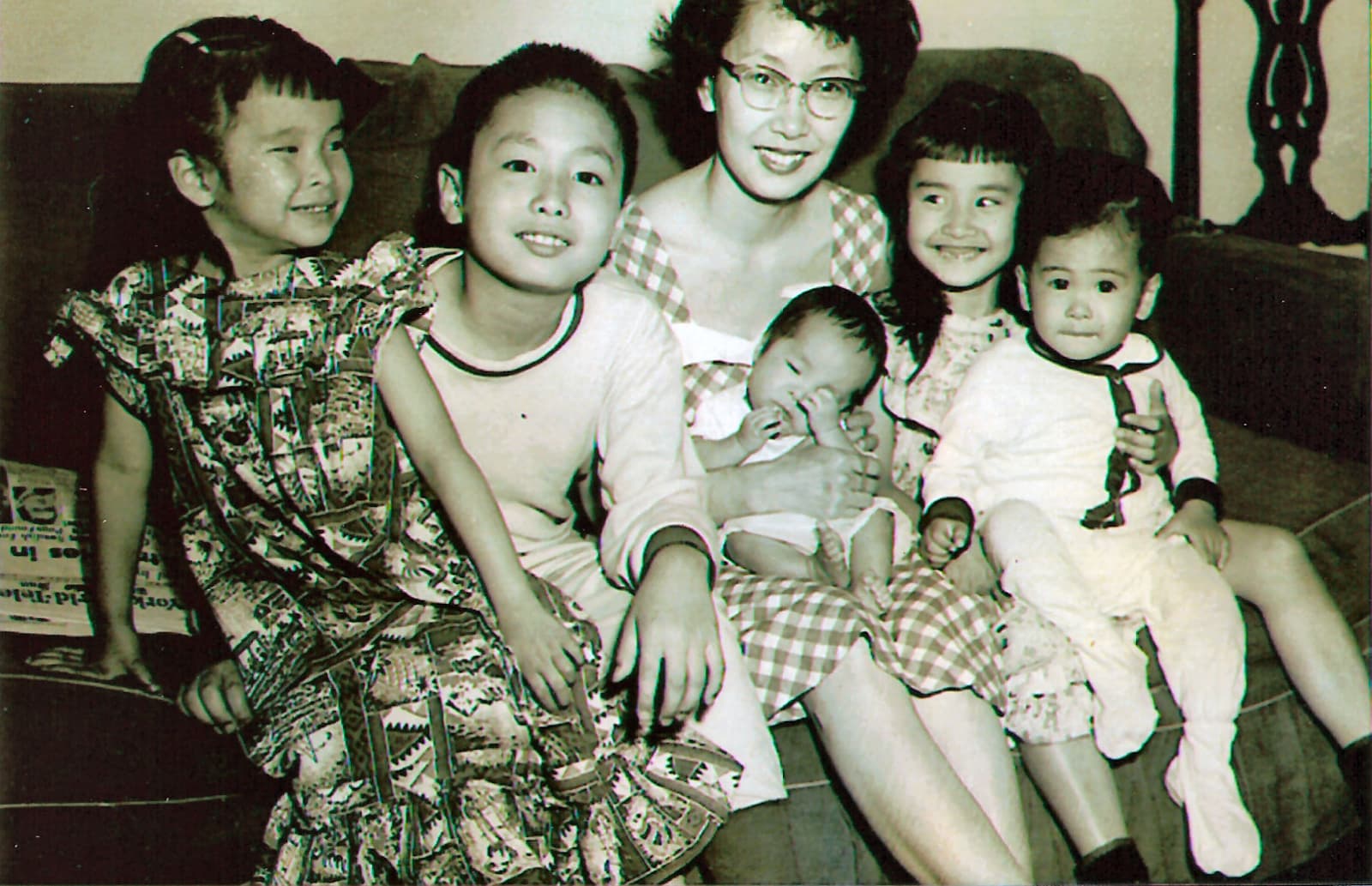
Image 38.03.03 — Yuri Kochiyama (center) with five of her six children, c. 1957.
The Early Era of Community Service
Yuri Kochiyama’s home in midtown New York in the 1950s was dubbed “Grand Central Station.” Over the years, thousands of people, friends and strangers alike, visited their home. The Kochiyamas held social gatherings every Friday and Saturday night, where veterans and USO friends, Korean War soldiers, Sheltering Arms old-timers, San Pedro visitors, local college students and friends, and students from Hawaiʻi and the West Coast would gather for community, conversation, and connection. It was not unusual for the Kochiyamas’ small apartment to be filled with a hundred people. In 1959, they wrote in their holiday newsletter that their home is open to any and all who enjoy people, especially newcomers.
When the United States entered the war in Korea (1950–1953), Japanese American soldiers who came through New York City en route to the warfront were invited to the Kochiyamas’ to spread information and knowledge about racism in the US Army. They organized the Nisei Service Organization (NSO) and later the Nisei Sino Service Organization (NSSO). It was unusual to work in a Pan-Asian organization at this time, given the war conflicts and ideological wars being waged between Japan and China. This inter-Asian solidarity occurred almost two decades before an Asian American political identity developed in the late 1960s.
The Kochiyamas lived just west of Central Park and close to the Lincoln Center for the Performing Arts. They opened their apartment to NSSO socials every Friday night. Yuri wrote about the NSSO to friends in 1960, sharing the importance of the organization’s opportunity to provide fellowship, service, and personal growth. She also shared that the group provided services like a USO, such as social dancing and fundraising opportunities. Yuri emphasized that the NSSO required many people to work together. To find housing for soldiers passing through New York City, for example, NSSO families opened their homes to complete strangers. It was not unusual for the Kochiyama family and others to have soldiers sleeping on their floors.
Image 38.03.04 — The Nisei Sino Service Organization (c. 1950’s) aimed to support Asian American soldiers with fellowship, service, and personal growth.
Supporting the “Hiroshima Maidens”
One of the NSSO’s major activities was to provide support to the “Hiroshima Maidens,” a moniker given by the newspapers. When the United States dropped the atomic bomb on Hiroshima on August 6, 1945, the bombs killed at least one hundred thousand people. They also left many others with severe disabilities, scarring, and life-long pain. Ten years after the bombing, twenty-five hibakusha, atomic bomb survivors, came to the United States for a year of intensive reconstructive surgeries. The Kochiyamas and others in the NSSO supported the women and also protested against the use of nuclear weapons.
One of the hibakusha, a young woman named Shigeko Niimoto, had been living in isolation for five years. She raised the idea of gathering other young hibakusha to support one another. Soon, a minister in Japan and an American publisher helped the women travel to the US to receive health care and reconstructive surgery. On May 9, 1955, the Hiroshima Maidens arrived in New York City where Quaker families hosted them while they collectively underwent 138 operations. The young women did not have any sort of social life while living abroad for a year.
The Kochiyamas, the NSSO, and Nisei veterans in New York organized dances, socials, and tours of New York City. The Kochiyamas wrote of the women in 1956 that their strength “is a manifestation that there are powers mightier than atomic energy.” The Hiroshima Maidens made a lasting impression on the Kochiyamas. They even asked one of the women’s nurses, Lani Miller, to be the godmother for their youngest child. They went on to organize for decades against nuclear weapons, using “No more Hiroshimas” as their slogan.
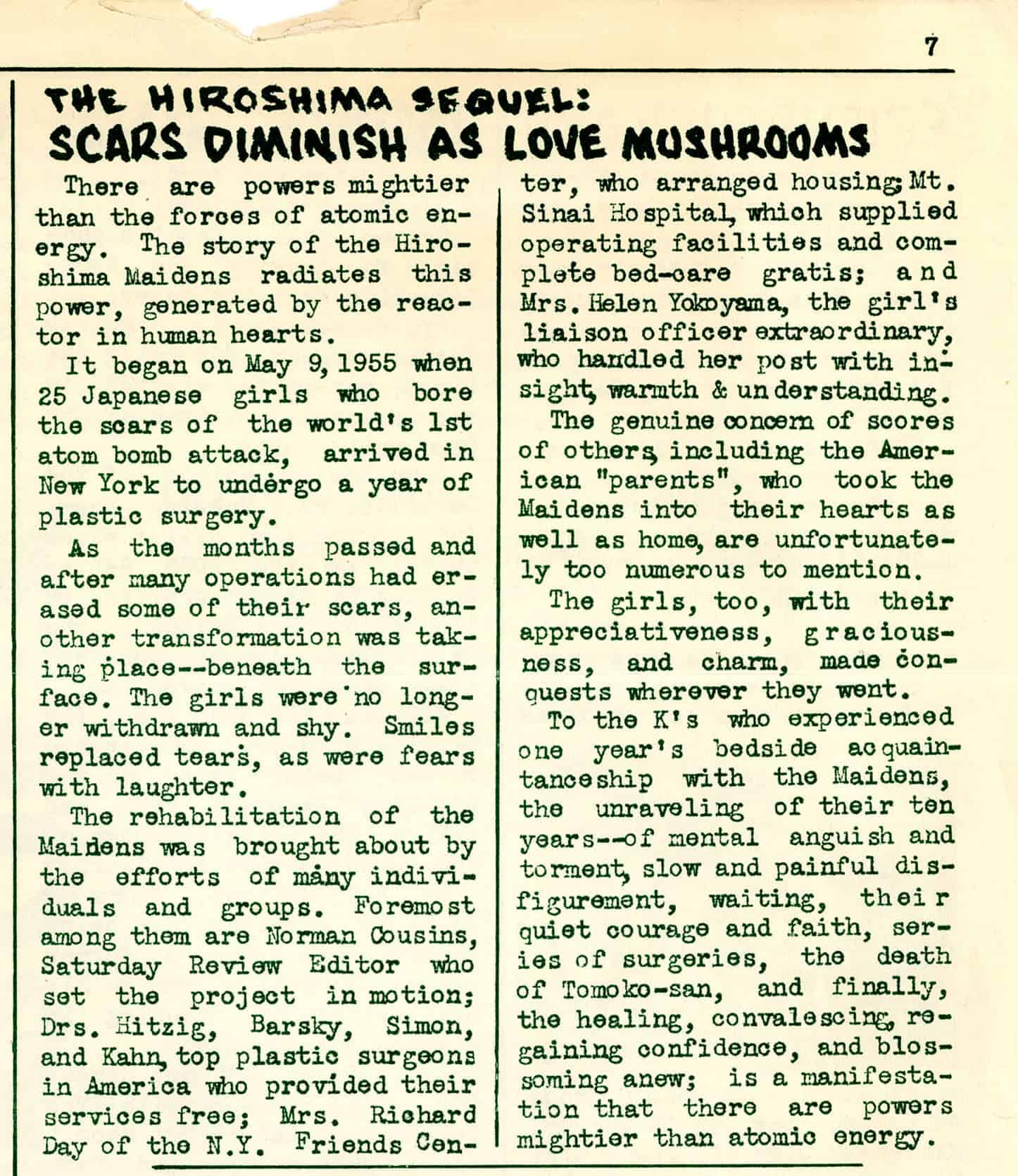
Text 38.03.05a — The Kochiyama’s Christmas Cheer newsletter article on the Hiroshima Maidens, 1956.
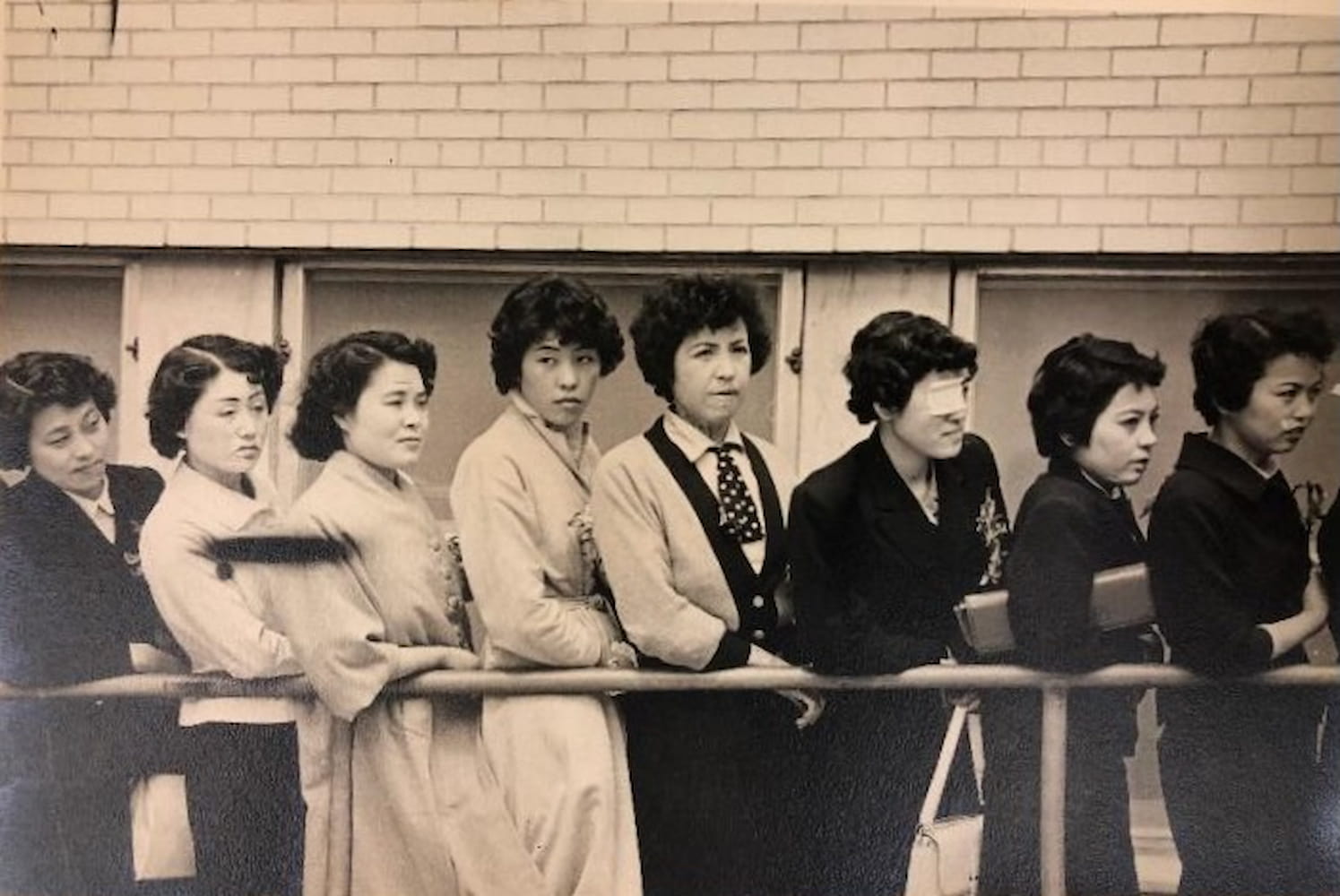
Image 38.03.05b — A photograph of the Hiroshima Maidens, a group of young hibakusha (atomic bomb survivors) women who traveled from Japan to the United States to receive health care and reconstructive surgery.


The Civil Rights Movement and a Move to Harlem
In 1960, the Kochiyamas and their six children moved to Harlem into a building run by the New York City Housing Authority. During the late 1950s and 1960s, the Kochiyamas closely followed the events unfolding in the Civil Rights Movement including the US Supreme Court case Brown v Board of Education that overturned school segregation, the killing of Emmett Till in Mississippi, the Montgomery Bus Boycott in Alabama, and the Freedom Riders bus-riding protests against segregated public transportation.
At this time, James Peck, a white leader in the Congress of Racial Equality (CORE), was one of many visitors to the Kochiyamas’ home at this time. In a daring campaign to test a Supreme Court decision that banned segregation laws governing interstate transportation facilities, CORE organized the first of several “Freedom Rides.” Some of the buses had been overturned and set on fire in Alabama, and one of the Freedom Riders came to New York to tell his story. Yuri later wrote in her memoir: “the speaker was James Peck, one of the most severely beaten Riders. He was kicked, stomped on, and ended up in the hospital with fifty-seven stitches on his face. People up North were realizing what the struggle in the South was about.” 1
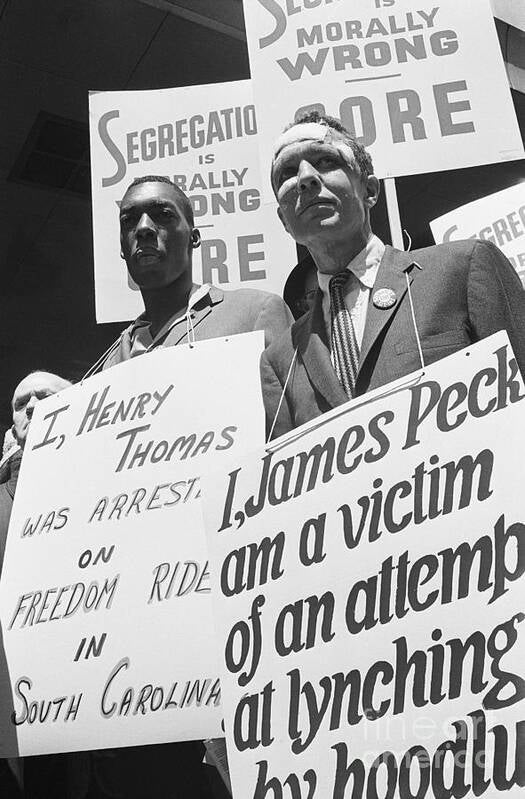
Image 38.03.06 — James Peck (right) a Freedom Rider who was severely beaten in Birmingham, Alabama, pickets in Manhattan with his head heavily bandaged.
The Kochiyamas soon became involved in the Civil Rights struggle. They worked with the Harlem Parents Committee, which organized school boycotts to demand quality education for the children of Harlem. In the summer of 1963, Yuri Kochiyama supported CORE’s campaign to protest racial discrimination in hiring practices at the construction site of the Downstate Medical Center in Brooklyn. She regularly protested at the site, often bringing her children, ages four to sixteen, to demand the hiring of Black and Puerto Rican construction workers.
Through this action, Yuri became introduced to the tactic of civil disobedience. She and other advocates used their bodies to block the entrance to the construction site. For the Kochiyamas, this was a powerful lesson about the effectiveness of collective protest. The construction companies eventually hired Black and Puerto Rican workers that summer, and the Kochiyamas and their son Billy were among six hundred people arrested for blocking construction trucks from entering the site. Through this action, Yuri met the person who changed her politics and her life, and his name was Malcolm X.
Glossary terms in this module
activism Where it’s used
The actions and philosophies that people practice to create positive change in their communities.
Civil Rights Movement Where it’s used
A mass movement in the 1950s and 1960s calling for an end to segregation and discrimination against Black people, and sought legal protections of civil rights and freedoms. A series of sit-ins, boycotts, and marches were carried out to accomplish these goals.
institutional racism Where it’s used
Also known as structural racism, refers to policies and practices in societal institutions (e.g., schools, governments, legal systems) that create and maintain racial inequities, discrimination, or unfair advantage.
political consciousness Where it’s used
One’s understanding and awareness of political issues and ideology, and how these things shape society and one’s life experience.
solidarity Where it’s used
A political, cultural, and collective stance that recognizes the mutual responsibility and support that is necessary to achieve change. Taps into the power in numbers and considers the collective interests of communities.