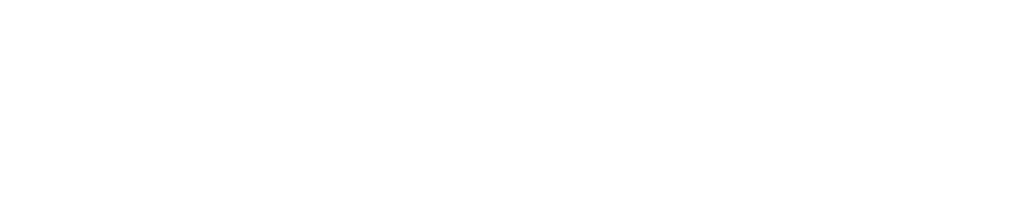





Asian American protestors walk through street holding banners and signs. Banner reads “Asian Coalition Unity is Strength” in English and Mandarin.
Module 5: Asian American Activism
Do Yuri Kochiyama’s life experiences explain her political consciousness, solidarity, and activism?
Yuri Kochiyama was instrumental in helping to build the Asian American Movement. These efforts protested against the Vietnam War and linked the anti-racist struggles in the US with the internationalist protests against US militarism worldwide.
This module focuses on her activism and political efforts in the 1960s and 1970s to organize Asian Americans for Action (AAA) and the United Asian Communities Center in New York City. This module further explores her husband and children’s support and work that forged an Afro-Asian solidarity for political liberation.
What contributions did the Kochiyama family make to activate the Asian American Movement in New York City?
How did the Kochiyama family react to international events that placed them in a struggle for political consciousness and liberation?
Why was Pan-Asianism a good thing in the 1960s and 1970s?
Asian Americans for Action: Vietnam, Hiroshima, Harlem
Yuri Kochiyama was one of the leading figures advancing the Asian American Movement (AAM) in the 1960s and 1970s. While Japanese Americans engaged in activism in the postwar period, the AAM that emerged in the late 1960s was entirely new. The AAM was the first time different groups united as Asian Americans to contest racism as part of a large-scale, nationwide, Pan-Asian struggle, and one that represented the solidarity of various Asian American and Pacific Islander groups.
Chinese, Japanese, and Filipinos led the three largest Asian American groups, and they created political unity on an anti-racist platform. Yuri noted how many younger Asian Americans became involved in the movement. “From coast to coast, Asian American students and community activists jumped into this domestic fray wholeheartedly,” she later wrote. “Young Asian America’s response to the social/political upheavals that rocked the country was like cracking the barriers and breaking down the previously accepted AA and PI stereotypes.”
The AAM was most active on the West Coast and Hawaiʻi where the largest numbers of Asian Americans lived. New York City was also a site of extensive Asian American political organization, with activists and artists forming organizations such as the Basement Workshop, I Wor Kuen, the Asian Americans for Equal Employment (AAFEE), and the influential band A Grain of Sand, featuring Nobuko Miyamoto, Chris Iijima, and Charlie Chin. Yuri was a core member of the first East Coast AAM organization called Asian Americans for Action (AAA). Yuri Kochiyama, Kazu Iijima, and Min Matsuda started AAA in April 1969.
A year earlier, in Berkeley, California, the Asian American Political Alliance (AAPA) introduced the term “Asian American” to announce a new political identity working toward a Pan-Asian politics of liberation. Kazu Iijima said they had not heard of AAPA and independently also used the new term “Asian American” in their name. The AAA had multigenerational membership, which was unusual among AAM organizations.
The AAA members in New York City were middle-aged Japanese Americans, like Kazu Iijima, Matsuda, and Kochiyama, and Chinese and Japanese American students, including Iijima’s two children. Yuri later wrote in her 2004 memoir that she believed Kazu was “the most informative and compelling Asian American woman on the East Coast.”
The AAA also formed the first Asian American constituents to march in New York City’s anti-Vietnam War demonstrations and to travel to Washington, DC, rallies. Yuri recalled later that only twenty or thirty people showed up the first time a group of Asian Americans organized to march against the Vietnam War. Gradually, they recruited and networked with every Asian American they knew until their numbers peaked at two hundred in New York City and four hundred in Washington, DC.
Yuri said that AAA members worked with Vietnamese, Cambodian, and Korean affiliates, in addition to their core members. Her group met with Cambodians and discovered they had their own political organization which they called the Group of Kampuchean Residents in America (GKRAM). The AAA not only opposed the war, but they also supported Vietnamese self-determination.
Beyond the Vietnam War, the AAA supported the removal of US military bases from Okinawa and critiqued US militarism abroad. Yuri was also often featured as the keynote speaker at AAA’s Hiroshima/Nagasaki Day programs whose goal was to end nuclear testing and war, and militarism in Vietnam and abroad. They also worked to keep alive the memories of the US atomic bombings of Hiroshima and Nagasaki in Japan in 1945, which killed two hundred thousand people and created indescribable hardships on people.
Yuri shared in an antiwar speech that the violence in Hiroshima has repeated itself again on Asians and other Third World peoples. She cautioned:
“Violence means violating humanity, so it comes in all forms; not just in bombs, interrogation by torture, the razing of villages, or incarceration in tiger cages. Sometimes, it is the simple denial of basic rights, the denigration of a heritage, the distortion of history, …the meagerness of famined lands, the negligence of medical aid to the poor… and the brutalizing of certain ethnic people.” 1
With this political foundation, Yuri connected the dropping of US atomic bombs on Hiroshima and Nagasaki to the problems of racism and poverty in the United States.
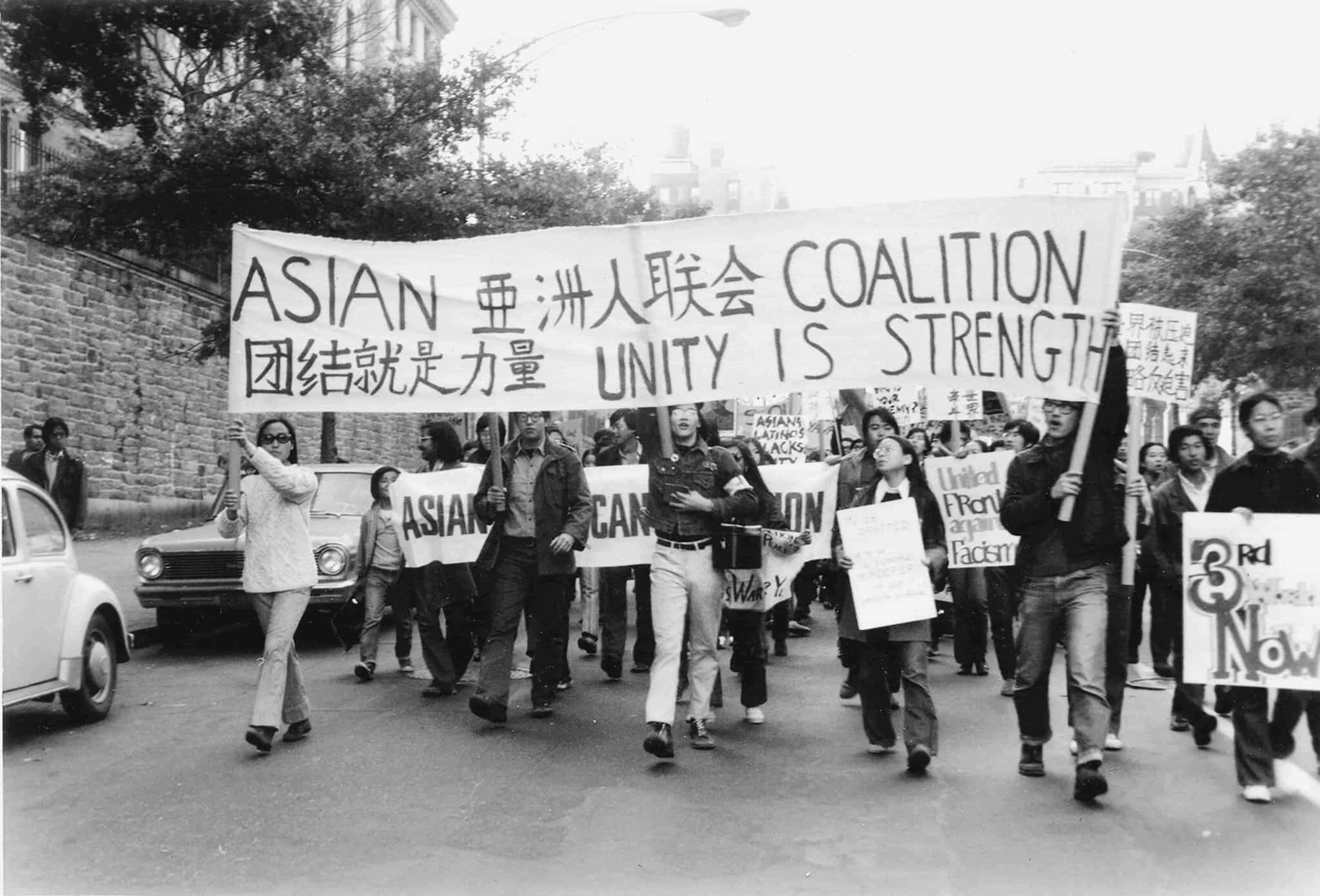
Image 38.05.01 — Asian Americans demonstrating in New York City against the Vietnam War.
Asian American Studies and the United Asian Communities Center
Inspired by the five-month strike for ethnic studies at San Francisco State College (now University) in 1968 and 1969, students at colleges and universities around the country organized to establish ethnic studies programs. In 1972, the Concerned Asian Students at the City College of New York (CCNY) staged a three-day sit-in to pressure the administration to provide a relevant education and greater student participation in departmental policy-making decisions.
In its first year, Yuri Kochiyama was among the earliest faculty to teach an Asian American Studies course. This was a testament to her prominence as a political activist and her constant development as an organizer. Her course discussed the Vietnam War, the movement to remove US bases in Okinawa, and the imposition of martial law in the Philippines. She further encouraged her multiracial class to build connections with their local communities.
Bill Kochiyama worked with Tak Iijima, Kazu’s husband, to keep the center open for several years. Kazu recalled how humble, yet spirited and lively the Community Center was. Some two hundred people would often cram into the two-story Center for parties, and each night, including the weekends, it became a nucleus of activity for Pan-Asian American activities and support.
The Kochiyama Children: Political Activism
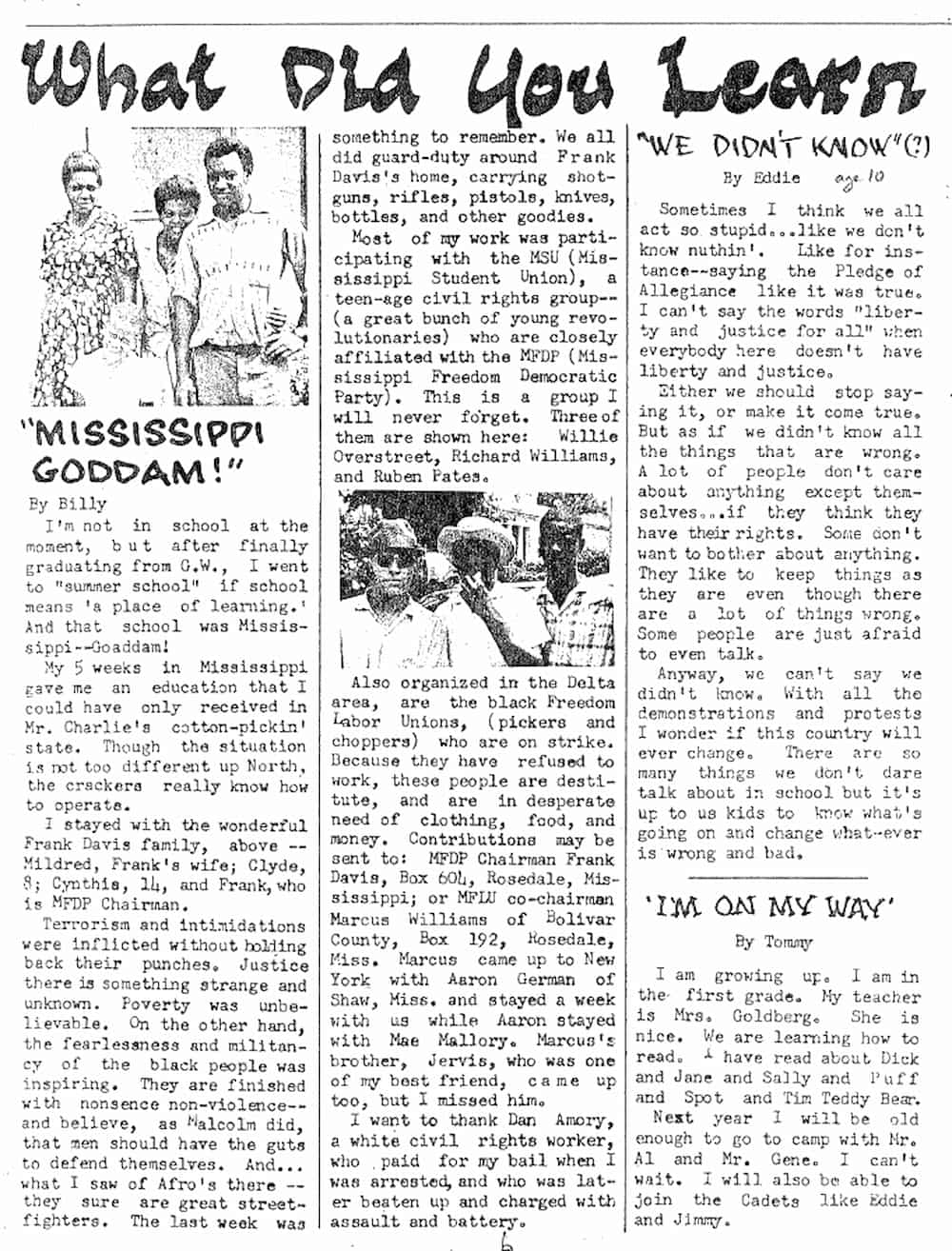
Yuri and Bill’s six children, Billy, Audee, Aichi, Eddie, Jimmy, and Tommy, were equally involved in political activism. Yuri’s two oldest children traveled to Mississippi in 1965 at a time when Civil Rights activists were often threatened, jailed, and even killed for their political activities. Despite these dangers, Yuri supported her children’s political activities and placed trust in their ability to handle any situation, even in the face of threats and violence.
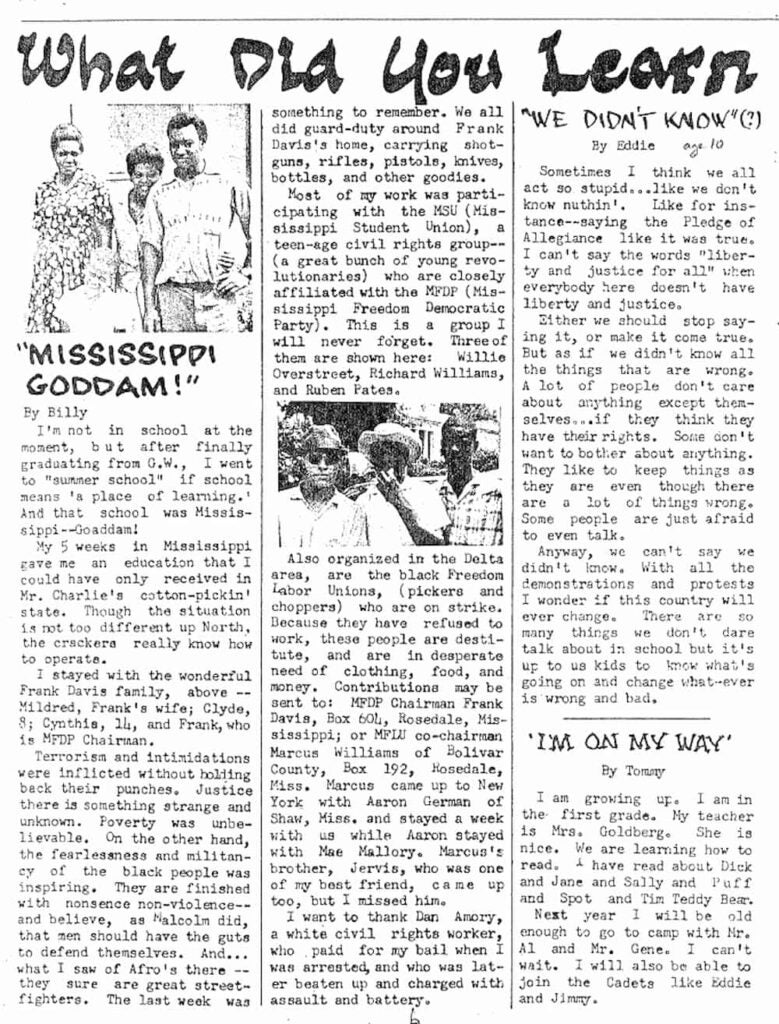
Text 38.05.02a — Articles by Billy, Audee, Aichi (Lorrie) and other Kochiyama children, Christmas Cheer, December 1965.
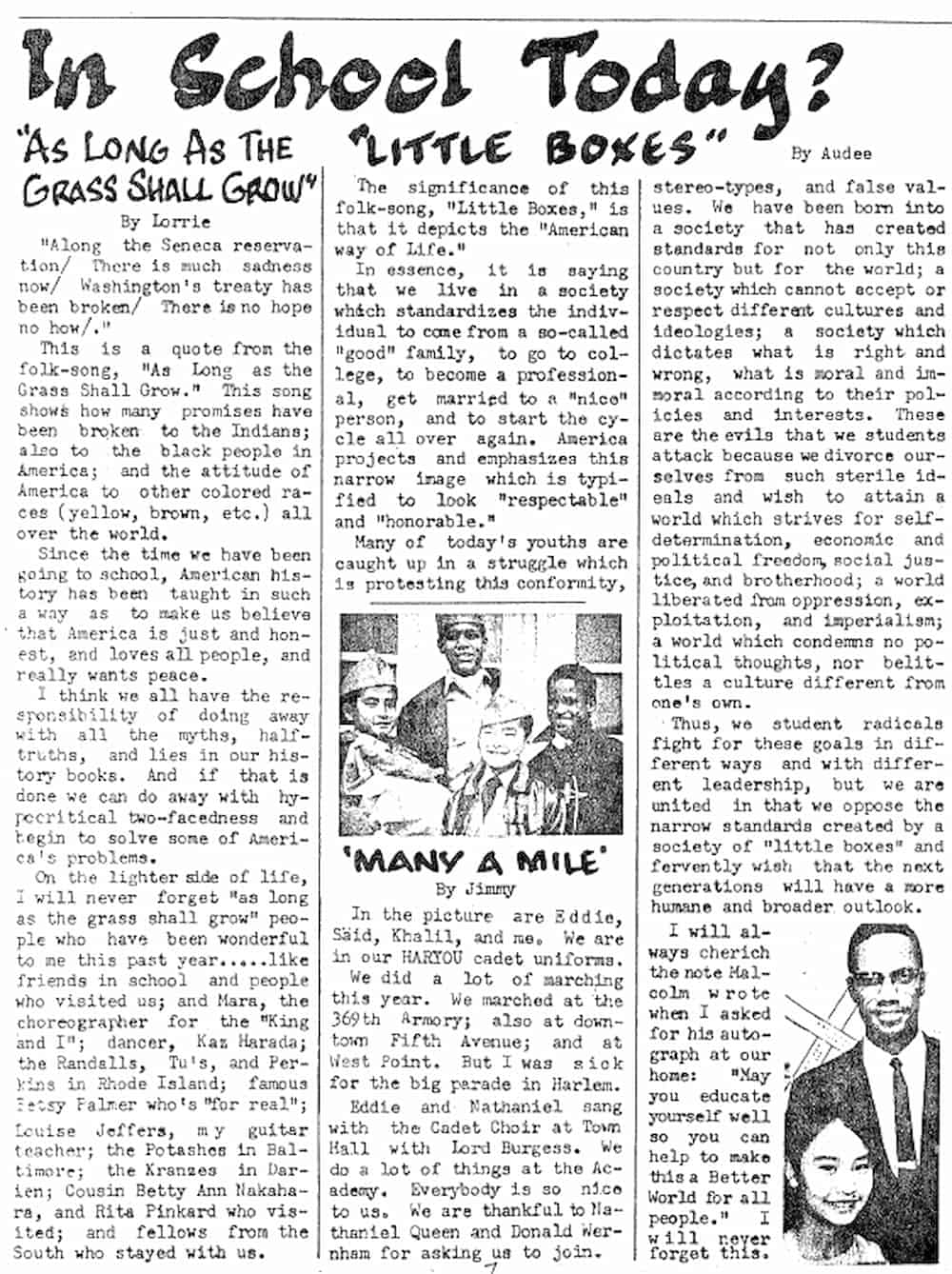
Text 38.05.02b — Articles by Billy, Audee, Aichi (Lorrie) and other Kochiyama children, Christmas Cheer, December 1965.

Yuri’s son Billy wrote a letter to his family while he was in Mississippi, in which he expressed remorse that Malcom X was never able to see the impact his message had in the state. Billy wrote, “So much of what the Black Mississippian wants is what Malcolm has said all along: Black unity, self-defense, and telling the truth just like it is. Malcolm would have found thousands of followers here.” 2
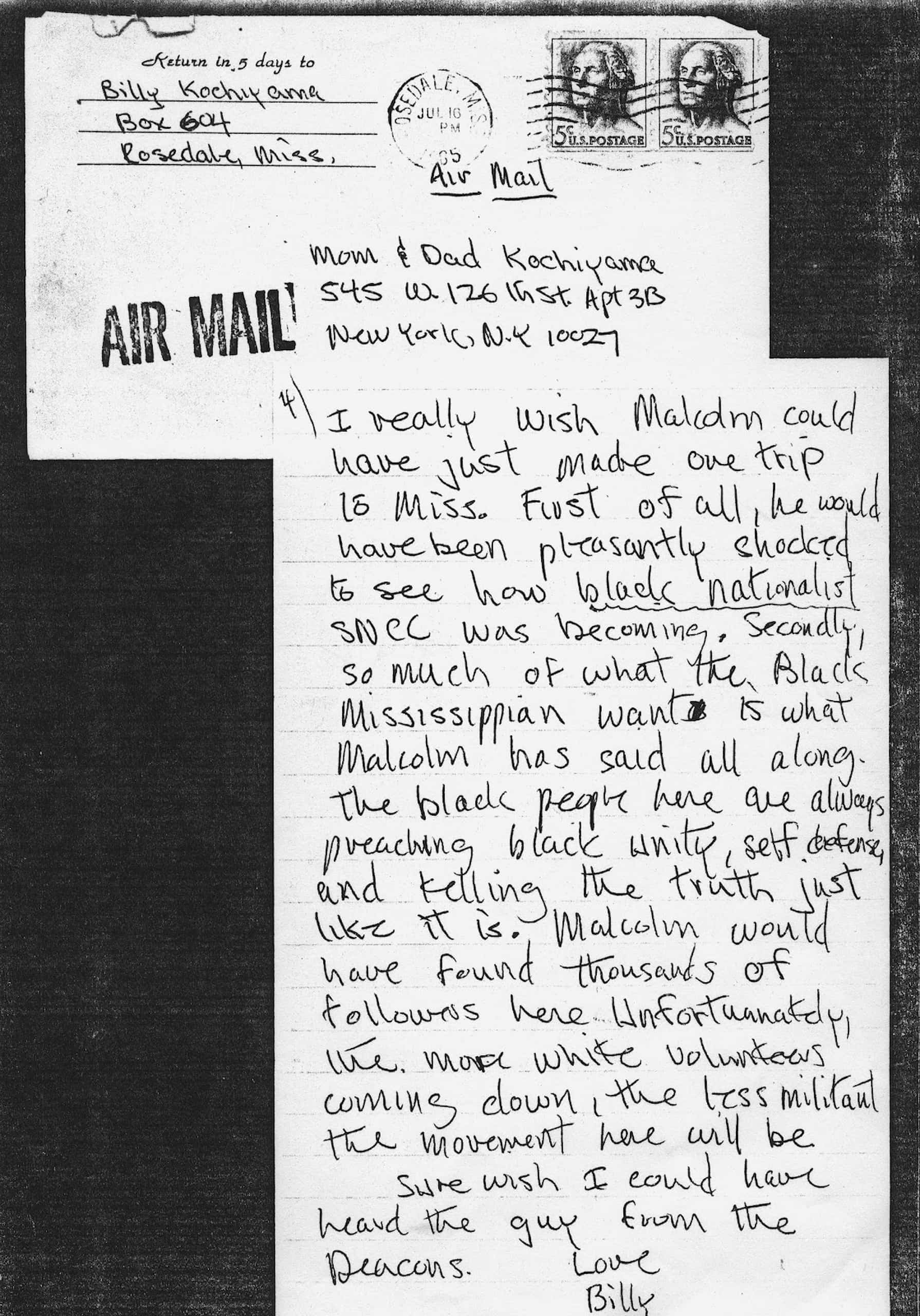
Text 38.05.03 — Billy Kochiyama wrote to his parents from Mississippi, where he went to support and learn about the Southern Civil Rights Movement.
Yuri’s third child, Aichi, was also politically active. She was upset that she was too young to go to Mississippi and used to say she wanted to go to Vietnam and protest the war. Instead, she began a correspondence with a female Vietnamese activist.
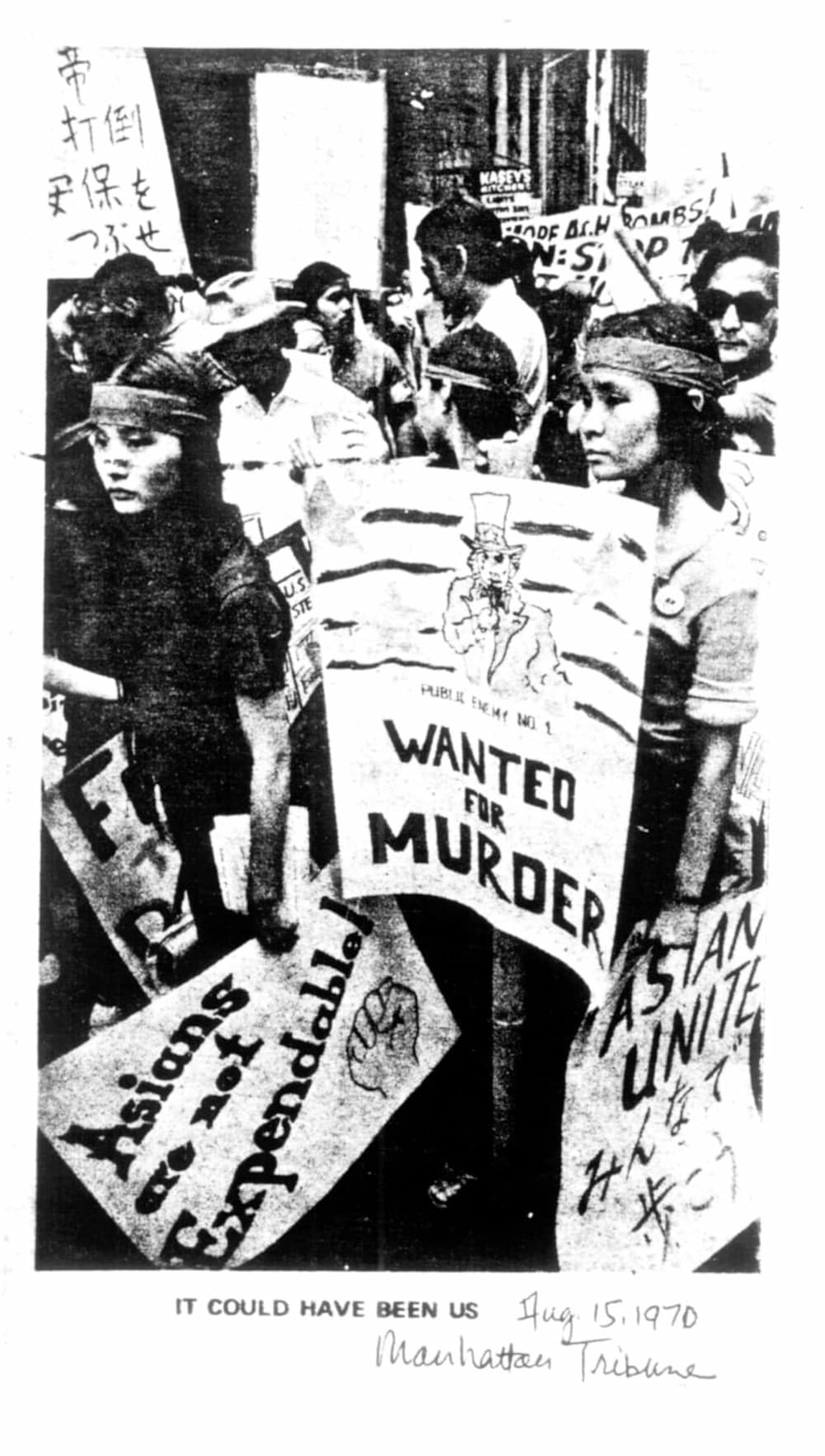
Image 38.05.04 — Audee (left), Aichi (right) and Bill (behind Aichi) at a demonstration against the Vietnam War on August 15, 1970.
Yuri’s son, Eddie, then age sixteen, had the chance to visit the People’s Republic of China with the second American group to be allowed into China. He went even before Richard Nixon stepped onto Chinese soil. The group included students of all ages and backgrounds, and Eddie was passionate about visiting China, understanding how much the visit would teach him, even though it pushed back his graduation from high school. Indeed, Eddie returned to the US as a transformed young political fighter like his brother and sisters before him, and he became more involved in the anti-Vietnam War protests.
Yuri started attending political meetings and demonstrations when her two youngest children, Jimmy and Tommy, were still quite young. When they were about seven and five years old, she took them to a demonstration in Central Park to commemorate the bombings of Hiroshima and Nagasaki. A news photographer snapped a picture of the two boys carrying candles at the march. As a proud mother, Yuri made many photocopies to send to friends and put in their scrapbooks. “Without these pictures,” she recalled in her memoir later, “I thought they would not remember.” 3
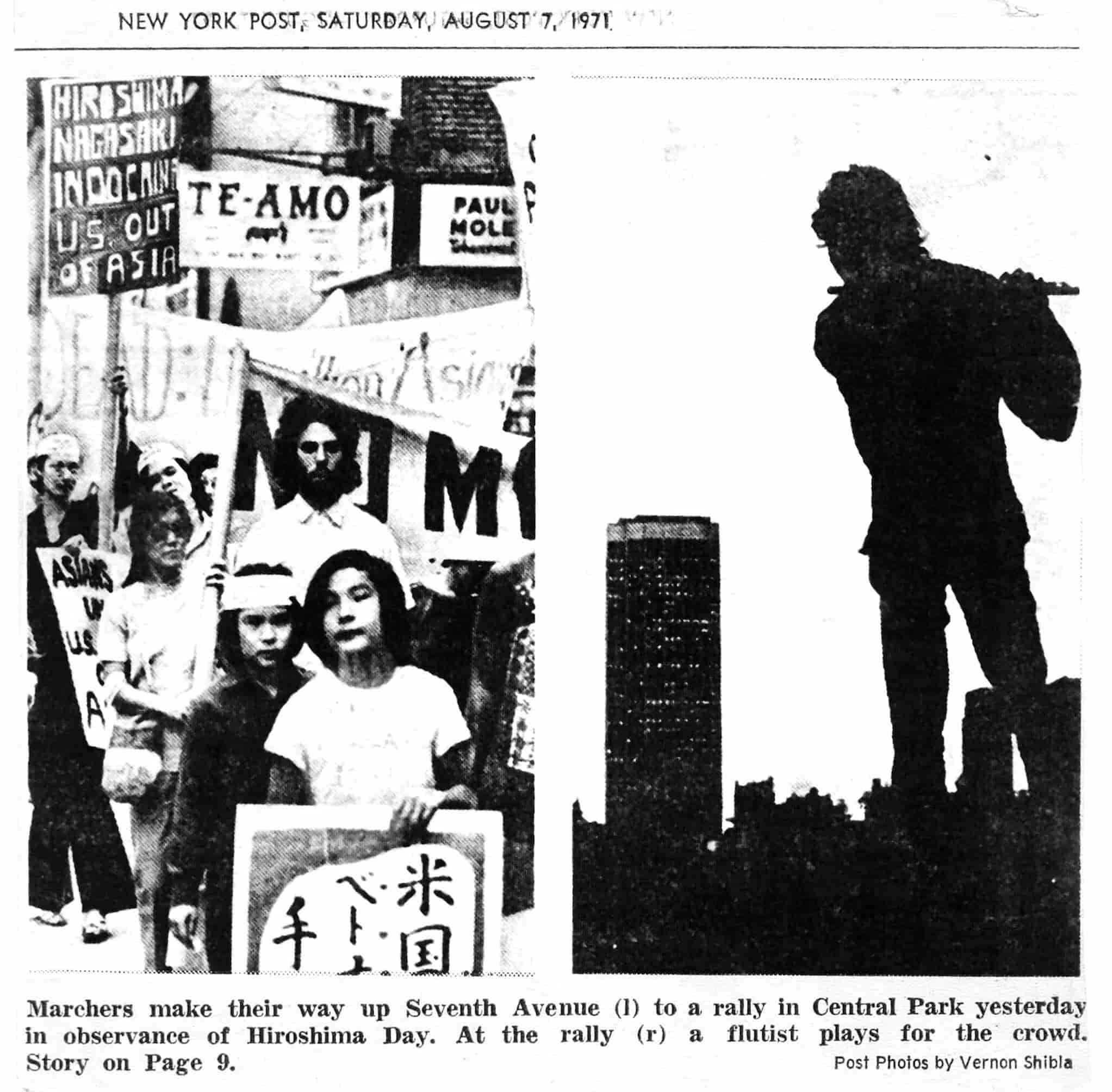
Image 38.05.05 — Tommy Kochiyama (with headband) and Jimmy Kochiyama at a demonstration to commemorate the bombings of Hiroshima and Nagasaki in New York City’s Central Park, August 6, 1971.
As her two youngest children grew older, Yuri spoke to them about Hiroshima and Nagasaki. Around the same time, the family participated in a march against American military bases in Okinawa. Again, Tommy was snapped by a photographer. Yuri remembered later, “When it appeared in the newspaper, the caption read, ‘Okinawa Youth Demonstrating.’ We smile today, because Tommy grew up to eventually [marry] a woman of Okinawan descent.” 4
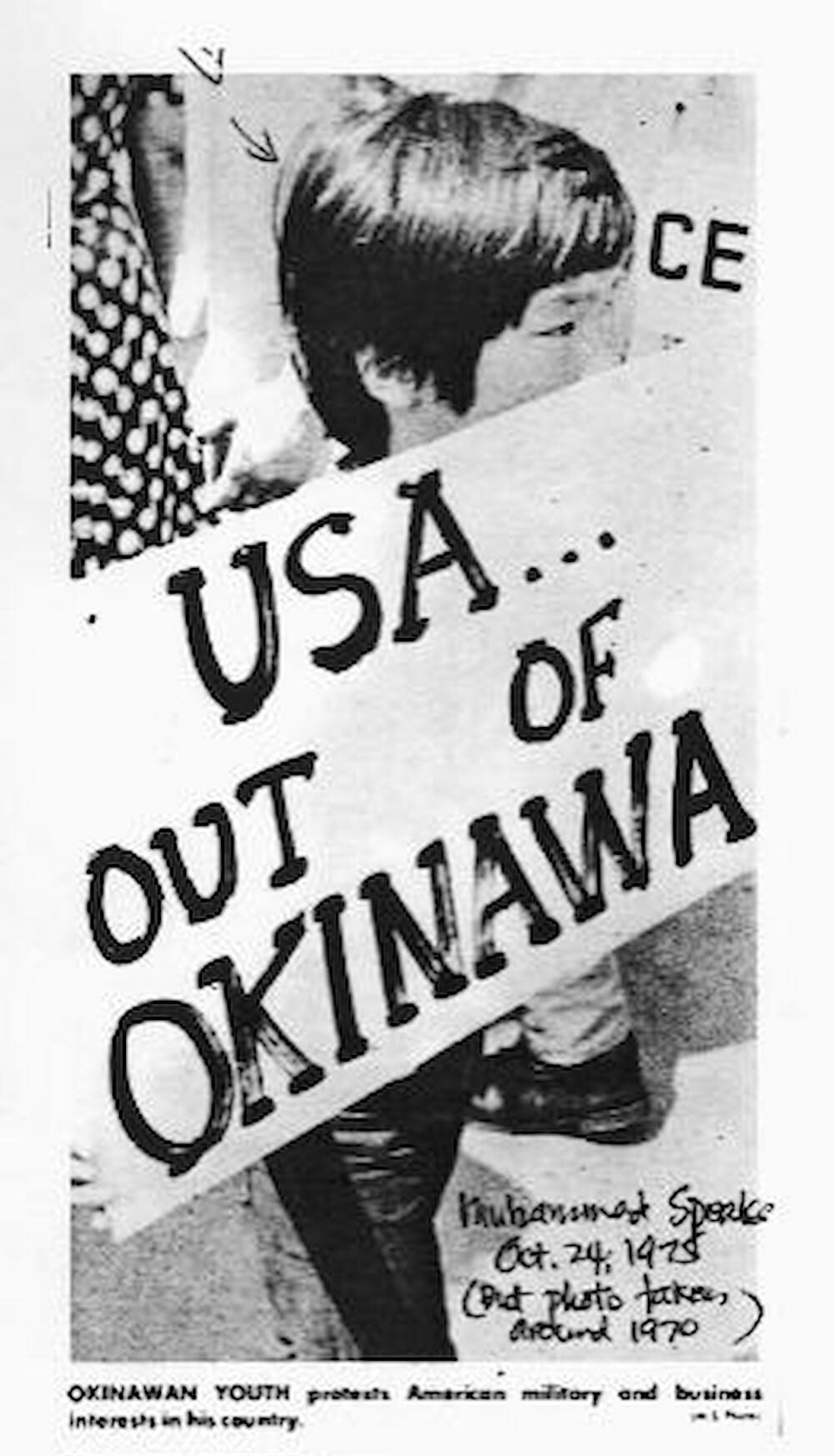
Image 38.05.06 — Tommy Kochiyama at a demonstration against US military bases in Okinawa.
Eventually, Yuri’s entire family participated in the Asian American Movement. As a result of the long and arduous years of political protest and social organizing, Yuri Kochiyama became one of the most prominent figures of the Asian American Movement.
Glossary terms in this module
activism Where it’s used
The actions and philosophies that people practice to create positive change in their communities.
Asian American Movement Where it’s used
Political and cultural movement inspired by the Black Power Movement and Vietnam War protests launched in the late 1960s, that opposed imperialism and racism and advocated for racial equality by connecting Asian Americans across different ethnic, national, and class backgrounds.
solidarity Where it’s used
A political, cultural, and collective stance that recognizes the mutual responsibility and support that is necessary to achieve change. Taps into the power in numbers and considers the collective interests of communities.