




Sixteen casually dressed Asian Americans and Yuri Kochiyama pose on a shiny wooden floor in front of a large banner that reads “Asians for Mumia.”
Module 6: Supporting Political Prisoners
Do Yuri Kochiyama’s life experiences explain her political consciousness, solidarity, and activism?
Alongside the protests and solidarity work against the Vietnam War in the 1960s and 1970s, Yuri Kochiyama began supporting political prisoners in the 1960s. The letter-writing campaigns grew into her lifelong passion.
This module examines Yuri Kochiyama’s work to support political prisoners, including a focus on mass incarceration.
Why did Yuri Kochiyama call political prisoners the “heartbeat of struggle?”
How did the political prisoner movement shape Yuri Kochiyama’s understanding of racial solidarity?
How was political organizing relational for Yuri Kochiyama?
Against Mass Incarceration
Yuri Kochiyama opposed using prisons as a solution for society’s problems. Unlike the mainstream view that locking people up keeps society safe from danger, Yuri believed that certain neighborhoods were over-criminalized and over-policed. In her view, the poor, Black, Brown, Indigenous, non-Christian, and Pacific Islander communities were often subject to hyper-policing.
The very core of social problems including poverty, affordable housing, universal health care, and equitable education exist in communities that suffer from the highest rates of incarceration. These are often based on race, class, gender, and sexuality. Moreover, the United States has the greatest number and highest rate of imprisonment in the world. The carceral state, according to Yuri, is part and parcel of the continued problems, often perpetuated by racism.
In 2004, she wrote, “There are over two million men and women, mostly of color, warehoused in prisons across this country, which is more than any other nation. Many are innocent, and many should not be in prison but rather, in hospitals.” She continued, “When we think of the statistics which impact people of color, we cannot help but surmise that racism, classism, and politics weigh heavily in the criminal justice system.” 1
More to explore
Political Prisoners and Letter-writing Campaigns
Yuri Kochiyama worked most diligently to support a set of prisoners who were targeted for their political ideas and activist practices. A political prisoner of consciousness is often defined as someone whose politics and activism threaten the established order. But Yuri offered a more complex definition. She wrote in 2004:
“Because the definition of ‘political prisoner’ varies, it is difficult to make any definite boundary lines of who would be in the category of political prisoners. America denies they have ever placed political prisoners within their cages…[but] all political prisoners are given long sentences because they consciously struggle against colonialism and US government’s imperialist policies.” 2
Her life-long work to support political prisoners began in the 1960s when the police and FBI increased their harassment and arrests of Black Power Movement activists, especially Black militants. Many of those arrested were her colleagues and friends. The public later learned that the FBI initiated a program called COINTELPRO (for Counterintelligence Program) to target Black radicals, especially members of the Black Panther Party, as a way to weaken their liberation movements.
Yuri responded by fighting to support and gain release from prison for her fellow activists. She and other Japanese Americans had been falsely incarcerated during World War II, forced from their homes into concentration camps. She understood the problems of using prisons for political purposes. This era in the late 1960s and 1970s was an intense, exhausting, and frightening time for many activists.
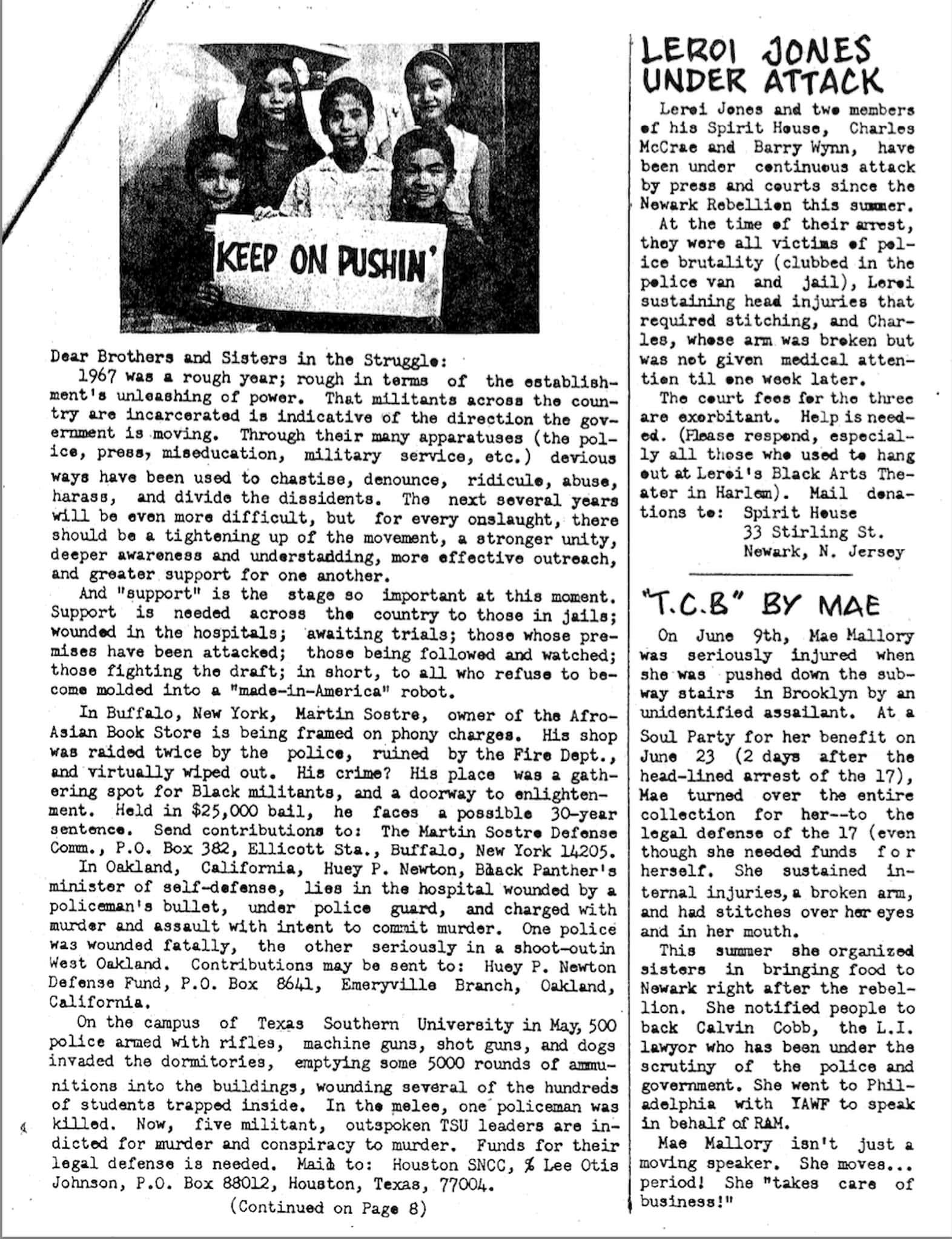
One of the first persons Yuri supported was Mae Mallory, who became an important political mentor. Mallory was born in 1927 in Macon, Georgia, and she moved to New York as a child. She was a major advocate of school desegregation and of Black liberation. She was one of the few Black women in visible leadership roles. Mallory taught Yuri how to stand strong and persist in political movements for liberation. Yuri believed Mallory was an exemplary model for other political activists.
More to explore
Text
“T.C.B. by Mae” by Yuri Kochiyama
In “T.C.B by Mae,” Yuri Kochiyama writes about how Mae Mallory, herself injured, donated the monies raised to help her heal to another political cause. The North Star was the Kochiyamas’ annual newsletter. What do you think might motivate such generosity?
Throughout the years, Yuri developed close relationships with many political prisoners, including Mutulu Shakur, a Black activist and stepfather of the slain rap artist Tupac Shakur. Shakur used acupuncture to treat drug addiction at the Lincoln Hospital detox program in the Bronx, New York. It was Yuri who introduced Shakur to Chinese healing practices.
Shakur recalled that Yuri was the first person many turned to when arrested or released from prison. He said:
“When we were captured…our first call went to WA6-7412….Anybody getting arrested, no matter Black, Puerto Rican, or whatever, our first call was to her number. [Yuri’s] network was like no other. She would get a lawyer or get information out to our family and the politically engaged. You knew she wasn’t going to stop until somebody heard from you.” 3
Yuri and Shakur worked together to create the Republic of New Africa and the National Committee to Defend Political Prisoners.
Yuri admired many women political prisoners, including Marilyn Buck. Buck was a white anti-imperialist, serving the longest prison term held by any woman political prisoner in US history. Yuri first heard about Buck in 1974 when someone sent her a newspaper article about the arrest of a young white woman activist who was suspected of helping a Black militant organization. Yuri and Buck began their letter-writing correspondence, and she also visited Buck at least once a month while Buck was in prison.
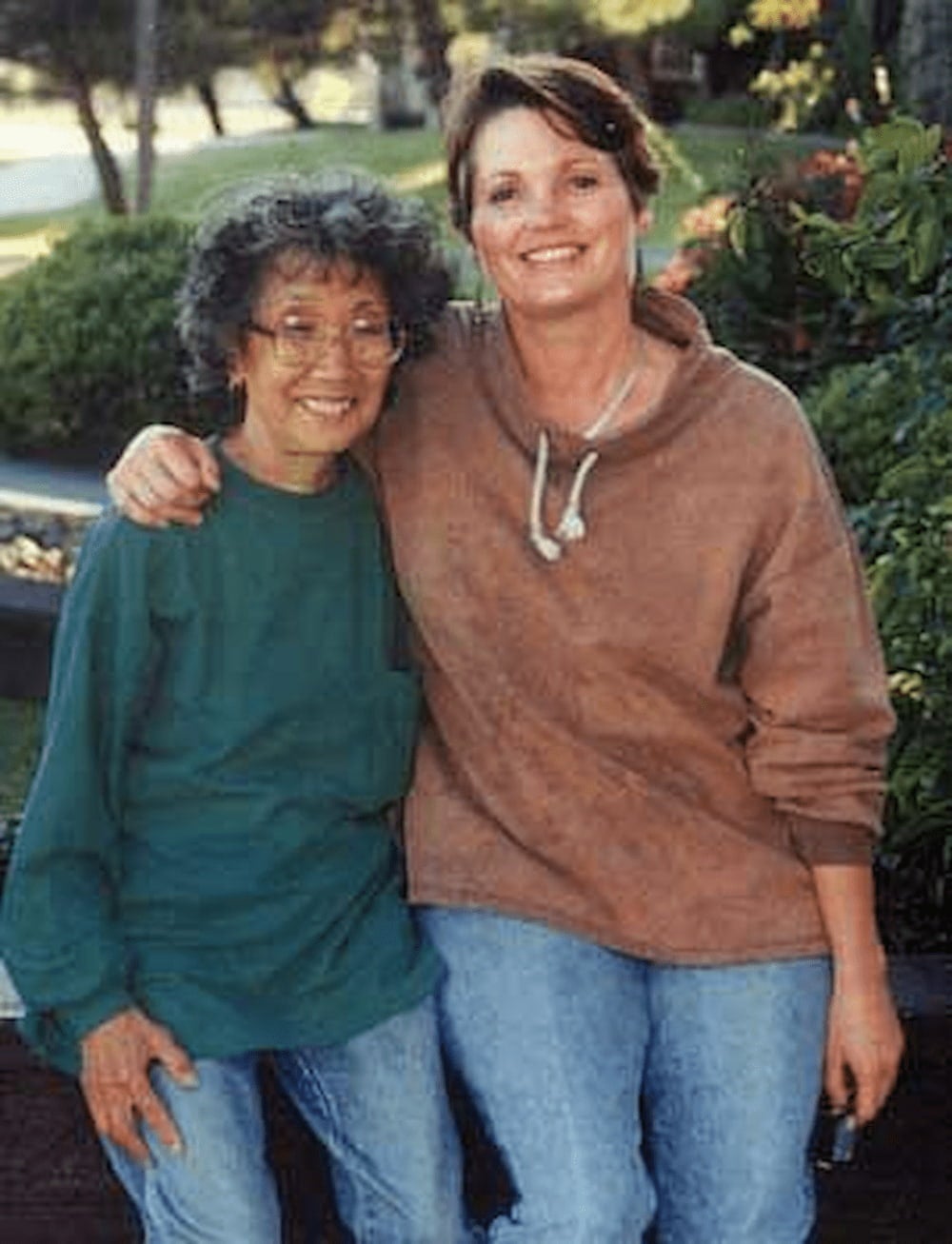
Image 38.06.02 — Yuri Kochiyama visiting Marilyn Buck in prison in Dublin, California.
Yuri was an enthusiastic letter writer, a practice she began when she herself was in the concentration camps during World War II. She would often write into the wee hours of the night, and would encourage the participation of others to write to political prisoners as she knew how important such letters were to the survival and struggle of political prisoners. In the end, she hoped the letter writing campaigns would help the prisoners know that they were still connected to a community outside the prison.
The Case of Mumia Abu-Jamal
Yuri Kochiyama was a strong supporter of Mumia Abu-Jamal, the most prominent US political prisoner of consciousness sentenced to death. Abu-Jamal was an award-winning journalist and former member of Black Panther Party in Philadelphia. She explained that support for Abu-Jamal reached as far as overseas labor unions, European parliaments, the Japanese Diet, and international prison groups.
People supported his fight for release from prison as a protest against the death penalty and the persecution of Black radicals. Though his death sentence was overturned in 2011, Abu-Jamal is still serving a life sentence for the shooting of a police officer. His attorneys and many community supporters stand firmly for his innocence, especially in light of new evidence involving the recanting of a key witness, ballistic and forensic evidence, and a confession from one of the killers of the police officer himself.
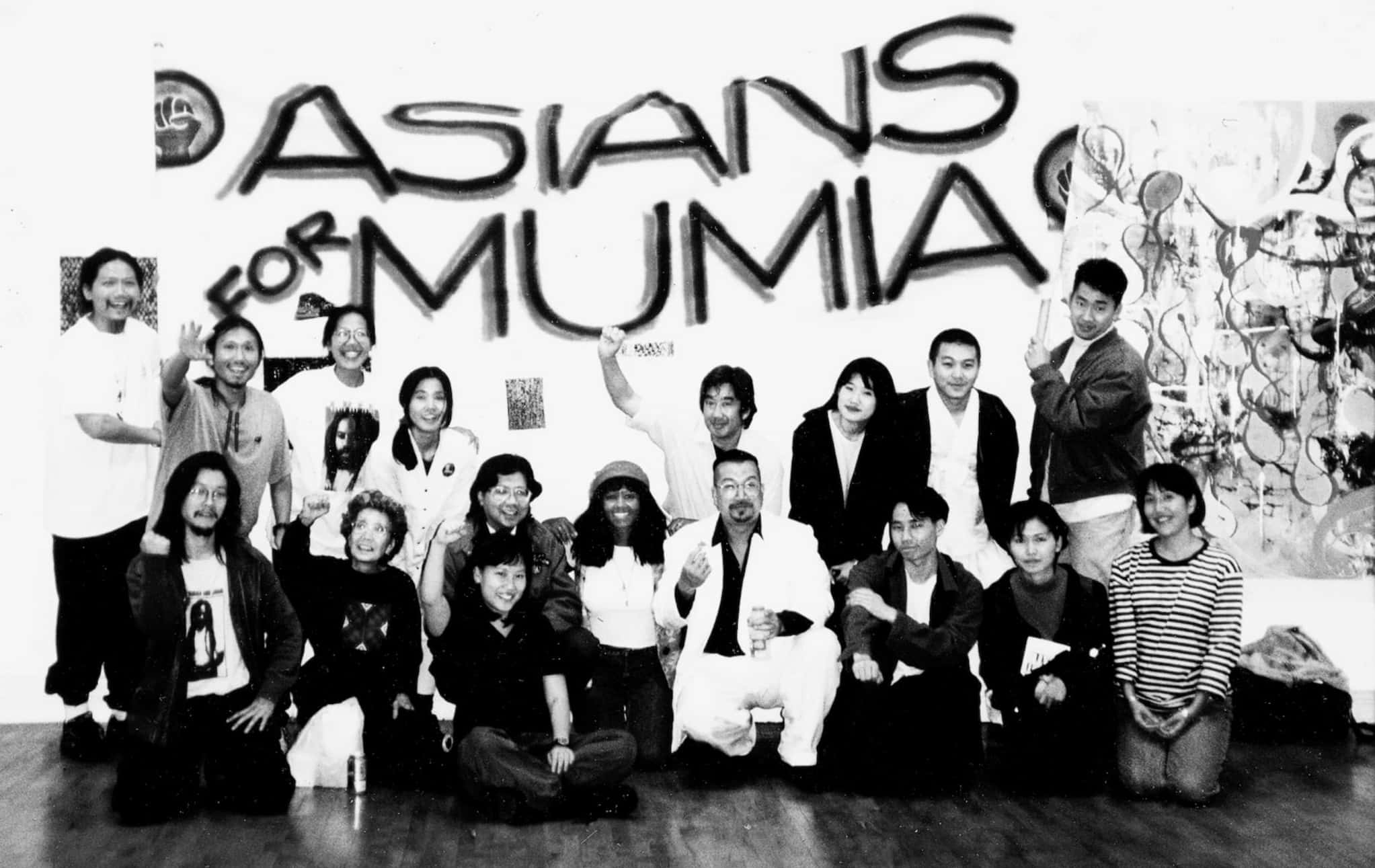
Image 38.06.03 — Yuri Kochiyama was a strong supporter of journalist Mumia Abu-Jamal since his arrest and imprisonment in the early 1980s. When Abu-Jamal was facing the death sentence in 1995, Yuri Kochiyama formed Asians for Mumia, bringing Asian Americans into the struggle.
Activists today continue to work to gain Abu-Jamal release from prison and proclamation of innocence. Yuri has worked with grassroots organizations in New York, including the Jericho Movement for political prisoners, and helped to form “Asians for Mumia.” Yuri later wrote in her memoir that Abu-Jamal was a phenomenon like Malcolm X, someone who would lead the fight against social injustices. “Mumia’s extraordinary leadership is needed on the streets,” she wrote, “not behind the walls.” 4
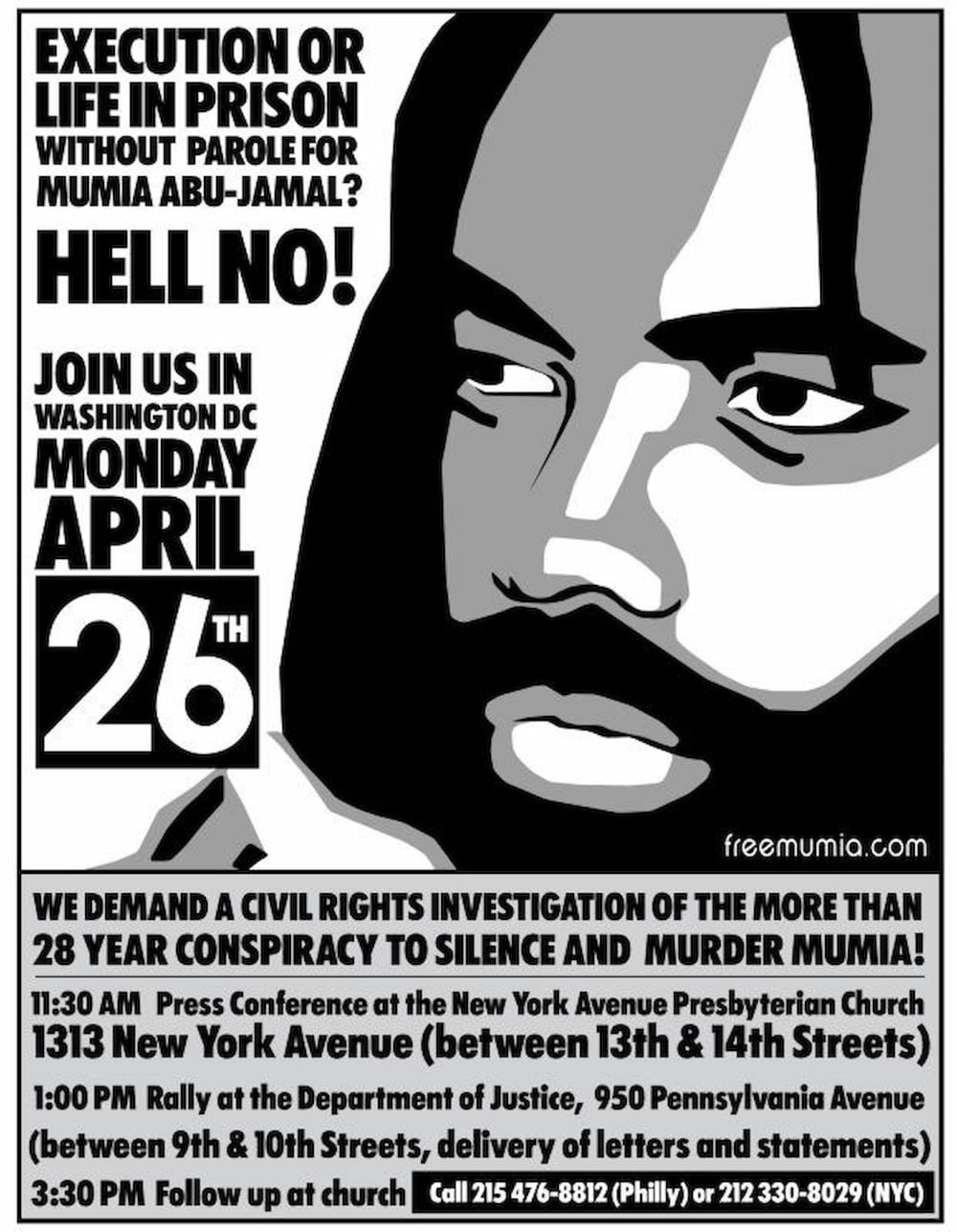
Image 38.06.04 — In 2010, supporters of Mumia Abu-Jamal organized a rally on his birthday to demand a new trial. Yuri Kochiyama was one of the activists appealing on his behalf.
Puerto Rican Political Prisoners
Yuri Kochiyama was a strong supporter of the Puerto Rican movement to remove US control of their island to decolonize. The activists with whom Yuri worked believed that the United States had colonized the island nation of Puerto Rico in 1898 and thus, Puerto Rican activists had a right to fight for liberation from US control over the island.
In 1977, Yuri participated in an effort to gain release for Lolita Lebron, a leader of the Puerto Rican independence movement, and four other Puerto Ricans held in US prisons. They had been imprisoned since 1954, making them the longest-held political prisoners in the Western hemisphere. In a symbolic action to bring attention to the impoverishment of Puerto Rico under US colonialism and to call for the release of these political prisoners, activists closed the Statue of Liberty to tourists and hung the flag of Puerto Rico on the statue’s forehead. Yuri was one of twenty-nine protesters arrested for this action. The Puerto Rican political prisoners were released from prison just a few months later. Puerto Rican independence activist and former political prisoner Dylcia Pagan said Yuri was the most incessant and consistent activist she ever met.
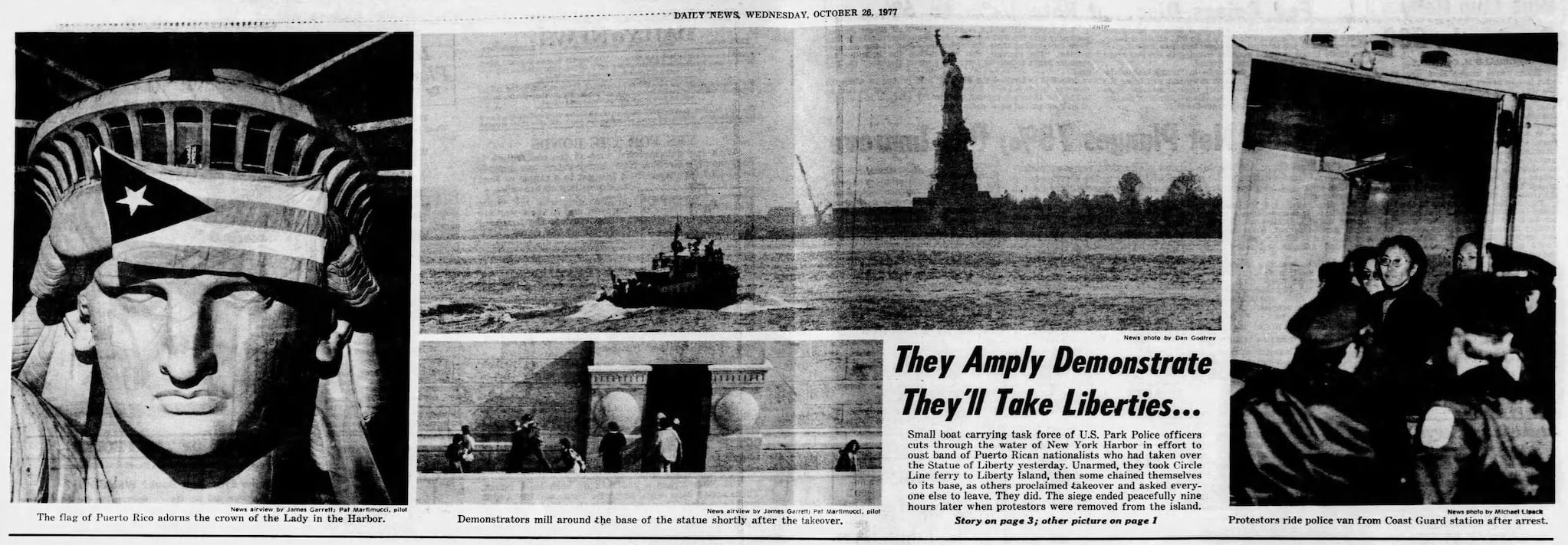
Image 38.06.05 — Yuri Kochiyama being arrested during a protest on October 26, 1977. She was one of twenty-nine activists who seized the Statue of Liberty to demand the release of five Puerto Rican nationalists who had been held in US prisons for a quarter century.
Yuri often referred back to her own incarceration when discussing her motivations for political activism. She said later that such things are able to happen when there is no support from the outside. “If we don’t support one another, and stand by one another, it will be easy for those in power to pick off one group at a time, as they have done so successfully in the past.” 5 Yuri saw political prisoners as dedicated activists who made a great sacrifice for everyone’s liberation. While she called political prisoners “the heartbeat of struggle,” many imprisoned activists saw Yuri as that heartbeat of the political prisoner movement.
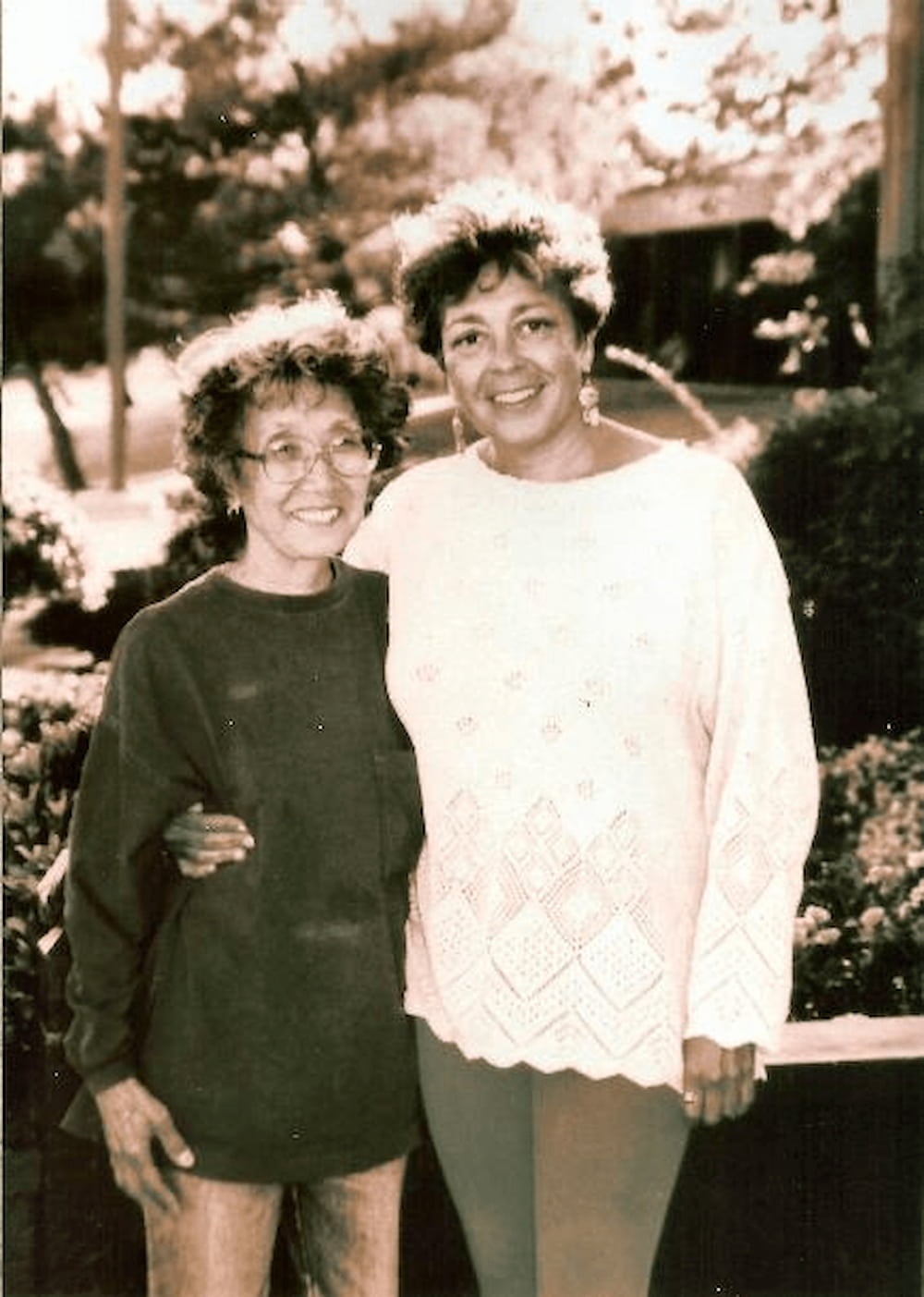
Image 38.06.06 — Yuri Kochiyama visits Dylcia Pagan in 1993 at the Dublin federal prison in Northern California.
Glossary terms in this module
activism Where it’s used
The actions and philosophies that people practice to create positive change in their communities.
Black Power Movement Where it’s used
A revolutionary movement formed in the 1960s and 1970s that stressed self-determination, economic empowerment, the celebration of Black cultural accomplishments, and the creation of political and cultural groups to serve the interests of Black people.
mass incarceration Where it’s used
The dramatic increase of imprisoned people in the United States, beginning in the mid-1970s, with disproportionate numbers of prisoners being people of color, particularly Black people, and poor people.
political prisoners Where it’s used
People who are imprisoned for their political actions, beliefs, or affiliations.
solidarity Where it’s used
A political, cultural, and collective stance that recognizes the mutual responsibility and support that is necessary to achieve change. Taps into the power in numbers and considers the collective interests of communities.