





Module 7: Ruby Ibarra’s Jacket
Can everyday objects tell us something important about Filipinx American history or lives?

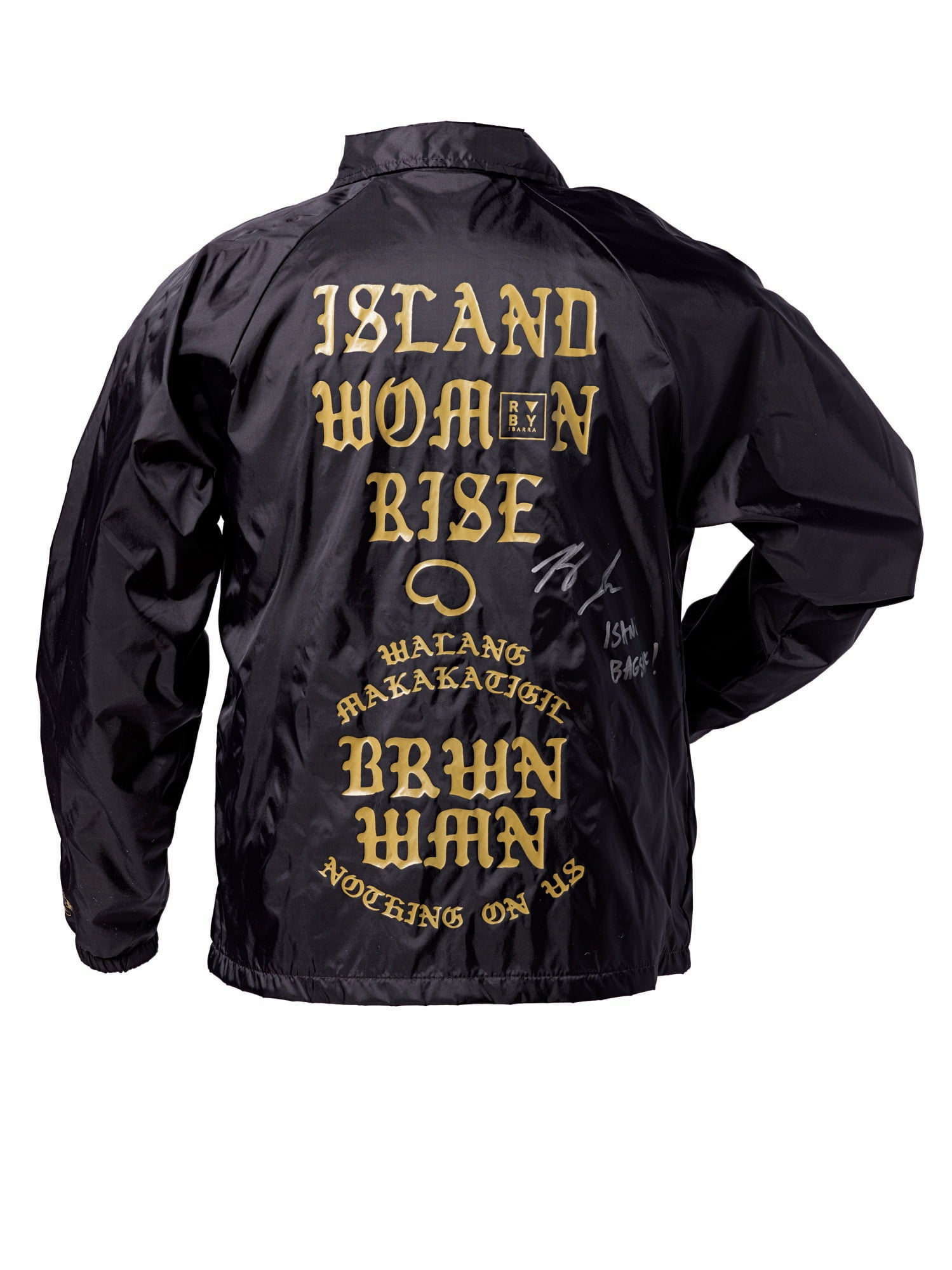
Image 10.07.01 — Philippine-born rapper Ruby Ibarra wore this jacket that features lyrics from “Us,” a song honoring the central role that women play in Filipino and Filipino American culture. Also featured on the track are Filipina rappers Rocky Rivera and Klassy and poet Faith Santilla.
In 2017, Ruby Ibarra released her debut album, CIRCA91. On the album, the rapper, director, and spoken word artist considers her life as a first-generation Filipina American. In an interview after the album’s release, Ibarra explained her motivation behind creating music: “If I don’t write my story, who will?” 1
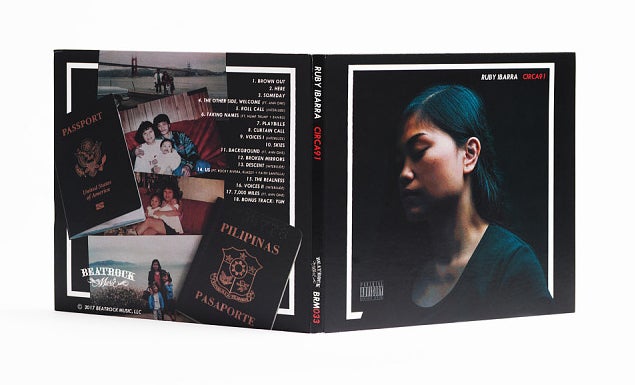
Image 10.07.02 — Cover artwork and tracklist for Ruby Ibarra’s debut album CIRCA91, released in 2017.
Accompanying this accomplishment, Ibarra included a black windbreaker coach jacket as part of her artist merchandise. The left cuff of the jacket features the logo of Beatrock Music, an independent hip-hop record label. On the back are lyrics from her song “Us” printed in gold-colored lettering:
Island woman rise
Walang Makakatigil
BRWN WMN
Nothing on us
When Ibarra donated her jacket to the Smithsonian, she autographed it along with the phrase, “Isang Bagsak!” This Tagalog phrase has a deep cultural significance related to collective action and unity. In this module, we analyze Ibarra’s artistry and point of view through her coach jacket, as well as learn about the importance of Filipino community-building through the arts.
Who is Ruby Ibarra and what do the lyrics of her song “Us” mean?
How are performing arts related to social change?
Language Matters
“Us” features three other Filipina performers—Klassy, Rocky Rivera, and Faith Santilla—and unapologetically mixes English and the Filipino language of Tagalog. Ibarra was insistent that in doing so, she conveys the feeling of her immigrant story. “I want people to hear our beautiful language…. When you talk about the immigrant story, there’s no way that you can fully express it or tell it without using language as well.” 2
According to the 2019 Census, Spanish, Chinese, Tagalog, Vietnamese, and Arabic are the five most common spoken languages other than English in US homes. About half of the Filipino population in the United States is foreign-born, and within Filipino households, regional languages such as Visayan and Ilokano may also be spoken.
Klassy explained that she wrote her verse in Tagalog and English because “certain words feel a different way when they are said in another language. … Whether you were born in America, or in the Philippines, or if you can speak Tagalog or not, and all the factors that come with the struggle of our Filipino identities, we are all one.” 3 Ibarra’s jacket proudly represents Filipino American culture and a diverse community that speaks multiple languages.
In addition to embracing tradition, Ibarra’s music also invites people to participate in shifting it. By proclaiming “ISLAND WOMEN RISE,” Ibarra encourages Filipinas in her community to tell their stories. “Growing up in a traditional Filipino household, I recognized early on how patriarchal our community was. Once I fell in love with hip-hop, I also saw how male-dominated and machismo this genre was, and ultimately, how women are often pitted against each other.” Through “Us,” Ibarra emphasizes “the importance of sisterhood, as well as the power of our voices.” 4
Isang Bagsak: “We rise and fall together”
On the coach jacket, Ruby Ibarra signed her autograph along with the phrase “Isang Bagsak!” Her inclusion of the Tagalog phrase connects her music and artistry to Filipino organizing history.
The meaning of Isang Bagsak has changed over time. For example, the phrase appears in a 1917 Tagalog novel to describe the moment when a person falls into water. Over the course of the twentieth century, the phrase took on deeper cultural significance. When Filipino and Mexican labor organizers worked together to form the United Farm Workers (UFW) in the 1960s, they ended their meetings with the practice of “unity claps” and a jubilant chant of “Isang Bagsak!”
Unity claps start with a single person clapping slowly and steadily. The rhythm increases in tempo and loudness as more people join in until the meeting is filled with a sea of applause. Dozens, hundreds, or even thousands of claps merge into joyous sound, and at the UFW meetings, the unity claps end with a call-and-response of “Isang Bagsak!” No one is left out. More meaningful than the literal act of an individual falling, the expression “Isang Bagsak” to this day stresses unity.
Ibarra explained, “Translated from Tagalog [it] means ‘one down’ and in particular, that if one falls, then we all fall. This phrase has strong historical ties both in the Philippines and in the US, and serves as a reminder of the importance of unity and the collective, especially within socio-political movements; we rise and fall together.” 5
Isang Bagsak is not about individual actions, or simply about failure or collapse. Instead, the phrase is a reminder of collective action and coming together. Isang Bagsak becomes a promise–to rise and fall together.
Hip-Hop and Balagtasan
Ruby Ibarra’s artistry teaches us about the ways that Filipino cultural forms adapt over time, making their way from the Philippines to the United States. Ibarra infuses her performances with a spirit of Filipino poetry anchored in US hip-hop traditions, while telling her story through a Filipina feminist lens.
Art is often created in response to the artist’s world, and hip-hop is no different. Hip-hop is a cultural expression that can be traced to Black and Brown youth in New York City’s late 1960s post-industrial landscape. During this period, the city experienced economic abandonment as manufacturers and middle-class white people moved out, leaving those who stayed in New York City with fewer jobs and resources. In the South Bronx neighborhood in particular, working-class Black, Latinx, and Caribbean immigrants developed creative ways to talk about their experiences.
Hip-hop is a convergence and remix of many cultures, music genres, and creative expressions—including poetry and spoken word. The youth of the Bronx created a new style, an aesthetic, and a cultural movement that would transform how people spoke, sang, danced, and made money. Hip-hop grew deep and heavy roots that branched out into the creative expressions of people on the opposite side of the planet.
The artistic and literary form of balagtasan also has deep cultural roots. In 1924, a group of writers created the first balagtasan in the Philippines, naming the event as a tribute to the Filipino poet Francisco Balagtas (1788–1862). The event featured two poets squaring off against each other in verbal combat, competing for the honorable title of makata. In order to win, poets demonstrated their artistry and skill, attempting to move crowds with their poetry. This popular art form can be compared to today’s rap battles that began a century later.
Filipina American poet and educator Barbara Jane Reyes sees similarities between the balagtasan and hip-hop, not only in the cadence and rhythm of the verbal jousts, but also because both are known for “MC charisma, engaging the audience (with the flair, with the wordplay), and tackling social issues.” 6 The balagtasan’s reach has also extended to the US. In the mid-1990s, Filipino Americans in Southern California started the Balagtasan Collective and held events around the Los Angeles area. The founders, US-based children of Filipino immigrants, linked poetry to politics.
Former member Terry Valen described the group’s efforts as “taking cultural performance back into the heart and struggles of Filipino communities.” 7 Women made up the majority of the group, and provided a feminist analysis of gender and sexuality to the events they held. Ruby Ibarra is part of the balagtasan tradition in many ways, including being part of the Beatrock label, where some members of the Balagtasan Collective have also released their music.
Conclusion
Ruby Ibarra’s jacket helps us understand who she is as an artist, and how she connects her experiences as a Filipina with others. By analyzing her Tagalog and English song lyrics and learning about the importance of the phrase Isang Bagsak, we can better understand the vibrant cultures, histories, and people that influence her work. Ibarra’s music is part of a long tradition of truth-tellers, activists, and agitators using art to move people, inspire action, and create change.
Endnotes
1 “Meet Ruby Ibarra; Rapper, Director, and Co-Founder of the Pinays Rising Scholarship Program,” Mestiza New York (blog), August 17, 2021.
2 Jasmine Ting, “Ruby Ibarra is On the Rise,” Paper, May 18, 2019. https://www.papermag.com/ruby-ibarra-interview#rebelltitem17
3 Pauline De Leon, “Island Women Rise: The Triumphs and Struggles of Filipino American Artists: A conversation with Ruby Ibarra, Klassy, Faith Mantilla, and Rocky Rivera,” Hypebae, March 8, 2020. https://hypebae.com/2020/3/ruby-ibarra-klassy-rocky-rivera-faith-santilla-filipino-american-hip-hop-artists-female-empowerment-immigrants-interview
4 Pauline De Leon, “Island Women Rise.”
5 Ruby Ibarra, SMS text to author, September 27, 2023.
6 Barbara Jane Reyes, “Reveling in Fluidity, Resisting Dichotomies: An Interview with Barbara Jane Reyes and Matthew Shenoda,” interview by Meta DuEwa Jones and Keith D. Leonard, MELUS 35, no. 2 (Summer 2010): 139.
7 Terry Valen quoted in Victor Viesca, “Native Guns and Stray Bullets: Cultural Activism and Filipino American Rap Music in Post-Riot Los Angeles,” Amerasia Journal 38, no. 1 (2012): 118.