




An illustrated movie poster for The Crimson Kimono. Against a light backdrop, a white woman and a Japanese man kiss. The movie title appears below.
Module 1: An Introduction to Asian American Popular Culture
Can pop culture combat racism toward Asian Americans?
The simplest definition of pop culture (popular culture) comes from the roots of the term itself: Pop culture is “culture”—arts, media, entertainment, and other forms of creativity and expression—that is “popular” to a wide range of people.
In short, pop culture refers to content that is produced not just for artistic but also for commercial purposes, distributed at mass scale for broad consumption. Because it is intended to appeal to as many people as possible, pop culture tends to reflect society’s standards and beliefs—what sociologists refer to as “norms” and “mores”—while also helping to shift them by embedding new ideas among mass audiences. Audiences then grow accustomed to these changes in the relatively safe space of the imagination.
This module is a brief overview of the significance of Asian American pop culture.
What is popular culture, and why is it an essential lens for exploring the Asian American experience?
How does perception shape reality for Asian Americans?
What are the differences between representation, inclusion, and narrative power?
The Power of Pop Culture
Before the 1960s, marriage between two people of different races was viewed negatively by the majority of the US population. In 1958, a Gallup poll revealed that fewer than 5 percent of white Americans approved of interracial marriage—and interracial marriage was actually illegal in many states.
Pop culture played a major role in opening the minds of mass audiences to love and marriage between people of different backgrounds. For example, in 1956, the comedy I Love Lucy debuted, starring Lucille Ball and her real-life Cuban American husband Desi Arnaz, becoming one of TV’s biggest and longest-running hits. A year later, in 1957, the film Island in the Sun featured American cinema’s first kiss between white and Black romantic leads, played by Joan Fontaine and Harry Belafonte. And two years after that, the thriller The Crimson Kimono (1959) featured Japanese American James Shigeta as its police detective hero, who wins the heart of (and a kiss from) the female lead, Victoria Shaw.
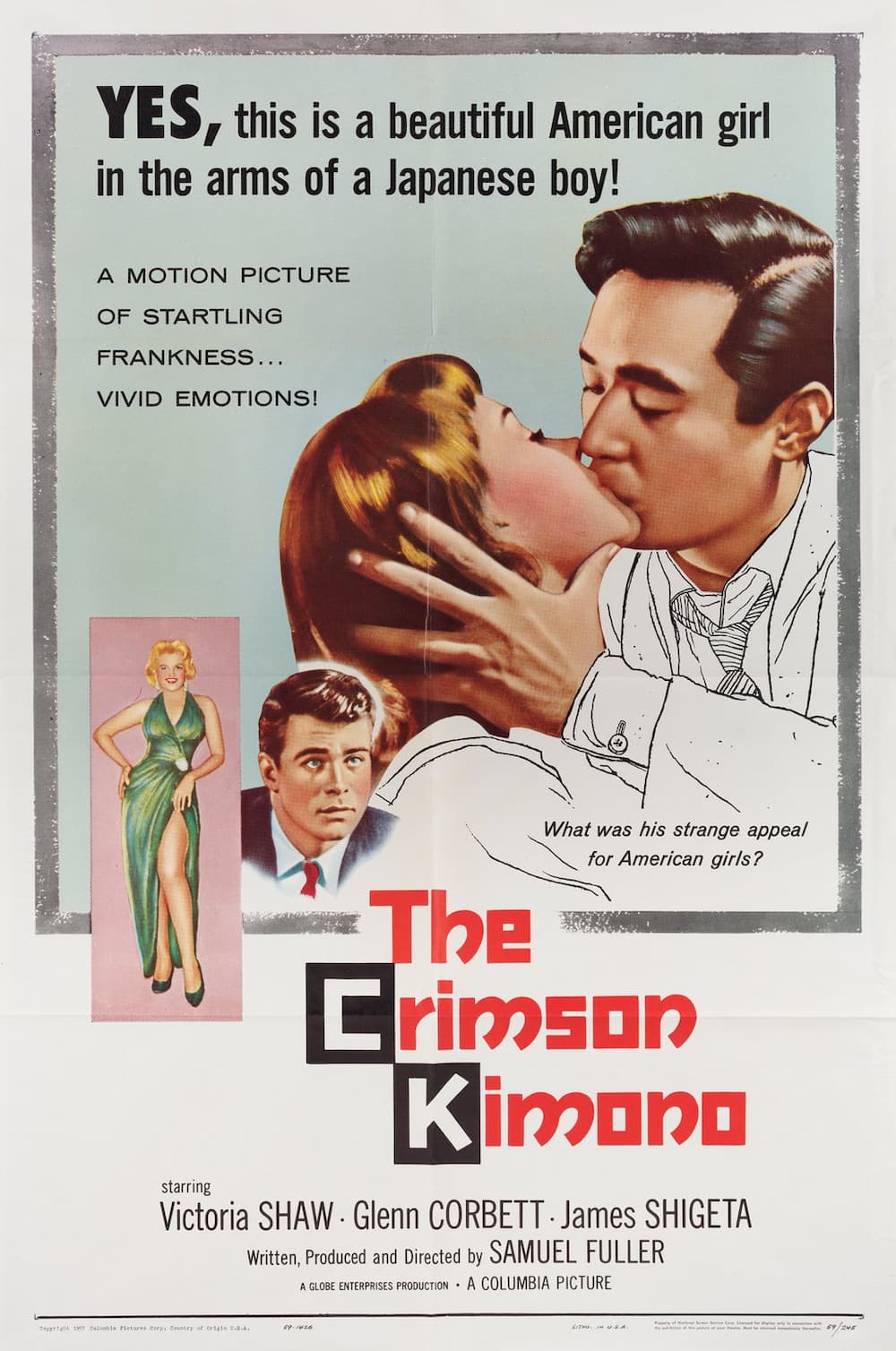
Image 25.01.01 — The theatrical poster for Samuel Fuller’s The Crimson Kimono (1959). As the Civil Rights Movement was budding, pop culture reflected the reality of interracial relationships in a way that was broadly accessible and, for a growing number of people, acceptable.
Interracial marriages existed in the American colonies before they became the United States, regardless of their legal status. An extensive history of resistance against anti-miscegenation laws was also present leading up to the 1950s. But in a cultural climate where the Civil Rights Movement was starting to bud, pop culture reflected the reality of interracial relationships in a broadly accessible and acceptable way.
By 1965, nearly half of Americans believed that interracial marriage should be made legal, and in 1967, the landmark Supreme Court case Loving v. Virginia struck down state laws banning it across the nation.
Why Pop Culture Pops for Asian Americans
Pop culture plays a powerful role in shaping the experiences of Asian American populations in the United States because it is often the primary lens through which Asian people, ideas, and culture are seen and encountered by most Americans.
Only about half of all US citizens have passports as of the mid-2020s; consequently, most will never experience Asia firsthand. Meanwhile, people of Asian heritage make up just 7 percent of the American population, with their numbers highly geographically concentrated (over half of the US Asian population resides in five states: California, New York, Texas, New Jersey, and Washington). As a result, it’s not surprising that the average non-Asian American does not have a single Asian American or Pacific Islander friend within their core social networks, according to a 2022 survey by the Public Religion Research Institute (PRRI).
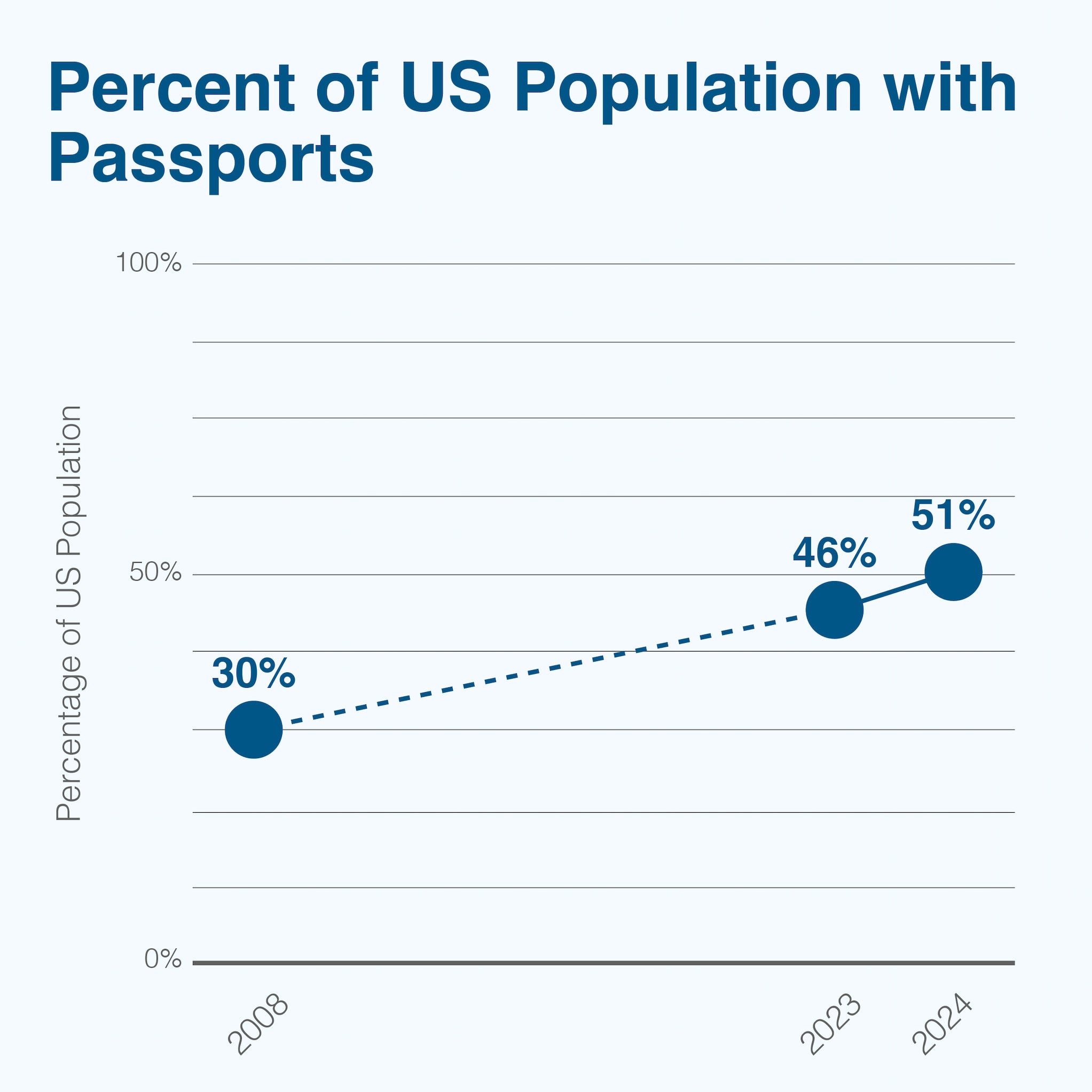
Image 25.01.02a — The percentage of Americans with passports has increased from thirty percent in 2008 to fifty-one percent in 2024 totalling over 171 million valid passports in circulation. (Source: US Department of State)
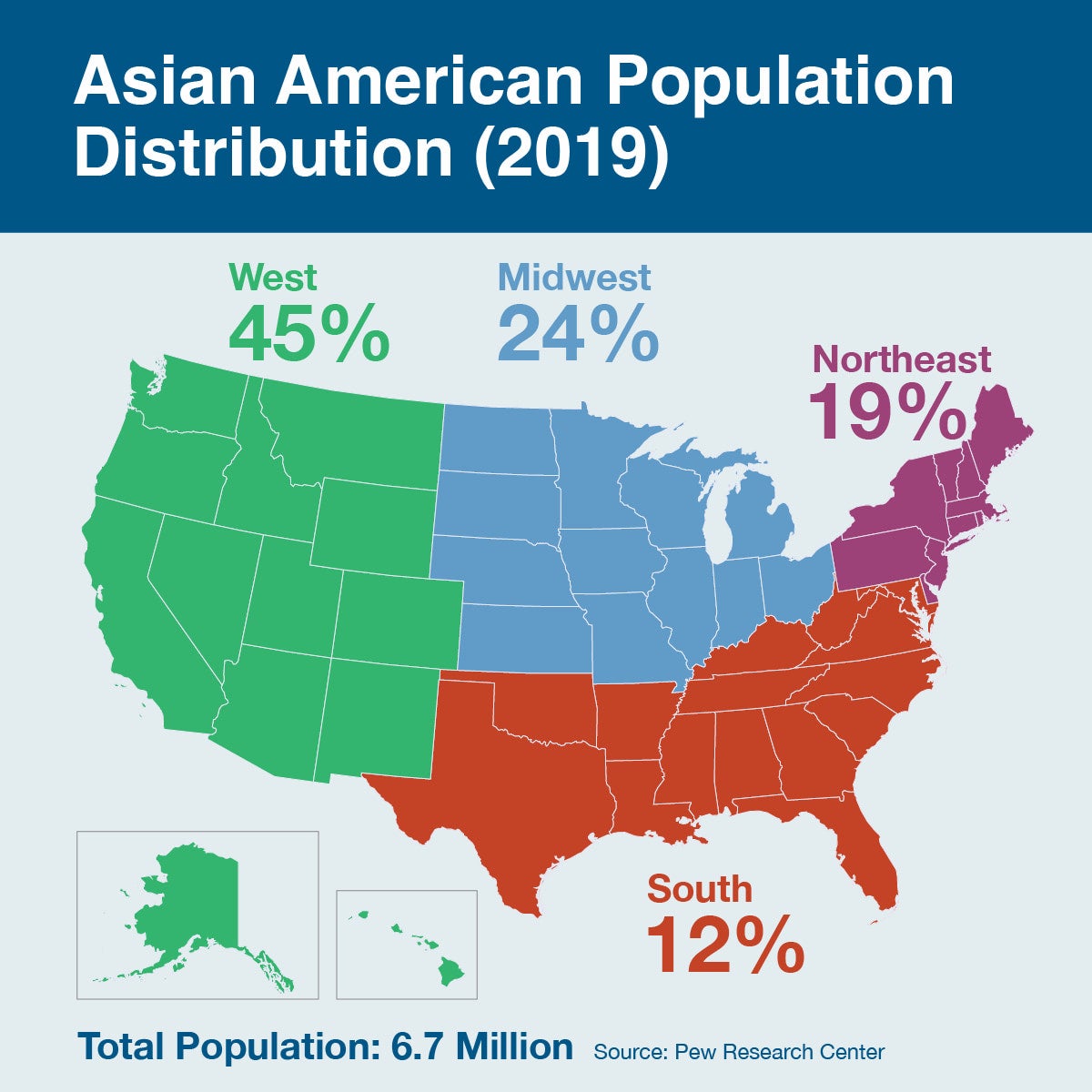
Image 25.01.02b — Nearly half (45 percent) of Asian Americans live in the western United States, with 30 percent in California alone. (Source: Pew Research Center Analysis of 2017–2019 American Community Survey (IPUMS))
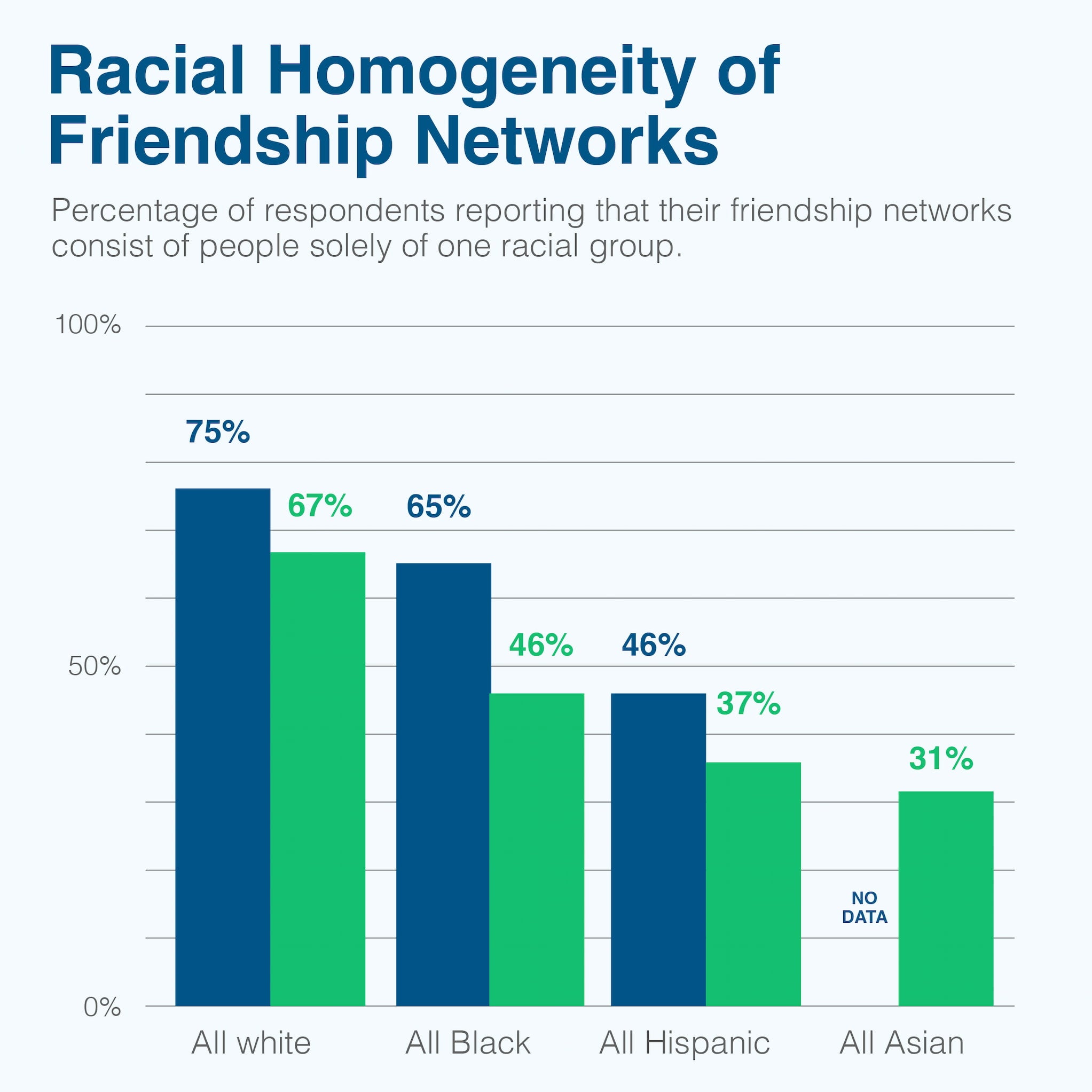
Image 25.01.02c — While racial homogeneity in friendship networks has decreased from 2013 – 2022, the average non-Asian American does not have a single AAPI friend within their core social networks. (Source: PRRI 2022 Social Networks Survey (Public Religion Research Institute))



Because most Americans have little opportunity for first-hand experience with Asian people or culture, their attitudes toward Asians are often heavily shaped by what they encounter in media and entertainment. A survey by The Asian American Foundation found that nearly a quarter of Americans get most of their information about Asians from movies, television, and music. For Asian Americans, pop culture representation has served as a primary entry point for activism and organizing.
How Pop Culture Can Make Positive Change
Representation matters, and inclusive content reflects the real world, featuring creators, characters, and storylines that accurately portray the experiences, perspectives, and identities of people from many backgrounds. Inclusive content can help to actively dissolve stereotypes, promote understanding, and create a more equitable society. Exposure to inclusive stories with Asian American characters has been found to increase non-Asian viewers’ empathy with and engagement toward Asian American people and communities.
Simultaneously, inclusive content shapes Asian American viewers themselves—helping them to work through trauma, build self-esteem, and imagine new worlds. The net effect of seeing yourself consistently and fairly represented is the feeling of having “narrative power.” This means feeling secure that your story is worth telling and hearing; that you have the right to be the protagonist, not just a side character in someone else’s tale. It means that your heritage is honored within our broader social landscape as part of the normative culture—not just an exception.
It means that your community is included in the “canon” of popular culture: The vast repository of creative works, historical moments, and notable persons that are cited, preserved, and taught, generation after generation.
The Negative Impacts of Pop Culture Erasure
Lack of Asian representation in pop culture has a number of significant consequences:
- It allows outdated and problematic images of Asian Americans and Pacific Islanders to perpetuate.
- It limits opportunities for Asian American and Pacific Islander performers and creators.
- It sends the message that Asians are not valued or important in the United States.
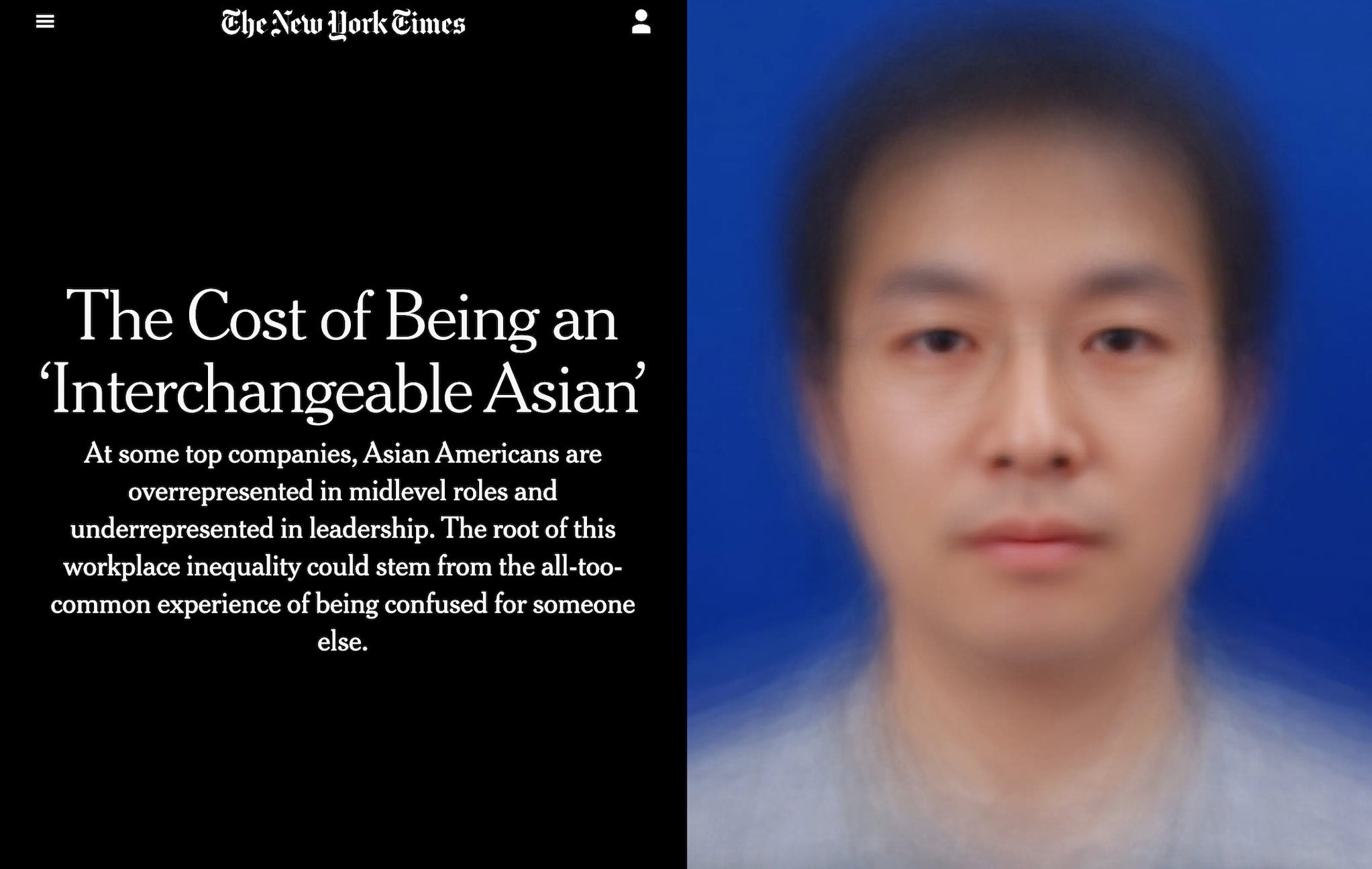
One direct impact of pop culture underrepresentation for Asian Americans is the so-called “wrong Asian” syndrome. As Brian X. Chen wrote in the New York Times in a 2021 article “The Cost of Being an ‘Interchangeable Asian,’” lack of exposure to Asian faces contributes to the perception that all Asians look the same or are replaceable. Chen writes:
“The invisibility of Asians in pop culture is part of what, scholars say, contributes to the ‘wrong Asian’ experience … When people aren’t accustomed to seeing Asian faces onstage or onscreen, they may have more trouble telling them apart in real life. To put it another way: If all you really have to work with are John Cho, Steven Yeun … and Kal Penn, that’s not going to go a long way in training you to distinguish among men of Asian descent offscreen. In contrast, Hollywood has given everyone plenty of training on distinguishing white faces.” 1
More to explore
Text
NYT “The Cost of Being an ‘Interchangeable Asian’” by Brian X. Chen
About three years ago, JC Lau, a game developer, was one of a handful of women of Asian descent working at Bungie, a large video game studio in Bellevue, Wash. At the office, which had an open-floor plan and a staff of predominantly white men, co-workers regularly mistook her for one of the other Asian employees sitting in another row nearby.
The “All Look Same” Phenomenon
This phenomenon has been supported in research. A study conducted by psychologists at Memorial University of Newfoundland found that white subjects were 255 percent more likely to accurately distinguish between different white faces than they were different Asian faces.
The lack of top-of-mind recognition of Asians extends even to celebrities. In The Asian American Foundation’s 2024 STAATUS Index Survey, over half of all Americans couldn’t name a single notable living Asian American. When asked, 9 percent responded with Jackie Chan, who is not Asian American, and 5 percent responded with Bruce Lee, who is not alive. The most notable living Asian American cited by respondents? Then-Vice President Kamala Harris, who is of Black and South Asian ancestry. She was named by only 2 percent of participants—even though she was running for president at the time.
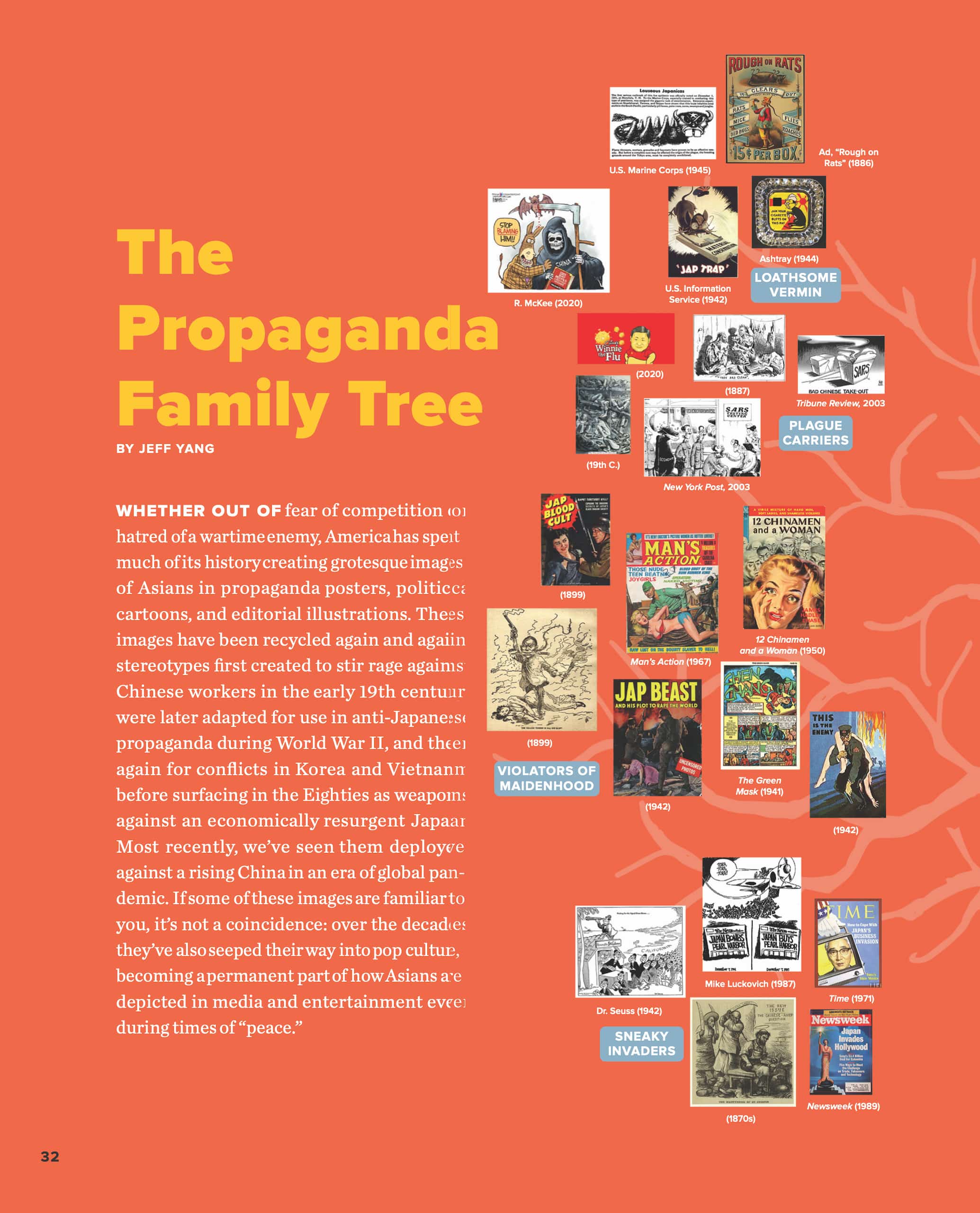
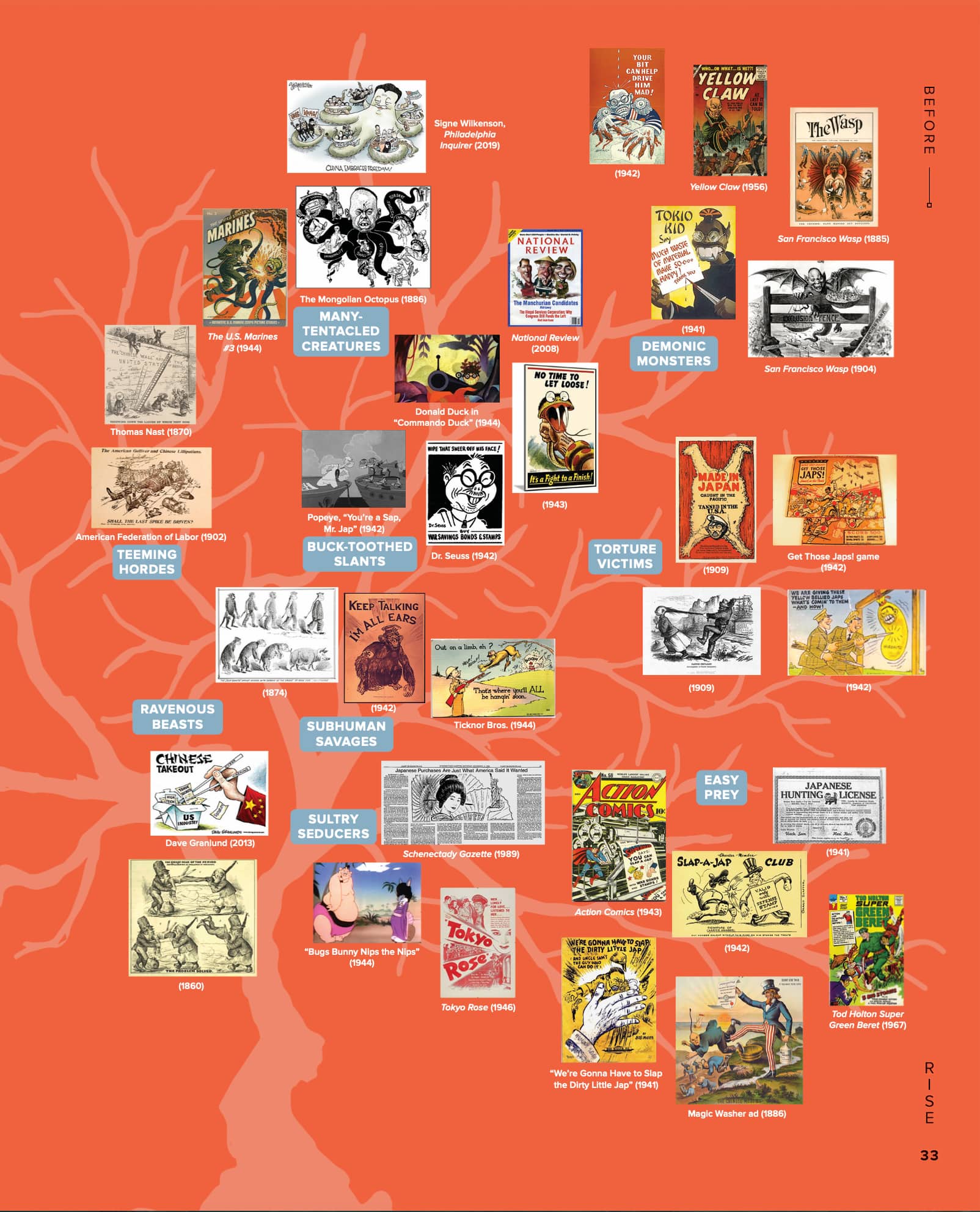
Stereotypes are images that are one-dimensional or that perpetuate distorted or bigoted perspectives toward a target group. For Asians, many of these stereotypes originated as tools to marginalize, exclude, or dehumanize. Examples include the following:
- Depictions of Chinese as drug users and eaters of disgusting things, drawn by newspaper cartoonists in the late nineteenth and early twentieth century to support efforts to bar Chinese migration to the United States
- Images of Japanese as tiny, bucktoothed, squint-eyed creatures that could be easily swept away, created as part of World War II propaganda to make it easier to rally support for American troops fighting Japan in the Pacific
These and other images were recycled and reused for other Asian populations during subsequent conflicts—the Korean War in the 1950s, the Vietnam War in the 1960s, the “cold war” with China in the 1970s, economic tensions with “Japan Inc.” in the 1980s, and trade battles with a resurgent China in the 1990s and beyond.
More to explore
Document
The Propaganda Family Tree
A spread from the book RISE, the “Propaganda Family Tree,” depicting the ways that propaganda images have persisted over the decades, and been repurposed for subsequent conflicts.
Invented as weapons, these stereotypes were embedded into comics, pulp fiction, children’s cartoons, military dramas, and comedy sketches. They became a part of broader pop culture, and often served as the first and most frequent exposure Americans had to Asians—and the most common “reflection” many Asians saw of themselves.
The Impact of Stereotypes
According to a survey conducted by the Geena Davis Institute on Gender in Media, the Coalition of Asian Pacifics in Entertainment, and Asian American media advocacy organization Gold House, only 4.5 percent of main cast roles in top-grossing Hollywood movies released between 2010 and 2019 were played by Asian Americans or Pacific Islanders, and of those, three-quarters were supporting characters. Researchers also found that 35 percent of all Asian characters in these blockbusters were stereotypical in nature, depicting Asians as “coolies,” inscrutable foreigners, manipulative “dragon ladies,” or awkward nerds.
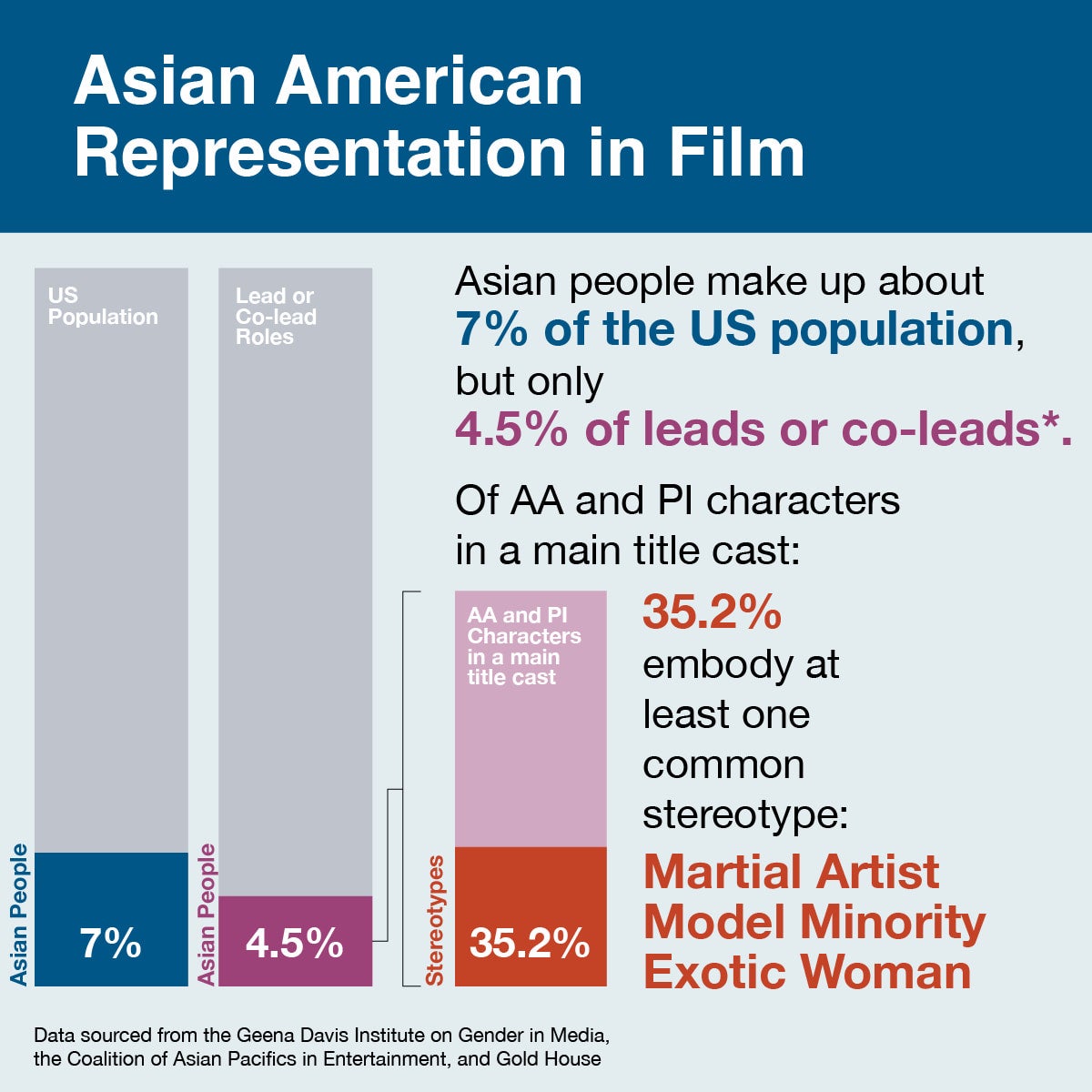
Image 25.01.05 — Asian Americans remain significantly underrepresented in film and other mass visual media, and when they do appear, they are frequently depicted in stereotypical fashion. (Source: Geena Davis Institute on Gender in Media; CAPE; Gold House)
Research published by the National Institutes of Health (NIH) have shown that Asian American students are the least likely to have high self-esteem scores of any ethnic group, with Asian American female students having the lowest mean self-esteem score of any group in their age range. Stereotypes—including those that might be seen as “positive,” like the perception that Asians are a “model minority” with a greater expected level of achievement—play a key role in this reduced self-image: Even Asian Americans with higher GPAs and other markers of achievement have been found to score significantly lower on self-esteem than other students, with higher rates of depression and other mental health issues.
And because stereotypes flatten and dehumanize their subjects, they can also make it easier for Asian Americans to be targeted for harassment or violence in times of social and economic distress.
Vincent Chin
In the late 1970s and early 1980s, as Japanese auto industry exports were skyrocketing, pop culture depicted Japanese people as sneaky cheats, emotionless, and inscrutable schemers and ruthless invaders, reviving stereotypes first minted during the rise of World War II. Politicians compared Japanese imports to the surprise attack on Pearl Harbor, and car dealers invited news cameras to broadcast scenes of American auto workers destroying Toyotas with sledgehammers.
In 1982, the increasingly hostile environment toward Japan helped to trigger a tragedy. Vincent Chin, a young Chinese American man celebrating his imminent marriage, was ambushed and killed by two Detroit auto workers who were allegedly overheard mistaking him for Japanese—shouting, “It’s because of you little [expletive] that we’re out of work.”
The case of Vincent Chin became a national rallying cry for Asian Americans in 1987, after filmmakers Renee Tajima-Peña and Christine Choy made a widely seen documentary about the incident. Who Killed Vincent Chin? was subsequently nominated for an Academy Award, which brought further national attention to the issue of violence against Asian Americans.
Physical Attacks Against Asians During COVID-19
More recently, pop culture—in the form of memes, shareable news clips, and video rants uploaded to social media platforms—also played a role in amplifying hostile rhetoric and encouraging physical attacks against Asians during the COVID-19 pandemic in 2020 to 2022. As use of terms like “Chinavirus” and “Kung Flu” became widespread among online posters, news commentators, comedians, and even public officials, the number of federally reported anti-Asian hate crimes increased from 158 in 2019 to 279 in 2020, and then 746 in 2021, according to statistics published by the FBI.
Simultaneously, Asian American communities demonstrated their ability to unite and resist this wave of hatred. Asian American celebrities and political leaders stepped up to protest and educate Americans about the roots and human impact of anti-Asian bias, and nonprofits like Stop AAPI Hate emerged to collect and amplify reports of harassment, bullying, shunning, and other discriminatory actions against Asians. Ultimately, over eleven thousand reports of such incidents occurred between March 2020 and May 2023.
Reflection Questions
Why does popular culture play such a big role in defining what people think of Asians?
How do the consequences of being underrepresented or invisible in popular culture impact Asian Americans?
What are some of the stereotypes often associated with Asians, and where did they originate?
Glossary terms in this module
model minority Where it’s used
A stereotype that has been projected onto Asian Americans that depicts them as more hard working, studious, diligent, and law-abiding than other minority populations. While this stereotype seems positive, it can be harmful in two ways: It can cause resentment from groups that are not described in such terms, and it can lead to members of the group who don’t meet those standards being subjected to shame and condemnation.
norms and mores Where it’s used
Norms are the widely held or deeply rooted belief systems of a population or community that define what is “mainstream”—i.e., normal. Mores are norms that have an explicitly moral context; those who act or speak in ways that are seen as violating social mores can be condemned as shocking, objectionable, or obscene.
pop culture Where it’s used
Short for popular culture, a collective term for the creative and social expressions of a population or community that influence large numbers of people, usually through the broadest and most accessible forms of media, entertainment, and communications available, such as film, television, radio, or the internet.
propaganda Where it’s used
Media, entertainment, or commentary that creates false images of or beliefs about a group with the goal of turning public opinion against the targeted population. It is frequently used in the context of war to dehumanize the enemy and encourage public support for combat against them.
stereotypes Where it’s used
Widely accepted but oversimplified, exaggerated, and often offensive images of or beliefs about particular categories of people—often those who are less well represented or less powerful in society. The preconceived ideas they create about the groups they represent can be harmful: for example, making people reflexively believe that members of those groups are dangerous, strange, or less capable than themselves.
Endnotes
1 Brian X. Chen, “The Cost of Being an ‘Interchangeable Asian,’” New York Times, June 6, 2021.