





Nobuko Miyamoto, seated before small crowd, sings into microphone while Chris Iijima, seated beside her, sings and plays guitar during a performance.
Module 4: Asian Americans in Music, Part 1: Folk, Traditional, Jazz, and Classical
Can pop culture combat racism toward Asian Americans?
Music is the oldest known form of performance art. Evidence of musical performances can be found in the artifacts of the earliest prehistoric societies, including those from the Indus Valley (covering much of what is now Pakistan, northwest India, and northeast Afghanistan) and the Xia dynasty civilization of China.
This module examines Asian American achievements in folk, traditional, jazz, and classical music.
What is the importance of traditional music in Asian American communities?
How has folk music been tied to political movements, including the Asian American movement of the 1970s?
How did classical music become so central to the image of Asian Americans?
Musical Forms
Music emerged so early in human history partly because it’s so intimately tied to language: Both aspects of human culture activate similar parts of the brain, and share aspects in common, like rhythm, pitch, and tone. People have long called music the “universal language”—a form of creativity that connects us and allows us to communicate despite other barriers, while also displaying seemingly infinite variety.
Because musical tastes cross boundaries of class, race, and geography, music has been a powerful tool for encouraging tolerance and mutual understanding, even when laws required—and enforced—separation. For example, jazz and R&B built cross-racial friendships and collaborations during the Jim Crow era and helped move white audiences toward supporting the end of segregation and the fight for civil rights.
Where Asian American pop culture is concerned, music has generally fallen into three major genre categories:
- Asian folk and traditional music: Asian native, ancestral, and Indigenous musical forms that have been preserved or reclaimed by members of the diaspora
- European classical music: Widely embraced and adopted in Asia, and an educational cornerstone for many Asian immigrants
- Rock/pop/R&B/hip hop: The most widely consumed contemporary musical forms
Artists from Asia have helped to change expectations among popular music audiences, with Korean pop music performers in particular becoming mainstream global superstars, paving the way for Asian American and Asian diasporic artists to find audiences around the world as well.
Sounds of the Homeland: Folk and Traditional Music Forms
As they arrived in America, Asian immigrants brought with them the musical customs and traditions of their native lands. Some of these were tied to ceremonial practices like holidays, weddings, funerals, and commemorative events, like Japanese “taiko” drumming; Korean “pungmul,” a musical tradition tied to farm culture that weaves together chanting, percussion, and dance; and Filipino “kulintang” music, which is played on gongs and drums. Oral folk music traditions were also a part of immigrant family life: Drinking songs, songs used to teach children, and songs to be sung during work.
Finally, there were traditional forms of entertainment that immigrants preserved in order to maintain cultural bonds with their homelands and community ties with one another, such as Japan’s “kabuki” and Chinese opera—one of the most successful early musical transplants to the United States, which by the 1880s had become so embedded among Chinese immigrant communities that there were no fewer than four thriving opera venues in San Francisco alone.
Though performance and consumption of these traditional and classical music forms were initially restricted to their individual immigrant communities, over time others began to discover them. Asian Americans gravitated to Japanese taiko drumming as a loud, rhythmic performance art that commanded attention; among Asian American activists in the late 1960s and 1970s, taiko was often a part of political protests and rallies.
From this political environment emerged an original form of Asian American folk music. Activist musicians Nobuko Miyamoto and Chris Iijima formed a duo that would eventually become a trio, adding William “Charlie” Chin, and name itself Yellow Pearl, a winking pun on the phrase “Yellow Peril.” In 1973, they would release A Grain of Sand, which many have dubbed the “first Asian American music album.”
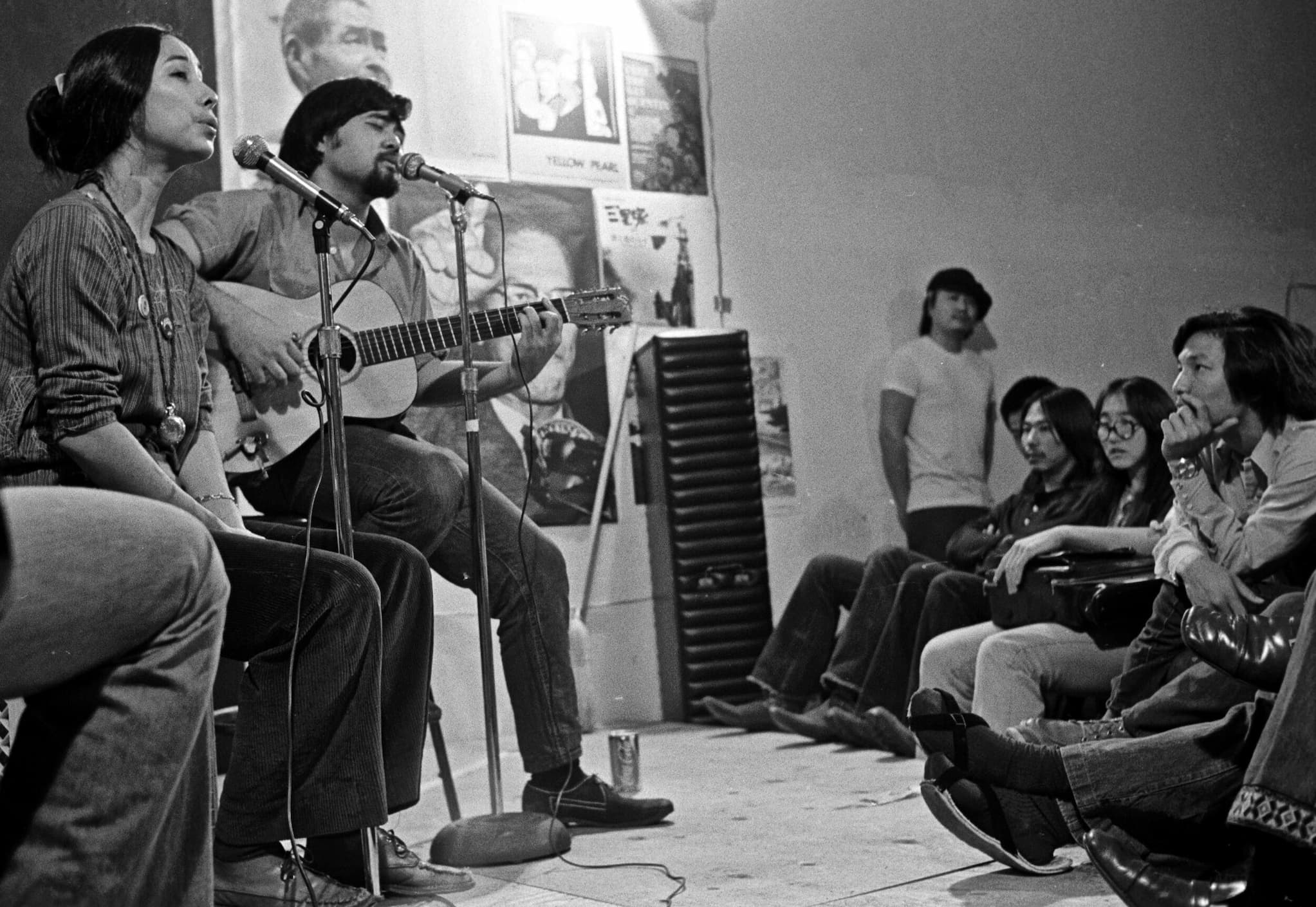
Image 25.04.01a — Nobuko Miyamoto (left) and Chris Iijima (right), the folk duo who, along with guitarist Charlie Chin, created what is often referenced as the first album of music by, for, and about Asian Americans: A Grain of Sand (1973).
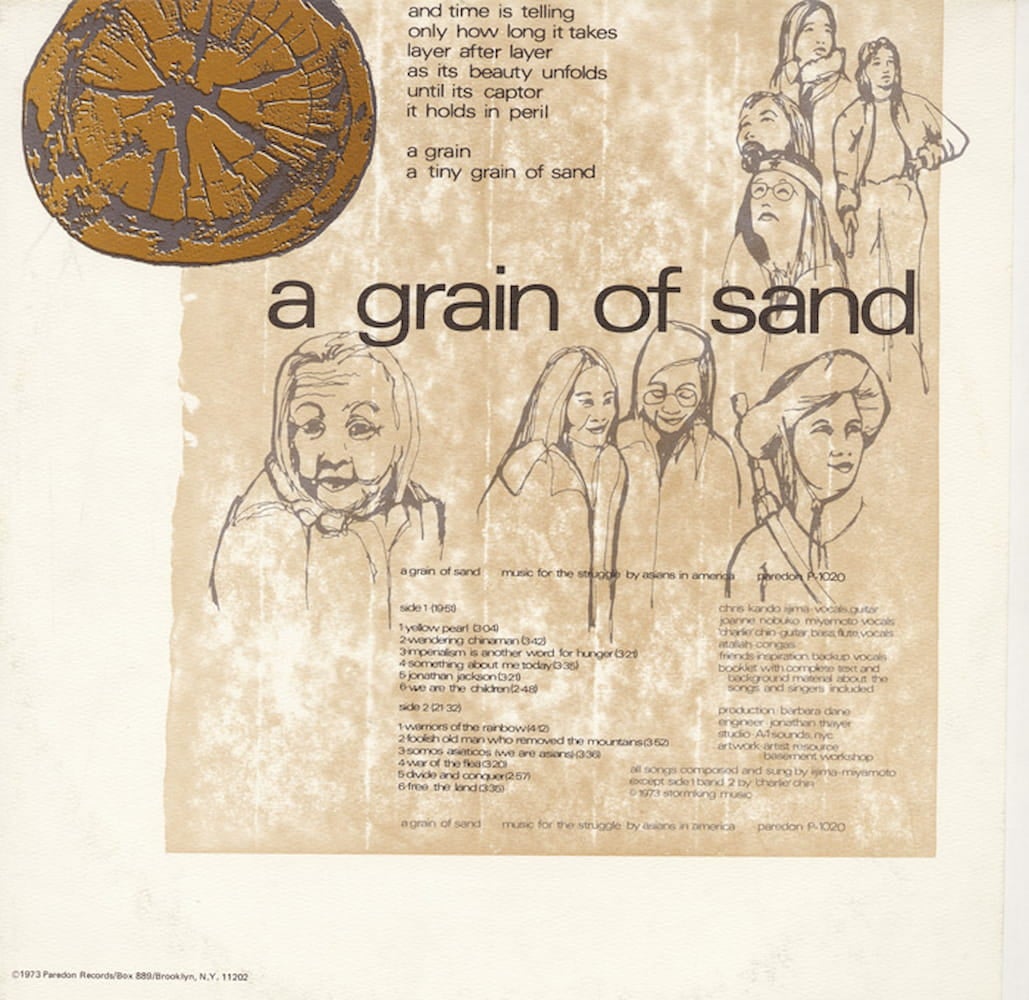
Image 25.04.01b — The cover of A Grain of Sand (1973), the first album of music by, for, and about Asian Americans.


A year later, the band Hiroshima would be founded by then husband-and-wife pair Dan and June Kuramoto. The jazz-folk-fusion band brings traditional Asian instruments like taiko and the “koto” (the Japanese zither) together with Western ones. Signed to Arista Records in 1978, their debut self-titled album sold one hundred thousand copies; their second earned them their first Grammy nomination. They’ve now sold well over four million records in a half century of making music.
Other Asian American musicians also embraced jazz as a medium through which to celebrate their heritage while building bridges into the African American, Afro-Caribbean and Latin communities, inspired by the Black Arts Movement of the 1970s.
Orchestral Maneuvers: Asian Americans and Classical Music
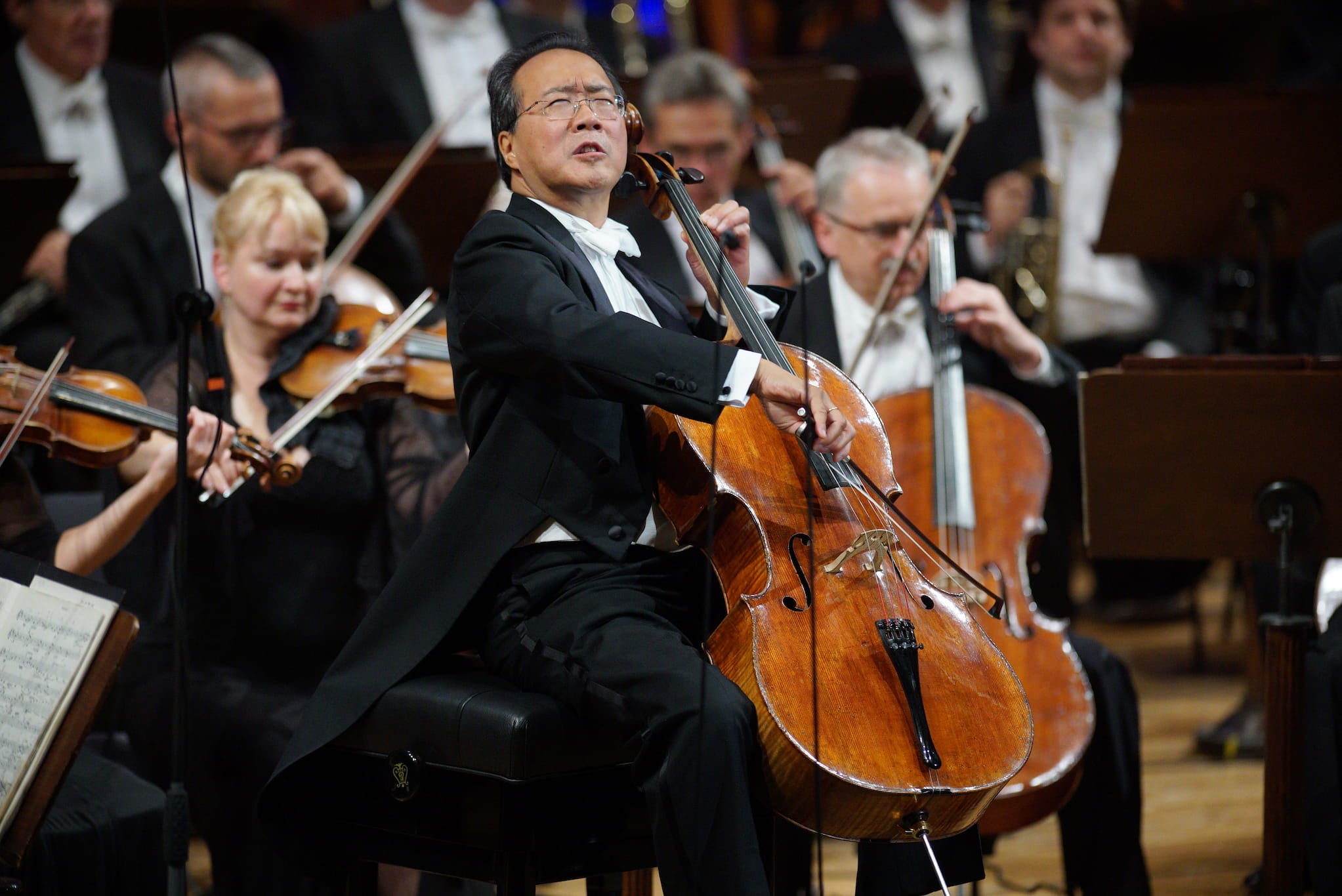
Image 25.04.02 — Perhaps the best-known classical musician of his generation, cellist Yo-Yo Ma was born in France to Chinese immigrant parents who moved to Boston when he was seven. In his legendary career, he has recorded 120 albums and received nineteen Grammy Awards.
From the 1940s through 1970s, middle-class and upper-class Asian families began encouraging their children to learn Western classical music as a sign of refinement, a trend accelerated by the creation in Japan of the Suzuki method of music teaching. This method, developed by violinist Shinichi Suzuki, emphasized starting the teaching of music when very young, with deep parental involvement.
In the late 1960s, after the Immigration and Nationality Act of 1965 removed obstacles to Asian immigration to the United States, many of the first wave of immigrants recruited to come to the United States arrived on student and professional visas. They believed that classical music was aspirational. As such, playing piano and violin became deeply woven into the “model minority” stereotype of Asian Americans.
As Western classical music became embedded in the Asian American experience, it produced a number of standout artists.
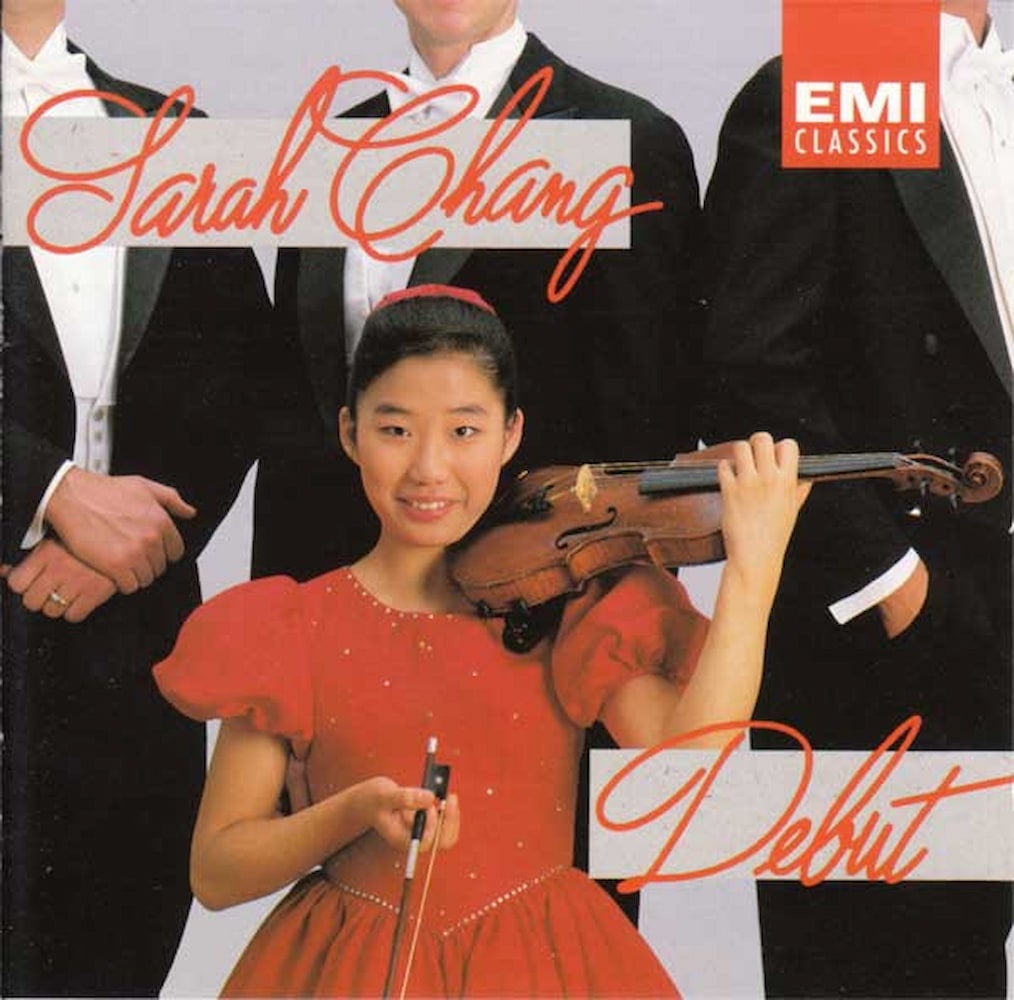
Image 25.04.03 — Violinist Sarah Chang was a child prodigy who released her first album at the age of nine. The first wave of Asian immigrants after the Hart-Cellar Act often brought with them the belief that Western classical music was aspirational.
Sarah Chang, born in Philadelphia, Pennsylvania, was the daughter of two South Korean immigrants who were both musicians. She auditioned for the Juilliard School at the age of five, was accepted into their program, and first soloed with the New York Philharmonic and the Philadelphia Orchestra in 1990 at the age of nine. She recorded her first album in 1991. Chang has since performed with nearly every major orchestra on earth, and she is recognized as one of the world’s foremost violin soloists.
Yo-Yo Ma, born in France to Chinese immigrant parents, began studying cello at the age of four. At age seven, his family moved to Boston and then New York City, where he attended Juilliard and won recognition as a cello prodigy. Since then, he has become perhaps the best-known classical musician of his generation, recording over 120 albums and receiving nineteen Grammy Awards. His collaborations outside classical music, with artists like Bobby McFerrin, Carlos Santana, and James Taylor, as well as pop icons like Miley Cyrus and Sting, are part of what have made him so widely known.
Another child of immigrants who found success in the classical world is Vijay Gupta, born in New York’s Hudson Valley, the son of Bengali immigrants. He enrolled at Juilliard at age seven and first performed as a soloist at age eleven with the Israel Philharmonic. After a friend fell into homelessness due to mental illness, Gupta founded the nonprofit Street Symphony, an organization dedicated to using music to engage homeless and incarcerated communities in Los Angeles. In 2018, for his music and his philanthropy, Gupta was awarded a MacArthur “Genius” grant.
Reflection Questions
How has music played a critical role in empowering Asian American communities and helping them to define themselves, politically and culturally?
What makes music such a powerful tool for building bridges between communities and generations?
Glossary terms in this module
diaspora Where it’s used
The broader network of people who have migrated from a particular region to other places in the world. Members of the diaspora can frequently serve as a cultural bridge between their overseas communities and their ancestral nations, acting as a vital mechanism for the global transmission of ideas, interests, fashions, and trends.
folk Where it’s used
Traditional creative forms that may not have fixed, written methods, or standards, and that are generally passed along from generation to generation through example and oral instruction rather than through formal training. Though folk arts are sometimes seen as simpler and less sophisticated than “fine” or “classical” arts, in reality they represent rich, complex bodies of work that reflect the deep history and collective identities of the populations from which they emerge.
model minority Where it’s used
A stereotype that has been projected onto Asian Americans that depicts them as more hard working, studious, diligent, and law-abiding than other minority populations. While this stereotype seems positive, it can be harmful in two ways: It can cause resentment from groups that are not described in such terms, and it can lead to members of the group who don’t meet those standards being subjected to shame and condemnation.
pop culture Where it’s used
Short for popular culture, a collective term for the creative and social expressions of a population or community that influence large numbers of people, usually through the broadest and most accessible forms of media, entertainment, and communications available, such as film, television, radio, or the internet.
stereotype Where it’s used
Widely accepted but oversimplified, exaggerated, and often offensive images of or beliefs about particular categories of people—often those who are less well represented or less powerful in society. The preconceived ideas they create about the groups they represent can be harmful: for example, making people reflexively believe that members of those groups are dangerous, strange, or less capable than themselves.
Yellow Peril Where it’s used
A stereotype that envisions Asians as part of a vast, faceless, menacing horde, dedicated to destroying or conquering Western civilization. It was originally sparked by the invasion of Europe by Genghis Khan’s Mongols but soon expanded to include fear of East and Southeast Asian peoples, recycling similar racist imagery.