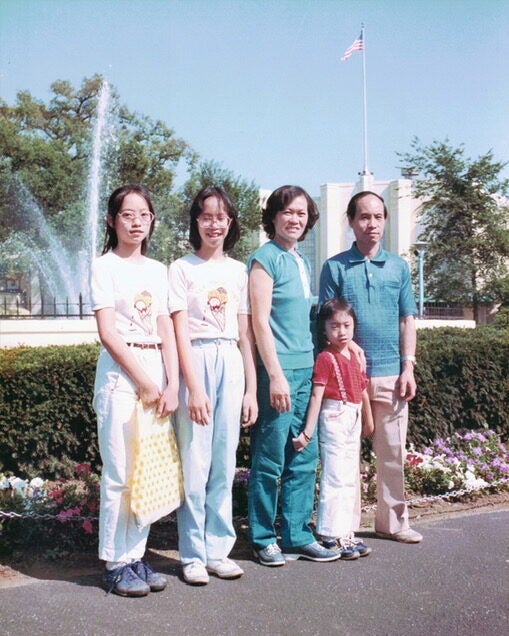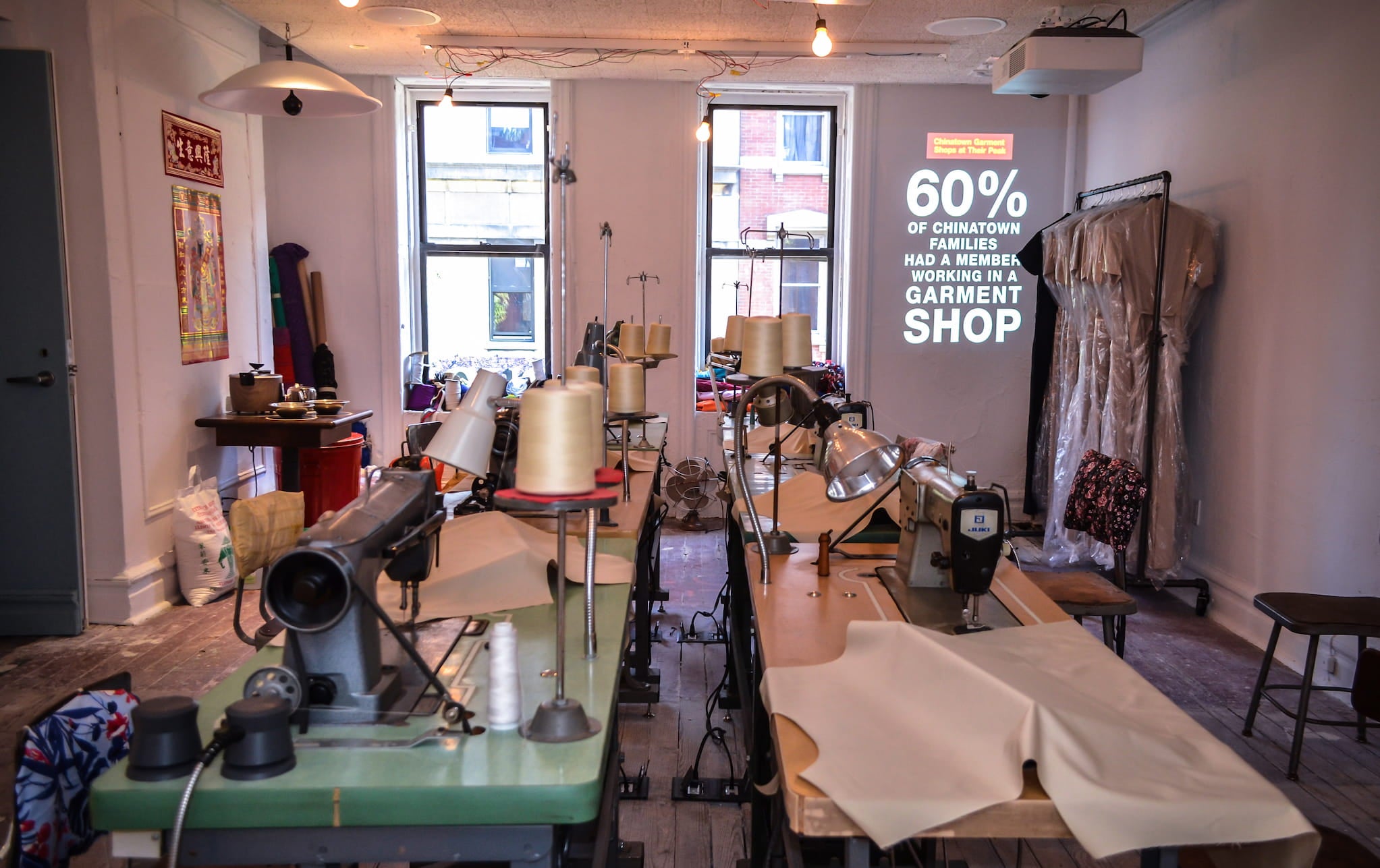





Museum exhibit depicts a typical sewing factory from the 1980s, showing a small room with multiple tables, sewing machines, and clothing racks.
Module 1: New York Chinatown and the Garment Industry
Did the collective action of New York City Chinatown’s Chinese American garment workers positively change their working conditions and their lives?
How did your clothing get made? Who did the designing? Who did the sewing?
Making clothes has been an important industry in the United States for over a century, and immigrants have been the heart, muscle, and brains of this work. New York City has been an especially important city for both the garment industry and for immigration. As each wave of immigrants came looking to the United States for work, there were always some who arrived with sewing skills. Others came with visions of founding a small business. In the 1970s, thousands of Chinese immigrants settled with their families in New York City and re-energized the historic garment industry by establishing hundreds of factories in Manhattan’s Chinatown. Their story is the focus of this chapter.
Immigration to the US and to New York City has occurred in different waves and sewing work was a part of each. A rush of Irish immigration in the first half of the nineteenth century was followed by a wave of German immigrants in the mid-nineteenth century. Immigration from these and many other countries did not stop, but was eclipsed in the late 1800s by a much larger group of Eastern European Jewish and Italian immigrants.
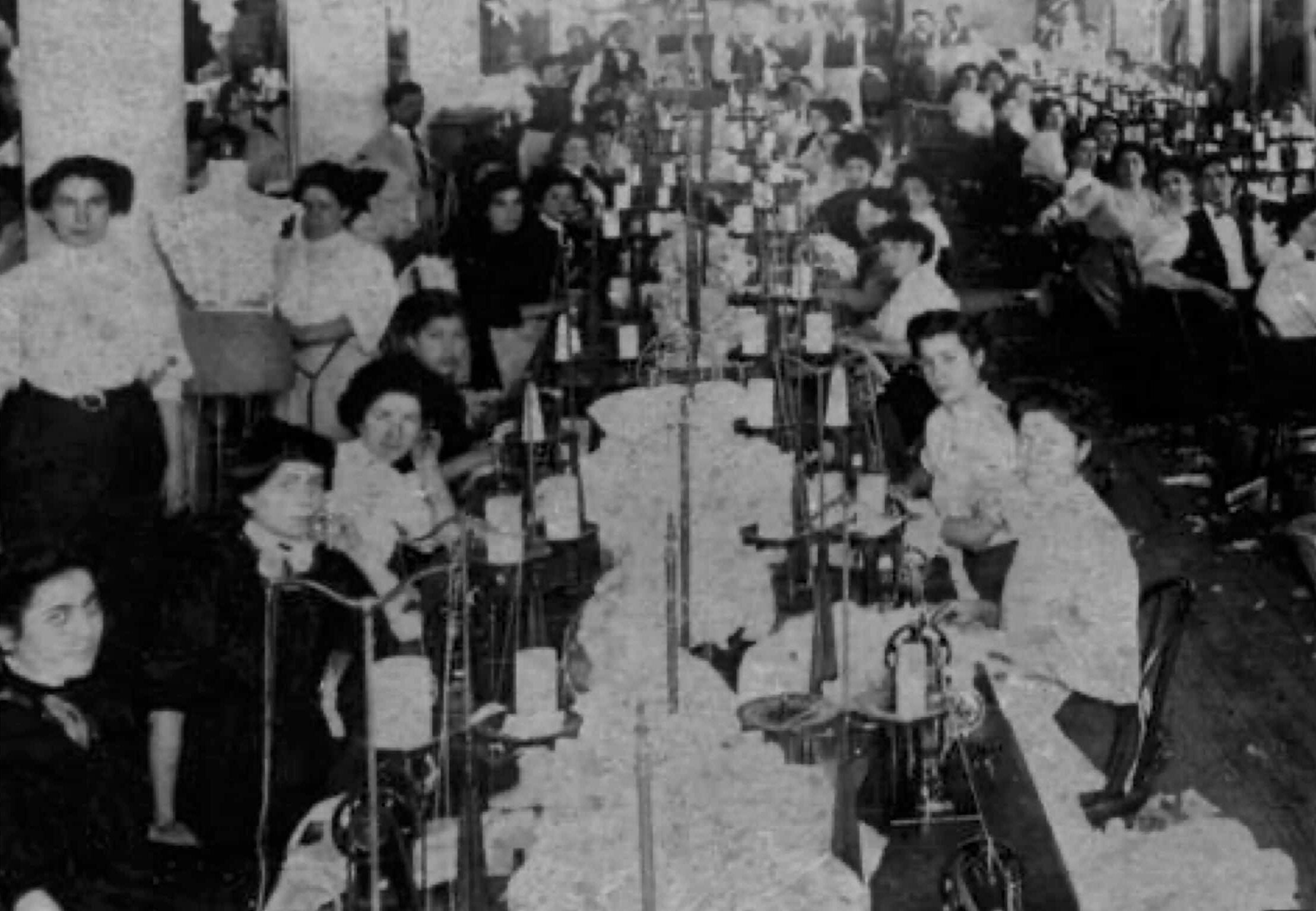
Image 47.01.01 — This 1910 garment factory photo looks a little different from the other photographs in this chapter, which were taken in the 1970s—1980s. What are the differences? What are the similarities?
African Americans from the South and Puerto Rican and Black migrants from the Caribbean came to the city in the 1920s–1960s. Garment manufacturing in New York City benefitted from major waves of new immigrants in the 1960s and 1970s coming from China, Korea, the Dominican Republic and other Caribbean countries. Each wave of arrivals decided to migrate based on a variety of reasons, including “push” factors, in which people hoped to escape conditions in their home country or region, and “pull” factors, which motivated migrants to seek opportunities abroad. These workers formed the base of a revived garment industry in the 1970s, especially in New York’s Chinatown.
More to explore
Image
Mrs. Ma’s Story
Who are the women who worked in the garment factories? How and why did they immigrate to New York? May Ying Chen conducted oral history interviews in Chinese, translated, and wrote up the stories for writer and poet Esther Cohen who edited the project, We Built New York.
Just as immigration waves have changed over time, so too has the garment industry. The division of work into small tasks and improvements in sewing machine technology allowed for faster and more efficient clothing manufacturing. But these changes, alongside companies’ emphasis on quick profits and mass production, frequently left workers making garments for low pay and in dangerous working conditions. As a result, workers learned to fight for a better workplace and negotiate with their bosses.
One particular victory for garment workers occurred in New York’s Chinatown in 1982, when thousands of immigrant workers—mostly women—took a stance to demand increased respect in the workplace and renewal of their union contract. In this chapter, we will learn about the New York City garment industry, the immigrant worker community in Chinatown, the International Ladies’ Garment Workers’ Union (ILGWU), and the historic strike for workers’ rights.
More to explore
Image
Tenement Museum
The New York Chinatown garment industry of the 1980s is the subject of a permanent exhibit at the Tenement Museum. The exhibit follows the story of the Wong family who lived in the museum’s building at 103 Orchard Street, recreating a room in the family’s apartment and a replica of a typical sewing factory of that time. Mrs. Wong was a long-time factory worker in Chinatown. The Museum conducted extensive interviews with Mrs. Wong and her children, as well as union members, employers, and researchers to build an educational and interactive exhibit about this history.
What is the history and nature of the garment industry in New York City?
How has Chinese immigration after 1965 shaped the New York garment industry?
How did immigrant workers in the factories, especially women, deal with their working conditions?
“Immigrants Rescue the Rag Trade”
The lives of many arrivals to New York City throughout the twentieth century—which included Jewish, Italian, African American, Puerto Rican, and Chinese communities—have been involved with the garment industry in some way. Most worked in factories or tenements, narrow and overcrowded apartment buildings where immigrants in New York City often lived.
Many tenements doubled as living quarters and garment shops before the industry moved to separate factory buildings in the early 1900s. Some immigrants arrived with sewing or tailoring skills, and others—hungry for work—learned these skills on the job. Some immigrants later became contractors and employers who recruited and hired garment workers to work in the shops. Many would hear about these jobs from friends or relatives from their home country. Language abilities, immigration status, and gender often limited job opportunities.
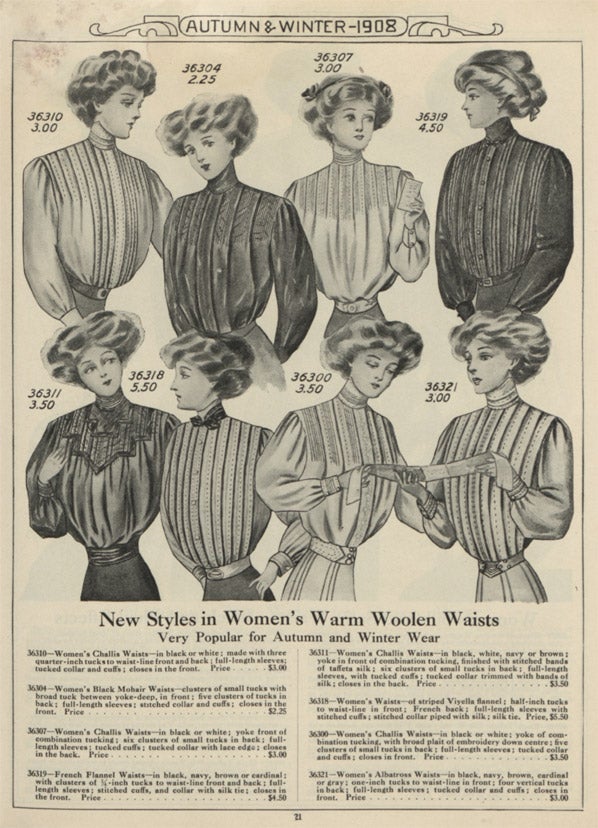
Image 47.01.04 — A 1910 advertisement for shirtwaists, a relatively simple and functional ready-to-wear garment that was inexpensive to manufacture. At the time, over a third of the nation’s ready-to-wear clothing was produced by New York City’s garment industry.
The garment industry was one of the city’s most important industries, and immigrants have always been at its core. By 1900, fewer than 20 percent of family heads in New York City had parents who were both born in the United States. This city of immigrants produced more than a third of the nation’s ready-to-wear clothing during the early twentieth century. But the industry, dependent on immigrant energy, was a volatile one.
Reflection Question
What occupations are available to immigrants arriving in New York City today?
Sewing machines improved and the industry divided work into segments that workers with fewer skills could perform. This reduced costs for companies. The workforce grew along with consumer demand for inexpensive clothes and new fashions. In the 1920s and 1930s, the search for lower labor and real estate costs soon sent clothing manufacturers out of New York City to New Jersey and Pennsylvania and across the nation.
Although 95 percent of the clothing Americans wore then was still made in the US, production had slowly been moving away from New York City. In the early 1960s, the downtown neighborhood of Manhattan’s Chinatown had a small population of mostly men and virtually no garment manufacturing. However, this would soon change.
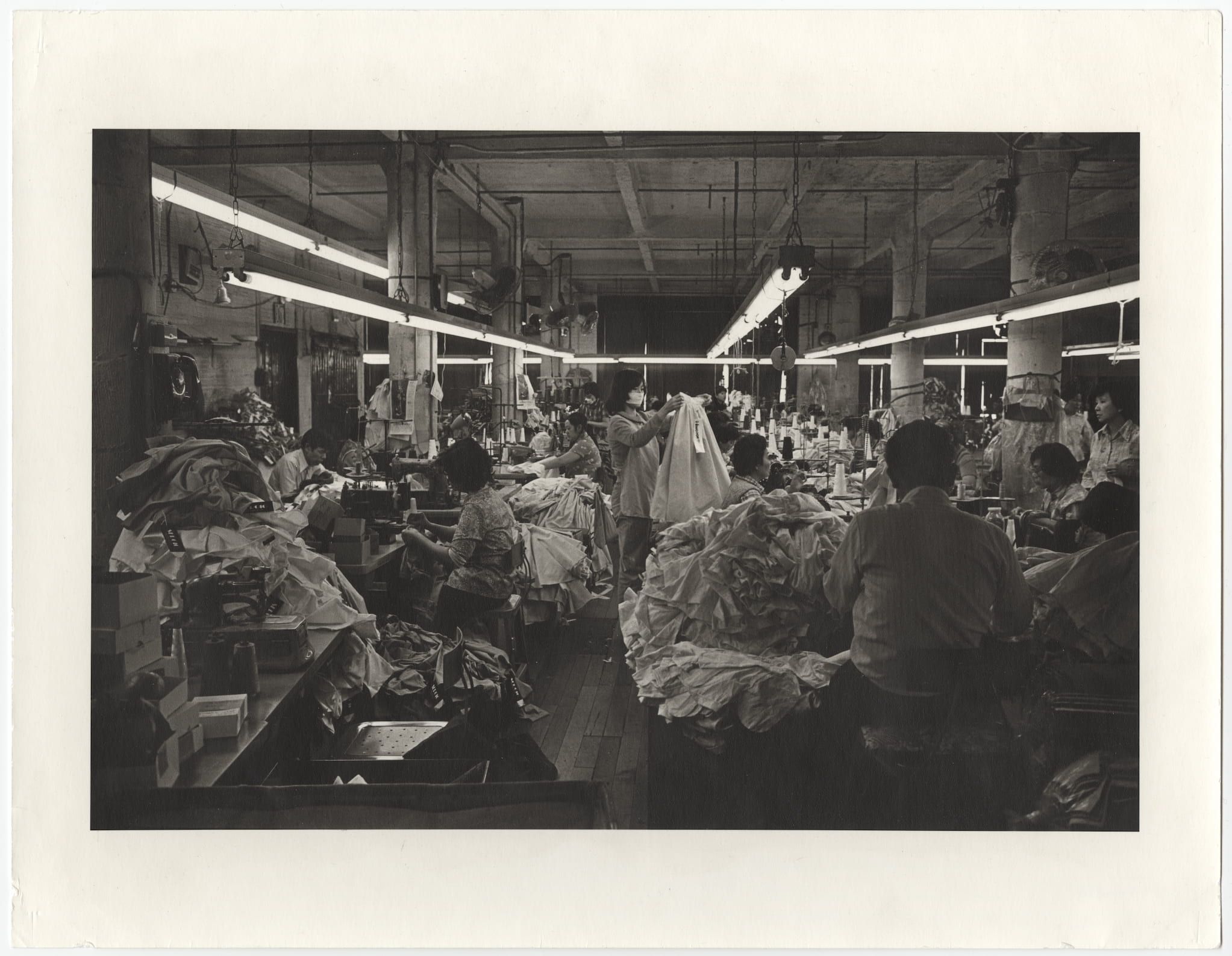
Image 47.01.05a — An inside look of the floor layout in a garment factory located in New York City’s Chinatown, c. 1980.
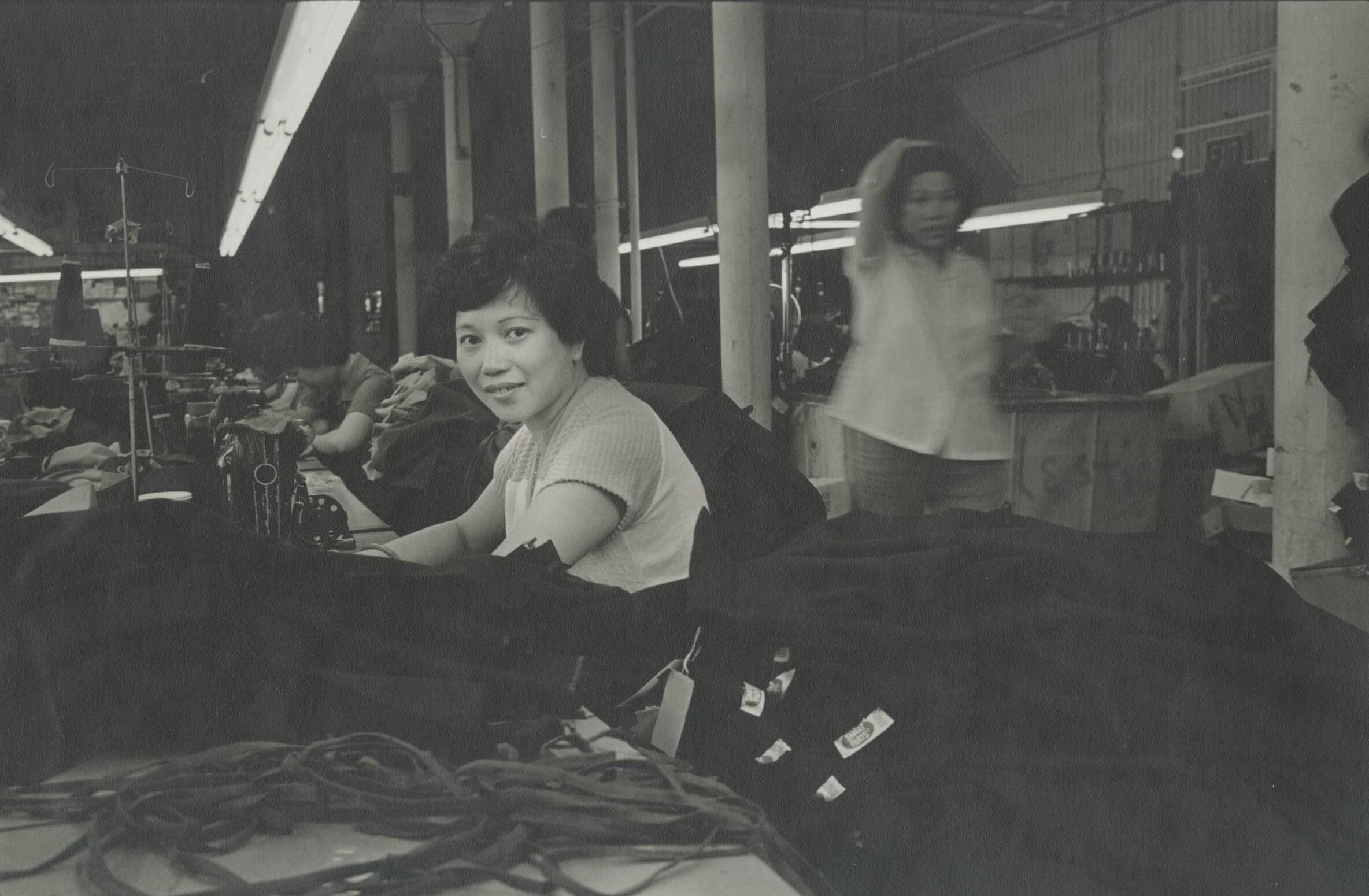
Image 47.01.05b — A woman working at a garment factory on Canal Street in New York City’s Chinatown.
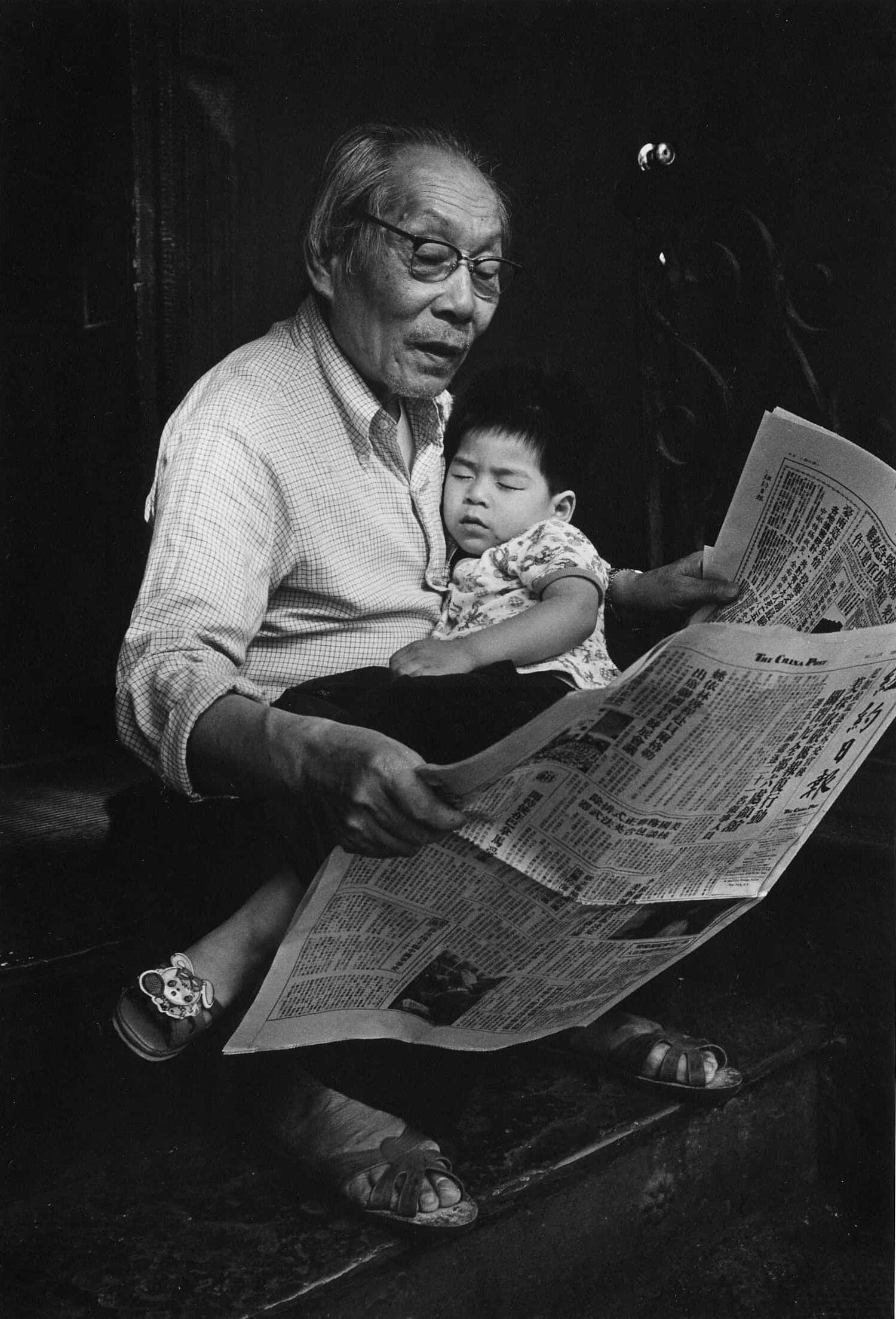
Image 47.01.05c — Extended family members often cared for children while their mothers were working in the garment factories.



The 1970s saw a resurgence of garment work in New York City due to major shifts in immigration laws. “Immigrants rescue the rag trades” 2 is how one observer described the situation. Change was quick—in both the city’s faltering garment industry and in Chinatown, where a garment industry was built by immigrant entrepreneurs and workers, mostly from China. By 1980, there were nearly five hundred small garment factories in loft buildings throughout the neighborhoods of Chinatown, SoHo, and Tribeca.
Making a Garment
The loft factories and small shops that rapidly grew in Chinatown in the 1970s, organized work using piecework pay rates, section work, and contracting—employment systems similar to those established decades earlier. Here’s how it worked:
In factories, garments are usually constructed in pieces. Instead of expecting each worker to produce an entire garment on their own, factories separated the multiple steps into sections, with a different worker completing a single specific task repeatedly, such as sewing on zippers. This production method is called “section work.”
The term “piecework” refers to the compensation system in which workers are paid for the number of pieces they can make or for the number of tasks they complete—rather than the number of hours worked. The more pieces completed, the more workers are paid. This system, however, puts the worker in a difficult position of deciding whether to keep on working to make more money, or take necessary breaks to maintain a healthier working environment and lose out on money they could be making. Employers set rates low knowing that workers’ economic status would force them to choose to work faster and longer in order to earn more money.
A “fair” rate of pay for piecework means that a competent worker can complete enough pieces in an hour to make a decent hourly wage. Some experienced and skilled workers could make more money per piece rather than by the hour, but overall the effect was a punishing pace of work, with each sewer, ironer, and cutter pushing themselves to do more and more tasks to make a living wage. These jobs were further complicated by shop owners who competed for highly-skilled workers by paying them more and others less.
Contractors and shop owners who employed garment workers also competed with each other for bundles of work from manufacturers who had their own contracts with department stores to produce fashionable, ready-to-wear clothing styles for retail. The contractors—often immigrant men—offered manufacturers lower prices to have the cloth pieces sewn into garments.
As a result, contractors pushed their employees—often immigrant women—to work faster for less pay. Contractors from every immigrant group relied on shared language and culture to drive the work more efficiently, giving them better chances at success. Even though many contractors started as workers themselves, they often felt pressured to keep paying low wages and to push production to the limit.
An immigrant contractor or shop owner would make a deal with a manufacturer to sew each new style at a set price per garment. The contractor then divided the total price per garment into money for each section—seams, sleeves, zippers, and so forth, and a portion to cover their overhead and profit margin. They committed to receive the pre-cut fabric pieces of a garment and return them sewn together according to the designer’s sample in a fixed amount of time.
Through the “section work” production line, a sewing machine operator would receive a bundle of already cut fabric, sew the same section of the item over and over (as fast as they could), and then pass it on to the next seamstress to sew the following section. The finished garments were then sent back to the manufacturer and sold under that company’s label.
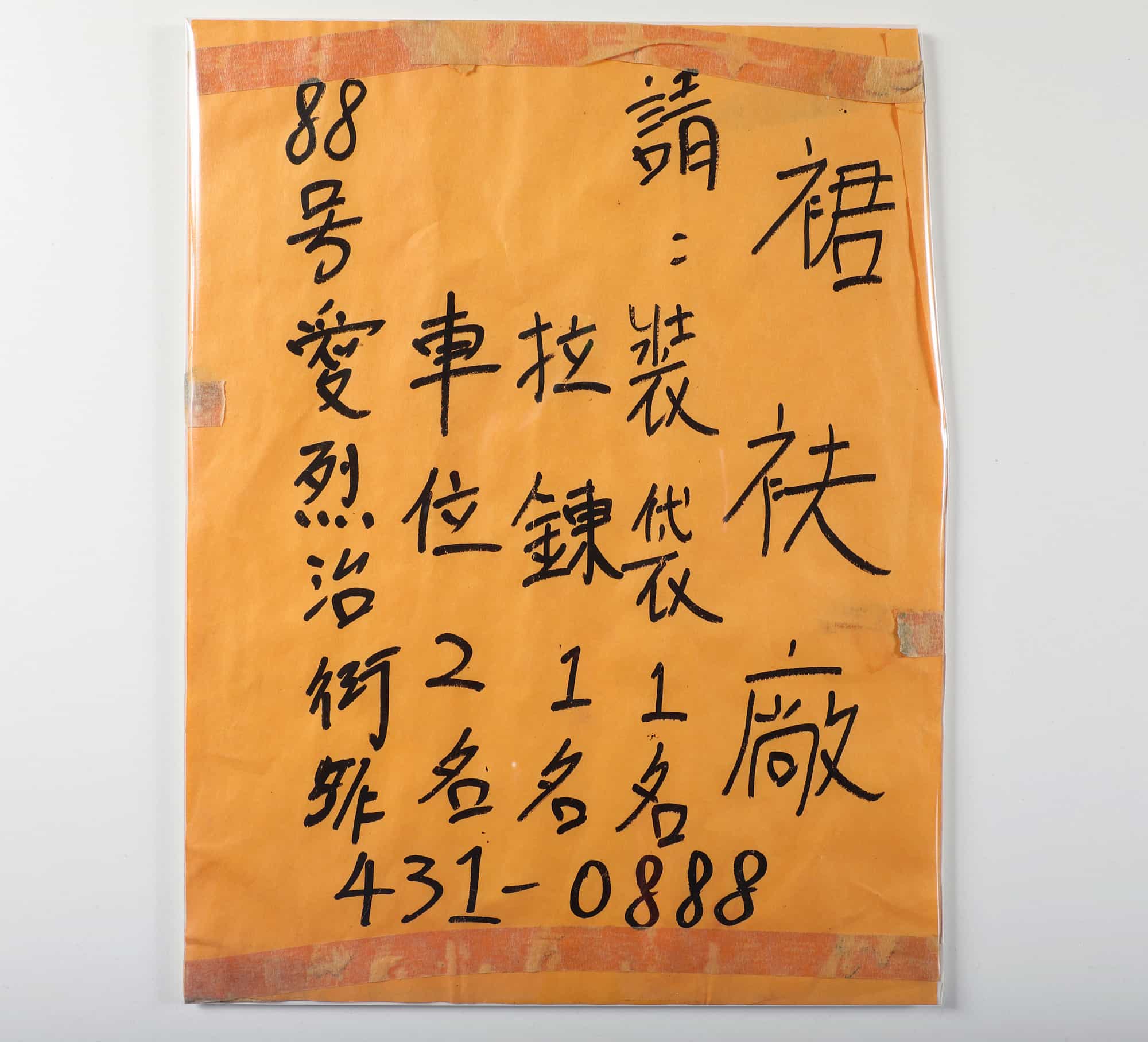
Image 47.01.07 — The division of the sewing through the “section work” production line is reflected in this Chinese handbill. In English it reads: “Skirt-pant factory seeking one pocket setter, seeking one zipper setter, seeking two regular lock-stitch operators, 88 Eldridge Street, fifth floor.”
Reflection Questions
Can you give examples of people you know who work as fast as they possibly can on a regular basis? Why do they push themselves so hard?
This practice of contracting out began around the turn of the twentieth century. The system enables manufacturers to avoid the responsibility of finding, equipping, and paying workers directly. The manufacturers make a profit once they sell the garment, and to ensure that profit, they try to pay the lowest possible price per garment to contractors.
For the contractor to make a profit, they, in turn, pay the lowest possible amount to the person doing the sewing. This arrangement exemplifies the intense economic and other pressures for garment workers. Department stores, manufacturers, and contractors made profits at the expense of low-wage workers, with section and piecework rates catching workers like cogs in the wheels of production.
A Century of Dangerous and Volatile Work
Working conditions varied from each shop and era, but overall, new immigrants had an urgent need to work while contractors paid them low wages and demanded high production. Even as larger factories began to replace sweatshops, the division of steps in garment making kept wages low and conditions crowded and unsafe.
In response to these working conditions, in 1909, workers in the shirtwaist industry—mostly immigrant women—went on strike to force factory owners to listen to their concerns about unsanitary and overcrowded factories. A majority of factory owners agreed to change conditions, but some refused, including the infamous Triangle Shirtwaist Factory in New York. Unfortunately, this would lead to tragedy.
Dangerous working conditions and low pay in the garment industry pierced the nation’s consciousness when a fire broke out at the Triangle Shirtwaist Factory on March 25, 1911. Young workers were trapped on the top floors of the building on Washington Square. Fire department hoses and ladders could not reach the women. Safety nets were not strong enough to hold those who jumped. A total of 146 workers, mostly young immigrant women, died. The tragedy commanded public attention to the terrible working conditions at the factory.
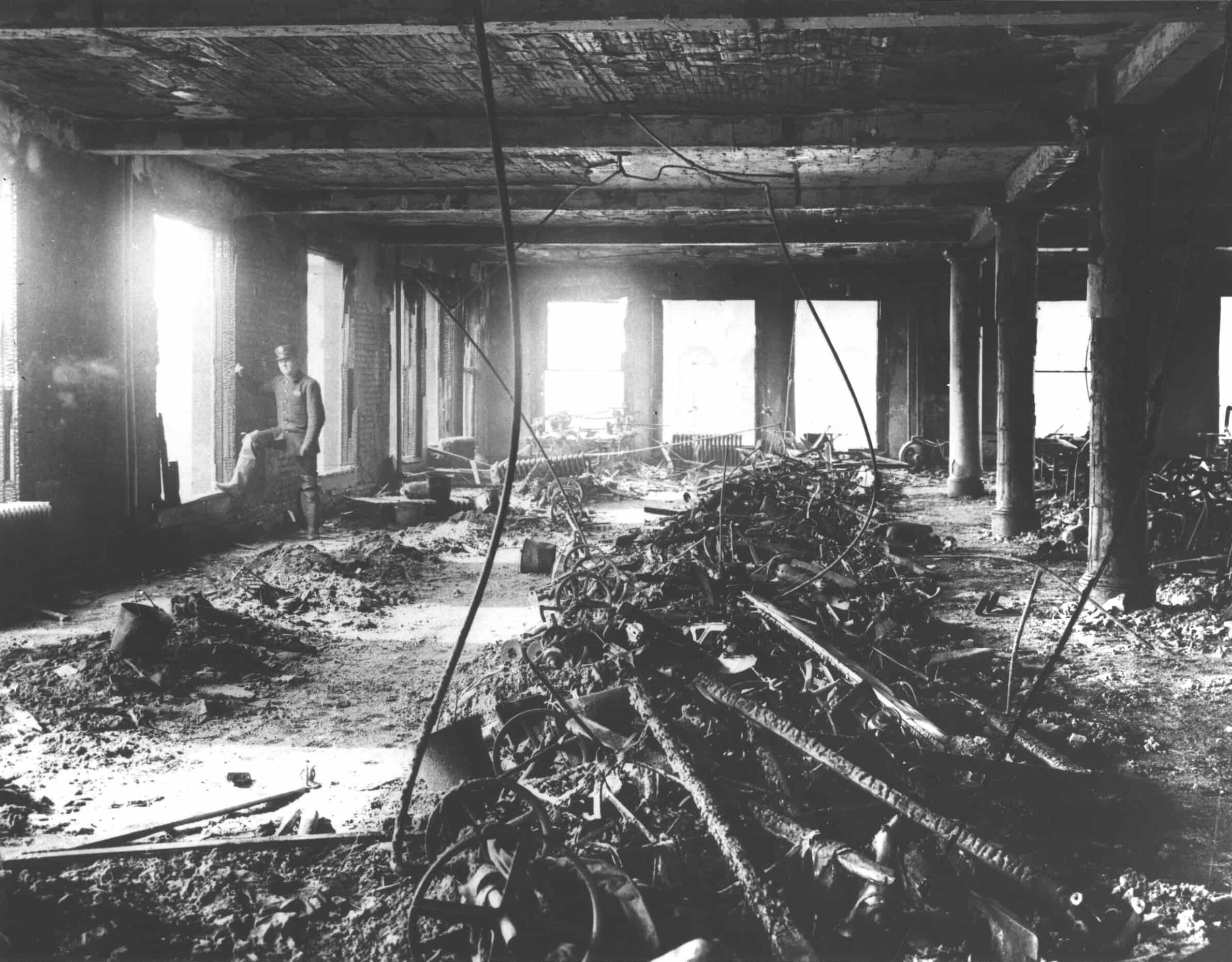
Image 47.01.08 — This image captures the destruction at the Triangle Shirtwaist Factory after the devastating fire on March 25, 1911. Garment factory sewing wheels can be seen amongst the rubble.
The city’s working-class people, middle-class progressives, socialist organizations, and the International Ladies’ Garment Workers’ Union (ILGWU) all responded to the tragedy. Workplace safety laws we rely on to this day were a result of these groups organizing together. The outpouring of grief included demands for change.
“120,000 Pay Tribute to the Fire Victims; Army of Workers, Most of Them Women, March Through the Downpour of Rain,” 3 read the New York Times headline about the memorial procession. Hundreds of thousands of people lined the streets to watch the silent procession. The labor movement gained momentum from the tragedy, and the state government finally responded to organizers and protestors with safety laws. Many reforms were subsequently adopted nationwide.
From 1911 to the 1980s, there was an expectation shared by the majority of the nation that workers would organize and push back against the extremes and the ravages of capitalism. Unions and their members played a respected role as a vital counterbalance to greedy manufacturers and the pressures of a hypercompetitive economy.
Unions Protect Workers
A union is an organization formed by workers, typically from the same industry or company, representing the workers’ collective needs in the workplace. A local union, often simply called a “local,” represents workers in a geographic area, or sometimes a specific portion of an industry. Locals are usually part of a central umbrella union; in North America, they are often designated as “international” because they represent workers in the US and Canada. This is true of the International Ladies’ Garment Workers’ Union (IGLWU) formed in 1900.
Why are unions important? They negotiate better contracts for workers through collective bargaining. A union staff member who represents workers, called a union representative or business agent (BA), meets with an employer to respond to workplace problems. Unions protect individual workers from their bosses who might punish or fire them for bringing up concerns. Unions can also provide a vital information resource and community for workers.
The surge of organizing energy among garment workers and their allies after the Triangle Shirtwaist Factory Fire led to union contracts requiring better and safer work conditions and to essential protective legislation. But constant attention and organizing were needed to keep up with changes in the industry and to ensure the enforcement of the new laws. Workers continued to unionize and pressure the government to regulate the industry.
As a result, some manufacturers moved away from New York City in the 1920s and 1930s to avoid paying union wages while remaining within driving distance of the city’s garment shops. They relocated to the outer boroughs, across the river, upstate, and farther across the country. In New York City, large loft factories were established farther uptown, away from the earlier Lower East Side tenement shops and closer to the new locations of department stores.
Each successive generation of newcomers to the US transformed the garment industry. Despite growing garment centers in other cities, the New York City garment trade reached its peak in the early 1950s, dominated by Puerto Rican and Afro-Caribbean migrants and African Americans migrating from the South.
Reflection Questions
What do you think the retailer’s responsibility is for the working conditions of the person who made the shirt you recently bought? Does it matter that the seller does not know the sewer or pay them directly?
The Chinatown garment industry rose in the 1970s and 1980s, even as the total number of shops in the city continued to decline, and the ILGWU became a pivotal resource for workers to join together to make important changes in the workplace there. While some unions limit their focus to wages and health care, the ILGWU focused on social unionism in addition to earnings and benefits.
The ILGWU and other social unionists believed that a safe and healthy workplace was connected to a safe and healthy community. Work issues are related to family, communities, human rights, and democracy. The immigrant women who made up most of Chinatown’s garment industry compelled the union to pay attention to the unique challenges they faced as a community of working immigrant mothers.
Chinatown’s Garment Workers Rise
The Chinese immigrant workers in New York’s Chinatown of the 1970s were mostly women who did not speak English. Unlike their early 1900s counterparts, most of these women were married and a great many were mothers. Their status as women, limited English skills, and strong family responsibilities limited their choices for work. Garment factory contractors and shop owners who hired them were often Chinese men who spoke their language, celebrated the same holidays, and shared cultural traditions. This brought some level of comfort and familiarity while in this new country where they experienced intolerance and hostility as immigrants.
However, the financial pressure these employers faced often led them to push their workers to work faster and for less pay in order to secure more work orders and increase profits. This led to conditions that severely stressed the women who sewed and produced the garments and needed to make a living. But thanks to the International Ladies’ Garment Workers’ Union, many immigrant workers were aware about working conditions in the broader garment industry. With the help of their union, they were propelled into action.
A union member, Mrs. Wong recalled reaching out to an ILGWU business agent (BA) when her boss wanted to close the shop without paying the workers. “This kind of thing happens very often in New York’s Chinatown,” she said. Wong called Connie Ling, the union’s BA, who responded right away and arrived at the shop the next day.
“After greeting and talking to the workers as she usually did, instead of talking to me in front of the boss about my grievances, as some of the BAs usually did—she went straight to the boss and presented my grievances with the evidence that she had gathered not only from me but also from other workers. The boss could say nothing but gave us the money. … Without her help, each of us would lose at least a thousand. One thousand dollars, you know, how much it meant to us! … Her help made me realize how important the union is in my life.” 4
Connie Ling confessed that being a union business agent was a difficult position. Shop owners did not enjoy scrutiny, and she felt a responsibility to support the workers.
“Even if you don’t go to the bosses, they will follow you all the way around once you set your feet in the shops. … If you really care about the workers, you will find a way to deal with the situation. …Every time, on my first visit to a new shop, I will stand in the middle of the shop, face the workers, and announce at the top of my voice, “I am Mrs. Ling. I am your new BA. The union is an organization of workers, and I am more than willing to help you. If you have any problems and don’t think you can tell me now, don’t worry, call me at my office. You even don’t have to tell me your name.” 5
Labor Solidarity and the 1982 Strike
“We are one!” was the rallying cry during successful rallies and a strike in the summer of 1982, when twenty thousand members of the International Ladies’ Garment Workers’ Union came together to protest unfair treatment. Most of the strikers were Chinese women, but they were supported by the multiethnic leaders and members of the ILGWU.
The slogan reflected an extraordinary culture of solidarity, built with a huge outpouring of energy from the immigrant garment workers who made up the boom of Chinatown’s garment industry in the 1970s–1990s. The lead-up to the strike took labor and community organizing, resulting in a dramatic change in the culture of the Chinatown community.
The 1982 strike was a watershed moment of overlapping ethnic and labor solidarity. Each strengthened the other. Solidarity occurs when people who share beliefs and experiences recognize a collective responsibility to each other. Many of the Chinatown garment workers had been raised in villages where they were socialized to see their fates tied to their larger community. This cultural heritage was strengthened by the experiences they shared with fellow immigrants in the New York City factories.
In the early 1980s, this cultural solidarity was further strengthened by the labor solidarity of the ILGWU. The core belief of the labor movement—that workers’ fates are tied together, and that conditions can only be improved by collective action—matched the moment at hand.
The bosses, hoping to get rid of the union in Chinatown, refused to renew the garment industry union contract. Workers stood up together in their response. Alice Ip, a garment worker strike leader, captured the mood when she proclaimed, “We cannot accept any treatment that is inferior. Chinese workers are people, too!” 6 A perfect storm of cultural and labor solidarity led to remarkable group action in the summer of 1982.
Working in the garment factories slowly but surely changed women’s attitudes of subservience. Their friendships and, more importantly, their spirit of unity, dignity, and solidarity helped lead to a rally and then a strike. The strike was brief, but the effects of it, and the intense activities leading up to it, were long-lasting.
Inspired by their collective action, these immigrant women became more active in community organizations, particularly around health care and education. They became more outspoken both at home and in the community. They made their concerns a priority within the ILGWU, and as a result, the union advocated for child care centers, immigration services, and educational, cultural, and political programs. They contributed their strength and their talents to their community and to the labor movement.
The Decline of the US Garment Industry and the Legacy of the 1982 Strike
By the end of the twentieth century, New York City was once again a city of immigrants, with well over half of the residents being immigrants or children of immigrants. Of the foreign born population, the largest number were from the Dominican Republic and China. Few, however, still worked in the garment industry by the 1980s and 1990s. By this time, there was a decline in domestic industrial production as New York City became the dominant center for the global finance industry, real estate speculation led to rising rents, and multinational corporations operated factories around the world.
The corporate drive for greater profits in a global market—without regard for the well-being of those whose labor fueled the industry—led to industries moving production to developing nations. Similar to jobs in the auto and furniture industries and service jobs like call centers, the garment industry evolved overseas and away from US manufacturing. The fairly paid jobs that union contracts had protected became fewer and fewer as the industry’s long decline since the 1960s picked up speed at the end of the century.
The immigrant women at the heart of this story gained agency in their working lives and, as a result, left a legacy that lasts to today, despite the decline of the general US garment industry, and specifically in New York City’s Chinatown.
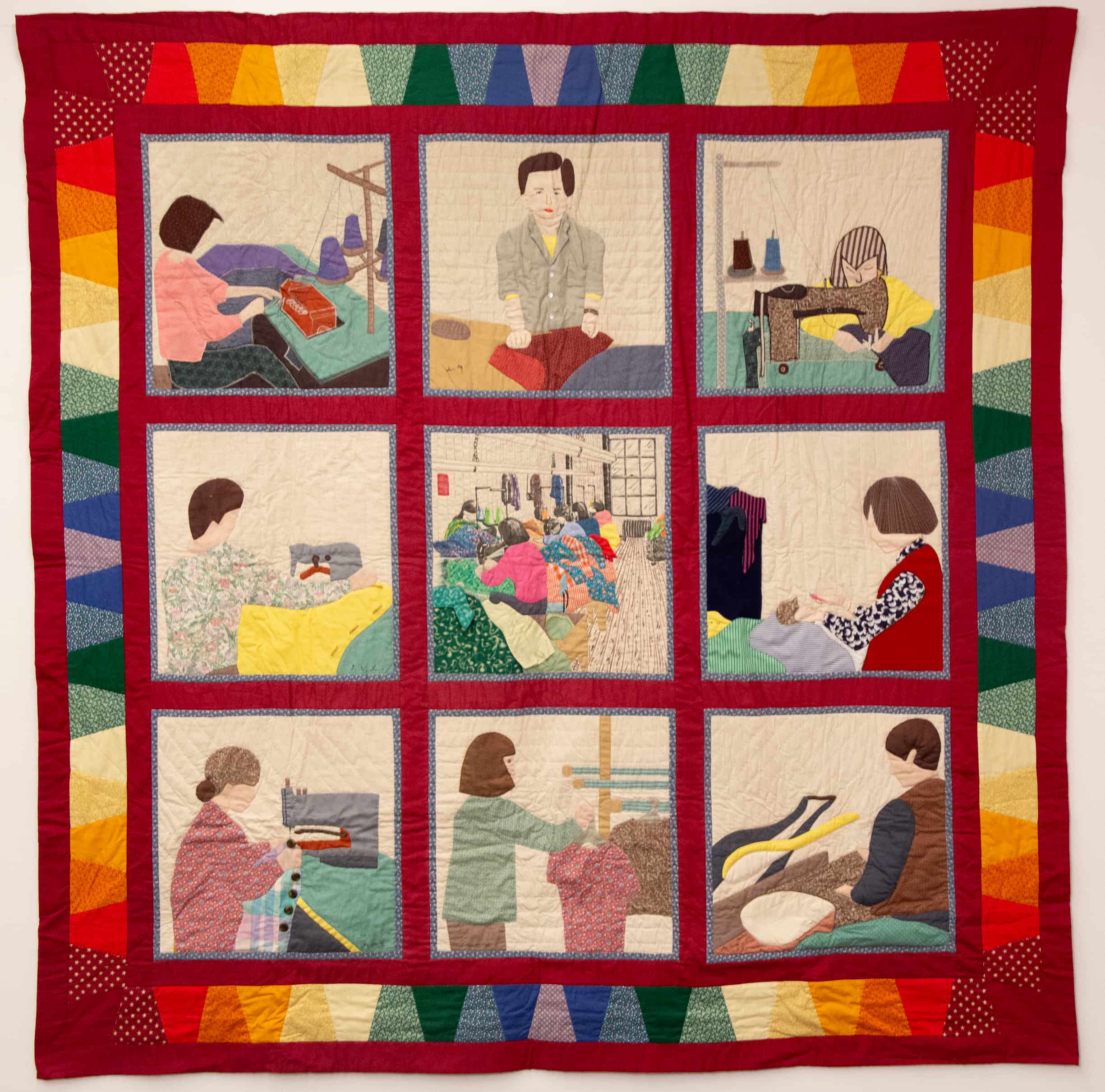
Image 47.01.10 — This quilt sewn by garment workers depicts specialized section work. For eight weeks, garment workers volunteered to sew the quilt for a 1989 exhibit at the New York Chinatown History Project (later named Museum of Chinese in America).
Glossary terms in this module
collective bargaining Where it’s used
A process of negotiation between a group of employees represented by a union and their employer to come to agreement on a contract that covers wages, hours, benefits, and workplace conditions.
community organizing Where it’s used
Educating and engaging groups of people in activities that contribute to the empowerment of a community.
contractors Where it’s used
Factory owners who get work orders from garment manufacturers (brand name designers) and hire workers to sew garments for the manufacturer to ship and sell.
garment workers Where it’s used
Workers who are involved in the production of clothing items.
International Ladies’ Garment Workers’ Union (ILGWU) Where it’s used
A union dedicated to fighting for garment workers’ rights to fair wages, benefits, and safe working conditions.
labor solidarity Where it’s used
The act of workers coming together across different backgrounds to collectively demand for better working conditions and benefits.
oral history Where it’s used
A recorded interview with people that contains historical information from their first-hand perspective and memory of events.
social unionism Where it’s used
Social unionism distinguishes itself from other forms of unionism by connecting the struggles in the workplace to greater issues of human rights, social justice, and democracy; it shapes both the culture of unions and the tactics they utilize.
solidarity Where it’s used
Shared beliefs and experiences that lead to group action and a feeling of mutual responsibility and support; when a group of people understand their fates are tied together.
strike Where it’s used
When workers stop work and withhold labor in protest about workplace problems, often involving picket lines where striking workers march in a line with signs outside the workplace asking others not to go in.
sweatshops Where it’s used
Factories with numerous labor law violations and poor working conditions.
union Where it’s used
An organization formed by workers, typically from the same industry or company, representing the workers’ collective needs in the workplace; locals are units of an umbrella “international” union (internationals include U.S. and Canadian locals).
Endnotes
1 Duen Yee Lam, “We Built New York: Duen Yee Lam,” interview by May Chen, Chasing the Dream, PBS, May 2, 2018.
2 Roger Waldinger, “Immigrants Rescue the Rag Trade,” City Journal, Winter 1991.
3 “120,000 PAY TRIBUTE TO THE FIRE VICTIMS; Army of Workers, Most of Them Women, March Through the Downpour of Rain. THRONGS ALONG THE LINE Leaders in the Suffrage Movement, Undismayed by the Weather, Join in the Line of March,” The New York Times, April 6, 1911.