



Search the Media Repository
Discover the curated images, videos, and primary sources featured throughout Foundations and Futures
History is more than just text on a page; it is the photographs, voices, and artifacts of the people who lived it. The images and recordings featured across Foundations and Futures are part of a meticulously curated media repository. Whether you are building a lesson plan or investigating an artifact, you can use this database to trace the provenance of our media: discover who created an asset, the historical context behind it, and how it can be used to bring Asian American and Pacific Islander experiences into your classroom.
Multimedia
Chapters
-
Image
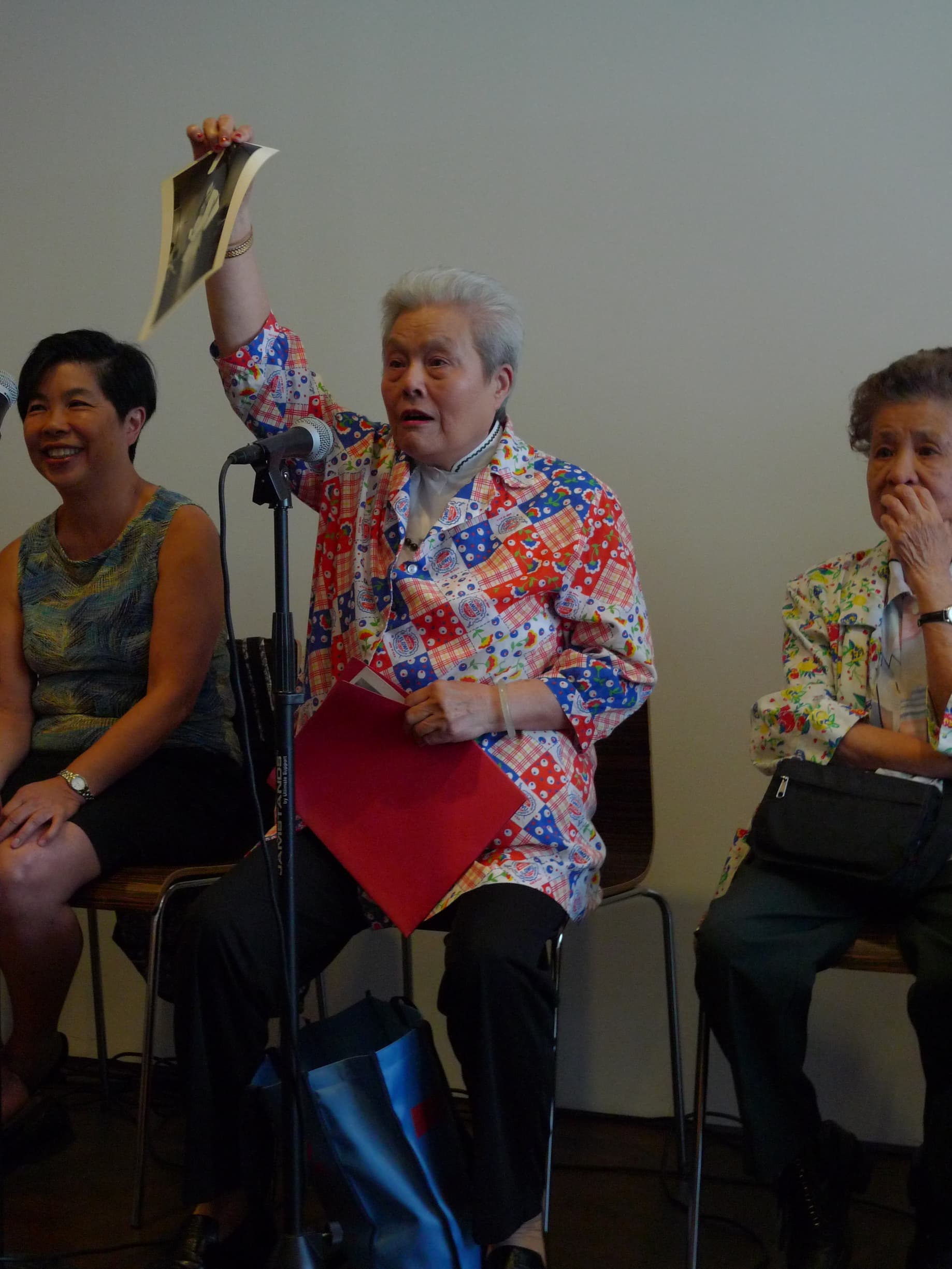
Gathering for 30th Anniversary of 1982 Strike
Shui Mak Ka (center), a.k.a. Mrs. Ka, at a 2012 workshop honoring the 1982 strike’s thirtieth anniversary. Seated next to her is Katie Quan (left) and longtime union worker and Local 23-25 Executive Board officer Wing Fong Chin (right).
-
Text
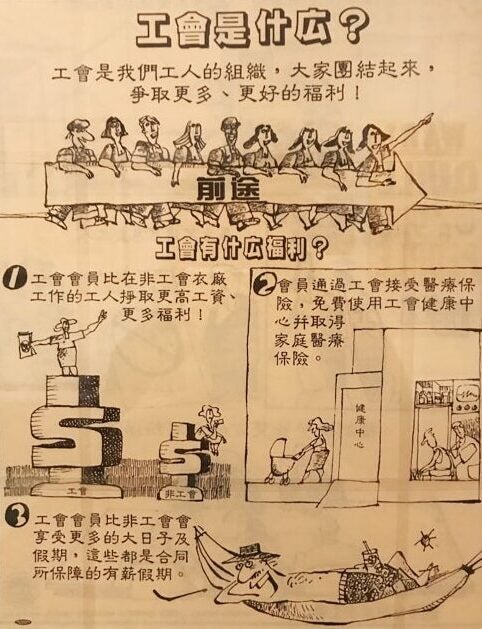
ILGWU Local 23-25 Pamphlet (Chinese)
In the 1980s and 1990s, ILGWU Local 23-25 distributed flyers like this one in both English and Chinese to describe the benefits of unions. Above, a Chinese-language flyer.
-
Text
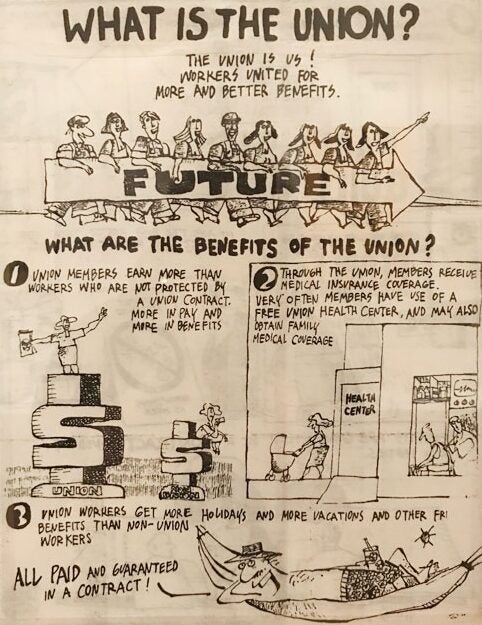
ILGWU Local 23-25 Pamphlet (English)
In the 1980s and 1990s, ILGWU Local 23-25 distributed flyers like this one in both English and Chinese to describe the benefits of unions. Above, an English-language flyer.
-
Image
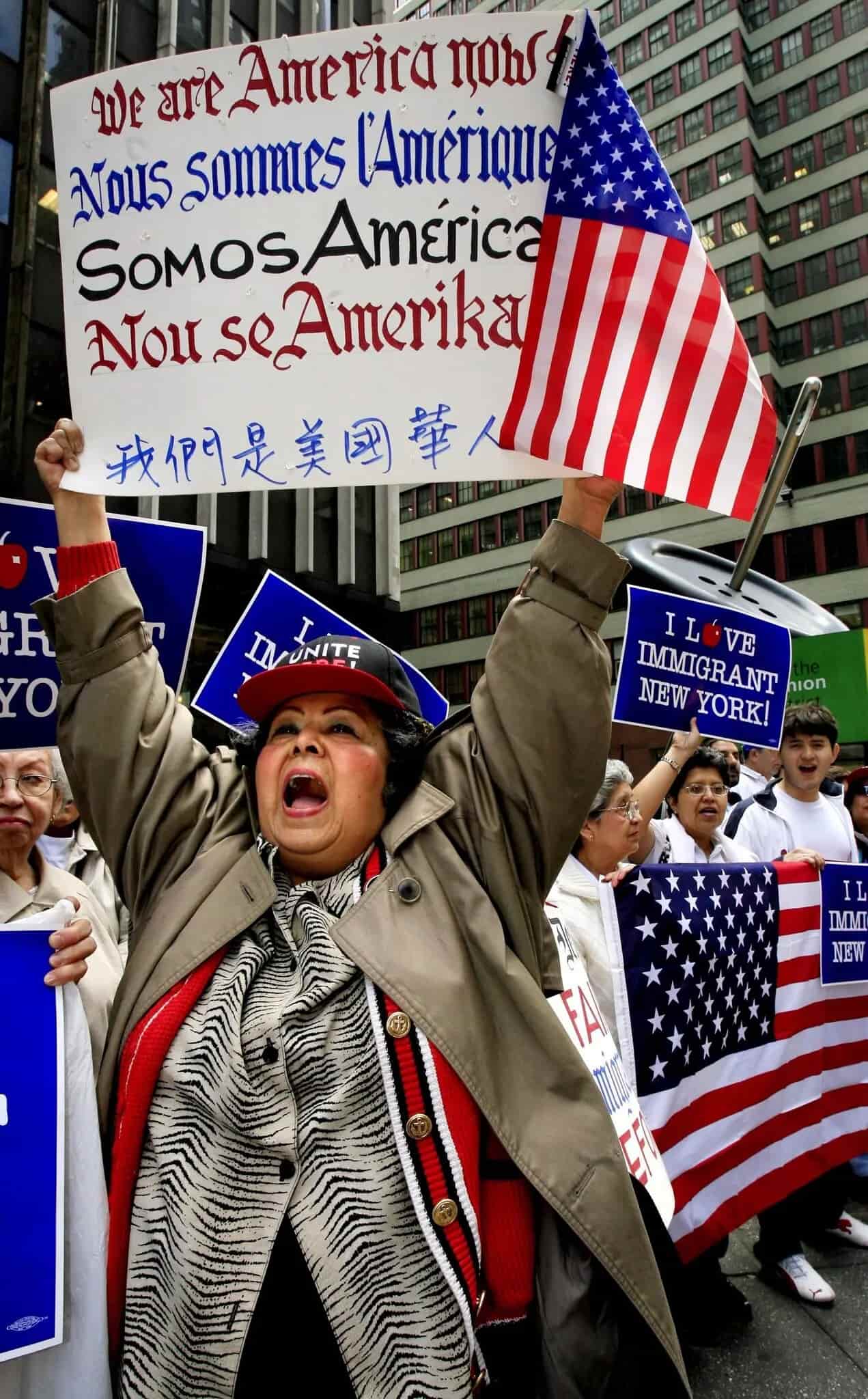
Immigrants’ Rights Rally
Kathy Andrade (front) at a 2006 rally in support of immigrant rights in Manhattan, New York City. She holds up a sign in multiple languages. Image published in the New York Times on July 21, 2021.
-
Image
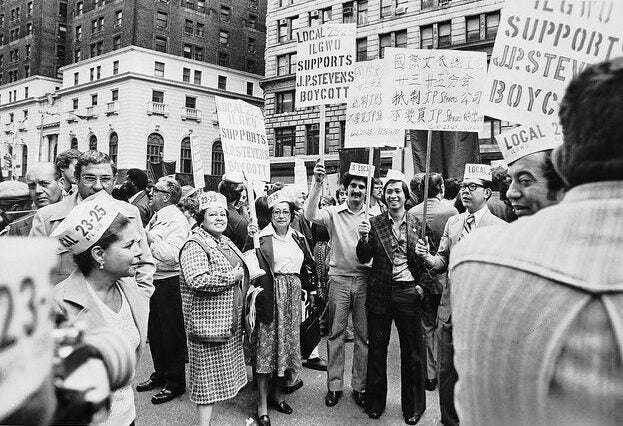
ILGWU Supports Textile Boycott
Local 23-25 Education Director Kathy Andrade (checkered coat) leads supporters of the J.P. Stevens textile company boycott in 1977. Andrade was a dynamic leader of union education activities and social justice issues in and beyond the ILGWU.
-
Image
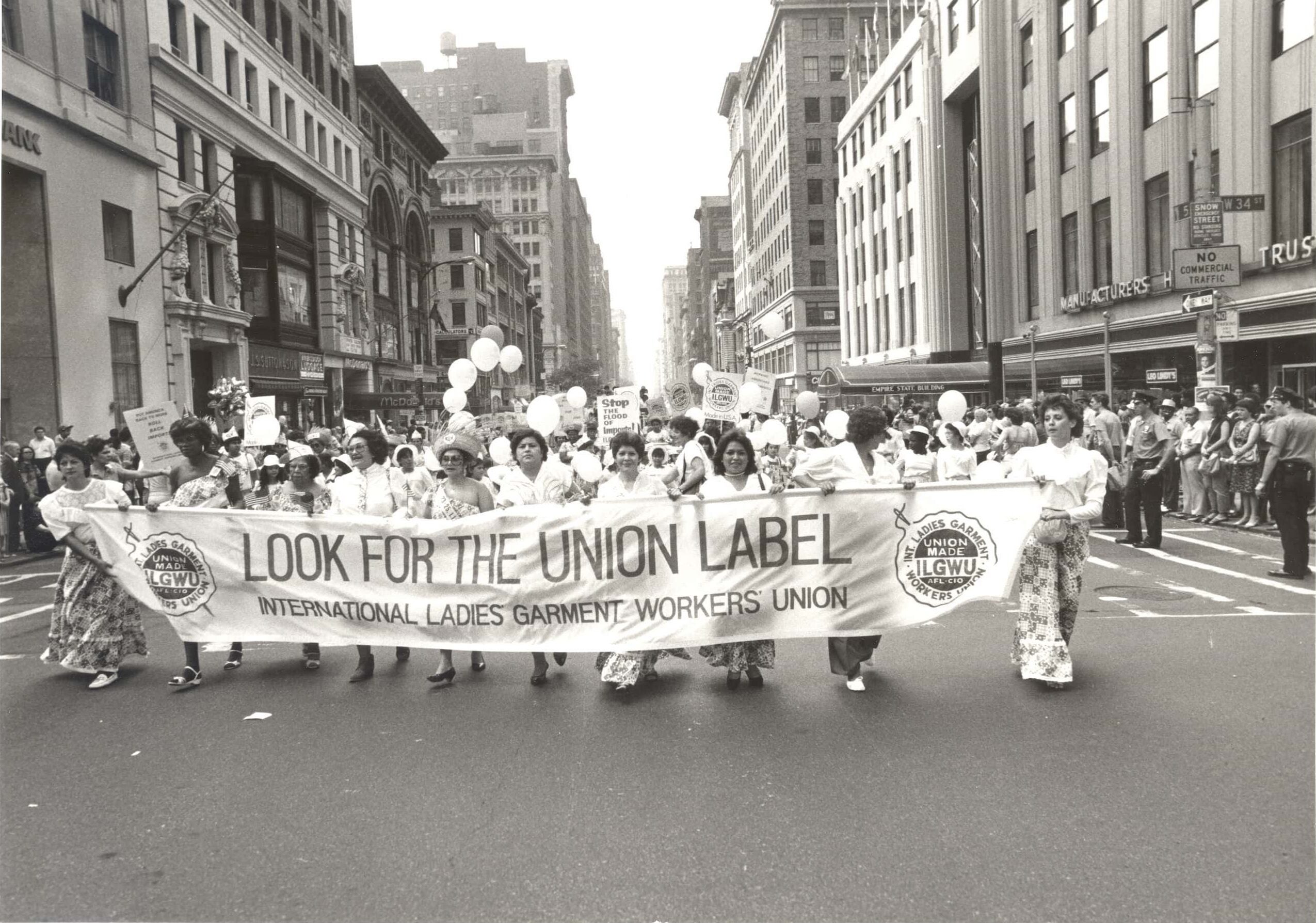
ILGWU New York City Labor Day Parade
A multiracial group of ILGWU members participate in the Labor Day Parade. The group proudly holds a banner in support of the union as they march on Fifth Avenue, New York, New York.
-
Video
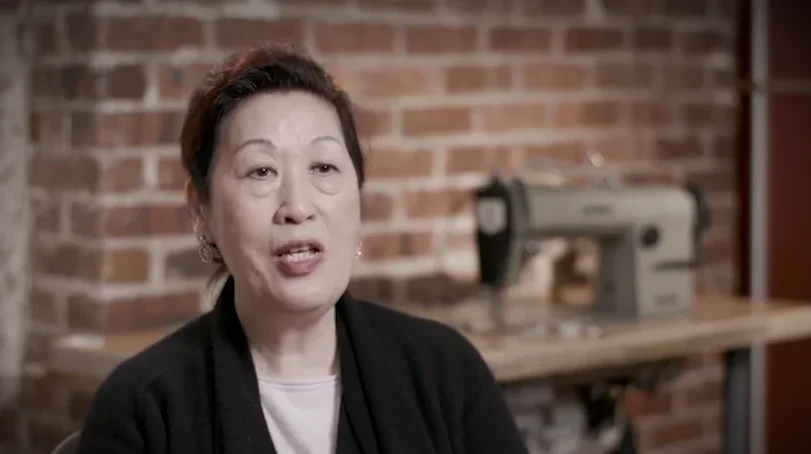
Personal Agency and Financial Freedom
In this clip, retired garment worker and union organizer Alice Ip discusses how the money and personal agency she got from her job made all the difference in her life as a single mother.
-
Image
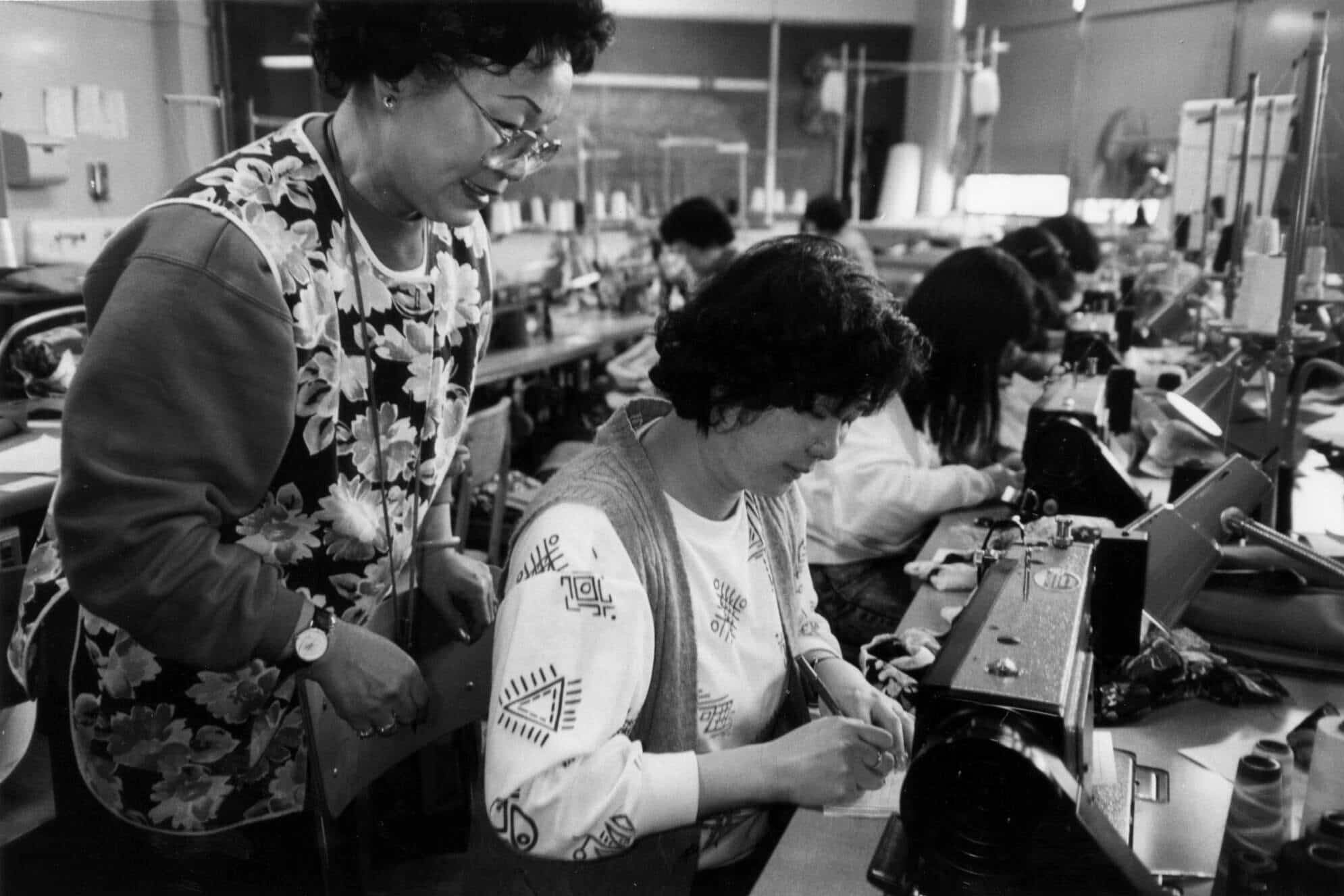
Factory Worker Teaches Coworker
Yook Chee Hom (left), a highly skilled worker, helps factory coworkers with new styles. This image reflects Chinese immigrant women helping one another instead of competing against one another. Hom was very active in ILGWU Local 23-25.
-
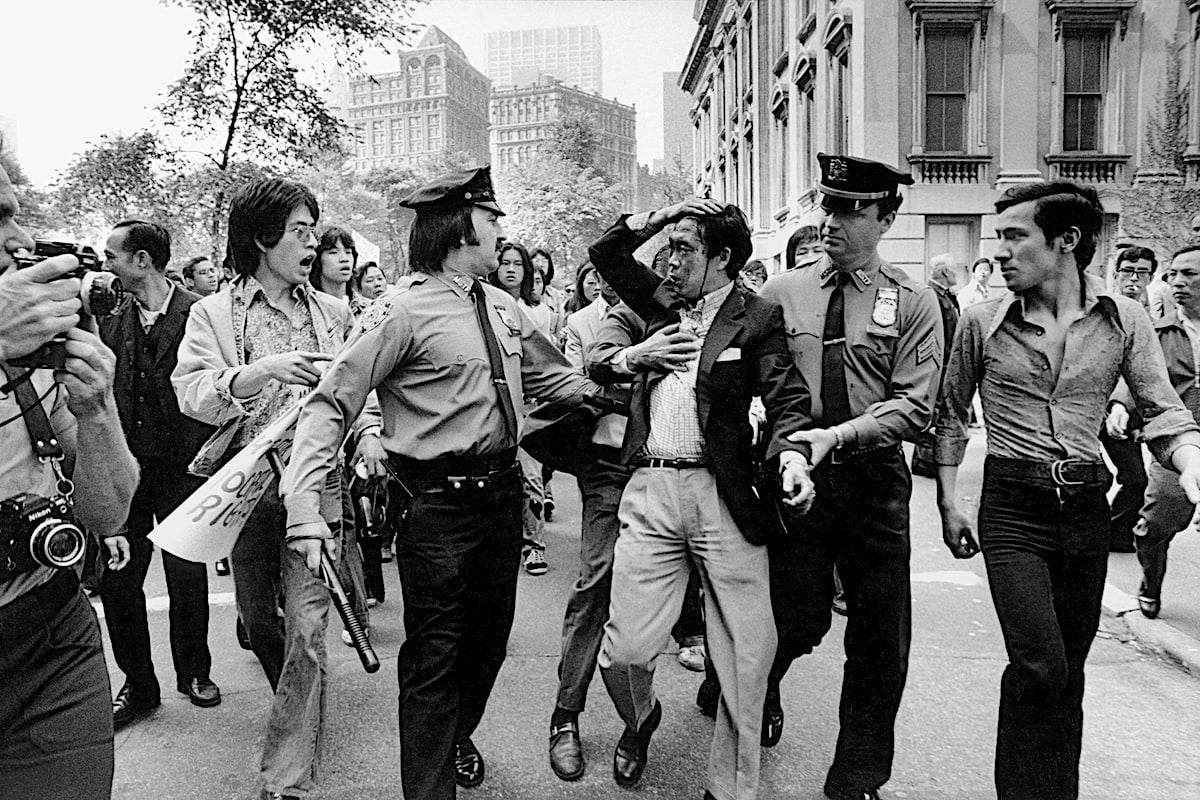
Image
Peter Yew Protest
Community photographer Corky Lee captures an interaction between police officers and a man bleeding from head wounds at a protest against the 1975 beating of Peter Yew. Lee’s image highlights Chinese American participation in movements for justice.
-
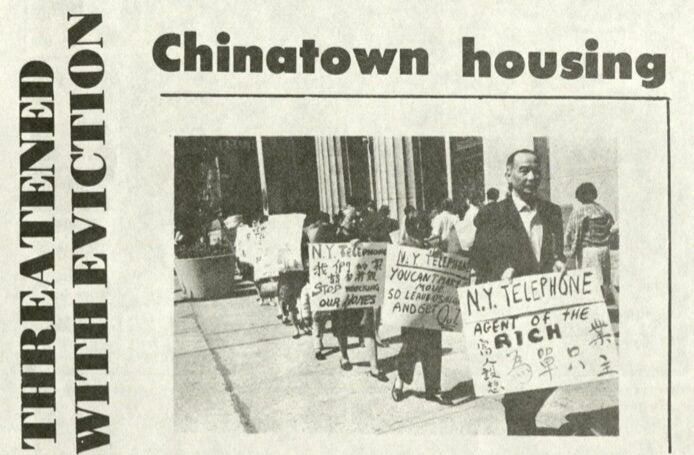
Image
Chinese Community Members Protest
Chinese community members hold up protest signs in English and Chinese at a “We Won’t Move” campaign demonstration at the New York Telephone Company, an example of the Chinese community’s engagement with collective action (c. 1970).
-

Audio
An Interview with Alison Wong
Alison Wong reflects on the importance of her mother’s relationships with her garment factory coworkers.
-
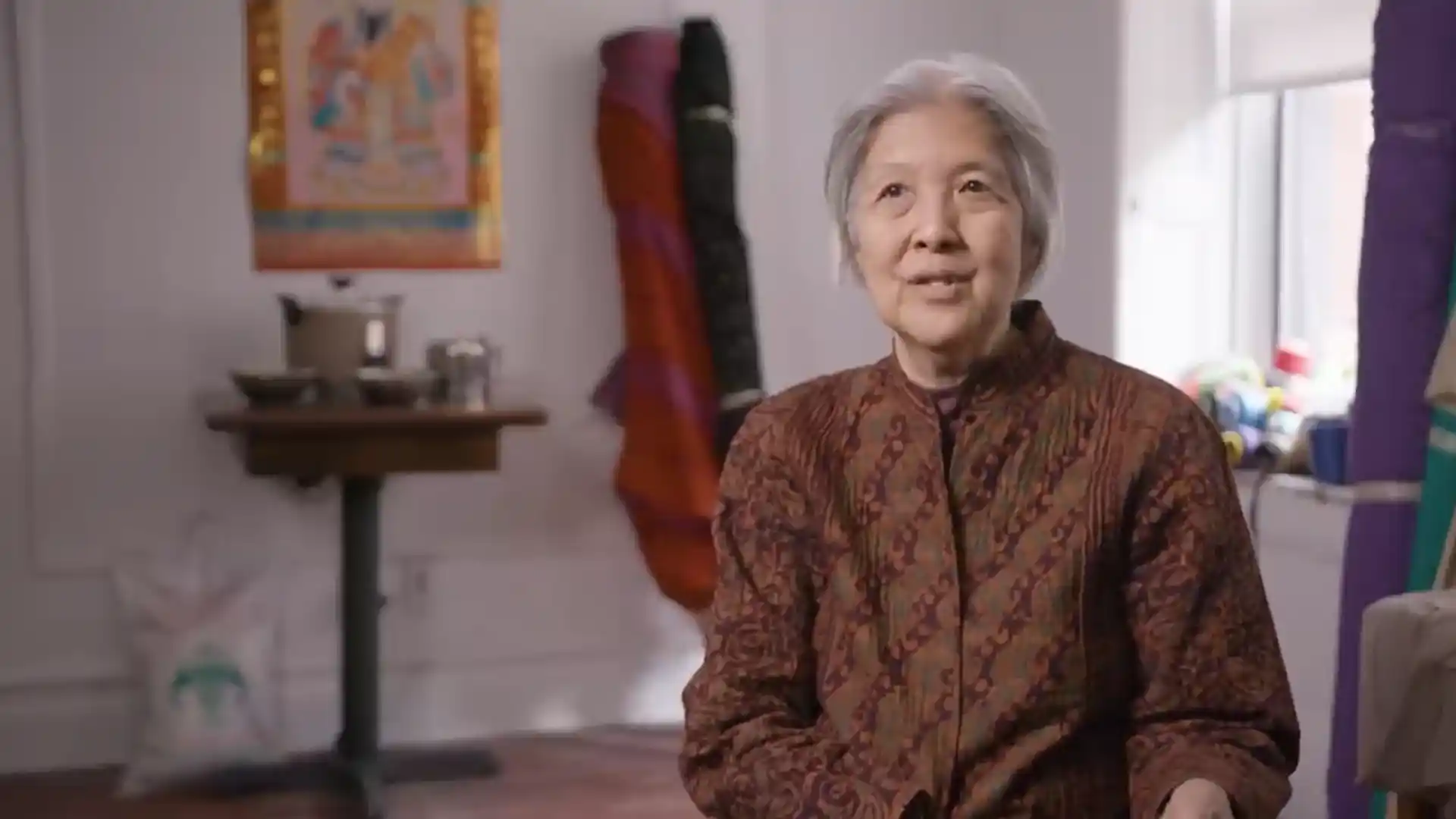
Video
Importance of Cultural Food
In this clip, former Vice President of the International Ladies’ Garment Workers’ Union (ILGWU) May Chen discusses the importance of cultural food and explains the double meanings of soy sauce chicken and pork bones for garment workers.
-
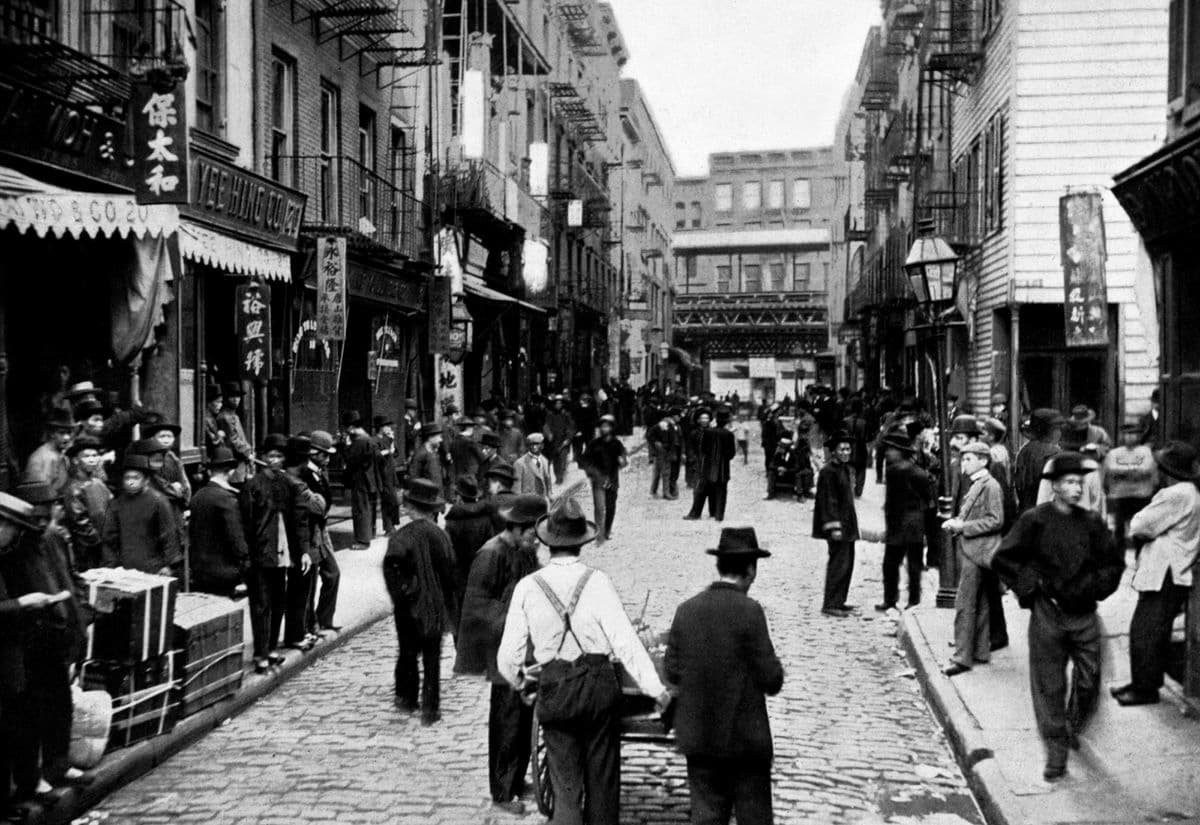
Image
Bachelor Society in Chinatown
This photograph taken on Pell Street in Manhattan’s Chinatown c. 1899 captures the “bachelor society” of the community.
-
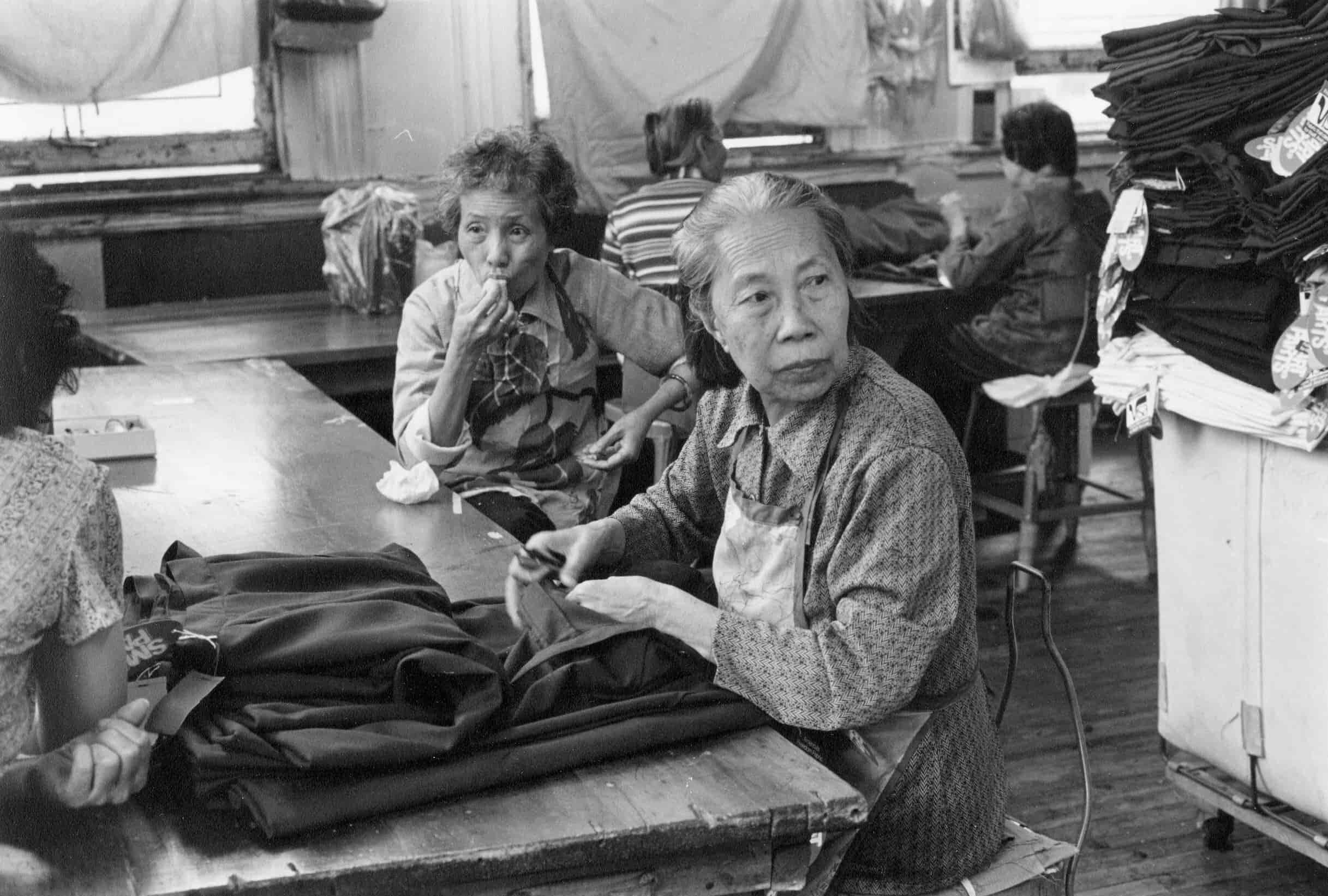
Image
Courtesy of Museum of Chinese in America
Many elderly Chinese women workers were assigned to the finishing section of a garment factory. They trimmed loose threads off the finished garments and prepared the clothes for shipping.
-
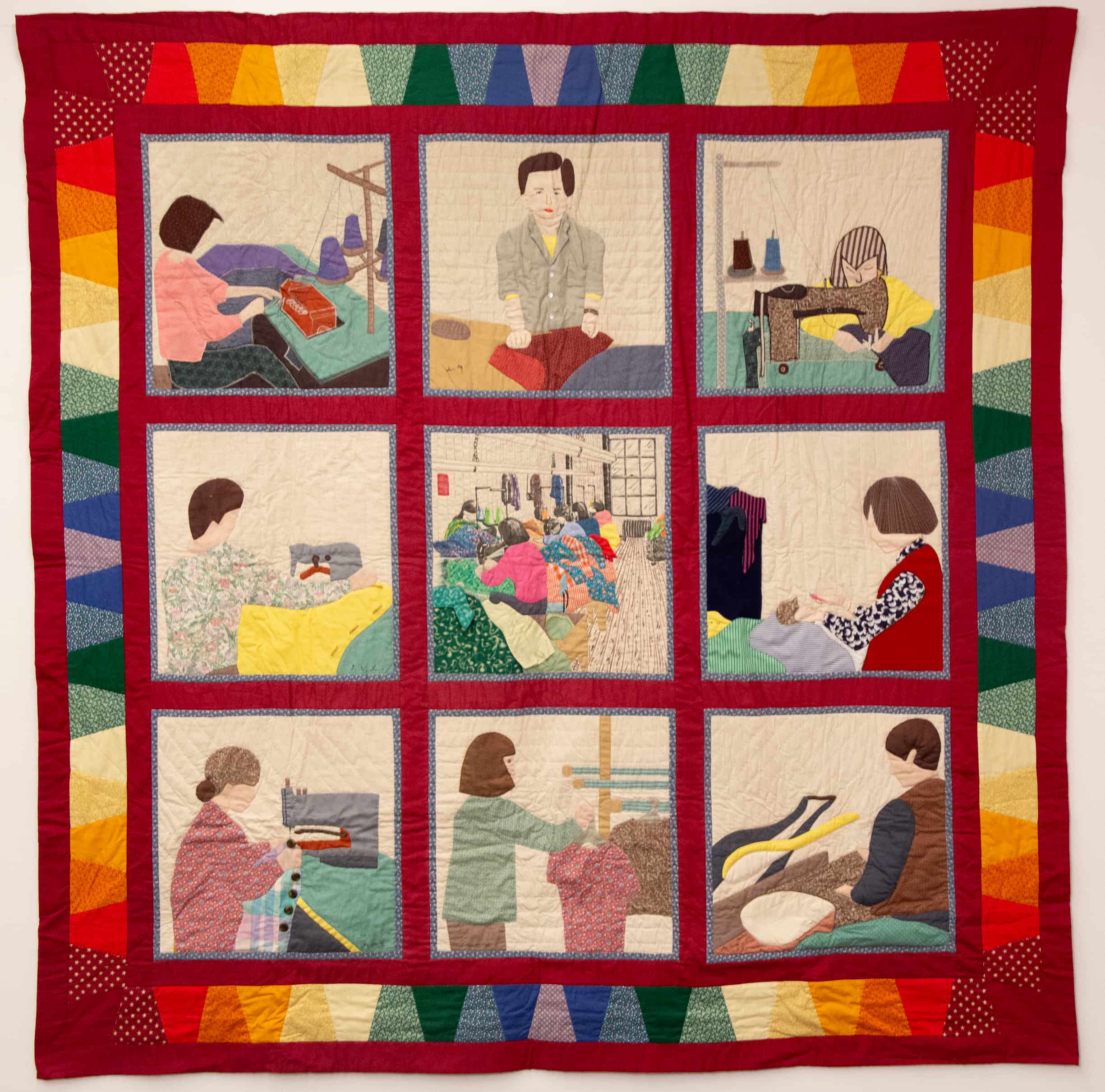
Image
Garment Workers Quilt
This quilt sewn by garment workers depicts specialized section work. For eight weeks, garment workers volunteered to sew the quilt for a 1989 exhibit at the New York Chinatown History Project (later named Museum of Chinese in America).
-
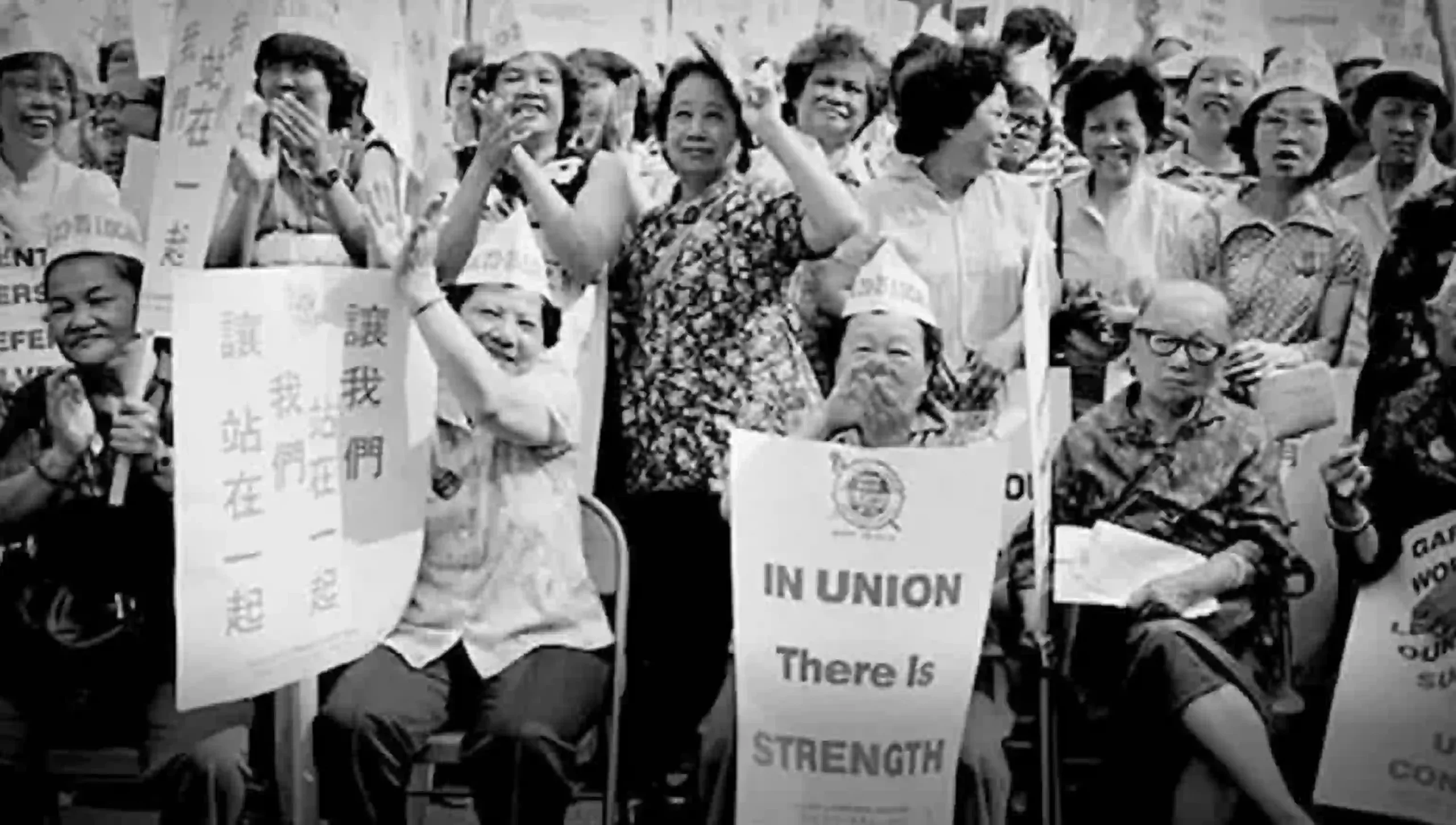
Video
Union Benefits
In this video excerpt, Mrs. Wong (retired garment worker), her daughter, Alison Wong, and Professor Margaret Chin (Hunter College, City University of New York) discuss the important benefits that union membership provided New York Chinatown garment workers.
-
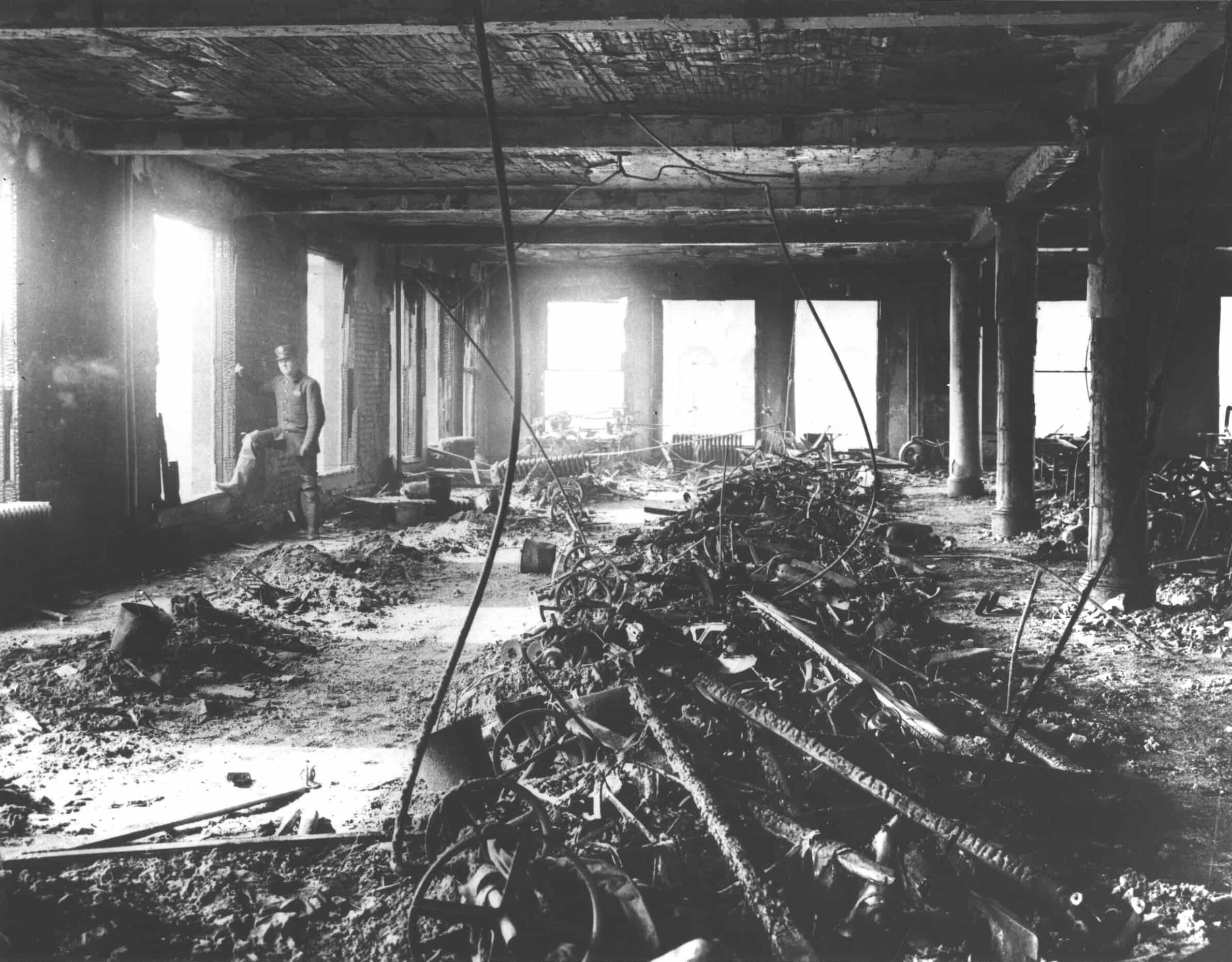
Image
Triangle Shirtwaist Factory Aftermath
This image captures the destruction at the Triangle Shirtwaist Factory after the devastating fire on March 25, 1911. Garment factory sewing wheels can be seen amongst the rubble.
-
Image
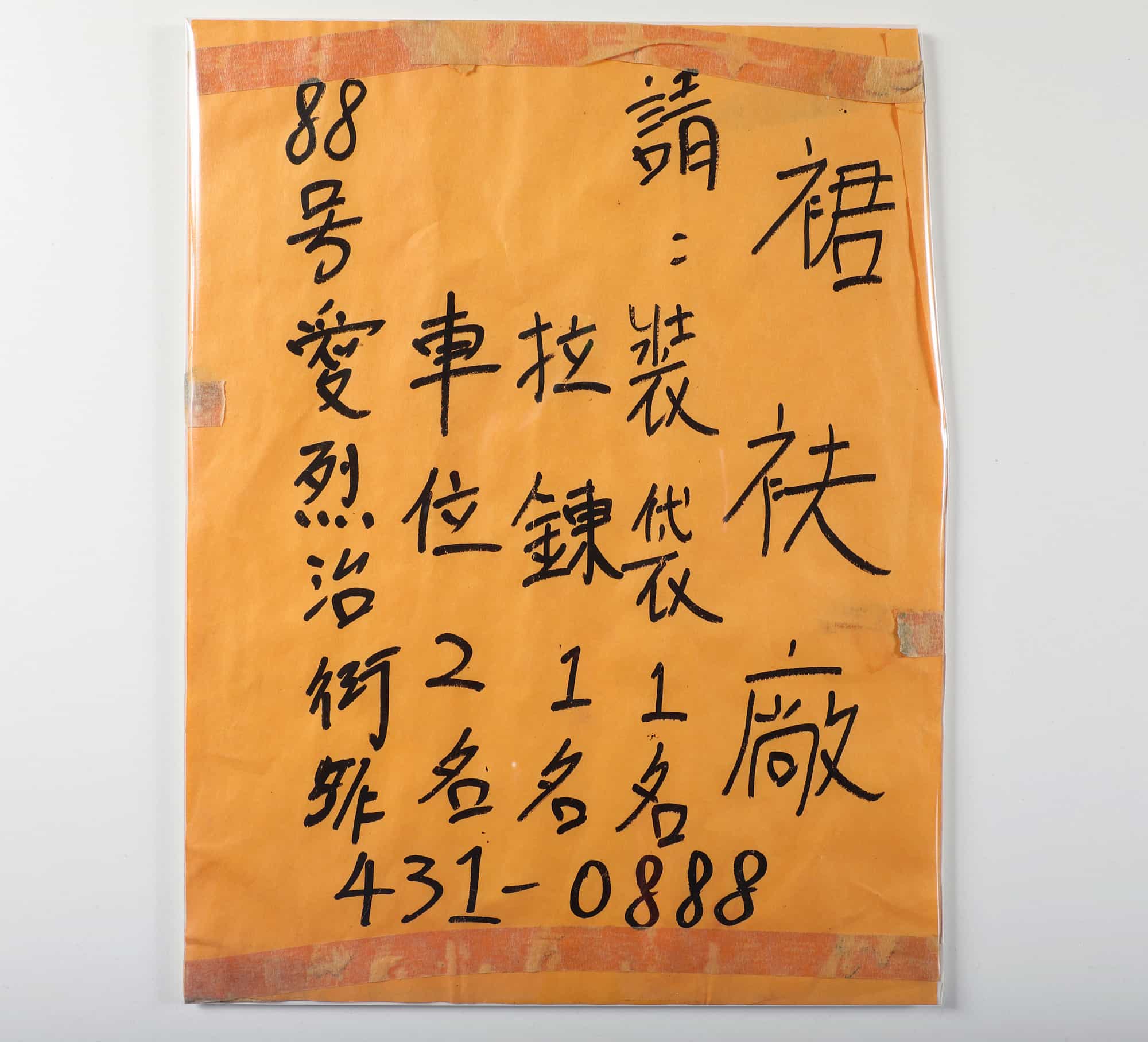
Job Openings at Factory
The division of the sewing through the “section work” production line is reflected in this Chinese handbill. In English it reads: “Skirt-pant factory seeking one pocket setter, seeking one zipper setter, seeking two regular lock-stitch operators, 88 Eldridge Street, fifth floor.”
-
Video
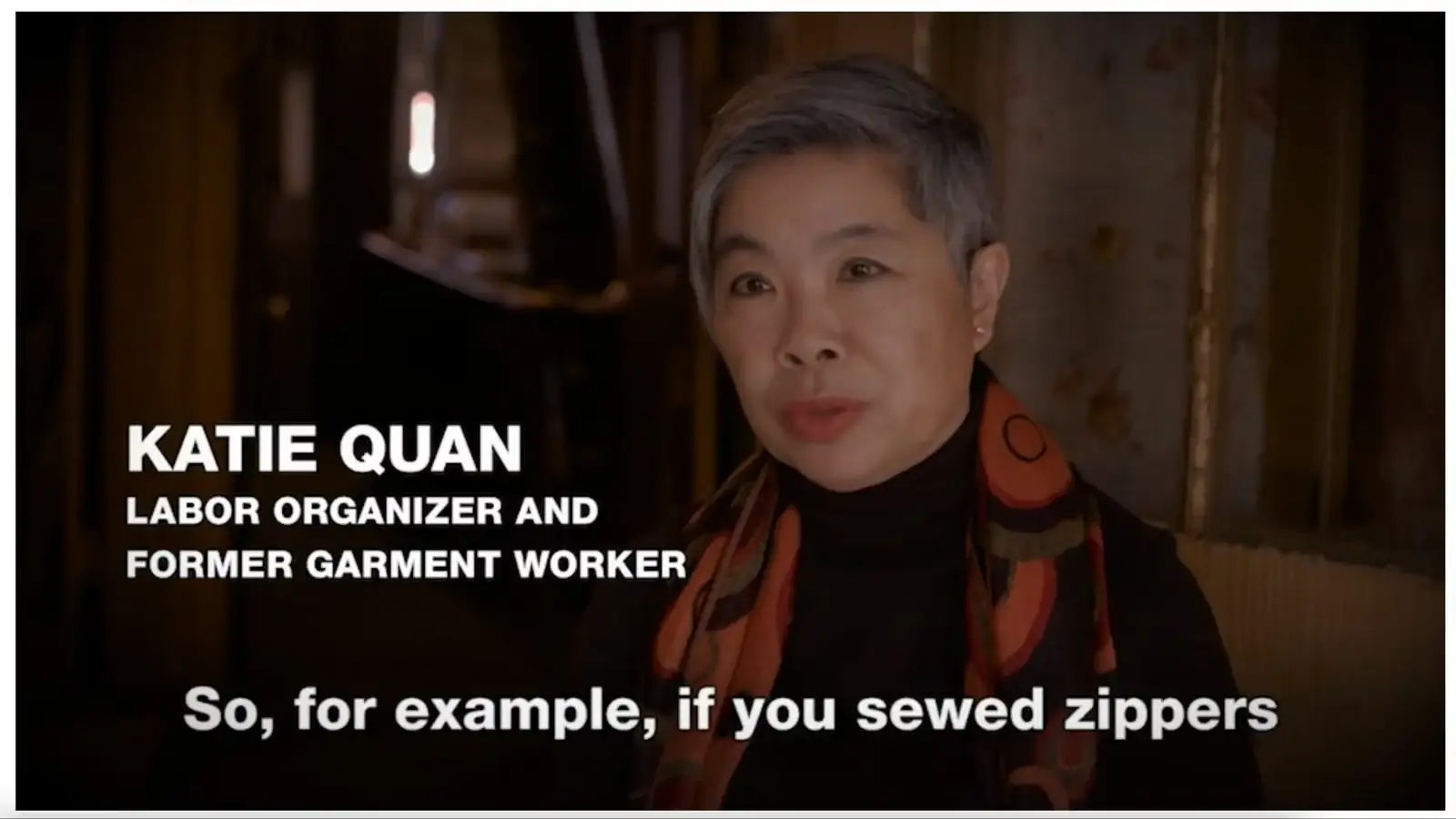
Piecework Compensation
Former New York Chinatown garment workers Katie Quan, Connie Ling, and Wing Ma share their first-hand experiences of the “piecework” compensation system.
-
Image
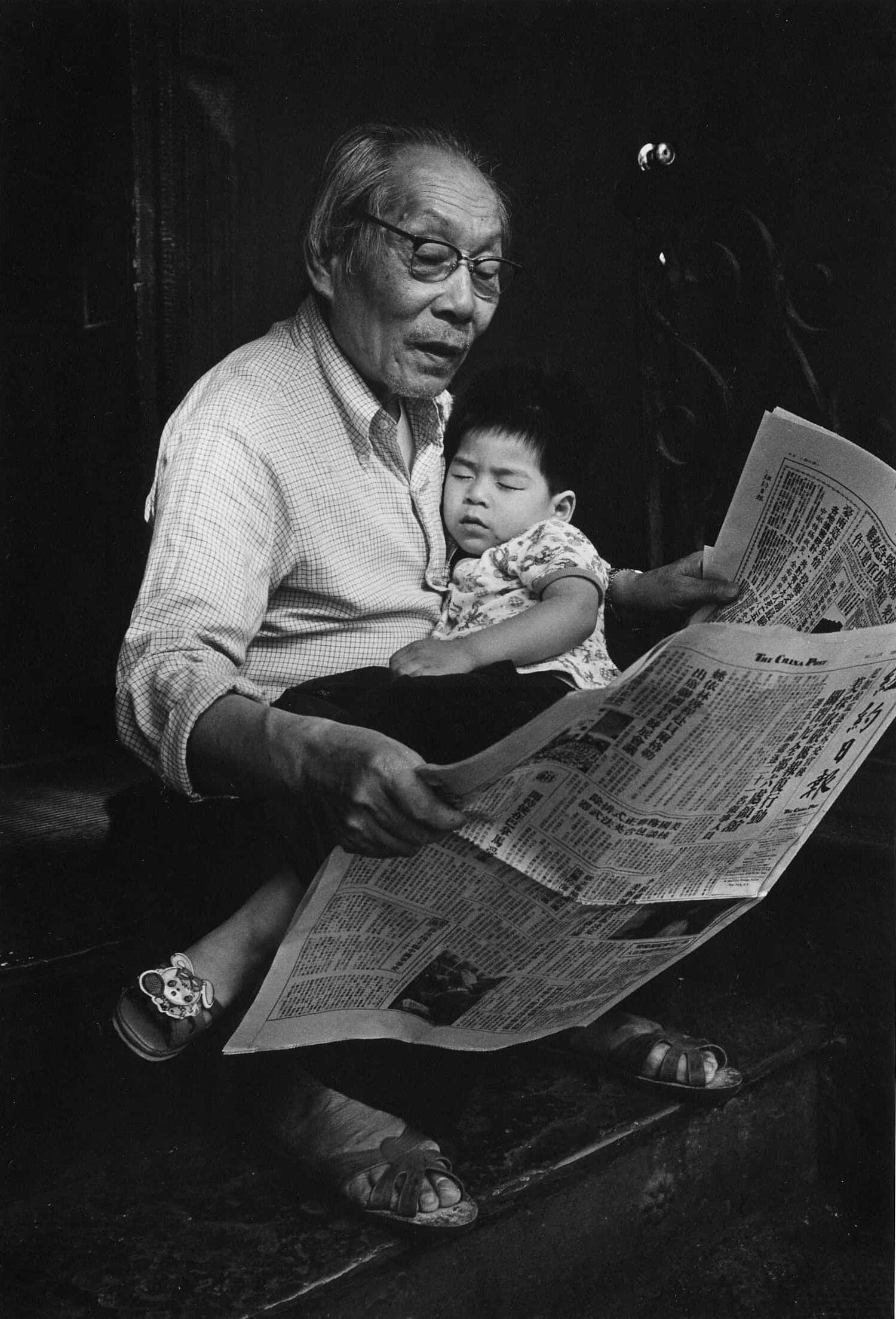
Grandfather and Grandson
Extended family members often cared for children while their mothers were working in the garment factories.