



Search the Media Repository
Discover the curated images, videos, and primary sources featured throughout Foundations and Futures
History is more than just text on a page; it is the photographs, voices, and artifacts of the people who lived it. The images and recordings featured across Foundations and Futures are part of a meticulously curated media repository. Whether you are building a lesson plan or investigating an artifact, you can use this database to trace the provenance of our media: discover who created an asset, the historical context behind it, and how it can be used to bring Asian American and Pacific Islander experiences into your classroom.
Multimedia
Chapters
-
Text
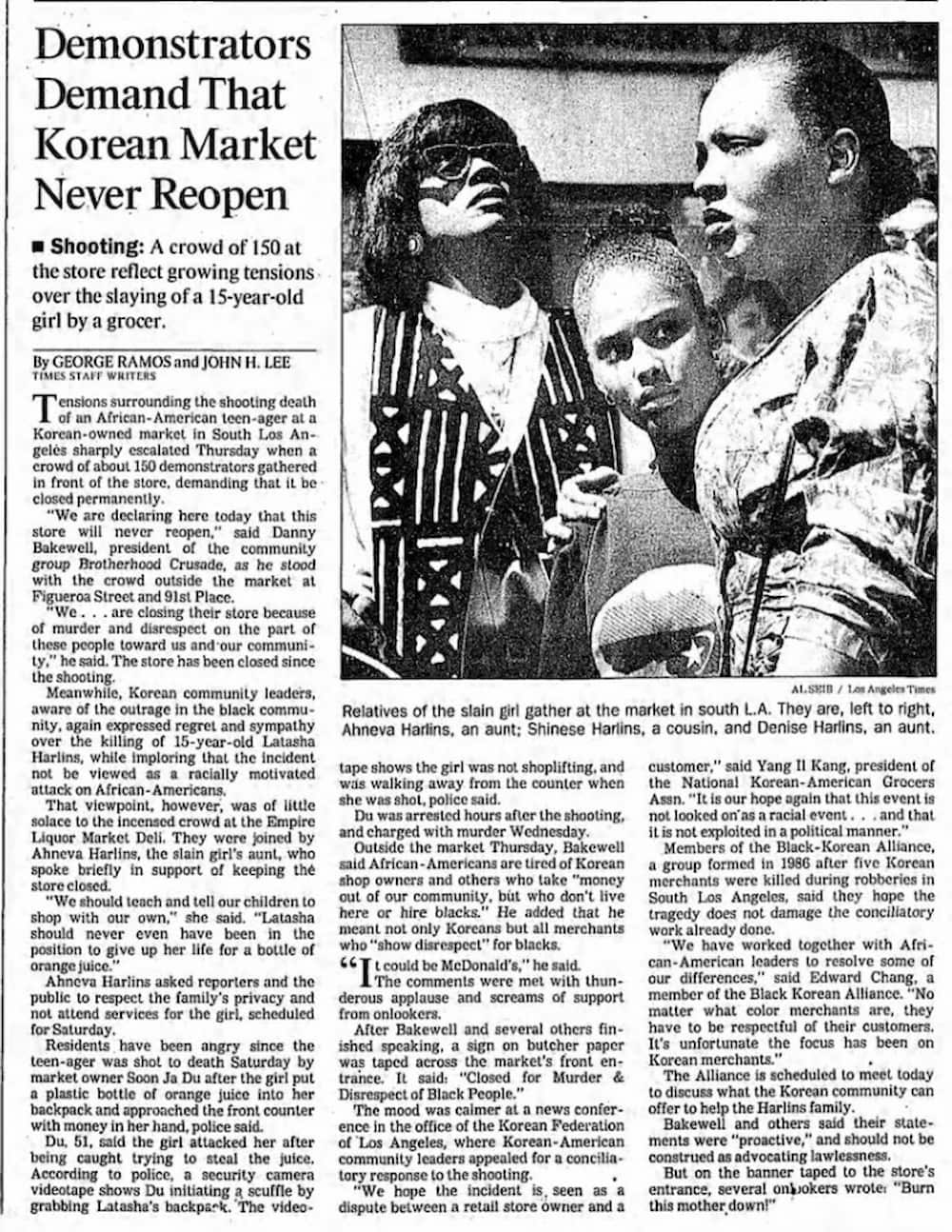
Relatives of Latasha Harlins
Denise Harlins (right), her daughter Shinese (center), and 150 protesters attend a protest at Empire Liquor store six days after Denise’s niece, Latasha, was shot and killed by store owner Soon Ja Du in a dispute over a bottle of orange juice.
Featured in:
Sa I Gu: Los Angeles, 1992, Module 2
-
Image
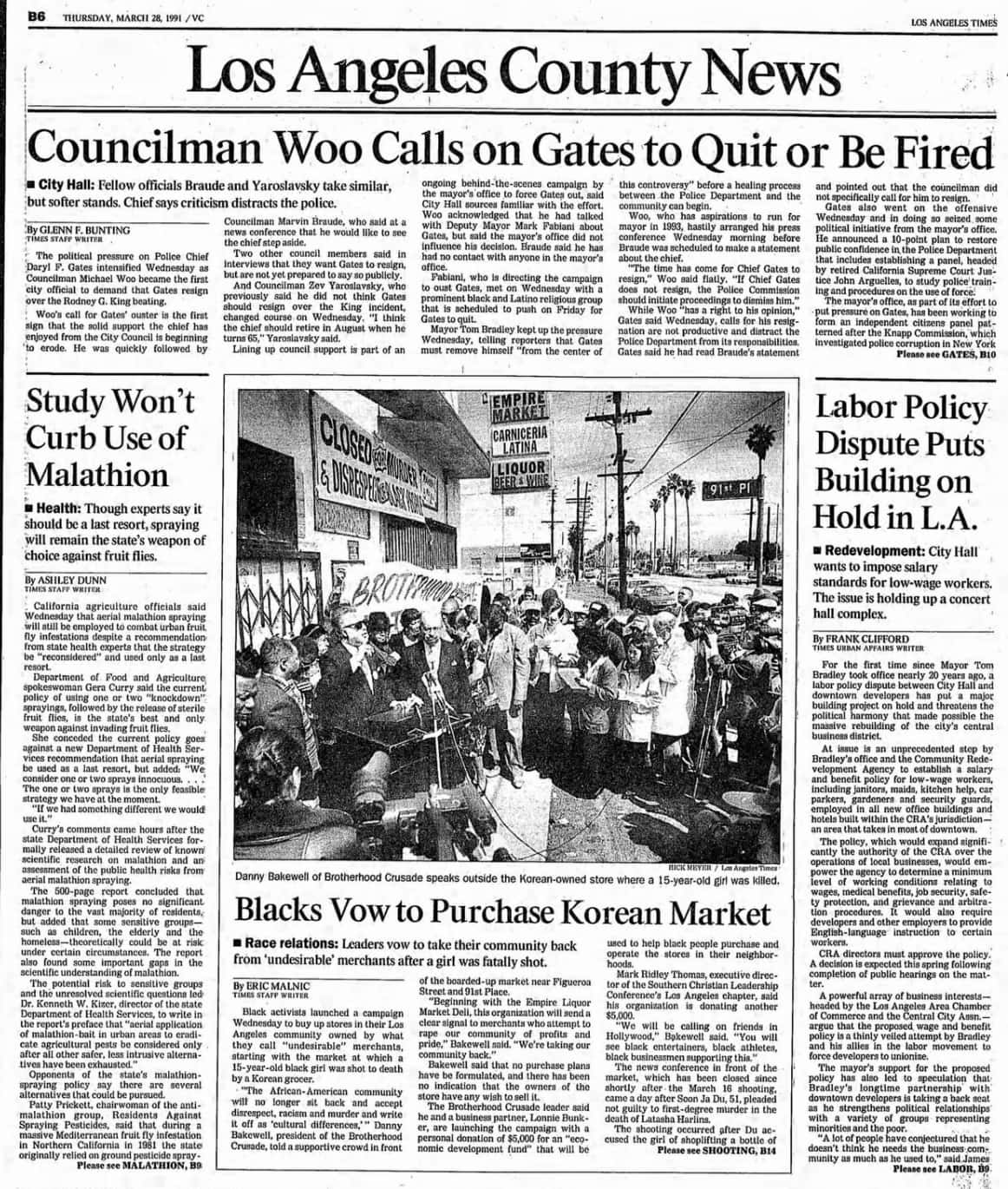
Press Conference at Empire Liquor Market Deli
Five days after Latasha Harlins was killed, a crowd of more than 150 protesters held a press conference with activist Danny Bakewell outside Empire Liquor Market Deli, declaring a boycott of the store.
Featured in:
Sa I Gu: Los Angeles, 1992, Module 2
-
Text
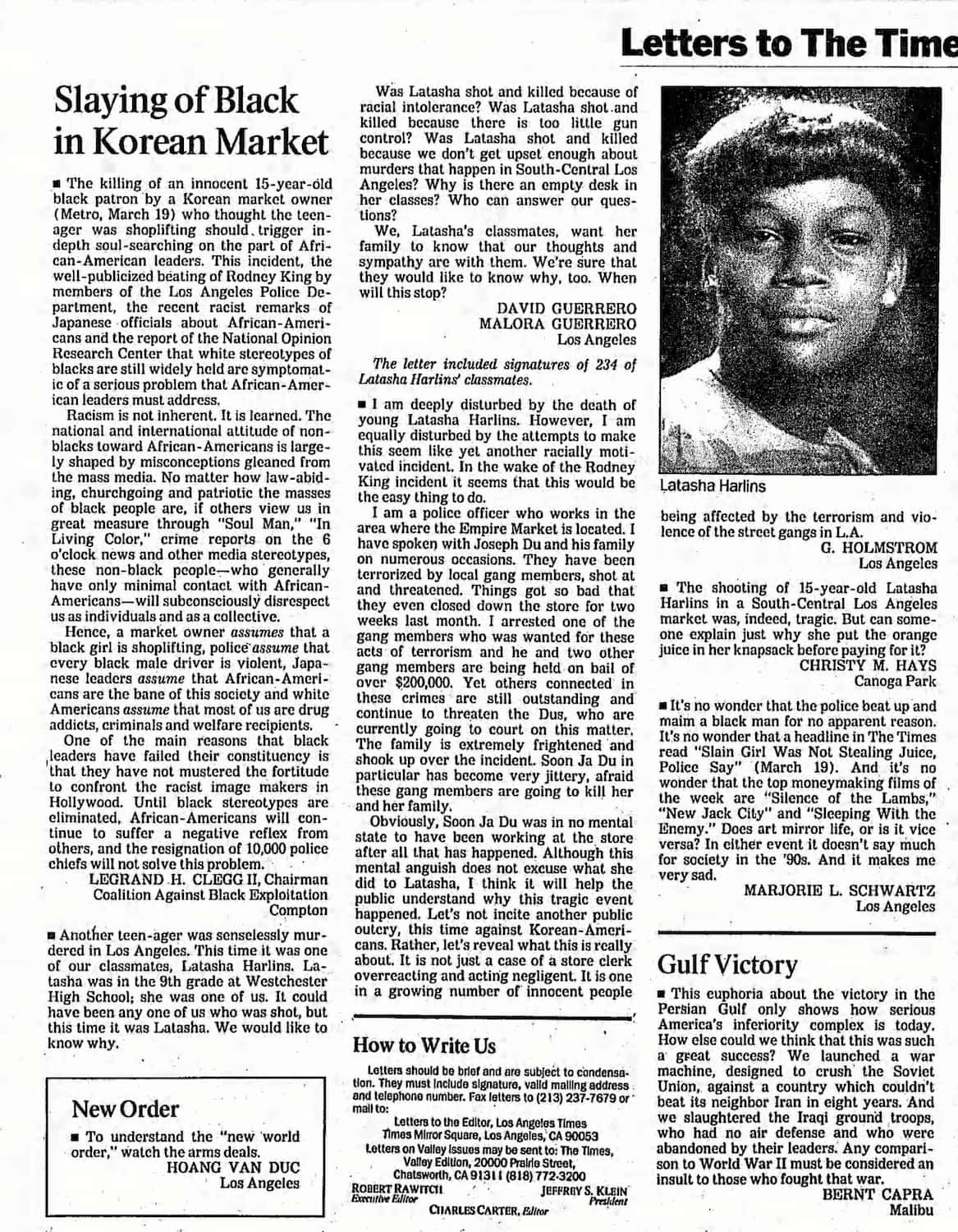
Latasha Harlins News Clipping
Two weeks after Latasha Harlins was shot and killed, the Los Angeles Times posted a letter written and signed by 234 of her classmates.
Featured in:
Sa I Gu: Los Angeles, 1992, Module 2
-
Image
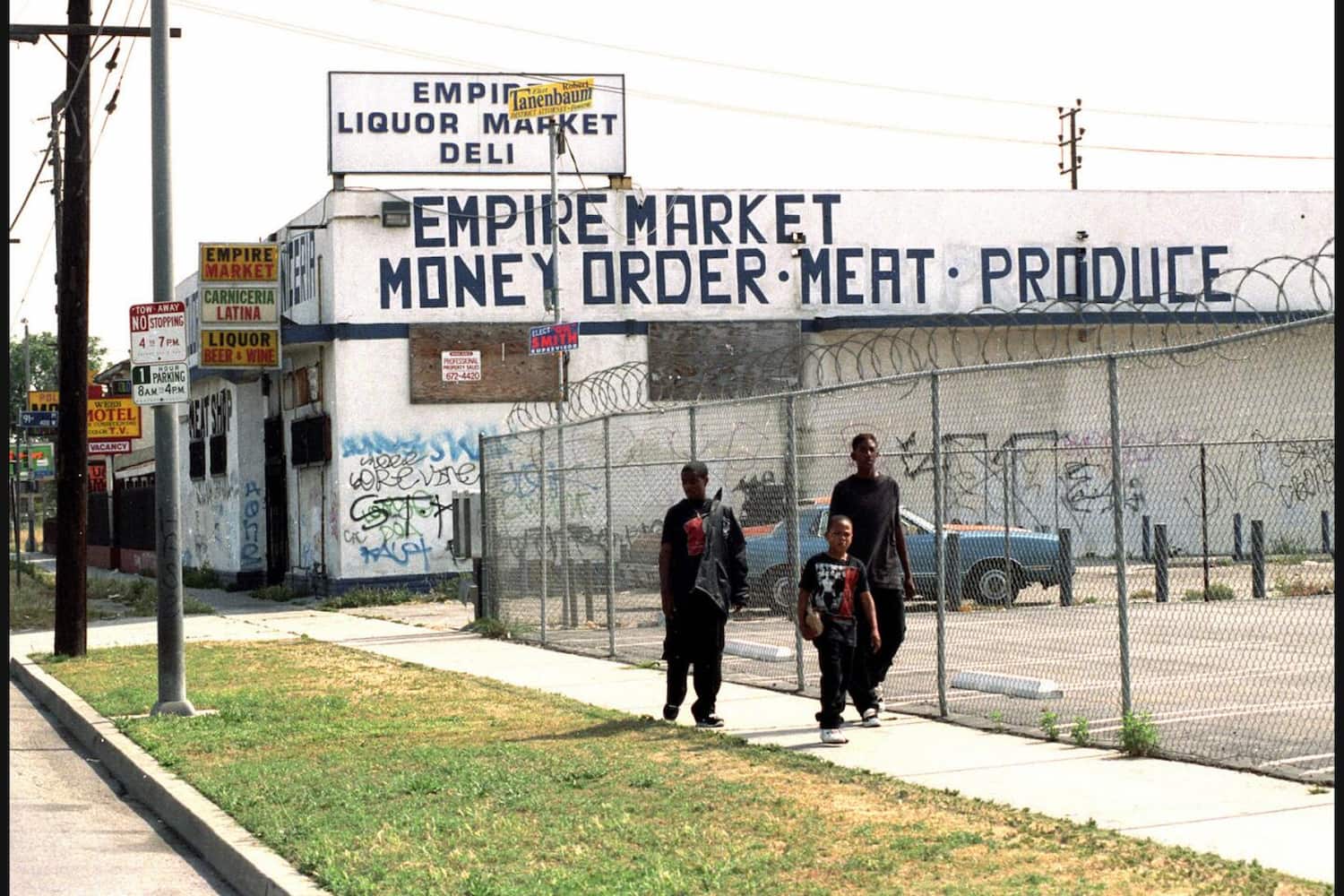
Empire Liquor Market Deli
Empire Liquor Market Deli was one of the few mom-and-pop stores providing food and basic supplies in Latasha Harlins’s neighborhood, known as a “food desert” because residents lacked access to larger chain supermarkets like Vons and Ralphs.
Featured in:
Sa I Gu: Los Angeles, 1992, Module 2
-
Image
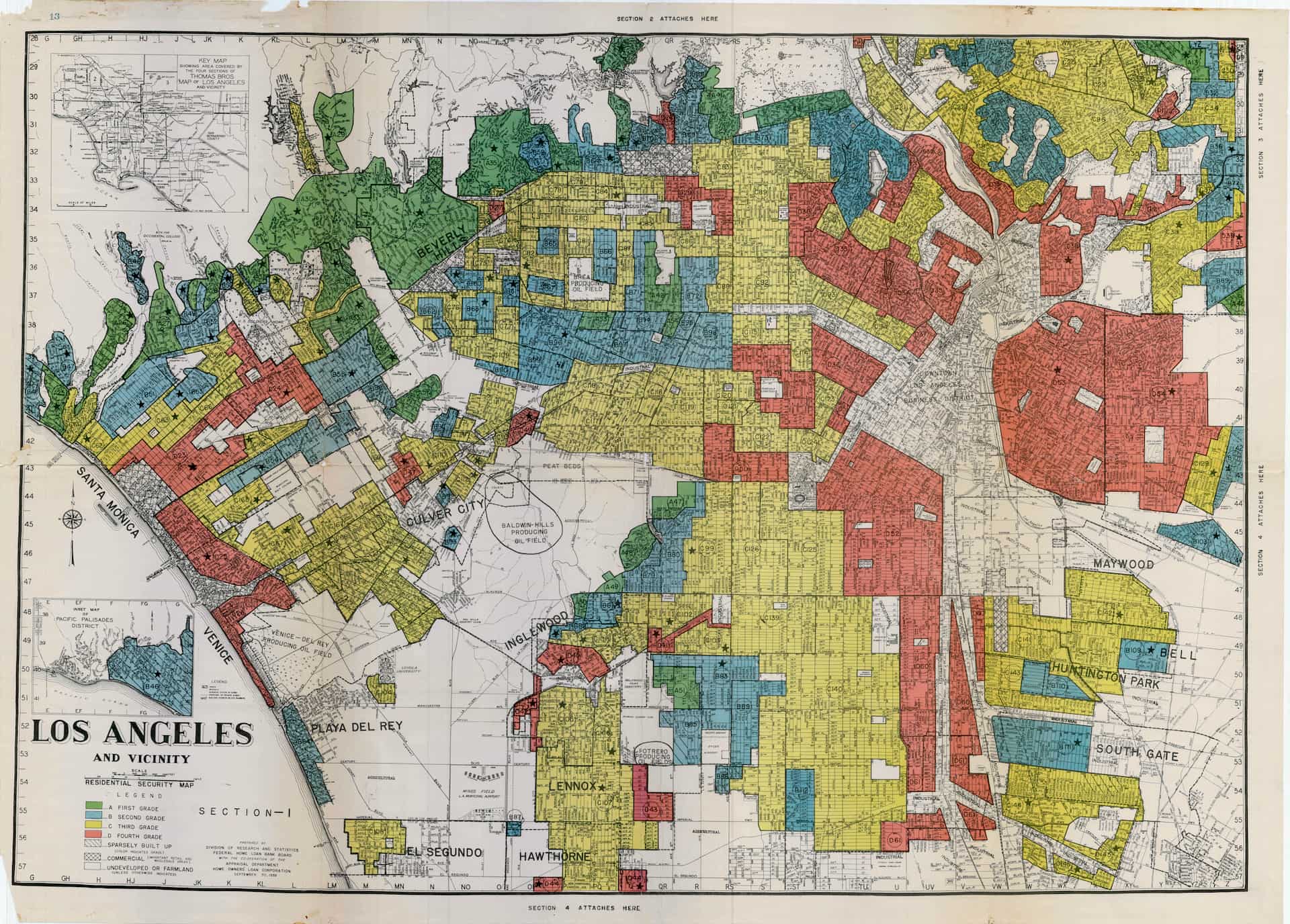
Redlining Los Angeles
A typical “redlining” map of Los Angeles from 1939. Colored grids signified a neighborhood’s “desirability” and led to racial segregation.
Featured in:
Sa I Gu: Los Angeles, 1992, Module 1
-
Image
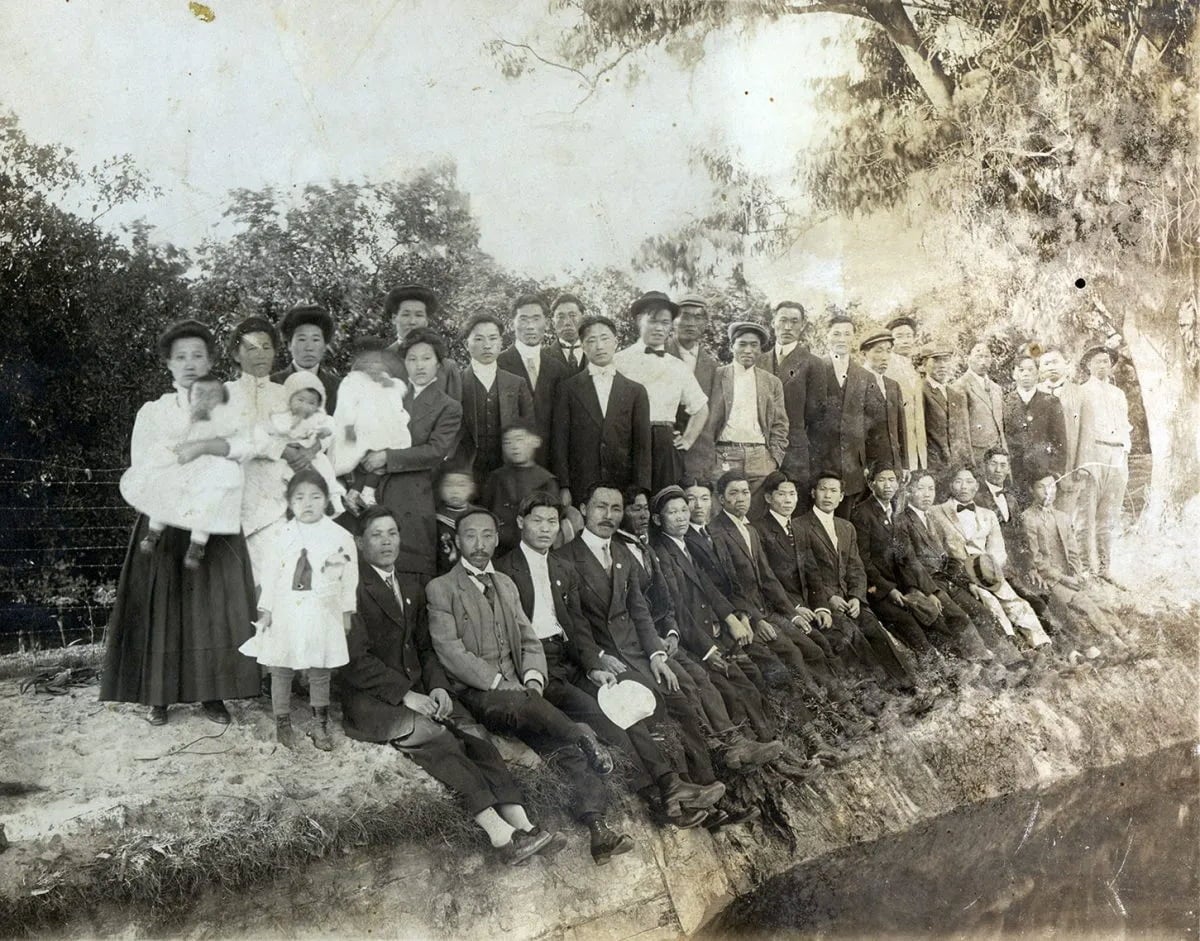
Riverside Koreatown Community
Members of the Riverside Koreatown community.
Featured in:
Sa I Gu: Los Angeles, 1992, Module 1
-
Image
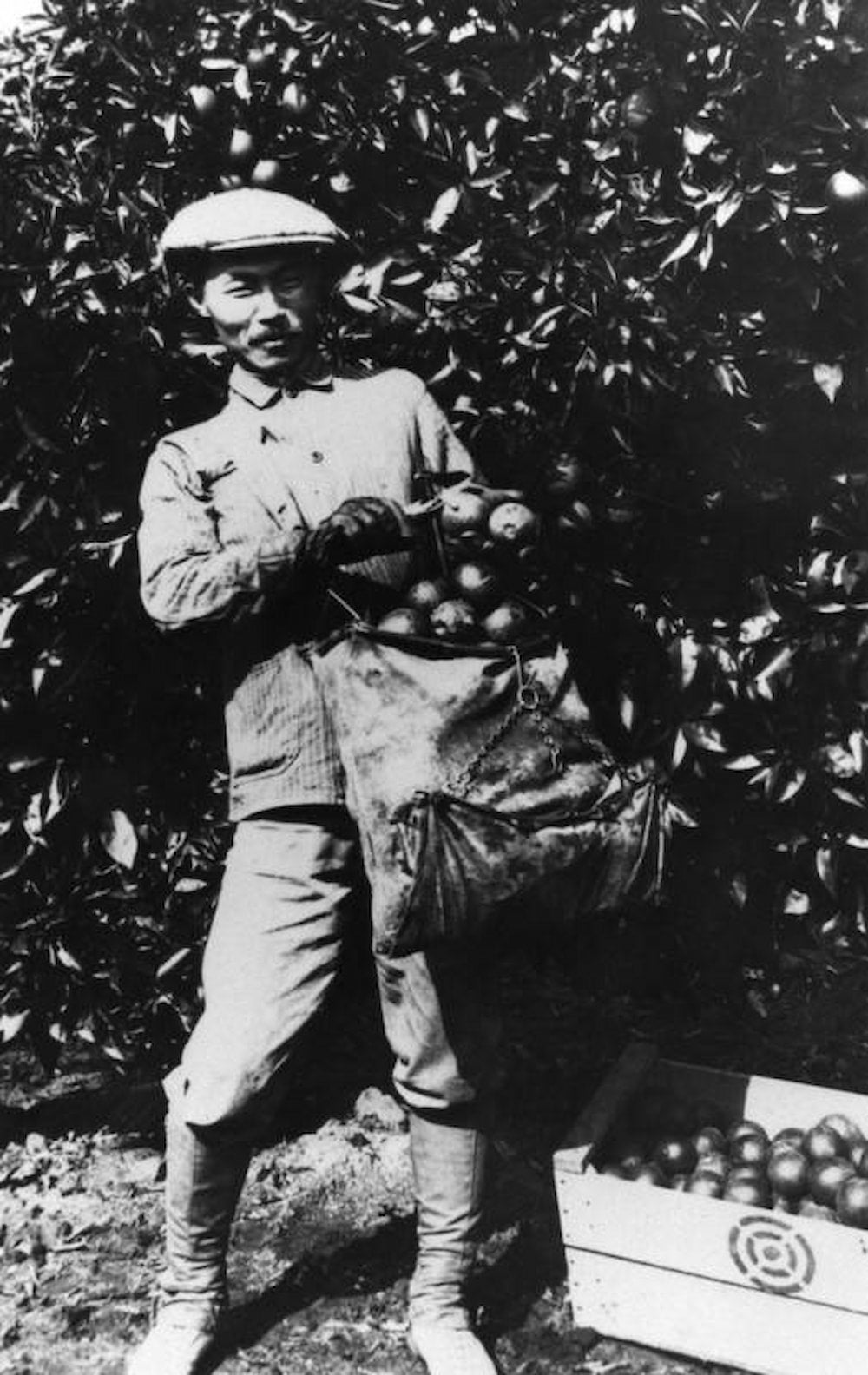
Dosan Ahn Chang Ho Harvests Fruit
Dosan Ahn Chang Ho, who established the first Korean American immigrant community in Riverside, California, in the early 1900s.
Featured in:
Sa I Gu: Los Angeles, 1992, Module 1
-
Image
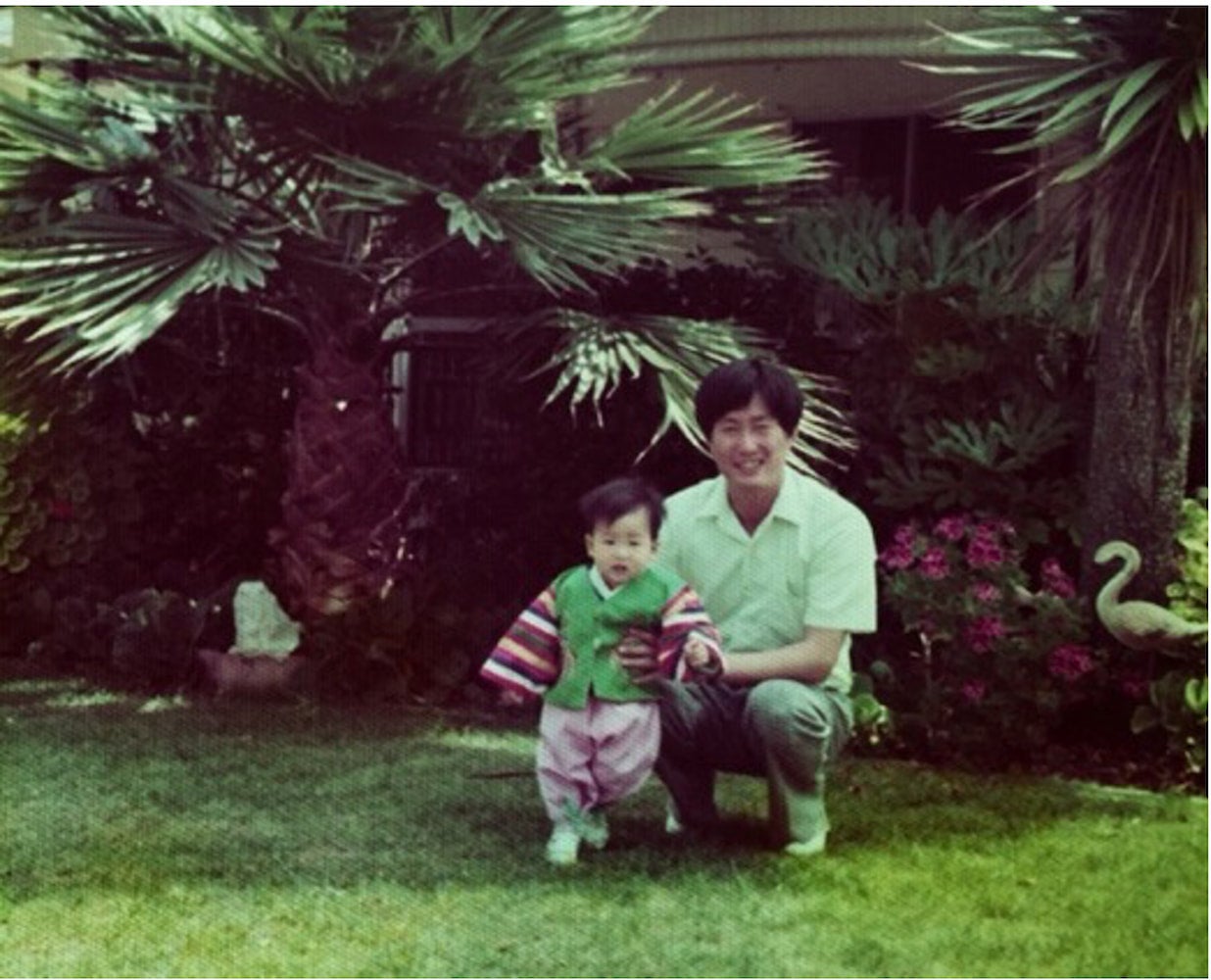
Edward Lee’s First Birthday
Eddie Lee, wearing his traditional Korean dol first-birthday hanbok, with his father.
Featured in:
Sa I Gu: Los Angeles, 1992, Module 1
-
Image
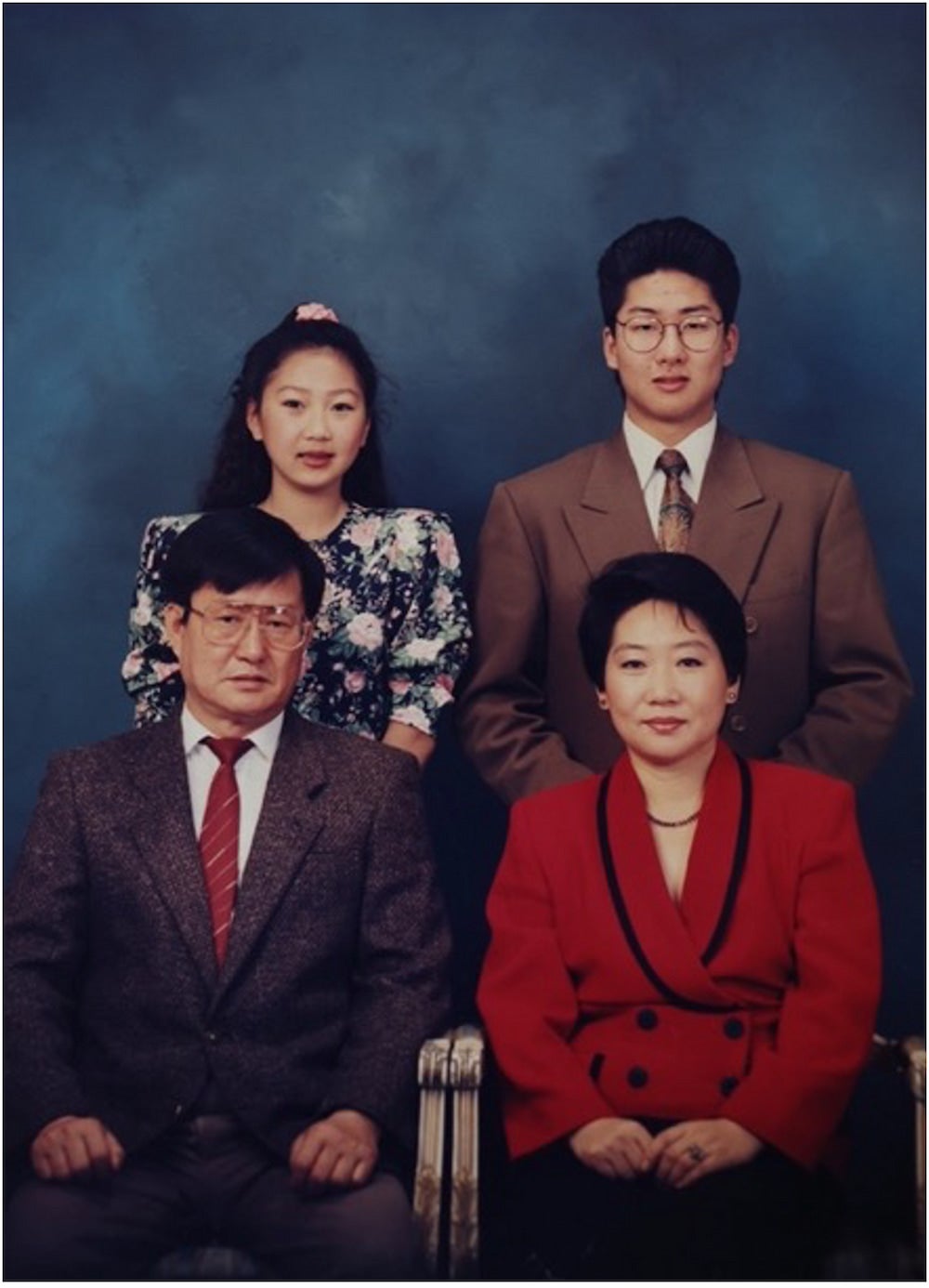
Lee Family Portrait
A portrait of the Lee family in happier days. (Clockwise from the top left) Jenny, Eddie, Young Hi, and Jung Hui.
Featured in:
Sa I Gu: Los Angeles, 1992, Module 1
-
Image
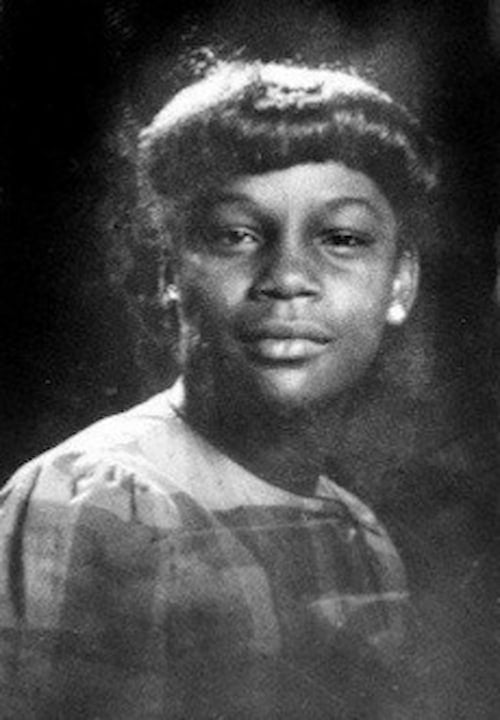
Latasha Harlins Portrait
Latasha Harlins was a fifteen-year-old African American girl shot and killed by Soon Ja Du, a Korean store owner in 1991.
Featured in:
Sa I Gu: Los Angeles, 1992, Module 1
-
Image
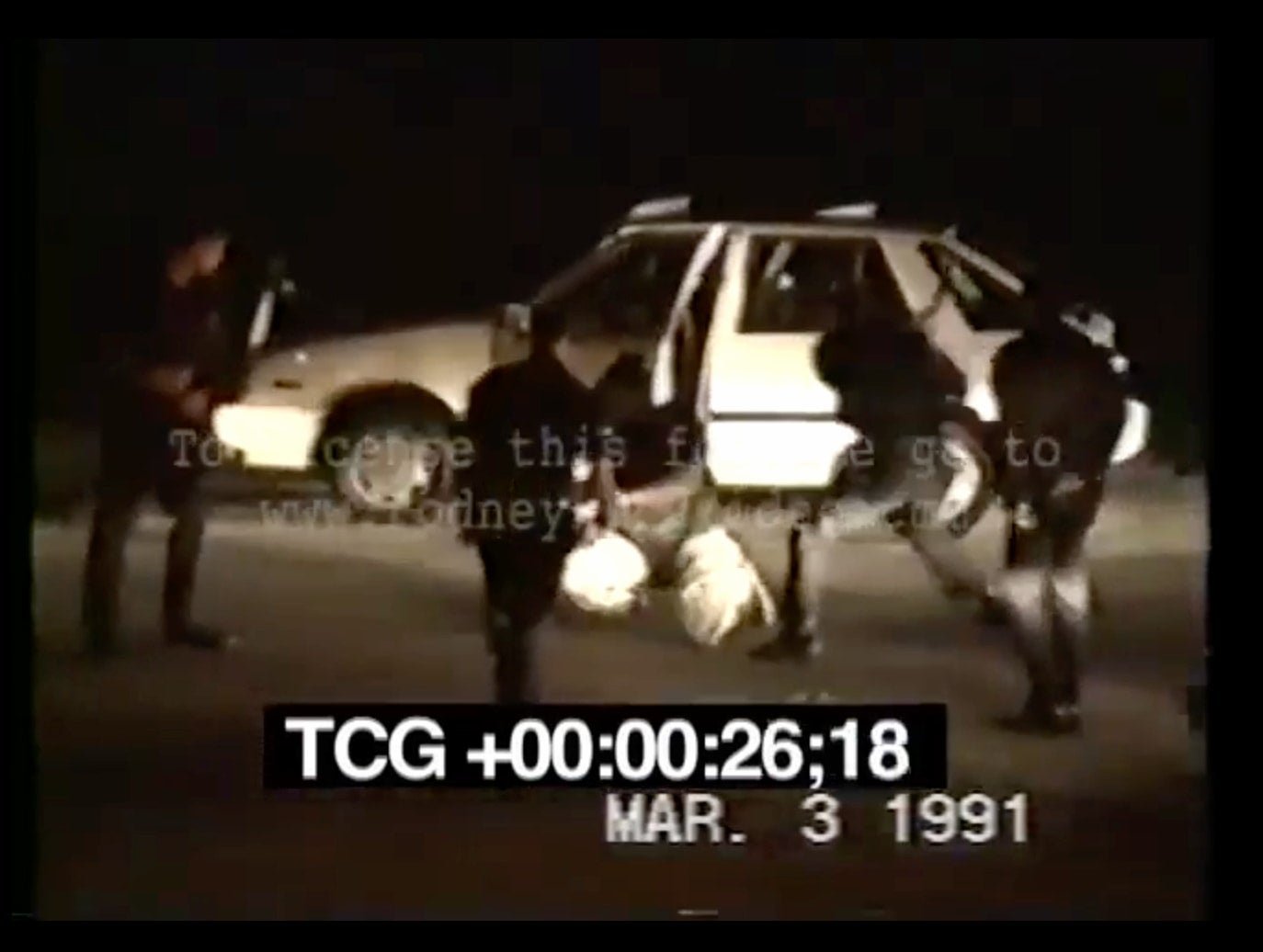
LAPD Officers Beat Rodney King
A still from the March 31, 1991, video shot by George Holliday from the balcony of his apartment showing LAPD officers beating an unarmed Rodney Glen King with batons while other officers stand and watch.
Featured in:
Sa I Gu: Los Angeles, 1992, Module 1
-

Audio
Radio Korea Callers Seeking Help
Amid the violence of April 30, 1992, Korean immigrant store owners, who could not speak fluent English, begged Radio Korea 1540 AM reporters in Korean to call 911.
Featured in:
Sa I Gu: Los Angeles, 1992, Module 1
-
Image
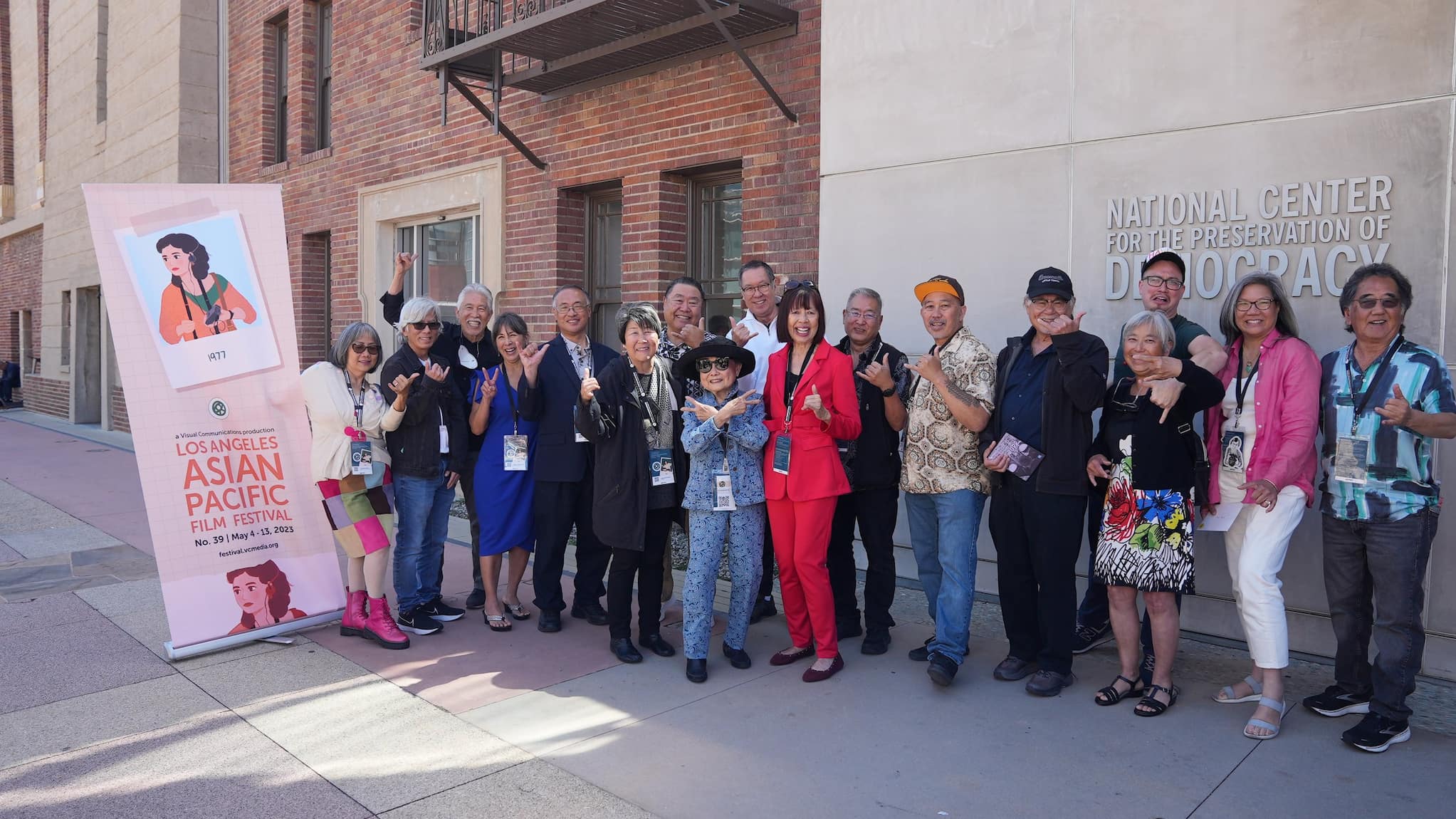
2023 Los Angeles Asian Pacific Film Festival
Filmmakers from the Digital Histories program celebrating the premiere of their short films at the 2023 Los Angeles Asian Pacific Film Festival.
-
Image
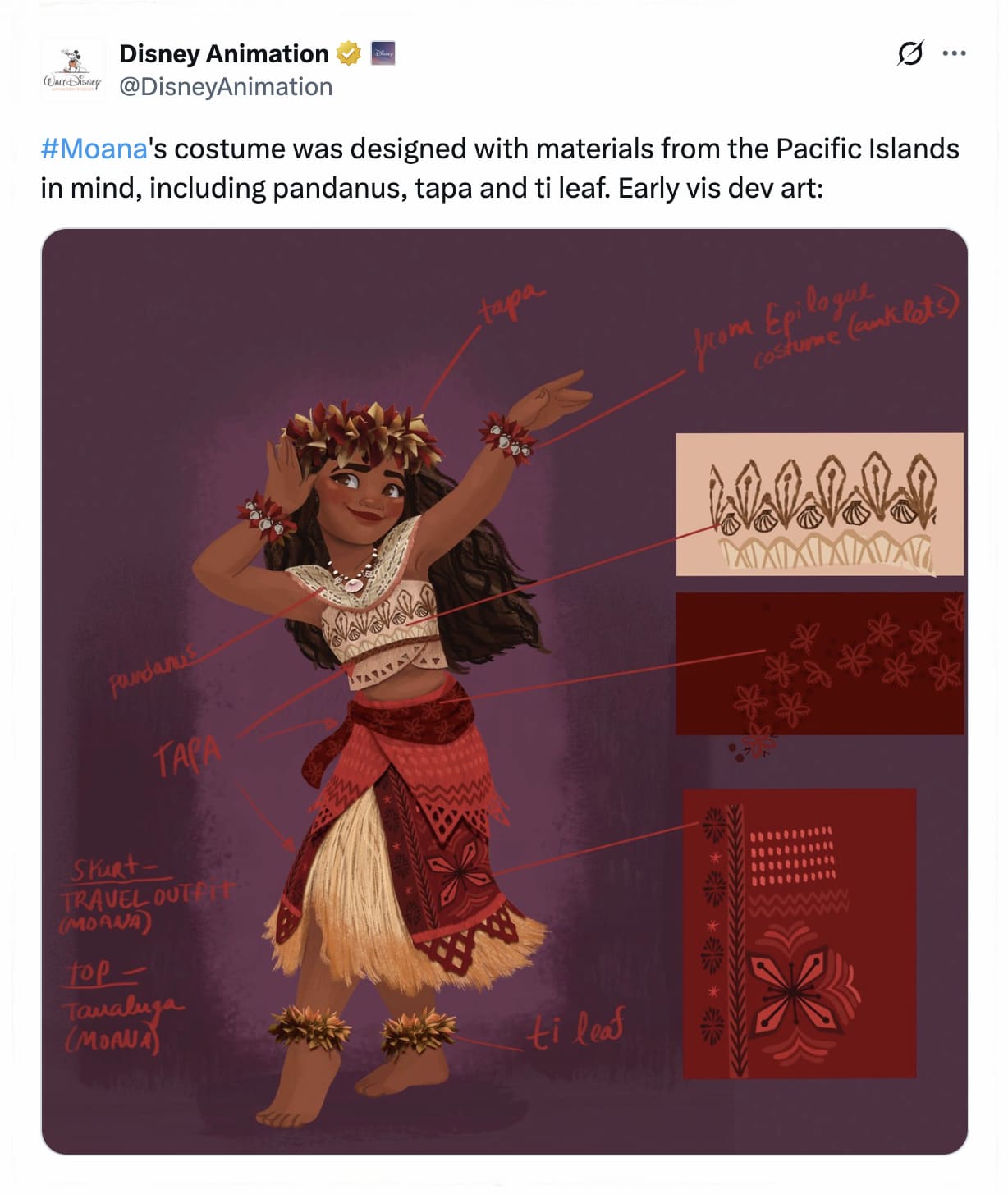
Moana Character Design
Disney animators consulted with Polynesian experts from the Oceanic Story Trust to ensure the accuracy of details in the worldbuilding and character designs of Moana (2016) such as garments, natural elements, hairstyles, and language.
-
Image
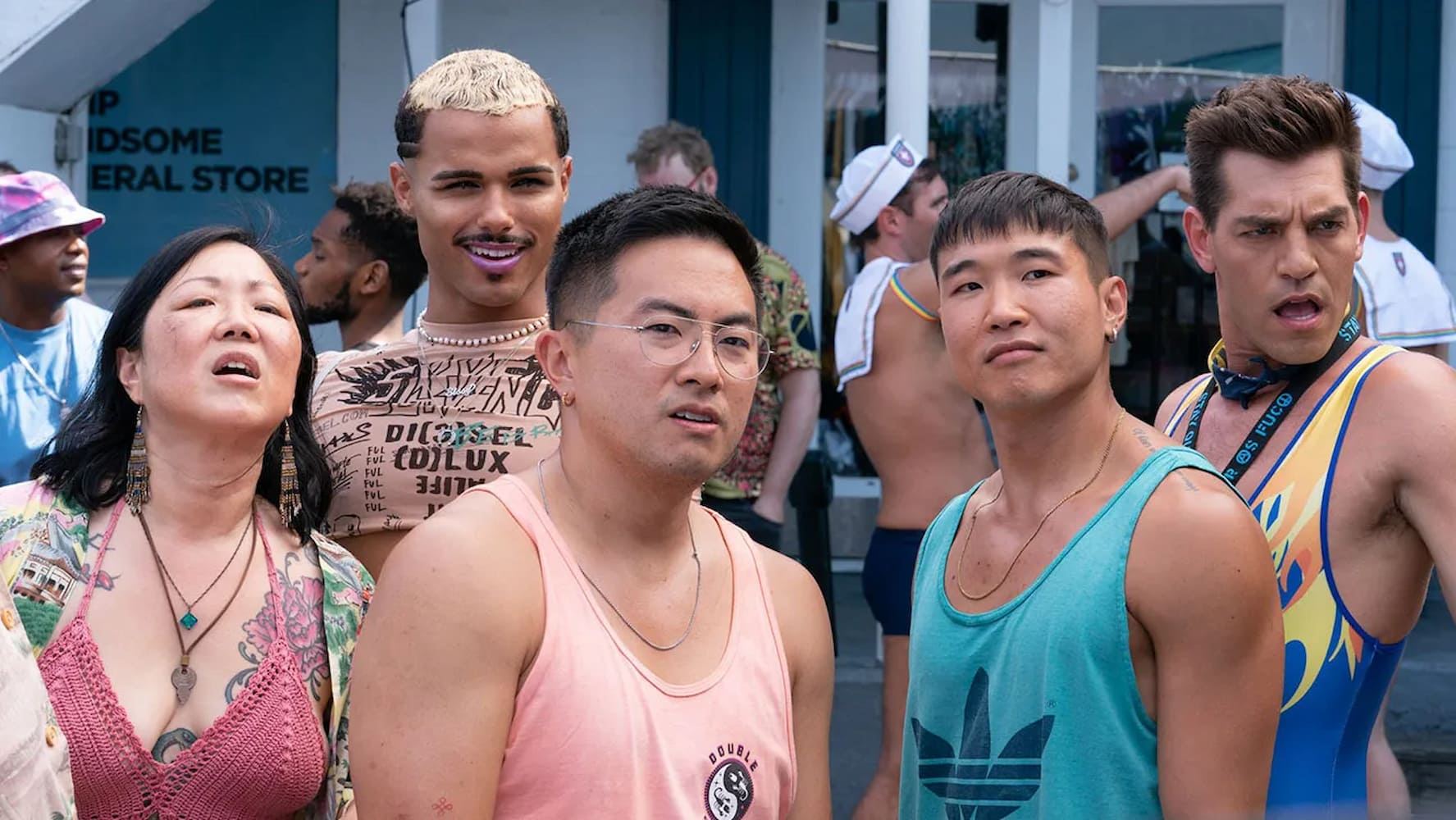
AA&PI Fire Island Cast
Left to right) Margaret Cho, Bowen Yang, and Joel Kim Booster starring in Fire Island (2022)—the first queer romantic comedy released by a major movie studio created by and starring queer Asian Americans and Pacific Islanders.
-
Image
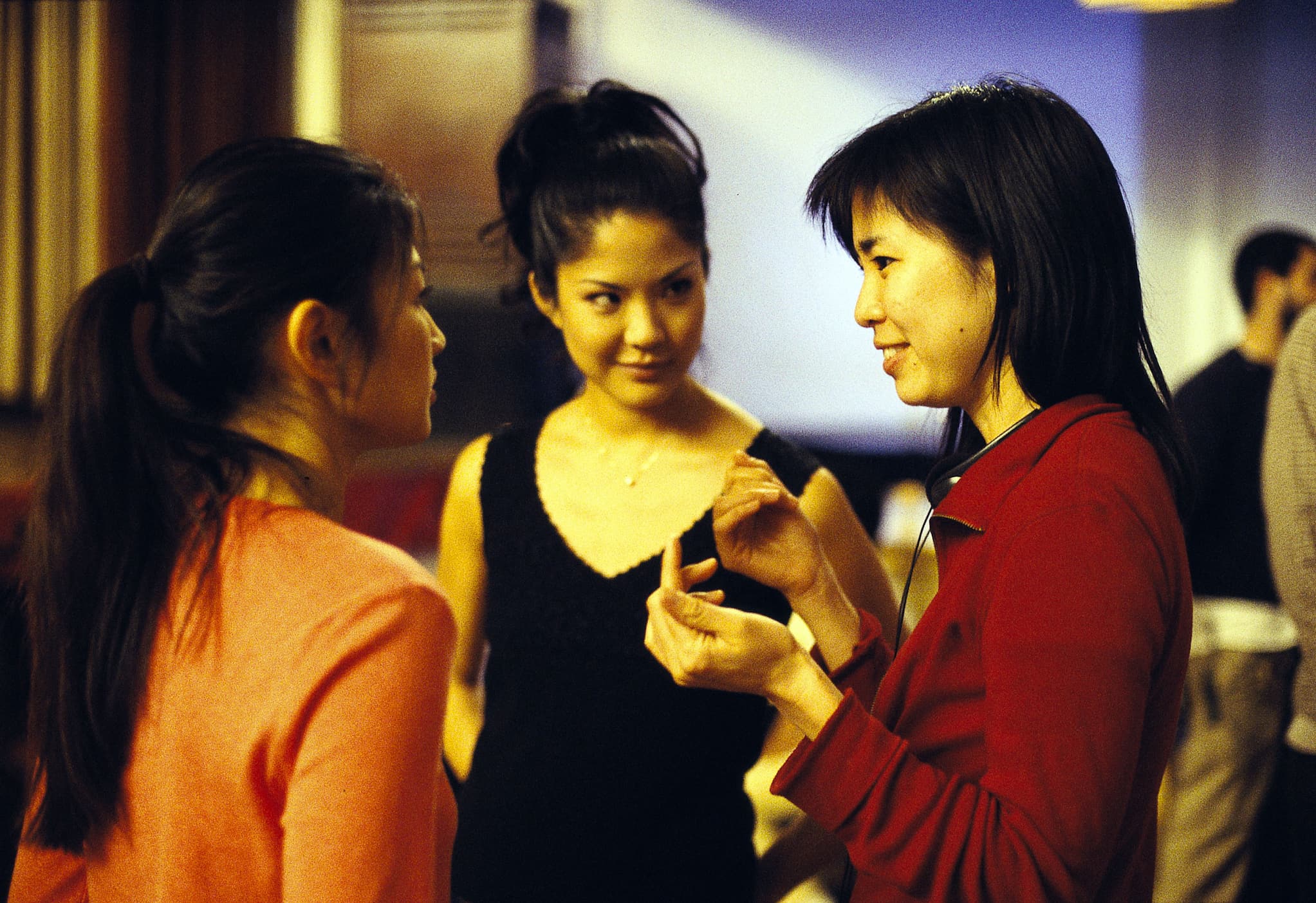
Alice Wu, Michelle Krusiec, and Lynn Chen on Saving Face Set
Director Alice Wu (right) working with actresses Michelle Krusiec (left) and Lynn Chen (center) on the set of Saving Face (2004).
-
Text
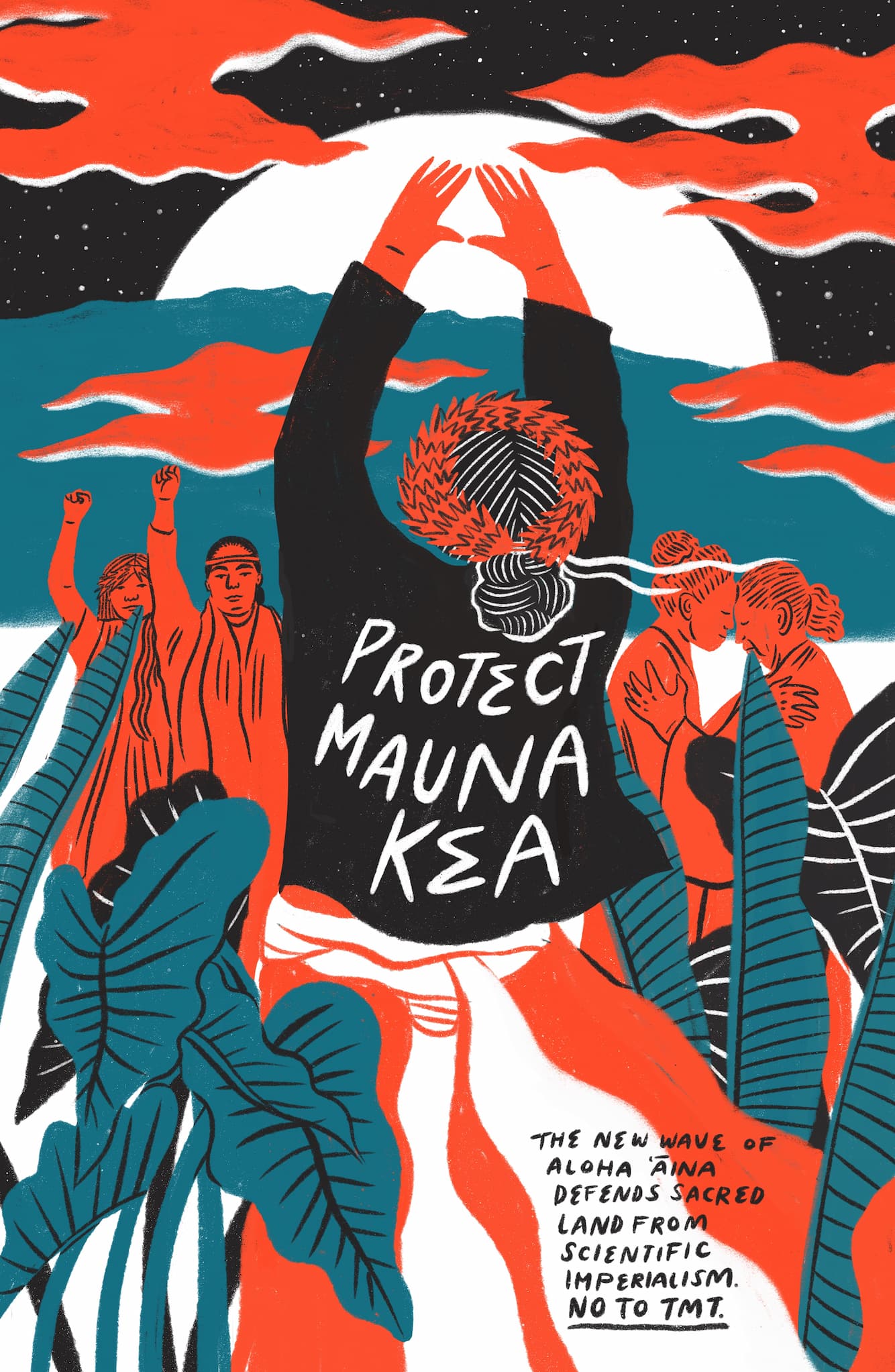
We Are Mauna Kea
Honolulu-based artist Ash Kwak Lukashevsky created this art in support of Native Hawaiians taking part in a global movement supported by hashtags like #WeAreMaunaKea and #ProtectMaunaKea.
-
Image
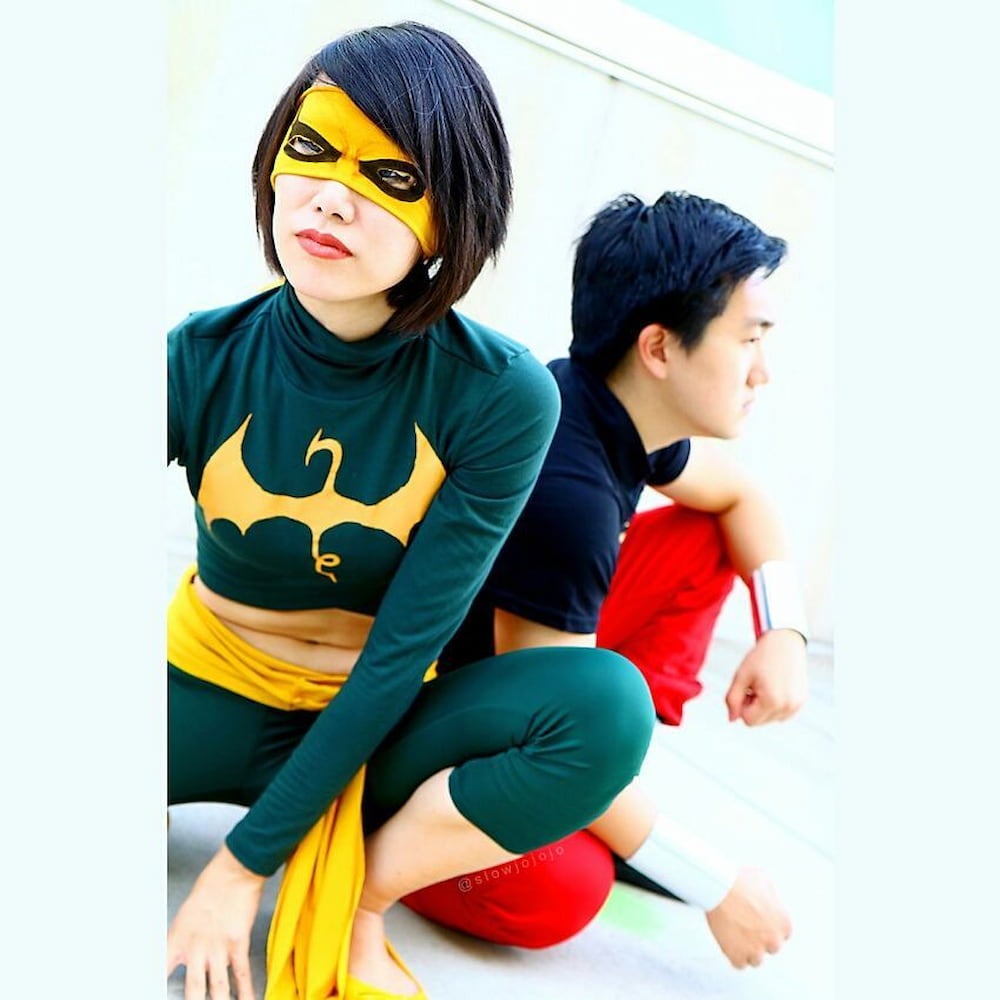
Iron Fist Cosplay
Other Asian American and Pacific Islander fans, such as Nerds of Color writer Josephine Chang, responded to the character’s whitewashing by suiting up as the superhero themselves, cosplaying at comic conventions and posting photos of themselves online.
-
Image
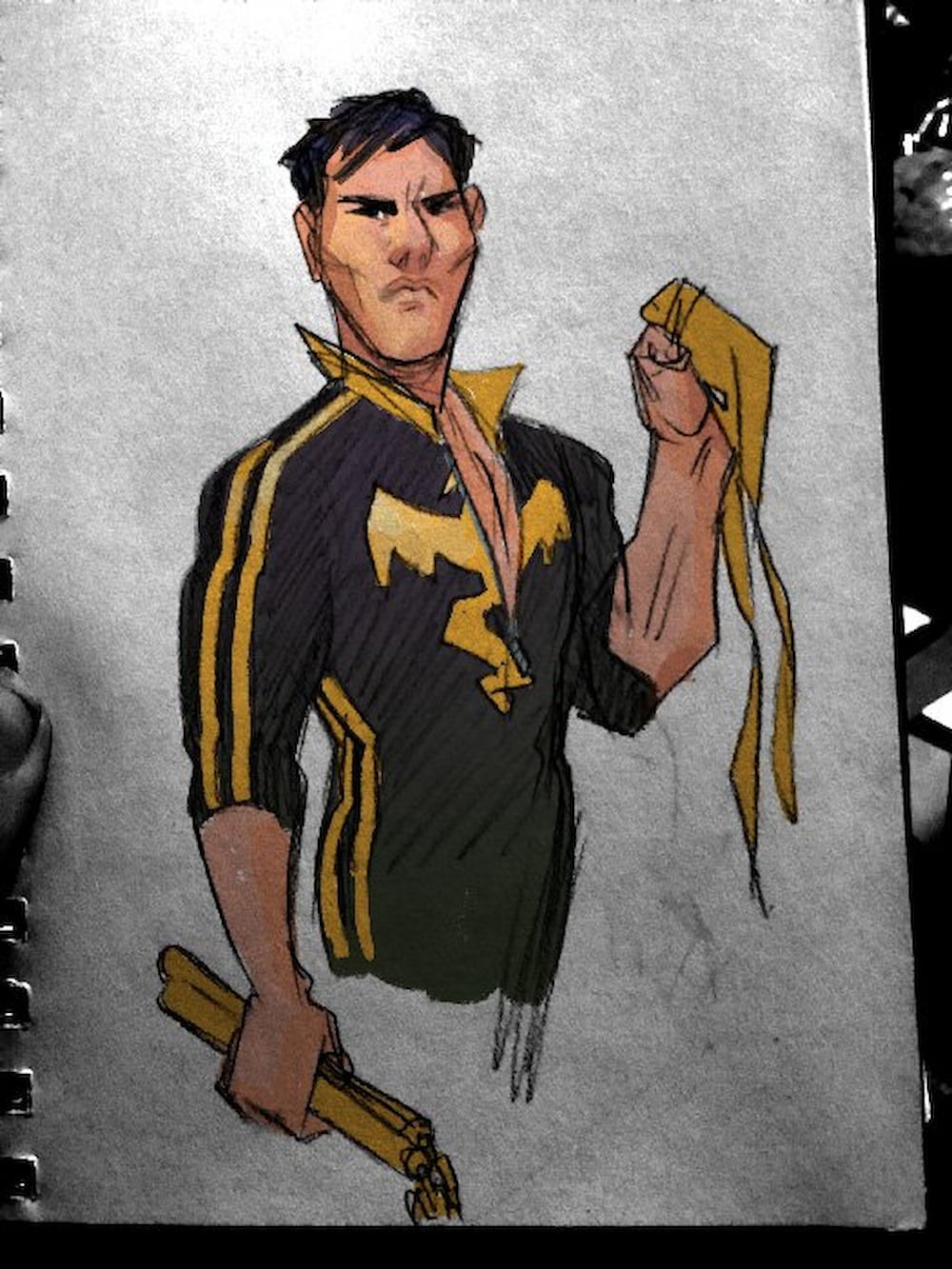
Iron Fist Recast Fan Art
A popular fan recast of Danny Rand was British Chinese actor and martial artist Lewis Tan. Fans portrayed Tan as the Iron Fist through fan art, as in this sketch by comic artist Erica Henderson.
-
Image
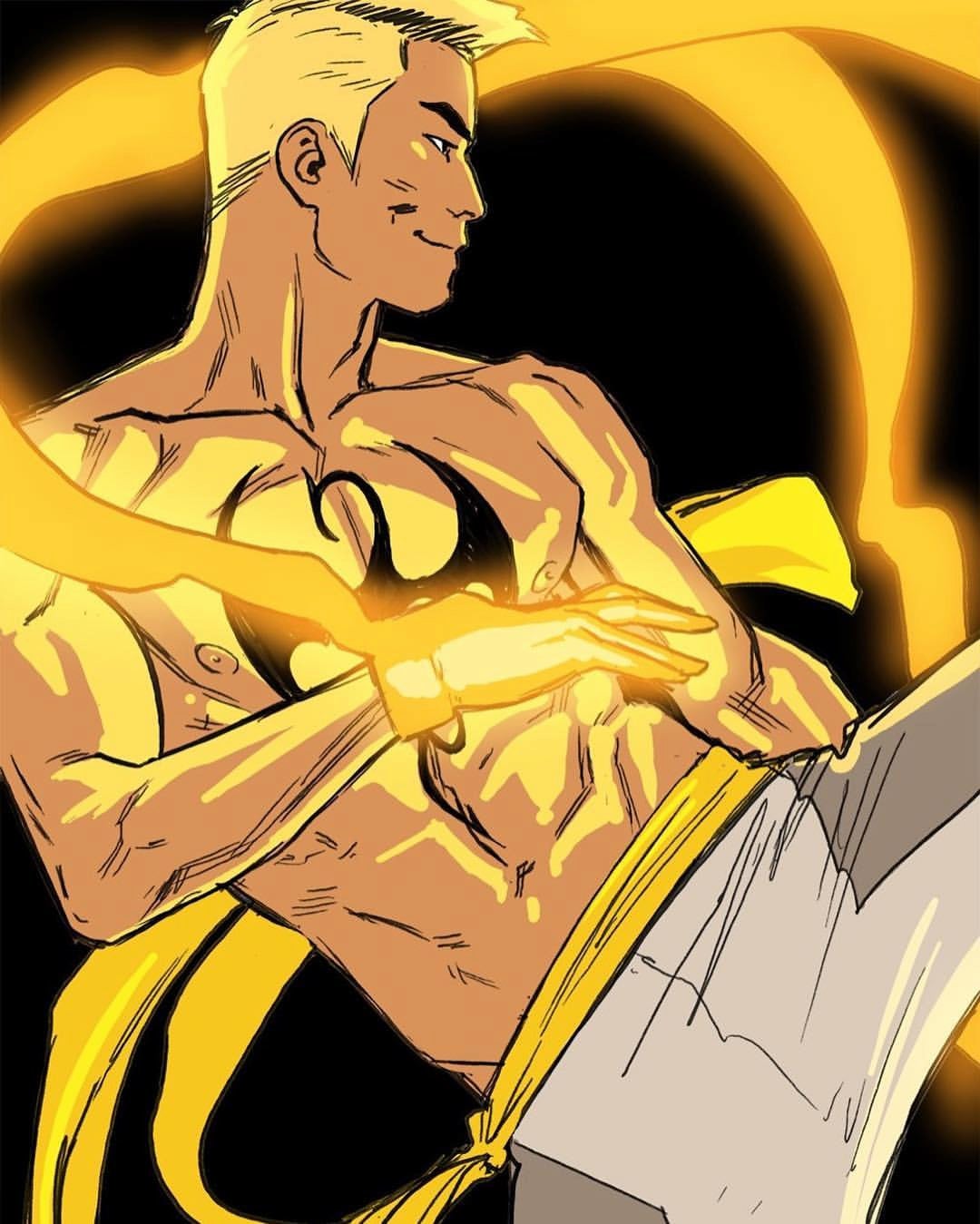
Iron Fist Redesign Fan Art
As a response to Danny Rand’s white casting, comic artists like Kris Anka advocated for an Asian American and Pacific Islander recast, reimagining the character’s racial representation through fan art. Anka’s original design inspired other artists to post their own renditions on Twitter in support.